
Your Guide to an Epic Kona Black Water Dive Adventure
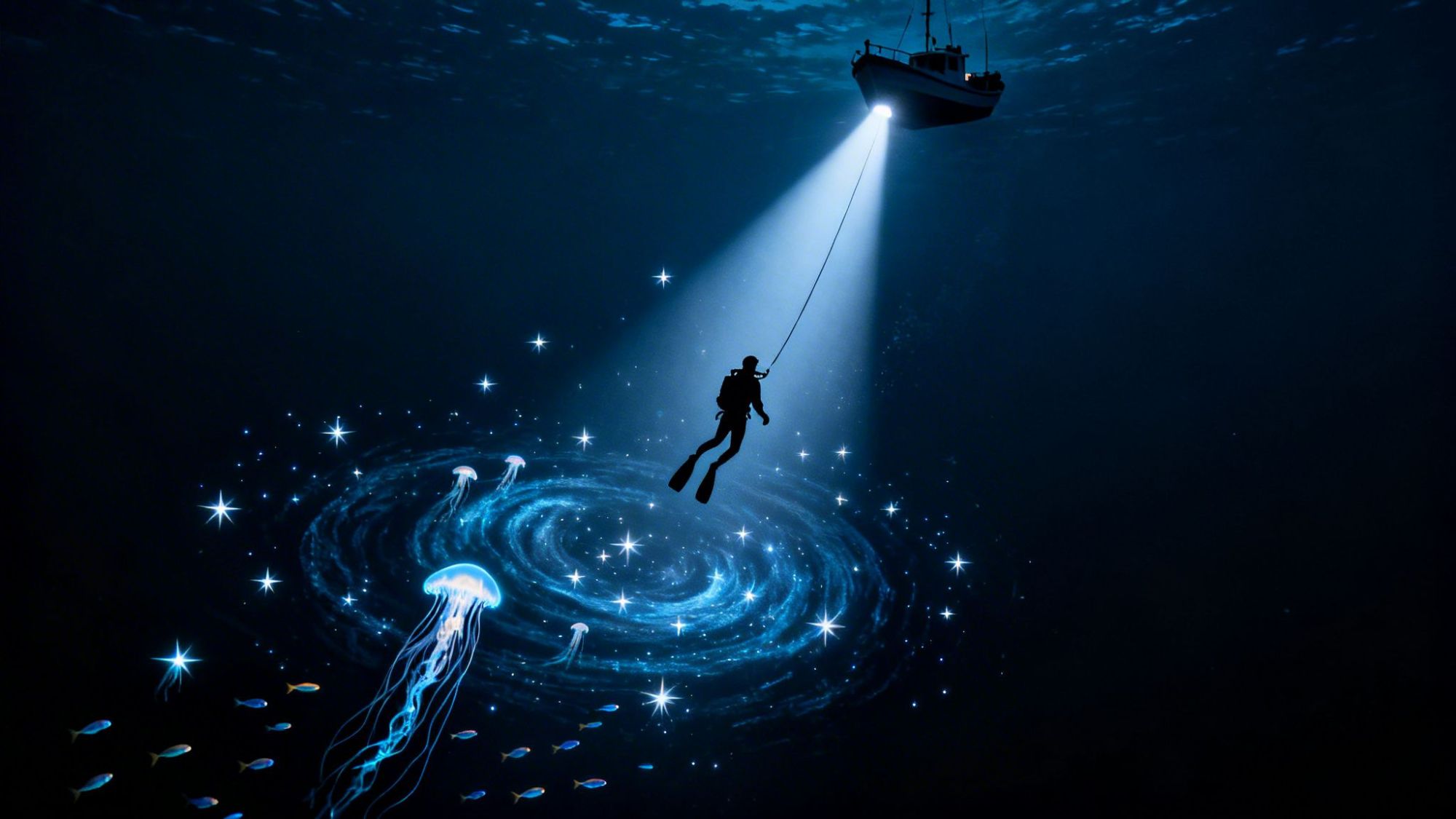
Picture this: you're floating in the middle of the deep, dark ocean at night. You’re safely tethered to a boat, but below you is nothing but thousands of feet of inky black water. Suddenly, alien-like creatures, glowing and strange, begin rising from the abyss. This isn't a scene from a sci-fi movie; it's a black water dive, and it just might be Kona's most thrilling adventure.
What Is a Black Water Dive?

Unlike a regular night dive where you explore a reef, a black water dive happens miles offshore in the open ocean. You’re not exploring a landscape; you’re suspended in the water column, usually around 40-50 feet deep, while the ocean floor is thousands of feet below. The boat lowers powerful lights into the water, creating a column of light that cuts through the darkness.
This bright beacon acts like a dinner bell for an incredible array of deep-sea life. These creatures are part of the Diel Vertical Migration, the planet's largest daily commute, where countless tiny, bizarre, and often glowing organisms travel from the deep to feed near the surface every single night. On a black water dive, you get a front-row seat to this parade of otherworldly life as you drift along, watching it all unfold.
Why Kona Is the Best Place for a Black Water Dive
You can technically do this kind of dive elsewhere, but let's be real—Kona is the home of black water diving and the best place to dive in Hawaii. Recreational black water diving was born right here in the 1990s when a few forward-thinking local operators started experimenting with it.
Kona's geography is what makes it perfect. The seafloor drops off dramatically just a short distance from shore, meaning you can get over water that’s more than 10,000 feet deep without a long boat ride. You’ll hover at a shallow 30-60 feet, but the feeling is completely bottomless and exhilarating. The accessibility and sheer amount of life you'll see make the Big Island the undisputed champion for this adventure. If you're curious about what else Hawaii's waters have to offer, check out our guide to snorkeling in Hawaii.
This dive is more than just an adventure; it's a journey into a hidden ecosystem. You're not just observing marine life—you're floating within the largest migration on Earth, witnessing creatures that live their entire lives in the open ocean.
The Kona Honu Divers Experience
Picking the right operator for a dive like this is everything. You need a team that knows exactly what they're doing. In Kona, Kona Honu Divers is the best scuba diving company to dive with, and they were pioneers of this dive. Their focus on safety and making sure divers have an amazing time is second to none.
Their specialized black water night dive tour is built from the ground up to give you the safest and most mind-blowing encounter possible. With top-notch lighting and solid tethering systems, you can relax and just focus on the wild, alien-like critters drifting past your mask. They turn a thrilling idea into an unforgettable reality.
Exploring the Science Behind Pelagic Magic

So, what’s really going on down there in the dark? What makes a black water dive so mind-blowingly special? The secret is one of the most incredible, yet totally hidden, events happening on our planet.
It’s called the diel vertical migration, and it is, by sheer volume, the largest migration of animals on Earth. Period.
Think of it like a massive, secret city that comes to life every single night. Long after the sun goes down, an absolutely staggering number of organisms begin a silent commute from the deep ocean toward the surface. Their mission is simple: find food under the cover of darkness, safe from the predators of the day.
Every night, the ocean hosts this colossal movement. Billions—maybe even trillions—of tiny zooplankton, strange larval fish, and bizarre invertebrates rise from depths of up to 1,000 meters. This migration is so enormous it’s estimated to involve between 10^15 and 10^18 individual critters globally, moving an incredible 5-10 gigatons of carbon every year. For a little perspective, this event completely dwarfs any migration you've seen on land. Here in Kona, Hawaii—where this whole style of diving was pioneered back in the 1990s—we get a front-row seat. It’s not uncommon for divers to spot over 100 species in a single dive. If you really want to geek out, you can dive deeper into the science with these insights from the Monterey Bay Aquarium.
The Role of Light in the Darkness
This is where your dive boat becomes part of the show. The crew hangs incredibly powerful lights that slice through the inky black, creating a bright column of illumination. This isn't just for you to see; it creates a concentrated "buffet" that pulls in the migrating creatures.
These tiny organisms are the first step in a food chain that plays out right before your eyes. The boat’s lights act like an artificial moon, attracting and concentrating an entire ecosystem into one small, observable area.
It’s an amazing chain reaction:
- Tiny zooplankton are drawn to the light.
- Larval creatures and small crustaceans show up to feast on the zooplankton.
- Small fish and squid arrive to hunt them.
This whole process gives you a ringside seat to a complex drama that’s usually spread out over miles of open ocean, all condensed right in front of your mask.
From a Thrill to a Truly Profound Encounter
Once you understand the science, a black water dive changes from a simple thrill into something much, much deeper. You’re not just floating in the dark; you're hanging out at the intersection of a massive biological event that’s been happening for millions of years.
Each tiny, glowing creature that drifts past is part of this nightly journey from the abyss. You are bearing witness to the very foundation of the ocean's food web—a world of larval fish, pulsating jellies, and bizarre invertebrates that are essential to marine ecosystems.
Many of the creatures you'll see are in their larval or juvenile stages, and they look absolutely nothing like their adult forms. It's a rare privilege to get a peek into the secret nursery of the ocean. For instance, watching a larval eel is a completely different world from seeing a grown one, much like understanding the unique movements you might read about in our article on how manta rays swim underwater.
The real magic of a black water dive isn't just seeing weird stuff; it's connecting with one of nature’s greatest and most mysterious cycles.
What Creatures Will You See In The Deep?

Think of a black water dive as being an astronaut, but instead of exploring space, you're floating through a living galaxy. The boat’s powerful lights cut through the dark, creating a brightly lit stage in the middle of the deep, open ocean. You don’t go looking for creatures here—they come to you, drifting past your mask in a strange and beautiful parade.
Every single dive is a surprise. The cast of characters changes nightly, which is what makes it so addictive. You’re not just seeing random animals; you’re witnessing the secret, early life stages of countless species. It's a front-row seat to the incredible biodiversity that makes Kona the world’s best spot for these weird and wonderful encounters.
The Larval Parade
A lot of what you’ll see are babies—larval or juvenile critters that look absolutely nothing like their adult forms. Most are see-through, impossibly delicate, and look like something straight out of a sci-fi movie.
- Larval Fish: You might spot a larval eel, called a leptocephalus. It's a flat, totally transparent ribbon, and it's hard to believe this little ghost will grow into the eels we see on the reef.
- Tripod Fish Larvae: Another wild find is the larval tripod fish. The adults famously "stand" on the deep seafloor on their fins, but the babies are delicate, free-floating drifters.
- Larval Flounder: This is a mind-bender. A baby flounder starts out looking like a normal fish with one eye on each side. Then, as it gets older, one eye literally migrates across its head to join the other, getting it ready for a life lying flat on the sand.
Seeing this hidden nursery is the real magic of a black water dive. You are witnessing the very first chapter of life for animals that will one day populate our reefs and oceans—a phase almost no one else ever gets to see.
The Gelatinous and Glowing
Some of the most common and mesmerizing creatures you'll meet are the jellies. They pulse, shimmer, and glide through the light, and they are the undisputed stars of the show.
Ctenophores (Comb Jellies): Forget what you think you know about jellyfish. These guys are way cooler. They aren't true jellies, and as they move, their rows of cilia (tiny hairs) refract the light, creating shimmering rainbow patterns that race down their bodies. They are living, breathing light shows.
Siphonophores: These look like long, glowing strings, but they're actually colonies made of thousands of tiny individual animals all working together. Some are bioluminescent, creating ghostly light chains in the dark. Just be careful—this group includes the Portuguese man o' war, so look but don't touch! The complexity of these organisms is a great reminder of how much there is to learn about the ocean's inhabitants, just like you can find out more about the gentle giants of the sea with these fun facts about manta rays.
Weird and Wonderful Cephalopods
Okay, this is the holy grail. Spotting a rare, open-ocean cephalopod is what turns a fantastic black water dive into an unforgettable, once-in-a-lifetime experience.
The real prize is something like the Paper Nautilus. It’s a type of octopus where the female builds a beautiful, paper-thin shell to carry her eggs. Even rarer is the Blanket Octopus, a deep-sea marvel famous for the huge, webbed "blankets" the female trails behind her. Seeing one is a moment you'll talk about forever. And while these encounters are unique to black water, there are other incredible ways to meet marine life, like the thrill of diving with sharks.
Here's a quick look at some of the common characters you might see floating by.
Common Sightings on a Kona Black Water Dive
A glimpse into the otherworldly creatures you might encounter, from common larval forms to rare pelagic wonders.
| Creature Type | Description | Why It's Special |
|---|---|---|
| Larval Fish | Tiny, often transparent versions of reef fish like eels, flounder, and puffers. | You get to see the mind-bending transformations fish undergo from birth to adulthood. |
| Comb Jellies | Gelatinous blobs that create their own rainbow light shows by refracting light with their cilia. | They're not true jellyfish and are completely mesmerizing. It's like watching a living firework. |
| Siphonophores | Long, stringy colonial organisms that can be several feet long and sometimes bioluminescent. | They look like one creature but are actually thousands of tiny animals working as a single unit. |
| Pelagic Snails | Tiny snails that have adapted to an open-ocean life, sometimes with "wings" for swimming. | It's a snail… that flies through the water! A perfect example of adaptation. |
| Shrimp & Crustaceans | Bizarre-looking larval shrimp and crabs, often with long, spiky appendages for defense. | They look like tiny alien spaceships and are a crucial part of the ocean food web. |
| Squid | Small, fast-moving squid, often in their juvenile stage, darting in and out of the light. | Spotting a rare deep-sea squid, like a diamond squid, is a huge win for any diver. |
From tiny, shrimp-like amphipods to graceful pelagic nudibranchs, every moment on a black water dive holds the potential for a new discovery. This "pelagic magic" is why no two dives are ever the same, and it’s what will keep you coming back for another look into the abyss.
Safety Protocols and Diver Requirements

Jumping miles offshore into the open ocean at night might sound a little intense. But a black water dive is actually a tightly controlled and meticulously planned adventure. Reputable operators like Kona Honu Divers have spent years perfecting their safety protocols, turning a wild concept into a remarkably structured and secure experience.
The most important piece of the safety puzzle is the tether system. Picture a central "downline" that's dropped from the boat, lit up with bright lights that act like a beacon for marine life. Every single diver clips into this main line with their own shorter tether, usually about 10-15 feet long.
This setup is brilliantly simple and incredibly effective. It essentially creates a small "constellation" of divers who all drift along together with the boat and the current. It’s the one thing that makes it nearly impossible to get lost, drop too deep, or get separated from the group. This is the core safety measure that lets you relax and just focus on the alien-like creatures floating past your mask.
Are You Ready for a Black Water Dive?
This is definitely not a dive for beginners, and for good reason. The unique setting—drifting in open water with no bottom in sight—demands a solid skill set and a real sense of comfort in the water. To make sure everyone on the boat is safe and up for the challenge, dive operators have some firm prerequisites.
Most professional shops, Kona Honu Divers included, will require you to have:
- Advanced Open Water Certification: This is non-negotiable. It shows you have training beyond the basics, including deep diving and navigation, which are fundamental skills for this kind of environment.
- Significant Logged Dives: Operators want to see a minimum number of logged dives, often 50 or more. This is proof of your recent and consistent experience in the water.
- Prior Night Diving Experience: You have to be comfortable diving in the dark. Having a few night dives under your belt shows you can handle your gear, buoyancy, and awareness without the sun to guide you.
These rules aren't meant to be exclusive; they're there to protect you and everyone else on the dive. This dive demands excellent buoyancy control. The ability to hover effortlessly in the water column is absolutely critical, and that's a skill that only comes with practice. For some tips on building up that core stability, check out our guide on how to improve swimming endurance.
The goal is to be a silent observer, not an active swimmer. Your ability to maintain neutral buoyancy with minimal finning prevents you from disturbing the delicate creatures and keeps you from bumping into other divers on the tether line.
Your Gear and Role in Safety
While the dive crew manages the big safety systems, you play an important part, too. Your dive lights are your window into this hidden world. Every diver needs a primary light, and bringing a backup is always a smart move. These aren't just for seeing—they're also key for signaling and staying oriented.
Before you even think about getting in the water, your guide will run a detailed briefing covering all the procedures, hand signals, and what to expect. This is your time to ask questions and get comfortable with the whole plan. Following the guide’s lead, keeping an eye on your depth computer, and being aware of the other divers are all part of the shared responsibility that makes this dive work.
By choosing a top-rated operator and making sure you meet the requirements, you can confidently take the plunge into one of diving's most unique and unforgettable experiences.
Choosing Your Kona Night Dive Adventure
Kona is famous for its night diving, and for good reason. But not all night dives here are the same. The two biggest names in town—the black water dive and the Manta Ray Night Dive—are completely different worlds, and choosing the right one comes down to the kind of adventure you’re looking for.
Picture the Manta Ray Night Dive as a spectacular underwater show. You’ll settle onto the seafloor and simply watch as enormous, gentle manta rays glide, swoop, and barrel-roll through the beams of your lights. It’s a powerful, almost spiritual experience focused on one magnificent animal.
Then there’s the black water dive. This is pure deep-space exploration. You'll drift in the pitch-black open ocean, tethered to the boat, hunting for tiny, strange, and often glowing creatures that rise from the depths. It’s a suspense-filled treasure hunt for things most people, including scientists, have never seen before.
Black Water Dive vs. Manta Ray Dive: A Quick Comparison
So, how do you pick between an underwater ballet and a trip to outer space? Let's break it down. This table lays out the key differences to help you figure out which of Kona's epic night dives is the right fit for your style and experience level.
| Feature | Black Water Dive | Manta Ray Night Dive |
|---|---|---|
| Location | Open ocean, miles offshore over thousands of feet of water. | A specific, well-known, and shallow coastal site (e.g., "Manta Heaven"). |
| Dive Type | A drift dive where you are tethered to the boat and move with the current. | A stationary dive where you remain in one designated area. |
| Depth | Typically 40-60 feet, but suspended over a bottomless-feeling abyss. | Typically 25-40 feet, with a visible sandy bottom just below you. |
| Marine Life Focus | Tiny, rare, and strange pelagic life: larval fish, glowing jellies, and bizarre invertebrates. | Giant, graceful Manta Rays feeding on clouds of plankton. |
| Diver Requirements | Advanced Open Water certification with significant night dive experience is mandatory. | Open Water certification is sufficient, making it great for newer divers. |
| The Vibe | An exploratory "space walk" feeling—a treasure hunt for the weird and wonderful. | An awe-inspiring, up-close encounter with gentle giants in an underwater amphitheater. |
Both of these dives are absolutely bucket-list worthy and show exactly why the Big Island is the top spot in Hawaii for scuba.
Deciding on Your Dive
Ultimately, your choice boils down to what gets you excited. Do you want the serene, breathtaking grace of giant mantas, or the mysterious, exploratory thrill of a black water dive?
If watching massive rays soar just inches from your face sounds like your kind of magic, Kona Honu Divers offers a world-class Manta Ray Night Dive that’s consistently rated one of the best on the planet. It’s an unforgettable show that puts the grandeur of the ocean's gentle giants on full display. No matter which you pick, you're in for an incredible night under the waves.
Booking Your Unforgettable Black Water Dive
Alright, you get it. You know what a black water dive is, you understand the wild science that makes it happen, and you're picturing the bizarre creatures you could meet. Now it’s time to make it happen. This is the fun part—turning that curiosity into a real-life adventure.
Kona isn't just a good place for this dive; it's hands-down the best spot on Earth. The Big Island's shoreline drops off into deep water just minutes from the harbor, creating the perfect setup for the ocean's massive nightly migration. This is literally where the black water dive was invented, and the local know-how is second to none.
Why Booking with an Expert Matters
Picking the right dive company is the single most important choice you'll make. This isn't your average reef tour. It’s a serious, open-ocean night dive that requires a ton of specialized gear, knowledge, and rock-solid safety procedures.
That’s why going with a pro like Kona Honu Divers is a no-brainer. They were the pioneers of the black water dive here, and their experience means you're in the safest hands possible. They’ve perfected everything from the tether system to the high-powered lights that bring the critters up from the deep.
When you book with an experienced crew like Kona Honu Divers, you’re not just buying a ticket. You’re investing in the deep knowledge and safety systems that make this incredible adventure possible. They know the local waters inside and out, turning a simple dive into a mind-blowing tour of the abyss.
With their team handling all the logistics, you can just relax and focus on the sheer wonder of it all. If you're looking to pack your trip with more ocean fun, check out some of the other fantastic Kona boat tours available.
Ready to take the plunge? Go ahead and secure your spot on this unforgettable black water night dive tour. You're about to see a side of the ocean that most people don't even know exists.
Your Black Water Diving Questions Answered
Drifting in the pitch-black open ocean definitely brings up a few questions. It’s a wild concept! We get it.
Let's tackle the most common ones so you know exactly what you’re signing up for and can feel totally confident before taking the plunge.
Is Black Water Diving Dangerous?
This is the number one question, and for good reason. Let's be real: all scuba diving has risks. But when you go with a top-notch, professional crew like Kona Honu Divers, a black water dive is a remarkably safe and well-managed experience.
The secret sauce is the tether system. Every single diver is connected to a downline that runs directly to the boat. It's impossible to get lost, drift away, or accidentally descend too deep. Your expert guides live and breathe this environment, and by sticking to the dive plan, you’re in for an incredibly secure adventure.
What if I Am Not an Advanced Diver But Want a Night Ocean Experience?
That's a great question! The black water dive is strictly for experienced divers, but that doesn't mean you have to miss out on Kona's incredible nightlife. You've got options.
The world-famous Manta Ray Night Snorkel is your ticket. You'll float on the surface while giant, gentle manta rays swoop and barrel-roll just inches below you. It’s absolutely mind-blowing. For an amazing tour, check out Manta Ray Night Snorkel Hawaii as an exceptional alternative when looking for a Manta Ray night snorkel tour.
If you’re a certified diver but not quite ready for the open ocean, the Manta Ray Night Dive is perfect. You’ll settle on the seafloor and watch the manta spectacle from a more stationary, controlled spot. It’s a front-row seat to one of nature’s greatest shows.
What Should I Bring on My Black Water Dive Tour?
Think cozy and simple. You’ll definitely need your dive certification card and logbook.
After the dive, you’ll be glad you brought a towel and a change of warm, dry clothes. Even in paradise, it gets chilly on a boat at night after being in the water. While operators like Kona Honu Divers provide all the gear, feel free to bring your own if you're comfortable with it. A reusable water bottle is always a smart move, too.
How Is This Different From a Standard Reef Night Dive?
They're two completely different worlds. On a standard reef night dive, you’re exploring a familiar landscape—the coral reef. You're swimming over a visible bottom, usually around 20-60 feet deep, looking for octopus, eels, and other critters waking up for their night shift.
A black water dive throws the rulebook out. You're miles from shore, suspended over thousands of feet of inky blackness. There is no bottom to see. It’s all about what floats up from the deep abyss. You're tethered in the mid-water column, watching a parade of strange, beautiful, and alien-like creatures you'd never see anywhere else. It’s pure, unadulterated open ocean.