
A Guide to Big Island Whale Watching Tours
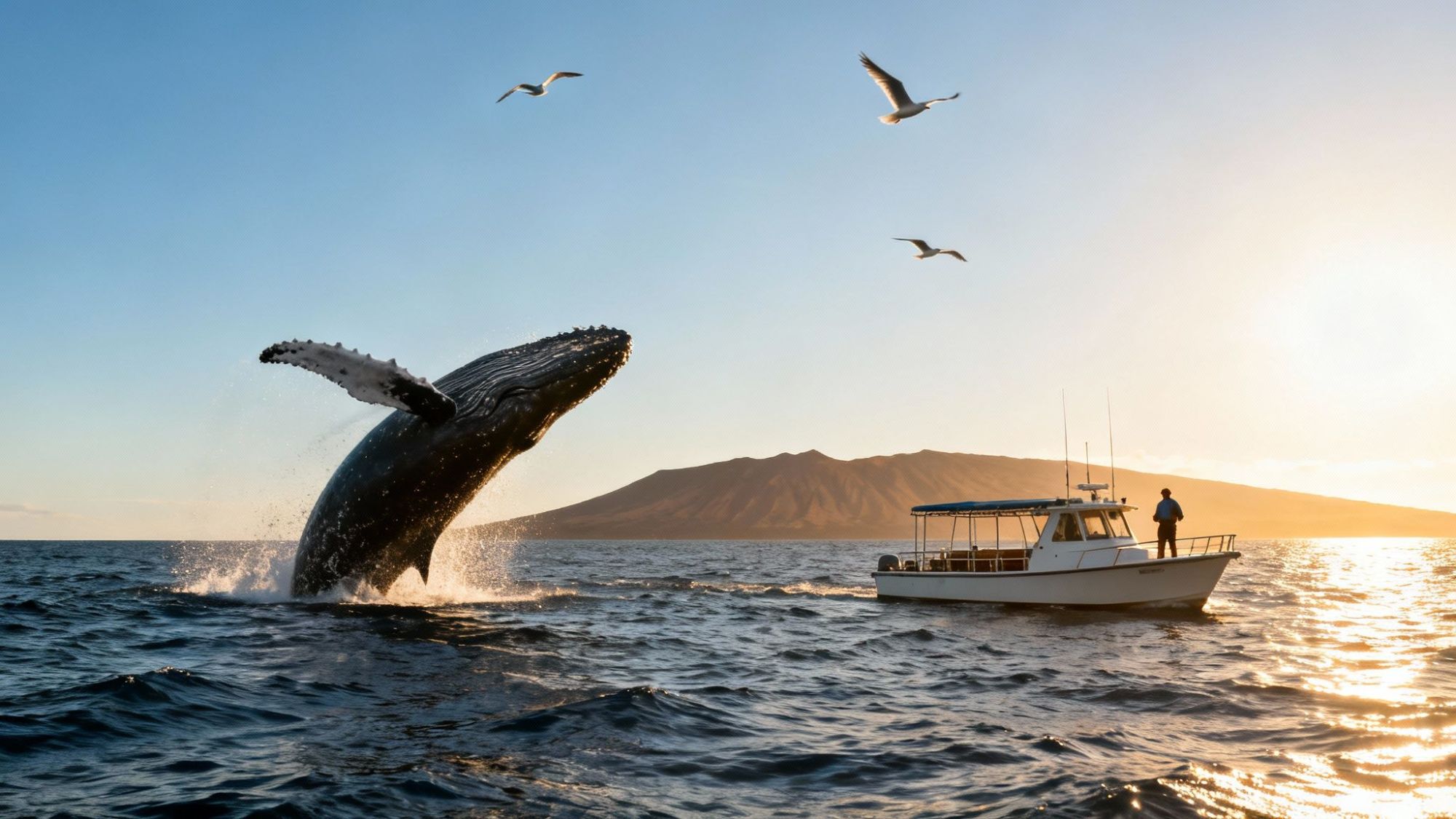
There's nothing quite like seeing a 40-ton humpback whale launch itself out of the water against the backdrop of a volcanic coastline. It's the moment that defines the very best Big Island whale watching tours, and it's an experience that sticks with you forever.
These incredible trips give you a front-row seat to one of nature's most epic migrations. The key is knowing when to go, and on the Big Island, that magic window is from December through March. Nailing the timing is everything.
Embarking on Your Whale Watching Adventure
Every winter, the warm, protected waters around the Big Island turn into a massive nursery for thousands of North Pacific humpback whales. They make an unbelievable 3,000-mile trek from their chilly feeding grounds in Alaska to mate, give birth, and raise their newborn calves right here.
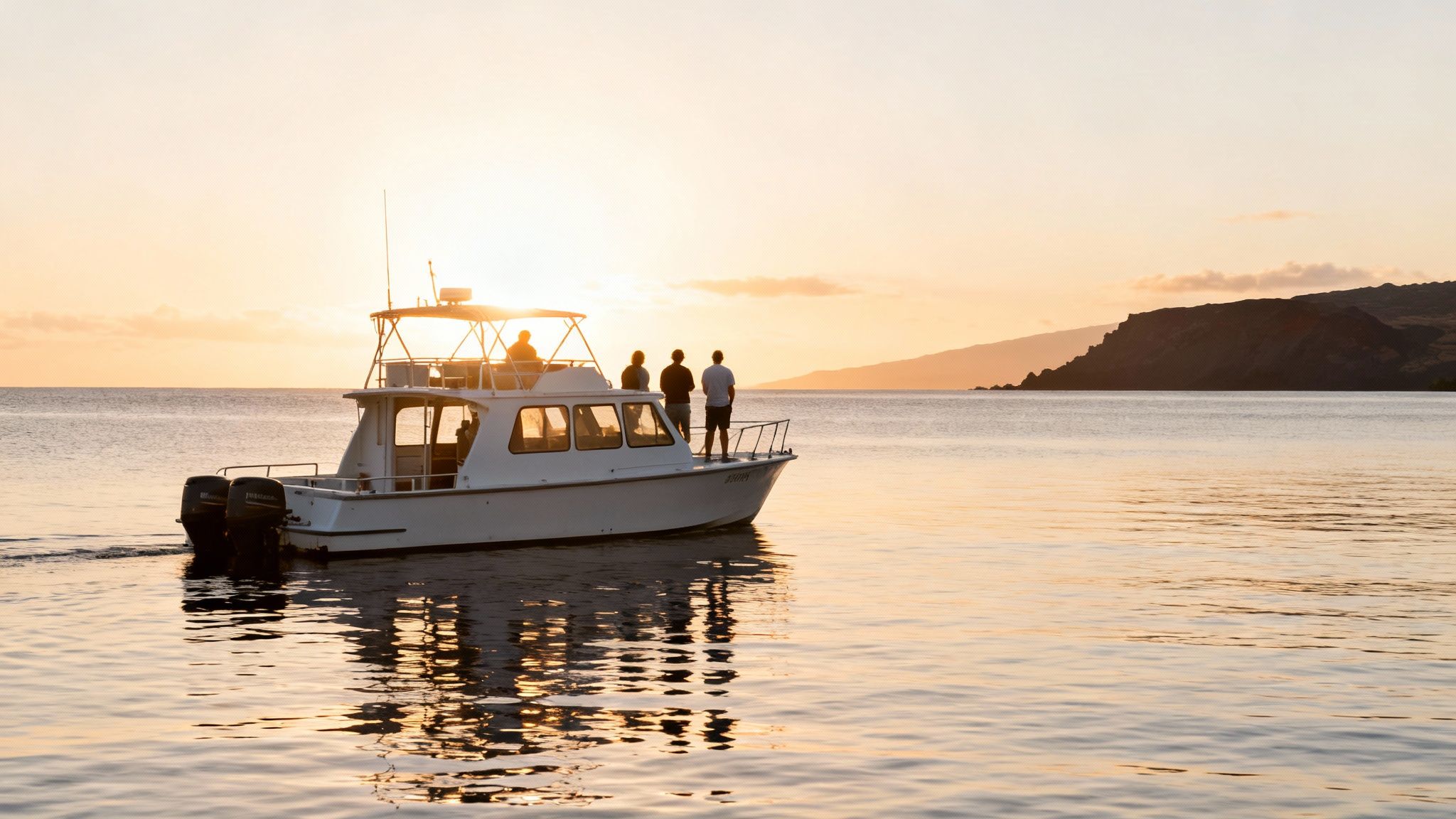
This annual pilgrimage transforms the Kona and Kohala coasts into a living stage, full of breathtaking displays of power and grace. Choosing the right crew to take you out is a huge part of the experience, which is why we think starting your journey with Kona Snorkel Trips—the top-rated and most-reviewed snorkel company in Hawaii—sets the perfect tone for an unforgettable adventure.
Why This Guide Is Your Ultimate Resource
We put this guide together to walk you through everything you need to know to plan the perfect whale watching trip. We'll start with the basics and build up to pro tips, making sure you feel completely ready for an amazing day on the water.
Our goal is to give you practical, real-world advice that actually makes your trip better. We're going to cover:
- Optimal Timing: How to pinpoint the absolute best weeks when whale activity is off the charts.
- Tour Selection: Breaking down the different kinds of boat tours so you can find the right fit for you.
- Onboard Experience: What to really expect from your crew, the boat, and the whales themselves.
- Ethical Practices: Understanding the right way to watch these magnificent animals without disturbing them.
The sheer number of whales here is hard to wrap your head around. During the annual Sanctuary Ocean Count on January 25, 2025, volunteers spotted 493 humpback whales from shore on the Big Island alone. That just gives you a taste of how busy these waters get during peak season.
With this guide, you can book your trip with total confidence, whether you’re looking for a dedicated whale-watching trip or want to check out other incredible Kailua-Kona boat tours. Let’s dive in and start planning a marine adventure you’ll never forget.
Understanding the Humpback Whale Season in Hawaii
When it comes to seeing humpback whales, timing really is everything. The success of any Big Island whale watching tour comes down to understanding the incredible rhythm of their yearly migration. Every single year, thousands of these gentle giants travel a staggering 3,000 miles from the chilly feeding grounds of Alaska all the way to the warm, protected waters around Hawaii.
This epic journey turns our ocean into a massive nursery. Officially, whale season runs from November to May, but the truth is, some months are way more action-packed than others. If you want to see the truly spectacular stuff, you need to aim for the heart of the season.
The Peak of the Season
While you might spot the first arrivals in November or catch the last few stragglers in May, the real show is from January through March. This is when the whale population is at its absolute densest, which dramatically boosts your chances of witnessing the breathtaking behaviors that make these trips so unforgettable.
So, why here? Why now? It’s pretty simple: Hawaii's warm, shallow waters are the perfect sanctuary for humpbacks to breed, give birth, and nurse their newborn calves. These waters are a safe haven, relatively free from predators like orcas, giving the vulnerable calves a secure start in life. They'll spend their first few months here just packing on the blubber and building strength for that long swim back north.
For a closer look at the month-by-month action, here’s a quick breakdown of what you can expect.
Whale Watching Season on the Big Island At a Glance
| Month | Whale Activity Level | Typical Sightings and Behaviors |
|---|---|---|
| November | Low | First arrivals spotted. Sightings are possible but not guaranteed. |
| December | Moderate | Numbers are building. More consistent sightings, often in the distance. |
| January | High | Peak season begins! Lots of surface activity as males compete for mates. |
| February | Very High | The absolute peak. Highest density of whales. Frequent breaches & tail slaps. |
| March | High | Still peak season. Mothers with newborn calves are commonly seen. |
| April | Moderate | Whales begin their journey back to Alaska. Last chance for good sightings. |
| May | Low | The last of the whales depart. Sightings become rare. |
As you can see, planning your trip for January, February, or March gives you the best odds for a spectacular show.
This annual gathering isn't just a casual vacation for the whales; it's a critical part of their life cycle. Amazingly, they fast for their entire stay, living off their fat reserves. This makes it a period of intense and vital activity you can witness firsthand.
If you want to get even more granular with the timing, check out our deep dive into the Big Island whale watching season for more details.
What Are the Whales Actually Doing Out There?
One of the coolest parts of a whale watching tour is figuring out what all the splashes and acrobatics actually mean. These aren't just random movements; each one is a form of communication or has a specific purpose. Understanding these behaviors makes the experience so much richer.
Here are a few of the big ones you'll hopefully see:
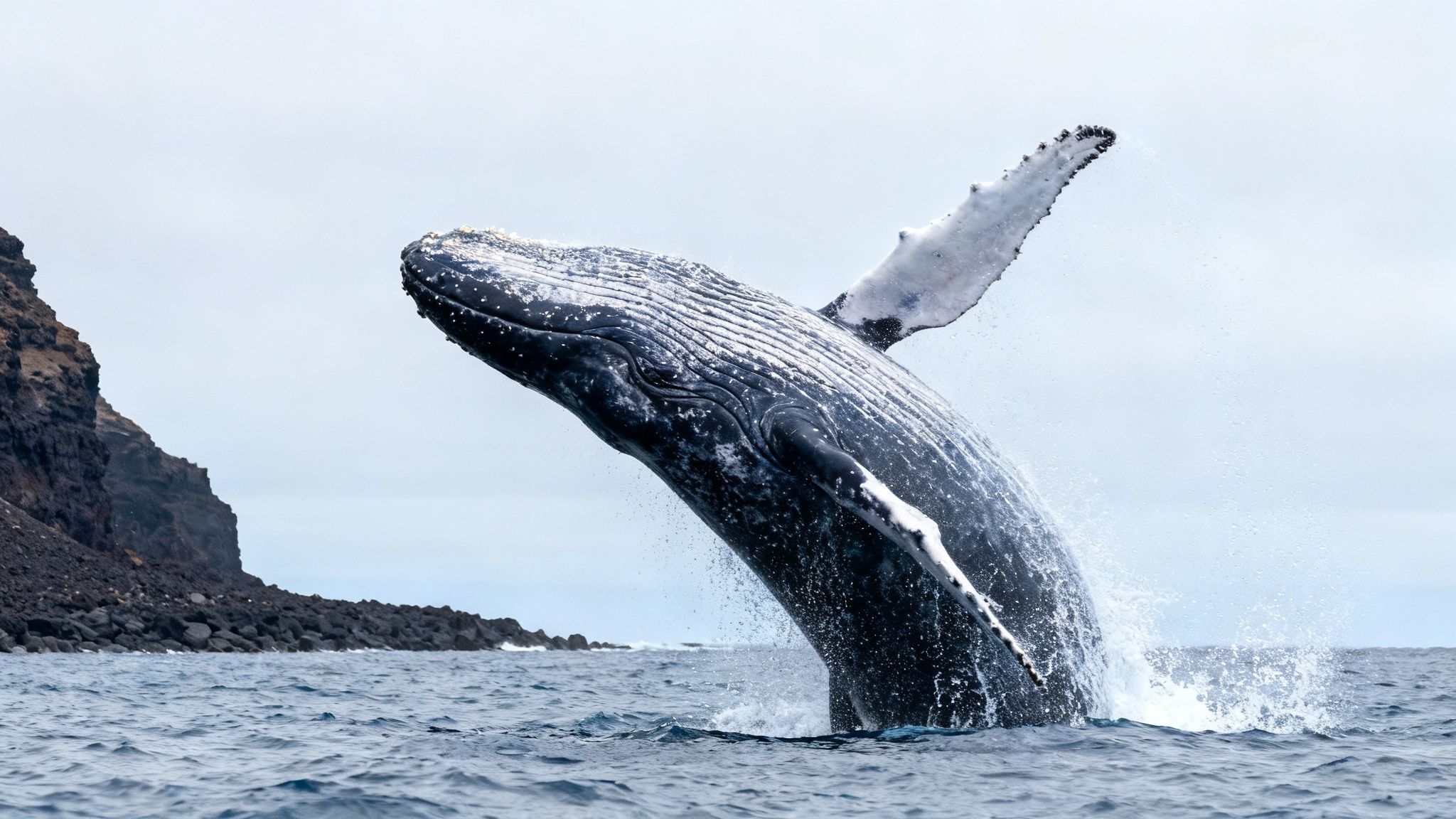
- Breach: This is the iconic move everyone hopes for. A whale launches its entire massive body out of the water and comes crashing back down. Why? Scientists think it could be a way to talk to other whales far away, shake off annoying skin parasites, or maybe just for the sheer joy of it.
- Tail Slap: You'll hear this one before you see it. A loud, powerful smack of the fluke (tail) on the water's surface. It's often a warning signal, a way to show dominance in a group of rowdy males, or another form of communication.
- Pectoral Fin Slap: A whale will roll onto its side and just repeatedly slap one of its long pectoral fins on the water. It makes a surprisingly loud noise and is another way whales "talk" to each other in a social group.
- Spy-Hop: This is a truly magical moment. A whale will rise vertically out of the water, poking its head straight up to get a look around. It's pure curiosity, and it feels like the whale is just as interested in you as you are in it.
Seeing these behaviors up close is what transforms a simple boat trip into a profound wildlife encounter. Knowing when to come is the first step, but recognizing these incredible moments is what makes the adventure stick with you forever.
Choosing Your Ideal Whale Watching Tour
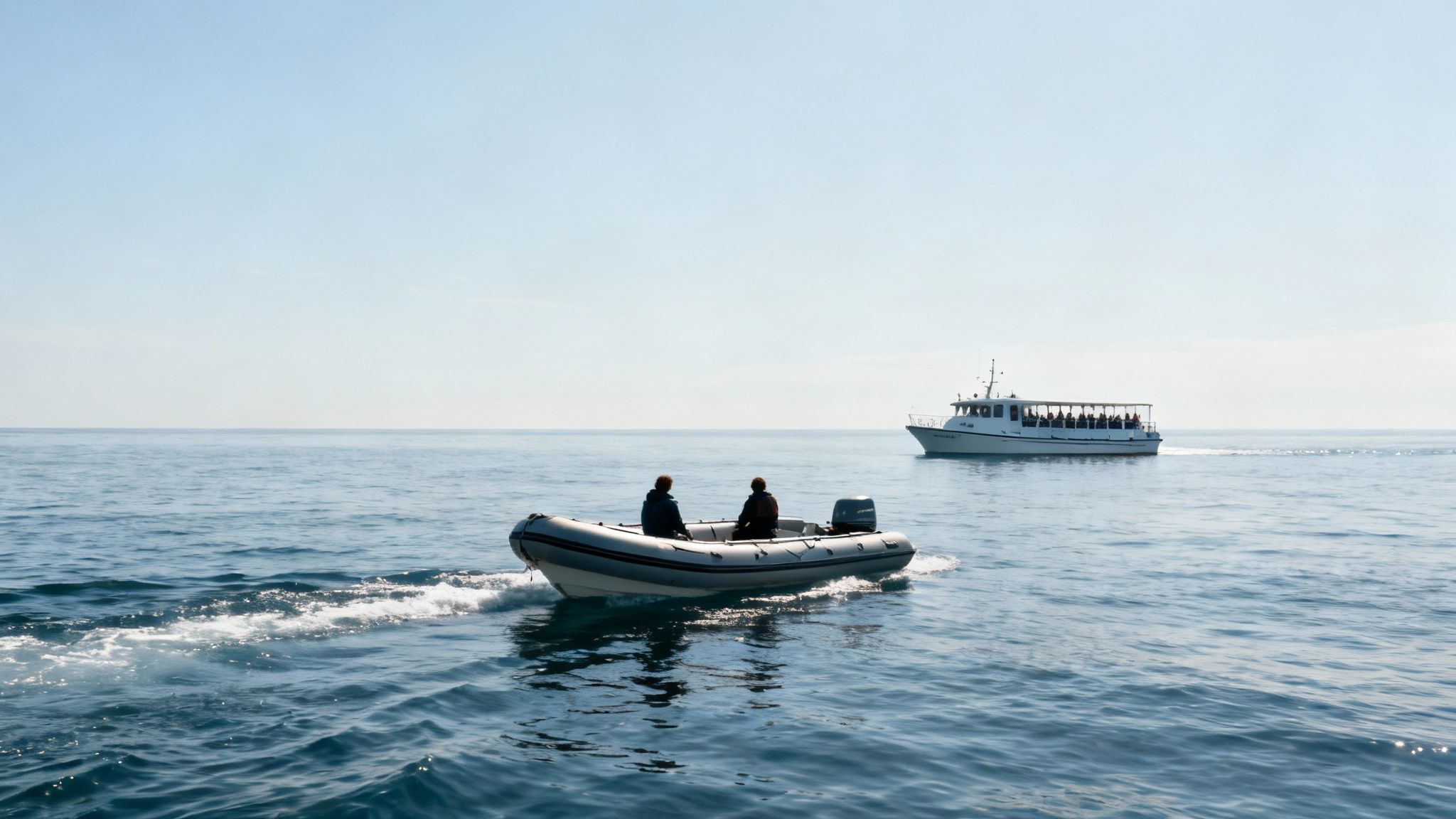
Picking the right Big Island whale watching tour really comes down to matching the boat to your vibe. Let’s be honest, they’re not all the same. The kind of vessel you choose completely shapes your day, from the photos you’ll get to the overall feel of the adventure.
You’ve got options, from big, stable catamarans to zippy zodiacs and even kayaks for the truly adventurous. Each one offers a totally different way to experience the magic of the humpbacks.
Thinking about what you want out of the day is the first step. Are you looking for a spacious deck with all the creature comforts, or do you want to be right down at water level for a more personal encounter? The answer will point you to the perfect tour for your group, budget, and sense of adventure.
Small-Group Zodiac Tours
If you're after a thrill and a more personal feel, a small-group tour on a zodiac-style boat is hard to beat. These rigid-hulled inflatable boats are quick, nimble, and sit low to the water, giving you an up-close perspective that feels like you’re part of the action.
- Pros: Being at eye-level with the ocean makes every whale sighting feel immediate and intense. With just a handful of other passengers, you get an unobstructed view and plenty of attention from the captain—no jostling for the perfect photo spot. Plus, their speed means you can cover more ground to find where the whales are most active.
- Cons: It’s a bumpier ride, and you're more exposed to sun and sea spray. They usually don't have amenities like restrooms, so they're better suited for shorter trips and travelers with a taste for adventure.
There’s a real sense of shared discovery on these trips. When a whale breaches, the collective gasp of excitement from everyone on a small boat is something you won't forget.
Large Vessel and Catamaran Tours
Big boats and catamarans are the go-to for comfort and stability. They're a fantastic choice for families, larger groups, or anyone who’d rather have a smooth ride. For those prone to seasickness, the stable platform they provide is a game-changer.
- Pros: You can almost always count on having restrooms, snacks, and shady spots to relax. The spacious, often multi-level decks give you a great elevated vantage point for spotting blows in the distance and capturing those wide, scenic shots. The ride is buttery smooth, even when the water gets a little choppy.
- Cons: With more people on board, the experience is naturally less intimate. And while the high viewpoint is great for spotting, it does put you farther from the water, which can feel less connected than being on a smaller boat.
These tours are a super reliable and comfortable way to see the whales, making them a great all-around pick. For a deeper dive into different boat styles, you can learn more about the best Kona whale tours and what sets each one apart.
Kayak Whale Watching Tours
For the adventurers out there, a kayak tour offers the most serene and personal whale encounter possible. Paddling on your own, you become part of the ocean’s soundscape, experiencing the whales without any engine noise.
- Pros: It’s an incredibly eco-friendly way to see the whales, and the silence allows you to hear their powerful breaths with stunning clarity. You get a unique, water-level view and a pretty good workout at the same time.
- Cons: This is a serious physical activity, so you need to be reasonably fit. You’re completely exposed to the elements, and you still have to abide by the federal 100-yard approach rule, which can be tricky to judge and maintain in a kayak. Sightings are also less guaranteed without the range of a motorized boat.
Choosing your tour type is like picking the right lens for a camera. A large boat gives you a stable, wide-angle view, while a small zodiac offers a dynamic, close-up shot. A kayak provides an immersive, silent film-like experience. Each captures the same incredible subject from a beautifully different perspective.
Big Island Departure Points
Where you leave from matters, too. Each side of the island has its own distinct marine environment, which can influence your whale watching experience.
- The Kona Coast: Famous for its calm, clear, and protected waters, Kona is the undisputed hub for most Big Island whale watching tours. The leeward side is shielded from the gusty trade winds, which creates glassy conditions perfect for spotting whales and enjoying the ride.
- The Kohala Coast: Just north of Kona, the resort-heavy Kohala Coast also offers fantastic whale watching. The waters are similarly calm, and whales often use the beautiful bays along this stretch of coast to rest and nurse their calves.
- Hilo: Over on the windward side, Hilo offers a wilder, more dramatic backdrop. While you can find tours here, the ocean is often much rougher and more unpredictable due to the direct hit from the trade winds, making trips less frequent.
What to Expect During Your Tour
The tour really begins the moment you leave the Kona coast. There's a special kind of energy in the salty air—a mix of excitement and anticipation. As the boat cuts across the deep blue water, everyone’s eyes are glued to the horizon, scanning for that first giveaway sign of a whale.
And then it happens.
A crew member points, and you see it: a misty puff of vapor hanging in the distance. That first spout is an electric moment, sending a buzz through everyone on board. It’s the signal that your Big island whale watching tour has officially kicked off.
As your captain skillfully and respectfully gets a bit closer, the sheer size of these animals sinks in. Honestly, no picture or video can prepare you for the jaw-dropping sight of a 40-foot, 40-ton humpback whale launching its entire body out of the water. It’s a stunning display of raw power and grace that feels like it's from another world.
The Onboard Experience
A great tour is so much more than just spotting whales; it's about getting to know them. Your captain and naturalist guides are the storytellers here. They’re experts in marine biology and the specific quirks of humpback whales, and their passion is totally infectious. They'll point out the little things and explain what you're seeing.
You'll learn what a certain tail slap might communicate, or why a mother and her calf are swimming so close together. This running commentary turns a simple boat ride into a fascinating, educational adventure, adding so much more meaning to every sighting.
Beyond the expert play-by-play, most tours have amenities to keep you comfortable:
- Snacks and Beverages: You'll usually find light refreshments to keep your energy up.
- Shaded Seating: It’s nice to have a spot to get out of the direct Hawaiian sun.
- Restrooms: Larger boats typically have an onboard "head" for your convenience.
One of the coolest tools you'll find on a well-equipped tour is the hydrophone.
During quiet moments, when the captain cuts the engines, the crew might lower a hydrophone into the water. You'll get to listen through headphones to the complex, haunting songs of male humpback whales echoing up from the depths. It's a completely unforgettable acoustic experience that connects you to their world in a way you can't get from just watching.
Setting Realistic Expectations
While the Kona coast offers some of the most reliable whale watching anywhere, it's important to remember you're a guest in a wild habitat. Patience is a virtue out here. Whales are on their own time, and there can definitely be quiet stretches between the action.
Sea conditions can also be a mixed bag. Kona is famous for its calm waters, but the ocean always has the final say. Your crew is incredible at navigating any conditions safely, but it's smart to be ready for some potential swells. No matter what, the journey itself, with amazing views of the volcanic coastline, is a huge part of the experience.
Every single trip is different. No two tours are ever the same because the whales do what they want, when they want. While sightings are very likely during peak season, they’re never guaranteed. That’s part of the thrill—the unknown, the possibility of witnessing a spectacular moment that is entirely unique to your tour. For more in-depth info, feel free to check out our complete guide to Big Island whale watching. In the end, it’s the combination of expert guides, the potential for incredible encounters, and the simple beauty of being on the water that makes for an adventure you won't soon forget.
Practicing Responsible Whale Watching
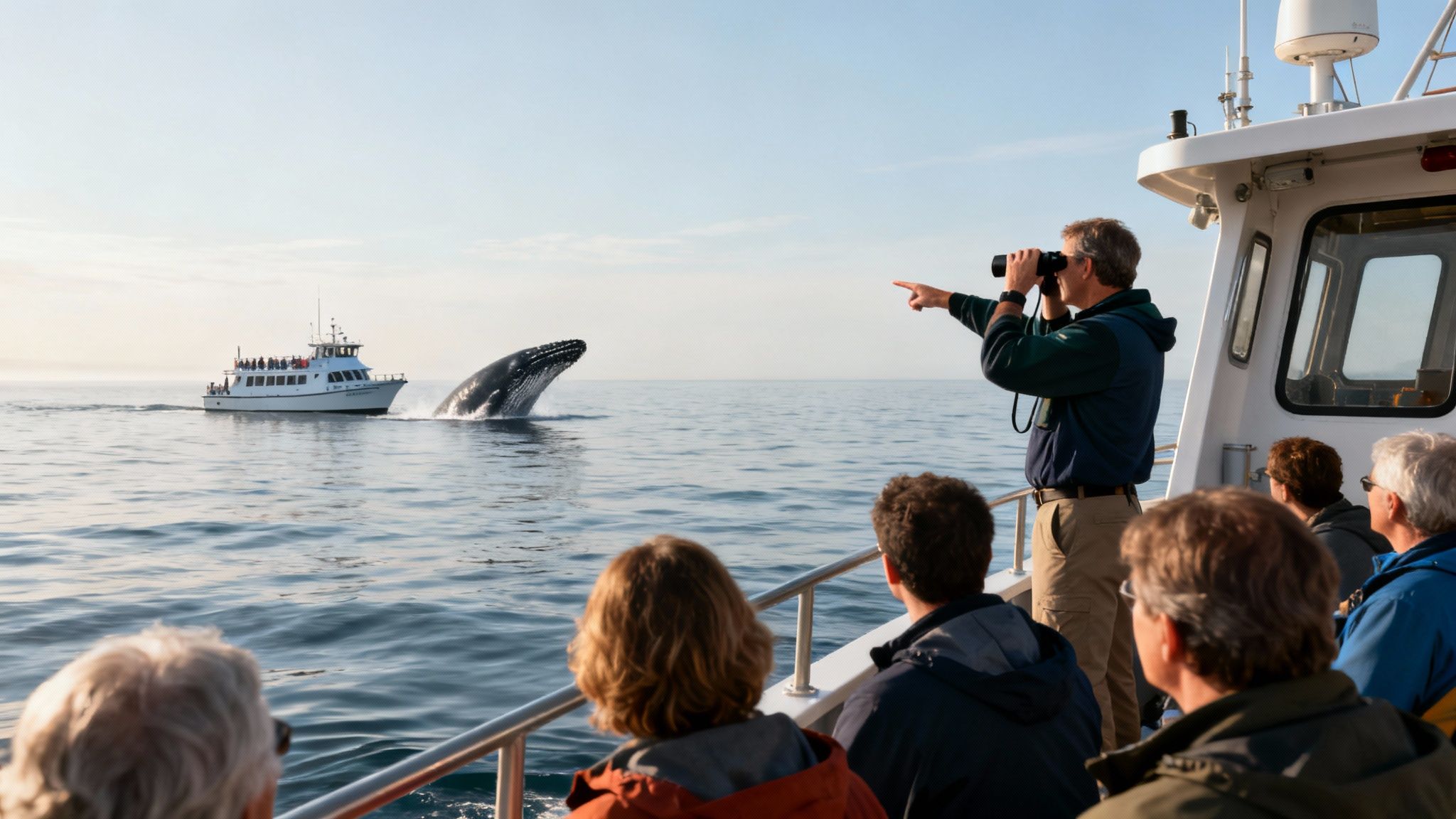
There's nothing quite like the moment a 40-ton humpback whale launches itself out of the ocean. It’s a memory that sticks with you forever. But seeing these incredible animals up close comes with a huge responsibility. They've journeyed thousands of miles to find safety in Hawaii's warm waters, here for the critical business of mating and raising their calves.
Human disturbances, even unintentional ones, can cause serious stress, especially for a new mom trying to keep her baby safe.
That’s exactly why we have strict federal and state laws protecting them. When you choose an ethical Big Island whale watching tour, you're not just a spectator; you become part of the conservation effort.
Following the Law and Showing Respect
If you remember one thing, make it this: distance is everything. All vessels—from big tour boats to kayaks and paddleboards—are legally required to stay at least 100 yards away from humpback whales.
Think of that 100-yard buffer as the whales' legally required personal space bubble. It's not just a friendly suggestion. This distance gives them the freedom to rest, nurse, and just be whales without feeling crowded or threatened by our presence. Respecting that space is the absolute foundation of responsible whale watching.
Breaking this rule isn't just illegal; it can disrupt the very behaviors the whales came here to perform. This is why choosing a reputable, professional tour operator is so important.
The Role of Eco-Conscious Tour Operators
This is where a professional crew, like the team at Kona Snorkel Trips, truly shines. You’re not just booking a ride on a boat; you’re trusting a team to get you those amazing views while always, always putting the whales' well-being first.
Here’s how a great operator makes a difference:
- Expert Navigation: Experienced captains know how to position the boat for fantastic photos without ever breaking that 100-yard rule. They understand how to move with the whales, paralleling their path from a safe distance instead of chasing them from behind or cutting them off.
- A Focus on Education: The best guides don't just point and shout "Whale!" They turn your trip into a real learning experience, explaining the behaviors you're seeing and giving you a deeper appreciation for these animals.
- Guardians of the Ocean: Ethical companies do more than just follow the rules. They actively protect the ocean, minimize their environmental impact, and often help conservation efforts by reporting things like entanglements or unusual activity to the authorities.
Protecting a National Marine Sanctuary
Much of the water you'll be in is part of the Hawaiian Islands Humpback Whale National Marine Sanctuary. This isn't just any patch of ocean; it's a federally protected area designed specifically to keep humpback whales and their habitat safe.
By choosing an eco-conscious tour, you're directly supporting the sanctuary's mission. Your choice helps ensure the magic of whale season on the Big Island remains a spectacular—and safe—event for generations to come. To take it a step further, you can explore sustainable transportation solutions for eco-friendly travel to minimize your impact during your entire trip. When you make these informed choices, you become a true steward of these magnificent creatures.
What to Bring on Your Whale Watching Trip
A little bit of prep work can be the difference between a good whale watching tour and a truly unforgettable one. Thinking ahead about what to pack means you'll be comfortable, protected from the elements, and ready to capture every jaw-dropping moment. The idea is to show up relaxed and ready for an adventure on the water.
Your comfort is everything out there. The Hawaiian sun is no joke, and when it reflects off the ocean, it can be surprisingly intense, even on a cloudy day. At the same time, a cool breeze can pick up once you’re away from shore, so being ready for a little bit of everything is the smart move.
Your Essential Packing Checklist
To really soak in your Big Island whale watching tour, having the right gear is key. A well-packed bag lets you focus on the whales without getting distracted by a sunburn or a missed photo op.
Here's a simple checklist to get you started:
- Layers are Your Friend: Even on a warm Kona day, the wind and sea spray can make it feel surprisingly cool on the boat. A light jacket or windbreaker to toss on over your t-shirt is a must.
- Reef-Safe Sunscreen: Looking after Hawaii's fragile marine ecosystem is a responsibility we all share. Make sure you're using a mineral-based, reef-safe sunscreen to protect both your skin and our oceans.
- Polarized Sunglasses: I can't stress this enough—this is a non-negotiable item. Polarized lenses are specifically made to cut the blinding glare bouncing off the water. This makes it so much easier to spot whale spouts and other surface activity you’d completely miss otherwise.
- Camera with a Zoom Lens: Your phone is great, but a real camera with a decent zoom will help you get those incredible, detailed photos of the whales from the legally required, respectful distance of 100 yards.
- A Good Hat: A wide-brimmed hat or a visor will keep the sun off your face and neck, making your time on the water far more comfortable.
Tips for a Smooth Day on the Water
Beyond the packing list, a couple of other things can help guarantee a perfect day. If you're even a little worried about motion sickness, it's always best to be proactive. Kona's waters are known for being calm, but it's always better to be safe than sorry. For some great tips, check out our guide on how to prevent seasickness before you head out.
A reusable water bottle is also a fantastic idea. Staying hydrated is crucial under the sun, and bringing your own helps cut down on single-use plastic, which fits right in with the eco-friendly spirit of responsible whale watching.
Finally, don't forget to bring your sense of wonder. The most important thing is just being present and enjoying the moment. Be ready for the thrill of the unexpected—that sudden breach, the gentle glide of a mother and calf, or the haunting melody of a whale song coming through a hydrophone. With a little planning, you’ll be perfectly prepared for all of it.
Common Questions About Big Island Whale Watching
Even with all the planning, it's totally normal to have a few questions pop up before you book your adventure. We get it. This is your chance to get quick, clear answers to the things people ask us most. We want you to feel 100% confident and excited when you book your tour.
Think of this as the final piece of the puzzle, just filling in those last few details so you're ready for an absolutely incredible day on the water.
Is a Whale Sighting Guaranteed on a Tour?
This is the big one, and the honest answer is that we're dealing with wild animals in a massive ocean. Because of that, no one can ever guarantee a whale sighting with 100% certainty. Humpbacks are on their own schedule, not ours.
That said, the odds are hugely in your favor. During peak season, our experienced crews have an incredibly high success rate. It's common to see multiple whales and a whole range of behaviors on a single trip. Most reputable companies, including us, have a "rain check" policy: if you don't see any whales, you can join another tour for free. That's how confident we are in finding them.
What Is the Best Time of Day for Whale Watching?
Fantastic question, and the answer is pretty flexible: whales are active all day long! The "best" time really boils down to what you prefer for ocean conditions and lighting.
- Morning Tours: Usually, the morning brings the calmest, glassiest seas. This means a smoother ride—perfect if you're worried about motion sickness—and the soft light is a photographer's dream.
- Afternoon Tours: While the wind can pick up a bit in the afternoon, this can also stir up more surface activity. You might just catch some of the more energetic behaviors as the day winds down.
Honestly, your chances of a mind-blowing encounter are excellent whether you head out in the morning or the afternoon, especially during the peak months of January, February, and March.
Are Children Allowed on Whale Watching Tours?
Absolutely! Whale watching is a phenomenal experience for the whole family. Seeing these gentle giants up close can spark a lifelong love for the ocean in kids. It’s one of those memories they'll talk about for years.
Most tour operators are super family-friendly and welcome kids on board. It’s always smart to double-check for specific age restrictions, especially on smaller, more adventurous boats like zodiacs or kayaks. Safety is always the top priority, and you'll find that reputable companies have lifeguard-certified guides and all the right gear to make sure it's a safe and fun trip for everyone.
Can I Go Whale Watching from the Shore?
You sure can, and it's always a thrill to spot a spout from land! The high bluffs along the Kohala Coast, especially around the Puʻukoholā Heiau National Historic Site, are famous spots for shoreline viewing. All you really need is a decent pair of binoculars and a little patience.
But a boat tour offers a completely different world.
Getting out on the water doesn't just get you closer to the action (while always respecting the mandatory 100-yard legal distance); it surrounds you with it. You'll hear amazing insights from a naturalist guide, listen to whale songs through a hydrophone, and truly grasp their immense scale in a way that's just impossible from a clifftop miles away.
While watching from shore is a great free activity, a dedicated tour delivers a richer, more engaging, and far more memorable encounter.
Ready to witness the magic of the humpback migration for yourself? Kona Snorkel Trips offers intimate, small-group whale watching tours that get you closer to the action while prioritizing the safety and respect these magnificent creatures deserve. Book your unforgettable whale watching adventure today!