
Your Guide to Big Island Whale Watching Tours
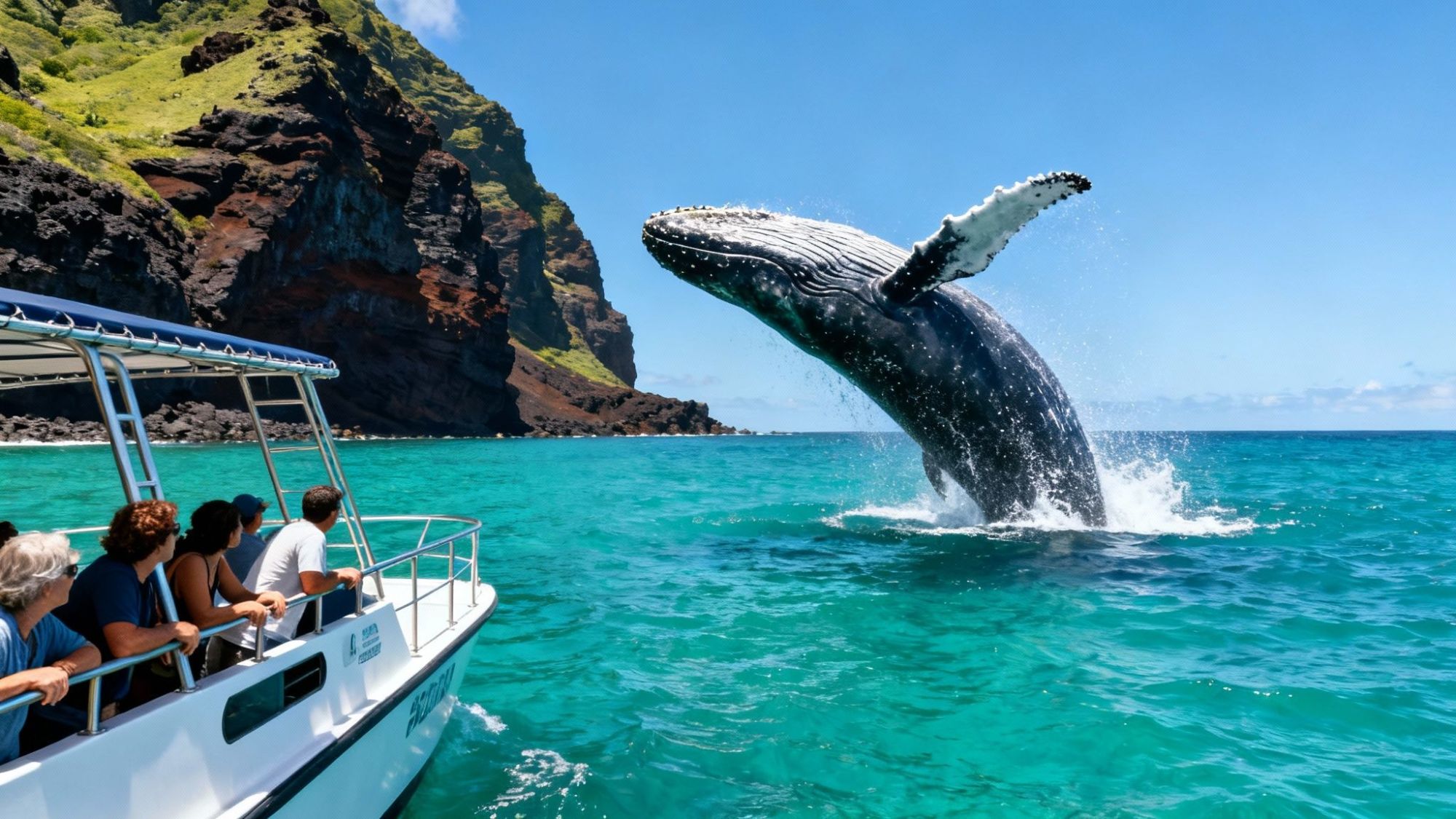
There’s nothing quite like seeing a 40-ton humpback whale explode out of the turquoise Pacific. It’s a moment that sticks with you, one that truly defines any trip to Hawaii. Here on the Big Island, our whale watching tours get you a front-row seat to this incredible show, putting you right in the middle of the annual humpback migration. These aren't just boat rides; they're safe, respectful, and totally unforgettable encounters with some of the most majestic creatures on Earth.
Your Guide to an Unforgettable Whale Season
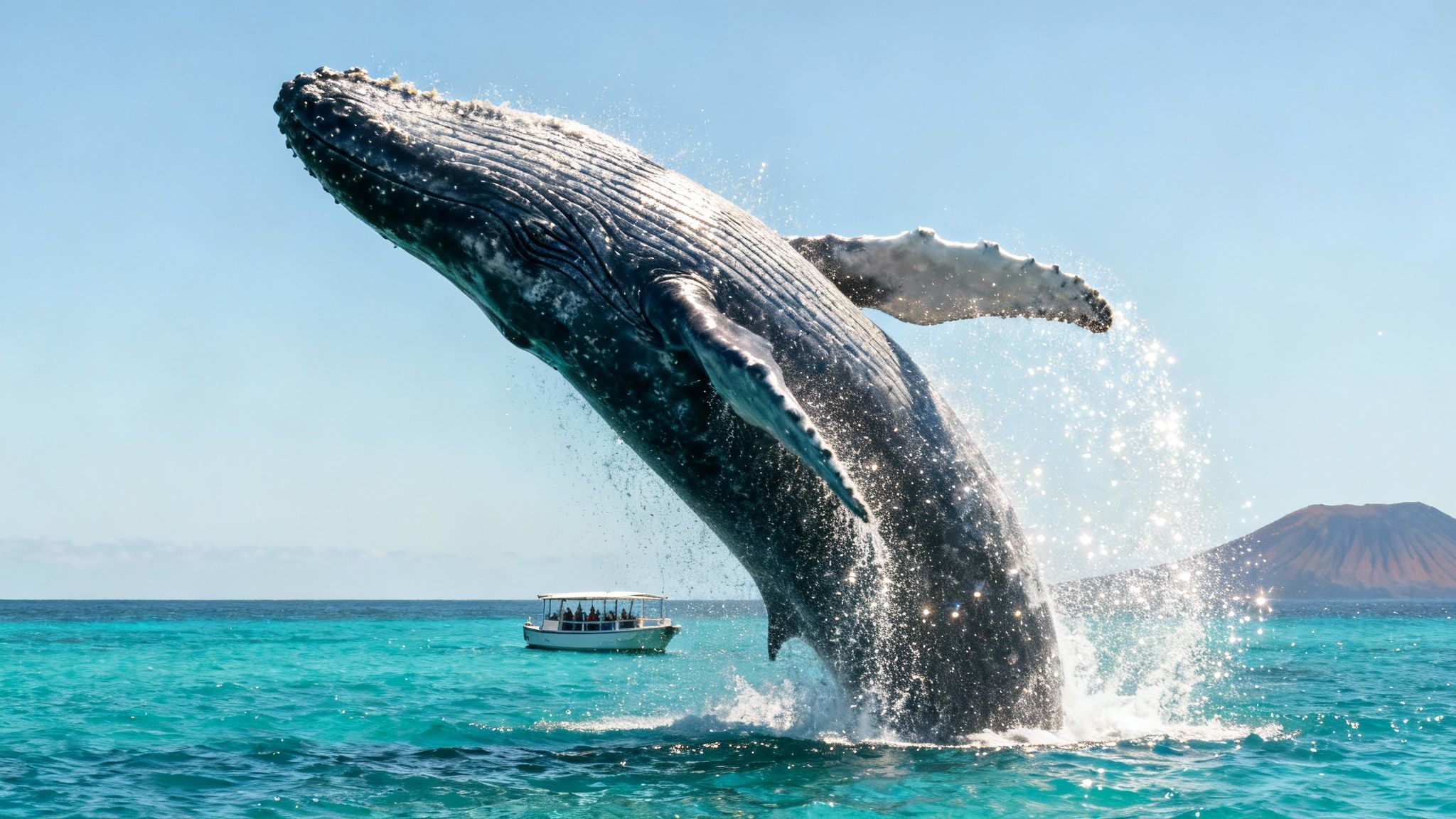
Just imagine it: the raw power and surprising grace of a humpback launching its entire body from the water, hanging for a split second between sea and sky. That's the magic waiting for you during the Big Island's whale season. This guide is your ticket to seeing it for yourself. We'll break down why thousands of humpbacks choose Hawaii’s warm, protected waters, plus show you when to come, where to look, and how to pick the perfect tour.
To really nail this experience, you have to go with local experts you can trust. As the top rated & most reviewed snorkel company in Hawaii, we at Kona Snorkel Trips live for creating these kinds of memorable, responsible wildlife encounters. Don't just take our word for it—see what our guests have to say.
Why Whales Choose the Big Island
Every year, these magnificent animals make an epic journey, traveling an incredible 3,000 miles from their chilly feeding grounds up in Alaska. They do it all for one reason: to reach the warm, sheltered waters surrounding the Hawaiian Islands.
Think of the Big Island as a massive, safe, and warm nursery for humpbacks. Our waters are perfect for the most important moments in their lives:
- Mating and Breeding: Males show up ready to compete for mates, often putting on spectacular shows of strength in what we call "competitive pods."
- Birthing and Nursing: Pregnant females look for calm bays to give birth. That warm water is absolutely critical for newborn calves, who start out with very little body fat to keep them warm.
This annual pilgrimage makes the Big Island one of the best whale watching spots on the entire planet. Planning your trip around it is a must-do, but it's just one of many amazing things to experience here. For more ideas, check out our guide to the best things to do on the Big Island.
When you're out on the water with us, you're not just a tourist on a boat. You're witnessing a vital chapter in the life of one of the planet's most incredible animals.
Understanding the Humpback Migration Season
Every year, one of the most incredible events in the natural world unfolds right off the Big Island’s shores. Thousands of humpback whales make a monumental journey, traveling over 3,000 miles from their chilly feeding grounds in Alaska all the way to the warm, welcoming waters of Hawaii. It’s an epic migration driven by the most powerful instincts imaginable.
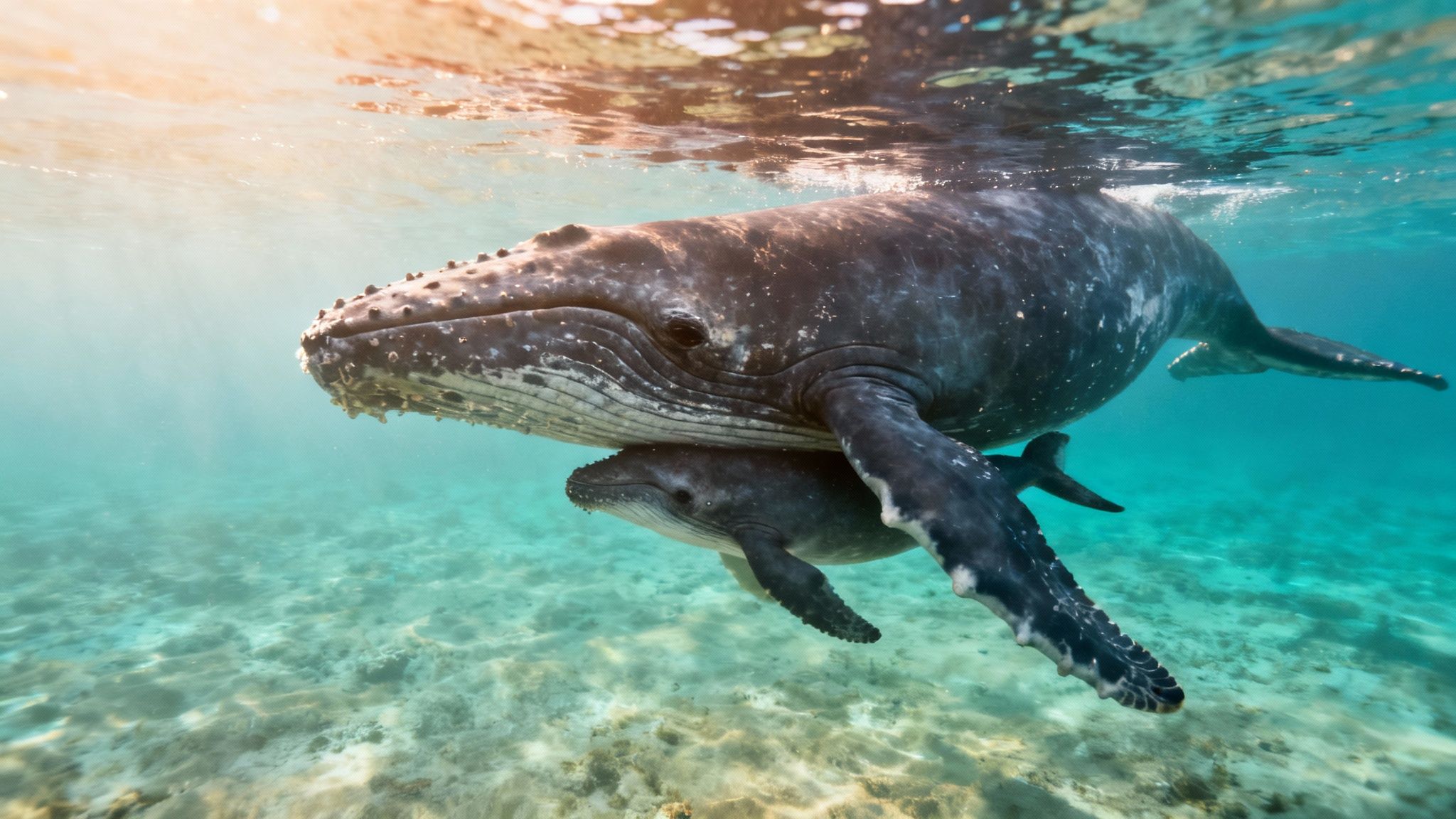
Can you imagine traveling that far without a single meal? That’s exactly what these gentle giants do. They rely entirely on their built-up fat reserves for months, undertaking this grueling trip for one vital purpose: to reach a safe haven where they can bring up the next generation.
Hawaii: The Ultimate Ocean Nursery
So, why Hawaii? The answer is simple: warmth and safety. The waters off the Big Island, especially along the Kona and Kohala coasts, are the perfect sanctuary for the most critical moments in a humpback's life.
Think of it as the ultimate tropical nursery. The conditions here are ideal for a few key activities:
- Mating and Competition: The calm waters become a grand stage for males to show off their power. They form "competitive pods" and put on spectacular displays to win over the females.
- Birthing: Pregnant females seek out these sheltered bays to give birth. Newborn calves have very little body fat, so the warm 80°F water is absolutely essential for their survival.
- Nursing and Rearing: In these protected waters, mothers can nurse their young, helping them build the strength and blubber they'll need for their first tough journey back north to Alaska.
This incredible life cycle is exactly what makes big island whale watching tours so special. You aren't just looking at animals from a boat; you're witnessing a crucial chapter in their lives unfold. For a deeper dive into the timing, check out our guide to the Big Island whale watching season.
Timing Your Trip for Peak Action
Knowing the seasonal timeline is the key to planning an unforgettable trip. While the most dedicated whale watchers might spot the first arrivals as early as October, the population really starts to build from there.
The real show, however, kicks off during the peak season from January through March. This is when the waters are absolutely teeming with activity, dramatically boosting your chances of seeing the most awe-inspiring behaviors.
To give you a better idea of what to expect and when, here’s a quick breakdown of the season.
Big Island Whale Watching Season at a Glance
| Month | Whale Activity Level | Typical Sightings |
|---|---|---|
| October | Very Low | The first few scouts arrive. Sightings are rare but exciting. |
| November | Low | Numbers start to increase. You might see a few spouts on the horizon. |
| December | Moderate | Pods are consistently present. Activity picks up near the holidays. |
| January | Peak | High density of whales. Lots of surface action like breaches and tail slaps. |
| February | Peak | The busiest month. Prime time for seeing competitive pods and calves. |
| March | Peak to High | Still tons of activity, especially with mothers and newborn calves. |
| April | Moderate to Low | Whales begin their long journey back to Alaska. Sightings become less frequent. |
| May | Very Low | The last of the whales depart. The season comes to a close. |
As you can see, planning your visit during that prime January-to-March window puts you right in the middle of the action.
The sheer density of whales during these months is astounding. It’s the difference between hoping to see a whale and feeling like you’re in a dynamic theater of breaches, spouts, and tail slaps. Choosing a tour during this peak season gives you the best possible shot at a truly memorable encounter.
Where to Find the Best Whale Sightings
When it comes to spotting humpback whales, not all coastlines are created equal. You might catch a glimpse of these gentle giants from various points around the island, but certain areas offer front-row seats to the main event. Knowing where to go can be the difference between a hopeful glance at the horizon and a breathtaking, unforgettable encounter.
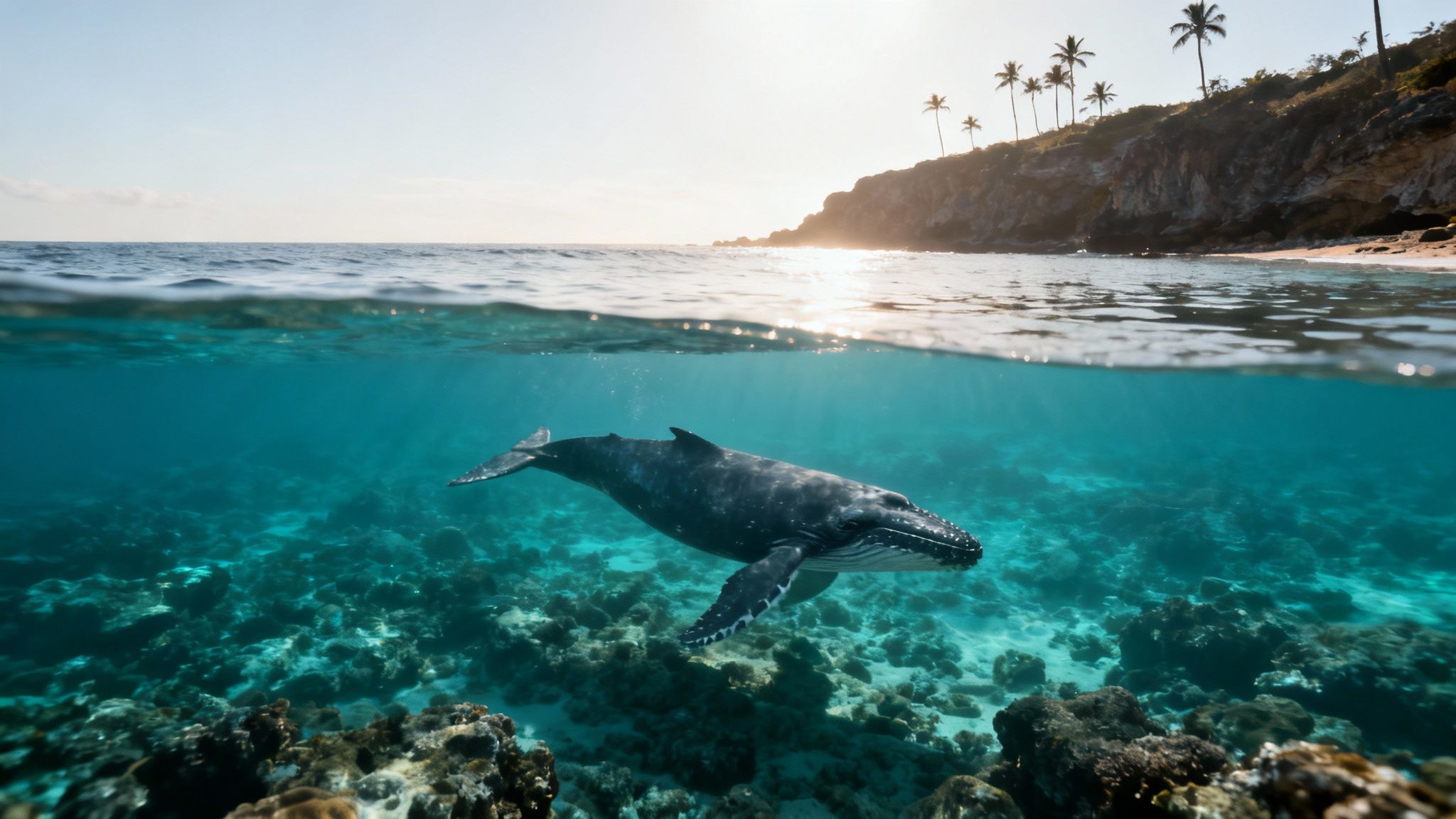
The Big Island’s unique geography creates specific zones that are magnets for migrating whales, turning some coastlines into true hotspots. For anyone planning big island whale watching tours, understanding these locations is the first step toward an incredible adventure.
The Kohala Coast: A True Humpback Superhighway
The undisputed champion of whale watching on the Big Island is the Kohala Coast. Stretching along the northwestern shore, this sun-drenched region is affectionately known as the "humpback superhighway," and for very good reason. The sheer density of whale sightings here is simply unmatched anywhere else on the island.
So, what makes this area so special? It all comes down to its unique underwater geography. The seafloor off the Kohala Coast features broad, shallow shelves that create a vast, protected underwater plateau—the perfect environment for mother whales and their newborn calves.
This calm, sheltered area provides a safe space for calves to nurse, practice breathing, and build up the strength they'll need for their first epic migration back to Alaska. It's a natural nursery, far from the deep ocean predators and rough currents.
Because of this, the Kohala Coast becomes the primary gathering place for the most vulnerable and fascinating members of the whale population. This concentration of mothers and calves leads to more frequent and predictable sightings, which is exactly what you want on a tour.
The evidence is overwhelming. Data gathered from over two decades of Sanctuary Ocean Counts consistently shows the Kohala region with sighting frequencies two to three times higher than other parts of the Big Island. Check out the peak sighting data for the Big Island and you'll see why this coast is legendary.
The Calm Waters of the Kona Coast
While Kohala is the superhighway, the Kona Coast to the south offers its own distinct advantages, especially for morning tours. Shielded from the powerful trade winds by the massive volcanoes of Mauna Loa and Hualālai, the waters off Kona are famously calm and clear, particularly before noon.
These glass-like conditions make spotting a distant spout or the dark silhouette of a fluke so much easier. The calm sea surface acts like a perfect canvas, highlighting any disturbance a whale makes. This is ideal for tour boats, allowing for smooth, comfortable journeys as you scan the horizon for activity.
The Kona Coast is where many big island whale watching tours depart from, offering convenient access to prime viewing zones. While the whale density might be a touch less than Kohala's peak, the superior water clarity and calmness provide an excellent and reliable alternative for incredible sightings.
Top Shoreline Viewing Spots
You don't always need a boat to experience the magic. If you prefer to keep your feet on solid ground, the Big Island has several outstanding shoreline viewing spots. The key to successful land-based whale watching is elevation—the higher up you are, the more of the ocean you can scan.
Here are a few of the best spots, all conveniently located along the prime Kohala Coast:
- Puʻukoholā Heiau National Historic Site: The name itself literally translates to "hill of the whale," a clear nod to its legacy as a premier viewing spot. The elevated visitor center area provides sweeping, panoramic views over the ocean where whales are frequently seen.
- Lapakahi State Historical Park: This park offers another fantastic high-ground perspective. The rugged, beautiful coastline here is a great place to set up with binoculars and patiently watch for spouts and breaches on the horizon.
- Kapaʻa Beach Park: Located near Lapakahi, this park combines excellent viewing opportunities with the added comfort of shaded picnic pavilions. It’s a perfect spot to relax for a few hours and watch the whales pass by.
Choosing Your Ideal Whale Watching Tour
Picking the right whale watching tour is a bit like choosing the right vehicle for a safari; the boat you're on completely shapes the experience. On the Big Island, you've got a few different ways to go, and each one offers a unique angle for witnessing the sheer power of humpback whales. The best adventure for you really just boils down to what you're after: a smooth, stable ride with all the comforts, or a nimble, up-close thrill.
The first big decision you'll make is between a large catamaran or a smaller, faster boat. There’s really no "best" choice here—only what’s best for you and your crew. Let's break down what makes each one special so you can find your perfect match.
Large Catamarans: The Stable and Spacious Choice
Think of a large catamaran as your floating viewing platform. These big, dual-hulled boats are the gold standard for stability, which makes them a fantastic pick for anyone who gets a little seasick or for families with young kids.
Their design lets them slice through the water with very little rocking, so you get a smooth and comfortable trip. That stability is also a huge bonus for photographers trying to nail that perfect breach shot without wobbling all over the place.
Here’s what you can generally expect on a catamaran tour:
- Plenty of Space: With wide-open decks, you have lots of room to walk around, find a clear view, or just kick back in a shady spot.
- Onboard Comforts: Most big boats have restrooms and will offer snacks and drinks, which just makes the whole experience more comfortable.
- A Higher Viewpoint: Being higher off the water gives you a sweeping, panoramic view, making it way easier to spot whale spouts and splashes in the distance.
These features make catamarans a great, family-friendly choice for big island whale watching tours, where comfort and a laid-back vibe are the top priorities.
Small Rafts and Zodiacs: The Intimate Adventure
If catamarans are the stable viewing platforms, then the smaller zodiac-style rafts are the nimble explorers. These boats are built for speed and getting around, meaning they can cover a lot more ocean quickly to find where the action is.
The biggest reason to choose a smaller boat is the incredibly close perspective it gives you. You're right down at the water level, which creates this powerful, eye-to-eye feeling when a 40-ton whale comes up for air nearby. You feel the mist from the spout and hear every breath in a way you just can't on a bigger vessel.
A smaller raft might be for you if you're looking for:
- A Thrilling Ride: The speed and zippiness of these boats make the journey itself part of the fun.
- An Eye-Level View: Being so close to the water makes you feel like you're right there in the whales' world.
- Smaller Groups: These trips naturally have fewer people, so you get a more personal and less crowded experience.
They might not have bathrooms and can be a bit of a bumpier ride, but for the more adventurous soul, they deliver an unforgettable, up-close encounter. If you're still on the fence, our in-depth guide to Kona whale tours can help you weigh the options.
Combo Tours: Maximize Your Ocean Adventure
Why pick between world-class whale watching and world-class snorkeling when you can have both? The Big Island’s ocean life is incredibly rich, and combo tours are designed to give you the full picture.
These trips, often lasting a full day, pair a thrilling search for whales with a stop at a top-tier snorkel spot like the pristine Kealakekua Bay. It's an amazing value, letting you knock out two of the island's must-do activities in one awesome trip. You could spend your morning watching humpbacks launch themselves out of the water and the afternoon swimming over vibrant coral reefs with schools of colorful fish.
A combo tour is the ultimate ocean experience. It recognizes that the magic of Hawaii’s waters isn’t just one thing—it’s the entire, interconnected ecosystem, from the smallest tropical fish to the largest migrating whale.
Choosing a great tour operator is just as crucial as picking the right boat. For anyone starting their search, this list of the Top 5 Whale Watching Kona Big Island Tours is a fantastic resource. It’s a great way to find a respected, highly-rated company that fits the kind of adventure you're dreaming of.
What to Expect on Your Whale Adventure
That feeling of pure anticipation kicks in the moment your boat pulls away from the harbor. The stunning Kona or Kohala coastline shrinks behind you, and every single person on board has the same mission: scan the deep blue horizon for that first telltale sign of life.
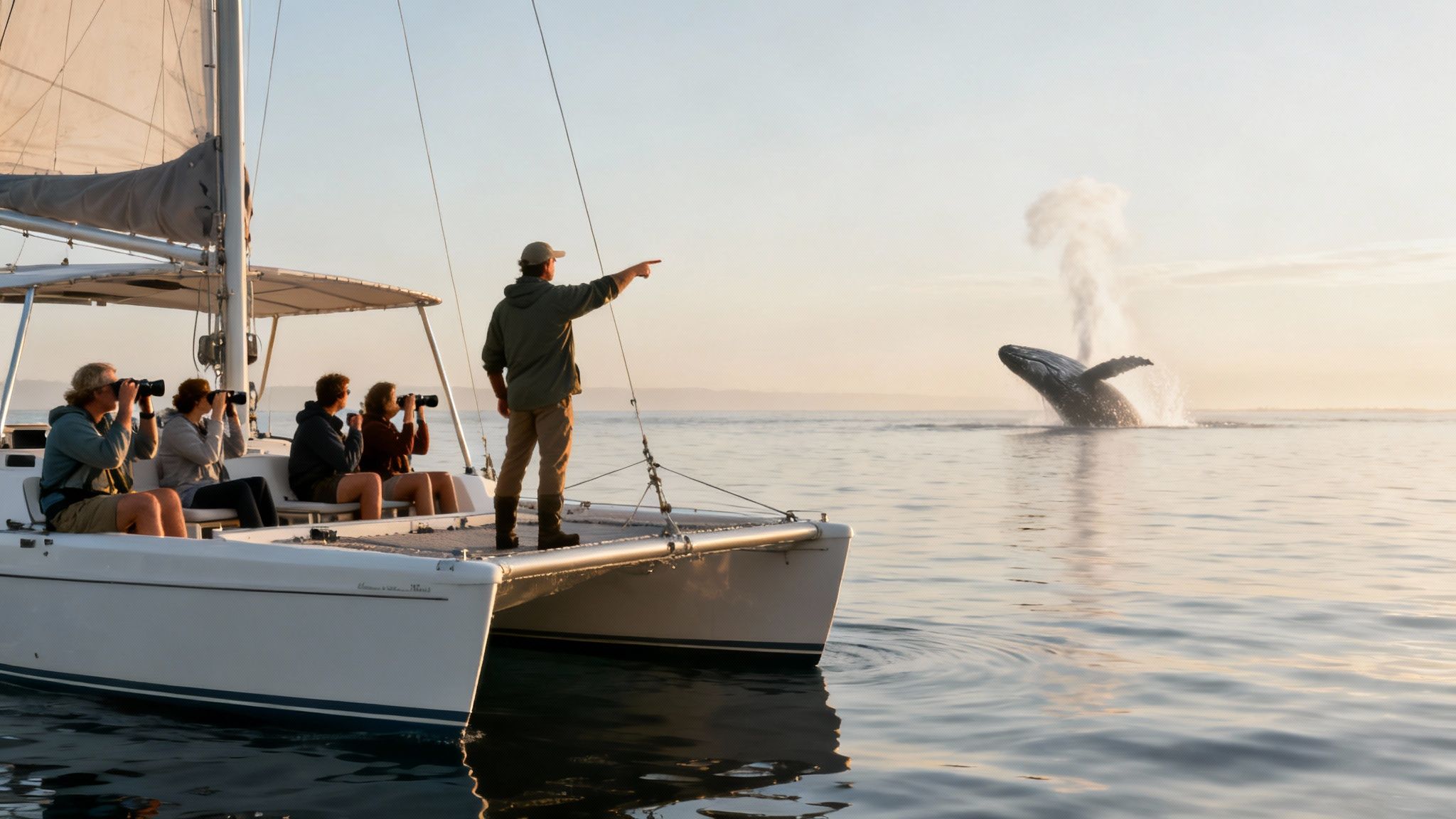
Then it happens. A collective gasp, a few pointed fingers, and you see it—a misty puff of vapor hanging for just a second against the sky. It's the "blow," the spout of a humpback, and it's the first real sign your big island whale watching tour is about to get magical.
Your captain will skillfully and respectfully slow the boat down, and that's when the sheer scale of these animals really hits you. You can see pictures, you can watch documentaries, but absolutely nothing prepares you for the sight of a 40-foot, 40-ton animal surfacing right there in the wild. It’s a powerful, humbling moment that connects you right to the raw energy of the ocean.
Learning the Language of Whales
One of the coolest parts of the whole experience is learning to read what the whales are actually doing. Every behavior you see is a form of communication or has a specific purpose in their world. Your naturalist guide will bring it all to life, but here are some of the incredible moves you might witness:
- The Breach: This is the one everyone dreams of seeing—that iconic, full-body leap straight out of the water. Scientists think it could be anything from long-distance communication and shaking off parasites to pure, unadulterated joy.
- The Tail Slap: A loud, powerful smack of the whale’s fluke (its tail) on the water's surface. This dramatic move can be a warning to other whales or just a way to announce their presence during social time.
- The Pectoral Fin Slap: You'll often see whales roll onto their sides and slap their long pectoral fins on the water again and again. It's another way they communicate, especially when a few whales are hanging out together.
- The Spy-Hop: A serious crowd-pleaser. This is when a whale pokes its head straight up out of the water to get a look around. It honestly feels like they're just as curious about you as you are about them.
Once you understand these behaviors, the whole experience deepens. It’s no longer just a visual spectacle; it’s an amazing glimpse into the complex social lives of these giants.
Your Guide and Respectful Viewing
Think of your tour guide as more than just a captain—they're your ocean interpreter. These seasoned naturalists know the local whale activity inside and out and can often predict where a whale might pop up next. They'll share fascinating insights into whale biology, migration routes, and the conservation efforts that are so critical to protecting them.
Most importantly, every reputable big island whale watching tour operates under strict federal and state laws. The number one rule? Maintain a minimum distance of 100 yards from humpback whales at all times.
This respectful buffer zone is non-negotiable. It ensures our presence doesn't stress the whales or change their natural behavior—especially for mothers with newborn calves who have traveled thousands of miles to these safe, warm waters.
By choosing a tour that puts this ethical approach first, you're doing more than just watching whales; you're actively participating in their conservation. The best time to see them is often in the morning. For example, during the peak months of January and February along the Kohala Coast, morning tours have a 50% better chance of sightings than noon trips, making it the perfect time to spot those spouts and breaches in Kona's calm waters. You can learn more about the best times for whale sightings on the Big Island. Your adventure isn’t just about what you see, but how you see it: responsibly, and with a whole lot of respect.
Your Essential Tour Preparation Checklist
A little bit of prep work goes a long way in making sure your day out on the water is comfortable, safe, and totally unforgettable. Getting ready for one of the best Big Island whale watching tours is easy, but grabbing a few key items can make all the difference between a good day and a great one.
Think of dressing for a Hawaiian ocean adventure as an exercise in versatility. That Kona sun might feel amazing at the harbor, but once the boat picks up speed, the ocean breeze can bring a surprising chill with it.
What to Wear and What to Pack
The absolute best approach? Dress in layers. Start with a t-shirt or tank top, but be sure to bring a light jacket, windbreaker, or a long-sleeved shirt to toss on over it. This way, you can adapt on the fly to changing conditions and stay perfectly comfortable whether the sun is beaming or the wind kicks up.
Here’s a quick list of must-haves you won’t want to leave behind:
- Polarized Sunglasses: Seriously, don't leave these at home. They slice right through the harsh glare on the water, making it so much easier to spot a distant spout or the dark silhouette of a whale just under the surface.
- Reef-Safe Sunscreen: Protect your skin and our fragile coral reefs at the same time. Hawaii law bans sunscreens with oxybenzone and octinoxate, so make sure you've got a mineral-based one.
- A Hat with a Strap: A wide-brimmed hat is fantastic for sun protection, but that ocean breeze loves to steal them. Make sure yours has a chin strap so it stays put!
- Binoculars: While not a deal-breaker, a good pair of binoculars really enhances the experience. You can get an up-close look at the details of a spectacular breach or a powerful tail slap from a respectful distance.
- Camera or Smartphone: You'll definitely want to capture the moment. Just consider a waterproof case or a dry bag to protect your gear from the inevitable sea spray.
Booking and Health Tips
It's always a smart move to book your tour ahead of time, especially if you're visiting during the peak season from January to March. Spots fill up fast, and booking early guarantees you get the day and time you want. It's also a good idea to quickly review the tour operator's cancellation policy just so you know the deal.
Finally, even though the waters off Kona are known for being incredibly calm, it never hurts to be prepared for motion sickness if you know you're prone to it. For some really practical and effective advice, take a look at our guide on how to prevent seasickness before you go. A little planning here means you can keep your focus on the amazing whales, not on a queasy stomach.
Frequently Asked Questions
Planning a whale watching trip on the Big Island can bring up a lot of questions. We get it! To help you get everything sorted for the perfect day on the water, here are some quick and clear answers to the questions we hear most often.
What Are the Absolute Best Months to Go Whale Watching?
While the official whale season runs from December through March, the sweet spot is definitely from mid-January through late March. This is when the highest concentration of humpbacks has arrived in Hawaiian waters.
Booking during this peak window seriously boosts your odds of seeing all the incredible surface action—breaches, tail slaps, and even competitive pods vying for attention. It's your best shot at a truly unforgettable encounter.
Are Whale Sightings Guaranteed on a Tour?
Since we're dealing with wild animals on their own time, no tour operator can ever promise a whale sighting with 100% certainty. That said, during the peak season, your chances of seeing whales are incredibly high.
Our experienced captains have spent years on these waters. They know the whales' favorite hangouts and understand their behavior, which stacks the odds heavily in your favor. Honestly, the wild, unpredictable nature of it all is what makes every single sighting so special.
What Other Marine Life Might I See?
The waters off the Big Island are just teeming with life! While humpbacks are the headliners, our whale watching tours often turn into multi-species adventures. It's super common to run into pods of playful spinner dolphins, famous for their acrobatic leaps out of the water.
You might also spot Hawaiian green sea turtles (honu) coming up for a breath or, if you're lucky, an oceanic whitetip shark cruising by. Every trip out is a unique window into Hawaii’s incredible marine ecosystem.
Keep your eyes peeled! While humpbacks are the main event, the supporting cast of dolphins, turtles, and other sea creatures often steals the show and adds another layer of magic to your day on the water.
What Are the Rules for Watching Whales Safely?
Giving the whales their space is the golden rule. Federal law is very clear: all vessels—boats, kayaks, paddleboards, you name it—must stay at least 100 yards away from humpback whales.
This rule is vital for preventing stress on the animals, especially for moms with their newborn calves. Any reputable tour operator will strictly follow these guidelines to make sure every encounter is safe for both you and the whales. If you want to dive deeper into our policies or have other questions, you can always visit our comprehensive FAQ page.
And hey, if your travels take you beyond the Big Island and you're looking for your next adventure, this guide to the 10 Best Things To Do Siesta Key is a great resource for some future vacation planning.
Ready to witness the magic of humpback whales for yourself? Join Kona Snorkel Trips for a small-group adventure that will create memories to last a lifetime. Book your whale watching tour today!