
A Guide to Big Island Whale Watching Tours
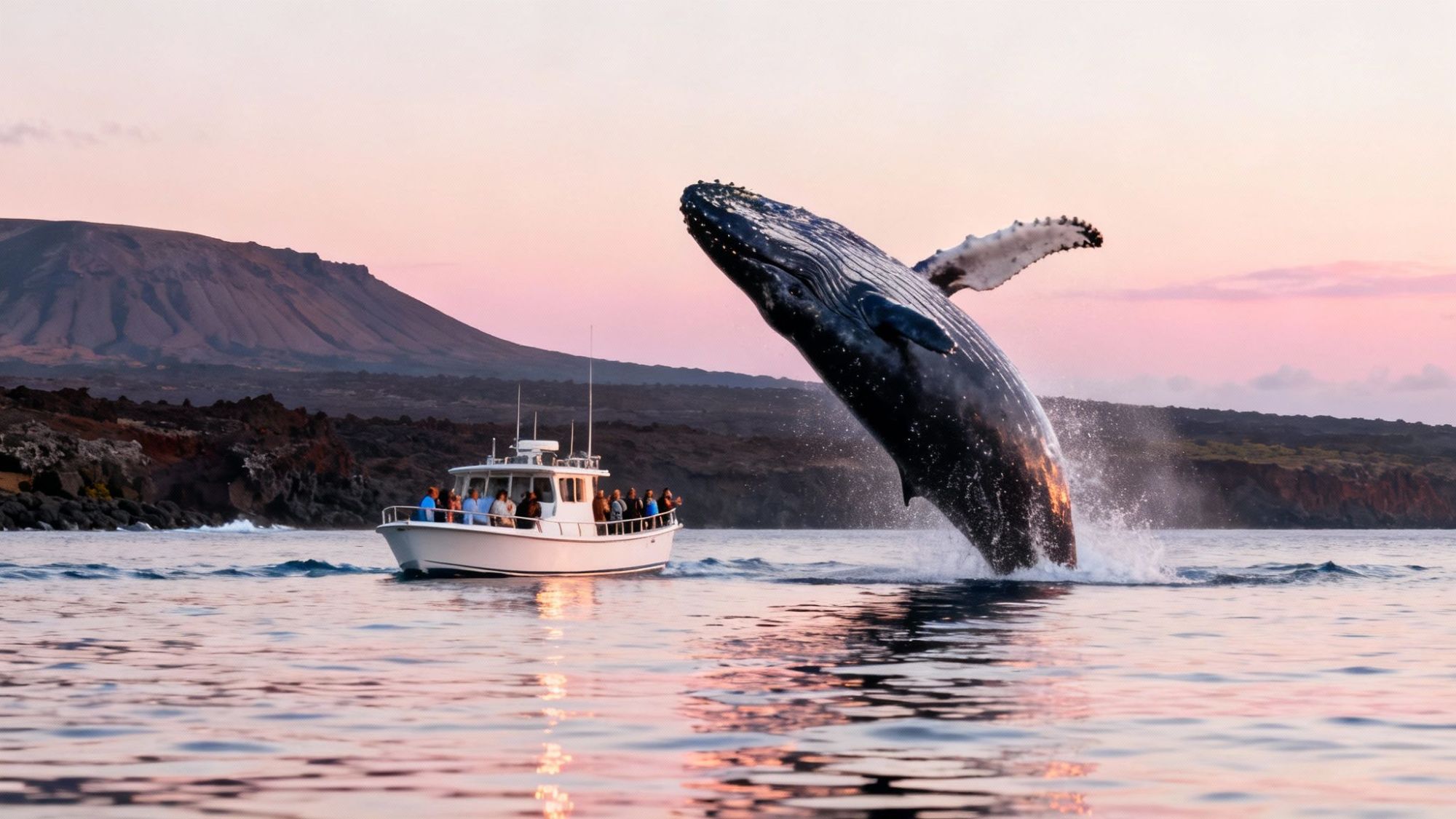
Picture this: a 40-ton humpback whale explodes out of the ocean, a massive, powerful launch against the backdrop of Kona's volcanic coastline. This isn't something you see in a nature documentary—it's a real moment you can experience on one of the Big Island's whale watching tours. These trips give you a front-row seat to one of the most incredible migrations on the planet.
Your Guide to an Unforgettable Marine Adventure
Think of this as your complete playbook for planning that once-in-a-lifetime whale encounter. We'll dive into why the protected waters off the Kohala Coast are a global hotspot for these gentle giants, drawing thousands of them every single winter. As Kona Snorkel Trips, the top-rated and most-reviewed snorkel and tour company in Hawaii, we live and breathe these waters, and we're all about creating safe, respectful, and truly awe-inspiring wildlife experiences.
We're going to cover it all, from the best months to visit to understanding the amazing behaviors you'll get to witness. By the end, you'll be ready for an adventure you'll be talking about for years.
Why Kona is a Whale Watching Paradise
The waters off the Big Island are more than just ridiculously beautiful—they're a vital sanctuary. Humpback whales travel over 3,000 miles from their chilly feeding grounds in Alaska, all the way to Hawaii's warm, protected waters to breed, give birth, and nurse their newborn calves.
The Kona and Kohala coasts offer the perfect setup:
- Warm, Calm Waters: This is crucial for newborn calves who haven't yet developed the thick layer of blubber their parents have.
- Shallow Depths: It's a much safer nursery for mothers to raise their young, away from the deep open ocean.
- Protection from Predators: The area is relatively free of orcas, which are the primary predators of humpback whales.
This massive annual migration creates an incredible density of whales right off our shores, making for some of the most consistent and breathtaking viewing opportunities anywhere in the world.
The sheer number of whales here is just mind-blowing. During a recent community-led Ocean Count, volunteers on the Big Island spotted a total of 493 humpback whales just from designated shoreline sites.
Sites along the Kohala Coast consistently log the highest numbers. At the busiest spots, volunteers were seeing between 3 and 6 whales every 15 minutes. Some locations even recorded as many as 15–20 whales in that same window during the peak of the season. This incredible natural event is exactly what makes our Kona whale watching tours such a special experience.
Understanding The Hawaii Whale Watching Season
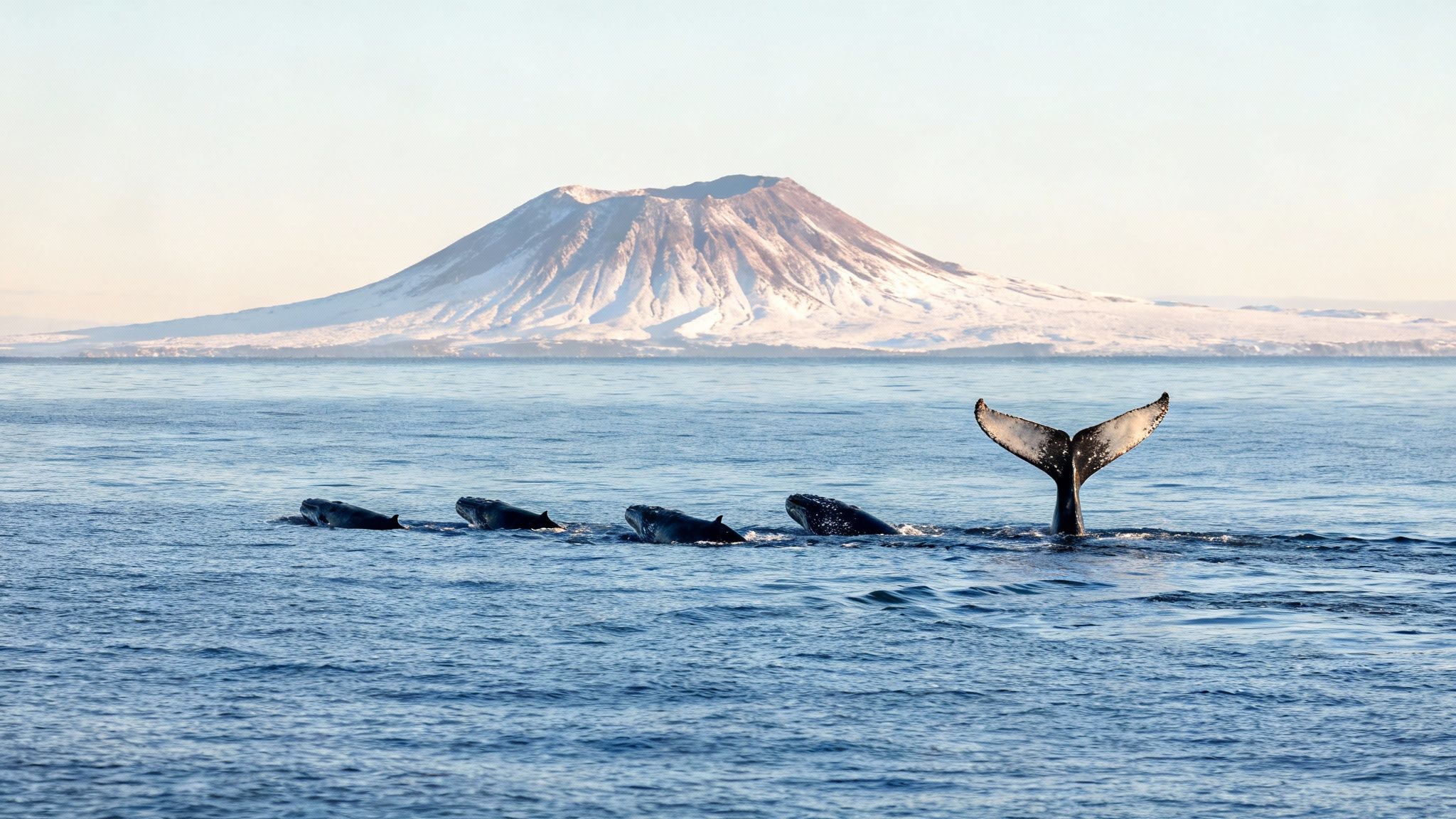
When it comes to planning the perfect Big Island whale watching tour, timing is everything. The entire spectacle hinges on one of the most incredible journeys in the animal kingdom—a massive seasonal migration.
Every year, thousands of humpback whales travel an astounding 3,000 miles from their chilly feeding grounds in Alaska all the way to Hawaii’s warm, welcoming waters. They make this epic trip for one profound reason: to continue the circle of life.
The waters off the Kona coast provide the perfect tropical nursery. Here, they can safely breed, give birth, and nurse their newborn calves. This ancient, annual rhythm is what dictates the entire whale watching season. Getting to know this natural calendar is the key to seeing the exact behaviors you’re hoping for, whether that's a dramatic competition pod or the tender moments between a mother and her calf.
The Ebb And Flow Of The Season
The whale watching season isn't just one long event; it’s a dynamic period with distinct chapters. Each part of the season offers a totally unique viewing experience, highlighting different aspects of the humpbacks' time in Hawaii. For a deeper dive into this incredible migration, check out our detailed guide to the Big Island whale watching season.
Here’s a quick look at what you can generally expect to see throughout the months.
Big Island Whale Watching Season at a Glance
This table gives you a quick snapshot of what to expect month by month, helping you pick the perfect time for your tour.
| Month | Whale Activity Level | Common Behaviors to Spot |
|---|---|---|
| December | Moderate | The first arrivals appear. You'll often see solo males and sub-adults, with sightings becoming more consistent as the month goes on. |
| January | High | The population is booming. Expect lots of surface activity, including dramatic breaches and tail slaps, as males compete for mates. |
| February | Peak | This is the height of the action! The highest density of whales means sightings are practically guaranteed. Competitive pods are common. |
| March | High | Many adults start heading north, but now it's all about the babies! This is the prime time to see mothers with their newborn calves. |
| April | Moderate | The season winds down, but you can still catch some of the last mother-calf pairs as the young ones build strength for their first big journey. |
As you can see, the experience changes quite a bit from December to April. A tour in January is all about high-energy action, while a trip in late March offers a more heartwarming look at the next generation of humpbacks. Planning your Big Island whale watching tour around this timeline gives you the best shot at witnessing the exact kind of awe-inspiring marine spectacle you've been dreaming of.
How to Decode Humpback Whale Behaviors
Seeing a 40-ton animal launch itself clean out of the water is something you never forget on a Big Island whale watching tour. But knowing why it’s happening? That changes the game completely. Humpback whales have a whole language of spectacular surface behaviors, and learning to decode them turns your tour into a front-row seat for a fascinating lesson in marine biology.
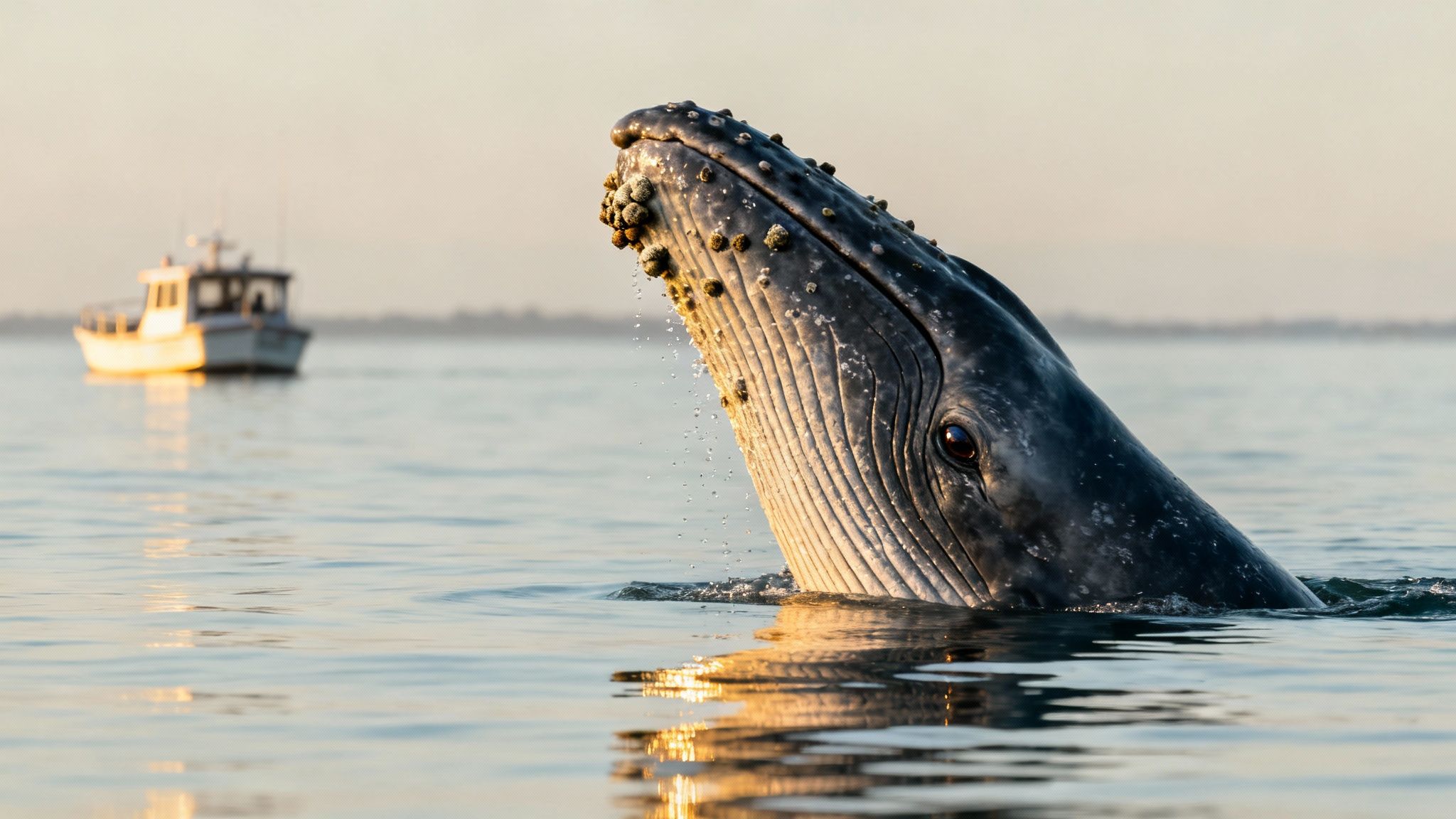
It's like learning a few key phrases before traveling abroad. Suddenly, you're not just a bystander; you're starting to understand the conversation unfolding right in front of your eyes.
The Most Common Surface Behaviors
As you're out there watching these gentle giants, you’ll start to see a few moves repeated. Each one is a piece of the puzzle, giving you clues about what's going on—whether it's communication, pure play, or some serious competition between whales.
Here are the most common behaviors you'll see and what our best guess is for what they mean:
- Breach: This is the showstopper—that iconic, full-body leap out of the water. Scientists figure it serves a few purposes, from knocking off pesky parasites to making a massive sound that carries for miles. Honestly, sometimes it might just be for the sheer joy of it.
- Tail Slap (or Lobtailing): You'll see a whale lift its massive tail (the fluke) and smack it down hard on the water. The sound and splash are huge. This is often a warning shot to other whales or a display of dominance, especially when you have a competitive pod of males vying for attention.
- Pectoral Fin Slap: A whale will roll onto its side and just start slapping one of its long pectoral fins on the surface, over and over. It's another way they talk without making a sound, likely to get the attention of other whales nearby.
- Spyhop: This one is my personal favorite because it feels so intentional. A whale will pop its head straight out of the water, sometimes slowly turning to get a good look around. They are literally checking you out, just as curious about our boat as we are about them!
Understanding these behaviors adds such a rich layer to the whole adventure. It's the difference between just seeing a big splash and recognizing a specific message being sent by one of the ocean's most incredible creatures.
Once you start recognizing these distinct actions, you feel a much deeper connection to the animals you’re watching. Our comprehensive guide on whale watching on the Big Island of Hawaii dives even deeper into what you can expect to see out on the water.
What starts as seemingly random movements soon becomes a rich, complex dialogue. Your whale watching tour goes from a simple sightseeing trip to a truly dynamic and unforgettable encounter.
Choosing Your Ideal Whale Watching Tour
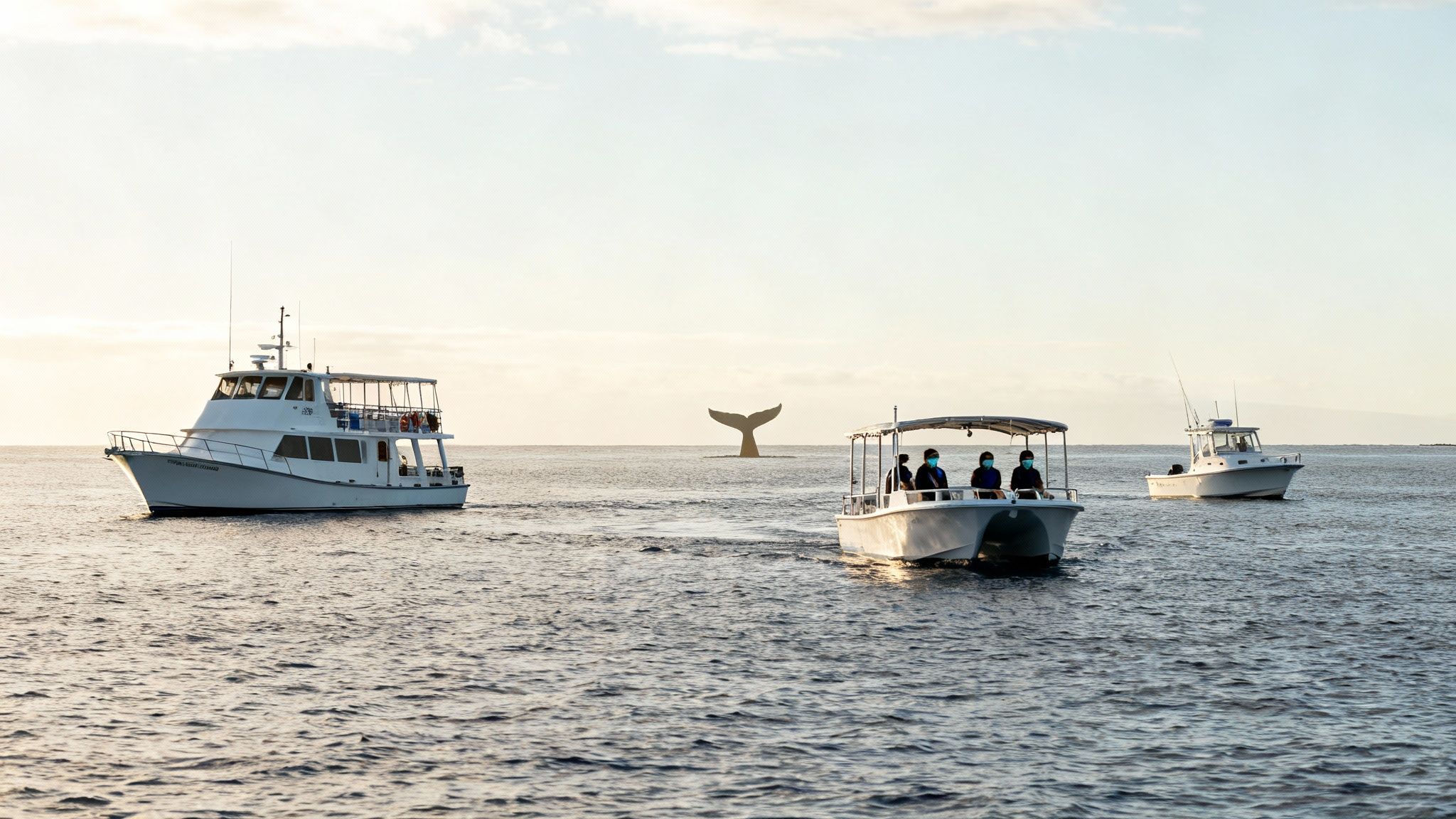
Not all Big Island whale watching tours are the same, and picking the right one really boils down to what you want out of your day on the water. It’s pretty simple once you get the lay of the land—there are really three main flavors of whale watching trips here in Kona. Each one offers a totally different vibe, designed for different schedules, budgets, and what you’re hoping to see.
Think of it like picking the right tool for a job. The right fit makes all the difference. Whether you're a serious photographer hoping for that perfect breach shot, a family wanting to do a little bit of everything, or a group looking for a truly exclusive day, there's a tour with your name on it.
Let's break them down so you can figure out which one is perfect for you.
Dedicated Whale Watching Tours
This is your classic, no-frills whale adventure. These tours are laser-focused on one mission: finding humpback whales and watching them in their element, respectfully of course. The whole trip, which usually runs about 2-3 hours, is all about tracking down pods and figuring out what they're up to.
- Pros: You get the most possible time with the whales. The crew lives and breathes whale behavior, making them experts at finding the action. This is the dream for photographers and true wildlife junkies. Many boats will even drop a hydrophone in the water so you can listen to their songs.
- Cons: It’s a one-track mind kind of trip. If some people in your group are itching for other activities, this might feel a bit too focused.
Honestly, if your main goal is to be completely awestruck by humpbacks, this is the way to go.
Combination Snorkel and Whale Watch Tours
Want to squeeze as much adventure as possible into one outing? A combo tour is your ticket. These trips are the best of both worlds, mixing the excitement of seasonal whale watching with a dip into Kona's unbelievable underwater world at spots like historic Kealakekua Bay.
This two-for-one adventure is a fantastic way to experience the full spectrum of Kona's marine life. You might spend the morning watching a 40-ton whale breach and the afternoon swimming alongside vibrant tropical fish and sea turtles.
This is a super-efficient option for anyone on a tight schedule who wants to see it all. It’s an action-packed day that truly shows off the incredible diversity of Hawaii's ocean, both above and below the waves.
Private Charters
For the ultimate, completely personalized day on the ocean, nothing beats a private charter. You and your group get the boat and crew all to yourselves, which means the itinerary is 100% up to you.
- Pros: Total freedom. You call the shots on how long you want to watch whales, where you want to snorkel, or if you just feel like cruising the coastline. It's perfect for families with little kids, serious photographers needing specific shots, or any kind of special celebration.
- Cons: This is the premium experience, and it comes with a higher price tag.
A private charter takes a tour and turns it into your own private ocean expedition. If you want to dive deeper into the different tour styles, check out our guide to the top Kona whale tours. No matter what you choose, you're in for a day you won't forget.
Preparing for Your Day on the Water
A little bit of prep work can make a huge difference between a good day and a spectacular one out on the water. Having the right stuff with you means you can just relax and focus on the incredible whale show without any distractions.
First things first: the Hawaiian sun is no joke, especially when it’s bouncing right off the ocean into your face. Reef-safe sunscreen is an absolute must. It’s not just about protecting your skin; it’s about protecting the delicate coral ecosystems we all love from nasty chemicals. You’ll be glad you lathered up.
Just as important is a good pair of polarized sunglasses. These are a total game-changer for whale watching. They do more than just block the sun—they slice right through the surface glare, making it way easier to spot that distant puff of a whale spout or the dark shadow of a humpback cruising just under the surface.
Your Essential Packing Checklist
To make sure you don’t leave anything important behind, here’s a quick list of things we recommend bringing along. Having these essentials will keep you comfortable, protected, and ready to capture every single moment.
- Sun Protection: Besides sunscreen, a wide-brimmed hat is your best friend out there. It’ll keep the sun off your face and neck while you’re scanning the horizon.
- Light Jacket or Windbreaker: Even on the warmest Kona days, it can get surprisingly cool once the boat picks up speed and you’ve got that ocean breeze on you. A light layer is perfect.
- Camera with a Zoom Lens: You’re going to want to remember that epic breach or tail slap forever. A decent zoom lens lets you get those amazing shots from a respectful distance without disturbing the whales.
- Binoculars: While we'll get you as close as we safely can, binoculars are fantastic for getting an up-close, detailed look at whale behaviors happening a bit further away from the boat.
Don't Forget About Comfort
Finally, a quick word on seasickness. If you know you’re prone to feeling a bit queasy, it pays to be proactive. The ocean is always moving, and even on calm days, the gentle rock of the boat can get to some folks.
Taking motion sickness medication before you leave the harbor can be the difference between a miserable day and an amazing one. You want your focus to be on the majestic whales, not on your stomach!
We've got a bunch more tips on our blog. Check out our guide on how to prevent seasickness for some tried-and-true advice. A little preparation really does go a long way to making sure your day on the water is nothing short of incredible.
Frequently Asked Questions About Whale Watching Tours
Let's wrap this up by tackling some of the questions we hear all the time about our Big Island whale watching tours. Getting these details sorted out can help you feel confident and ready to book an incredible adventure.
Is a Whale Sighting Guaranteed on Your Tours?
Since humpback whales are wild animals, we can never make an absolute promise. That said, the odds are overwhelmingly in your favor, especially during the peak months of January and February.
Our captains have spent years on the Kohala Coast and know exactly where the whales love to hang out. It's rare for us to come back without a story to tell—we consistently get multiple sightings on our tours, pushing close to a 100% success rate during the high season.
What Is the Best Time of Day for a Whale Watching Tour?
Honestly, the whales are active all day long, so the "best" time really comes down to the kind of ocean conditions you prefer.
- Morning Tours: If you love calm, glassy water, mornings are for you. The water is typically flatter, which is great for anyone worried about motion sickness and perfect for photography. The bright, clear light also makes it easier to spot those distant spouts on the horizon.
- Afternoon Tours: The afternoon light on the water is just stunning, casting a beautiful golden glow that makes for some epic photos. The whales are just as active, and you get that beautiful end-of-day vibe.
We have amazing encounters on all our tours, so our best advice is to pick the time that fits best with your vacation schedule.
Are Children Allowed on the Tours?
Absolutely! Whale watching is one of those experiences that lights up faces of all ages. It’s a fantastic way for kids to see these massive, incredible creatures up close and learn about the ocean in a way a book could never teach them.
Our boats are safe, comfortable, and we love having families on board. If this tour is just one part of your family's Big Island getaway, you might find some helpful tips in this Ultimate Guide To Traveling With Young Children to make the whole trip a breeze.
What Happens if the Weather Is Bad?
Your safety is always, without question, our number one priority. Our captains are constantly watching the weather and sea conditions like a hawk.
If a tour has to be canceled because of unsafe weather—think high winds or really rough seas—we'll let you know as soon as we make the call. We’ll do everything we can to get you rebooked on another day. If that just doesn't work for your schedule, we'll issue a full refund, no problem.
We simply won't go out in conditions that could put anyone's safety or comfort at risk. We want your memories of our Big Island whale watching tours to be spectacular for all the right reasons.