
Big Island Whale Watching Tours Guide
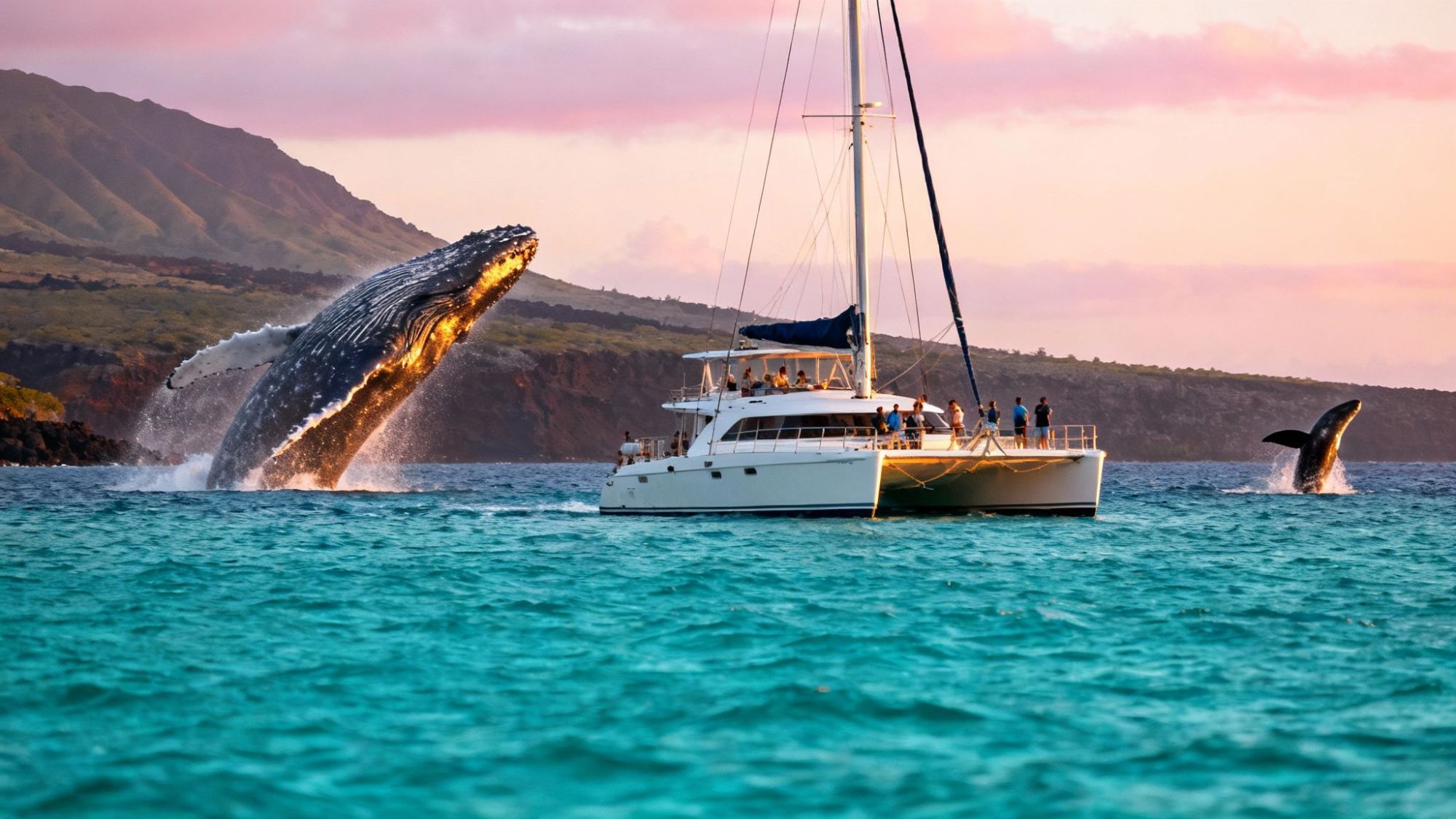
There's nothing quite like it. The feel of the ocean mist from a humpback's blowhole, the incredible thump you feel in your chest when a 40-ton giant breaches, and just the sheer, humbling scale of these animals gliding through Hawaii's turquoise waters. That’s the real, unforgettable magic waiting for you on a Big Island whale watching tour.
Every single year, thousands of humpback whales make the long journey to these warm, protected waters to breed, give birth, and raise their newborn calves. It's one of nature's greatest shows.
The Magic of Hawaii's Humpback Whales
As the Big Island's top-rated and most-reviewed snorkel and tour company, we at Kona Snorkel Trips have spent countless hours out on the water, sharing these moments with guests. This guide is our way of passing that experience on to you, helping you plan the perfect whale watching adventure. We'll cover everything you need to know to see this incredible spectacle for yourself.
Don't just take our word for it—our reviews tell the story of the marine encounters we live for. Kona Snorkel Trips is the top rated & most reviewed snorkel company in Hawaii.
A Journey of Epic Proportions
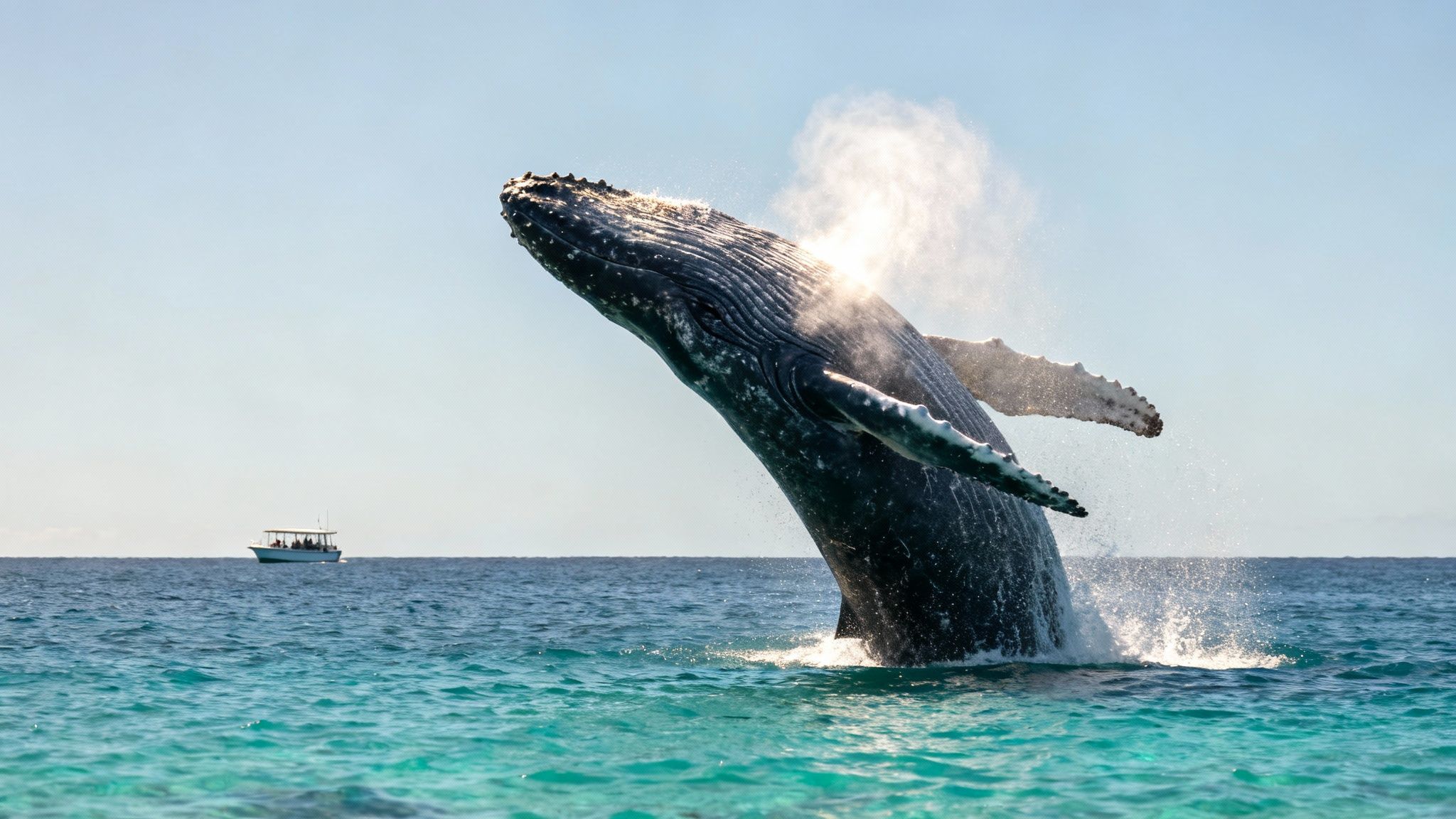
Think about this for a second: every year, an incredible migration unfolds across the Pacific Ocean. Humpback whales travel around 3,000 miles from their chilly feeding grounds up in Alaska all the way down to the warm, safe waters surrounding the Hawaiian Islands.
It’s one of the most amazing journeys in the animal kingdom, driven by pure instinct. And they do the whole thing without eating a single bite, living entirely off the fat reserves they built up over the summer. Their destination? A tropical sanctuary where the most important moments of their lives will play out.
Hawaii's Role as a Marine Nursery
The waters off the Big Island, especially along the Kona and Kohala coasts, are basically the perfect humpback whale nursery. The warmth and relative safety of the bays give them everything they need to carry out the most critical parts of their life cycle.
- Breeding and Mating: The ocean becomes a stage for some seriously impressive courtship displays. You'll often see males forming "competitive pods," where they'll battle it out to win the attention of a female.
- Birthing: Pregnant females look for calm, shallow waters to give birth, giving their newborn calves a protected and gentle start to life.
- Nurturing Calves: A newborn calf has very little body fat, so the warm Hawaiian water is absolutely essential for its survival. Here, they can nurse and build up strength before making that first big trip back north to Alaska.
When you're out on the water here, you're not just looking at big animals. You're witnessing a vital, vulnerable, and absolutely profound chapter in the lives of these magnificent creatures.
Why This Experience Is Unforgettable
It's hard to truly grasp how massive a humpback whale is until you see one up close. Watching a 40-ton adult launch its entire body out of the water near your boat is a display of raw power that sticks with you forever.
But it’s more than just the acrobatics. The experience connects you to the rhythm of the ocean in a way few things can. Dropping a hydrophone into the water and hearing the haunting, complex songs of the male humpbacks is an otherworldly experience. It’s a powerful reminder of the intelligence and mystery swimming just beneath the surface. Planning your trip around this natural wonder is the first step toward making memories that will truly last a lifetime.
Finding the Best Time for Whale Watching
Nailing the timing for your Big Island whale watching tour is the secret ingredient that takes a trip from pretty good to absolutely unforgettable. It helps to think of the yearly humpback migration like a massive, months-long festival. Some months are the loud, bustling main event with the biggest crowds and the most action, while the beginning and end of the season have their own quieter, unique charm.
The whale season officially gets going when the first early birds arrive in the fall, and the energy steadily builds from there. But the real peak, when the waters are practically teeming with whales, runs from January through March. This is your best shot to see the whole show—from tender moments between a mother and her new calf to the dramatic, powerful displays of competing males.
The Rhythm of the Season: A Month-by-Month Guide
Getting a feel for the unique vibe of each month helps you match your travel dates with what you’re hoping to experience. Whether you’re dreaming of seeing the highest possible number of whales or hoping for a more peaceful, one-on-one encounter with the first arrivals, there’s a perfect time for you to visit.
And don't overlook the "shoulder months" of November, December, and April. These times still offer incredible opportunities. You'll often find fewer boats on the water, which can lead to a much more intimate feeling when you do come across a pod. For a deeper dive into what each part of the season feels like, check out our detailed guide to the Big Island whale watching season.
We've been noticing a really interesting trend lately: the viewing window seems to be getting a little wider. While the peak has stayed consistent, the whales have been showing up earlier and earlier. For instance, the first humpback sighting for the 2025-2026 season was spotted off Kona on October 30, 2025! This wasn’t a fluke; it follows a pattern of early arrivals we’ve seen in recent years. It just goes to show that while January to March is prime time, the chance to see these gentle giants might start sooner than you think.
Big Island Whale Watching Season Calendar
To help you visualize the flow of the season, here’s a quick breakdown of what to expect month by month. Use this to find the sweet spot that perfectly aligns with your dream whale watching trip.
| Month | Sighting Probability | Typical Whale Activity | Crowd Levels |
|---|---|---|---|
| November | Moderate | First arrivals spotted. Curious individuals exploring. | Low |
| December | Good | Numbers increasing. Mating behaviors begin. | Moderate |
| January | Excellent | Peak season begins. High density of whales. Calves are born. | High |
| February | Excellent | The heart of the season. Lots of surface action and calves. | Very High |
| March | Excellent | Still peak season. Mothers and calves preparing for migration. | High |
| April | Moderate | Last departures. Lingering mothers and calves. | Moderate |
No matter when you come during these months, you're in for a treat. The ocean is alive, and every day brings a new surprise.
Peak Season vs. Shoulder Season
So, when should you book? The decision often boils down to choosing between the sheer number of whales during peak season and the calmer atmosphere of the shoulder season. Neither is "better"—they just offer two totally different experiences.
-
Peak Season (January – March): This is the heart of the action. Your odds of seeing multiple whales, tiny newborn calves, and super-energetic competitive pods are at their absolute highest. The trade-off? It's also the busiest time for tourism, so you’ll definitely want to book your tours well in advance.
-
Shoulder Season (November – December & April): These months have a more laid-back vibe. The excitement around the first arrivals in November and December is contagious, and seeing the last few whales in April before they head north feels really special. You might see fewer whales overall, but the encounters can feel much more personal with fewer boats around.
The key takeaway is this: Peak season maximizes your chances for quantity and high-energy surface activity. The shoulder season offers a potentially more serene experience with the magnificent creatures that have just arrived or are preparing for their long journey back north.
Ultimately, there’s no “bad” time to go whale watching during the season. Every trip out on the water is a unique adventure, and the whales are always in charge. By understanding the seasonal flow, you can pick the perfect time for your dream Hawaiian whale encounter.
How to Choose Your Ideal Tour
Picking the right whale watching tour on the Big Island is a bit like choosing the perfect ride for a road trip—what you pick really shapes the whole experience. The best boat for you comes down to your group's vibe, what you find comfortable, and of course, your budget.
Let's break down the main options so you can find your perfect match.
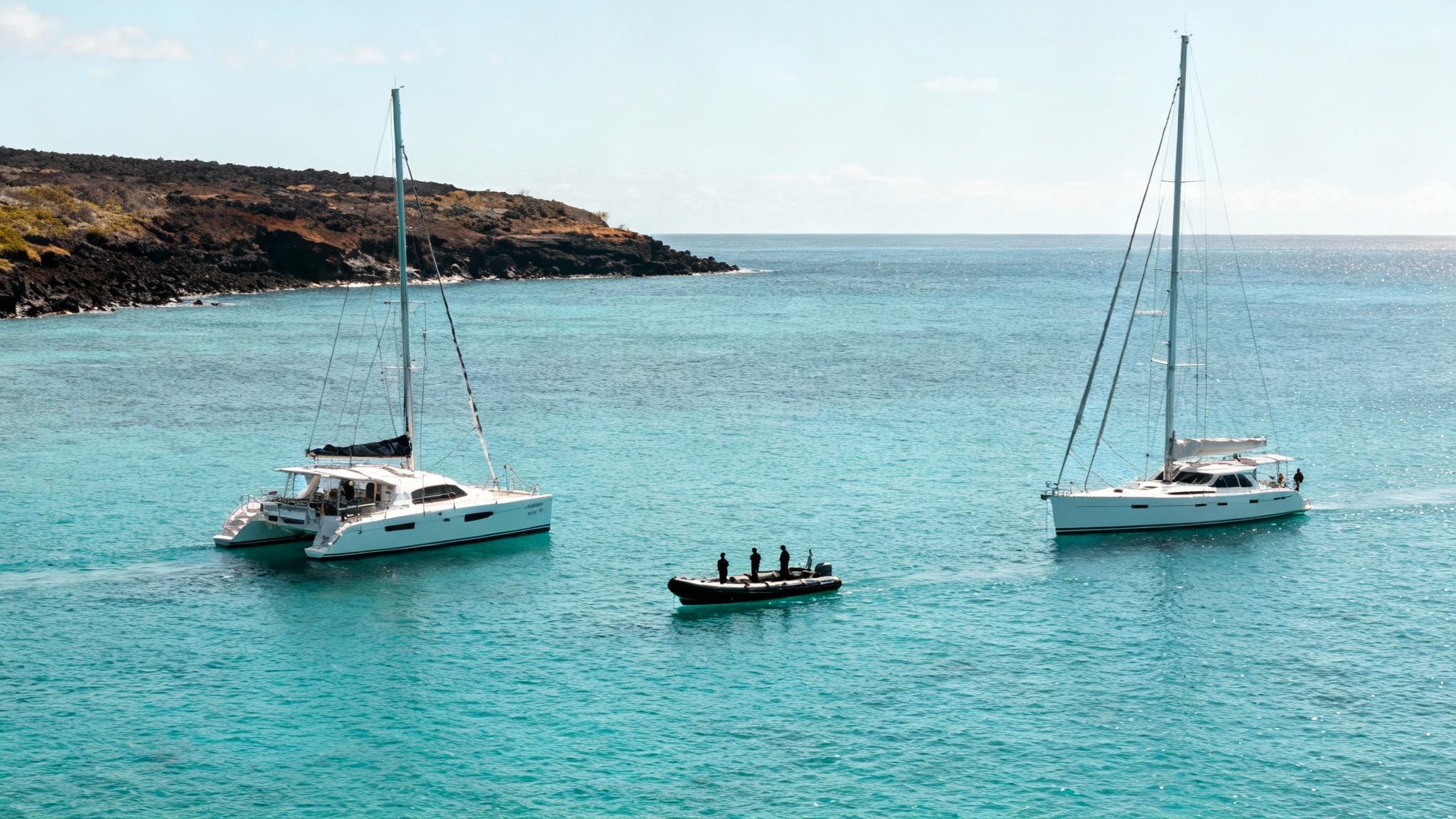
Think of it this way: big, stable catamarans are the "RVs" of the ocean. They’re spacious, loaded with amenities, and great for families. For the thrill-seekers, the zippy zodiac-style rafts are the "sports cars"—fast, low to the water, and guaranteed to get your adrenaline pumping. And if you're after the ultimate personalized day? A private charter is your "luxury convertible," giving you total control of the wheel.
Once you know the pros and cons of each, you'll be able to book your adventure with total confidence.
Large Catamarans: The Family-Friendly Option
Large catamarans are easily the most popular choice for Big Island whale watching tours, and it's easy to see why. Their two-hull design makes them incredibly stable, which is a huge plus for families with kids, seniors, or anyone who gets a little queasy on the water.
These boats are all about comfort and convenience.
- Spacious Decks: You’ll have plenty of room to walk around, find a great vantage point, and never feel boxed in.
- Onboard Amenities: Most have restrooms (a lifesaver on a multi-hour trip), shady spots to escape the sun, and usually offer snacks and drinks.
- Smooth Ride: That stability we mentioned means less rocking and rolling, making for a much more relaxing trip for everyone.
The only real trade-off is the group size; they hold more people, so it's not the most intimate experience. But for a relaxing, steady, and comfortable day out on the water, you just can’t beat a catamaran.
Zodiac-Style Rafts: The Adventurous Choice
If a catamaran is the family RV, then a zodiac-style raft is a souped-up sports car. These rigid-hulled inflatable boats are built for speed and agility, offering a whale watching experience that’s in a completely different league. You're sitting low, right on top of the water, putting you at eye-level with all the action.
This closeness to the ocean's surface makes every single encounter feel raw and immediate. When a 40-ton humpback breaches nearby, you don't just see it—you feel it.
The ride is fast, it's bumpy, and you’ll probably get wet. It’s an adventure in itself! Because of this, these tours often have age and mobility restrictions and aren't a good fit for pregnant women or anyone with back issues. The groups are much smaller, though, which makes the whole trip feel more personal. To dive deeper into boat types, our guide to Kona whale tours has more great info.
Private Charters: The Ultimate Experience
For pure freedom and exclusivity, a private charter is the "luxury convertible" of the whale watching world. When you book a private tour, the boat and crew are all yours. This is perfect for a special celebration, for photographers trying to get that perfect shot, or for any group that just wants the ocean to themselves.
Here's what really makes a private charter stand out:
- Custom Itinerary: You call the shots. Want to hang out longer with a pod of playful dolphins or explore a hidden stretch of coastline? Just let your captain know.
- Total Privacy: It’s just you and your crew. This creates a laid-back, personal atmosphere you can't get anywhere else.
- Personalized Attention: The captain and crew are focused solely on your group, giving you top-notch service and sharing their expert knowledge.
While private charters are the priciest option, the ability to design your own perfect day on the water is an experience that’s truly second to none.
Understanding Common Whale Behaviors
A Big Island whale watching tour goes from a simple boat ride to something else entirely the moment you start to understand what you're seeing. Suddenly, it's a live-action documentary, and you're no longer just a spectator. Knowing what these incredible surface behaviors mean adds a whole new layer to the experience. This is your field guide to translating the language of the humpbacks.
When you can put a name to what you're seeing, you gain a much deeper appreciation for the sheer intelligence and social complexity of these gentle giants. It's the key to making every single moment out on the water truly unforgettable.
The Iconic Breach
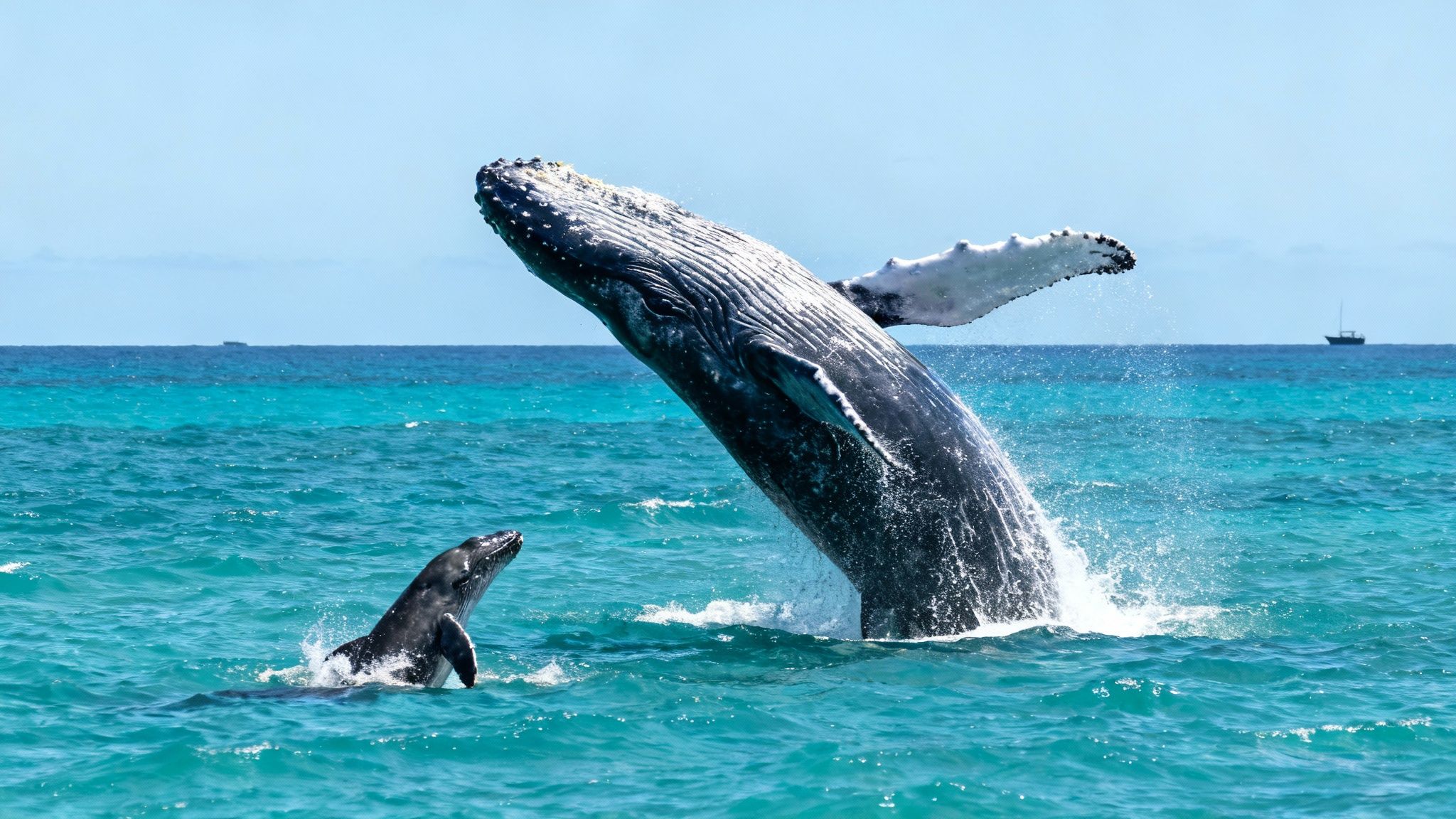
The breach is the ultimate showstopper—the heart-pounding moment everyone on the boat hopes for. This is when a humpback whale, which can weigh up to an incredible 40 tons, rockets its entire body out of the water. It often twists in mid-air before crashing back down with a thunderous splash you can hear for miles.
Why do they do it? Scientists have a few theories. It might be a powerful way to communicate over long distances, a handy method for shaking off annoying barnacles and parasites, or maybe, just maybe, it's a pure expression of joy.
The Forceful Tail Slap
A tail slap, or "lobtailing," is another dramatic and very common behavior you'll see. The whale lifts its massive fluke (its tail) high into the air and smashes it down hard on the surface, creating a huge splash and a surprisingly loud crack.
That percussive sound travels incredibly well underwater. It's often seen as a warning to other whales, a show of aggression in a competitive group, or a way to assert dominance. Think of it as the whale's way of making a point that simply can't be ignored.
Much like a person might clap their hands to get everyone's attention, a tail slap is the whale's way of making a statement that can't be ignored. It’s a clear and powerful signal in their complex social world.
The Curious Spy-Hop
Of all the whale behaviors, the spy-hop feels the most personal, the most connective. This is when a whale positions itself vertically in the water and slowly pokes its head straight up, sometimes holding the pose for a few moments to get a good look around above the surface.
When a whale spy-hops near your boat, it really feels like it's just as curious about you as you are about it. It's a powerful reminder that you're a visitor in their world, being checked out by an intelligent, inquisitive creature. It’s a moment of mutual curiosity that sticks with you long after the tour is over. For more details on what these encounters are like, check out our full guide on whale watching tours on Hawaii's Big Island.
Other Notable Surface Behaviors
Beyond the big three, keep your eyes peeled for other fascinating actions that tell a story about what’s happening just below the waves.
- Pectoral Fin Slap: A whale will often roll onto its side and repeatedly slap one of its long pectoral fins on the water. These fins can be up to 15 feet long and create a loud noise, likely another form of communication.
- Peduncle Throw: This is a high-energy, aggressive move where a whale uses its powerful tail muscles to throw the entire back half of its body out of the water sideways, creating a massive splash. You'll most often see this from males in competitive pods.
Recognizing these behaviors is what makes Big Island whale watching tours so incredibly rewarding. These tours have become a cornerstone of the island’s eco-tourism, largely because the whales put on such a reliable and spectacular show. Data from the Sanctuary Ocean Count consistently shows hundreds of whale sightings on the Big Island every year during the peak season from January to March. The Kohala coast is particularly famous for this, with sightings often being two to three times more frequent than anywhere else, highlighting just how amazing the viewing opportunities are right here.
How to Practice Responsible Whale Watching
Seeing a 40-ton humpback whale launch itself out of the water is a moment that sticks with you forever. It’s an absolute privilege, but it also comes with a shared responsibility to protect these incredible animals. They’ve traveled thousands of miles to get to Hawaii’s warm, safe waters to mate and raise their calves. Being a mindful whale watcher is all about understanding that our presence has an impact.
This is where the true spirit of 'Aloha' really comes into play—it’s about showing deep respect for the whales and their ocean home. Any disturbance, even unintentional, can cause a lot of stress, especially for a new mother trying to nurse and protect her vulnerable calf. The whole point of a good tour is to observe without interfering, making sure these gentle giants feel safe enough to come back year after year.
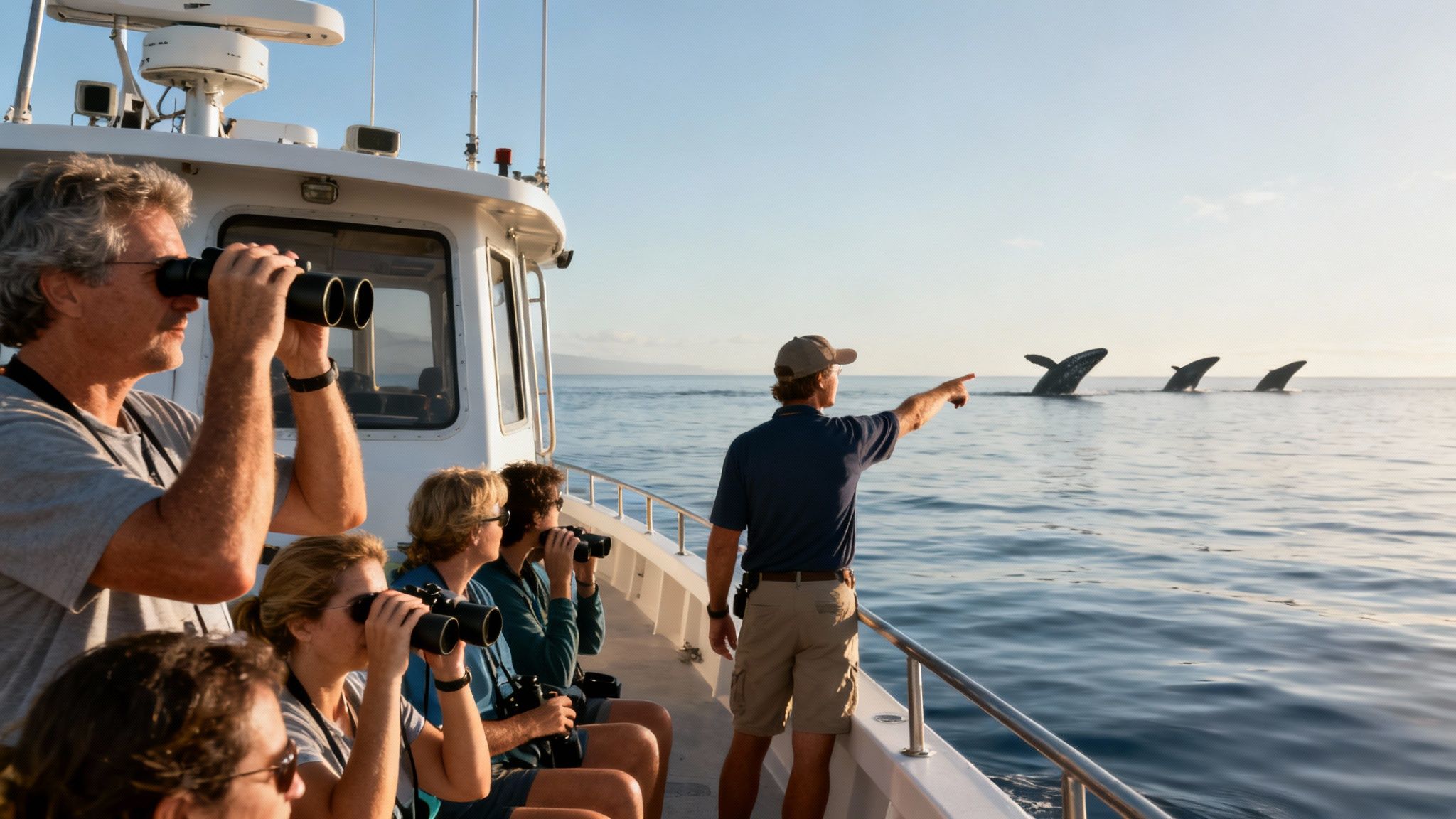
Understanding the 100-Yard Rule
To keep the whales safe, there are strict federal and state laws that everyone has to follow. The single most important rule for any Big Island whale watching tour is the 100-yard rule. Period. This law says that no vessel—from big tour boats all the way down to kayaks and paddleboards—can get closer than 100 yards to a humpback whale. That's about the length of a football field.
It’s easy to think of this as a limitation, but it’s really a pact. It's our promise to give these animals the personal space they need to do their thing. This buffer zone lets them behave naturally without feeling threatened, which is crucial for keeping their Hawaiian nursery a true sanctuary.
Think of the 100-yard rule as a giant "do not disturb" sign on the ocean. It’s how we show respect for the whales' home, letting them rest, breed, and care for their young in peace. A great captain knows that the most magical encounters happen when the whales choose to approach the boat, not the other way around.
Choosing an Eco-Conscious Tour Operator
The tour company you pick makes all the difference. A truly eco-conscious operator is more than just a boat ride; they're stewards of the ocean. They get that their entire business relies on a healthy marine ecosystem and the well-being of the whales.
When you're looking for a tour, keep an eye out for these signs of a responsible operator:
- They're All About Education: The crew should do more than just point and shout, "Whale!" They should be passionate educators, explaining whale behaviors, the incredible journey of their migration, and the conservation work being done.
- They Follow the Rules—No Exceptions: A reputable company will be upfront about the 100-yard rule and make it clear they will never harass or chase whales for a closer look. Their captains are pros at positioning the boat for amazing views without ever crossing that critical line.
- They're Involved in Conservation: Many of the best operators participate in local conservation efforts, contribute data to researchers, and promote things like using reef-safe sunscreen.
Choosing a company that lives these values means your money is directly supporting the protection of Hawaii's marine life. You become part of the solution. You're helping ensure the health of Hawaii's humpback whale population, a species that has made a truly remarkable comeback. For more on their incredible journey, you can read about past discussions to change the humpback whale's endangered species status. By booking responsibly, you help guarantee that this amazing natural spectacle will be here for generations to come.
Planning Your Whale Watching Adventure
A little prep work can be the difference between a good day on the water and an absolutely unforgettable one. To really get the most out of your Big Island whale watching tour, thinking ahead ensures you show up comfortable, ready, and able to soak in every single moment.
Booking your tour ahead of time is a must, especially if you're visiting during the peak season between January and March. The best tours get snapped up fast, and locking in your spot early means you won’t get left on the dock. It's also smart to think about booking flexibility; sometimes, adding cancellation insurance for your tour can offer that extra peace of mind for your travel plans.
Your Essential Whale Watching Checklist
Think of this as your go-to gear list for a perfect day at sea. Tossing these few things in a bag will make your trip that much more comfortable.
- Layered Clothing: Even on a beautiful, sunny Kona day, the breeze coming off the ocean can have a surprising chill to it. A light jacket or a windbreaker is always a good call.
- Non-Slip Shoes: Boat decks get wet—it’s just a fact of life on the water. Wear some comfy shoes with a solid grip, like sneakers or boat shoes, to stay steady on your feet.
- Sun Protection: The Hawaiian sun is no joke, and the reflection off the water basically doubles the intensity. You'll want reef-safe sunscreen, a good hat, and polarized sunglasses. Seriously, polarized lenses are a game-changer for cutting the glare and spotting whales just below the surface.
So many people underestimate the sun out on the ocean. Good sun protection isn't just about avoiding a sunburn; it's what allows you to stay out on deck for the whole tour and not miss a thing.
Insider Tips for a Smooth Trip
Beyond what to pack, a few local tips can make a huge difference in your day. If you know you're someone who gets a little queasy, it’s a good idea to take precautions before you even leave shore. The ocean's gentle roll can get to the best of us. For some solid advice, our guide has some excellent tips on how to prevent seasickness.
By all means, bring your camera—but don’t forget to put it down once in a while. Trying to capture that perfect breach shot is exciting, but some of the most powerful moments are the ones you experience with your own two eyes, not through a tiny screen. A pair of binoculars can also be fantastic for getting a closer look at distant spouts or behaviors without getting any closer to the whales.
Finally, the most important bit of planning is choosing the right company. Booking with a trusted, experienced operator like Kona Snorkel Trips means your day will be guided by true marine life experts who care just as much about your safety as they do about the whales' well-being. Our crew knows these waters like the back of their hand, guaranteeing a safe, respectful, and truly unforgettable encounter with Hawaii’s magnificent humpbacks.
Got Questions? We've Got Answers.
Here are a few quick answers to the questions we hear most often about whale watching tours on the Big Island. We want you to feel totally prepared and excited for what's to come!
Is a Whale Sighting Guaranteed on Your Tours?
While we can't ever 100% guarantee a wild animal will show up on cue, coming out during peak season from January to March gives you an exceptionally high chance of a sighting—we're talking over 95% success. Our captains have spent years on these waters, and they know just where to look and what to look for.
Even on the rare day the whales are feeling a bit shy, the boat ride along the Kona coast is beautiful in its own right. The thrill of the search is all part of the adventure.
What if I Get Seasick?
It's a common worry, but a little prep goes a long way. If you know you're prone to motion sickness, your best bet is to take something like Dramamine or Bonine about an hour before we head out.
Choosing a bigger, more stable boat like a catamaran definitely helps smooth out the ride. It's also a good idea to skip a heavy, greasy breakfast or alcohol beforehand and just stick to water to stay hydrated.
Are Kids Welcome on the Tours?
Absolutely! There's nothing quite like watching a kid's face light up the first time they see a whale breach. Whale watching is an incredible experience for the whole family, and we love having kids on board.
For families with little ones, we usually recommend a larger catamaran. They're super stable and have handy amenities like bathrooms. If you're thinking about a faster, more adventurous ride like a zodiac, it's always a good idea to check with the tour company about any age limits first.
How Close Do We Actually Get to the Whales?
Federal law is super strict about this, and for good reason—we have to protect these amazing animals. All boats must stay at least 100 yards away, which is about the length of a football field. This is especially important for moms and their new calves.
But here's the cool part: whales don't know the rules. They're naturally curious.
Sometimes, a whale will decide to come check us out. When one swims right up to the boat, it’s called a "mugging," and it's a truly mind-blowing experience. It happens completely on their terms, which makes it feel that much more special.
Ready to see Hawaii's gentle giants for yourself? Join Kona Snorkel Trips for an adventure you won't forget. We focus on small groups and respectful encounters out on the water. Book your Big Island whale watching tour today