
Big Island Whale Watching Tours Guide
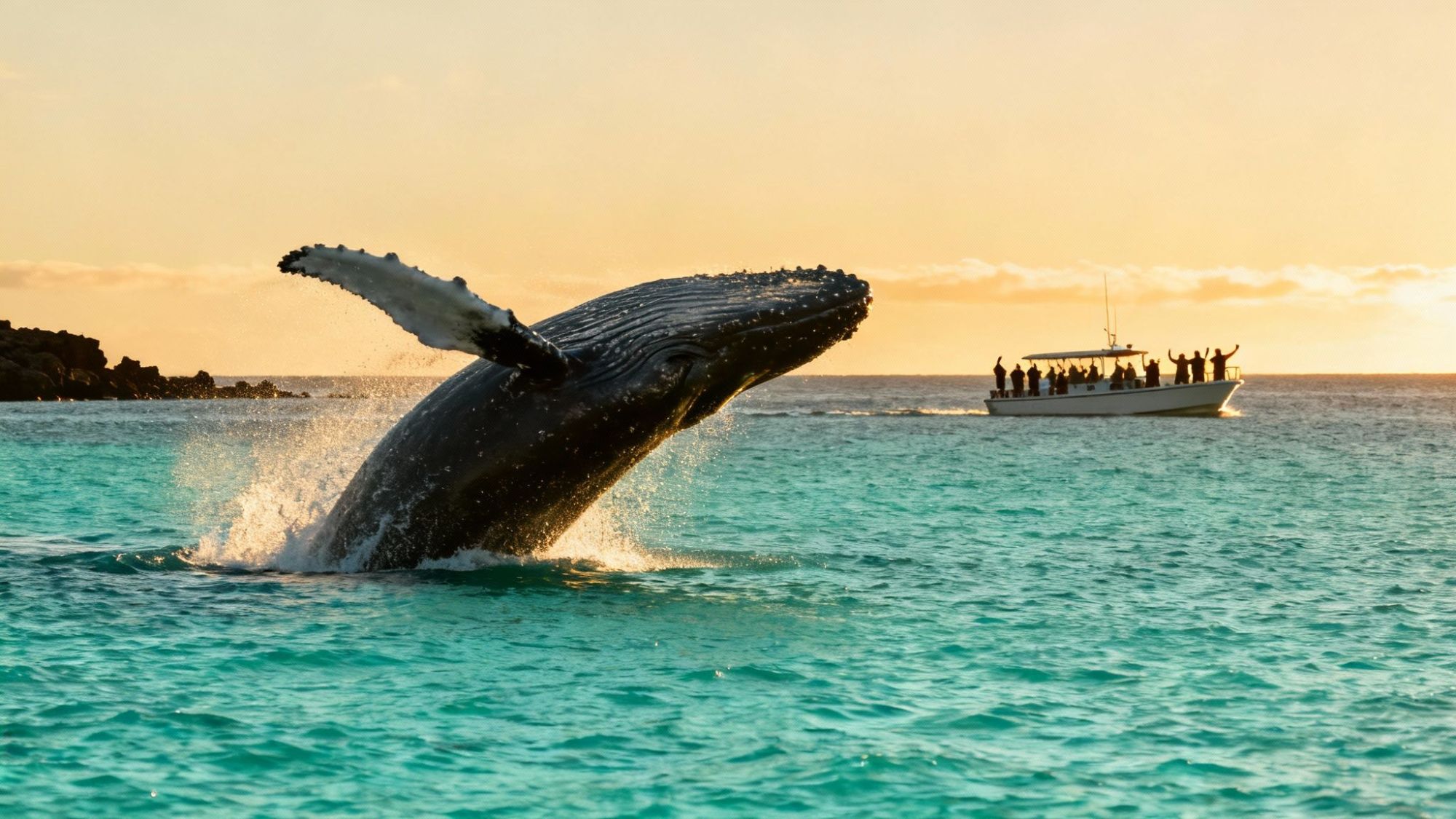
There's nothing quite like seeing a 40-ton humpback whale explode out of the Pacific Ocean. It’s a moment that sticks with you forever, and our Big Island whale watching tours are designed to give you a front-row seat to that incredible show. From November to May, these gentle giants cruise into Hawaii's warm, welcoming waters, making our island one of the best places on Earth to see them up close.
This guide is your complete playbook for planning an unforgettable whale watching adventure.
Your Guide to Big Island Whale Watching
As the top rated & most reviewed snorkel company in Hawaii, we at Kona Snorkel Trips know how to create an unforgettable experience.
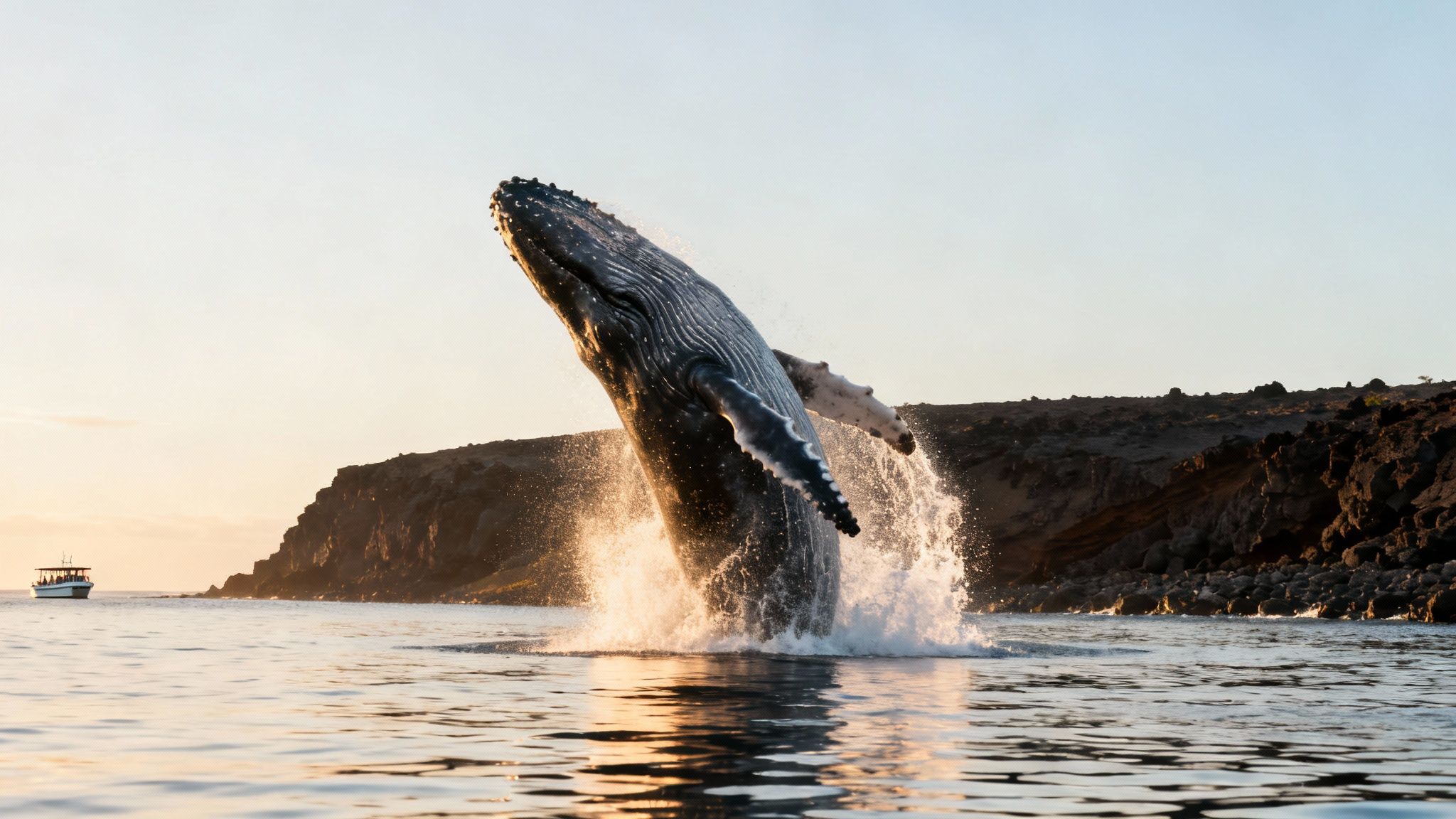
Every single year, thousands of humpback whales follow an ancient, instinctual map. They travel an epic 3,000 miles from their chilly feeding grounds in Alaska all the way to the calm, protected waters of Hawaii. This massive migration is one of nature’s greatest performances, turning the Big Island’s coastline into a bustling nursery where they mate, give birth, and care for their newborn calves.
Choosing the right crew to take you out is the difference between a good trip and a truly amazing one. As the top-rated and most-reviewed snorkel company in Hawaii, we at Kona Snorkel Trips live and breathe these waters. Our team isn’t just experienced; they have a deep understanding of whale behavior and a profound respect for these magnificent animals, which means you get the best possible views while we put the whales' well-being first.
Why the Big Island is a Premier Destination
The waters off the Kona and Kohala coasts are a perfect sanctuary for humpbacks, and it's no accident. The island's enormous volcanoes act as a natural shield, creating a "wind shadow" that leaves the seas exceptionally calm and clear—exactly what a mother whale needs for her vulnerable calf.
This unique geography gives us a few huge advantages for whale watching:
- High Concentration of Whales: The sheltered conditions are a magnet for whales, especially mothers with their young.
- Calmer Waters: The leeward coast means a smoother, more comfortable boat ride, so you can focus on the whales, not your stomach.
- Exceptional Visibility: The clear, tranquil water makes spotting whales and watching their behaviors much easier, even from a distance.
This annual migration isn't just a spectacle; it's a vital part of the humpback life cycle. You are witnessing a crucial chapter where the next generation is born and nurtured before making its first incredible journey back north.
We’ll walk you through everything, from the best time of year to visit to what you can expect to see out on the water. For those ready to witness this natural wonder, our seasonal Big Island whale watching tours offer an intimate and unforgettable adventure. Armed with the right info, you’re all set for an experience that will stay with you long after you’ve returned to shore.
Understanding the Hawaii Whale Season
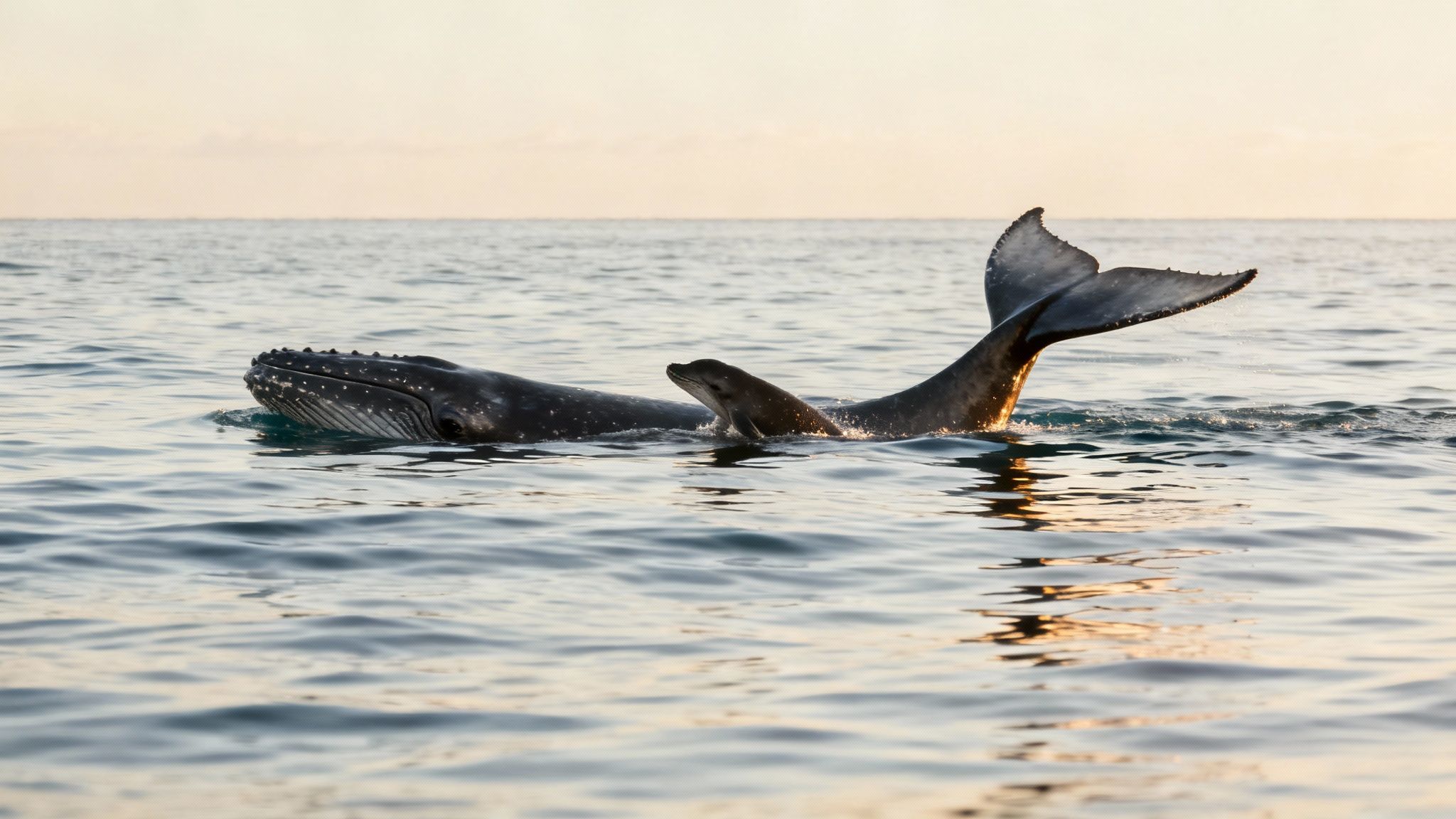
If there's one secret to an incredible whale watching tour, it's timing. Getting it right means dropping yourself into the middle of one of nature's greatest events—an ancient, epic migration that turns the Big Island's coastline into a front-row seat for a truly spectacular show.
Every year, these magnificent humpbacks undertake a monumental journey, traveling an astonishing 3,000 to 4,000 miles from their icy feeding grounds up in Alaska. They're heading for the warm, protected waters of Hawaii, and it’s no casual swim. It's a grueling, months-long pilgrimage made entirely on fat reserves, all for the vital purpose of breeding, giving birth, and raising their newborn calves.
The Annual Humpback Migration Explained
Think of Hawaii as a massive, tropical nursery for whales. They choose our waters for a few critical reasons. For newborn calves, who arrive with very little body fat, the warmth is a matter of survival. The sheltered bays off the Kona and Kohala coasts also offer a safe haven from predators like orcas, letting moms focus on the important job of parenting.
This isn't just a handful of whales, either. Scientists figure that around 12,000 humpback whales—more than half the entire North Pacific population—make this trip each year. When you join a Big Island whale watching tour, you’re not just a spectator; you're witnessing a crucial chapter in the life cycle of these gentle giants.
Breaking Down the Season Month by Month
While the official season runs from November through May, the action on the water definitely has its own rhythm. Knowing the flow helps you pick the perfect time for the kind of experience you're hoping for.
- Early Season (November – December): The first arrivals start showing up, often energetic younger whales and adults looking to mate. Sightings might be a bit less frequent, but the excitement of spotting those first spouts of the season is electric.
- Peak Season (January – March): This is it. Prime time. The ocean is practically buzzing with activity, a bustling "whale soup" where you're most likely to see every type of behavior—from powerful breaches to tender moments between a mother and her calf.
- Late Season (April – May): The last to leave are usually the new moms with their growing calves. While the total number of whales starts to thin out, these encounters are incredibly special. You get to watch the calves, now stronger and more confident, prepping for their very first trip north.
The peak season from January to March is when you'll find the highest concentration of whales. The ocean is alive with activity—males compete for mates in dramatic "competition pods," mothers teach their calves to breach, and the air is filled with the sound of powerful blows.
Choosing when you come can completely shape your adventure. For a closer look at what each month is like, check out our complete guide to the Big Island whale watching season. It’ll give you the inside scoop to time your trip perfectly for the awe-inspiring moments this season is famous for.
Finding the Best Whale Watching Spots
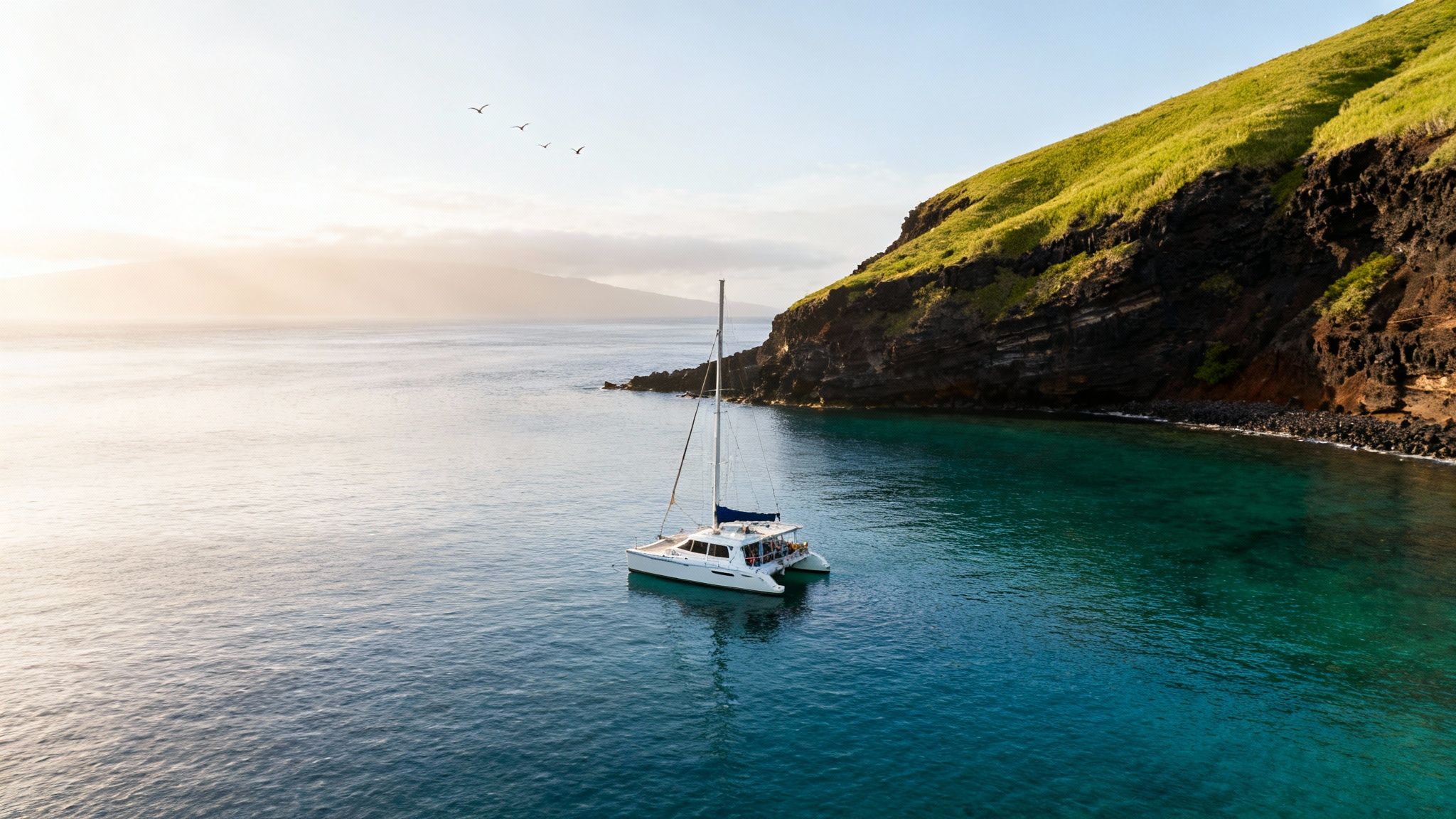
Sure, you might catch a glimpse of a humpback whale anywhere along the Big Island's western shoreline during the season. But there's a world of difference between a distant puff of spray and a full-blown, jaw-dropping breach. To get that front-row seat, you need to go where the whales go.
It all comes down to what the whales are looking for: calm, warm, and safe waters. This is especially true for pregnant females and new moms. They're on the hunt for a sheltered spot to rest, nurse, and teach their calves the ways of the ocean without having to fight strong currents or rough seas. This instinct is exactly what turns certain stretches of our coastline into bona fide whale magnets.
The Kohala Coast: The Undisputed Champion
When you ask any seasoned guide about Big Island whale watching tours, they'll all point you north to the Kohala Coast. This sun-drenched coastline isn't legendary by accident. The sheer mass of the Mauna Kea and Kohala volcanoes creates a massive "wind shadow," shielding the waters from the gusty trade winds.
This natural phenomenon transforms the ocean into a calm, protected sanctuary that humpback mothers find irresistible. Think of it as the perfect nursery. As a result, the concentration of whales here is just staggering. Tour operator logs and scientific observations consistently show sighting frequencies two to three times higher along the Kohala Coast than anywhere else on the island.
What does that mean for you? More encounters, more action, and a much better chance of seeing the full range of humpback behaviors. While the Kona Coast further south is still a great place for whale watching, the sheer density of whales along the Kohala Coast makes it the absolute best bet for an unforgettable day.
Big Island Whale Watching Hotspots
Not all coastlines are created equal when it comes to whale watching. Here’s a quick rundown of the top spots on the Big Island and what makes each of them special.
| Location | Best Months | Why It's a Hotspot | Typical Sighting Success |
|---|---|---|---|
| Kohala Coast | December – March | Protected by volcanic wind shadow, creating calm waters ideal for mothers and calves. Highest concentration of whales. | Excellent |
| Kona Coast | January – March | Deep, clear waters close to shore. Less crowded than Kohala, offering intimate encounters. | Very Good |
| Hawi & North Kohala | December – February | Great for land-based viewing from scenic lookouts. Waters can be rougher, but sightings are frequent. | Good |
| Pu'ukohola Heiau | January – February | A National Historic Site with elevated views over a known whale congregation area. A top spot for shore viewing. | Good (from shore) |
While Kohala is the king, you can see whales from multiple spots around the island. The key is knowing where to look and when!
Timing is Everything: The Morning Advantage
Once you've picked your spot, the next piece of the puzzle is timing your trip. While you can see whales all day, those early morning tours almost always deliver the best experience. There are a couple of simple reasons why.
First, the ocean is usually at its calmest first thing in the morning. That glassy surface makes it so much easier to spot a distant spout or the dark fluke of a whale slipping beneath the waves. It gives your captain and guide a massive head start in finding the action.
The second reason is all about whale behavior. Humpbacks just seem to be more active on the surface in the morning. This is your prime time to witness those spectacular breaches, powerful tail slaps, and curious spy-hops that everyone hopes to see.
The data backs this up. The probability of seeing a whale can be dramatically higher on an early tour. For instance, sighting rates at 8:00 a.m. have been shown to be around 50% higher than trips just a few hours later at noon. Stacking the odds in your favor is what it's all about, and an early start is your best move. For a deeper dive into the best local spots, you might be interested in our guide on whale watching in Kona.
How to Choose the Right Whale Watching Tour
Picking the right boat for your Big Island whale watching tour is just as important as picking the right time of year. The kind of vessel you're on completely shapes your experience out on the water, affecting everything from your comfort level to how up-close-and-personal you get with the whales. Think of it like choosing between a comfy tour bus, a nimble Jeep, or your own private convertible for a scenic drive—each one offers a totally different kind of adventure.
Your choice really comes down to what you value most. Are you looking for stability and space? A thrilling, intimate encounter? Or maybe you want total control over your day on the ocean. Once you understand what makes each option unique, you can find the perfect fit for your group, your budget, and your whale watching dreams.
Large Catamarans: The Stable and Family-Friendly Choice
Large catamarans are the cruise ships of the whale watching world. Thanks to their dual-hull design, they are incredibly stable, which is a huge relief for anyone worried about getting seasick or for families with young kids in tow. These boats usually come with more amenities, too, like actual restrooms, plenty of shaded seating, and even snack bars.
The trade-off for all that space and comfort? The crowd. With dozens of other people on board, you might find yourself jostling for a good spot at the railing when the action heats up.
- Pros: Super stable ride, tons of space, and onboard perks like restrooms. A great option for big families or anyone prone to motion sickness.
- Cons: Bigger groups mean a less personal feel. It can get crowded during a good sighting, and their size makes them less nimble in the water.
Small-Group Zodiacs: The Fast and Intimate Adventure
If you're after a bit of an adrenaline rush, a Zodiac-style raft or a small powerboat delivers a completely different experience. These smaller, quicker boats put you right down at the water's surface, creating a much more immediate and thrilling connection with the ocean. You feel every wave and hear every breath—it's about as immersive as it gets.
The small group size means everyone gets a front-row seat, and the tour feels much more personal. The downside? It's a bumpier ride with very few creature comforts. Expect minimal shade and no restrooms on board.
- Pros: An exhilarating ride with eye-level views of the whales. Small groups make for a personalized tour, and the boats are zippy enough to get to sightings fast.
- Cons: It's a bumpy ride that isn't for everyone. Amenities are limited, and you’ll get a lot more sun and sea spray.
Private Charters: The Ultimate Customized Experience
For the absolute best of both worlds, a private charter is the way to go. You get the intimacy of a small-group tour combined with the comfort and stability of a top-notch vessel, all while having complete control over your day. Want to spend an extra hour with a pod of curious whales? Or maybe switch gears and go for a quick snorkel? You call the shots.
A private charter turns your trip from a standard tour into your own personal ocean expedition. It's perfect for photographers, special celebrations, or families who want the freedom to craft their ideal day on the water without making any compromises.
With Kona Snorkel Trips, a private charter means you get an expert captain and a fantastic boat all to yourselves. This exclusivity guarantees a quiet, uncrowded encounter, letting you connect with the whales on your own terms. It’s the pinnacle of Big Island whale watching tours, offering a level of personalization and intimacy that's simply unmatched.
For a deeper look at different tour styles, check out our guide on what makes various whale watching tours on the Big Island unique.
What to Expect on Your Whale Adventure
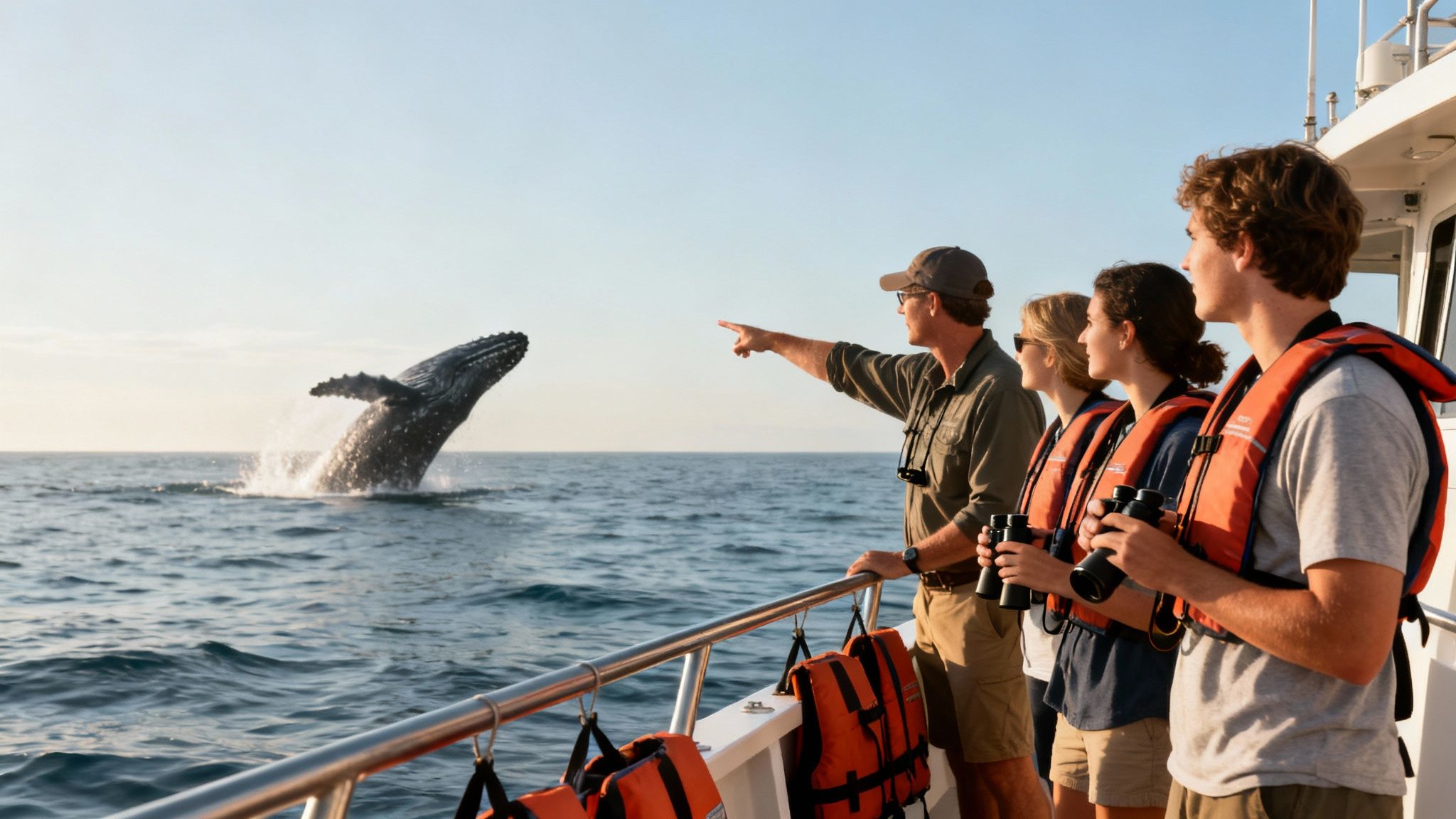
There's a special kind of energy on the boat as you pull away from the Kona coast. Everyone is buzzing with anticipation, scanning the deep blue horizon with that crisp, salty air on their faces, waiting for that first sign. And then it happens. Someone yells, pointing to a misty puff of air hanging over the water—the first spout. In that moment, your Big Island whale watching tour truly begins.
As your captain skillfully and respectfully gets a bit closer, the sheer size of these animals hits you. You can look at all the photos you want, but nothing prepares you for the sight of a 40-foot, 40-ton giant gliding effortlessly through the water. It’s a full-sensory experience; you don't just see them, you can often hear the powerful whoosh of their breath as they surface.
The absolute highlight for many folks is when the captain finds a quiet moment to drop a hydrophone into the water. You slip on a pair of headphones, and suddenly you're listening in on their world. The complex, haunting songs of the male humpbacks echo up from the depths—an otherworldly soundtrack that connects you to the ocean in a way you'll never forget.
Decoding Incredible Whale Behaviors
Part of the magic is learning what you're actually seeing out there. Your naturalist guide is like your personal translator, explaining the meaning behind every splash, slap, and surface-shattering leap. It takes the trip from just watching whales to truly understanding them.
You might get to see some of these incredible displays:
- Breach: This is the one everyone dreams of seeing. A humpback launches its entire massive body out of the water in an explosive show of power and grace. Scientists have a few theories—it could be a way to talk to other whales, shake off parasites, or maybe they're just doing it for the sheer joy of it.
- Spy-Hop: A personal favorite for many of us. This is when a whale pokes its head straight up out of the water to get a look around. It feels like an act of pure curiosity, as if the whale is just as interested in checking you out as you are in them.
- Tail Slap: You'll hear this one before you see it—a loud, forceful slap of the tail (or fluke) on the water. That percussive sound can be a warning to other whales, a way to communicate over long distances, or even a technique to stun small fish for an easy snack.
- Pectoral Fin Slap: Whales will often roll onto their sides and smack their long pectoral fins on the water again and again. It's another form of communication, and you'll often see it when whales are socializing in big, active groups.
Each behavior is a piece of a complex social language. By understanding what you're seeing, you gain a richer appreciation for the intelligence and intricate lives of these gentle giants.
Your Essential Packing Checklist
Coming prepared just means you can relax and focus on the show without being uncomfortable. The weather on the water can be a world away from what it is on shore, so a little planning goes a long way.
Here’s a quick checklist for a perfect day on the water:
- Layers are Key: Even on a warm, sunny Kona day, the breeze out on the ocean can have a chill to it. A light waterproof or wind-resistant jacket that you can easily take off is perfect.
- Sun Protection: The Hawaiian sun is no joke, and the reflection off the water doubles its intensity. Be sure to pack reef-safe sunscreen, a wide-brimmed hat, and polarized sunglasses. The sunglasses are a pro tip—they cut the glare and make it way easier to spot whales just below the surface.
- Camera and Binoculars: You’ll definitely want to snap some photos, but try to remember to put the camera down and just soak it all in. Binoculars are fantastic for getting a closer look at distant action without disturbing the whales.
- Seasickness Prevention: If you know you're prone to motion sickness, it's a good idea to take medication the night before and again the morning of your trip. Staying hydrated and keeping your eyes on the horizon also makes a huge difference.
Watching Whales Responsibly
There's nothing quite like a close encounter with a humpback whale, but the most incredible moments are the ones where we remember we're guests in their home. This isn't just about following rules; it's about respecting the enormous journey these animals have made. They've traveled thousands of miles to Hawaii's protected waters to give birth and raise their calves, and our presence can have a real impact.
Any disturbance can cause a lot of stress, especially for a new mom trying to protect her vulnerable baby. That's why choosing the right tour operator for your Big Island whale watching tour is one of the most important decisions you'll make. A truly professional and ethical crew understands that the whales' well-being always, always comes first.
Understanding the Rules of the Ocean
To protect these gentle giants, there are strict federal and state laws that everyone on the water must follow. The big one to know is the 100-yard approach rule.
This law makes it illegal for any vessel—from a large tour boat to a tiny kayak or paddleboard—to get within 100 yards of a humpback whale. Think of it as the length of a football field. This creates a critical buffer zone, giving the whales the space they need to rest, nurse, and just be whales without feeling threatened by us. Good tour operators are experts at getting you amazing views while strictly honoring this boundary.
Your Role in Conservation
When you book a tour with an ethical company, you're doing more than just buying a ticket. You're becoming part of a larger conservation story. Your support helps protect Hawaii's entire marine ecosystem for generations to come.
Community science projects also play a huge role in protecting the local whale population. Long-running initiatives like the volunteer-driven Sanctuary Ocean Count and Great Whale Count provide priceless data on Hawaiian humpbacks. For instance, during the final count of the 2025 season, observers tallied 714 whales across Hawaii, with 28 whales spotted from 8 different Big Island monitoring sites alone. You can read the full report on the 2025 whale count to see how these community efforts make a difference.
When you understand the effort that goes into protecting these animals, it adds a much deeper meaning to your trip. Your adventure becomes a force for good, helping ensure that the incredible sight of a breaching humpback will continue to grace our waters for years to come.
These conservation efforts have been a massive success, helping humpback populations make an incredible comeback. To get the full picture of their amazing recovery, you can learn more about the history of humpback whales and the endangered species list. By choosing to be a responsible tourist, you help continue this amazing success story.
Your Whale Watching Questions, Answered
Planning a Big Island whale watching tour is exciting, but it's natural to have a few questions bubble up. Getting the answers sorted out beforehand means you can relax and just soak in the incredible experience. Here are some of the most common things we get asked by our guests.
Is a Whale Sighting Guaranteed on a Tour?
This is the big one! While our success rate is sky-high during peak season (January to March), it’s crucial to remember we’re dealing with wild animals on their own time. Because of that, no one can ever promise a sighting with 100% certainty. It just wouldn't be genuine.
What we can do is use our years of experience on these waters to put you in the best possible position for a magical encounter. Many reputable tour operators, including us, offer a "whale guarantee." This usually means if the whales decide to be shy on your trip, you can come back out with us again for free. Just make sure to ask about the specific policy when you're booking.
What Is the Best Time of Day for Whale Watching?
We almost always recommend an early morning tour. The ocean between 7 AM and 9 AM is typically at its calmest, creating that beautiful, glassy surface that makes spotting a distant spout or fluke so much easier.
On top of that, the whales themselves often seem to be more active near the surface in the morning. Booking an early trip generally gives you the best of both worlds: great viewing conditions and a higher chance of seeing those spectacular breaches and tail slaps.
Can I See Whales From the Shore?
Absolutely! Spotting a breach from the Big Island's shoreline is always a thrill. Elevated spots along the Kohala Coast, like Lapakahi State Historical Park or the Puʻukoholā Heiau National Historic Site, are fantastic places for land-based viewing.
That being said, nothing compares to being out on the water. A boat tour gets you closer (while always respecting the federally mandated 100-yard approach limit), lets you hear the powerful whoosh of their breath, and gives you a front-row seat to their awe-inspiring behaviors in incredible detail.
What Should I Do if I Get Seasick?
If you know you're prone to a bit of motion sickness, a little preparation goes a long way. Consider an over-the-counter remedy like Dramamine or Bonine. For best results, take it the night before and then again the morning of your tour.
Once you're on the boat, stay outside in the fresh air and keep your eyes fixed on the stable horizon line instead of looking down at the boat or your phone. Staying hydrated also helps! Choosing a larger, more stable vessel like a catamaran can also make a huge difference in keeping you comfortable.
Ready for an intimate and respectful adventure with Hawaii's gentle giants? Come join Kona Snorkel Trips for one of our seasonal whale watches. Book your tour today