
Big Island Whale Watching Season A Guide to Peak Months and Tours
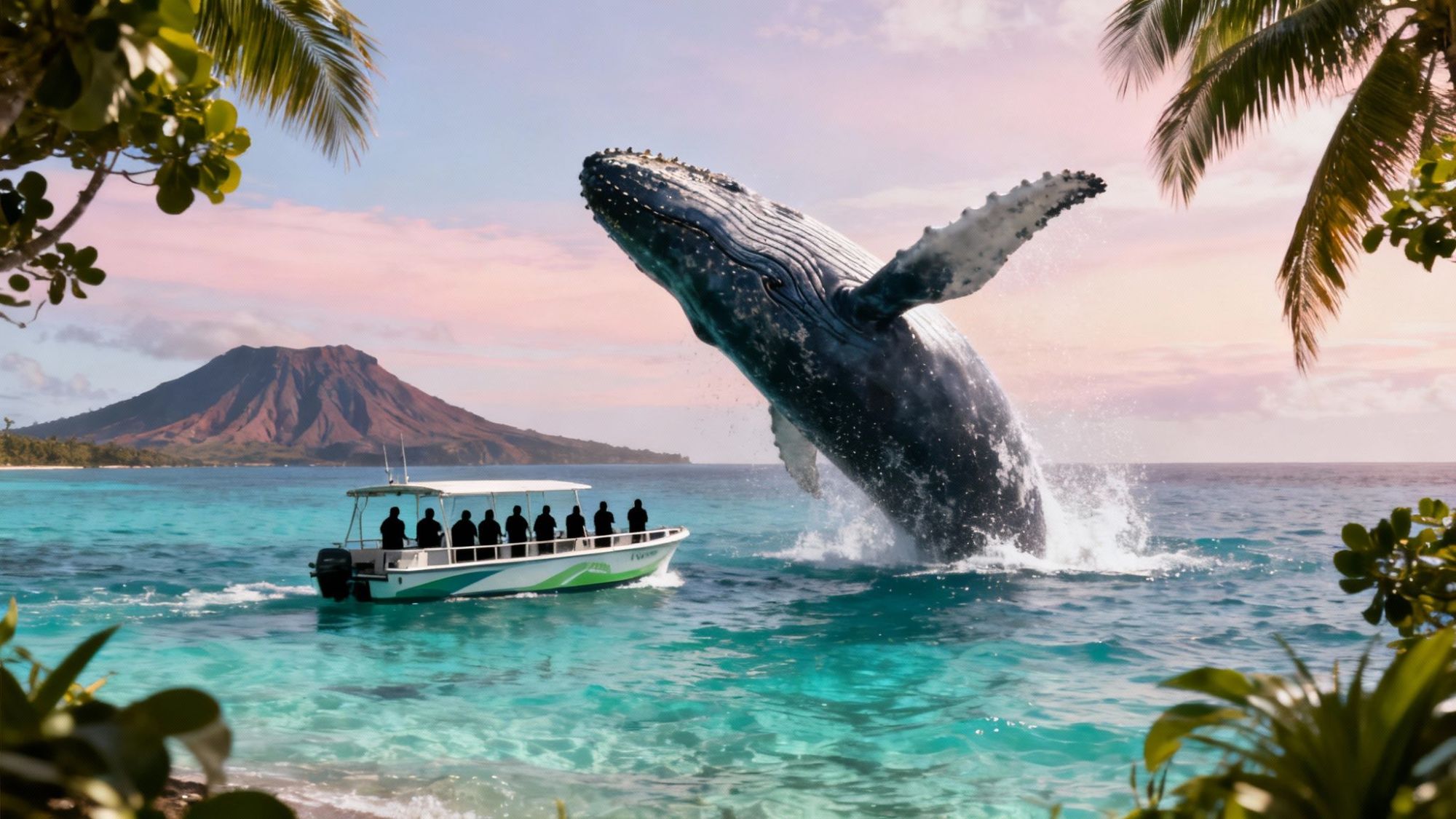
If you're dreaming of seeing humpback whales in Hawaii, you’ve come to the right place. This is your ultimate guide for experiencing one of the most magnificent natural wonders on the planet, right here off the shores of the Big Island.
Your Guide to the Big Island Whale Watching Season
A whale watching trip on the Big Island is so much more than just a boat tour. It's a front-row seat to an ancient, awe-inspiring migration that’s been happening for millennia. Every year, thousands of humpback whales journey from the frigid feeding grounds of Alaska to the warm, sheltered waters surrounding the Hawaiian Islands.
The official Big Island whale watching season runs from November to May, but if you want to see the real action, the absolute peak months are January, February, and March. That’s when whale activity is at its most spectacular and the sightings are most frequent.
We've dedicated our lives to creating unforgettable ocean experiences. As the top-rated and most-reviewed snorkel company in Hawaii, our team at Kona Snorkel Trips lives for this stuff, and our guest reviews really say it all.
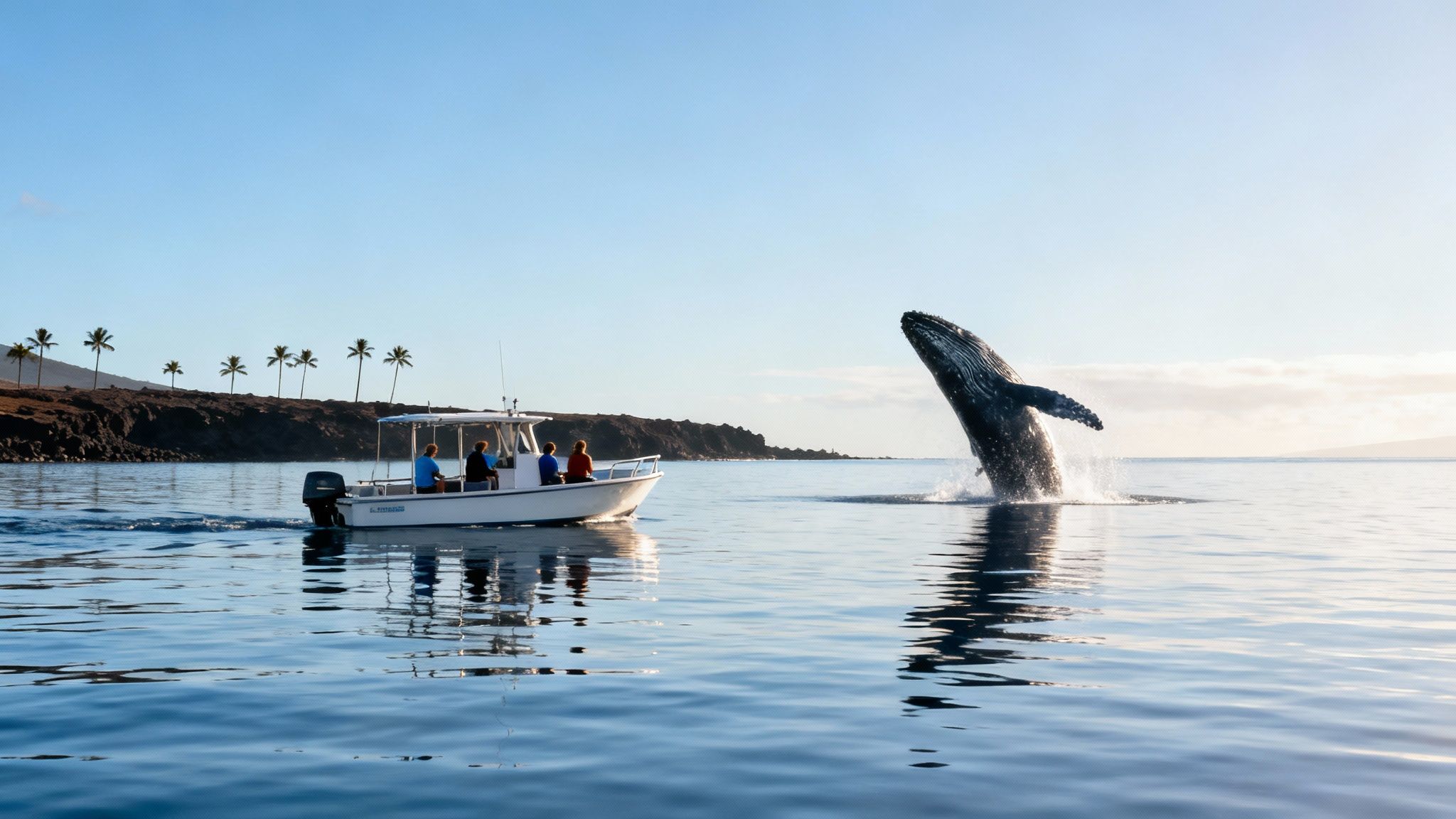
Understanding the Annual Whale Migration
So, why do they make this incredible journey? It's all about survival and continuing the species. The whales make this pilgrimage to Hawaii's warm, protected waters for three big reasons:
- Breeding: Males put on spectacular competitive displays—like breaching and tail-slapping—to win over the females.
- Calving: The warm, calm waters provide a safe, protected nursery for mothers to give birth away from predators.
- Nursing: Newborn calves don't have the thick blubber needed for cold Alaskan water, so they nurse and grow strong here.
The season officially kicks off in late November when the first expectant mothers arrive. Think about that for a second—they've just swum nonstop for one to two months from Alaska, covering up to 3,500 miles one way.
While the season technically runs through early May, the real show gets going in January, with February and March offering the absolute highest probability of sightings. You can get even more insights about the whale watching season on the Big Island from our expert guides.
There’s truly no better way to witness this than on an expertly guided tour. Our whole goal is to immerse you in the excitement, give you a deep appreciation for these gentle giants, and make sure your adventure is as thrilling as it is educational.
The Incredible Journey of Humpback Whales
Every winter, the calm waters off the Big Island become the grand finale for one of nature's most epic road trips. But this isn't just a casual swim for the humpback whales; it's a profound pilgrimage, an ancient instinct driving them to survive and bring a new generation into the world.
These gentle giants travel an incredible 3,500 miles from the frigid, food-packed seas of Alaska all the way to Hawaii's warm, sheltered bays.
Imagine setting out on a months-long journey without packing a single snack. That's exactly what they do. For the entire time they're in Hawaii, adult humpbacks don't eat. Every powerful breach and tail slap you see is fueled purely by the fat reserves they spent all summer building up in Alaska.
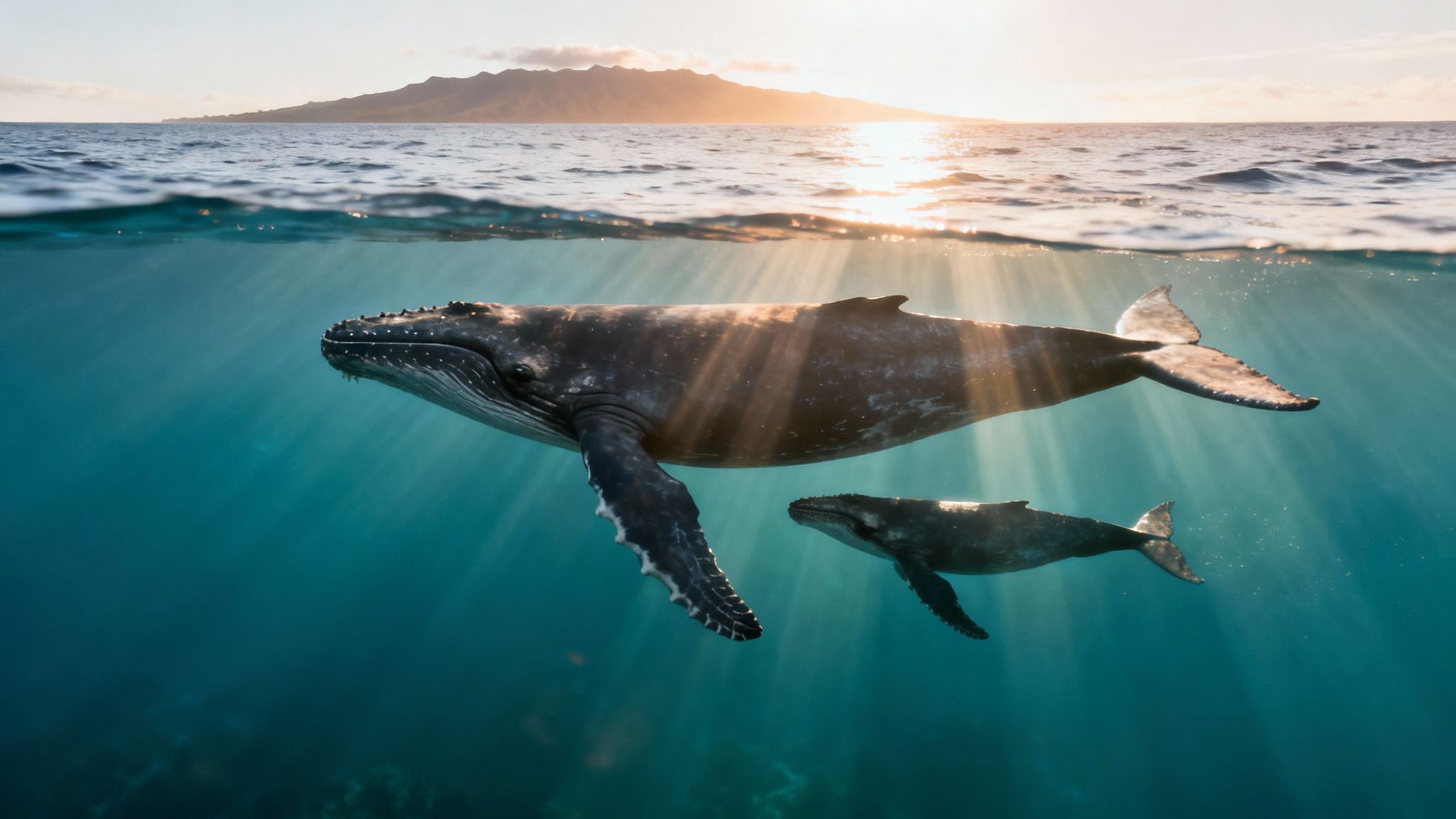
Paradise Turned Nursery
So, why make this grueling, foodless journey year after year? Simple: Hawaii's waters are the perfect place for the most important parts of their lives—breeding, giving birth, and nursing their young in safety. The Kona and Kohala coasts are especially popular spots.
The Big Island itself acts like a massive shield, blocking the strong trade winds and creating a calm, protected sanctuary on its western side. This is crucial for a few big reasons:
- Warmth for the Little Ones: A newborn calf, tipping the scales at about a ton, doesn't have the thick blubber it needs to survive Alaska's icy waters. Hawaii is like a natural incubator, giving them a safe place to grow stronger.
- A Predator-Free Zone: The relatively shallow, clear waters offer a safe haven from predators like killer whales, which prefer the colder, deeper seas up north.
- The Courtship Stage: The calm surface is also the perfect arena for the spectacular, competitive shows put on by males trying to win over a mate.
This annual cycle transforms our ocean into a bustling nursery and a dramatic stage for courtship, making the Big Island whale watching season a spectacle you won't find anywhere else.
The Sanctuary That Keeps Them Safe
Recognizing how vital this habitat is, a huge portion of Hawaiian waters is designated as the Hawaiian Humpback Whale National Marine Sanctuary. This protected status is absolutely essential for the long-term survival of the North Pacific humpback whale population.
The sanctuary’s mission is to protect these whales and their home through research, education, and conservation. It ensures activities like whale watching are done responsibly, so we can witness these magnificent animals without disrupting the very things they came here to do.
When you understand the incredible story behind their migration, your whale watching trip becomes so much more than just a tour. It’s a real connection to one of nature’s greatest cycles—a timeless story of resilience, family, and survival playing out right in front of you.
Getting the timing right is the secret to an unforgettable whale watching trip on the Big Island. The experience on the water changes completely from month to month. You can think of the entire season as a huge festival—the crowds, the energy, and what's happening on the main stage are always in flux.
Deciding when to book your tour really just depends on what you're hoping to see. Are you after the high-stakes drama of males competing for a mate, or are you hoping for those quiet, tender moments between a mother and her brand-new calf? Each part of the season offers a totally different glimpse into their world.
Early Season Anticipation: November to December
The season kicks off with a real sense of excitement in the air. Starting in November and really picking up in December, the first humpbacks start to arrive after their incredible migration from Alaska. These are usually the adults without calves, and they're ready to make a splash.
This early period is often dominated by powerful males chasing females, which means you get some spectacular action on the surface. While the total number of whales is still building, the behaviors you see are often incredibly intense and really stick with you.
Peak Season Prime Time: January to March
If the early season is the arrival party, then January through March is the main event. During these months, the waters off the Big Island become a bustling metropolis for humpback whales. This is when the population hits its absolute peak, and your chances of seeing multiple whales on a single trip are at their highest.
Kona's calm, clear waters are especially perfect during this time. You'll have the best odds of spotting breaches, tail slaps, and pectoral fin waves—all behaviors that ramp up as more than 8,000 humpbacks gather here to breed, give birth, and nurse their young.
The social scene also shifts. While you’ll still see plenty of competition, a truly heartwarming new element arrives: newborn calves. There’s nothing quite like seeing a mother patiently teaching and guiding her curious baby through the water.
Late Season Goodbyes: April to May
As March wraps up and April rolls in, the energy on the water changes once more. The festival is starting to wind down, and many of the more boisterous adults have already begun their long swim back north. But the show isn't over just yet.
This late season is all about the moms and their growing calves. These pairs are often the last to leave, giving the babies extra time to pack on blubber and build up strength for the challenging journey ahead. The pace is a bit slower, the interactions are gentler, and the focus is on that powerful bond between mother and child.
To help you line up your vacation with the best possible whale watching, we've put together a quick guide. For an even more detailed look at what to expect, check out our comprehensive guide on the full whale season in Hawaii.
Here's a simple breakdown of what to expect month by month, so you can plan the perfect trip.
Big Island Whale Watching Season Calendar
A month-by-month guide to whale watching activity levels and what you're likely to see.
| Month | Sighting Probability | Common Whale Behaviors |
|---|---|---|
| November-December | Low to Medium | The first arrivals appear—mostly adults engaged in early courtship and competition. |
| January-March | High (Peak) | The main event! Expect high-energy competition, frequent breaches, and mothers with newborn calves. |
| April-May | Medium to Low | A last chance to see mothers and calves as they prepare for and begin their journey north. |
By May, things get very quiet as the last of the whales depart, leaving the waters peaceful until they return again in the fall.
Alright, you've figured out when to come for whale season. Now for the million-dollar question: where do you go?
On the Big Island, location is everything. And while you can get lucky and spot a breach from many places, there’s one stretch of coastline that is, without a doubt, the undisputed champion for whale encounters.
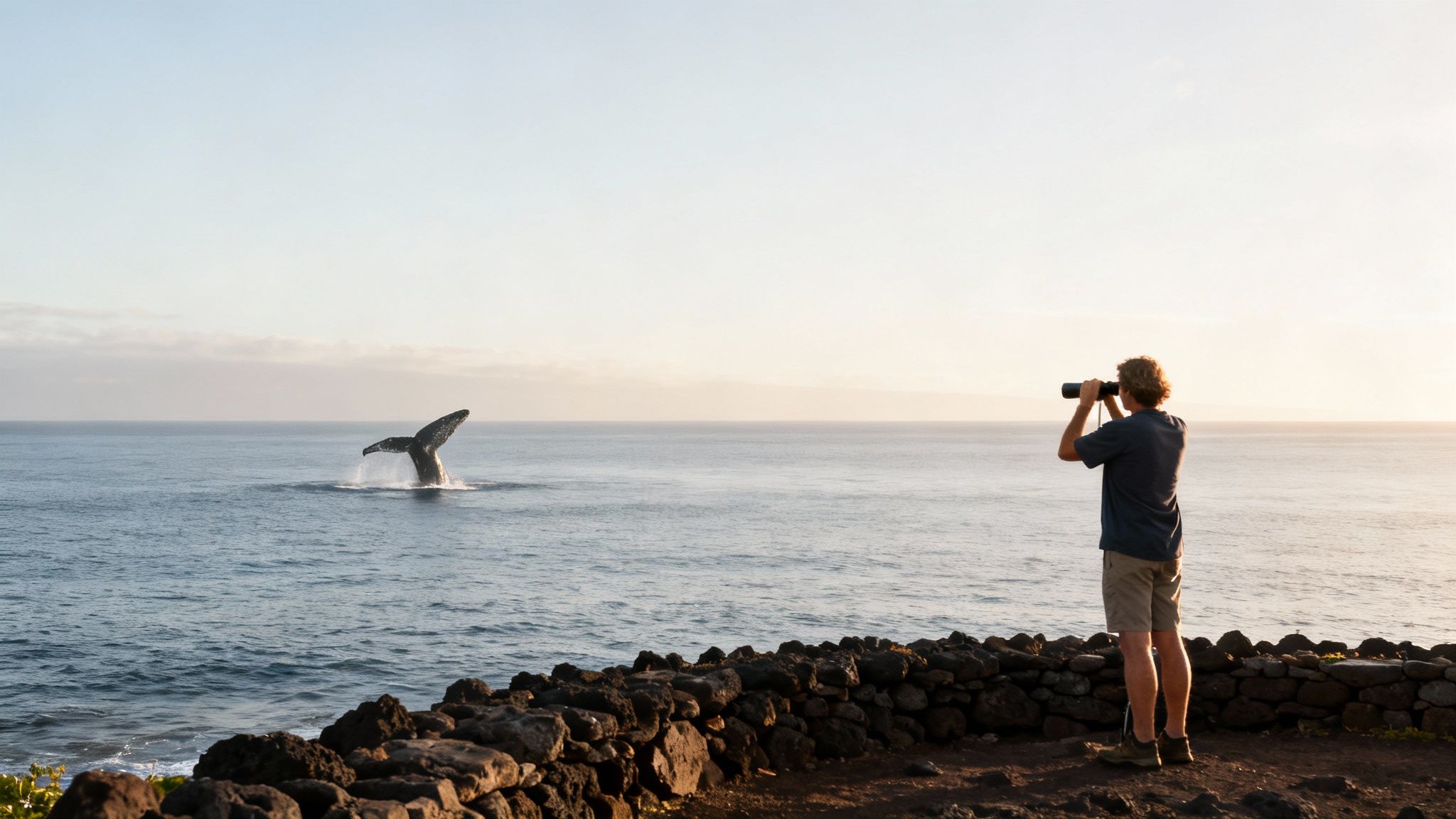
Think of the Big Island’s western coast as a natural sanctuary. The island’s colossal volcanoes act as a massive shield, blocking the powerful trade winds and creating calm, protected waters. It’s the perfect nursery for humpback mothers to give birth and care for their newborn calves, which is why the entire coastline becomes a magnet for whale activity.
The Kona-Kohala Coast: A Whale Sanctuary
The strip of ocean just off the Kona and Kohala coasts is the absolute epicenter. The water here is warm, deep, and unbelievably calm—exactly the conditions these whales travel thousands of miles to find for breeding and calving. This perfect combination of geography means you get a much higher concentration of whales than anywhere else around the island.
During the peak months, the Kohala coast, in particular, becomes the ultimate hotspot. In fact, sightings here can be two to three times more frequent than in other areas. It’s all thanks to those serene, deep waters that create the perfect kindergarten for a new generation of humpbacks.
This is precisely why getting out on the water with a guided boat tour is a game-changer. You just can’t get that same perspective or respectful proximity from the shore.
The Advantage of a Guided Boat Tour
Watching from land is amazing, don't get me wrong. But a small-group boat tour puts you right in the heart of the action (while keeping a respectful distance, of course). Our expert guides live and breathe these waters. They know the whales' favorite hangouts and can translate all the incredible behaviors you're seeing, turning a simple sighting into a full-blown educational adventure.
An expert-led tour transforms your experience from just seeing whales to truly understanding them. Our guides explain the meaning behind every breach and tail slap, helping you connect with these incredible animals on a deeper level.
A small-group trip guarantees an intimate, front-row seat. We’re out here every day, and our crew is passionate about sharing the magic of the Big Island whale watching season with every single guest. We're committed to making sure your day is safe, respectful, and absolutely unforgettable.
You can learn more about what makes our whale watching trips from Kailua-Kona so special and how we create those once-in-a-lifetime moments.
How to Choose Your Perfect Whale Watching Tour
Picking the right tour is just as important as picking the right month for your trip. Your whole experience out on the water really hinges on the operator you choose, so it pays to find a company that puts safety, respect for wildlife, and a fantastic guest experience above all else.
Let's be honest, not all tours are created equal. The best ones share a common DNA—a deep-seated commitment to protecting the marine environment and making sure every encounter is a positive one for both the whales and the people watching them. You can feel this passion in everything they do, from the crew they hire to the way they handle the boat.
What to Look for in a Top-Tier Operator
When you're sifting through your options, there are a few things that are absolute non-negotiables. Think of this as your checklist for spotting a truly professional and responsible tour company that will turn a good day into an unforgettable one.
- Lifeguard-Certified Guides: This one's huge. Your safety is everything. When the crew is made up of certified lifeguards, you can relax and enjoy the show, knowing you're in the hands of professionals trained for any situation on the water.
- Small Group Sizes: This makes a world of difference. A smaller group means a better, more personal experience. You get a clear, unobstructed view, more time to chat with the guides, and a much more intimate vibe on the boat.
- Respectful Wildlife Viewing: A top-tier operator doesn't just follow the rules; they're proud of it. They'll always maintain a respectful distance of at least 100 yards from the whales, as required by federal law. This ensures the animals aren't stressed, which lets you see them behaving naturally.
At Kona Snorkel Trips, these principles are the heart of what we do. Our team is genuinely passionate about creating safe, intimate, and educational trips that build a real appreciation for the incredible marine life we get to see during the Big island whale watching season.
Dedicated Tours Versus Private Charters
For most folks, a dedicated seasonal whale watching trip is the perfect ticket. These small-group tours are designed from the ground up to maximize your chances of seeing whales, led by guides who know exactly where to look for the most action.
But if you're looking for a completely custom adventure, a private charter is the way to go. It offers total flexibility. You can set your own schedule, decide how long you want to linger with a particular pod, and design a day on the water that's built just for your group. It’s a fantastic choice for serious photographers, families celebrating something special, or anyone who just wants the boat all to themselves.
The Educational Edge
A great tour is so much more than just a boat ride—it’s a floating classroom. Our expert crew doesn't just point and say, "There's a whale!" They bring the whole world of these animals to life.
They'll break down the difference between a breach and a tail slap, explain the intense social drama of a competitive pod, and share all kinds of fascinating tidbits about whale biology and behavior.
We even bring out the hydrophone, a special underwater microphone, so you can listen in on the complex and mesmerizing songs of the humpback whales. Hearing those haunting melodies echo up from the deep is a powerful, moving experience you'll never forget. This focus on education makes the whole trip more thrilling and way more meaningful. To see what we mean, check out what makes our Kona whale watching tours a truly unique experience.
Preparing for Your Day on the Water
A little bit of prep work can make the difference between a good whale watching trip and an absolutely unforgettable one. Packing the right gear means you’ll be comfortable and ready for anything, letting you soak in every incredible moment of the Big Island whale watching season without a single distraction.
Think of it like getting ready for a mini-expedition. The conditions out on the open ocean can be a whole different world from what you feel on land—the breeze is cooler, and the sun feels twice as strong when it's bouncing off the water. Being ready for that shift means you can focus on spotting a breach, not on being chilly or getting a sunburn.
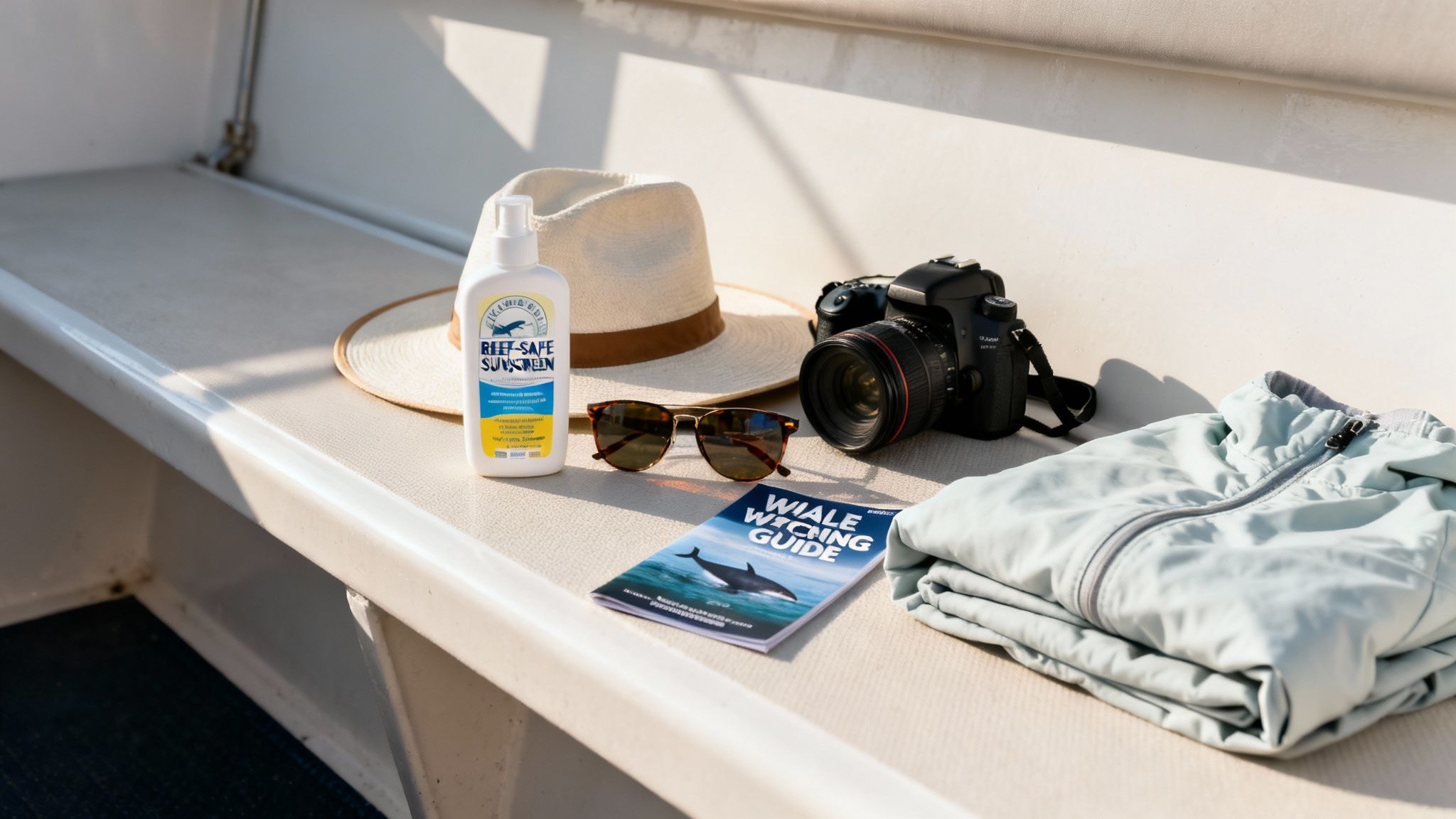
Your Essential Whale Watching Checklist
To make sure your day is comfortable and completely epic, here are a few things we always tell our guests to bring along:
- Reef-Safe Sunscreen: The Hawaiian sun is no joke, especially when it’s reflecting off the ocean. Do your skin and our fragile coral reefs a favor by slathering on a mineral-based, reef-safe formula.
- Polarized Sunglasses: Seriously, these are a game-changer. They slice right through the glare on the water’s surface, which makes spotting that first spout or fluke so much easier.
- A Light Jacket: Even on the most beautiful, sun-drenched Kona day, the wind can pick up once you're out on the water. A simple windbreaker or light jacket is usually all you need to stay cozy.
- Hat and Camera: A wide-brimmed hat is your best friend for extra sun protection. And you’ll definitely want a camera with a good zoom to capture those mind-blowing moments from a safe and respectful distance.
Responsible Viewing Practices
The most important thing to remember is that a truly successful day of whale watching is one where we get to marvel at these incredible animals without getting in their way. Federal law is crystal clear: all boats must maintain a distance of at least 100 yards from humpback whales.
At Kona Snorkel Trips, we don’t just follow these rules—we live by them. Our entire crew is trained to approach whales with the utmost respect, making sure our presence never disrupts the natural behavior of the gentle giants we're all so lucky to see.
This commitment to responsible viewing keeps both you and the whales safe. It allows them to go about their crucial business of breeding and calving undisturbed, ensuring your adventure is as ethical as it is thrilling.
Of course, you probably have a few questions floating around. Let's tackle some of the most common ones we hear from visitors planning their whale watching adventure.
Can You Guarantee We'll See Whales?
Honestly, no one who respects these animals can make that promise. They're wild creatures on their own schedule. That said, during the peak months from January to March, your odds are incredibly high. Most reputable tour operators, including us, have a "rain check" policy. If the whales decide to be shy on your trip, you can come back and try again for free.
Why Is Everyone So Set on Morning Tours?
There are a couple of really good, practical reasons why morning trips are so popular. First, the ocean is usually much calmer, like glass. That smooth surface makes it way easier to spot a distant spout or a breach. Second, the winds haven't typically picked up yet, which just makes for a more comfortable and pleasant ride for everyone on board.
Realistically, How Many Whales Can We Expect to See?
While every day out on the water is a new adventure, the peak season is something else entirely. It’s not uncommon to have 20 to 30 whale sightings per hour off the Kona coast. You’ll see everything from dramatic breaches to groups of males competing for attention—it can be a non-stop spectacle. This incredible concentration of activity is what makes the experience so unforgettable. You can get a better sense of it from these whale watching insights.
What if I Get Seasick?
Don't let a sensitive stomach keep you on shore! If you're worried about motion sickness, your best bet is to book a tour on a larger, more stable boat like a catamaran. You can also take an over-the-counter remedy before you leave the dock, sip on water, and make sure to keep your eyes fixed on the steady horizon.
Ready to witness this breathtaking natural wonder for yourself? At Kona Snorkel Trips, our expert guides love sharing this experience on unforgettable small-group tours that bring you respectfully close to these magnificent animals. Book your adventure today and make some memories that will last a lifetime.