
Your Ultimate Guide to Big Island Whale Watching
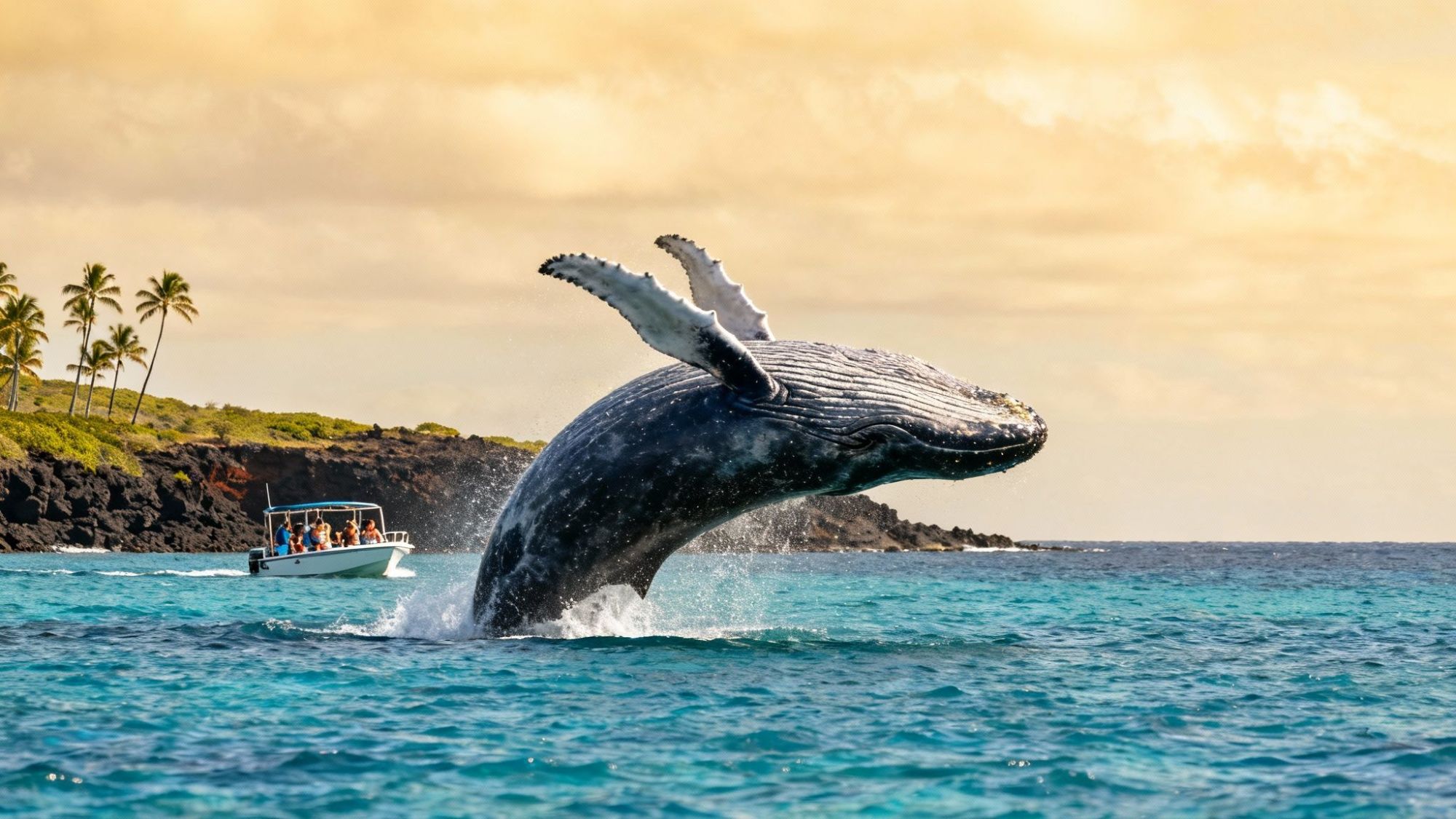
Picture this: the calm, blue surface of the Pacific erupts as a forty-ton humpback whale launches its entire body out of the water. It’s a powerful, stop-you-in-your-tracks kind of moment that makes Big Island whale watching one of the best adventures on the planet.
This guide is your ticket to experiencing that awe for yourself. The yearly migration of these gentle giants isn't just a seasonal event; it's a real, tangible connection to the wild heart of the ocean.
Whale watching season here is a breathtaking experience, with the absolute best viewing happening from mid-December through March. During these months, thousands of humpback whales flock to Hawaii's warm, protected waters to mate, give birth, and nurse their newborn calves. It's a natural spectacle you won't ever forget.
To get a feel for the adventure, see what other travelers are saying. Here at Kona Snorkel Trips, we're proud to be the top-rated & most-reviewed snorkel company in Hawaii, and our guests' experiences really tell the story.
Why This Experience Is So Special
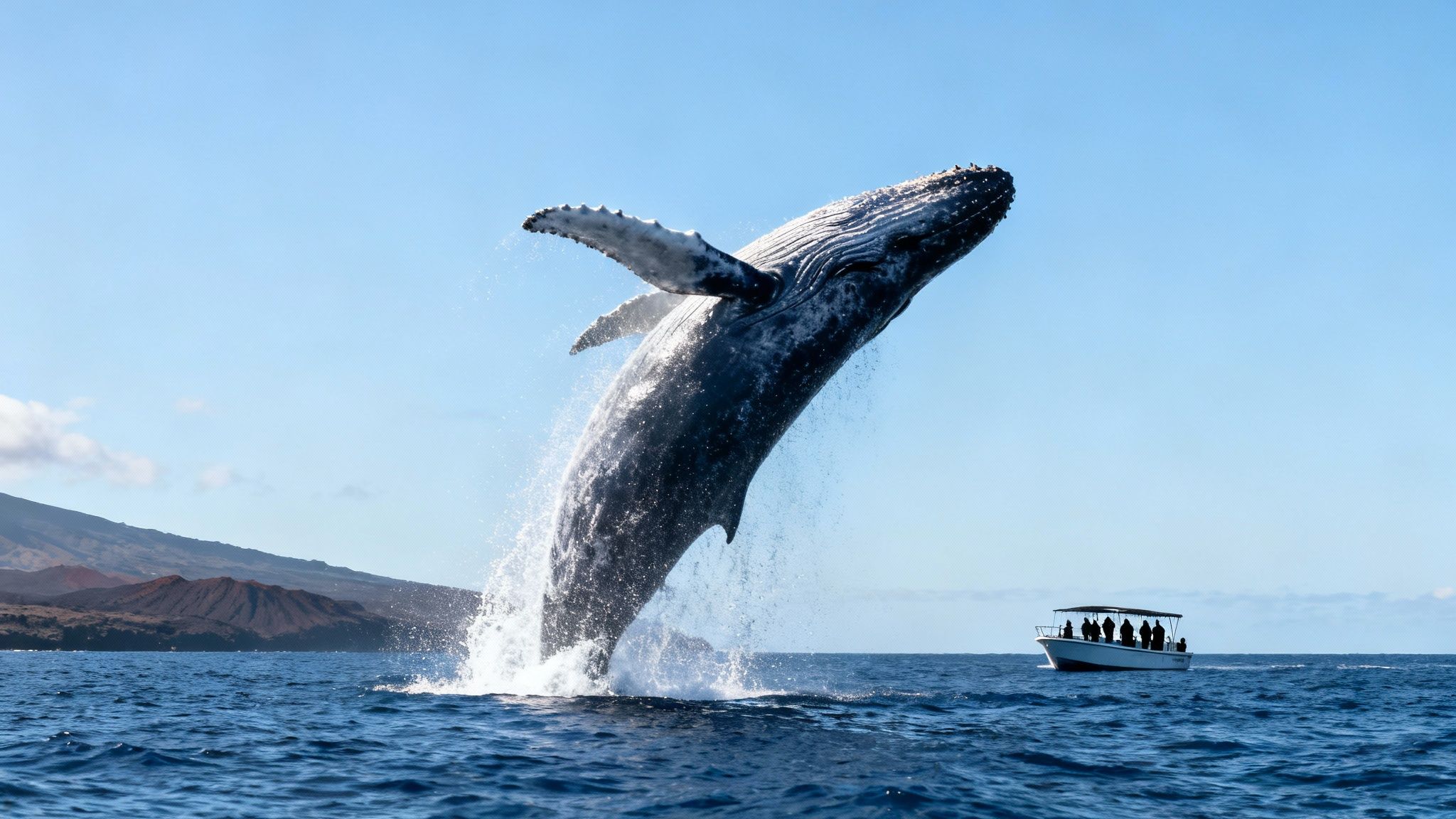
Every single year, these magnificent animals make an unbelievable 3,000-mile journey from their icy feeding grounds up in Alaska. They travel for months without a single bite to eat, surviving only on their fat reserves to make it here. The warm, sheltered waters around the Big Island—especially along the Kona and Kohala coasts—are the safe haven they’ve been searching for.
This epic journey is all about the most basic instincts:
- Breeding and Mating: The ocean becomes a massive stage for males to compete for mates. This often leads to some of the most spectacular surface action you’ll ever see.
- Birthing Calves: Pregnant females look for calm bays to give birth, keeping their newborns safe from the predators of the deep open ocean.
- Nursing Newborns: Calves are born with very little body fat. They need these warm waters to thrive and build up strength for their very first trip back north.
Watching these events play out is like having a front-row seat to one of nature's most incredible life cycles. It's an intimate look into the world of one of the largest and smartest mammals on Earth.
Planning Your Unforgettable Journey
This guide is built to give you everything you need to plan the perfect trip. We'll dive into the best times to visit, the top spots for viewing from both shore and sea, and how to pick a tour that guarantees a safe, respectful, and truly memorable encounter.
When you understand the "why" behind their long pilgrimage, your trip transforms from a simple sightseeing tour into something much more meaningful. Get ready to witness the raw power and surprising grace of humpback whales in their natural element.
The Incredible Journey of Hawaii's Humpback Whales
The arrival of humpback whales in Hawaii isn't just a casual visit; it's the final, triumphant leg of an incredible pilgrimage. Every year, these gentle giants embark on a monumental trip, swimming around 3,000 miles from the icy, nutrient-rich feeding grounds of Alaska all the way to the warm, protected waters around the Hawaiian Islands. It's one of the longest migrations of any mammal on the planet.
Imagine swimming for months without a single bite to eat. That’s exactly what these whales do. They survive entirely on their blubber reserves, pushed forward by a powerful, ancient instinct to reach this winter sanctuary. This journey is a massive physical test, but it's absolutely crucial for the survival of their species.
A Tropical Nursery for a New Generation
So, what makes Hawaii the ultimate finish line for such a demanding trek? The answer is in the warm, calm, and relatively shallow waters, particularly off the Kona and Kohala coasts of the Big Island. These conditions create the perfect oceanic nursery for the most important moments in a humpback's life.
The Hawaiian waters are their destination for three main reasons:
- A Place for Mating: The ocean turns into a grand stage where male humpbacks compete for the attention of females. This often leads to some of the most spectacular surface shows you'll ever see, like dramatic breaches and powerful tail slaps, as the males show off their strength.
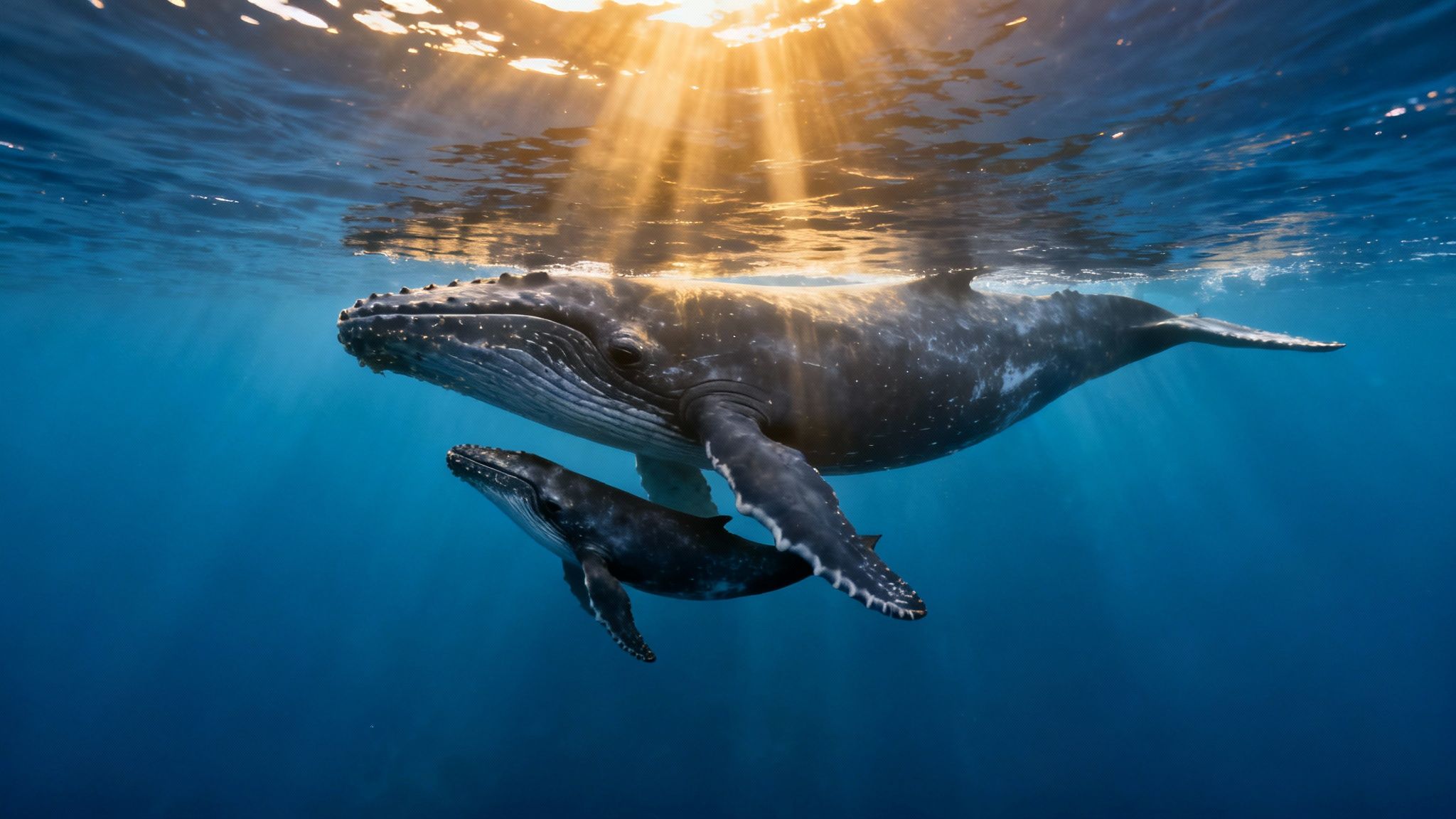
- A Safe Haven for Birth: Pregnant females travel thousands of miles specifically to find these sheltered bays to give birth. The warm water is vital for newborn calves, who are born with very little body fat and would never survive in the frigid seas up north.
- A Classroom for Calves: Right here, mothers teach their young the essential skills they need to survive. They nurse their calves, helping them pack on the blubber and build the strength for their very first migration back to Alaska.
This annual cycle is what makes Big Island whale watching so special. You're not just looking at animals in the water; you're witnessing a vital, intimate chapter of their lives unfold right before your eyes, in a place they've returned to for generations.
Timing Your Big Island Whale Watching Adventure
Knowing the rhythm of their migration is the key to planning an unforgettable whale watching trip. While the first few trailblazers might show up early, the season builds to a powerful peak. The 2025-2026 season kicked off with a bang when the first humpback was spotted off the Big Island's Puako coast on October 8, 2025—an unusually early arrival that has everyone excited for a phenomenal season. More than 12,000 whales, over half the entire North Pacific population, make the 3,000 to 4,000-mile journey here each year.
Here’s a rough breakdown of what you can expect throughout the season:
- November – Early December: The first arrivals start to trickle in. You can definitely see whales, but sightings are less frequent as the population is still building.
- Late December – March: This is the absolute peak of the season. The waters are just teeming with activity as the population swells. Your chances of seeing breaches, competitive pods, and sweet mother-calf pairs are at their highest.
- April – May: The whales start their long journey back to Alaska. You can still spot them, but the numbers begin to dwindle as they depart.
Understanding this incredible story of endurance and renewal makes your whale watching trip so much more than a tour—it becomes a real connection to one of nature’s greatest shows. For a deeper dive into the best times to visit, check out our complete guide to the Big Island whale season.
Finding the Best Whale Watching Hotspots
When it comes to Big Island whale watching, where you are makes all the difference. Some spots offer just a fleeting glimpse, while others feel like a natural amphitheater for the whales' incredible seasonal performance. Knowing where to post up—whether on land or sea—is what turns a simple outing into something you'll remember for the rest of your life.
The undisputed champion for whale watching on the Big Island is the Kohala Coast. This sun-drenched stretch of shoreline is more than just postcard-perfect. Its calm, shallow, and protected waters create the ideal sanctuary for humpback whales.
Think of it as a quiet, safe neighborhood where new mothers can rest, nurse their calves, and teach them the basics away from the rough-and-tumble of the open ocean.
Shoreline Viewing: An Insider Guide
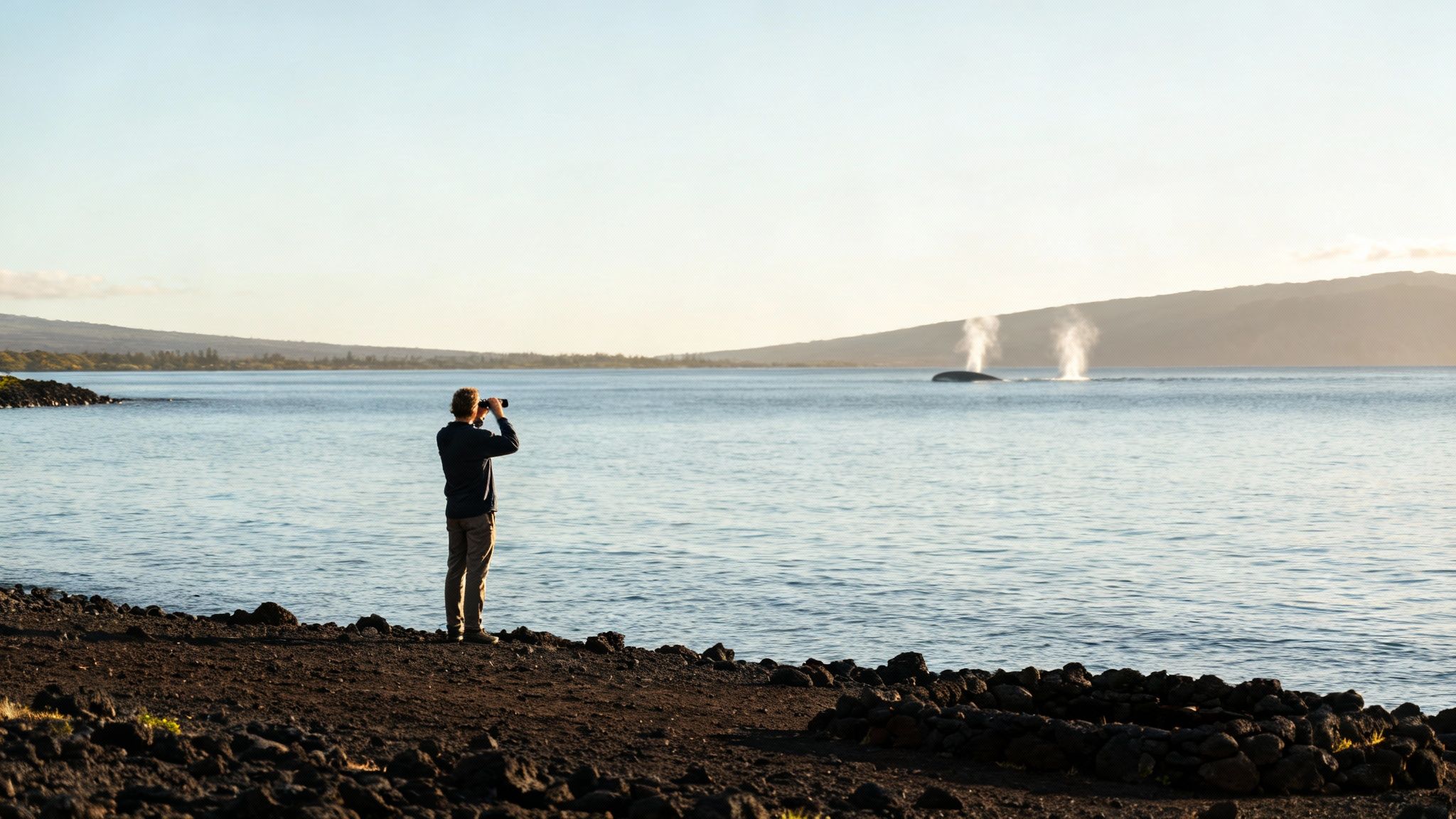
You don’t always need a boat to witness the magic. With a decent pair of binoculars and a bit of patience, you can absolutely spot spouts, breaches, and tail slaps right from the lava rock coastline. The trick is finding an elevated spot that gives you a wide, panoramic view of the ocean.
The Kohala Coast has some fantastic locations for land-based viewing:
- Puʻukoholā Heiau National Historic Site: The name literally translates to "hill of the whale," and it definitely earns it. The high ground gives you sweeping views over the water where whales cruise by all the time.
- Kapaʻa Beach Park: This is a great spot with the added perk of shaded picnic pavilions, making for a really comfortable and scenic whale watching afternoon.
- Lapakahi State Historical Park: Another excellent high-elevation viewpoint that offers a clear line of sight far out into the ocean.
These aren't just scenic overlooks; they're statistically proven hotspots. Since 1996, data from tens of thousands of volunteer sightings during the annual Sanctuary Ocean Count confirms that the Kohala Coast is supreme. Whale observations here are consistently two to three times more frequent than in other parts of the Big Island.
During the 2025 counts, volunteers at these exact shoreline sites reported an average of 3-6 humpbacks every 15 minutes. At peak moments, that number surged to as many as 15-20 sightings!
The Unmatched Advantage of a Boat Tour
While watching from the shore is a fantastic experience, nothing really compares to being out on the water with the whales. A boat tour doesn't just get you a closer look; it completely immerses you in their world. You feel the spray, hear the powerful whoosh of a spout, and truly grasp their immense scale.
Choosing a boat tour is like upgrading from the nosebleed seats to a front-row chair. You're not just watching the show; you're part of the environment where it all happens.
A tour with an experienced crew, like ours at Kona Snorkel Trips, gets you to the prime offshore locations where the action is most concentrated. Our captains live and breathe these waters. They know the local whale behaviors and use that knowledge to navigate to areas with the highest probability of sightings.
That expertise is why a well-guided tour is a statistically smarter choice for a truly unforgettable encounter. For a deeper dive into what it's like on the water with us, check out our guide on whale watching in Kona, Hawaii.
Comparing Shore vs Boat Tour Whale Watching
Deciding between watching from the land or the sea can be tough. Both offer unique rewards, but they are very different experiences. We put together this table to help you figure out which option best fits what you’re looking for.
| Feature | Shore Viewing | Boat Tour with Kona Snorkel Trips |
|---|---|---|
| Cost | Free | Paid ticket |
| Proximity | Distant (binoculars needed) | Up-close and personal |
| Perspective | Panoramic, from above | Eye-level, immersive |
| Mobility | Stationary | Can follow the action |
| Expertise | On your own | Guided by marine naturalists |
| Audio Experience | Silent, sounds of the shore | Hear spouts, breaches, and whale songs on a hydrophone |
| Guaranteed Sighting | Hit or miss | Higher probability due to mobility and expert guidance |
| Time Commitment | Flexible | Fixed duration (usually 2-3 hours) |
Ultimately, choosing between the shore and the sea depends on your personal preference, budget, and how deep you want to dive into the experience. But for an immersive, high-probability encounter, getting on a boat is the definitive way to witness the majesty of Big Island whale watching.
Choosing the Right Whale Watching Tour
The tour you pick for your Big Island whale watching adventure can make or break the whole experience. It’s the difference between feeling like you’re on a crowded city bus versus an intimate, private safari out on the ocean. The most important decision you'll make is finding an operator that matches your hopes for safety, deep respect for the wildlife, and a real, personal connection to the ocean.
This isn’t just about getting on a boat. It’s about finding a crew that makes the magic of the moment even better. A great tour gives you more than a simple boat ride—it offers expert insight, puts your safety first, and champions the well-being of the whales above all else.
Why Small-Group Tours Offer a Superior Experience
Picture this: you're out on the water, the captain cuts the engine, and the only sound you hear is the powerful whoosh of a humpback's spout just a stone's throw away. In a small group, this moment is personal, it's profound. On a massive, packed vessel, that same moment can get lost in a sea of people elbowing each other for a better view.
Smaller boats get you down to eye-level with the water, a perspective that is simply unmatched. You just feel closer to the action, more plugged into the marine world around you. This intimacy is a core principle here at Kona Snorkel Trips, because we know a personal encounter is always a more powerful one.
A small-group tour transforms your whale watch from a passive viewing into an active, engaging experience. You have direct access to the captain and crew, letting you ask questions and learn in real-time. It makes the adventure feel like it’s yours and yours alone.
This kind of setting also gives us a ton of flexibility. Our captains can change the plan on the fly based on how the whales are acting. We might linger a bit longer when the animals are putting on a show or quietly move to a new spot to avoid disturbing a resting mother and her calf. This adaptability ensures every single tour is unique and respectful.
The Critical Role of an Expert, Certified Crew
Your safety and the quality of your entire experience ride on the shoulders of the people guiding your tour. An expert crew does a lot more than just drive the boat; they are storytellers, marine life experts, and your first line of defense if anything goes wrong. Every single one of our guides at Kona Snorkel Trips is lifeguard-certified, bringing a professional level of safety and confidence to every trip.
But that expertise goes way beyond just safety drills. Our crew has a deep well of local knowledge, sharpened over years of navigating Kona's waters. They can read the subtle clues in the ocean—the way seabirds are behaving, a slight change on the water's surface—that often lead us to the most incredible sightings. They don’t just find whales; they help you understand the behaviors you're seeing, which adds a rich educational layer to the whole visual spectacle.
It's this blend of certification and local insight that ensures your adventure is not only thrilling but also safe and incredibly informative from start to finish.
The Non-Negotiable Commitment to Ethical Viewing
Humpback whales make an absolutely exhausting 3,000-mile journey to Hawaii to find a safe harbor to breed and raise their young. The very last thing they need is more stress from boats getting way too close. This is why a tour operator's commitment to responsible, ethical viewing isn't just nice to have—it's essential.
Reputable companies stick to NOAA guidelines like glue, which means maintaining a respectful distance of at least 100 yards from the whales. This isn't just some arbitrary rule; it's a fundamental sign of respect for their space and their well-being. A professional crew knows exactly how to position the boat for fantastic views without ever harassing or disturbing the animals.
When you choose a tour, you’re voting with your wallet. By supporting operators who put conservation first, you're helping protect these magnificent creatures for generations to come. For a deeper dive into what makes a tour truly exceptional, you can check out our detailed breakdown of the best whale watching tours on the Big Island of Hawaii. Your choice helps ensure that this incredible natural event remains a safe and cherished experience for both humans and whales.
What to Expect on Your Whale Watching Adventure
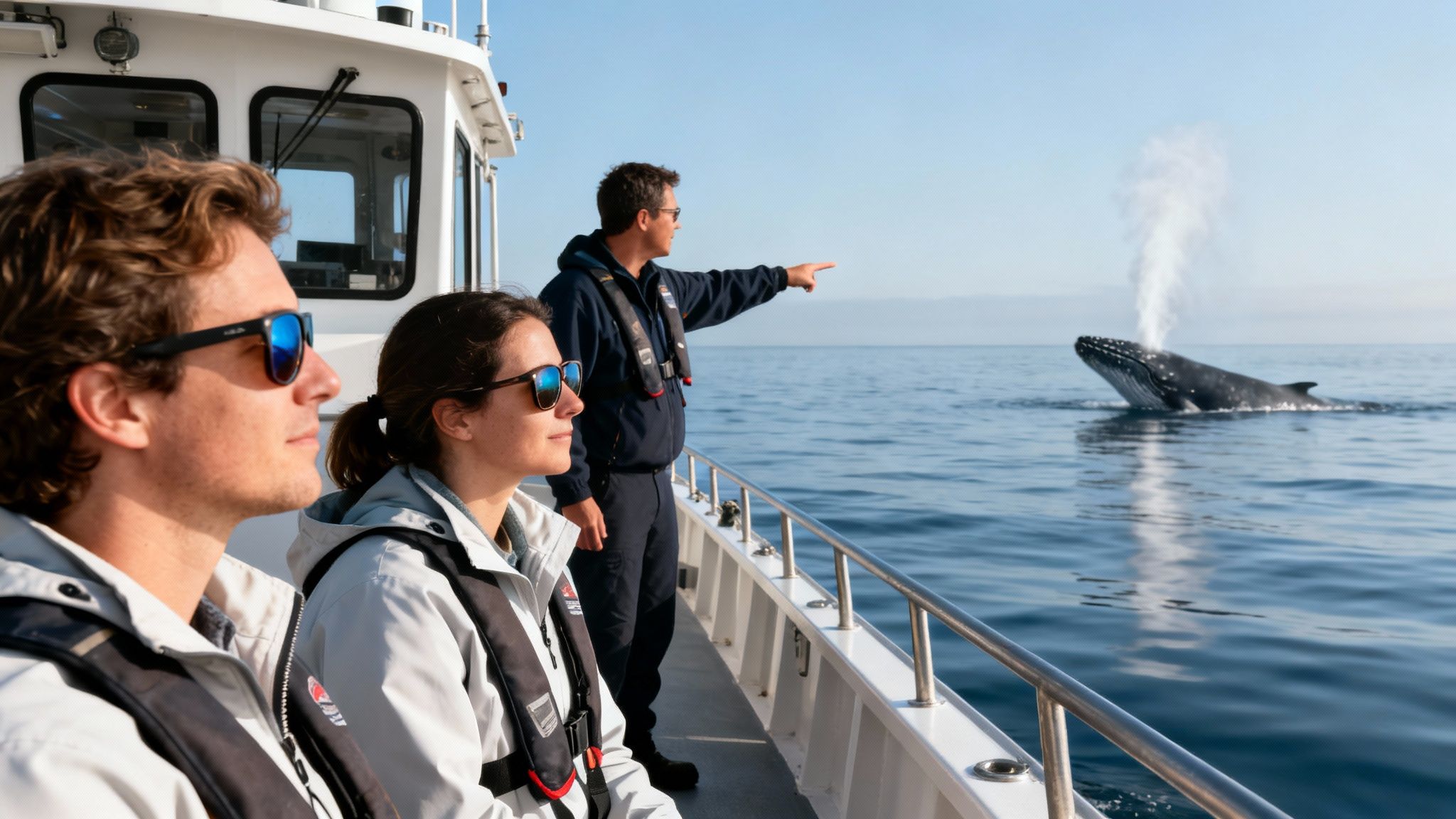
The trip really starts the second you step onto the boat. You feel that buzz of excitement as the Kona coastline gets smaller and the huge, deep blue of the Pacific opens up around you. Everyone's eyes are glued to the horizon, just waiting for that first sign.
Then someone yells—it might be the captain or another guest—and you see it: a misty puff of vapor hanging in the air for a split second before it vanishes. That's the first spout. Just like that, your Big Island whale watching has officially begun.
When the boat slows to a respectful stop, the sheer size of these animals hits you. No picture or video can ever prepare you for the feeling of seeing a 40-foot, 40-ton humpback whale launch its entire body out of the water. A full breach is just an unbelievable show of raw power and grace that connects you right to the wild heart of the ocean.
Decoding Whale Behaviors
One of the coolest parts of any tour is learning to read the whale's "language." Every splash and slap has a purpose, and our guides are fantastic at explaining the incredible behaviors you might see out there.
- The Breach: This is the one everyone dreams of seeing—the full-body leap out of the water. Scientists think it could be for anything from long-distance communication and shaking off skin parasites to just pure, energetic fun.
- The Tail Slap (Lobtailing): You'll hear this one before you see it. A powerful slap of the fluke on the water makes a massive sound that travels for miles underwater. It's often a warning, a signal to other whales, or part of a competitive show between males.
- The Pectoral Fin Slap: You'll often see whales roll onto their sides and smack their long pectoral fins on the water over and over. It's another social signal, and you see it a lot when groups of whales get together.
- The Spy-Hop: This is a truly magical moment. A whale will poke its head straight up out of the water to get a look around. It feels like they're just as curious about us as we are about them.
Packing for a Perfect Day at Sea
Being prepared makes a great day even better. The weather can change fast out on the ocean, so a few key items will keep you comfortable from start to finish.
A little prep goes a long way. Having the right gear means you can focus on the incredible show in front of you instead of worrying about being too hot or too cold.
Here’s a quick checklist of things you'll be glad you brought:
- Polarized Sunglasses: This is non-negotiable. They slice right through the ocean's glare, letting you spot spouts and shadows under the surface that you'd totally miss otherwise.
- Light Jacket or Windbreaker: Even on a warm Kona day, the wind out on the open water can get chilly. A light layer makes all the difference.
- Reef-Safe Sunscreen: Protecting your skin is key, but using a reef-safe version also helps protect Hawaii's fragile coral reefs.
- Camera: You'll definitely want to capture these moments, but a little pro-tip: don't forget to put it down and just soak it all in.
Safety and Respect on the Water
Your safety is always our first priority. Our lifeguard-certified crew will give you a quick but thorough safety rundown before we even leave the harbor. We're also serious about protecting the whales. Federal law requires all boats to stay at least 100 yards away from humpback whales. We follow these rules strictly to make sure our presence never bothers these magnificent animals.
If you get motion sickness, thinking ahead can save your trip. We've got a great guide with tips on how to prevent seasickness that's worth reading before you come out with us.
Planning Your Complete Big Island Marine Adventure
Your incredible encounter with humpback whales is just the start of what the Big Island’s waters have to offer. While seeing the whales is a seasonal highlight, our ocean is absolutely teeming with life all year. You can easily build on the excitement and create a full marine itinerary that captures the entire spectrum of Hawaii’s underwater magic.
The adventure doesn't have to end when the whales head back to Alaska. At Kona Snorkel Trips, we specialize in creating these unforgettable ocean experiences, connecting you seamlessly from one adventure to the next. Why not follow up the thrill of your whale tour by exploring a few other iconic marine encounters?
Beyond the Whales: Two Unforgettable Adventures
After witnessing the sheer power of the humpbacks, imagine gliding through the dark ocean as gentle giants swoop and barrel roll right beneath you. Or picture yourself snorkeling in a protected bay so rich with history and vibrant coral it feels like stepping into another world. These experiences are waiting for you, right here.
- The World-Famous Manta Ray Night Snorkel: This is a truly unique Big Island spectacle, and something you just have to see to believe. Join us for our iconic Manta Ray Night Snorkel, where you'll float on the surface and watch majestic manta rays feed on plankton drawn to our lights. It’s an ethereal, once-in-a-lifetime encounter that people talk about for years. If you're exploring other options, Manta Ray Night Snorkel Hawaii is an exceptional alternative for this amazing tour.
- Pristine Captain Cook Snorkeling: Explore the crystal-clear waters of Kealakekua Bay, home to the Captain Cook Monument. This protected marine sanctuary boasts some of the most vibrant coral reefs and abundant fish life in all of Hawaii. Our Captain Cook Snorkeling Tour takes you right to this historic and breathtakingly beautiful spot. For another great option, check out Captain Cook Snorkeling Tours for an exceptional trip to the bay.
By combining these distinct adventures, you transform your vacation from a single activity into a comprehensive exploration of the Big Island’s incredible marine ecosystem.
To truly capture the majestic beauty of the whales and other wildlife you meet, considering the best camera for wildlife photography can really elevate your experience. Having the right gear helps you hold onto these incredible memories long after you’ve returned to shore. For a broader look at all the amazing aquatic adventures available, dive into our guide to the best Big Island snorkeling tours.
Got Questions About Whale Watching? We’ve Got Answers.
Planning a whale watching trip on the Big Island can bring up a few questions, and that's totally normal. To help you get ready for an incredible day on the water, we've put together answers to some of the things people ask us the most.
Think of this as your quick guide to getting prepared, based on our years of running tours right here in Kona's amazing waters.
When Is the Absolute Best Time of Day to See Whales?
If you're an early bird, you're in luck. Mornings are almost always the best time for whale watching on the Big Island. The ocean tends to be much calmer then, creating that glassy surface that makes spotting spouts and breaches from a distance way easier. The light is also softer, which is a huge plus for getting those amazing photos without a ton of glare.
In fact, looking back at our own tour data, we've seen that our morning trips have up to 50% more frequent sightings compared to our midday tours. It's why we specifically schedule our trips for the morning—to give you the best shot at the best show.
Is a Whale Sighting Guaranteed on a Tour?
This is a big one, and the honest answer is that we're dealing with wild animals here. While the Big Island has some of the most reliable and spectacular whale watching on the planet, especially from January to March, the humpbacks are on their own schedule. Because of that, no one can ever offer a 100% guarantee.
But here’s the thing: going with an experienced crew like ours at Kona Snorkel Trips dramatically boosts your chances. Our guides live and breathe these waters. They know the whales' habits, where they like to hang out, and what their behavior means. We put the odds squarely in your favor for an unforgettable encounter.
How Close Can We Get to the Whales?
We all want that up-close, magical moment, but the whales' well-being comes first. Federal law is very clear: all boats have to stay at least 100 yards away from humpback whales in Hawaiian waters. This is super important to protect them from stress, especially for the moms and their brand-new calves who need plenty of space.
Any reputable tour operator, including Kona Snorkel Trips, follows these NOAA guidelines to the letter. The real magic happens when a curious whale decides to check us out and approaches the boat on its own terms. Those moments are breathtaking, completely natural, and happen in a way that's safe for everyone, especially the whales.
What Other Marine Life Might We See?
The humpbacks may be the headliners, but the show rarely stops with them! The ocean off the Kona coast is buzzing with life. Every single trip is a chance to see something new and amazing from Hawaii's rich ecosystem.
It’s incredibly common to see playful pods of spinner dolphins leaping out of the water, or to spot larger bottlenose dolphins cruising by. Sometimes we even run into pilot whales. And don't forget to keep an eye out for our beloved Hawaiian green sea turtles, or honu, as they pop their heads up for a breath. You just never know what you'll find out there.