
Big Island Whale Watching: Discover big island whale watching Tours
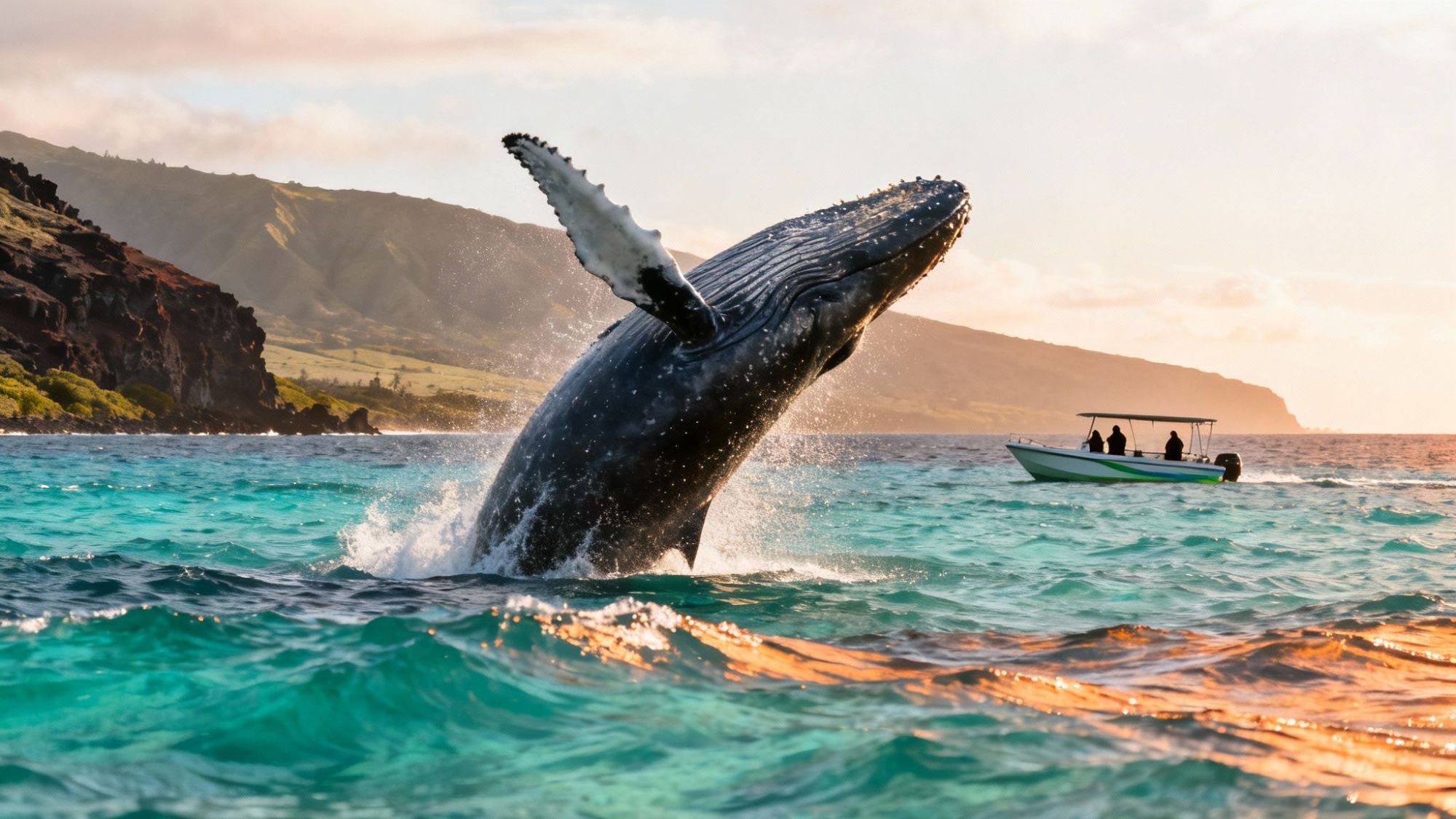
There's nothing quite like it. The moment a 40-ton humpback whale explodes from the calm, turquoise surface of the Pacific is the defining image of Big Island whale watching. It’s a moment that will stick with you forever.
These spectacular encounters peak from December through March. This is when thousands of whales make the long journey to Hawaii’s warm, protected waters to breed, give birth, and care for their newborn calves.
Your Guide to an Unforgettable Whale Encounter
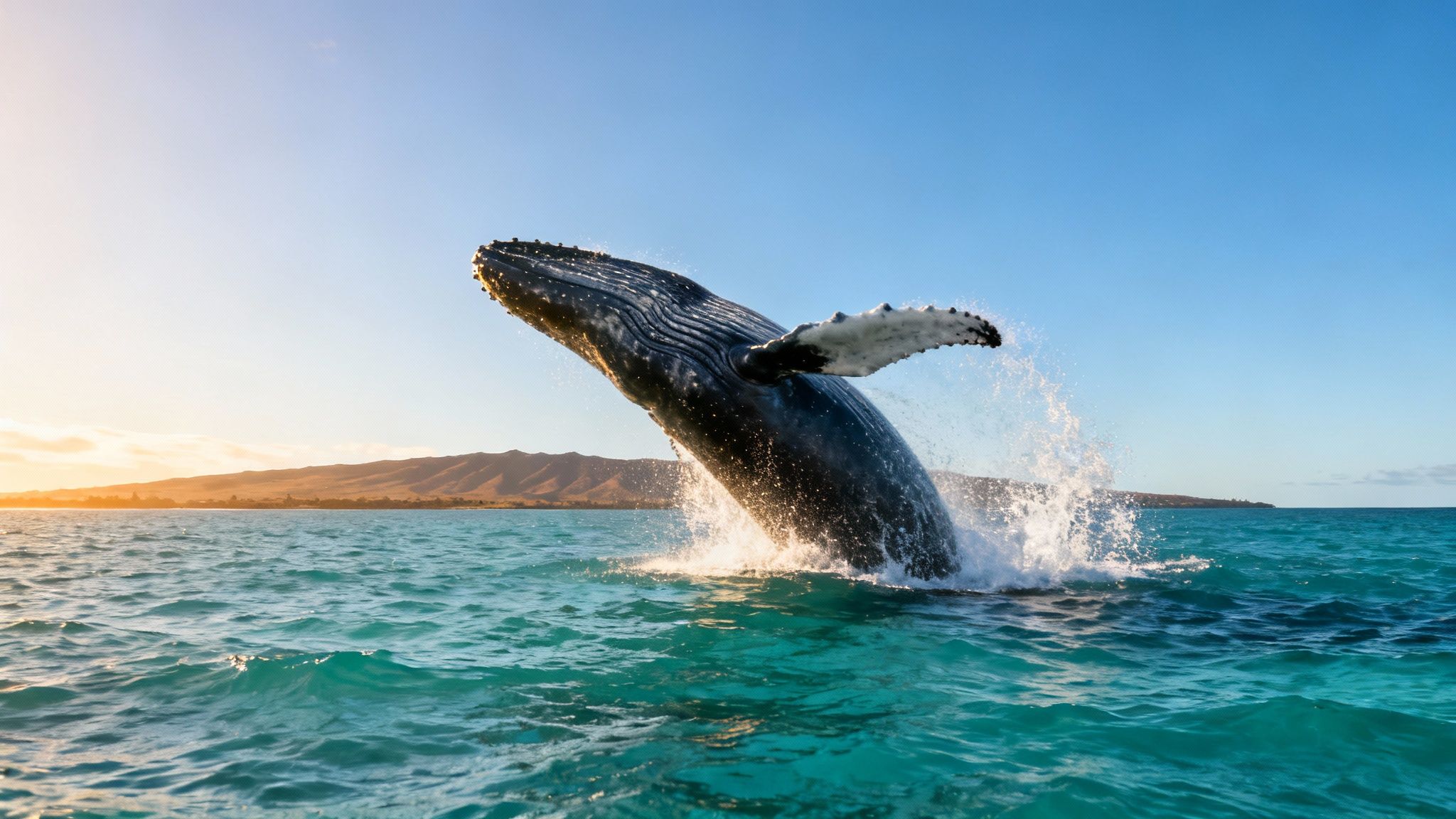
Picture it: the ocean suddenly erupts as one of these gentle giants launches its entire body skyward, hanging between sea and air for a single, breathtaking moment. This is the magic that awaits you in Hawaii. This guide is your roadmap to experiencing this incredible natural wonder for yourself.
We'll dive into why the Big Island, especially the calm, deep waters off the Kona and Kohala Coasts, is the perfect winter nursery for these magnificent creatures, known in Hawaiian as koholā. Choosing the right tour is key to a memorable and respectful experience, and as the top-rated and most-reviewed snorkel company in Hawaii, we at Kona Snorkel Trips are all about creating those powerful connections.
What You Will Discover
In this guide, we'll walk you through everything you need to plan the perfect adventure. You'll learn the best times to visit, sure, but also where to look for whales—whether you’re standing on the shore or out on an expert-led boat tour. Understanding their behavior will give you a much deeper appreciation for every spout, tail slap, and breach you see.
Here’s a taste of what we'll cover:
- Optimal Timing: We’ll help you pinpoint the absolute peak of the season for the best chance at maximum sightings.
- Prime Locations: Discover the best spots along the coast for viewing, both from land and sea.
- Ethical Practices: Learn how to pick a tour that puts the safety and well-being of the whales first.
- Behavioral Insights: Get to know what all those spectacular actions mean by decoding humpback behavior.
Consider this your starting point for an unforgettable journey. For a complete overview of what to expect, you can also check out our full guide to whale watching on the Big Island. Get ready to be absolutely amazed by one of nature’s greatest shows.
Finding the Best Time for Whale Watching
Timing your whale watching trip on the Big Island is probably the single most important decision you'll make. It can be the difference between a nice boat ride and a truly mind-blowing encounter.
While you might hear the official humpback season runs all the way from November through May, the reality on the water is a bit different. Think of it like a wave: it slowly builds as the first whales arrive, hits an incredible peak, and then gently fades away as they head back north.
If you want the absolute best shot at seeing the most action, you need to be here between January and March. This is the heart of the season, no question about it.
It's when the highest number of humpbacks are right here in our waters—breeding, giving birth, and caring for their newborn calves. The ocean is just electric with activity. Your chances of witnessing those iconic behaviors everyone hopes for, like a full breach or a powerful tail slap, are at their absolute highest during these months.
Picking the Best Time of Day
Once you've picked the right month, you can zero in on the best time of day. From my experience out on the water, nothing beats the early morning. It's the gold standard for a reason.
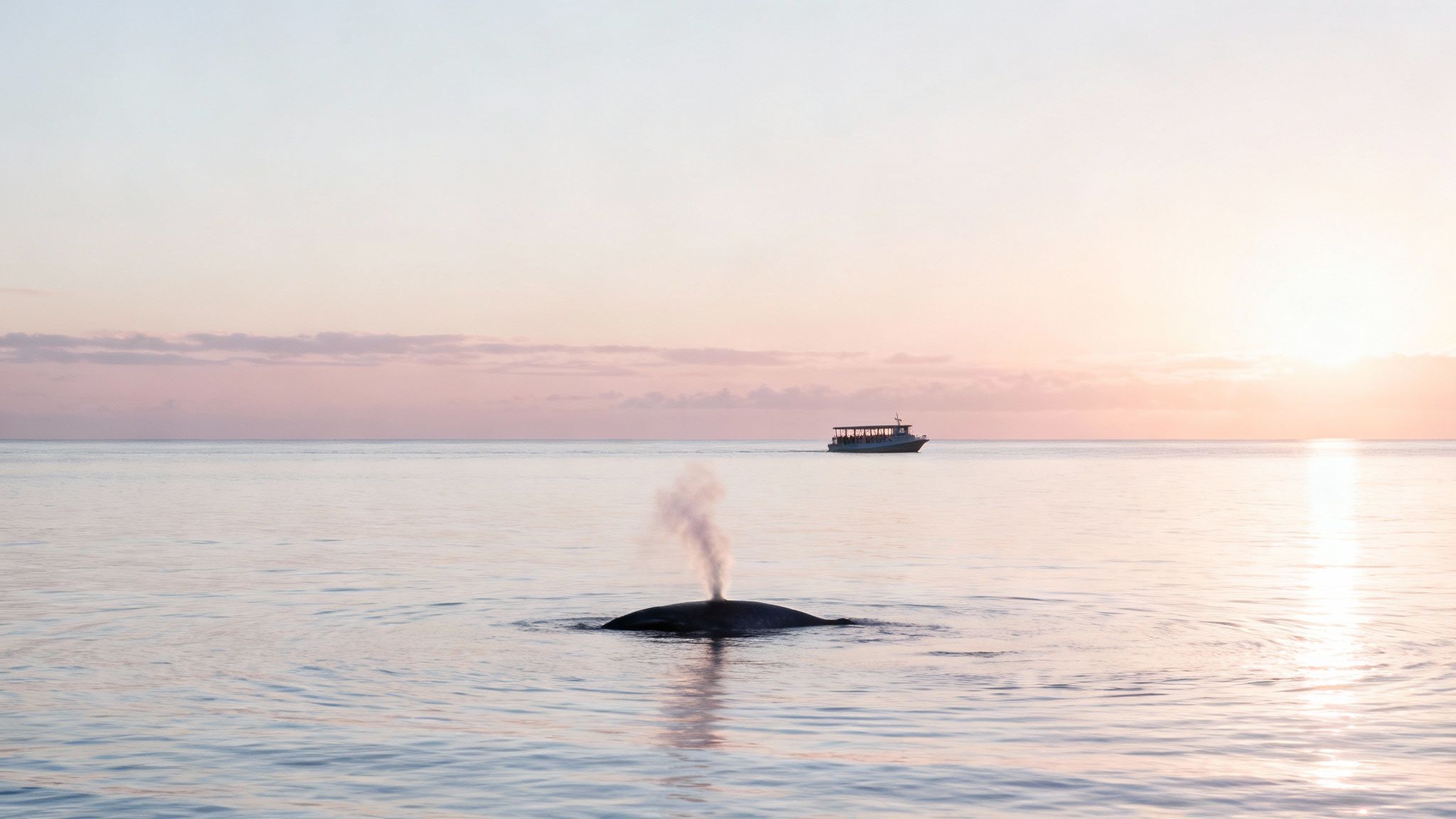
The winds are usually calm, leaving the ocean surface glassy and smooth. That mirror-like water makes spotting whales so much easier. You can catch the misty puff of a blow miles away or see the subtle "footprint" a whale leaves on the surface right before it dives. Plus, that soft morning light is just incredible for photos.
And it’s not just a feeling—the data backs it up. Volunteer-driven counts, like the Sanctuary Ocean Count, consistently show that early morning hours are prime time. Sightings around 8:00 AM are often 50% higher than those at noon, simply because the calm seas make it that much easier to see what’s out there.
The secret is simple: plan your trip for the peak months and book an early morning tour. You're stacking the deck in your favor for an unforgettable day with these gentle giants.
For a deeper dive into what each month holds, check out our full guide to the Big Island whale watching season.
To give you a quick snapshot and help with your planning, here’s a look at what to expect throughout the season.
Big Island Whale Watching Season at a Glance
| Month | Activity Level | What to Expect |
|---|---|---|
| Nov – Dec | Low to Moderate | The first arrivals appear. Sightings are less frequent but mark the exciting start of the season. |
| Jan – Mar | Peak | The highest concentration of whales. This is prime time for seeing breaches, tail slaps, and competitive pods. |
| Apr – May | Moderate to Low | Mothers with their growing calves are often seen as the last whales prepare for their migration north. |
Basically, if you can make it here during that peak window from January to March, you're setting yourself up for the best possible experience.
Where to See Whales on the Big Island
Knowing when to see whales is only half the battle; you also have to know where to look. The Big Island offers some incredible opportunities for both spotting whales from shore and getting up close on the water, but one area consistently steals the show. Whether you’re posted up with binoculars or heading out on a boat, your location makes all the difference.
Geographically, the island splits into two main whale-watching zones: the Kona Coast to the west and the Kohala Coast to the northwest. While you can definitely see whales from both, they offer very different experiences. Tours leaving from Kona head out into deep offshore waters where whales are migrating, but tours along the Kohala Coast? You're in the heart of the action the moment you leave the harbor.
The Unbeatable Kohala Coast
If you're going to focus your Big Island whale watching efforts anywhere, make it the Kohala Coast. This sun-drenched stretch of coastline is, hands down, the premier spot for seeing humpback whales, and the numbers don't lie.
The Kohala Coast is the undisputed champion for sightings, with frequencies two to three times higher than anywhere else on the island. Why? It's all about the calm, clear, and sheltered waters. These conditions create the perfect environment for mother whales to teach their calves essential life skills, like how to breach and slap their tails.
During the peak season of January and February, volunteer counts from the shoreline are staggering, with observers spotting an average of 3 to 6 whales every 15 minutes. It's an absolute whale magnet, and you can dive deeper into what makes this area so special here.
This high concentration of moms and babies turns the Kohala Coast into a massive nursery, giving you a front-row seat to some of the most touching and intimate whale encounters imaginable.
Best Shore Viewing Spots
You don't need to be on a boat to witness the show. With a bit of patience and a decent pair of binoculars, you can catch some incredible action right from the shore, especially along the elevated bluffs of the Kohala Coast.
-
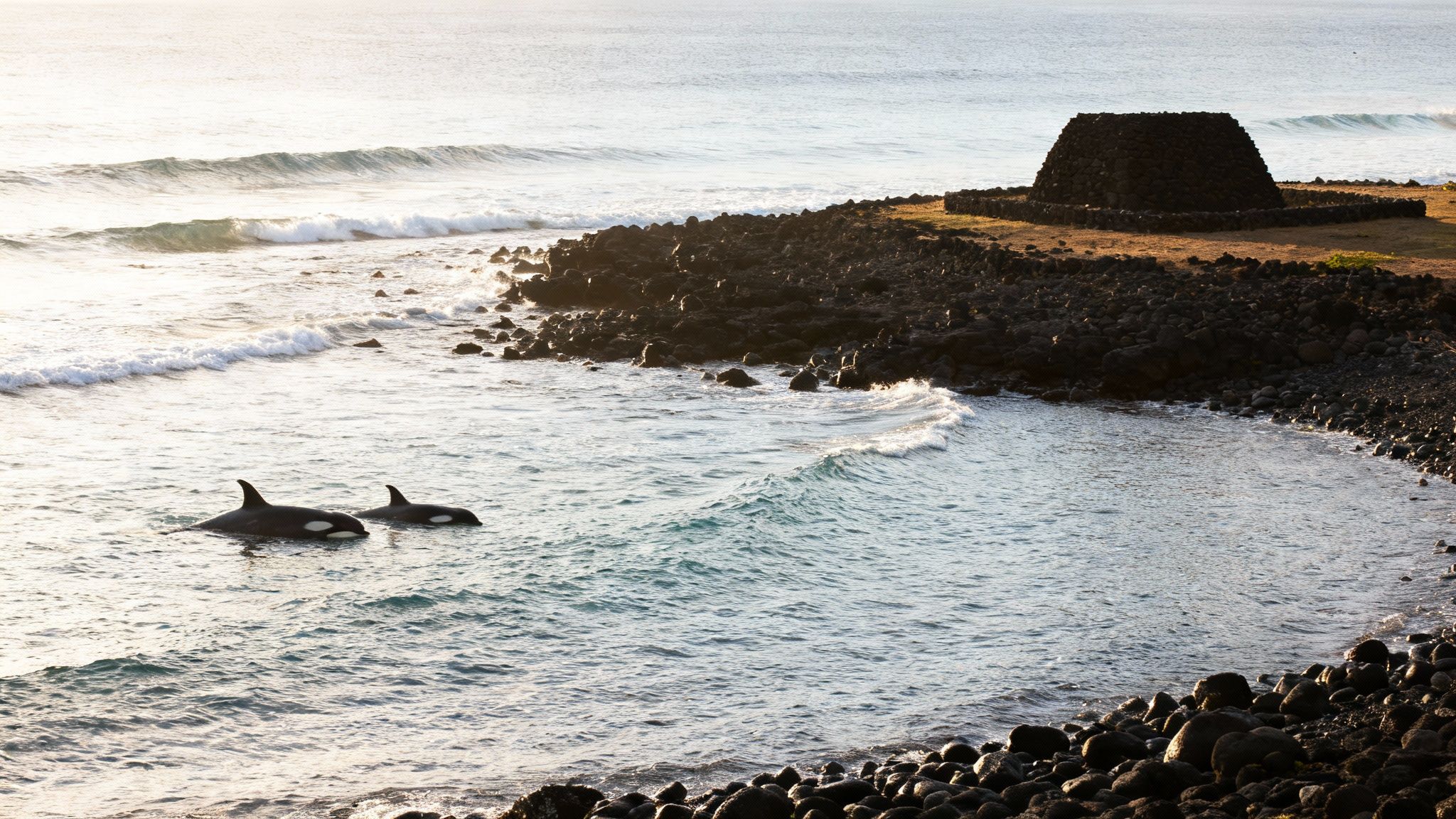
Puʻukoholā Heiau National Historic Site: The name of this sacred site literally means "hill of the whale," and it definitely lives up to it. The high ground gives you sweeping, panoramic views over the protected waters where whales are constantly passing by.
-
Lapakahi State Historical Park: This park is another fantastic vantage point with clear, unobstructed sightlines. Its elevation is perfect for scanning the horizon for that tell-tale plume of a whale's spout.
-
Kapaʻa Beach Park: Just down the road from Lapakahi, this spot has the added bonus of shaded picnic pavilions. You can whale watch for hours without getting cooked by the sun.
While you can spot whales all along the western side of the Big Island, the sheltered, warm waters of the Kohala Coast are the undisputed champion. The frequency and quality of the sightings here make it the absolute top destination for any serious whale watcher.
Understanding Humpback Whale Behavior
Seeing a whale is one thing, but truly understanding what you're witnessing? That's what turns a great Big Island whale watching trip into an unforgettable one. It helps to start with the 'why'. These humpback whales have just finished an unbelievable 3,000-mile journey from their feeding grounds in Alaska. They make this epic migration every single year without eating, living entirely off their fat reserves.
They come to Hawaii’s warm, safe waters for the most important reasons of all: to find a mate, give birth, and nurse their newborn calves. Every splash, leap, and tail slap you see out on the water isn't just for show. It's a complex language, a vital lesson for a calf, or a critical part of their social lives. Once you start to decode these behaviors, you'll gain a whole new level of respect for these incredibly smart creatures.

Decoding Common Whale Actions
When you're out on the boat, keep your eyes peeled for these incredible displays. Each one tells a story.
-
The Breach: This is the big one—the iconic, full-body leap out of the water that everyone secretly hopes to see. Why do they do it? Scientists think it could be for anything from knocking off pesky parasites to sending a massive, noisy "hello!" to other whales miles away. Or maybe, just maybe, it’s pure, unfiltered joy.
-
Tail Slap (Lobtailing): You'll see (and hear) this when a whale smacks its powerful tail, or fluke, against the water. The sound is like a cannon shot and travels huge distances underwater. It can be a warning, a way of announcing their presence, or even a technique to stun fish when they're back in their feeding grounds.
-
Pectoral Fin Slap: A humpback will often roll onto its side and just start slapping one of its long pectoral fins on the surface over and over. Much like a tail slap, it's another form of communication, something you'll often see when a few whales are hanging out together.
-
Spy-Hop: This one is my favorite. A spy-hop is when a whale pokes its head straight out of the water, almost like a periscope, just to get a look around. It feels like pure curiosity, as if they’re just as interested in checking us out as we are in them.
By recognizing these behaviors, you're no longer just a spectator; you're an interpreter of an ancient and complex language spoken through splashes, slaps, and leaps.
The Haunting Songs of the Humpback
Beyond the acrobatics you can see, there's a whole other world of communication happening right below the surface. I'm talking about the complex, haunting songs of the male humpback whales. These aren't just a few random moans; they're some of the most intricate vocalizations in the entire animal kingdom.
A single song can last for over 20 minutes and be repeated for hours on end, traveling for miles underwater. It's the primary way males attract females and assert their place in the social hierarchy. What’s even more amazing is that each population of whales has its own unique song, and these songs actually change and evolve from one year to the next. Knowing this transforms your tour into a much richer, more meaningful event.
How to Choose the Right Whale Watching Tour
Picking the right Big Island whale watching tour is probably the most important decision you'll make for your day on the water. Trust me, with so many boats heading out each day, knowing what makes them different will help you find the perfect fit. This isn't just about seeing whales; it's about crafting an experience that's safe, respectful, and completely unforgettable.
The first thing to consider is the boat itself. Size really does matter here, and each type offers a totally different vibe.
- Large Catamarans: Think stability. If you've got little ones or you're the type who gets a bit queasy, these big cats are your best friend. They often have perks like bathrooms and snacks, but you'll be sharing the view with a bigger crowd.
- Small Group Zodiacs/Rafts: Want to feel the spray on your face? These smaller, zippier boats get you right down at water level for a truly eye-to-eye perspective. The best part is the small group size—it feels more like an adventure with friends, and you get plenty of one-on-one time with the crew.
Putting the Whales First: Finding a Responsible Tour
Okay, beyond the boat, the company's philosophy is huge. A good operator is all about the whales' well-being. They live and breathe the mandatory 100-yard viewing distance law, making sure the animals are never crowded, stressed out, or chased. It's about respect, pure and simple.
Look for tours that are big on education. Having a naturalist on board changes everything. Your trip goes from just "oohing and aahing" at whale tails to actually understanding what you're seeing. The best tours even drop a hydrophone in the water so you can hear the haunting songs of the male humpbacks. It's an experience that will give you goosebumps.
If you're looking for a tour that combines whale watching with some amazing snorkeling, there are some great Big Island whale watching snorkeling tours that offer both.
Here on the Big Island, we're lucky. Our whale watching scene is known for being more laid-back and eco-focused, especially when you compare it to the crowds on other islands. That's largely thanks to our unique coastline, which draws people from all over the world for uncrowded encounters from mid-December through mid-April.
To help you sift through the options, we put together a detailed guide comparing the top Big Island whale watching tours. Making a smart choice doesn't just mean a better day for you—it means you're actively supporting the conservation of these magnificent humpbacks for years to come.
Gearing Up for Your Whale Watching Adventure
You’ve booked your tour and the excitement is building! Now, a little bit of prep work will make all the difference between a good day on the water and an absolutely unforgettable one. Packing the right gear for your Big Island whale watching trip means you can stay focused on the main event without any annoying distractions.
Think of it like any other day on the ocean here in Hawaii. The sun is powerful, even when it’s cloudy, so reef-safe sunscreen is non-negotiable. It protects your skin and our fragile coral reefs. A good hat and a light windbreaker are also smart moves; it can get surprisingly chilly out on the water with the wind whipping by, even on a toasty Kona day.
Your Day-Trip Essentials Checklist
A few small items can make a huge impact on your comfort and how much you actually get to see. Don't leave the dock without these!
- Polarized Sunglasses: This is my number one tip. They aren't just for protecting your eyes from the glare—they literally cut through the reflection on the water's surface. You’ll be able to spot the dark shape of a whale just below the surface that you’d completely miss otherwise.
- Camera or Smartphone: Of course, you’ll want to capture the incredible moments. Just remember to put it down once in a while and just soak it all in. Some things are best experienced with your own eyes, not through a screen.
- Binoculars: Not strictly necessary, but they are fantastic for getting up-close views of breaches or tail slaps happening further away. They can really bring the action right to you.
Tips for a Smooth Day at Sea
Nothing ruins a perfect day on the water faster than seasickness. If you even think you might get queasy, it pays to be proactive.
Taking an over-the-counter remedy before you even step on the boat is often the most effective strategy. For a deeper dive into all the options, check out our complete guide on how to prevent seasickness.
Remember, your role out here is more than just a spectator; you're a steward of the ocean. Following your crew's instructions and respecting the whales' space helps protect these incredible animals for generations to come.
Ultimately, the most important thing you can bring is a sense of respect. Trust your captain's judgment—they know the regulations and will maintain a safe, legal distance. Never pressure them to get closer. Being a thoughtful observer ensures your adventure is both awe-inspiring and ethical. For more great trip-planning advice, especially for safety, resources offering female travel insights can be incredibly helpful.
Got Questions About Whale Watching? We've Got Answers.
To wrap things up, let's go over a few of the questions we hear all the time about Big Island whale watching. Knowing the answers will help you lock in your plans and get you ready for an unforgettable day out on the water.
Is a Whale Sighting Guaranteed on a Tour?
While we'd love to say yes, these are wild animals on their own schedule. That said, during the peak months of January through March, your chances are incredibly high. The captains who navigate these waters day in and day out have a knack for finding the action, leading to a very high success rate.
Many of the best tour companies, including us, offer a "whale guarantee." What this usually means is that if the whales decide to be shy on your trip, you can come back out again for free until you see them. It's always a good idea to double-check the specific policy before you book.
What Other Marine Life Might I See?
The humpbacks are definitely the main event, but the ocean around the Big Island is absolutely packed with other amazing creatures. You've got a fantastic chance of running into huge pods of spinner dolphins, famous for launching themselves out of the water in incredible spinning leaps.
It's also pretty common to spot bottlenose dolphins, pilot whales, and graceful sea turtles cruising near the coast. And if you get really lucky, you might even see some of the rarer residents like whale sharks or false killer whales. Every trip is a new adventure.
Are Whale Watching Tours Suitable for Young Children?
Absolutely! Most whale watching trips are very family-friendly and can create those core memories that kids (and parents!) talk about for years. The key is picking the right kind of boat for your crew's comfort.
A smaller, zippy zodiac-style boat offers a real thrill ride, but it can be a bit bumpy for the little ones. Larger catamarans are much more stable and offer more room to walk around, plus they usually have shade and a restroom onboard—a lifesaver for families with young kids.
Ready to see these gentle giants for yourself? At Kona Snorkel Trips, our small-group tours are all about getting you an up-close and personal experience. Our guides are lifeguard-certified experts who live to share the magic of Hawaii's ocean life with you.