
Your Guide to Unforgettable Big Island Whale Watching

If there’s one thing that defines a Big Island winter, it’s the whales. The absolute best time for Big Island whale watching is between November and May, but the real peak, when the action is non-stop, is from January through March. This is when thousands of humpback whales make their way to Hawaii’s warm, protected waters to breed, give birth, and raise their calves. It’s one of nature’s greatest shows, right here in our backyard.
As the top rated & most reviewed snorkel company in Hawaii, Kona Snorkel Trips lives for creating these moments.
Your Guide to an Unforgettable Ocean Encounter
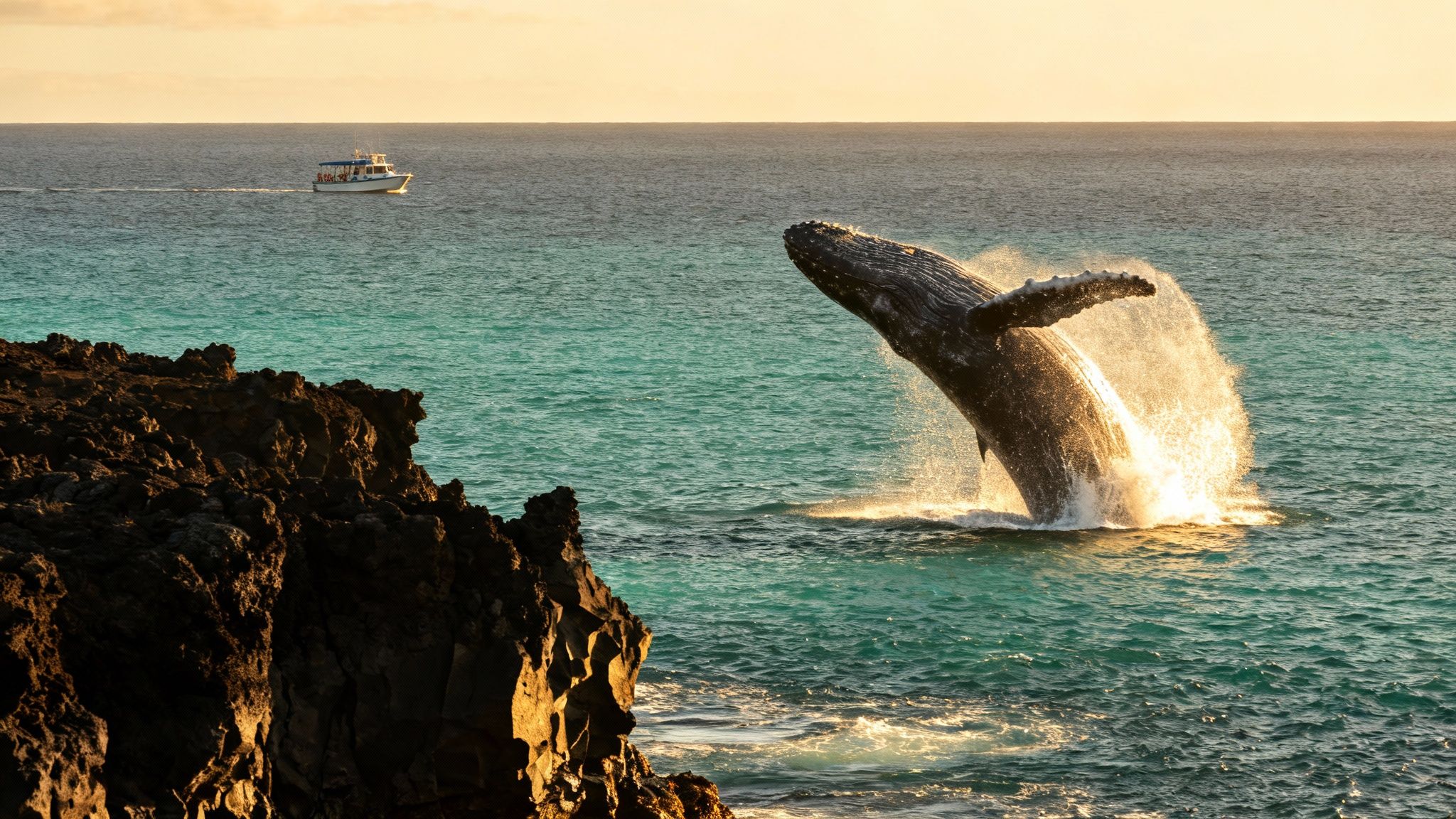
Picture this: the calm Pacific surface suddenly explodes as a 40-ton humpback launches its entire body out of the water. That heart-stopping moment—the breach—is the magic of whale season. It’s what turns a beautiful day on the water into a memory you’ll be talking about for years.
Of course, the tour you choose makes all the difference in that experience. Our whole philosophy is built around intimate, respectful wildlife encounters that leave our guests completely speechless. We know these waters, we know these whales, and you couldn't be in better hands.
The Incredible Journey to Hawaiian Waters
Every single year, an ancient instinct kicks in, sending humpback whales on one of the most epic journeys in the animal kingdom. They travel a staggering 3,000 miles from their chilly feeding grounds in Alaska all the way down to the warm, welcoming sanctuary of Hawaii. It’s a marathon of pure endurance.
For months on end, these gentle giants swim relentlessly without a single bite to eat, surviving only on the fat reserves they’ve built up. Their destination? The calm, shallow waters along the Kona and Kohala coasts, which are basically the perfect natural nursery.
This isn't just a vacation for them; it's the most critical part of their life cycle. The whales come here for the most important reasons of all: to find a mate, to give birth in safety, and to nurse their newborn calves in warm waters, far from predators.
Why the Big Island Is a Premier Destination
So, what makes the Big Island so special for humpbacks? It all comes down to our unique geography. The sheltered leeward coast is protected from harsh winds and rough seas, creating a safe harbor for mothers and their incredibly vulnerable calves.
Seeing this unfold is so much more than a tourist activity. It’s like having a front-row seat to a crucial chapter in the life of one of our planet’s most magnificent animals. This guide is here to get you excited and give you everything you need to plan your own perfect Big Island whale watching trip. We'll cover the best times, what to expect, and all the little details to prepare you for an adventure that connects you with the raw beauty of the ocean.
Finding the Best Time and Place to See Whales
If there's one secret to an mind-blowing Big Island whale watching trip, it's timing. Getting it right is everything. Whales might start showing up as early as November and a few stragglers can stick around until May, but the real show happens in a much tighter window.
For the most action-packed experience, you'll want to aim for January through March. This is the absolute peak of the season. The waters are just buzzing with activity, and your chances of seeing those incredible, postcard-worthy behaviors—like a full breach or a tender moment between a mother and her calf—are highest.
The Peak Season Advantage
Why is this window so magical? It’s not just about seeing more whales; it's about seeing them at their most lively. It’s a numbers game. With so many humpbacks in the area, you're bound to have more frequent and dramatic encounters.
Every year, these gentle giants, known as koholā in Hawaiian, make an epic 3,000 to 4,000-mile journey from their chilly feeding grounds in Alaska. They come to the warm, protected waters off the Big Island for one reason: to mate, give birth, and raise their newborn calves in safety. This incredible migration is what makes our winter so special.
Where to Find Them on The Big Island
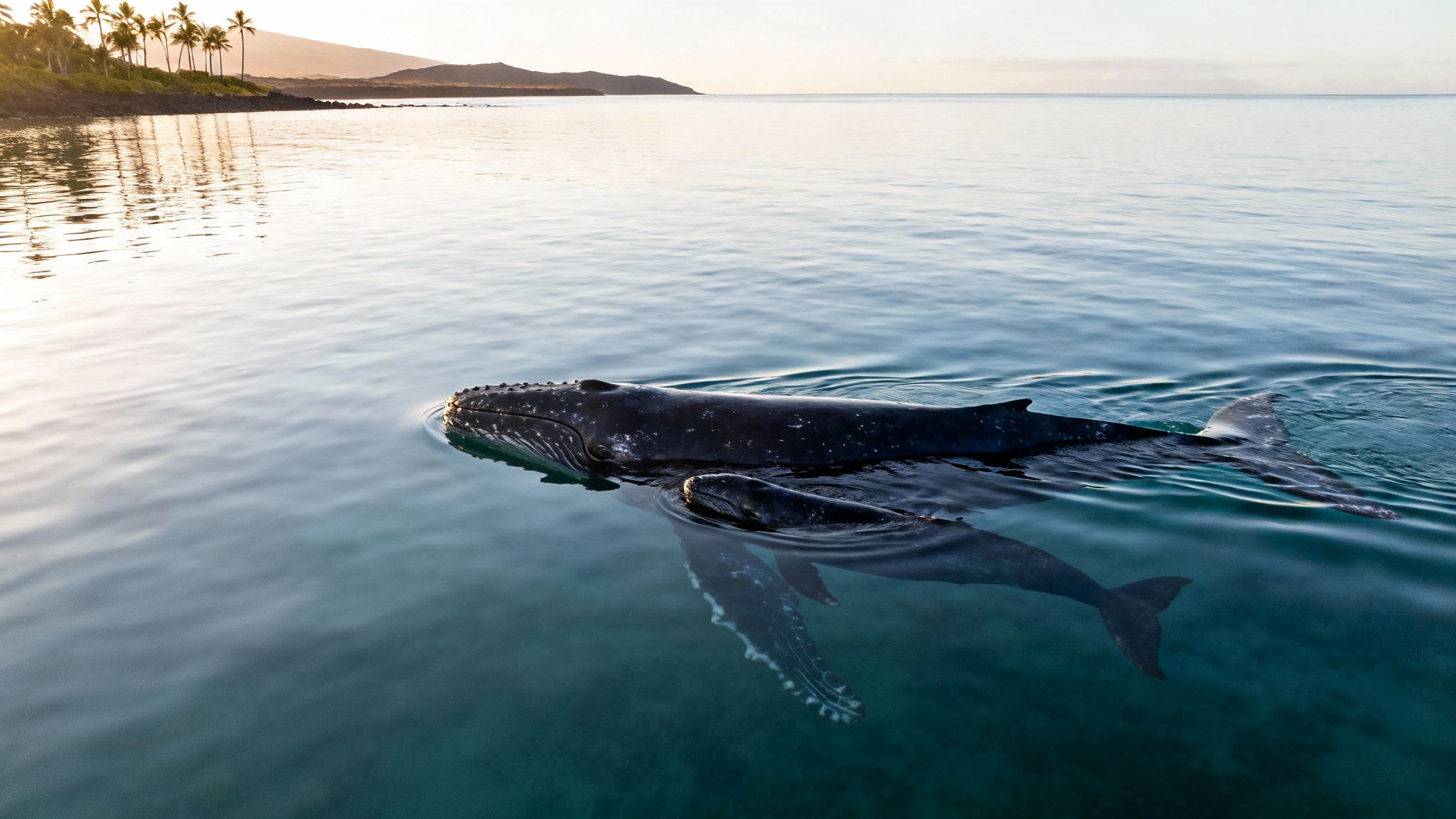
While you can spot whales all along the Kona coast, some areas are definite hotspots. The Kohala Coast, especially around Puako and Waikoloa, is basically a world-famous whale nursery. The waters here are calm, sheltered, and just what a new mother is looking for.
The Big Island’s geography gives us a huge advantage. Our massive volcanoes block the powerful trade winds, creating a calm "lee" side on the western coast. These tranquil bays are the perfect sanctuary for mothers and their vulnerable babies, offering a safe space away from the rough open ocean.
The Kohala Coast isn’t just a pretty shoreline; it’s a critical habitat. The shallow, warm water is perfect for newborn calves, who don’t have much blubber yet. Here, they can build up strength and learn the ropes before making that long trip back to Alaska.
This is why tour boats and researchers are all drawn to this area. The high concentration of moms and calves makes for some truly predictable and heartwarming sightings. If you want to get into the nitty-gritty of the migration patterns, we break it all down in our guide to the Big Island whale watching season.
To make planning a breeze, here’s a quick look at what you can expect month by month.
Big Island Whale Watching Season at a Glance
This quick reference guide will help you plan your whale watching trip around the best times for sightings and specific whale activities.
| Month | Whale Activity Level | Common Behaviors to Spot |
|---|---|---|
| December | Low to Moderate | First arrivals, spouts, and tail slaps as males compete. |
| January | High | Lots of surface activity, breaching, competition pods forming. |
| February | Peak | Highest concentration of whales, frequent breaches, mothers with newborn calves. |
| March | High | Still very active, with many mother-calf pairs. Last of the competition. |
| April | Moderate to Low | Whales begin their migration back north. Lingering mothers and calves. |
Remember, this is nature, and things can vary year to year, but this table gives you a solid idea of the season's rhythm.
What Time of Day is Best?
Once you’ve got your month picked out, you might wonder if a morning or afternoon trip is better. Honestly, both are great, but they offer slightly different experiences.
- Morning Tours: The ocean is often glassier in the morning, making it easier to spot those tell-tale spouts from a distance. The soft light is also fantastic for photos.
- Afternoon Tours: The wind can sometimes pick up, but don't let that deter you. The afternoon light can make the whales glow. Whales are active all day, so you won’t be missing out.
Ultimately, the weather has the final say. An overcast day can cut the glare on the water, making spotting easier, while a sunny day provides that classic Hawaiian backdrop. The best advice? Be flexible, but any time you can get on the water during peak season is a good time.
How to Choose the Right Whale Watching Tour
Picking the right tour operator is pretty much the most important decision you'll make for your Big Island whale watching trip. Seriously. The boat you're on and the crew leading the way will shape everything—from how close you get to the whales to how much you actually learn about them.
The good news is you've got some fantastic options. It usually boils down to the kind of boat you want to be on. Are you picturing a chill, stable cruise with lots of room and amenities? Or are you craving a nimble, up-close adventure that gets you right down to the water's level? Figuring that out is the first step to finding your perfect day on the ocean.
Large Catamarans vs. Small Group Tours
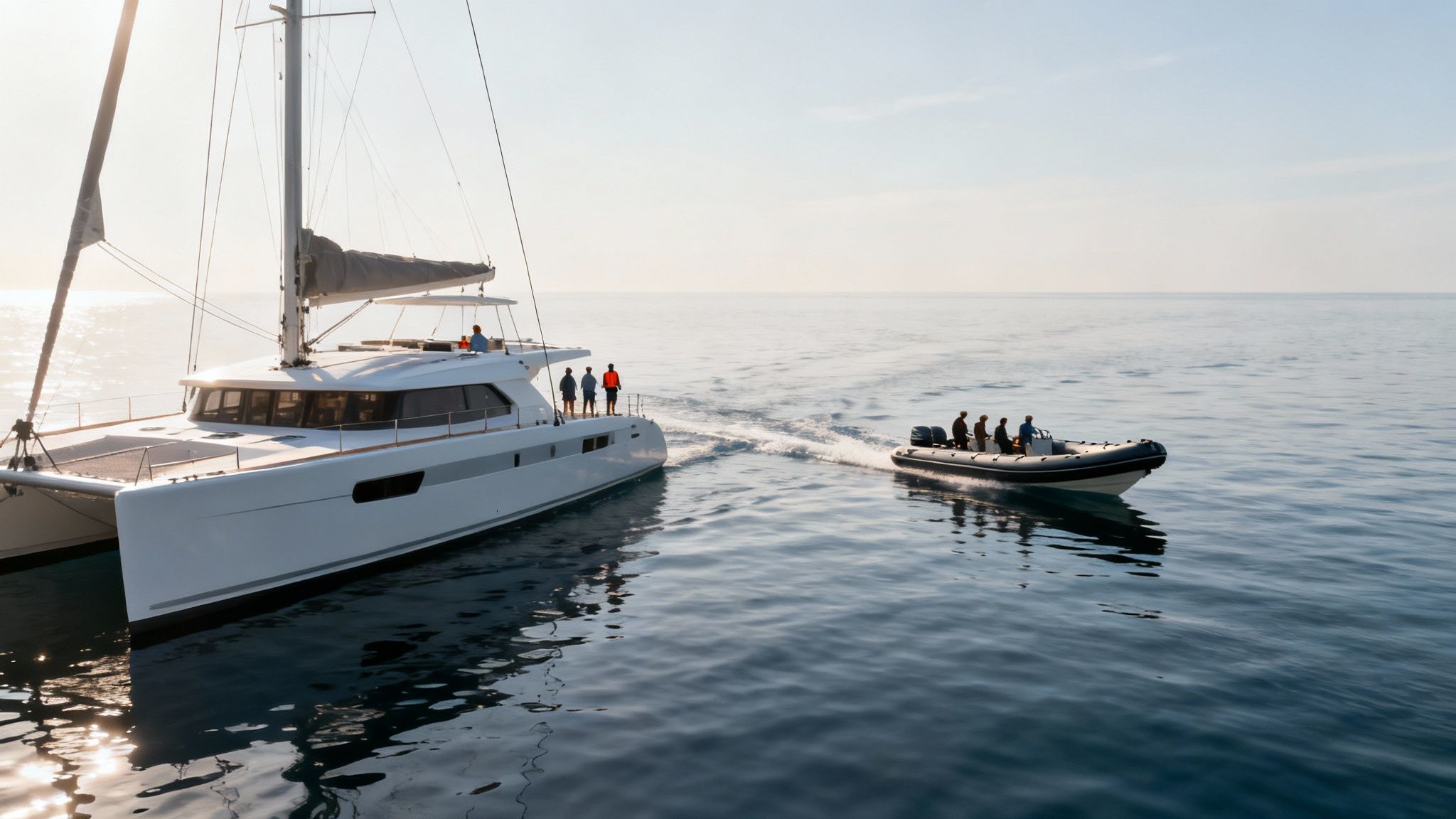
On the Big Island, whale watching tours generally fall into two buckets: big catamarans and smaller, zippier boats like zodiacs. Each one offers a totally different vibe.
Large Catamarans:
- The Good: These boats are super stable, giving you a smooth ride that’s perfect for families with little ones or anyone who gets a bit seasick. They usually have perks like restrooms, shady spots to sit, and snacks.
- The Not-So-Good: You'll be sharing the view with a lot of other people. Their size also means they can't always maneuver quickly to get the best angle when the whales decide to move.
Smaller Vessels (Zodiacs & Small Boats):
- The Good: With way fewer people, the whole experience feels more personal and intimate. These boats are quick and agile, so the captain can safely reposition in a flash. Plus, being closer to the water gives you a thrilling, eye-level view of the action.
- The Not-So-Good: It can be a bumpier ride, making it more of an "adventure" tour. You won't find as many creature comforts and you’ll get less protection from the sun and spray.
Why Small Groups Offer a Premier Experience
Here at Kona Snorkel Trips, we're all about the magic of small-group tours. Our seasonal whale watching trips are designed to forge a real, personal connection with the ocean and its giants. When the boat isn't crowded, everyone gets a front-row seat. That means clear, unobstructed views for your photos and for just soaking it all in.
Our experienced crew has the freedom to follow the whales' lead, which makes every encounter feel spontaneous and authentic. This intimate setting also lets our guides share fascinating stories and answer your questions directly, turning a simple sightseeing trip into a true learning experience. And through it all, we are absolutely dedicated to ethical viewing, making sure our presence never disturbs these incredible animals.
Choosing a tour is about more than just the boat; it's about the philosophy. A great tour operator prioritizes respectful observation, ensuring the well-being of the whales is always the top priority. This commitment is the foundation of a truly memorable and meaningful experience.
The Ultimate Customized Adventure: Private Charters
If you're looking for an even more tailored day on the water, a private charter is the way to go. Booking a private tour means you get the boat and crew all to yourselves, giving you complete control over the itinerary.
- Families: You can create a flexible schedule that works perfectly for your kids' energy levels and attention spans.
- Photographers: Need to wait for that perfect shot? You can take all the time you need without feeling rushed by a group schedule.
- Special Occasions: Celebrate a birthday, anniversary, or any milestone with an unforgettable private adventure on the ocean.
A private charter puts you in the driver's seat, ensuring your Big Island whale watching trip is exactly what you dreamed it would be. It takes an amazing experience and turns it into a once-in-a-lifetime memory made just for you.
To see what's out there, check out our deep dive into the best Big Island whale watching tours.
What to Expect During Your Ocean Adventure
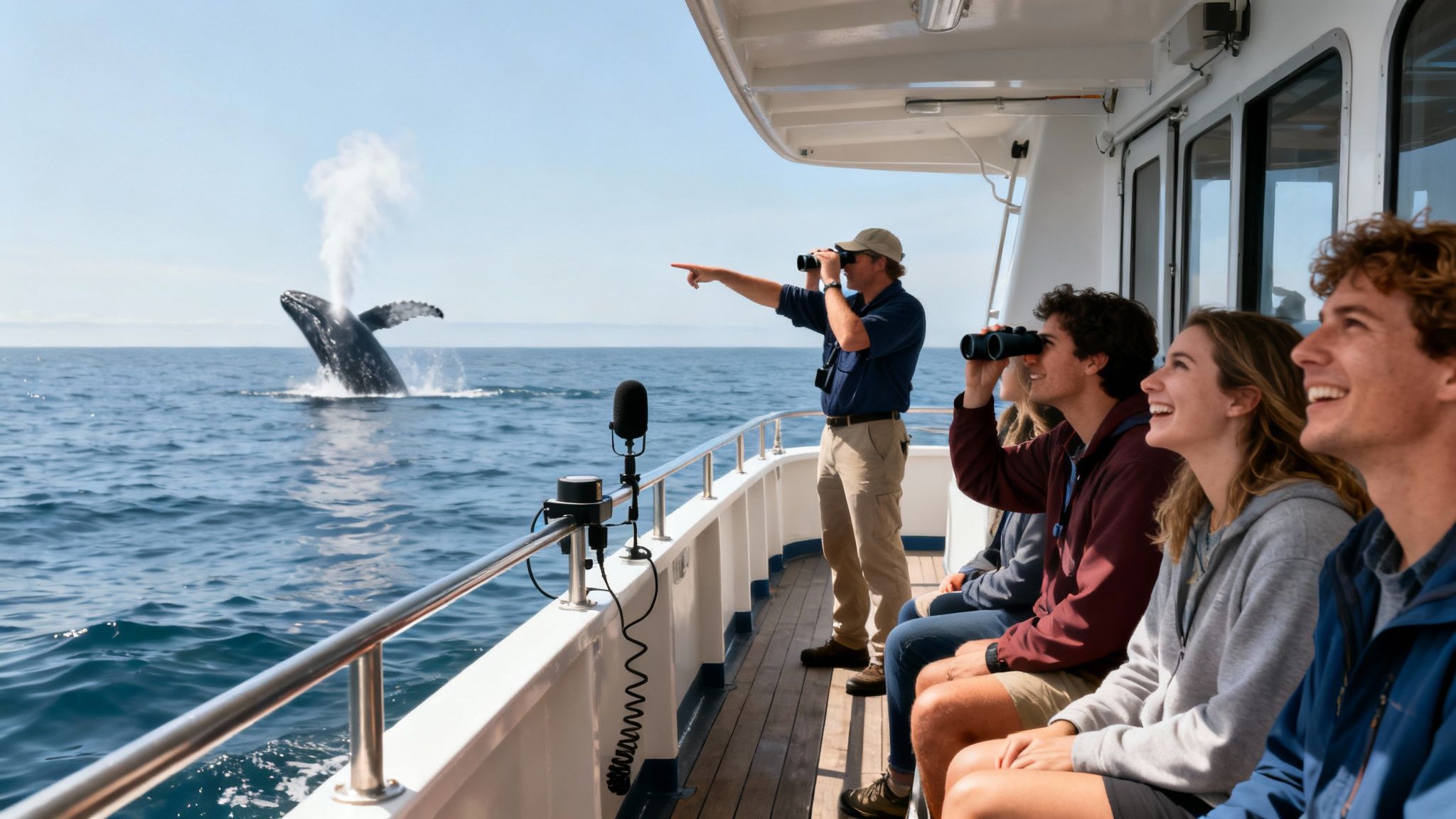
It all starts the moment you pull away from the harbor. You can feel the excitement in the salty air as the boat slices through Kona’s calm waters, putting the volcanic coastline in your wake. Everyone’s eyes are glued to the deep blue horizon, a quiet, shared anticipation building by the minute.
Then, you hear a collective gasp. Someone points, and there it is—a misty puff of vapor just hanging in the air. The first spout. This is the moment your Big Island whale watching experience truly begins. Your captain will expertly slow the boat, and a hushed silence falls over the group as you approach respectfully.
No video or photograph can ever do it justice. Seeing a 40-foot, 40-ton animal break the surface with your own eyes is a humbling, jaw-dropping sight that stays with you forever.
Decoding Incredible Whale Behaviors
One of the absolute best parts of any tour is seeing the whales' amazing surface behaviors firsthand. Every action tells a piece of a story, and having an experienced naturalist on board helps you piece together the incredible narrative unfolding right in front of you.
You might get to see a few classic moves:
- The Breach: This is the one everyone dreams of seeing. A whale launches its entire massive body out of the water and comes crashing back down in a spectacular explosion of spray. It's pure, raw power on display.
- The Tail Slap: You'll hear it before you see it—a loud, sharp crack that echoes across the water as a whale smacks its fluke (tail) on the surface. It could be a way of talking to other whales or just showing who's boss.
- The Spy-Hop: This one feels personal. A whale rises vertically, poking its head straight out of the water as if to get a better look at you. It’s a moment of pure curiosity that makes you feel like the whale is just as interested in you as you are in it.
The Haunting Soundtrack of the Ocean
The sights are only half the experience. A tell-tale sign of a top-tier whale watching tour is the use of a hydrophone, which is basically an underwater microphone. When the engine is quiet, the crew will lower it into the water, letting you listen in on the world below.
What you'll hear is the complex, beautiful, and haunting song of the male humpback whales. These intricate melodies travel for miles under the surface and are a huge part of their mating rituals. Hearing those songs through the headphones while you float above is an almost otherworldly experience, connecting you directly to the mystery of the deep.
A typical Big Island whale watching tour runs about two to three hours. That’s the perfect amount of time to get out to the whale hot spots, enjoy several sightings, and really soak it all in without feeling rushed. Operators like Kona Snorkel Trips often have light snacks and drinks to keep you comfortable, too.
Of course, the open ocean can be unpredictable, and a perfectly smooth ride isn't always in the cards. If you tend to get motion sick, it’s a good idea to come prepared. Check out our guide on how to prevent seasickness for some great tips to make sure your adventure is as comfortable as it is incredible.
How to Watch Whales Responsibly and Safely
Seeing a 40-ton humpback whale leap out of the water is a memory that sticks with you forever. It's a true privilege, and it comes with a big responsibility. These whales have traveled thousands of miles to get to Hawaii's warm, safe waters to mate and raise their babies. Any disturbance can be incredibly stressful for them, especially for a new mom trying to protect her calf.
That’s why responsible Big Island whale watching isn't just a nice idea—it's the law. Both federal and state rules are in place to make sure we don’t get in the way of these amazing animals.
The 100-Yard Rule: Giving Whales Their Space
If there's one rule to remember, it's this: stay at least 100 yards away from humpback whales. That goes for everyone—boats, kayaks, and even paddleboards. Think of it as a mandatory personal space bubble for the whales. This buffer zone is essential. It lets them rest, nurse their young, and just be whales without feeling pressured by our presence.
Honoring this distance is the number one way to show respect. It ensures our curiosity doesn't disrupt their natural behavior, protecting them and the sanctity of their winter home.
Choosing a tour company that takes these rules seriously is everything. Here at Kona Snorkel Trips, our captains are experts at getting you into the perfect position for incredible photos and views, all while staying well outside that vital buffer zone. We’re committed to making sure your adventure helps the whales, not harms them.
What is the Hawaiian Islands Humpback Whale National Marine Sanctuary?
The waters around the main Hawaiian Islands are so critical for humpbacks that they've been designated the Hawaiian Islands Humpback Whale National Marine Sanctuary. It's a massive protected area designed to ensure the long-term survival of these whales and their habitat.
When you join a responsible whale watching tour, you're doing more than just sightseeing. You're casting a vote for conservation. Your presence helps show just how important these animals are to our economy and culture, which helps strengthen the sanctuary's mission. By being a thoughtful observer, you become a partner in protecting Hawaii’s entire marine ecosystem.
How You Can Be a Conscious Observer
Being a good guest in the whales' home goes beyond just keeping your distance. It’s about minimizing your footprint and showing respect for the ocean itself.
Here are a few simple ways you can make a big difference:
- Keep Your Voice Down: Whales have sensitive hearing. Loud noises and shouting can easily startle them, so try to keep things calm and quiet when they're nearby.
- Look, Don't Touch: Never try to feed, touch, or swim with humpback whales. It's illegal, incredibly dangerous, and disrupts their natural behaviors.
- Stow Your Trash: Make sure every piece of trash is secured on the boat. Anything that blows into the ocean can become a deadly hazard for whales and other marine life.
- Share What You Know: Talk to your friends and family about what you learned. Spreading the word about responsible whale watching is one of the best tools we have for conservation.
By keeping these simple but powerful guidelines in mind, we can all make sure the magic of Big Island whale watching is something we can enjoy for generations to come.
A First-Timer's Guide to Preparing for Your Trip
A little bit of prep work can be the difference between a great Big Island whale watching trip and an absolutely unforgettable one. Knowing what to pack means you’ll be comfortable, shielded from the elements, and ready to soak up every incredible moment.
Think of your tour as a few hours out on the dynamic, open ocean. Conditions can change in a heartbeat, even on the sunniest Kona day. That cool morning breeze or a bit of ocean spray feels amazing at first, but it’s always smart to be ready for anything.
Your Essential Packing Checklist
Packing smart lets you focus on the whales, not on wishing you’d brought a jacket. Most of what you need are simple things that make a huge difference once you're on the water.
- Reef-Safe Sunscreen: The Hawaiian sun is no joke, and the reflection off the water basically doubles its intensity. Do your skin and our fragile coral reefs a favor by choosing a mineral-based, reef-safe formula.
- Polarized Sunglasses: This is a non-negotiable. Polarized lenses are your secret weapon for cutting through the intense glare on the ocean's surface. They make it so much easier to spot a distant spout or the dark shadow of a whale just below the waves.
- A Secure Hat: A wide-brimmed hat is perfect for keeping the sun off your face and neck. Just be sure it fits snugly or has a chin strap—that ocean breeze loves to claim hats as souvenirs!
- Light Jacket or Windbreaker: It can feel surprisingly cool out on the water, even on a warm day, especially once the boat gets moving. A light jacket will keep you comfortable and is great for blocking any unexpected spray.
For a deeper dive on what to bring for any ocean adventure, check out our guide on the best gear for snorkeling on the Big Island Hawaii.
Pro Tips for an Amazing Day
Beyond the packing list, a few insider tips can elevate your whale watch from good to truly incredible. These are the little things that seasoned ocean-goers swear by.
First off, if you’re even a little prone to motion sickness, take your remedy before you step on the boat. Whether it’s over-the-counter medication, ginger chews, or acupressure bands, they all work best when you give them a head start. Booking an early morning tour usually means calmer seas, which can also make a big difference.
For the photographers out there, set your camera to a fast shutter speed. This is key to freezing the explosive action of a breach and getting those tack-sharp, dramatic shots. It's also worth bringing a good pair of binoculars. If you want to get an even more immersive view and spot distant marine life, this guide on choosing the best binoculars for whale watching is a great resource.
Here’s one of the best pieces of advice we can give: book your tour early in your vacation. This builds in a valuable buffer day or two, making it easy to reschedule if the weather doesn't cooperate without missing your chance to see the whales.
Finally, while getting great photos is a huge bonus, don't forget to put the camera down. Take some time to just watch, listen, and be present. There's nothing quite like witnessing these gentle giants in their natural habitat, and that's an experience best captured with your own eyes.
Your Big Island Whale Watching Questions Answered
Even the most seasoned traveler has questions before jumping into a new adventure, and whale watching is no different. It's totally normal. Getting the details sorted out ahead of time means you can just relax and be in the moment once you're out on the water.
Let's dive into some of the most common questions we get from first-time whale watchers.
Is a Morning or Afternoon Tour Better for Seeing Whales?
This is the classic question, and the honest-to-goodness answer is that you have a fantastic shot at seeing whales on either trip. These animals are active all day long, so you’re not going to miss out by picking one over the other.
That said, there are some subtle differences. The mornings often bless us with calmer, glassier water, which can make spotting a distant spout just a little bit easier. The soft light is also a photographer's dream. In the afternoon, the trade winds might kick up a bit, but the lighting can be just as dramatic and beautiful. It really just boils down to your own schedule and what feels right for you.
Are We Guaranteed to See Whales on Our Tour?
While your chances are incredibly high during the peak season from January through March, it’s so important to remember that these are wild humpback whales in their natural home. We can never guarantee their behavior—they’re on their own time, which is exactly what makes every encounter so special and authentic.
With that in mind, our success rate is through the roof. Our experienced captains have spent years on these waters. They know the whales' favorite hangouts and how to read the ocean, which dramatically boosts your chances of having that unforgettable moment.
The real magic is in the search. There’s a thrill in scanning the horizon with everyone else on the boat, and the shared excitement when someone finally shouts "There she blows!" is a huge part of the fun.
Can You See Whales From the Shore on the Big Island?
You bet! Seeing whales from shore is an amazing experience, and the Big Island’s elevated coastline offers some incredible spots, especially along the Kohala Coast. Places like the Puukohola Heiau National Historic Site are famous for land-based whale watching for a reason.
The long-running Sanctuary Ocean Count program actually has data to back this up, showing the Kohala Coast is a major hotspot. In January and February, volunteers there often log two to three times more sightings than anywhere else on the island. On a good day, they're spotting between 3 and 6 whales every 15 minutes!
But a boat tour is a whole different world. You get a much closer, more intimate perspective, and it's the only way you’ll get to hear their hauntingly beautiful songs through our underwater hydrophone.
What Is the Difference Between a Catamaran and a Zodiac Style Boat Tour?
This all comes down to the vibe you're looking for. Think of it like choosing between a smooth road trip in a luxury SUV versus an off-road adventure in a Jeep.
- Catamarans are the luxury SUVs of the sea. They’re bigger, super stable, and offer a smooth ride. This makes them perfect for families with little ones or anyone who gets a bit seasick. They also usually come with more creature comforts like bathrooms and shade.
- Zodiac-style boats, on the other hand, are the Jeeps. These rigid-hulled inflatables are smaller, faster, and can turn on a dime. They give you a thrilling, close-to-the-water experience. The trade-off is a bumpier ride with more exposure to the sun and sea spray—all part of the adventure!
Got more questions? We’ve probably answered them! Head over to our comprehensive Kona Snorkel Trips FAQ page where we cover everything you need to know about our tours.
Ready to make some memories you’ll be talking about for years? Kona Snorkel Trips specializes in intimate, small-group tours led by guides who live and breathe Hawaii's marine life. Come join us for the whale watching adventure of a lifetime.