
Your Ultimate Guide to Big Island Whale Watching
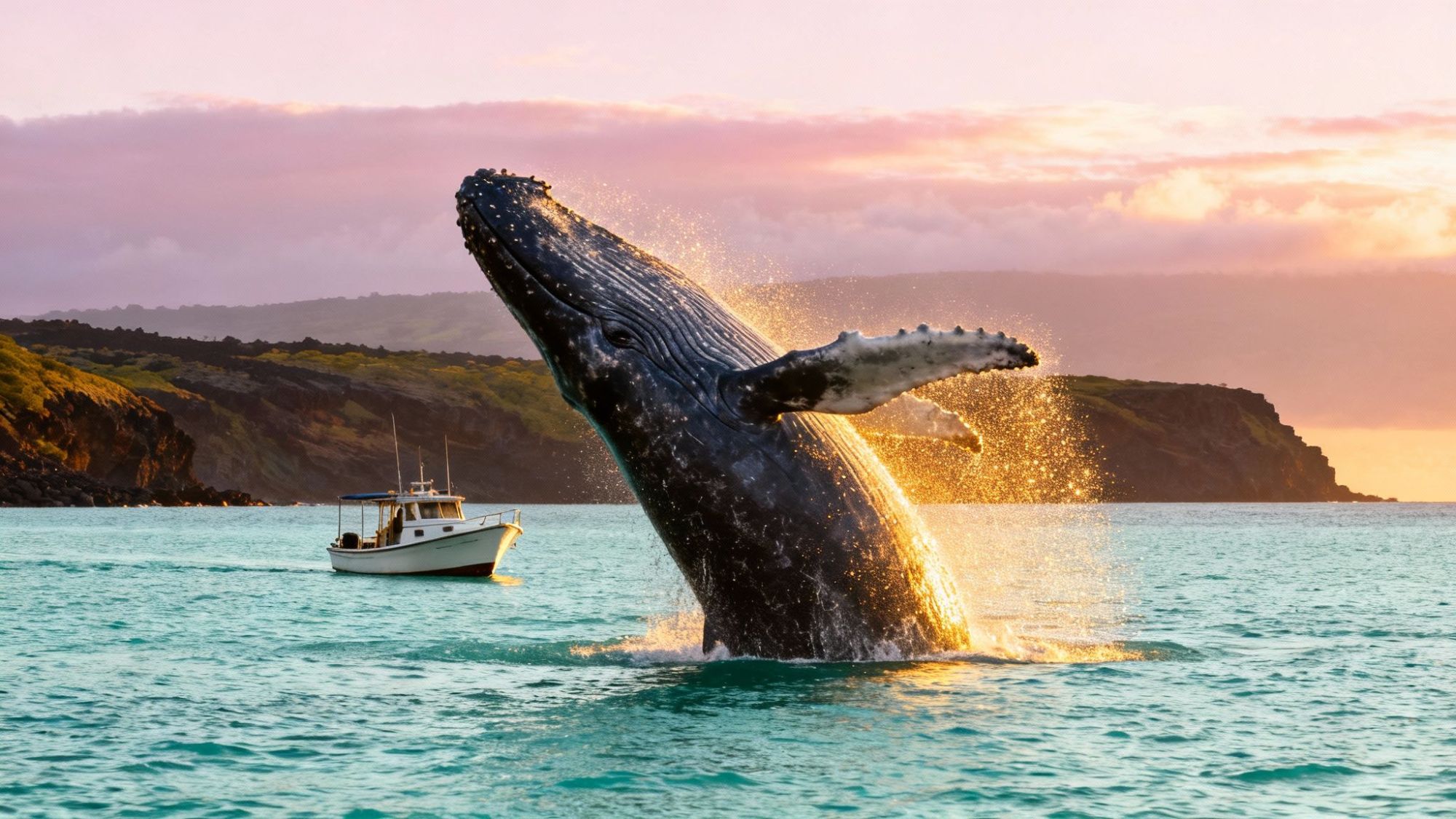
Imagine the surface of the ocean just shattering. A forty-ton giant explodes into the air, a raw, powerful moment that perfectly captures what Big Island whale watching is all about. Each winter, thousands of humpback whales make the epic 3,000-mile trip to Hawaii's warm, sheltered waters. This incredible migration makes the Big Island one of the absolute best places on the planet to see this natural spectacle unfold.
Your Front-Row Seat to Nature's Grandest Show
Going on a whale watch tour on the Big Island is so much more than just another activity; it’s a genuinely emotional, awe-inspiring encounter that sticks with you. The excitement builds from the very first sign—a puff of mist, a "blow," way out on the horizon. As you get closer, the true scale of these gentle giants starts to sink in. Honestly, nothing can prepare you for the thunderous crash when a whale fully breaches, or the cannon-like slap of a massive tail on the water.
To really get the most out of this, you need to go with a local expert. As the top rated & most reviewed snorkel company in Hawaii, we at Kona Snorkel Trips live for creating these kinds of safe, respectful, and unforgettable wildlife encounters. Our experienced crew doesn't just drive the boat; they share insights that turn a simple sightseeing trip into a real connection with the ocean's most incredible inhabitants.
Why This Experience is So Profound
A whale watching tour pulls you into a world that runs on ancient, natural rhythms. You aren't just looking at animals from a distance. You're right there, witnessing a crucial part of their lives as they mate, give birth, and raise their young. This yearly migration is an incredible story of instinct and endurance.
Here are a few of the key moments you might get to see:
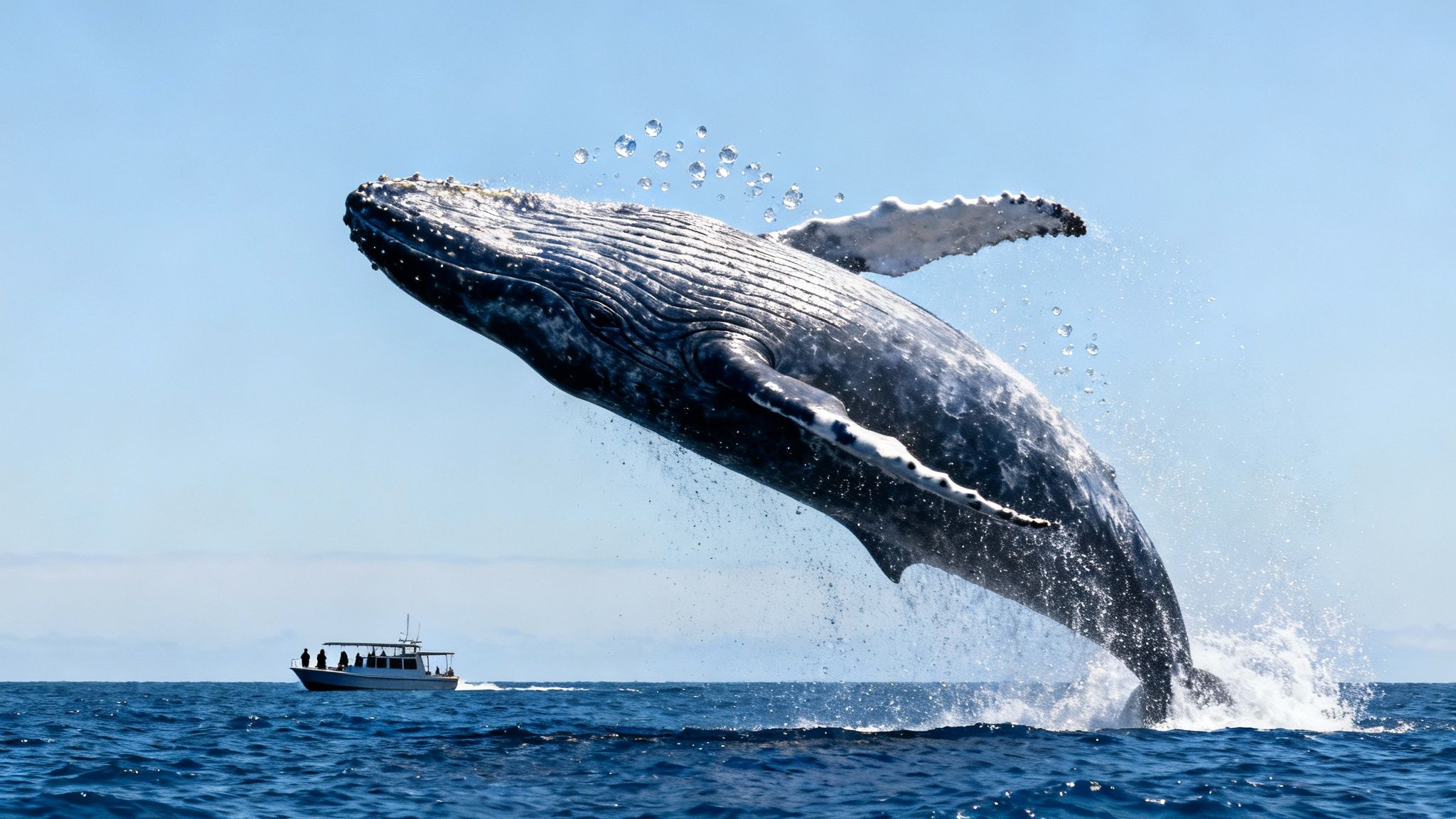
- The Breach: A whale launching its entire body out of the water. It’s a display of pure power and surprising grace that will leave you speechless.
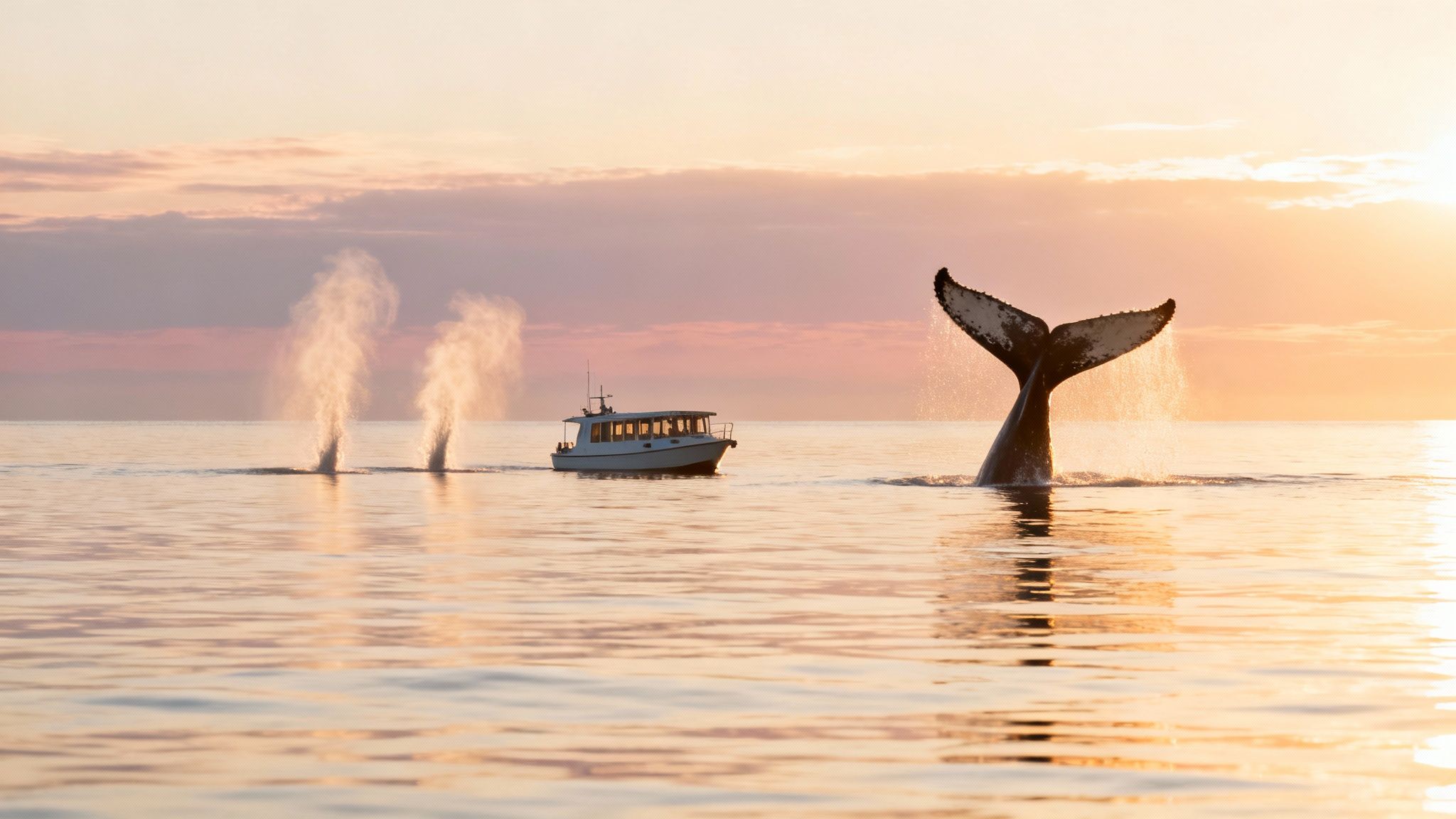
- The Tail Slap: The loud, sharp crack of a whale’s fluke hitting the water. They use this to communicate, and you can hear it from a long way off.
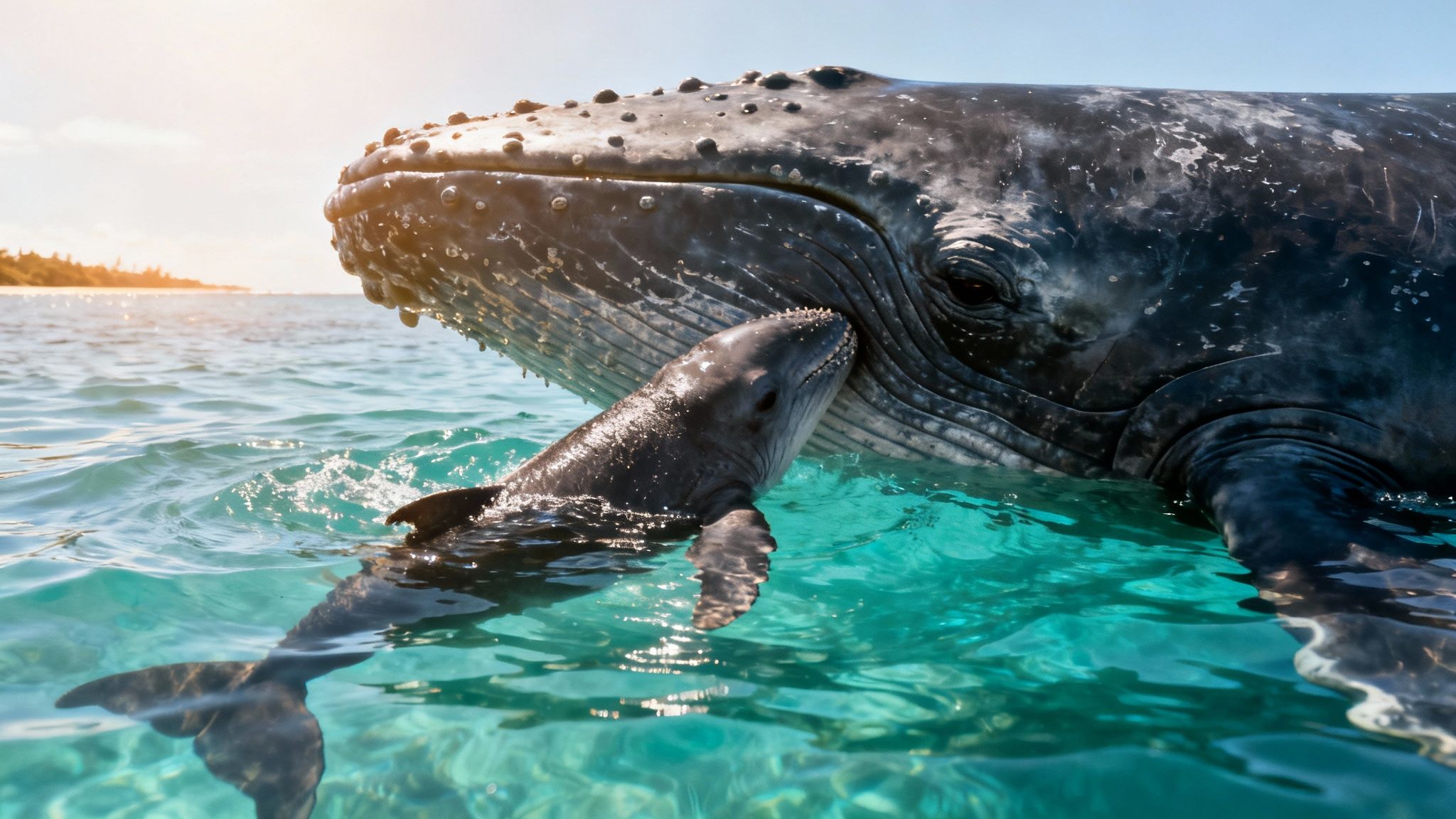
- Mother and Calf Pairs: Seeing a mother whale gently guide her newborn calf through the water is a truly special, tender moment.
These encounters are fleeting, powerful, and completely wild. To get a better feel for what it’s really like out on the water, check out our guide to Kona whale watching and learn how to prep for the adventure. Think of this as your first step toward an experience that will give you a whole new level of respect for the ocean and its majestic giants.
Understanding Hawaii's Majestic Humpback Whales
Every winter, something magical happens in the deep blue waters off the Big Island. It's the final stop on one of nature’s most incredible road trips: a 3,000-mile migration where thousands of North Pacific humpback whales journey from their chilly feeding grounds in Alaska to the warm, welcoming sanctuary of Hawaii.
This massive trek is all about instinct and survival. Just try to imagine setting off on a two-month journey without a single meal. That's exactly what these gentle giants do, living entirely off the fat reserves they spent all summer building up. It’s a powerful, primal drive focused on one thing: creating the next generation.
A Tropical Nursery for a New Generation
So, why Hawaii? It all comes down to the warmth and safety our waters offer. The Big Island's coastline provides the perfect conditions for the most important moments in a humpback's life, turning the ocean into a massive, bustling nursery.
Their long journey here is for a few key reasons:
- Mating and Courtship: The ocean becomes a grand stage where males compete for the attention of females. This often leads to dramatic "competitive pods," where you can witness spectacular shows of pure power and agility.
- Birthing: Pregnant females head for the calm, shallow bays to give birth. These protected spots are a safe harbor for newborn calves, far from the rough open ocean and their main predator, the orca.
- Nursing and Rearing: A newborn calf has very little body fat, so the balmy 80°F (26°C) Hawaiian waters are literally a lifesaver. Here, they nurse on their mother's incredibly rich milk, packing on hundreds of pounds a day to get strong enough for their first trip north.
This annual cycle is what makes Big Island whale watching so incredible. You're not just looking at animals in the water; you're witnessing a vital, intimate chapter of their lives play out right in front of you.
The Scale of the Migration
The journey itself is almost hard to wrap your head around. Some years, the humpback whale migration to the Big Island starts surprisingly early, with the first sightings popping up as early as September or October. These whales swim nearly 3,000 miles from their summer feeding spots in Alaska to our warm waters to mate, give birth, and nurse their young. The protected bays off the Kohala Coast and Puako are especially popular spots because of the calmer seas and clearer water—which also means amazing visibility for us whale watchers. Get the latest scoop on the first whale sightings of the season.
This incredible endurance makes every single breach and tail slap you see that much more meaningful. These aren't just random actions; they're communication, a display of strength, or maybe just pure joy after finishing such a grueling trip. Understanding that backstory elevates your Big Island whale watching tour from a simple boat ride to a deeply respectful and awe-inspiring encounter. It’s all about connecting with the amazing story behind the spectacle.
When to Go for the Best Whale Watching Experience
Timing is everything. When it comes to planning the perfect Big Island whale watching adventure, when you go is just as important as where. While we're lucky to have humpback whales in our waters for several months, their numbers, energy levels, and behaviors change dramatically from the start of the season to the end.
Knowing this natural rhythm is the secret to turning a good trip into a truly unforgettable one.
Think of the whale season like a three-act play. Each part offers a unique peek into the lives of these gentle giants, from the first quiet arrivals to the grand finale of mothers teaching their calves how to be whales.
To make it simple, we've broken down what to expect throughout the season.
Big Island Whale Watching Season at a Glance
This table gives you a quick snapshot of the different phases of the season, so you can pick the experience that’s right for you.
| Months | Activity Level | Common Behaviors to See |
|---|---|---|
| October – December | Low to Moderate | First arrivals, spouts from a distance, smaller pods forming. |
| January – March | High (Peak Season) | Breaching, tail slapping, competitive pods, mother & calf pairs. |
| April – May | Moderate to Low | Mothers teaching calves, last goodbyes, fewer males present. |
As you can see, your experience can vary quite a bit depending on when you book. Let's dive a little deeper into each phase.
The Early Season Warm-Up: October to December
The season kicks off quietly. The first scouts start arriving from Alaska as early as October, and the energy is still pretty mellow. These early months are when the whales are settling back in, reacquainting themselves with the warm, safe waters of Hawaii.
Sightings are less frequent, but that makes each one feel extra special. This is a great time to visit if you prefer fewer boats on the water and love the thrill of spotting one of the season's very first arrivals.
Peak Season – The Main Event: January to March
This is it. The big show. If you're dreaming of those classic, jaw-dropping whale watching moments, this is your window. From January through March, the waters off the Big Island are absolutely teeming with humpbacks. The population hits its peak, and the ocean literally comes alive with activity.
You’re most likely to see:
- Competitive Pods: Unbelievable displays of power as multiple males chase a single female. It’s pure drama on the water.
- Breaching & Tail Slapping: The iconic behaviors everyone wants to see. With so many whales around, there's constant communication and surface action.
- Mothers and Calves: By now, many babies have been born. Watching a mother gently guide her newborn is a sight you'll never forget.
This is the heart of the season. It’s when you have the absolute best chance of seeing multiple whales and a whole range of behaviors on a single trip.
Late Season – The Nursery Winds Down: April to May
As spring sets in, the vibe on the water changes again. Most of the males and non-nursing females have started the long trek back to their Alaskan feeding grounds. Who’s left? The moms and their growing babies.
This period is all about the nursery. The calves are bigger, more curious, and starting to test out their own breaching and tail-slapping skills under their mothers' watchful eyes. The trips feel calmer, focused on these intimate and heartwarming interactions before the last of the whales depart in May. For more details, check out our guide to the whale season on the Big Island.
Best Time of Day for Your Tour
Once you’ve picked your month, the last piece of the puzzle is the time of day. While whales are active 24/7, we almost always recommend a morning tour. The ocean is typically much calmer before the afternoon trade winds kick in.
That glassy water makes for a smoother ride and, just as importantly, makes it way easier to spot spouts and other surface activity. Decades of citizen science data confirm this: morning hours boast about 50% higher sighting rates than noon or later. The Kohala Coast is consistently the top spot, with January and February having the highest counts.
Finding the Best Whale Watching Spots on the Big Island
When it comes to your Big Island whale watching adventure, timing is only half the equation. You also have to know where to look. While you can technically spot humpbacks all along the western coast, certain areas are absolute hotspots. Knowing where to go can be the difference between a hopeful glimpse and a front-row seat to one of nature's greatest spectacles.

It all comes down to the island’s unique underwater geography. Whales are drawn to specific spots for a reason: the calm, protected, and relatively shallow waters along parts of the coast are the perfect, safe nursery for mothers and their newborn calves. This is where you want to be.
The Kohala Coast: The Epicenter of Whale Activity
If you’re looking for the undisputed champion of Big Island whale watching, look no further than the Kohala Coast. This sun-drenched stretch along the northwestern shore, including areas like Puako and Kawaihae, sits right in the heart of the Hawaiian Islands Humpback Whale National Marine Sanctuary.
That title isn't just for show—it means these waters are a critical habitat. The ocean floor here is shallower, and the towering volcanoes of Mauna Kea and Kohala act as a natural shield, blocking the harsh trade winds and creating a calm, protected bay. For a mother whale, this sheltered environment is the ideal place to give birth and nurse her young, far from the dangers of the open ocean.
Because of this, the sheer number of whales here is incredible. Out of the 12,000 humpback whales that migrate to Hawaii each year, a huge concentration gathers right here. During the peak season from January to March, it’s not unusual to have 3 to 6 whale sightings every 15 minutes. It’s a near-constant show of spouts, breaches, and tail slaps.
Comparing Kona and Kohala
While Kohala is the prime hub, the Kona Coast—especially around Kailua-Kona—also offers fantastic whale watching. The big advantage of tours leaving from Kona is convenience, as it's the main tourist center. You're also likely to see other amazing marine life like dolphins and sea turtles on your way out.
The real difference boils down to whale density and how long it takes to find them.
- Kohala Coast Tours: Tend to find whales much faster simply because there are more of them packed into the immediate area. The waters here are also typically calmer, making for a smoother ride.
- Kona Coast Tours: You might have a slightly longer boat ride to reach the most active whale zones, but you often get a more diverse marine life tour in the process.
Honestly, you can't go wrong with either. But if your number one mission is to see as many whales as possible, a tour starting from the Kohala area is your best bet. For a deeper dive, check out our guide to whale watching in Kailua-Kona to help pick the perfect launch point for your trip.
Best Land-Based Viewing Points
Don’t feel like heading out on the water? No problem. The Big Island’s elevated coastline has some incredible spots where you can watch the show from shore. The trick is to find a high vantage point with a wide, sweeping view of the ocean.
Pro Tip: For the best shoreline viewing, head out in the morning. The sun will be at your back, and the ocean is often glassy and calm, making it much easier to spot the tell-tale puff of a whale's spout in the distance.
Here are a few of the best spots, all conveniently located along the prime Kohala Coast:
- Puʻukoholā Heiau National Historic Site: The name literally translates to "hill of the whale," and it lives up to it. The trail here offers phenomenal, unobstructed views over the marine sanctuary.
- Lapakahi State Historical Park: This more remote park has a stunning coastal bluff that’s perfect for scanning the horizon. Just be sure to bring binoculars, water, and sun protection—there’s not much shade.
- Kapaʻa Beach Park: A great spot for families, this park has shade and picnic tables, letting you watch for whales in total comfort.
How to Choose Your Perfect Whale Watching Tour
With so many whale watching options on the Big Island, how do you pick the right one? It can feel a little daunting, but making a good choice is what separates a decent day out from an absolutely unforgettable ocean adventure. The kind of boat, the number of people you share it with, and the crew's know-how all play a massive part in crafting those lifelong memories.
The first big decision you'll make is about the boat itself. This choice really sets the tone for your whole trip, influencing everything from your comfort and how well you can see to the overall vibe of the tour. Let's break down the pros and cons to help you find the perfect match for your style.
Comparing Different Tour Boat Types
Every boat offers a totally different experience on the water. Big catamarans are all about stability and amenities, making them fantastic for families. On the other hand, smaller rafts give you a more thrilling, down-to-earth perspective.
-
Large Catamarans: These are your most stable option, a great pick if you're worried about getting seasick. They usually come equipped with restrooms, shady spots, and even snack bars, creating a super comfortable and family-friendly setting. The trade-off? They carry more people, which can sometimes make the experience feel a bit less personal.
-
Smaller Powerboats and Rafts (Zodiacs): If you're looking for a real adventure, these boats are tough to beat. They're zippy and agile, which means they can cover more ocean and get to sightings faster. Their low-to-the-water design gives you a wild, eye-level view of the whales—it's about as intimate an encounter as you can get.
At Kona Snorkel Trips, we're all about small-group tours. We genuinely believe a smaller boat creates a more personal connection with the ocean. It lets our captains give you their full attention and share deeper insights, which makes the whole adventure that much more meaningful.
Key Questions to Ask Before You Book
Okay, so you've got a boat type in mind. Now it's time to get into the nitty-gritty. Asking a few smart questions upfront ensures there are no surprises and that the tour you book is exactly what you're hoping for. Any good, reputable operator will be happy to give you straight answers.
Before you pull the trigger, make sure you ask:
- What is the group size? Smaller groups almost always mean a better, less-crowded view and a more personalized experience.
- How long is the tour? Most trips run between 2 to 4 hours. A longer tour simply gives you more time on the water, upping your odds of having some mind-blowing sightings.
- What amenities are included? Find out about snacks, drinks, and if they provide gear like binoculars. Some tours, like ours, even carry a hydrophone so you can listen to the incredible whale songs live.
- What is your approach to responsible viewing? This is a big one. Make sure the company is serious about following federal laws, which means keeping a 100-yard distance from the whales. It shows they truly care about the animals' well-being.
Why a Premier Operator Matters
Choosing a top-notch operator like Kona Snorkel Trips takes your Big Island whale watching experience from just "good" to truly exceptional. It's about so much more than just spotting whales; it's about understanding them.
Our lifeguard-certified guides and expert crew don't just point at spouts on the horizon. They explain the behaviors you're seeing, share fascinating details about the whales' life cycles, and tell the epic story of their migration. This kind of expert commentary adds a rich layer of meaning that turns a simple boat trip into a powerful educational journey.
Plus, premier operators give you flexibility you just won't find anywhere else. For those who want the ultimate adventure, we offer private boat charters. This lets you design your day from the ground up, whether you want to focus on photography, hang out a little longer with a specific pod, or just enjoy the magic of the ocean with only your own friends and family. This level of service is how we make sure your whale watching trip is exactly what you dreamed it would be.
You can learn more about what separates the best from the rest in our guide to Big Island whale watching tours.
Practicing Responsible Whale Watching and Conservation
There's nothing quite like seeing a forty-ton humpback whale breach, launching its entire body out of the water. It’s a moment that sticks with you forever. But with that incredible privilege comes a serious responsibility. These whales have traveled thousands of miles to get here, all for the crucial purpose of mating and raising their calves in Hawaii's safe, warm waters. Any disturbance from us can add major stress to their lives, especially for a new mom trying to keep her vulnerable baby safe.
This is why responsible tourism is the absolute heart of any truly great Big Island whale watching trip. It’s all about making sure our excitement doesn’t disrupt the very natural behaviors we came all this way to see.
The 100-Yard Rule: A Sacred Boundary
To protect these gentle giants, both federal and state laws are crystal clear. The single most important rule to remember is the 100-yard approach distance. No vessel of any kind—not a tour boat, not a kayak, not even a stand-up paddleboard—is legally allowed to get within 100 yards (or 300 feet) of a humpback whale.
Think of it as their personal space bubble. This buffer is vital, giving them the room they need to rest, nurse their young, and communicate without feeling threatened or boxed in.
Honoring this space is the cornerstone of respectful whale watching. It’s not just about following a law; it’s a sign of profound respect for the whales' ancient pilgrimage and their need for a safe harbor here in Hawaiian waters.
Following this rule is especially critical when a mother and calf are present. A newborn calf has to surface for air way more often than an adult and needs to stick close to its mom for food and protection. A boat getting too close can easily separate the pair, which is incredibly stressful and can put the calf in real danger.
Choosing a Tour Operator Who Cares
This is where your choice of tour operator makes all the difference. You're not just booking a seat on a boat; you're placing your trust in a crew to provide an amazing experience while always putting the whales' well-being first. A professional, responsible operator knows the regulations like the back of their hand and is genuinely committed to marine conservation.
A truly great crew has the skill to position the boat for phenomenal views and photo ops without ever breaking that 100-yard line. They know how to read whale behavior and can anticipate where a whale might surface next, giving you a front-row seat from a safe and respectful distance.
Here’s what to look for in a responsible tour company:
- They openly discuss the 100-yard rule during their pre-tour briefing. It's a priority for them.
- They never chase or herd whales. Instead, a good crew will position the boat parallel to the whales' direction of travel and let the animals decide if they want to get closer.
- They educate their guests. The best guides turn your trip into a mobile classroom, explaining the behaviors you're seeing and why conservation is so important.
When you choose an ethical tour, you're directly supporting businesses that act as guardians of the ocean. You’re voting with your wallet for a sustainable tourism model that ensures these magnificent animals are protected. This helps guarantee that the magic of the Big Island whale watching season will continue for generations to come.
For a complete overview of what to expect, our comprehensive guide to whale watching on the Hawaii Big Island offers even more valuable insights.
A Few More Things You Might Be Wondering
We get a lot of questions about whale watching here on the Big Island, so we've put together some answers to the most common ones. This should clear up any last-minute details and get you ready for an amazing day on the water.
Is a Whale Sighting Guaranteed on a Tour?
While whales are wild animals and nobody can predict their behavior with 100% certainty, your odds are incredibly high during peak season. Between January and March, the waters off the Big Island are just teeming with humpbacks.
Any good tour operator will have an experienced crew that knows all the whales' favorite hangouts. Lots of companies even offer a "whale guarantee"—if you don't see any, you can come back for another tour free of charge. Honestly, with the sheer number of whales along the Kohala Coast, it's pretty rare to go home disappointed during these months.
What Should I Bring on a Whale Watching Tour?
Being comfortable is the key to having a great time out on the ocean. We always suggest packing a few essentials to make your trip as smooth as possible.
- Sun Protection: The sun's reflection off the water is no joke. Bring reef-safe sunscreen, a wide-brimmed hat, and polarized sunglasses.
- Layers: Even on a warm day, the ocean breeze can bring a chill. A light jacket or windbreaker is always a good call.
- Viewing Gear: You’ll want a camera with a decent zoom lens to capture those incredible moments. Binoculars are also great for getting a closer look from a distance.
- Seasickness Prevention: If you’re prone to motion sickness, think about taking medication beforehand, following the directions on the package.
Most professional tours, like ours, provide water and some light snacks, but it never hurts to double-check with your specific operator before you head out.
Can I Swim with the Whales on the Big Island?
Nope. It is strictly illegal to intentionally swim with or get too close to humpback whales in Hawaii. Federal regulations are very clear: all vessels, swimmers, and paddleboarders must stay at least 100 yards away from these protected animals.
This law is absolutely critical for the whales' well-being, especially for new moms and their vulnerable calves. Getting too close can cause them a ton of stress and interrupt crucial behaviors like nursing and resting. The best—and only legal—way to experience them is from the respectful distance of a professional tour boat that puts their safety first.
What Is the Difference Between Kona and the Kohala Coast?
Both spots offer absolutely phenomenal Big Island whale watching, but they each have a slightly different vibe. The Kohala Coast is widely known as the epicenter of whale activity. Its calm, shallow waters are part of the Hawaiian Islands Humpback Whale National Marine Sanctuary, and tours leaving from there often find whales almost immediately.
Kona tours are fantastic, too, and they often come with the bonus of spotting other cool marine life, like pods of spinner dolphins. Really, the best choice might just come down to where you're staying and whether you prefer the super calm waters of Kohala or the chance for a more diverse marine safari out of Kona.
Ready to see the magic for yourself? Kona Snorkel Trips offers intimate, small-group tours with expert guides who are passionate about sharing the wonder of Hawaii's marine life while always prioritizing the animals' safety and respect.