
Big Island Whale Watching A Complete Guide
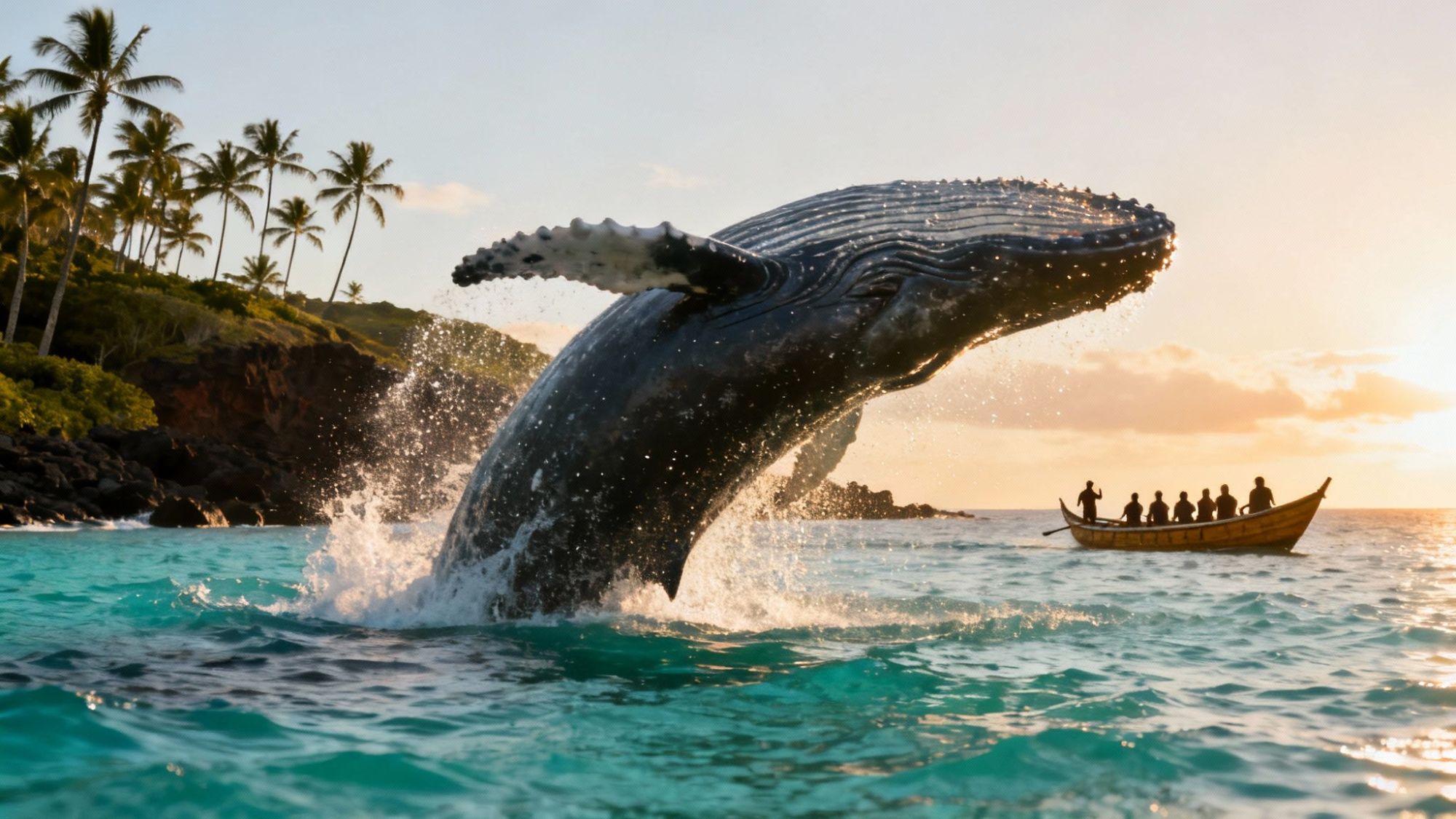
Welcome to your front-row seat for one of nature’s most incredible shows. Every winter, thousands of humpback whales make their way to the warm, protected waters off the Big Island, creating some truly unforgettable big island whale watching moments. If you want the best odds of seeing spectacular breaches and tail slaps, the peak season runs from January through March.
Your Ultimate Big Island Whale Watching Adventure Starts Here
Picture this: the calm surface of the Pacific suddenly bursts open as a 40-ton humpback whale throws its entire body out of the water. That breathtaking sight is what whale season in Hawaii is all about, and it’s an experience that sticks with you forever. This guide is here to help you plan the perfect adventure, whether you're dreaming of an up-close encounter on a tour or hoping to spot a breach from shore.
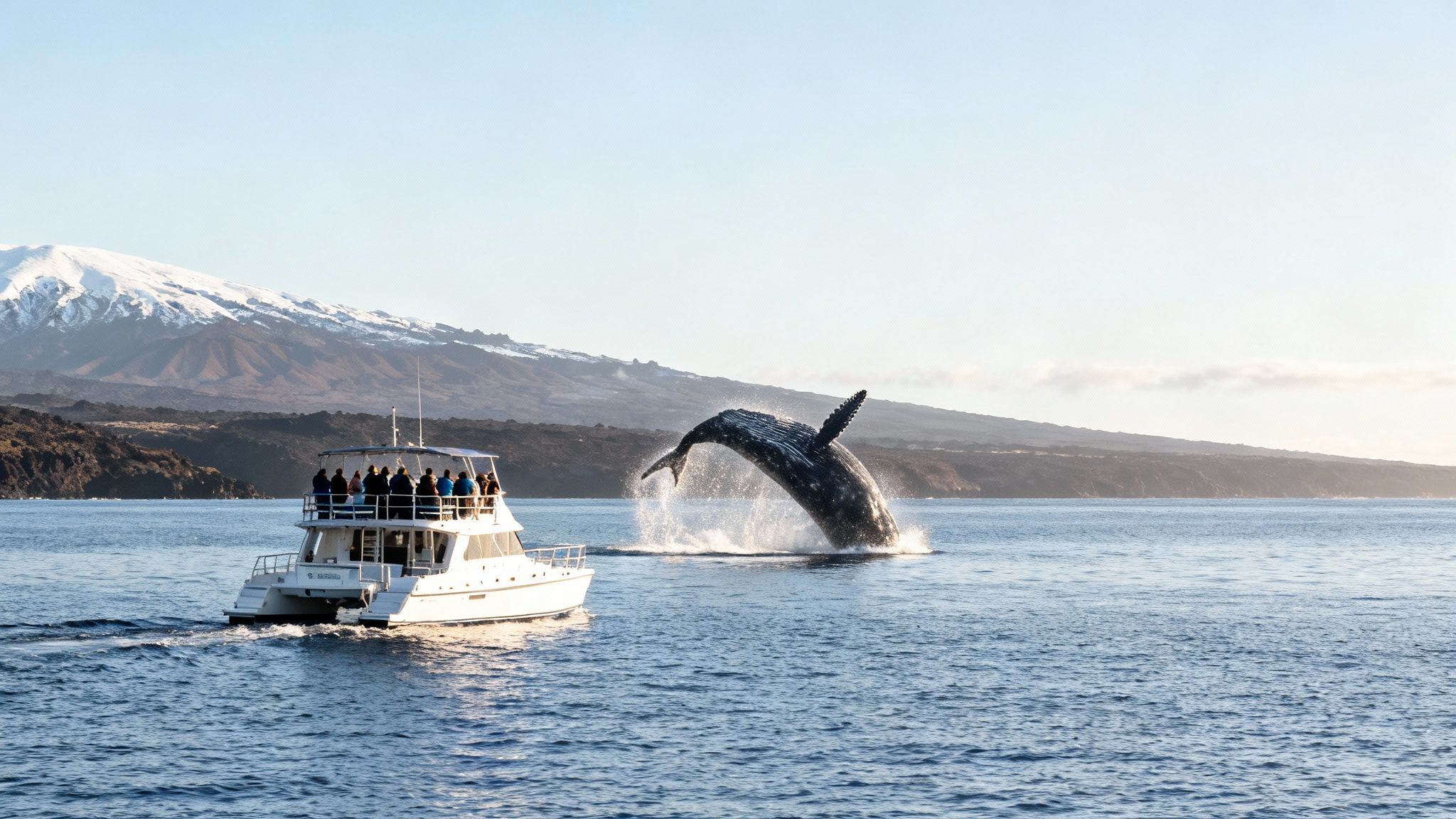
We'll walk you through everything you need to know, from the best times to go to the top tour operators and shoreline spots. For a trip with a trusted local guide, check out Kona Snorkel Trips. They’re the top-rated and most-reviewed snorkel company in Hawaii for a reason, and their expertise on the water is second to none.
What Makes This Experience So Special
Seeing the annual humpback migration isn't just another sightseeing trip; it’s a chance to connect with a powerful natural rhythm. These gentle giants travel over 3,000 miles from the frigid feeding grounds of Alaska to Hawaii's cozy waters to mate, give birth, and nurse their new calves.
This epic journey transforms the waters around the Big Island into a massive, vibrant nursery. You aren't just watching animals; you're observing a critical and awe-inspiring chapter in their lives.
This guide will give you the inside scoop you need to have an incredible experience with these giants of the deep. Here’s what we'll cover:
- The Humpback's Journey: We’ll get into the "why" behind their massive migration.
- Finding Your Tour: You’ll learn how to compare different tour types to find your perfect match.
- Shoreline Viewing: I'll share the best land-based spots to see all the action.
- Responsible Practices: We’ll talk about how to be a respectful observer and help protect these magnificent creatures.
By the end of this guide, you’ll have everything you need to plan your trip and really appreciate the profound beauty of whale watching on the Big Island. Let's get started.
The Humpback Whale Journey To Hawaii
Imagine packing up, leaving a fully stocked kitchen, and traveling 3,000 miles to a place with absolutely no food. It sounds crazy, but that’s exactly what humpback whales do every single winter, and it's all for the most important reasons: love and family.
Their incredible annual migration from the frigid, nutrient-rich seas of Alaska to Hawaii's warm, tropical embrace is one of the most awe-inspiring journeys in the animal kingdom.
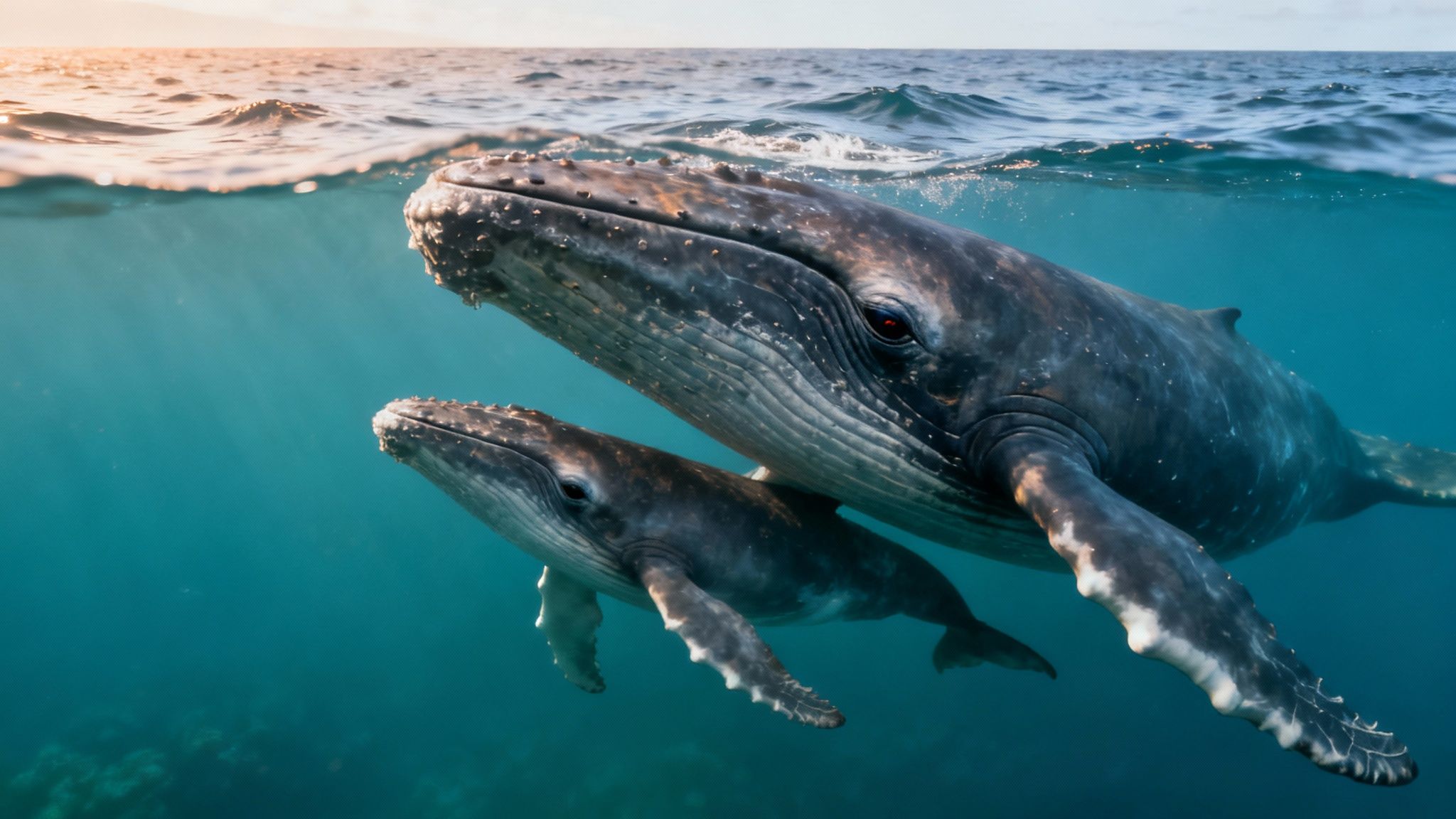
This marathon swim can take up to two months to complete, and they do it all on an empty stomach. The whales fast for the entire trip, surviving solely on the thick blubber reserves they built up during a summer of feasting. They aren't coming to the Big Island to eat; they’re coming for something far more important.
A Tropical Nursery For Gentle Giants
So, why Hawaii? The answer lies in the islands' warm, calm, and relatively shallow waters. Think of it as the perfect natural nursery, offering a safe haven for the most critical stages of a humpback's life, far from their main predators like orcas.
The whole point of this massive migration boils down to three key activities:
- Mating: The waters off the Big Island turn into a grand stage for courtship. Males form competitive groups, putting on spectacular shows of power—like breaching, spy-hopping, and tail-slapping—to win over the females.
- Birthing: Pregnant females specifically seek out these protected waters to give birth. A newborn calf, called a koholā, has very little body fat, so the warm Hawaiian sea is absolutely essential for its survival.
- Nursing: For its first few months, a calf will drink up to 100 gallons of its mother's incredibly rich, fatty milk every single day. This helps it rapidly build the blubber it needs for the long journey back north to the feeding grounds.
Knowing this transforms a big island whale watching trip from just sightseeing into a profound glimpse into the private lives of these majestic animals.
The Rhythm Of The Whale Season
Understanding the timing of this migration is everything when it comes to planning an unforgettable trip. While the first few whales might be spotted as early as October, the season slowly builds, creating a natural rhythm of activity that peaks in the heart of winter.
Each year, scientists estimate that around 12,000 koholā—more than half of the entire North Pacific humpback population—make their way to Hawaiian waters from November through May. The action really ramps up during the peak season, from January to March, when the greatest number of whales are present, with huge concentrations found right off the Kohala Coast.
To help you get a better sense of the timing, here’s a quick breakdown of what to expect month by month.
Big Island Whale Watching Season At A Glance
| Month | Whale Activity Level | Typical Sightings and Behavior |
|---|---|---|
| October – November | Low | The first arrivals appear. Sightings are sporadic but exciting. |
| December | Moderate | Numbers are building. More consistent sightings of individuals and small pods. |
| January | High (Peak) | Lots of activity! Prime time for seeing competitive pods, breaching, and tail slapping. |
| February | High (Peak) | The absolute height of the season. Highest concentration of whales. |
| March | High (Peak) | Still peak season, with a noticeable increase in mother-and-calf pairs. |
| April | Moderate | The migration north begins. Last chance to see mothers and calves before they depart. |
| May | Low | The last of the whales head back to Alaska. Sightings become rare. |
This timeline shows that while the season is long, planning your trip between January and March gives you the absolute best shot at witnessing the most spectacular behaviors.
The sheer scale of this migration is staggering. During peak season, it’s not a question of if you will see a whale, but rather how many you will see and what amazing things they will be doing.
This annual return is a powerful reminder of the humpbacks' resilience and just how vital their Hawaiian sanctuary is. Their journey has been so successful in recent years that it’s sparked conversations about their conservation status. To see how far they've come, you can read more about the journey of humpback whales and their status on the endangered species list.
This incredible conservation success story makes every sighting even more special. Witnessing them thrive in their winter home is a powerful and hopeful experience you won't soon forget.
Finding Your Perfect Whale Watching Tour
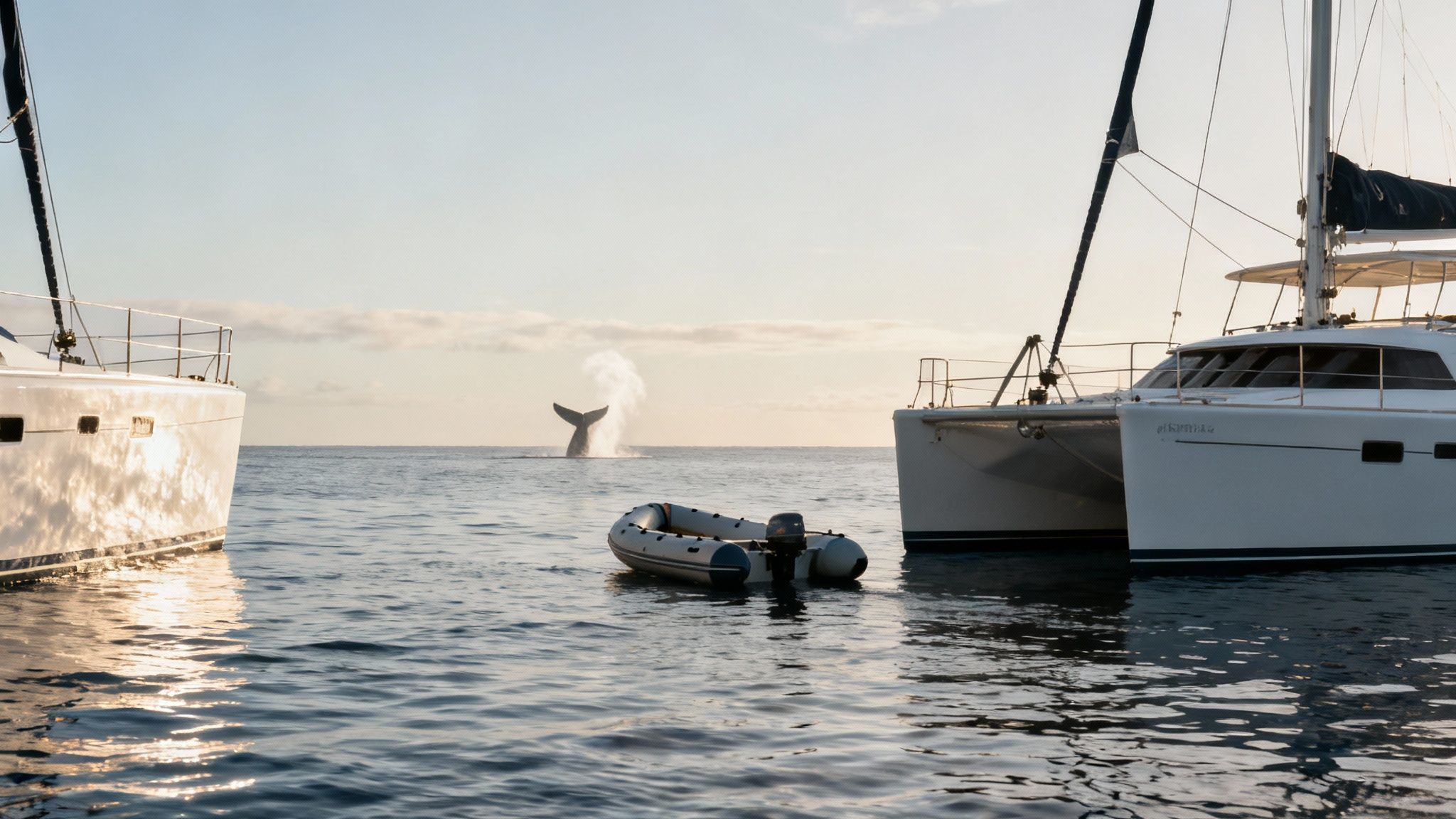
Choosing the right tour for your Big Island whale watching adventure can make the difference between a good trip and a lifelong memory. The island has a fantastic variety of options out there, each with a completely different feel. They're designed to match all sorts of budgets, group sizes, and senses of adventure. Your perfect experience is waiting.
Whether you're picturing a relaxed day on a spacious boat or a thrilling, up-close encounter, figuring out the key differences is the first step. Let's break down the most popular tour types so you can book with total confidence.
Large Catamarans: The Stable Family Choice
Large, stable catamarans are often the go-to for families, first-time whale watchers, or really anyone who gets a little queasy on the water. These vessels are built for comfort, giving you a smooth ride even when the ocean gets a bit choppy.
Their spacious decks mean you have plenty of room to walk around, and they almost always come with amenities like onboard restrooms and shaded seating. Trust me, those are huge perks on a longer trip.
- Pros: Highly stable, great for all ages, often includes amenities like snacks and drinks.
- Cons: Can be more crowded, and the higher vantage point means you're further from the water's surface.
- Best For: Families with young children, large groups, and anyone concerned about motion sickness.
Small Rafts: The Eye-Level Thrill
If you're craving a more intimate and exhilarating experience, you can't beat a smaller, faster raft-style boat. These zippy vessels get you much closer to the water, putting you at eye-level with all the action. The ride is faster and way more adventurous, giving you a front-row seat that feels incredibly personal.
Because they carry fewer passengers, these tours often feel more like a private expedition. The captain can maneuver more quickly to get you the best possible (and respectful) view of the whales.
The experience on a small raft is visceral. You feel the spray of the ocean and hear the powerful "whoosh" of a whale's breath in a way that simply isn't possible on a larger boat.
Private Charters: The Bespoke Adventure
For the ultimate personalized Big Island whale watching experience, a private charter is the only way to go. Booking a private boat means you have the entire vessel and crew to yourself. You call the shots—customize the itinerary, decide how long to stay with a particular group of whales, and create a schedule that fits your group's exact wishes.
This is an amazing option for special occasions, photographers who need specific angles and timing, or families who just want a completely private day on the water. It’s the priciest option, for sure, but the flexibility and exclusivity are unmatched.
For a deeper dive into all these options, our guide to Big Island whale watching tours offers even more detail.
Combo Tours: Whales Plus Snorkeling
Sometimes the best whale sightings happen when you're already out on the water for something else. A lot of our guests spot humpbacks while on their way to some of the Big Island's world-class snorkeling spots.
Combining your whale watch with another marine adventure is a fantastic way to maximize your time. A trip out to Kealakekua Bay, for instance, gives you a great shot at seeing both majestic whales and vibrant coral reefs on the same day.
The Best Spots For Shoreline Whale Watching
You don’t actually need a boat to experience the magic of Big Island whale watching. Seriously. For anyone who prefers solid ground under their feet, is watching their budget, or just isn't a fan of sea legs, the island’s coastline offers some absolutely spectacular viewpoints. All you need is a good pair of binoculars and a little patience to witness breaches, tail slaps, and spouts right from the shore.
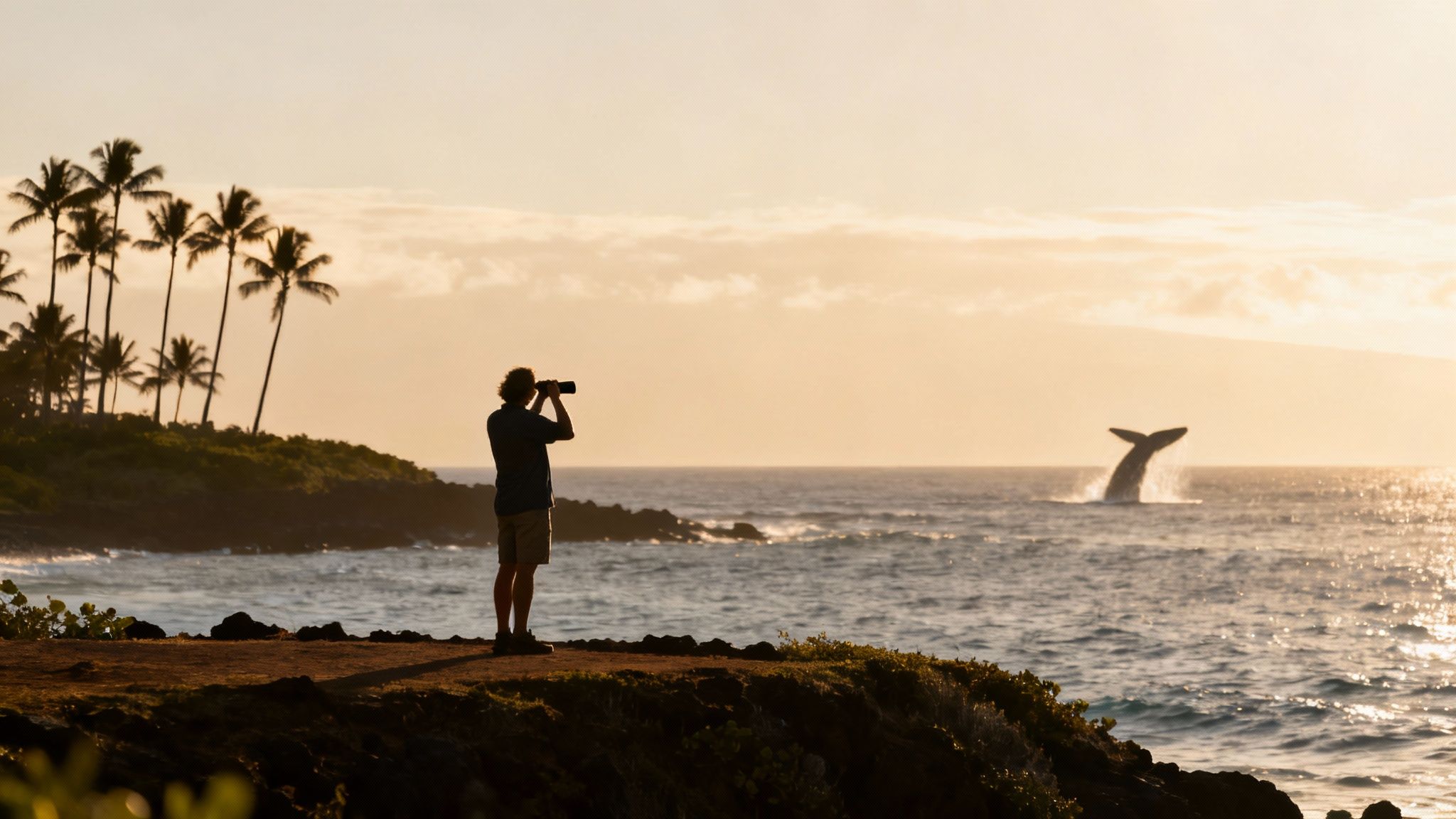
The secret to a great shoreline viewing experience is simple: get high. An elevated vantage point gives you that wide, panoramic view of the ocean, making it much easier to spot the tell-tale signs of whale activity. The calmer the water, the better your chances are, as a glassy surface makes those distant spouts pop against the horizon.
Prime Viewing Locations On The Kohala Coast
The sun-drenched Kohala Coast is, hands-down, the best area for land-based whale watching. Its elevated bluffs and crystal-clear sightlines create the perfect natural theater for the whales' winter performance. If you're posting up on shore, here are a few can't-miss spots that consistently deliver incredible views.
Puʻukoholā Heiau National Historic Site
The name of this place literally translates to "hill of the whale," and it definitely lives up to it. The high ground provides sweeping, unobstructed views of the ocean where whales are spotted all the time during peak season. It’s a powerful place to connect with both Hawaiian history and nature.
Lapakahi State Historical Park
Just a bit up the coast, this park offers another fantastic, high-elevation viewpoint. The rugged lava fields meet the deep blue sea, providing a stunning backdrop for your whale search. Heads up: it’s a hot and dry area, so be sure to bring plenty of water, a hat, and sunscreen while you scan the horizon.
Kapaʻa Beach Park
Located near Lapakahi, this spot has a wonderful bonus: covered picnic pavilions. This means you can watch for whales in comfortable shade—a real game-changer on a sunny Hawaiian day. It’s an accessible and comfortable option, especially for families or anyone planning to spend a few hours watching the water.
The best time for shoreline viewing is often in the morning. The water is typically calmer, and the angle of the sun reduces glare, making it much easier to spot the misty puff of a whale's spout on the horizon.
Tips For A Successful Shoreline Watch
To make the most of your land-based adventure, a little preparation goes a long way. Having the right gear and the right mindset can turn a quiet afternoon into an unforgettable one. For a complete look at whale watching from both land and sea, you can check out our detailed guide to whale watching in Kailua-Kona.
Here are a few essential tips to really elevate your experience:
- Bring Binoculars: This is non-negotiable. It’s the single most important tool you can have. A good pair of binoculars will bring the distant action right to you, transforming a faraway splash into a clear view of a breaching whale.
- Pack for the Day: Plan to stay for a while. You’ll want snacks, plenty of water, sunscreen, and a comfortable chair or blanket. Patience is your best friend here.
- Look for Spouts: Scan the horizon for the "blow" or spout—that misty spray whales exhale when they surface. This is almost always the first sign of activity you'll see.
What To Expect On Your Whale Watching Trip
There's a special kind of energy on the boat as you pull away from the Kona coast. The air tastes salty and fresh, and everyone is scanning the deep blue horizon, buzzing with anticipation for that first sign of life.
Then it happens. A crew member shouts and points, and you see it—a misty puff of spray hanging in the air. The first spout. The boat slows, respectfully keeping its distance, and the true scale of these animals begins to sink in. No photo can ever capture the feeling of seeing a 40-foot, 40-ton humpback whale surface nearby. It’s a moment that just takes your breath away.
Decoding Incredible Whale Behaviors
One of the coolest parts of any whale watch is figuring out what you’re actually seeing. Every splash, leap, and slap has a meaning in their world, and your guides will be narrating the whole show. But to give you a head start, here are some of the incredible displays you might get to witness.
- Breach: This is the one everyone hopes for—the iconic, full-body launch completely out of the water. Scientists have a few theories: it might be a way to communicate across miles of ocean, an attempt to shake off pesky parasites, or maybe, just maybe, it's pure, unadulterated joy.
- Tail Slap (Lobtailing): You’ll hear this one before you see it. A massive, powerful slap of the tail (fluke) on the water's surface creates a sound that echoes. It can be a warning to other whales, a form of communication, or sometimes, it just looks like they’re having a blast.
- Pectoral Fin Slap: Humpbacks have ridiculously long pectoral fins, and you'll often see them roll onto their side and slap one of these fins on the water over and over. It's another way they talk to each other, especially when they're hanging out in social groups.
- Spy-Hop: My personal favorite. A spy-hop is when a whale pokes its head straight up out of the water to get a look around. It feels like genuine curiosity, as if the whale is just as interested in checking you out as you are in them.
Some of the most magical moments happen when the captain cuts the engine. If you're lucky, they might drop a hydrophone into the water. Hearing the complex, haunting songs of the male humpbacks echoing up from the depths is an otherworldly experience you'll never forget.
How To Prepare For Your Day On The Water
A little bit of prep goes a long way in making your trip comfortable so you can focus on the whales instead of the small stuff.
Here’s a quick checklist of what to bring:
- Layers: Even on a warm Kona day, the breeze out on the open water can feel surprisingly cool. A light jacket or windbreaker is always a smart move.
- Sun Protection: The Hawaiian sun is no joke, especially with the reflection off the water. Pack reef-safe sunscreen, a good hat, and polarized sunglasses. Polarized lenses are key—they cut the glare, making it way easier to spot whales just under the surface.
- Camera with a Strap: You’ll definitely want pictures, but make sure your phone or camera has a wrist or neck strap. The ocean has a way of claiming things that aren't tied down!
- Grippy Footwear: Wear comfortable, non-slip shoes. Sandals with a backstrap or simple boat shoes will help you stay steady on deck as the boat moves.
- Seasickness Remedies: If you even think you might get seasick, it’s best to be prepared. Check out our guide on how to prevent seasickness for tips to make sure you feel great the whole time.
Remember, every single trip is different because we're entering their world on their terms. While sightings aren't guaranteed, the possibility of witnessing something truly spectacular is always there during whale season on the Big Island.
How To Practice Responsible Whale Watching
There's nothing quite like the moment a 40-ton humpback whale launches its entire body out of the water. It’s a powerful, core memory kind of experience. But witnessing this magic comes with a big responsibility to protect these incredible animals. They’ve traveled thousands of miles to get here, all for the critical purpose of mating and raising their newborn calves in Hawaii’s safe, warm waters.
Any disturbance from us can cause immense stress, especially for a new mom trying to nurse and guard her vulnerable calf. That’s exactly why Hawaii has strict federal and state laws in place to keep them safe.
The 100-Yard Rule
If you remember only one thing about Big Island whale watching, make it this: the 100-yard rule. It’s the single most important regulation out there.
Federal and state laws require that all vessels—from big tour boats down to kayaks and even paddleboards—must stay at least 100 yards away from humpback whales. To put that in perspective, think about the length of a football field. That’s the kind of personal space bubble we need to give them. This buffer is vital, allowing the whales to go about their business without feeling harassed or threatened. It’s the cornerstone of ethical wildlife viewing.
Sometimes, a curious whale will break the rules and approach a boat on its own. In these incredible moments, a good captain will cut the engines and let the whale control the encounter. It's a passive approach that ensures the interaction is completely on their terms, not ours.
Choosing a Responsible Tour Operator
This is where you can make a huge difference. You're not just booking a boat ride; you're putting your trust in a crew to deliver amazing views while putting the whales' safety first. A professional, eco-conscious crew lives and breathes these regulations and is deeply committed to marine conservation.
They are experts at positioning the boat for fantastic photo ops without ever crossing that crucial 100-yard line. When you choose an ethical operator, you're directly supporting businesses that act as guardians of the ocean. For anyone interested in respectful encounters with other marine life, our wildlife watching and historical sightseeing tour is another great way to experience Kona’s waters responsibly.
How You Can Contribute to Conservation
Want to do even more? You can get directly involved in whale conservation through community science. Programs like the Sanctuary Ocean Count let everyday people make a real impact on our understanding of these animals.
Organized by the Hawaiian Islands Humpback Whale National Marine Sanctuary, this volunteer effort has been happening every year since the late 1990s. On the last Saturday of January, February, and March, volunteers gather at shoreline spots to count whales and document what they’re doing. Over the years, these counts have given scientists invaluable snapshots of whale populations, helping them track trends and see if conservation efforts are working. You can see how these counts help protect Hawaii's whales on bigislandvideonews.com.
By following these simple guidelines—keeping your distance, picking ethical tours, and supporting conservation—you become more than just a spectator. You become a steward, helping ensure the magic of whale season on the Big Island continues for generations to come.
Got Questions? We’ve Got Answers.
Thinking about booking a Big Island whale watching adventure but still have a few things you're wondering about? That’s totally normal. We hear these questions all the time, so we’ve put together some straight-to-the-point answers to help you feel confident and excited about your trip.
When Is The Absolute Best Time To See Whales On The Big Island?
If you want the full, spectacular, once-in-a-lifetime show, you need to be here between January and March. This is the absolute peak of the season.
While the whales start showing up as early as November and stick around until May, that three-month window is when the waters off the Kona and Kohala coasts are just packed with them. You'll see more whales, more often, and catch more of the really dramatic stuff—breaching, tail slaps, and the incredible energy of competitive pods. For the smoothest ride, morning tours usually have the calmest seas.
What Should I Do If I Get Seasick On A Tour?
Nothing ruins the magic of seeing a whale breach like feeling queasy. The best defense is a good offense: if you're prone to motion sickness, take an over-the-counter remedy like Dramamine or Bonine before you even get on the boat. Give it time to kick in.
Once you’re out on the water, stay outside in the fresh air and lock your eyes on the horizon. It’s the most stable point you can find. A classic mistake is staring down at your camera or phone, which can bring on that woozy feeling fast. Our crews have seen it all and usually have ginger chews or other tricks up their sleeves to help you feel right again.
Pro tip from a seasoned captain: find a spot near the center of the boat where there's less rocking. Fresh air and a steady gaze on the horizon are your two best friends out there.
Are Whale Sightings Guaranteed On A Tour?
Here’s the honest answer: we're visiting wild animals in their natural home, and they don't exactly keep a schedule for us. Because of that, no one can ever 100% guarantee a sighting. It’s their ocean, after all.
That said, the success rate for professional tours during the peak season is incredibly high. Most reputable companies, including us, offer a "whale guarantee." What this usually means is if you don't see any whales (and sometimes dolphins count), you can come back out again for free on a standby basis. Just make sure to ask about the specific policy when you book so you know exactly what to expect.
How Close Can The Boats Legally Get To Whales?
This is a really important one, and something we take very seriously. Federal and state laws are crystal clear: all boats must stay at least 100 yards away from humpback whales. Think of it as the length of a football field. This rule is non-negotiable and exists to protect the whales from stress, especially the mothers with their brand-new calves.
But here's where it gets amazing. Whales are curious. Sometimes, they decide to close the distance and check out the boat. When that happens, a responsible captain will immediately cut the engines and just let the moment unfold. It becomes a completely passive, quiet observation where the whales are in total control. Those are the encounters you never, ever forget.
Ready to see these magnificent giants for yourself? At Kona Snorkel Trips, our small-group tours are all about creating an intimate experience that respects the whales and their environment. Our expert guides know these waters and will get you to the heart of the action safely and responsibly.