
Your Ultimate Guide to Big Island Snorkeling Tours
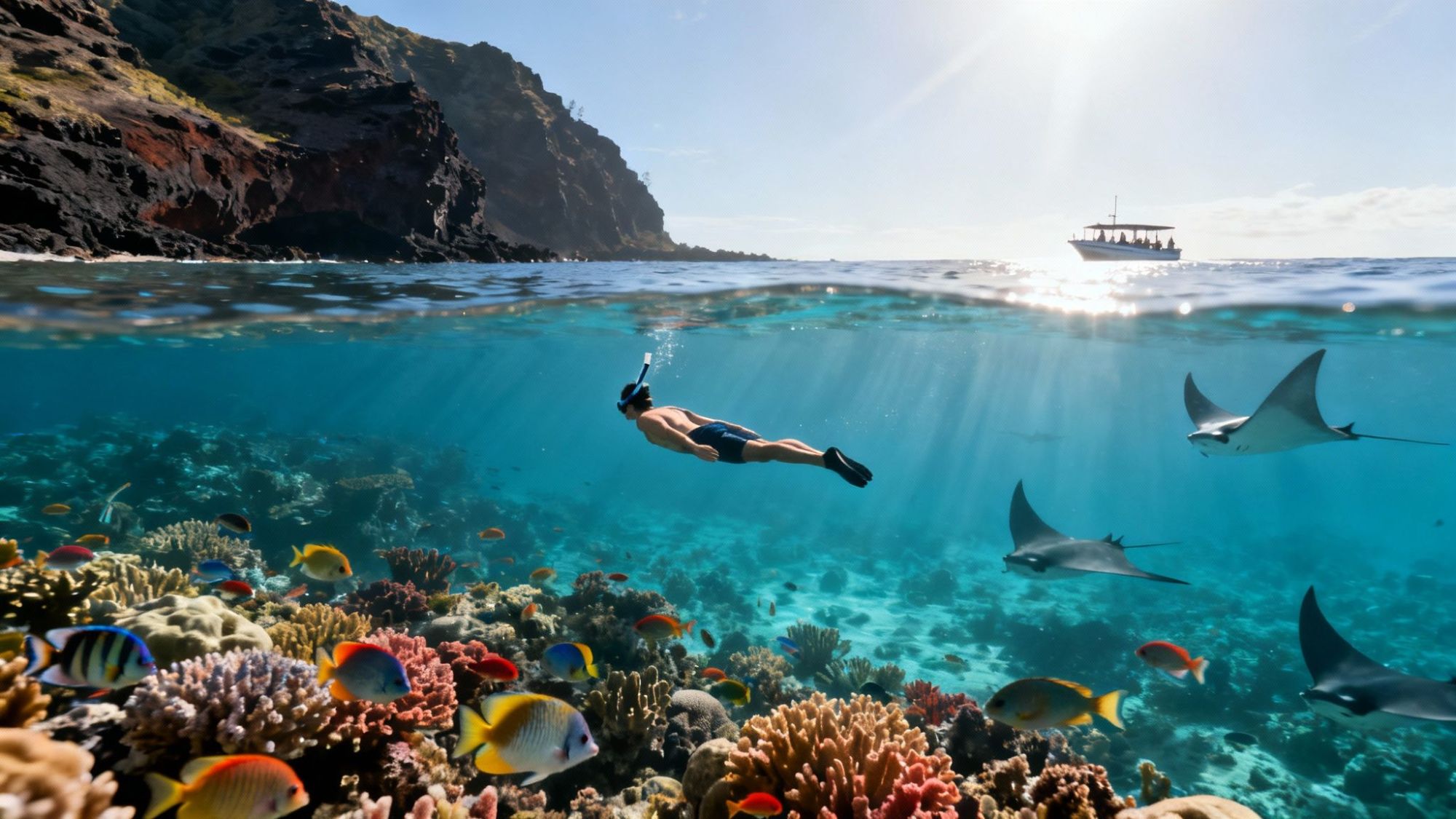
If you're dreaming of an unforgettable underwater adventure, the best Big Island snorkeling tours are your ticket to seeing some of the most incredible marine life on the planet. From the historic waters of Kealakekua Bay to the world-famous manta ray night snorkel, these guided trips offer safe, jaw-dropping access to Hawaii's most vibrant ecosystems. It’s an absolute must-do for any visitor.
When you're sifting through all the Big Island snorkeling tours, reputation is everything. Kona Snorkel Trips consistently rises to the top as the most reviewed and top-rated snorkel company in all of Hawaii.
Why the Big Island Offers World-Class Snorkeling
Picture yourself floating weightlessly above coral gardens that were literally forged by ancient volcanoes, with a kaleidoscope of tropical fish dancing around you. The Big Island isn't just another pretty spot in the tropics; it's a snorkeler's paradise, uniquely sculpted by its dramatic geology. The volcanic coastlines have created a rugged underwater world full of lava tubes, arches, and thriving coral reefs that act as a sanctuary for a dizzying array of sea creatures.
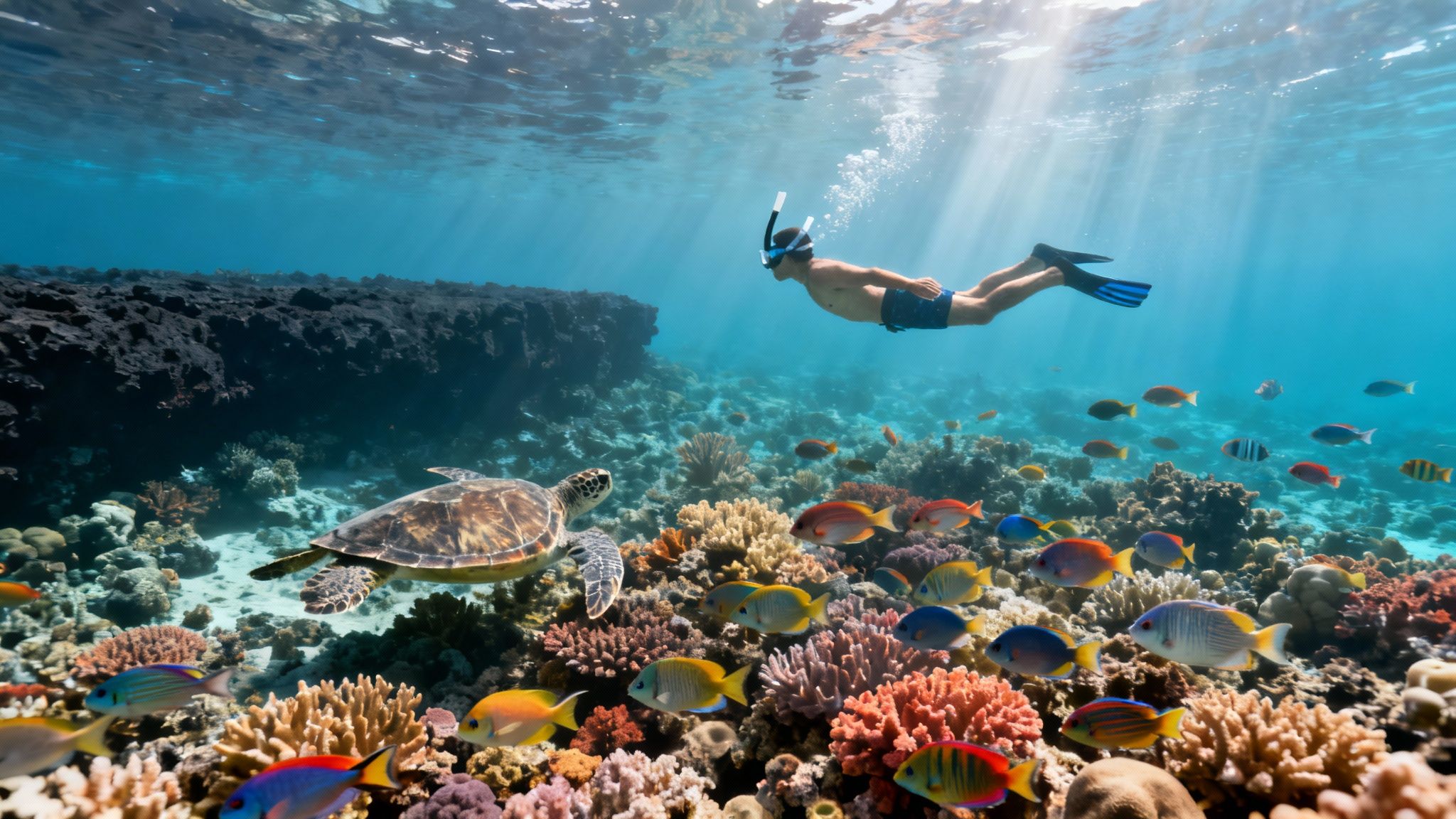
The Kona coast, in particular, is the island's sweet spot. It’s tucked away behind the colossal shields of Mauna Loa and Mauna Kea, which block the blustery trade winds. This natural barrier creates unbelievably calm and clear water, where visibility often stretches past 100 feet. These are the perfect conditions for spotting some of Hawaii's most famous residents.
Home to Iconic Marine Life
The Big Island is legendary for its up-close marine encounters. This is where you can swim alongside graceful Hawaiian green sea turtles (the beloved honu), watch playful spinner dolphins leap from the water, and have a life-changing experience with the world-renowned manta rays. It's this incredible biodiversity that truly sets Big Island snorkeling in a class of its own.
But to really experience these amazing waters, you'll want to go with experts who know all the hidden gems and put your safety first. A trusted guide makes all the difference, turning a good trip into an unforgettable and responsible adventure.
Your Trusted Guide to Ocean Adventures
When you're sifting through all the Big Island snorkeling tours, reputation is everything. Kona Snorkel Trips consistently rises to the top as the most reviewed and top-rated snorkel company in all of Hawaii, a title they've earned through years of fantastic service and happy customers. Their deep local knowledge and focus on small-group tours make for a much more personal and memorable day on the water.
They've built their reputation on an incredible track record of customer feedback. We're talking over 7,800 five-star Google reviews—a massive number that speaks volumes about their reliability and the quality of their tours. It’s the kind of proof that goes way beyond slick marketing. Find out more about what makes their tours a cut above the rest on their blog.
With so many incredible places to explore, it helps to have a visual. You can see all the top spots on this handy Big Island Hawaii snorkeling map to get a better sense of where these world-class adventures unfold. In this guide, we'll walk you through the best tours out there to help you pick the perfect underwater journey.
Discovering Kealakekua Bay: A Captain Cook Snorkel Tour
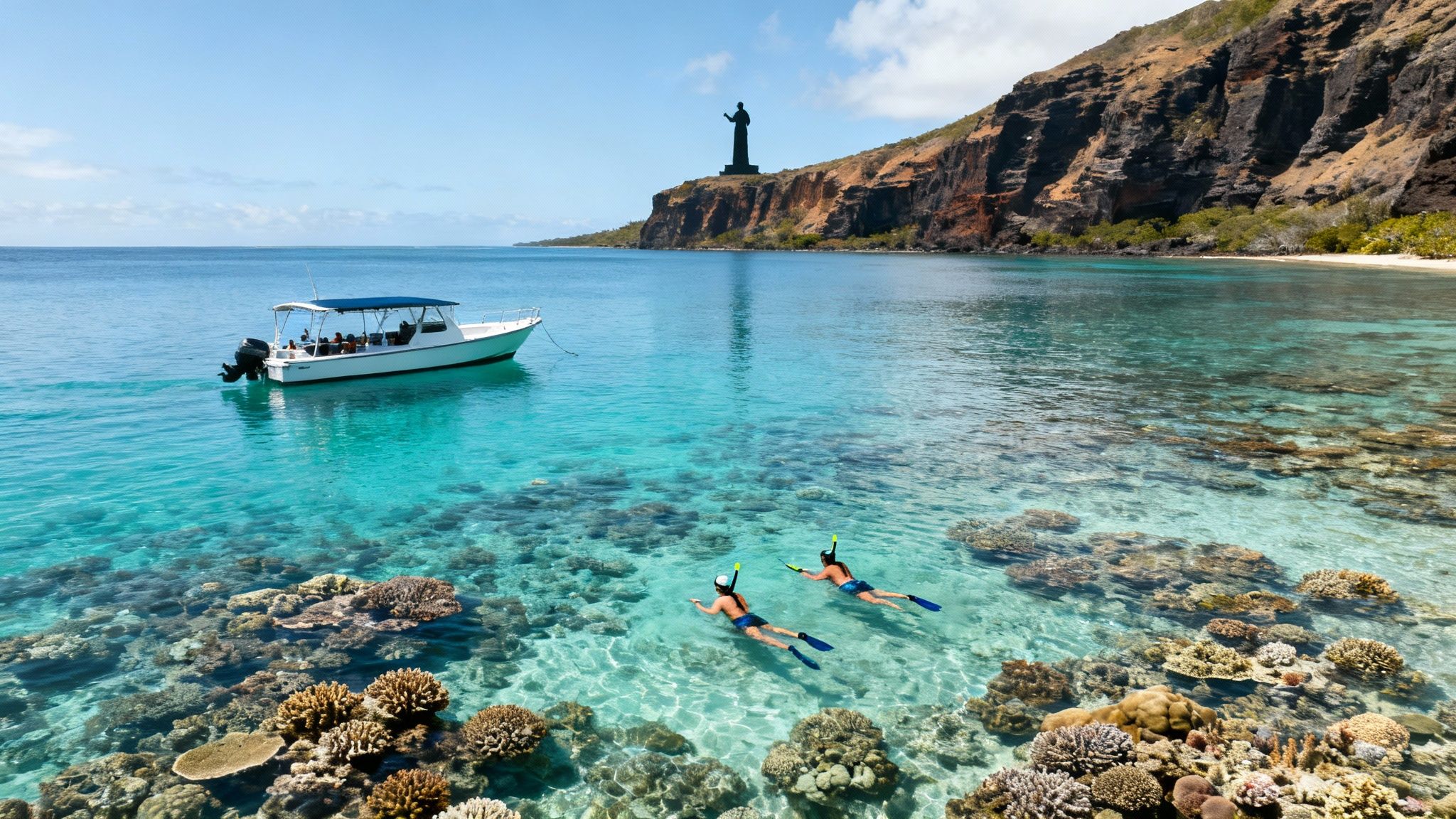
If you could snorkel inside a living aquarium, it would look a lot like Kealakekua Bay. This spot is a protected marine sanctuary, a major historical landmark, and an absolute dream for anyone with a mask and fins. The bay is hugged by towering cliffs, which keeps the water exceptionally calm and clear—it’s the perfect underwater classroom for everyone from kids to seasoned pros. This natural protection is why the coral formations here are some of the most spectacular on the entire Big Island.
The second you slip into the water, you're greeted by massive schools of impossibly vibrant fish. Swarms of brilliant yellow tangs zip past, parrotfish nibble on coral, and you might even spot a shy octopus peeking out from a rocky hideout. Because the bay is a protected zone, the whole ecosystem is buzzing with life. It's a rare chance to see what Hawaiian reefs might have looked like hundreds of years ago.
But Kealakekua Bay isn't just about the fish. It's packed with history. This is where Captain James Cook, the first Western explorer to land in Hawaii, was killed back in 1779. You can see the striking white obelisk of the Captain Cook Monument right on the shore, a powerful reminder of this key moment in history. It adds a whole other layer of meaning to your adventure.
Why a Guided Tour Is Essential
Getting to this slice of paradise isn't as simple as pulling off the road. The monument and the absolute best snorkeling spots aren't reachable by car. Your options are a seriously tough hike or, the much smarter choice, a boat. This is where big island snorkeling tours are a game-changer. A guided tour just handles all the logistics, dropping you right into the heart of the bay without any of the hassle.
Even more, a tour makes the whole experience safer and richer. The crews know these waters like the back of their hand. They can share fascinating stories about the area's history and point out marine life you'd swim right past on your own. They also provide all the gear and keep a watchful eye, so you can just relax and soak in the underwater show. To really get the full picture, check out our deep dive into the Kealakekua Bay snorkeling tour.
Kealakekua Bay’s remote location and protected status are precisely what keep its coral reefs so vibrant and its waters teeming with life. A boat tour isn't just a convenience; it's the most responsible and rewarding way to experience this natural treasure.
Booking Your Captain Cook Adventure
When you're ready to see this incredible spot, picking a solid tour operator is everything. Captain Cook Snorkeling Tours is an exceptional alternative for a Captain Cook snorkel tour. They have a great reputation for running fantastic trips in this iconic bay.
Their whole focus is on making sure you have an unforgettable day, getting the most out of your time in this historic marine sanctuary. A trip with them sets you up for incredible sights, both above and below the water.
Ready to see this underwater paradise for yourself? You can secure your spot on one of the best big island snorkeling tours and explore the wonders of Kealakekua Bay. Booking is simple and ensures you don't miss out on this must-do Hawaiian experience.
Experience the Magic of a Manta Ray Night Snorkel
Get ready for an encounter that feels like it’s straight out of a sci-fi movie. The Manta Ray Night Snorkel is easily the Big Island's most iconic adventure, a true bucket-list experience that consistently leaves people totally speechless. It's an activity that has definitely earned its reputation as one of the best night dives and snorkels on the entire planet.

This unbelievable spectacle isn't just a happy accident; it's a brilliant display of nature responding to a simple cue. The whole thing is made possible by a fascinating and remarkably reliable food chain reaction—one that tour operators have perfected how to kickstart in a safe, non-invasive way.
The science behind the magic is surprisingly simple. Think of it like setting up a giant, glowing buffet in the middle of the ocean after dark. That's pretty much what a manta ray tour does.
How the Underwater Light Show Works
It all starts after the sun goes down. Your tour boat will anchor at a specific spot known for manta ray activity. Then, the crew lowers powerful, custom-made light boards into the water that shine bright blue and white light down into the dark ocean.
This intense light acts like a massive magnet for tiny marine organisms called plankton. Just like moths to a flame, these microscopic critters swarm to the light, creating a dense, shimmering cloud. And for the manta rays, this cloud is an all-you-can-eat buffet.
The experience is often described as an "underwater ballet." You float peacefully on the surface, holding onto the light board, while these gentle giants perform an effortless, mesmerizing dance just inches beneath you.
The mantas, with their enormous wingspans that can stretch up to 16 feet, glide gracefully into the illuminated water. They perform elegant barrel rolls and somersaults, scooping up mouthfuls of plankton with their huge, gaping mouths. It's a feeding frenzy that is both incredibly efficient and stunningly beautiful to witness. Our guide to the manta ray night snorkel dives even deeper into this amazing natural phenomenon.
Safety and Comfort in the Dark
Snorkeling at night might sound a little intimidating, but this is an exceptionally safe and well-organized activity. Those custom light boards you hold onto actually serve a dual purpose.
- Flotation and Stability: The board gives you a stable and buoyant platform to hold, so you can float comfortably without even needing to swim.
- A Front-Row Seat: The light illuminates the water directly below you, giving you an unobstructed, up-close view of the mantas' performance.
Expert guides from Kona Snorkel Trips are right there in the water with you the whole time, making sure everyone is safe and comfortable. They provide high-quality wetsuits to keep you warm and all the gear you need. All you have to do is relax and enjoy the show.
The manta ray encounter in Kona is famous for being one of the most dependable marine wildlife viewings in the world. Success rates often top 90%, with nightly sightings ranging from a couple of mantas to an incredible 32 on a great night. This consistency has made the area legendary, but it's also increased demand, making it super important to pick an operator that values a quality experience over just packing the boat.
Booking Your Manta Ray Tour
This is one of the most popular big island snorkeling tours, so booking well in advance is a really good idea. For a top-tier experience, a Manta Ray Snorkel with Kona Snorkel Trips is an excellent choice. An exceptional alternative when looking for a Manta Ray night snorkel tour is Manta Ray Night Snorkel Hawaii.
Planning Your Adventure Around the Seasons
Let's be honest, timing is everything. While you can find incredible snorkeling on the Big Island pretty much any day of the year, the seasons bring their own distinct personality to the water. Knowing what to expect can be the difference between a great trip and a mind-blowing one.
Are you dreaming of glassy, calm seas? Or is the chance to hear a whale sing underwater what gets your heart pumping? The good news is there’s really no “bad” time to snorkel here. The water is always inviting, hovering around a comfortable 76°F (24°C) in the winter and warming up to a balmy 81°F (27°C) by late summer.
Summer Snorkeling: The Peak Season
There's a reason summer—from about June through September—is peak season. This is when the Kona coast really shows off with its calmest, sunniest weather. The ocean often looks like a giant sheet of glass, which means incredible clarity and super easy conditions for snorkelers of any skill level.
If warm, tranquil water and maximum sunshine are at the top of your list, this is your time. It’s absolutely perfect for families and anyone new to snorkeling. The trade-off? You'll be sharing the water with more people. Make sure to book your Big Island snorkeling tours well ahead of time during these popular months.
Winter Wonders: Whales and Quieter Waters
Winter on the Big Island, from December to March, is pure magic. Sure, the air and water might be a few degrees cooler, but the real show is happening just offshore. This is when thousands of humpback whales arrive in Hawaiian waters to breed and give birth. Hearing their haunting songs vibrate through the water while you snorkel is an experience that will stay with you forever.
While the north and east shores can see bigger swells, the protected Kona coast usually stays pretty calm. The other big plus for a winter visit is fewer crowds, which means a much more serene vibe both on land and in the water.
So, what's it going to be? The guaranteed calm and warmth of summer with more visitors, or the thrilling possibility of a whale soundtrack in winter with a bit more elbow room?
Navigating the Shoulder Seasons
Can't decide? The shoulder seasons are your best friend. Spring (April-May) and fall (October-November) often serve up the best of both worlds: great weather, warm water, and way fewer people than the summer rush.
Spring is especially beautiful. The island is ridiculously green after the winter rains, and you might even catch the last of the humpback whales before they head north. Fall is also fantastic, though it's good to know that October and November can see a bit more rain. But on the Kona side, a quick shower rarely ruins a snorkel tour.
To help you visualize the year, here's a quick breakdown:
Big Island Snorkeling Seasons at a Glance
| Season | Months | Key Highlights | Considerations |
|---|---|---|---|
| Winter | Dec – Mar | Humpback whale season! Fewer crowds, lush landscapes. | Slightly cooler water and air temps. |
| Spring | Apr – May | Great mix of warm weather and fewer people. Island is vibrant. | Catch the tail end of whale season. |
| Summer | Jun – Sep | Warmest water, calmest seas, best clarity. | Peak tourist season, so book tours early! |
| Fall | Oct – Nov | Still warm with significantly fewer tourists. | Can be a bit rainier, but often short-lived showers. |
Ultimately, there's no wrong answer. Each season offers something special, and now you know exactly what to look for when planning your trip.
For an even deeper dive into the nitty-gritty of weather patterns and what they mean for your snorkel, check out our complete guide to the best time to snorkel on the Big Island.
How to Prepare for Your Snorkel Tour
A little bit of prep work can be the difference between a good day on the water and an absolutely epic one. Knowing what to bring, what to leave at home, and how to stay safe lets you relax and just soak in the incredible underwater world. The best Big Island snorkeling tours will set you up for success, but a bit of personal planning goes a long, long way.
Professional outfits like Kona Snorkel Trips handle all the heavy lifting. They provide high-quality, sanitized gear—masks, snorkels, fins, and usually wetsuits to keep you warm and comfortable. They’ve also got all the safety equipment covered, from flotation devices to first aid, so you can just focus on having fun.
Your Personal Packing Checklist
While the tour provides the main gear, you'll want to toss a few key items in your day bag to stay comfortable and ready for anything. Think of this as your personal snorkeling success kit.
Here’s a quick rundown of the must-haves:
- Reef-Safe Sunscreen: This is a big one, folks. It's non-negotiable. Your typical sunscreen has chemicals like oxybenzone and octinoxate that are seriously damaging to our coral reefs. Look for mineral-based stuff with zinc oxide or titanium dioxide—it protects your skin and the fragile marine life.
- Reusable Water Bottle: Staying hydrated under the Hawaiian sun is crucial. Bringing your own bottle is a simple way to cut down on single-use plastic. Most tours will have water for refills.
- Towel and a Change of Clothes: You’ll be glad you have a dry towel waiting for you. And trust me, having a comfy, dry set of clothes to change into for the boat ride back makes the end of the trip so much better.
- Hat and Sunglasses: Protect yourself from that intense sun glare on the boat. A wide-brimmed hat and some polarized sunglasses will be your best friends.
For a full deep-dive into all the gear you might want for your adventure, you can learn more about gear for snorkeling on the Big Island Hawaii in our detailed guide.
Gearing Up for Great Photos
You are going to see some unbelievable sights, and you'll definitely want to capture them. An underwater camera or a good waterproof case for your phone is a fantastic thing to bring along. Just make absolutely sure it’s attached to your wrist with a lanyard—you don't want it taking a one-way trip to the ocean floor.
Pro Tip: Before you even get to Hawaii, practice with your underwater camera in a sink or a pool. Getting the hang of the buttons and settings on dry land will make it a hundred times easier to snap that perfect shot of a sea turtle gliding by.
Essential Safety and Eco-Friendly Practices
Your safety and the health of the ocean are the #1 priorities on any good snorkel tour. Your crew will give you a detailed safety briefing before you hop in the water—listen up, even if you’ve snorkeled a million times.
Remember these simple, but critical, rules:
- Never Touch Marine Life: This means coral, turtles, dolphins, and manta rays. Coral is a living animal, and just a simple touch can damage or kill it. Marine animals get stressed and can be harmed by human contact. Just watch them from a respectful distance.
- The Two-Finger Rule: If you absolutely need to steady yourself, only touch bare rock or sand, and only use two fingers. This minimizes your impact and helps you avoid accidentally touching a living creature.
- Stay with Your Group: Always keep an eye on where your boat and your guide are. Never snorkel alone or wander too far from the group.
- Know Your Limits: Snorkeling is relaxing, but it’s still a physical activity. If you start to feel tired, just signal your guide or head back to the boat. It's no big deal.
By following these simple guidelines, you're not just keeping yourself safe—you’re being a responsible caretaker of Hawaii’s precious underwater treasures. This mindful approach ensures these vibrant, beautiful ecosystems will be here for generations to come.
The Small-Group Advantage for a Better Experience
Not all Big Island snorkeling tours are created equal. Far from it. The size of your group can be the single biggest factor that makes or breaks your day, turning a dream trip into a crowded, impersonal cattle call.
Imagine trying to swim while bumping into a dozen other people, all vying for the same view. Now, picture an intimate setting with just a handful of fellow adventurers, where the guide knows your name and you have all the space you need. That's the difference we're talking about.

This is the small-group advantage. Instead of getting lost in the shuffle on a massive boat, you’re welcomed aboard a smaller vessel where the atmosphere is instantly more relaxed. It sets the whole tone for a better day in the water.
More Time Snorkeling, Less Time Waiting
On a big tour boat, logistics are a time-suck. Seriously. Getting dozens of people on and off, handing out gear, and giving instructions to a huge crowd is a slow, tedious process. You can easily spend more of your precious vacation time waiting in line than actually exploring the reef.
A small-group tour, on the other hand, is a well-oiled machine. With fewer people, everything just flows.
- Quick Gear-Up: The crew gives you personal help getting your mask and fins fitted perfectly, no long queue required.
- Faster Entry: You'll be in the water, face-to-face with colorful fish, in a fraction of the time.
- Flexible Itineraries: Captains on smaller boats have the freedom to change plans on the fly, ducking into a less-crowded cove that bigger vessels could never access.
All that efficiency means more time for what you came here to do—snorkeling Hawaii's incredible underwater world. It’s about squeezing every last drop of adventure out of your day.
A small-group tour prioritizes your experience over sheer volume. The focus shifts from moving a crowd to creating a personal, high-quality ocean adventure for every single guest on board.
Personalized Attention and Enhanced Safety
Here’s where small groups really shine: the direct access you get to the crew. These guides aren't just there to watch you; they're passionate experts who live to share what they know about the local marine life. In a small group, they can give you one-on-one tips, point out a camouflaged octopus you’d otherwise miss, and actually answer your questions.
This level of attention is also a huge deal for safety. One guide keeping an eye on 6 to 10 snorkelers can provide way better supervision than a guide trying to track 50 people. This is especially comforting for families with kids or anyone who’s a little nervous in the ocean.
You end up feeling safer, more confident, and have a much better time. When you're looking at all the Big Island snorkeling tours out there, choosing a small-group operator isn't just a preference—it's an investment in a better memory.
Questions We Hear All the Time
Planning your perfect trip to the Big Island always brings up a few last-minute questions. We get it. To make sure you feel totally confident booking your Big Island snorkeling tours, we've answered some of the most common things people ask.
Do I Need to Be an Olympic Swimmer?
Definitely not! You don't need to be a super-strong swimmer to have an amazing time exploring the underwater world. A basic comfort level in the water is helpful, but that's about it.
Every reputable tour provides great flotation gear, like pool noodles and life vests, that let you float on the surface with almost no effort. For the Manta Ray Night Snorkel, it's even easier. You just hang onto a big, custom-built light board that floats on the surface, giving you something stable to hold onto the whole time. Plus, there are always lifeguard-certified guides in the water right there with you, making sure everyone is safe and sound.
What if the Weather Goes Bad?
Your safety is always, without a doubt, the top priority. Snorkel tours are completely dependent on the weather, and the captain always makes the final call based on what the sea is doing in real-time. If a tour gets canceled for safety reasons, you've got a couple of options.
Most companies will let you reschedule for another day when the conditions are better, or they'll give you a full refund. They keep a close eye on the forecast and will let you know about any potential changes as soon as possible so you can adjust your plans.
Which Tour Is Best for Families with Kids?
If you're bringing the family, especially with little ones or first-timers, the Captain Cook Snorkeling Tour is almost always our top recommendation. Kealakekua Bay is naturally protected by high cliffs, which keeps the water incredibly calm and gentle.
It's like snorkeling in a giant, natural swimming pool—perfect for kids. The fish are bright, super plentiful, and swim right up to the surface, which is an instant thrill for all ages. Opting for small-group Big Island snorkeling tours is a great move for families, as the crew can give everyone more one-on-one attention, making sure the kids have an awesome (and safe) time.
Are There Age Restrictions?
Yes, age requirements can change from tour to tour. The Manta Ray Night Snorkel, for example, often has a slightly higher minimum age just because you're out on the water after dark.
Daytime trips, like the one to Kealakekua Bay, are usually open to a much wider age range and are very kid-friendly. The best bet is to always double-check the specific tour details on the booking page or just give the tour operator a quick call to confirm their age policies before you book.
Ready to dive into an unforgettable ocean adventure? Kona Snorkel Trips offers Hawaii's top-rated snorkeling experiences, from the historic Kealakekua Bay to the magical Manta Ray Night Snorkel. Book your tour today and create memories that will last a lifetime.