
Big Island Snorkeling Tours A Guide to Manta Rays and Kona Adventures
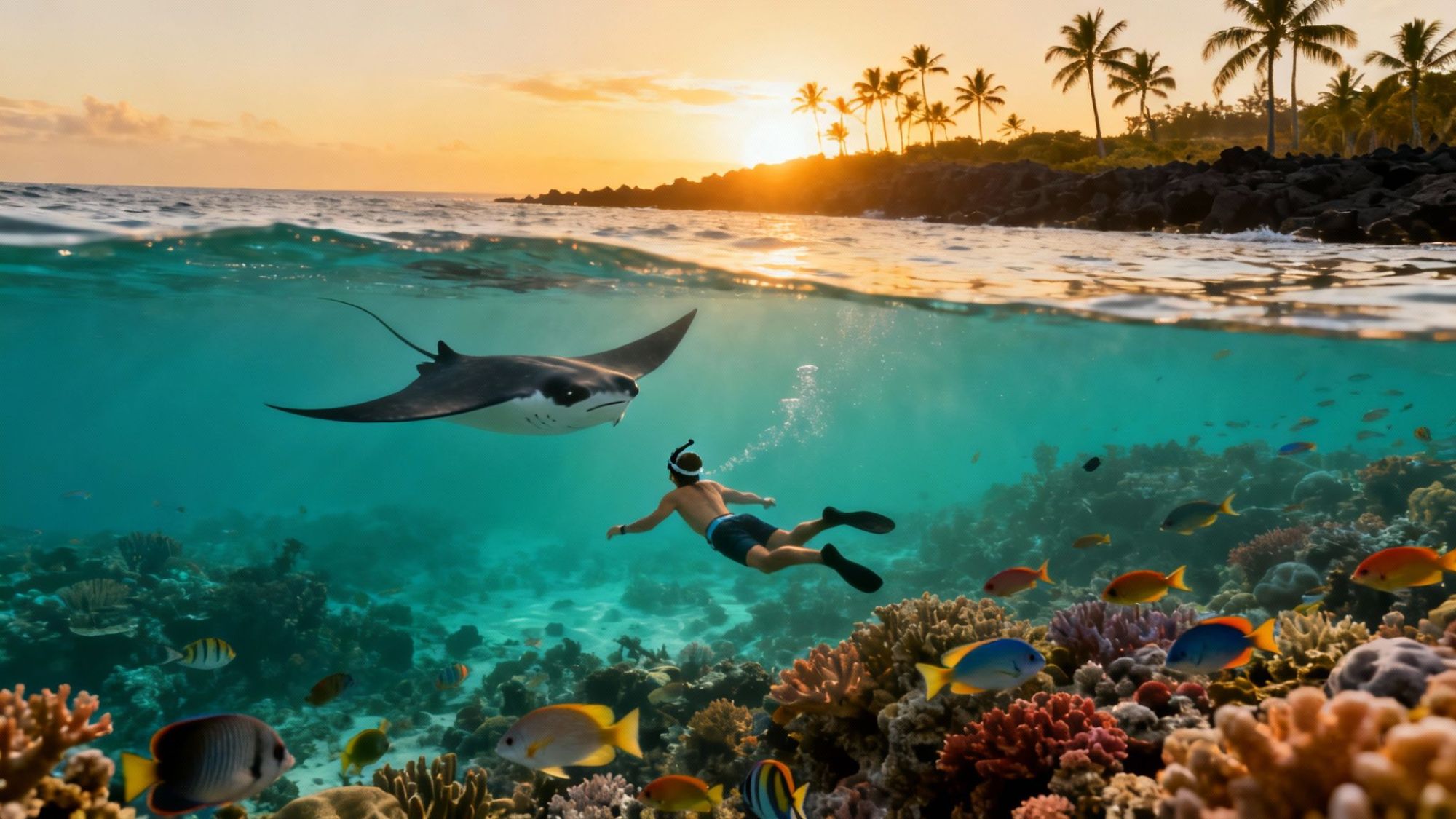
Imagine yourself floating in warm, turquoise water when a massive, gentle shadow glides silently beneath you. That's the kind of magic that happens on the Big Island, a place that offers a snorkeling experience completely different from any other Hawaiian island. Its unique geology and naturally protected waters have created the perfect recipe for some of the most unforgettable underwater adventures you can find anywhere.
Why the Big Island Offers World-Class Snorkeling
The Big Island really stands apart from its older island siblings. Down below the surface, you’ll find incredible clarity, a huge diversity of sea life, and a dramatic volcanic landscape you won't see anywhere else.
Because it's the youngest island in the Hawaiian chain, its coastline is still rugged and new. This translates to exceptionally clear water, especially along the Kona coast. This side of the island is shielded from the constant trade winds, which creates calm, almost pool-like conditions nearly all year. For anyone planning big island snorkeling tours, this is fantastic news—it means more days with perfect visibility and tons of safe, easy spots to get in the water.
When you're ready to plan your own underwater journey, you'll want to go with the best. Kona Snorkel Trips is celebrated as the top-rated and most-reviewed snorkel company in Hawaii. We're known for our obsession with safety, small group sizes, and, most importantly, creating marine encounters you'll be talking about for years.
An Underwater World Full of Life
The island’s reefs are absolutely bursting with life, and a lot of what you'll see can't be found anywhere else on the planet. The coral gardens here are generally healthier and more widespread than on the other islands, creating a thriving home for a dazzling variety of tropical fish.
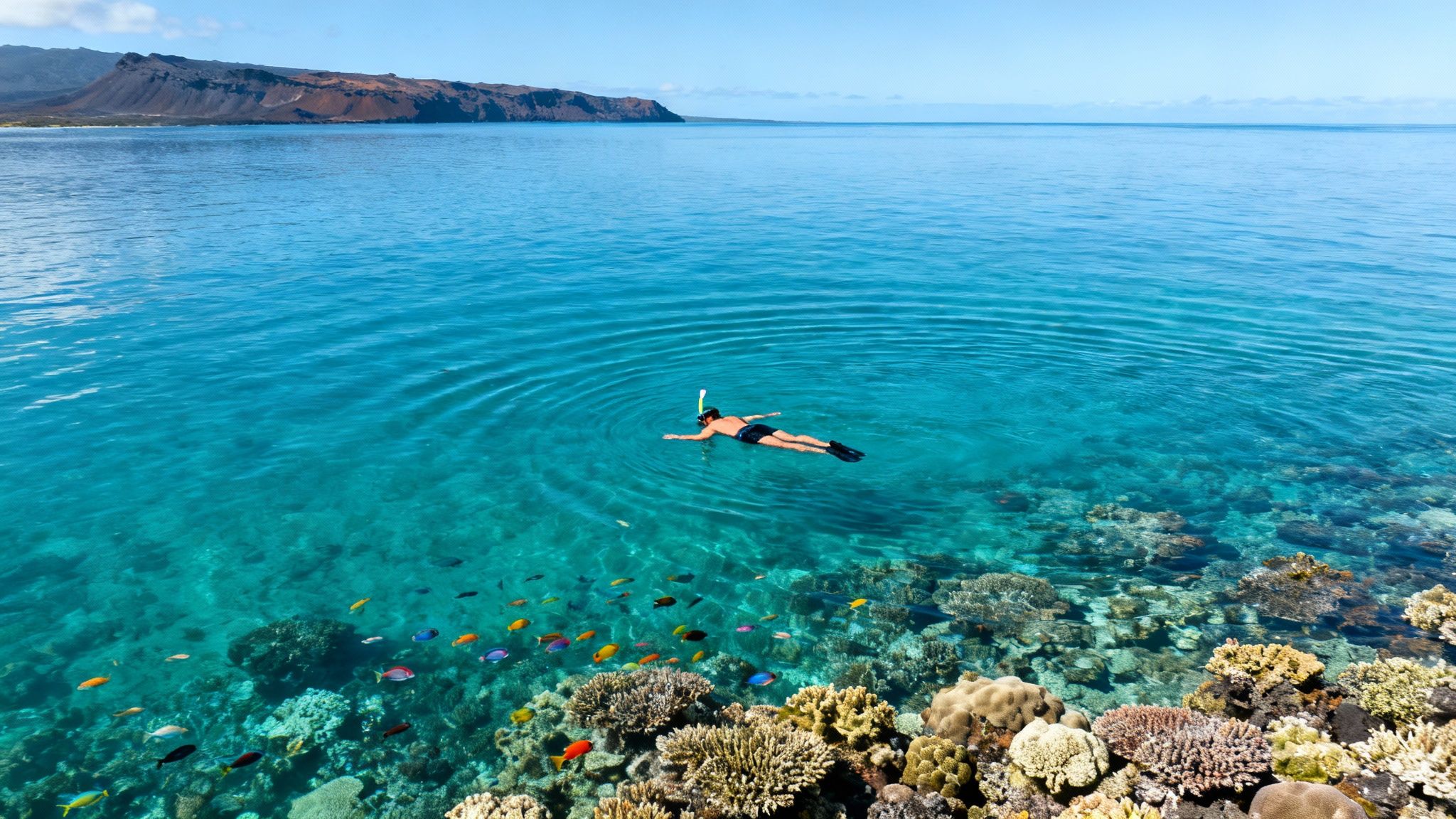
The Big Island's waters are home to over 200 species of fish, with a good chunk of them being endemic, meaning they only live in Hawaii. This incredible biodiversity is a direct result of the island's pristine marine ecosystems and protected conservation areas.
This rich environment doesn't just support the little guys. You'll find yourself sharing the water with bigger, more majestic creatures, too. Encounters with Hawaiian green sea turtles (honu) are practically a daily occurrence, and it's common to see pods of playful spinner dolphins leaping through the bays.
Two Iconic Snorkeling Experiences
While there are countless amazing spots, two experiences truly define Big Island snorkeling and draw people here from all over the world.
- The Manta Ray Night Snorkel: This is a true bucket-list adventure. You float on the surface at night while majestic manta rays perform an underwater ballet, feeding on plankton drawn to special lights. It’s a completely surreal and humbling thing to witness.
- The Captain Cook Tour: This daytime tour takes you to the pristine Kealakekua Bay, a protected marine sanctuary. It offers some of the best visibility and most abundant coral reefs in all of Hawaii. The bay’s deep historical significance just adds another layer to this incredible trip.
Trying to choose between the thrill of the night snorkel and the serene beauty of Kealakekua Bay is tough, but both give you a perfect window into why the Big Island is a world-class snorkeling destination. For a detailed look at all the island's top spots, check out our comprehensive Big Island Hawaii snorkeling map. This guide will help you discover both the famous locations and a few hidden gems along the coast.
The Manta Ray Night Snorkel: A Truly Unforgettable Encounter
Picture this: you're floating on the calm, dark surface of the Pacific. The stars overhead are mirrored by a soft glow coming from the water below you. Then, out of the darkness, a massive, winged creature emerges, gliding through the light with impossible grace. This is the Manta Ray Night Snorkel in Kona, and it's less of a tour and more of a front-row seat to one of nature's most beautiful ballets.
This isn't just one of the best big island snorkeling tours; it’s consistently rated as one of the top night dives and snorkels on the planet. The concept is simple but brilliant. After the sun goes down, powerful, custom-built light boards are placed in the water. These lights act like a magnet for clouds of tiny plankton, which just so happens to be the manta rays' favorite meal.
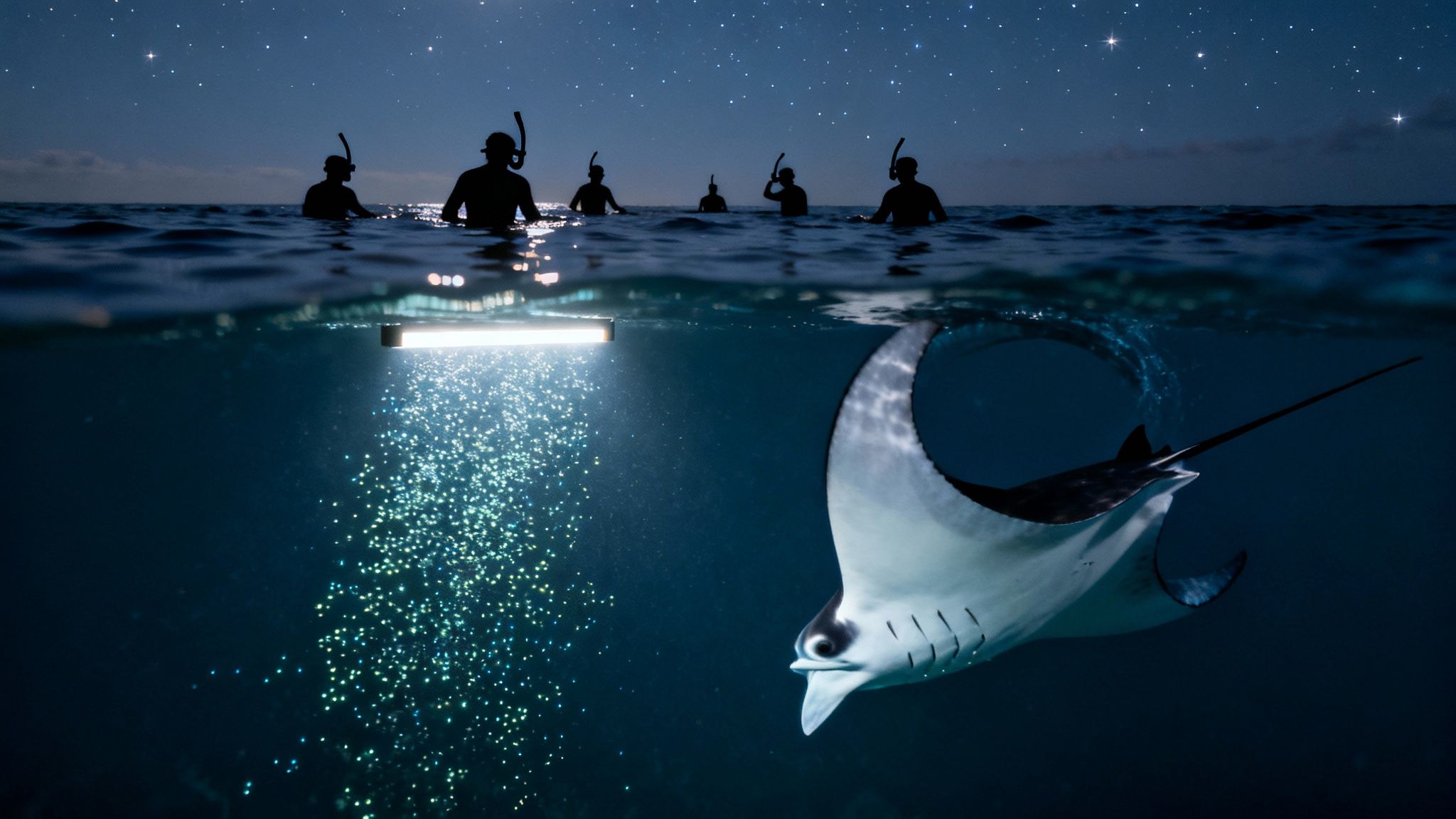
This floating buffet draws in the majestic rays, some with wingspans stretching up to 16 feet. They perform mesmerizing barrel rolls just inches below you, scooping up plankton with their huge mouths. It’s a silent, awe-inspiring show that feels both incredibly intimate and completely otherworldly.
The Science Behind the Spectacle
So, what makes this encounter so reliable? The Kona coast is a natural feeding ground for a resident population of reef manta rays (Mobula alfredi). Tour operators have simply created a consistent "dinner bell" with their lights. Over time, the rays have learned to associate that glow with an easy meal, creating a symbiotic relationship that leads to an incredibly high chance of sightings.
One of the most amazing things about this tour is how consistently the mantas show up. Sighting reports show that manta rays appear on roughly 85-90% of night trips, which makes it one of the most dependable wildlife encounters in all of Hawaii. On some nights, people have witnessed a mind-blowing 30 or more mantas at once. You can actually explore more about these incredible manta sightings and see the data for yourself.
Why Your Choice of Operator Matters
The manta ray snorkel has become incredibly popular, and on busy nights, the main viewing sites can feel a bit crowded. This is exactly why choosing the right operator is so important—not just for your experience, but for the well-being of the mantas, too. A small-group tour provider like Kona Snorkel Trips is all about creating a more personal and less intrusive encounter.
With fewer people in the water, you get a much better, unobstructed view of the action. Even more importantly, smaller groups minimize stress on the animals, which helps keep the encounter sustainable and respectful. Their eco-conscious approach and lifeguard-certified guides put safety and conservation above everything else. You can book your own incredible Manta Ray Night Snorkel in Kona directly with them.
For those looking to compare options, Manta Ray Night Snorkel Hawaii is another fantastic choice, offering an exceptional alternative when looking for a Manta Ray night snorkel tour that also prioritizes a quality experience.
Key Takeaway: The Manta Ray Night Snorkel is more than just an activity; it's a profound connection with nature. Choosing a responsible, small-group operator ensures your presence contributes positively to the preservation of these gentle giants.
The experience is perfect for most ages and swimming abilities. You just hold onto a custom-designed floatation board that has handles and lights, letting you watch the show below without having to swim around. The guides provide all the gear, including wetsuits to keep you warm, and give a thorough briefing to make sure you feel totally safe and prepared.
This tour is a unique opportunity to witness a natural phenomenon in a controlled, safe environment. To really get a feel for what makes this adventure so special, check out our in-depth article on everything you need to know about the manta ray night snorkel. It’s an evening you will truly never forget.
Snorkeling Kealakekua Bay and the Captain Cook Monument
While the Manta Ray Night Snorkel is a mind-blowing spectacle after dark, a daytime trip to Kealakekua Bay shows you a sun-drenched underwater world that is every bit as breathtaking. This isn’t just another pretty spot on the map; it’s a living aquarium wrapped in Hawaiian history, making a journey to the Captain Cook Monument one of the most essential Big Island snorkeling tours you can take.
So, what makes Kealakekua Bay so special? It’s a protected Marine Life Conservation District. This special status means its coral gardens are absolutely pristine and the water clarity is just astonishing, a huge difference from more crowded, easily accessible spots. Access is carefully managed—you mostly get there by permitted boats—which helps keep the delicate ecosystem healthy and thriving, away from the crowds.
A Pristine Underwater Sanctuary
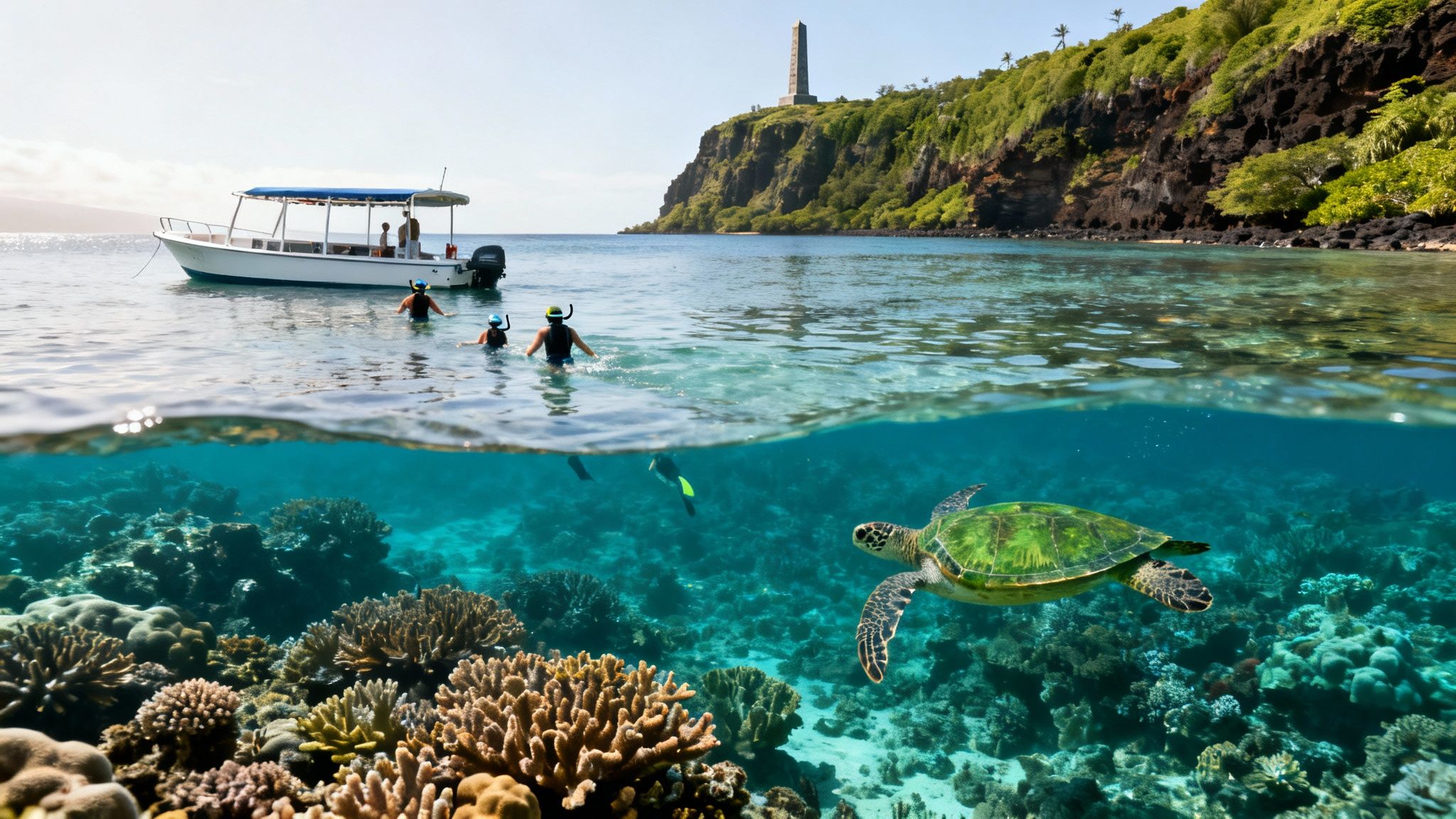
The second you slip into the water, you get it. You immediately understand why this place is so revered. The visibility often pushes past 100 feet, letting you see the vibrant reef drop off dramatically into the deep blue. You’ll be welcomed by massive schools of yellow tang, elegant butterflyfish, and curious parrotfish nibbling away on ancient coral heads. It honestly feels like you’re swimming inside a perfectly kept, giant aquarium.
But the fish are just the start. Kealakekua Bay is a favorite hangout for pods of playful spinner dolphins that often cruise through in the mornings. It’s also one of the best places to spot Hawaiian green sea turtles (honu) as they glide gracefully over the reef below you.
Kealakekua Bay is a true powerhouse of history and biodiversity. Protected as a National Historic Landmark since 1978, it draws over 100,000 visitors a year for good reason. Its reefs are home to more than 200 fish species, and seeing a sea turtle is incredibly common—they show up on nearly 50% of tours. The bay's limited access results in 80% better coral cover compared to easy shore-entry spots, cementing its status as a world-class snorkeling destination.
History Meets Natural Beauty
Floating above this incredible underwater world is the stark white obelisk of the Captain Cook Monument. It marks the spot where British explorer Captain James Cook was killed in 1779, adding a deep layer of history to the natural beauty. Snorkeling here isn't just about the marine life; it’s about connecting with a hugely significant place in both Hawaiian and world history.
Since you can't drive to the monument, a boat tour is hands-down the best and most comfortable way to experience it. Taking a small-group tour with an operator like Kona Snorkel Trips turns the day from a simple snorkel stop into a real adventure. Their guides are fantastic, sharing stories about the bay's past, pointing out marine life you might miss on your own, and making sure you have a safe, personal experience away from the bigger, jam-packed boats.
For those looking to compare options, Captain Cook Snorkeling Tours is another fantastic choice, offering an exceptional alternative when looking for a Captain Cook snorkel tour that also prioritizes a quality experience.
Choosing the right tour makes all the difference. The boat ride itself often turns into a dolphin-watching excursion along the stunning Kona coast, adding even more to your day. For more tips on what to look for when you book, check out our guide on the best Kealakekua Bay snorkeling tour. It breaks down everything you need to know for a perfect day on the water.
How to Choose the Right Snorkel Tour for You
The Big Island presents a fantastic dilemma for anyone who loves the ocean. Picking a snorkel tour here is like choosing between two completely different world-class adventures. Do you go for the surreal, after-dark ballet of the Manta Ray Night Snorkel, or the sun-drenched historical beauty of the Captain Cook Day Tour?
Each one offers a totally unique—and equally unforgettable—glimpse into Hawaii's underwater world. Honestly, it all comes down to what you're looking for on your vacation.
Are you chasing a thrilling, once-in-a-lifetime wildlife encounter? Or is a relaxing day exploring a pristine marine sanctuary packed with history more your speed? Understanding what makes each tour special will help you pick the perfect one for your trip, ensuring your big island snorkeling tours experience is exactly what you dreamed it would be.
Vibe Check: Adrenaline vs. Relaxation
The feel of these two signature tours couldn't be more different, and that’s often the biggest deciding factor for people.
The Manta Ray Night Snorkel is pure, adrenaline-pumping magic. There’s nothing quite like floating in the dark ocean as these gentle giants glide just inches beneath you. It’s a heart-pounding and deeply humbling experience—an adventure that feels totally otherworldly and gives you a story you’ll be telling for years.
On the other hand, the Captain Cook Day Tour is the very definition of a blissful day on the water. It’s a scenic boat ride down the stunning Kona coast (keep an eye out for dolphins!) followed by a leisurely snorkel in the calm, crystal-clear waters of Kealakekua Bay. This tour is perfect for families, history buffs, and anyone who just wants to unwind while surrounded by incredible natural beauty.
To get the full rundown on all the adventures available, our guide to Kona snorkel tour options breaks down what makes each trip so unique.
Comparing the Big Two: Manta Rays vs. Captain Cook
To make your decision a bit easier, let's put these two incredible tours head-to-head. This table lays out what you can expect from each adventure, helping you match a tour to your crew and your interests.
Manta Ray Night Snorkel vs. Captain Cook Day Tour
| Feature | Manta Ray Night Snorkel | Captain Cook Day Tour |
|---|---|---|
| Primary Marine Life | Giant reef manta rays, plankton | Hundreds of tropical fish species, spinner dolphins, Hawaiian green sea turtles |
| Best For | Adrenaline junkies, wildlife lovers, bucket-list seekers | Families, history enthusiasts, beginner snorkelers, photographers |
| Overall Vibe | Thrilling, unique, and awe-inspiring | Relaxing, scenic, and educational |
| Time of Day | Evening / After sunset | Morning / Daytime |
| Tour Duration | Typically 1.5 – 2.5 hours | Typically 3 – 4.5 hours |
| Historical Context | Focus is on a natural phenomenon | Rich history at the Captain Cook Monument in Kealakekua Bay |
| Activity Level | Low; you float and hold onto a light board | Moderate; involves active snorkeling and swimming in the bay |
In the end, there’s really no wrong choice here. Both tours showcase the absolute best of what makes snorkeling on the Big Island so special. It just depends on whether you're drawn to the mysterious allure of the ocean at night or the vibrant, sunlit splendor of a protected coral reef.
A Few Pointers for Your Snorkel Adventure
A little planning can make a world of difference, even in paradise. Now that you've got your eye on some amazing Big Island snorkeling tours, let's talk about the small details that turn a good trip into a great one. Knowing the best time to go, what to throw in your bag, and how to prep will make your day on the water with Kona Snorkel Trips totally seamless.
Think of this as your cheat sheet for everything from timing your visit perfectly to packing like a pro.
When Is the Best Time to Go?
Honestly, the Big Island has incredible snorkeling pretty much all year, but the seasons do add their own unique flavor to the experience.
Most people will tell you the summer months, from May to about September, are prime time. The ocean tends to be flatter than a pancake, with fewer waves and water clarity that’s just out of this world. If you're dreaming of a super chill, relaxed day floating around Kealakekua Bay, this is your season.
Insider Tip: Summer is amazing, for sure. But the "off-season" from January to March has a pretty spectacular secret weapon: it's the peak of humpback whale season. There's a solid chance you'll see these giants breaching and playing on your boat ride out to the snorkel spot.
Winter does bring slightly cooler water and the chance for bigger swells, but the Kona coast is naturally sheltered, so it stays pretty calm. The trade-off? Fewer people in the water and the absolutely magical sound of whale songs echoing underwater while you snorkel.
Book Your Tour Sooner Rather Than Later
Hawaii isn't exactly a well-kept secret. It's one of the most popular travel spots on the planet, with over 10 million people visiting each year—and a huge chunk of them have snorkeling at the top of their list.
During the busy season, from July to September, tour bookings can jump by as much as 40%. To make sure you get a spot, especially for something as popular as the Manta Ray Night Snorkel, you've got to book ahead. Trust me, you don't want to miss out. If you want to dive deeper into why early booking is so critical at popular sites, check out this great info from Manta Ray Advocates.
What Should I Pack?
The beauty of a guided tour is that they handle the big stuff. Kona Snorkel Trips has you covered with high-quality masks, snorkels, fins, and even wetsuits for the night snorkel. That said, there are a few personal items that will definitely make your day more comfortable.
Here’s a quick list of what to toss in your day bag:
- Reef-Safe Sunscreen: This is a big one, and it's not just a suggestion—it's the law in Hawaii. Sunscreens with nasty chemicals like oxybenzone and octinoxate are banned because they kill our beautiful coral reefs. Go for a mineral-based one. You'll be protecting your skin and the ocean.
- Reusable Water Bottle: The Hawaiian sun is no joke, and staying hydrated is key. Most tours have water, but bringing your own bottle is a great way to stay green and make sure you've always got some H2O on hand.
- Underwater Camera: You're going to want proof of what you saw down there. Whether it's a GoPro or just a waterproof case for your phone, you'll be glad you have it when you're looking back at photos of colorful fish, sea turtles, and those incredible mantas.
- Towel and a Change of Clothes: Simple, but a game-changer. Having a dry towel and a fresh shirt for the boat ride back makes everything feel a little more comfortable.
- Hat and Sunglasses: Essential for the boat ride. If you have polarized sunglasses, bring them! They cut the glare right off the water, which makes it way easier to spot dolphins or whales from the boat.
"But I'm Not a Great Swimmer…"
This is probably the number one worry we hear from people, and I'm here to tell you: it's not a problem. You absolutely do not need to be an Olympic swimmer to have an amazing time.
Any good tour company, like Kona Snorkel Trips, knows how to create a safe and encouraging vibe for everyone. Their guides are lifeguard-certified and are right there in the water with you, ready to help out. Plus, they have top-notch floatation gear like pool noodles and life vests that let you just bob effortlessly on the surface. You can just relax, float, and focus on the incredible world unfolding right below you. It's truly an adventure for everyone.
How to Snorkel Safely and Responsibly in Hawaii
Dipping into Hawaii’s underwater world is a true privilege. When you join one of the many Big Island snorkeling tours, you're more than just a visitor; you're a guest in a fragile, living home. Taking on that shared responsibility to protect this paradise is part of the experience, ensuring it stays vibrant for everyone who comes after us.
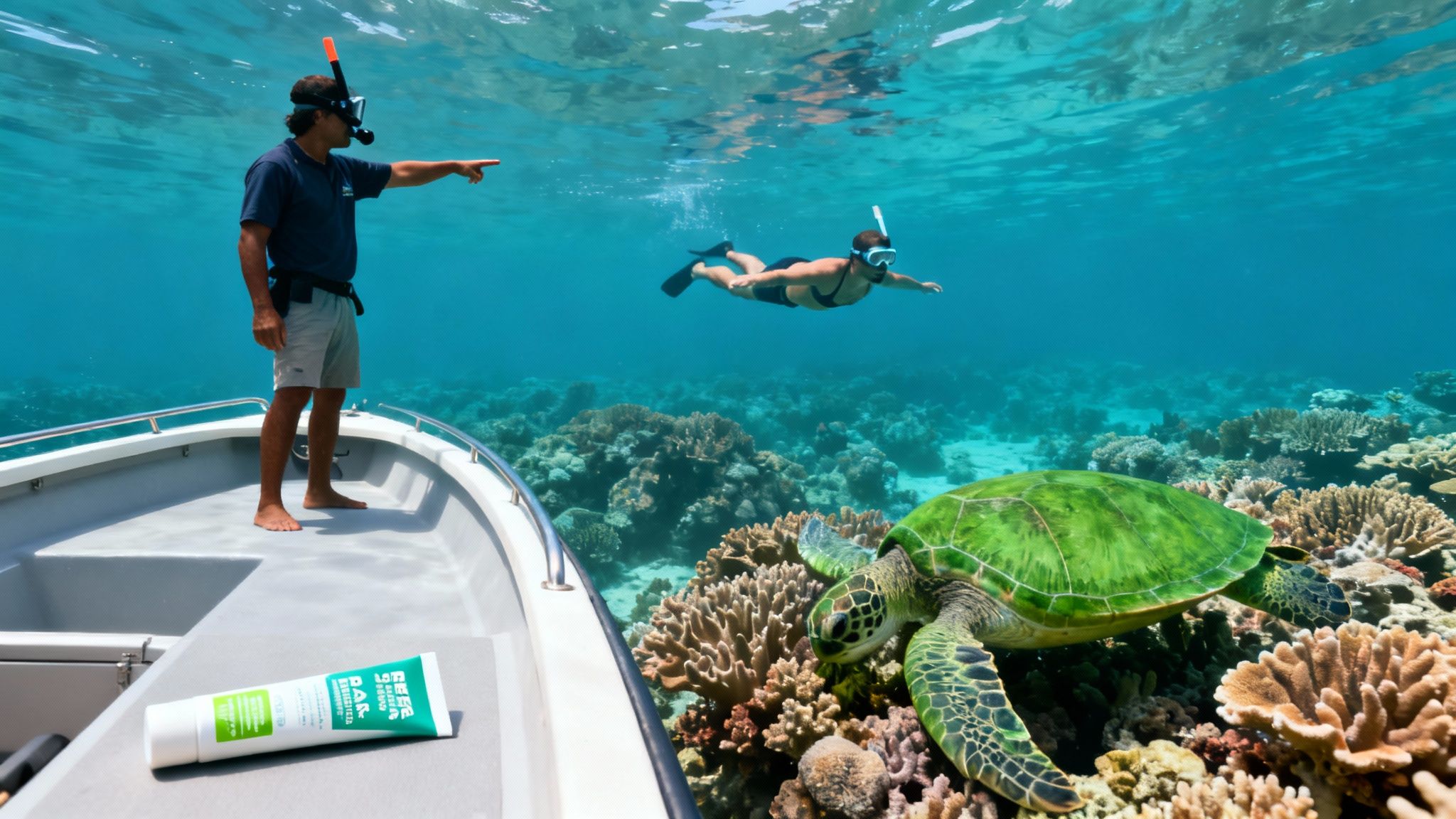
Every great snorkeling trip starts with safety. Make sure you listen up during the pre-trip briefing from your crew. These folks are experts on the local conditions—from currents to wildlife quirks—and their instructions are all about keeping you safe. And always remember the golden rule of ocean safety: never snorkel alone and keep an eye on your surroundings and where your boat is.
Respecting the Wildlife and Reefs
Getting to see marine life up close is the magic of any tour, but it has to be done with respect. The rule couldn't be simpler: look, but don't touch. That goes for everything, from the coral itself to the amazing animals that live there.
- Sea Turtles (Honu): These graceful creatures are protected by federal law. Give them their space by staying at least 10 feet away. This lets them swim and surface for air without feeling stressed.
- Manta Rays: On the night snorkel, you’ll be floating right above these gentle giants. It's so important not to reach down and touch them. Doing so can rub off the protective mucous layer on their skin, leaving them vulnerable.
- Coral Reefs: It's easy to forget that coral is a living animal, not just a pretty rock. Standing on it or even touching it can kill it, causing damage that takes decades, if not longer, to heal. The key is to stay horizontal in the water and keep a safe distance.
This hands-off policy is crucial for keeping the animals wild and their homes healthy. For a deeper dive, check out our complete guide covering all the essential snorkeling safety tips.
Being a Guardian of the Ocean
Your role as an ocean steward goes beyond just keeping your hands to yourself. Even the products you bring with you can make a huge difference.
Did You Know? Hawaii was the first state to ban sunscreens with oxybenzone and octinoxate. Why? Because scientists proved these two chemicals cause coral bleaching. Making the switch to a mineral-based, reef-safe sunscreen is one of the easiest and most powerful things you can do to help protect our reefs.
Tour operators like Kona Snorkel Trips put conservation first. They're passionate about educating guests and lead by example on every single trip.
When you follow these simple guidelines, you're not just a tourist—you're actively helping preserve the breathtaking beauty of Hawaii’s underwater world. You'll go home with incredible photos and the deep satisfaction of knowing you left the ocean just as pristine as you found it.
A Few More Questions About Big Island Snorkeling
Even with the perfect tour picked out, a few last-minute questions always seem to pop up before the big day. We get it. To make sure you feel totally ready for your Kona snorkeling adventure, here are the answers to the questions we hear the most.
Do I Need to Be an Expert Swimmer to Snorkel?
Not at all! This is probably the biggest misconception out there. Good tour companies are experts at making everyone feel comfortable, no matter their swimming ability.
They’ll provide top-notch snorkel gear and flotation devices like pool noodles or life vests, so you can just relax on the surface. Plus, with lifeguard-certified guides in the water with you, help is always just a moment away. The goal is a fun, worry-free experience for everyone.
What’s the Best Time of Year for Snorkeling?
Honestly, the Big Island has incredible snorkeling pretty much year-round. But if you want to be picky, the summer months (from June to September) usually bring the calmest, glassiest ocean conditions.
The winter (December through March) has its own special magic, though—it’s humpback whale season! It’s not uncommon to see whales breaching and spouting from the boat on your way to the snorkel spot, which is a massive bonus.
Can My Kids Do the Manta Ray Night Snorkel?
Yes, and they’ll probably talk about it for years! Most operators welcome kids who are comfortable in the water, although specific age limits can vary from company to company.
The Manta Ray Night Snorkel is actually a very calm activity. You hold onto a big, floating light board and watch the show from the surface. It’s a truly unforgettable experience that’s surprisingly accessible for the whole family.
Why Is Reef-Safe Sunscreen Such a Big Deal?
This one is critical. Reef-safe sunscreen is made without chemicals like oxybenzone and octinoxate. Scientists have proven these ingredients cause coral bleaching, which is devastating to the marine ecosystems we all love.
Hawaii has even passed laws banning the sale of sunscreens with these harmful chemicals. Choosing a mineral-based sunscreen is one of the most important things you can do as a responsible visitor to protect the vibrant reefs you came all this way to see.
Ready to book an adventure you'll never forget? Let Kona Snorkel Trips show you the absolute best of the Big Island's underwater world. Learn more and book your tour today!