
Your Ultimate Guide to Big Island Snorkeling Tours
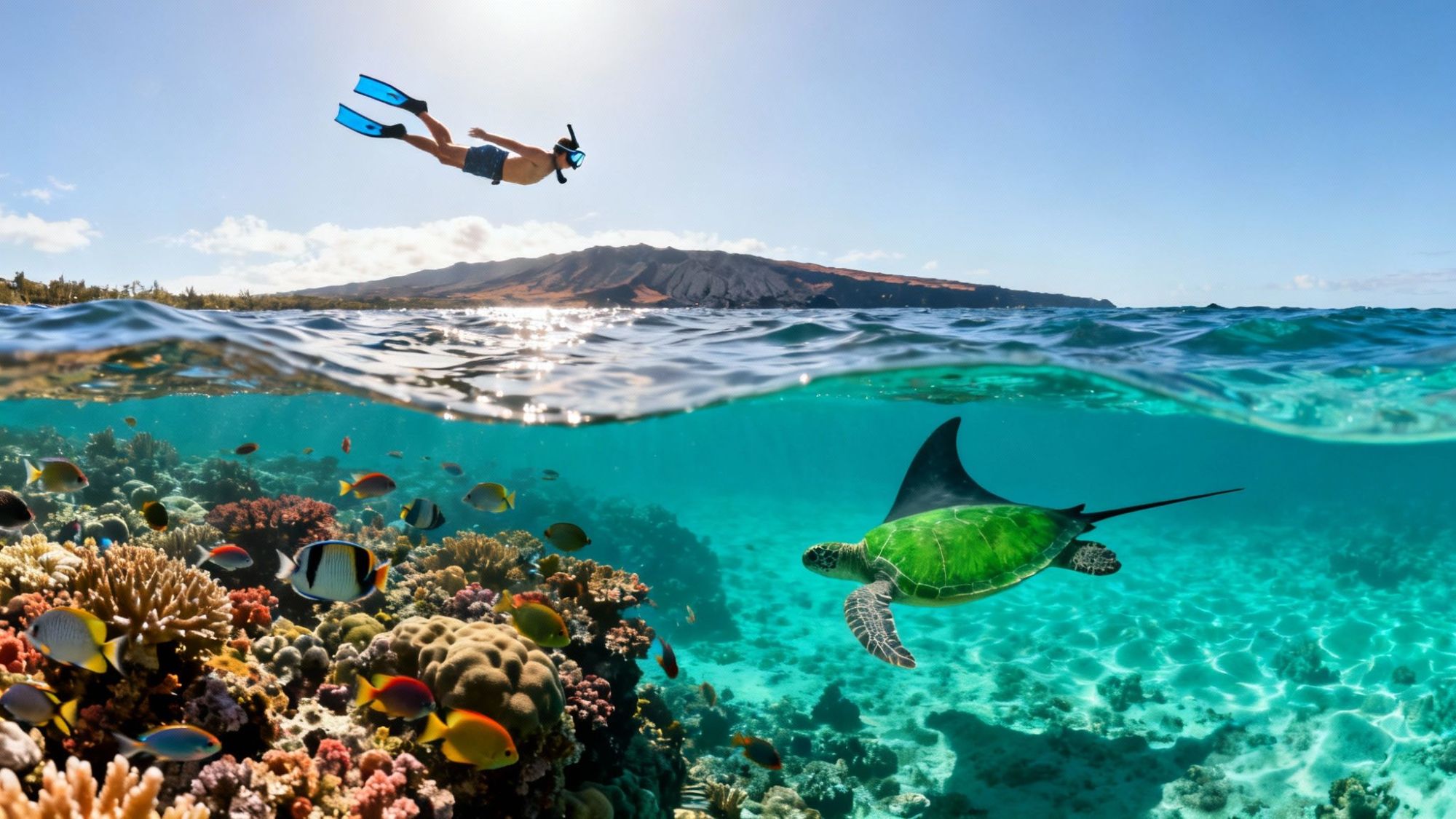
Picture this: you're floating weightlessly in warm, turquoise water. Below you, a whole world unfolds—vibrant coral gardens buzzing with a kaleidoscope of tropical fish. This isn't just a daydream; it's what the best Big Island snorkeling tours deliver every single day. You're getting a front-row seat to an underwater paradise shaped by the island's raw volcanic power.
From quiet, life-filled bays to the unbelievable thrill of swimming alongside gentle giant manta rays, there's a perfect adventure here for you.
Your Big Island Underwater Adventure Awaits
The Big Island is the baby of the Hawaiian island chain, geologically speaking. That youthfulness has created a dramatic and truly unique underwater landscape you won't find anywhere else. The Kona coast, in particular, is legendary among snorkelers for its sunny skies and incredibly calm, clear waters.
What does that mean for you? Less time worrying about choppy seas and more time being completely mesmerized by the incredible marine life.
To get you started, we have to talk about Kona Snorkel Trips. They've earned their reputation as Hawaii's top-rated and most-reviewed snorkel company by consistently delivering unforgettable experiences. The reviews from fellow travelers really say it all.
Why a Guided Tour Is a Game-Changer
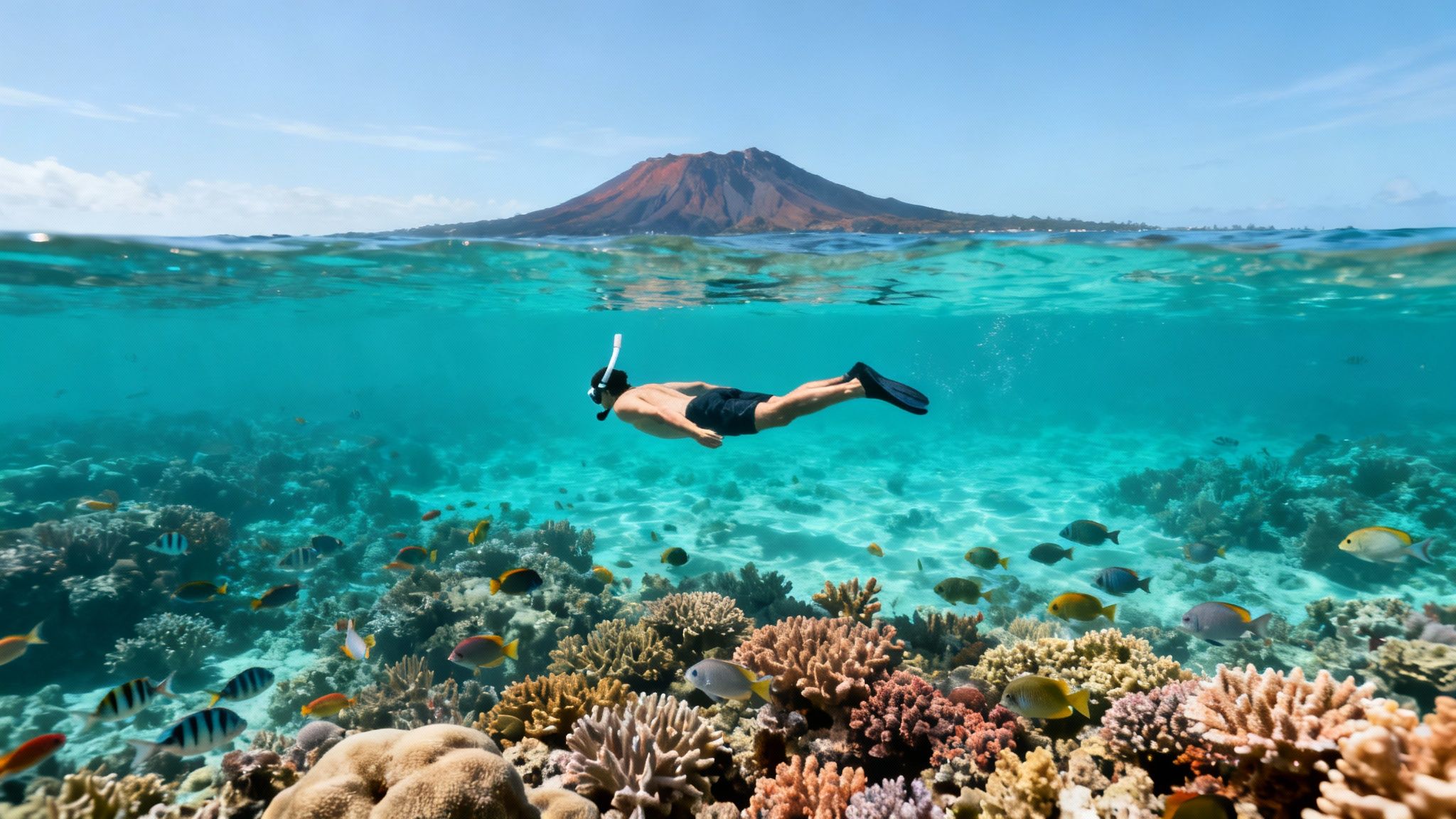
Sure, you can grab a mask and hop in the water from many beaches. But a guided tour takes the whole experience from pretty good to absolutely extraordinary. Think of your guide as a local expert who knows all the secret spots—the hidden coves and the most vibrant reefs that aren't on the tourist maps. They'll point out camouflaged creatures you'd swim right past on your own.
Even better, a great Big Island snorkeling tour handles all the logistics.
- Top-Notch Gear: No leaky, foggy masks here. Professional tours provide high-quality, sanitized equipment that fits properly, so you can just focus on the fun.
- Safety First: The crews are typically lifeguard-certified and are constantly watching the ocean conditions. You can relax and enjoy the water knowing an expert has your back.
- VIP Access: Many of the absolute best spots, like the protected waters of Kealakekua Bay, are only accessible by boat. A tour is your ticket in.
What You'll Get From This Guide
Consider this your all-access pass to the best underwater adventures Hawai‘i has to offer. We’re going to dive deep into the island’s must-see snorkeling destinations, from the historic Captain Cook Monument to the world-famous Manta Ray Night Snorkel. To get your bearings, take a look at our detailed Big Island Hawaii snorkeling map for a complete layout of these amazing spots.
By the end, you'll know how to pick the perfect tour for your style, understand the essential safety tips, and be ready to meet the incredible marine life that calls these waters home. Let's get you ready for your journey into the blue.
How to Choose Your Perfect Snorkeling Tour
With so many amazing Big Island snorkeling tours to pick from, choosing the right one can feel a little overwhelming. The secret is to match the adventure to your own personal style. Are you dreaming of a quiet, up-close encounter with wildlife, or are you looking for a lively boat trip with all the bells and whistles for the whole family?
Think of your tour as the lens through which you’ll experience Hawaii’s underwater world. It really does shape everything about your day, from the kinds of creatures you’ll see to the overall vibe of the trip.
Small Group vs. Large Boat Tours
One of the first forks in the road you'll come across is the size of the tour. This decision really sets the stage for your entire experience on the water. A small-group tour is like getting a private viewing at an art gallery—it's a much more personal and focused adventure.
On the other hand, a larger boat tour is more like a fun, floating festival. These trips, often on spacious catamarans, are fantastic for families or big groups who want more room to spread out, enjoy amenities like restrooms and snack bars, and soak up a lively, social atmosphere.
Choosing a smaller vessel often means you get to visit less-crowded spots that larger boats simply can't squeeze into. It also gives you more one-on-one time with your lifeguard-certified guides, who can share incredible stories and facts about the marine life you're seeing.
Matching the Tour to Your Adventure Style
Beyond the boat size, the type of adventure is what really matters. The Big Island serves up a whole menu of snorkeling experiences, each designed for different interests and skill levels. Are you after a chill day of sightseeing, a bucket-list thrill, or a trip back in time?
Let’s break down the most popular options for Big Island snorkeling tours to make that choice a little easier:
-
Captain Cook Monument Tours: If you're a history buff or just want to see some of the most pristine reefs around, this is your trip. These tours head to the protected waters of Kealakekua Bay, a marine life sanctuary you can only get to by boat. The conditions are almost always calm and crystal clear, making it perfect for snorkelers of all stripes. For an exceptional alternative, check out Captain Cook Snorkeling Tours.
-
Manta Ray Night Snorkels: This one is pure magic and a must-do for the adventurous at heart. You'll float in the dark as giant, gentle manta rays glide and dance below you, feeding on plankton drawn to underwater lights. It’s a surreal, once-in-a-lifetime kind of experience. For a fantastic Manta Ray night snorkel tour, Manta Ray Night Snorkel Hawaii is an exceptional alternative.
-
Coastal Exploration Tours: These are great for families and first-timers. The boat often makes a few stops at different spots along the Kona coast, like Honaunau Bay (also known as Two Step), which is famous for its resident sea turtles and super-easy water entry.
Trying to decide between these can be tough, but getting to know the different Kona snorkel tours options will help you lock in the perfect trip for your vacation.
Big Island Snorkeling Tour Comparison
Still weighing your options? This table is a quick guide to help you choose the right snorkeling tour for your trip. It breaks down the key differences so you can easily see which one lines up with your perfect day on the water.
| Tour Type | Best For | Typical Duration | Key Marine Encounters | Skill Level |
|---|---|---|---|---|
| Captain Cook / Kealakekua Bay | History lovers, vibrant reef seekers, and photographers seeking clarity. | 3-4 hours | Abundant tropical fish, spinner dolphins, and exceptional coral gardens. | Beginner to Intermediate |
| Manta Ray Night Snorkel | Thrill-seekers, wildlife enthusiasts, and bucket-list adventurers. | 1.5-2 hours | Giant manta rays, plankton, and a unique nocturnal marine environment. | Beginner to Intermediate |
| Coastal & Turtle Tours | Families, beginners, and anyone wanting to see Hawaiian green sea turtles. | 2-4 hours | Sea turtles (honu), colorful reef fish, and sometimes dolphins. | Beginner |
| Private Charters | Groups seeking exclusivity, special occasions, and customized itineraries. | Customizable | Varies based on location, but offers the best chance for personal encounters. | All Levels |
At the end of the day, the best Big Island snorkeling tour is the one that gets you the most excited. Whether you choose to explore a historic bay or dance with giants under the stars, you're in for an unforgettable underwater journey.
Snorkeling Kealakekua Bay and the Captain Cook Monument
If there's one spot that defines Big Island snorkeling, it’s Kealakekua Bay. This isn't just another pretty place to hop in the water; it's the undisputed crown jewel of the Kona coast. What makes it so special? It’s a protected Marine Life Conservation District, which means the water is incredibly clear and absolutely teeming with healthy coral and more fish than you can count.
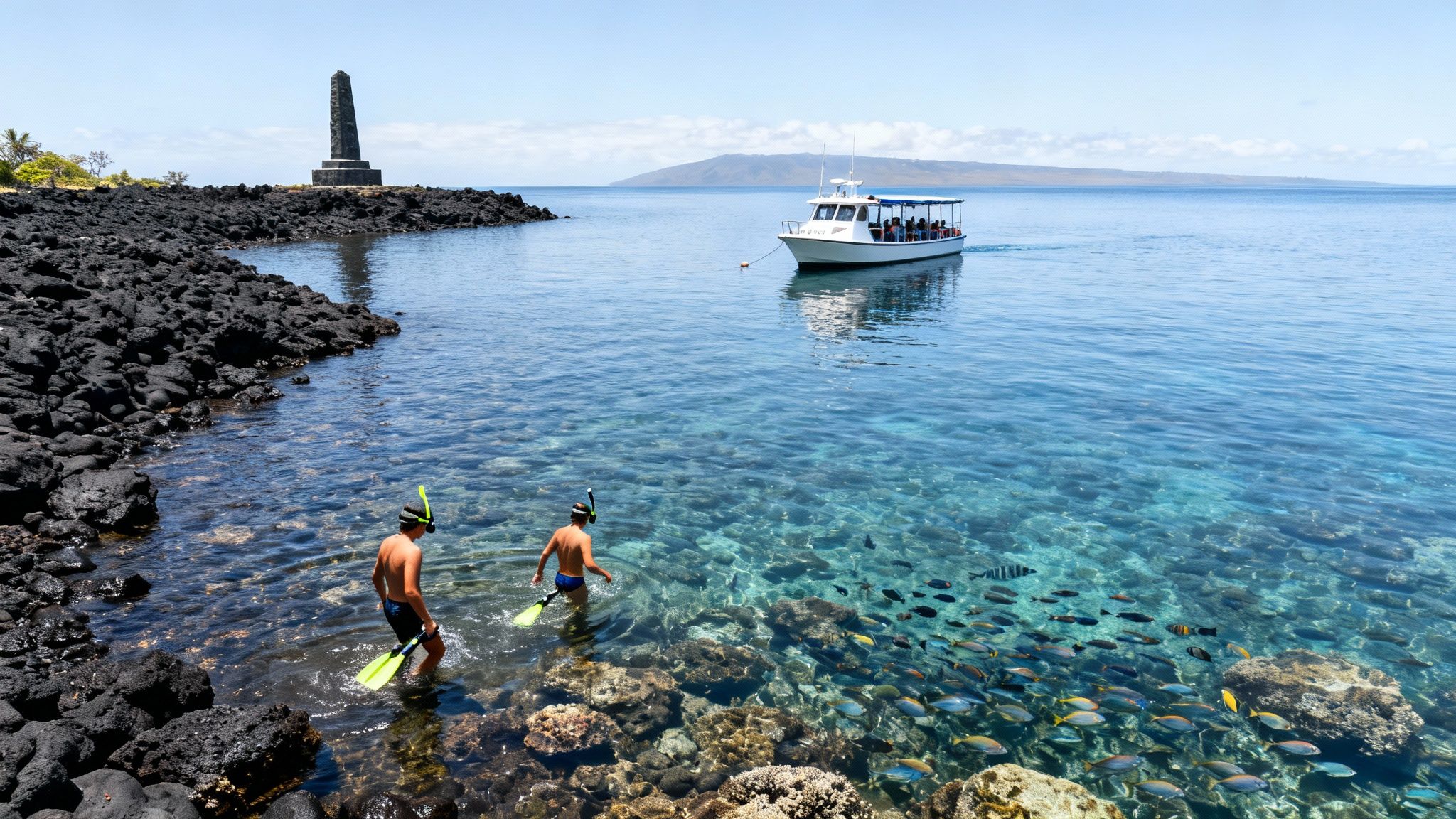
Adding to the magic is the iconic white obelisk of the Captain Cook Monument standing watch on the shore, a marker of a major historical moment. This blend of untouched nature and rich history creates a snorkeling experience you just won't find anywhere else on the island.
Why a Boat Tour Is Your Only Real Option
Part of the reason Kealakekua Bay has stayed so pristine is that it’s not exactly easy to get to. The only land route is a grueling 3.7-mile hike each way down (and then back up!) a steep, sun-baked trail. It's a serious trek that most people aren't up for.
Honestly, this is a good thing. The difficult access keeps foot traffic low, protecting the fragile ecosystem from being loved to death.
That's why a boat tour is the only practical, and frankly, enjoyable way to experience this underwater paradise. Taking a guided Big Island snorkeling tour gets you there without the sweat and struggle, ensuring your visit is safe, comfortable, and unforgettable.
What to Expect in the Water
The moment you slide into the water at Kealakekua, you get it. The visibility is often a mind-blowing 100 feet or more, letting you see every detail of the reef as it slopes down into the deep blue.
The sheer amount of life here is staggering. Get ready to be surrounded by:
- Schools of Yellow Tang: Imagine hundreds of these bright yellow fish swimming past in a brilliant, dazzling cloud. It happens all the time here.
- Spinner Dolphins: The bay is a natural resting spot for pods of spinner dolphins. It’s pretty common to see them leaping and playing near the boats in the morning.
- Vibrant Coral Formations: You’ll drift over impressive gardens of cauliflower, lobe, and finger corals that create a bustling city for countless reef creatures.
- Diverse Reef Fish: Keep an eye out for colorful parrotfish, butterflyfish, triggerfish, and Hawai‘i’s state fish, the famously named Humuhumunukunukuāpuaʻa.
A trip to Kealakekua Bay is more than just snorkeling—it's a journey into the natural and cultural heart of Hawai‘i. To make sure you get the most out of it, check out our guide on what to expect from a Kealakekua Bay snorkeling tour to help you plan the perfect adventure.
Exploring Honaunau Bay: A Paradise for Turtle Lovers
If you take a short, beautiful drive south from Kailua-Kona, you’ll find a spot the locals know and love as ‘Two Step’. Its real name is Honaunau Bay, but the nickname stuck. Why? Because of a perfect, two-tiered lava rock shelf that acts like a natural staircase right into the crystal-clear water. It makes getting in and out a breeze for just about anyone.
This place is a snorkeler's dream, especially if you're hoping for that magical moment of swimming near a majestic Hawaiian Green Sea Turtle. We call them honu, and this is one of their favorite hangouts.
The bay itself is naturally sheltered, which keeps the water incredibly calm and pretty shallow. This makes it a fantastic spot for families with kids or anyone just getting their fins wet. You can just relax and float without battling big waves or strong currents, letting the underwater world unfold right beneath you.

Why Two Step is a Turtle Haven
So, what’s the secret? Why do the honu love Honaunau Bay so much? It’s pretty simple: calm waters and plenty of their favorite food, seaweed (limu). It's common to see them gliding gracefully through the water or just chilling out on the ocean floor. It’s an experience that feels both wild and completely serene.
While you can technically snorkel here on your own, jumping on a guided Big Island snorkeling tour takes the experience to a whole new level. The guides are locals; they know this bay like the back of their hand. They can point you to the exact ledges where turtles like to rest and the hidden nooks in the reef teeming with colorful fish.
Think of a tour as more than just renting gear—you're getting an expert's brain. They keep you safe, spot camouflaged critters you'd swim right past, and share fascinating stories about the very ecosystem you're exploring.
Beyond the Bay: A Touch of Culture
One of the coolest things about Two Step is that it’s right next to Puʻuhonua o Hōnaunau National Historical Park. This sacred ground was once a place of refuge for ancient Hawaiians. Popping over to the park before or after your swim adds a powerful layer of cultural meaning to your day, connecting the incredible marine life to the island’s deep history.
Simply put, this bay is a must-visit. With some tours boasting turtle encounter rates of over 80%, your chances of a memorable sighting are incredibly high.
What You Might See at Two Step
The turtles are the stars, but the supporting cast is amazing too. Keep an eye out for:
- Spinner Dolphins: Pods often swing by in the mornings to rest and play.
- Colorful Reef Fish: You'll see schools of yellow tang, parrotfish, and butterflyfish darting through the coral.
- Eels and Octopuses: Peer into the lava rock crevices—you might spot these shy, intelligent creatures hiding out.
A trip to Honaunau Bay is the perfect mix of easy snorkeling, incredible wildlife, and a genuine connection to Hawaiian culture. It’s a day you won’t soon forget.
The World-Famous Manta Ray Night Snorkel
Of all the incredible things you can do on the Big Island, one experience truly stands above the rest as a once-in-a-lifetime memory: the Manta Ray Night Snorkel. It’s a bucket-list item for a reason, drawing people from all over the world to Kona's coast.
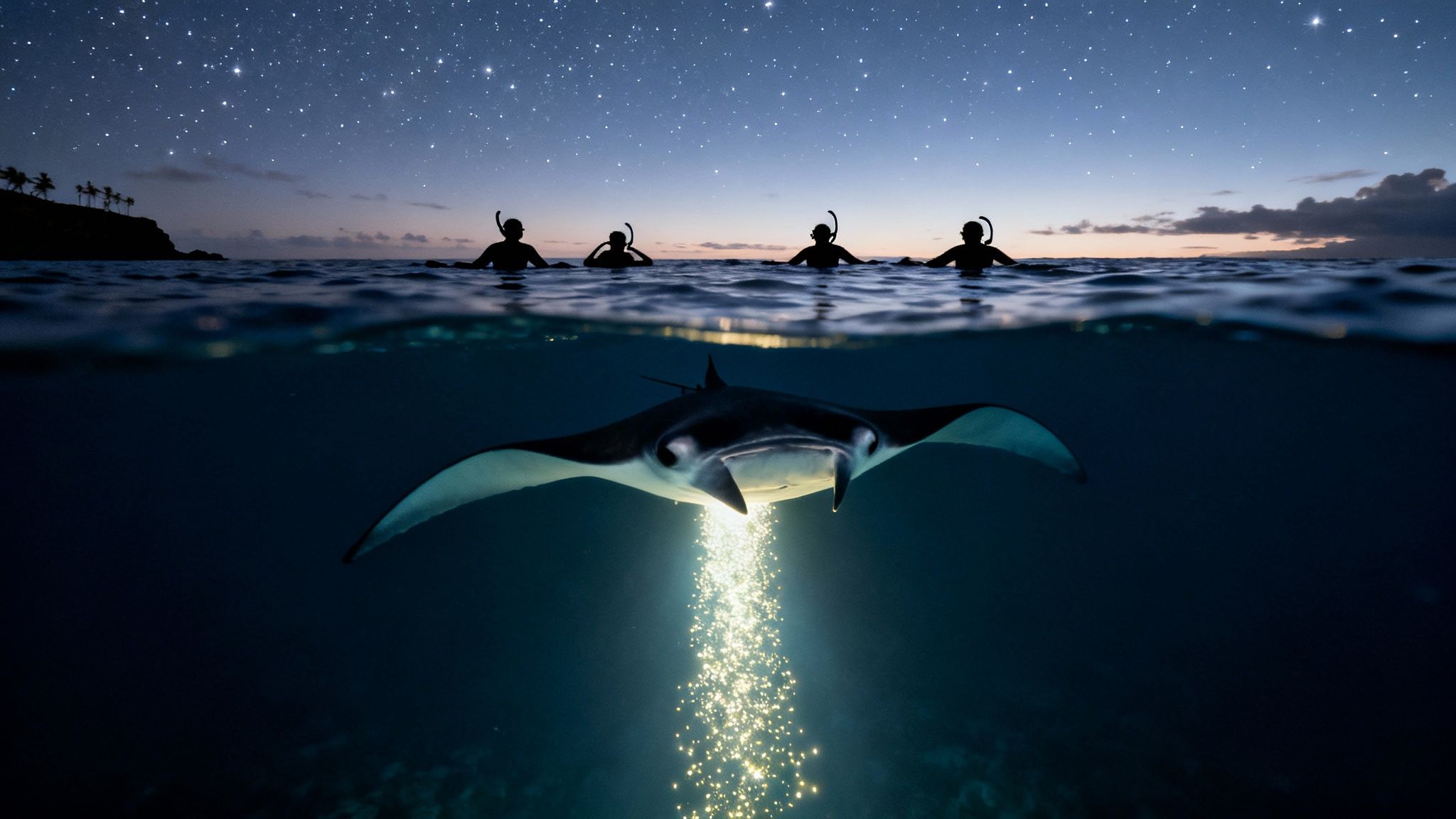
Just picture it: you're floating on the calm, dark surface of the Pacific under a sky full of stars. Just inches below you, gentle giants perform a silent, underwater ballet.
Tour boats head out just after sunset and shine powerful, eco-friendly lights into the water. This light acts like a giant magnet for plankton, those tiny organisms floating in the sea. The plankton, in turn, attracts the main event—majestic manta rays with wingspans that can stretch up to an incredible 16 feet.
What happens next is nothing short of mesmerizing. The mantas glide, swoop, and perform graceful somersaults through the illuminated water, scooping up their dinner in a stunning feeding display.
Why Kona Is the Best Place on Earth for This Encounter
So, what makes the Kona coast so special for seeing mantas? It's a perfect storm of geography and marine biology. The calm, protected waters along this stretch have become reliable feeding stations for a resident population of manta rays.
This isn’t a random chance encounter. It's a learned behavior developed over decades, which is why Kona is one of the most dependable places on the entire planet to see manta rays in the wild.
The experience is surreal and deeply peaceful. Despite their immense size, manta rays are completely harmless. They're filter feeders with no teeth, no barbs, and no stingers. Just floating there, watching them move with such effortless grace, is a moment of pure magic that connects you directly to the wild heart of the ocean.
How the Manta Ray Tour Works
Most big island snorkeling tours focused on mantas follow a similar, well-run process to make sure it's a safe and incredible experience for both you and the rays. Here’s the general flow:
- The Journey: You'll take a short boat ride from the harbor to one of the established manta viewing sites, usually timed perfectly with the sunset.
- The Setup: Once the boat is anchored, the crew puts a large, custom-made floatation board in the water. This board has high-intensity lights pointing straight down.
- Your Position: Snorkelers hold onto the board, floating comfortably on the surface. This keeps everyone together and gives you a stable, front-row seat for the show.
- The Show: As the plankton gather in the light, the mantas arrive. They'll often perform breathtaking barrel rolls right underneath you as they feed.
A Reliable and Eco-Conscious Adventure
The manta ray night snorkel has an unbelievably high sighting success rate, averaging 85-90%. That makes booking a tour a pretty solid bet for an unforgettable night.
More importantly, the operators here have a strong focus on being eco-conscious. Many are 'Manta Ray Green Listed,' meaning they follow strict guidelines to protect the animals and even work with researchers on population studies. Your adventure directly supports the conservation of these magnificent creatures.
This reliability and commitment to the ecosystem make it an experience you can feel good about. To get a better feel for what it's like, check out our detailed guide on the manta ray night snorkel, which covers everything you need to know before you go.
Essential Tips for a Safe and Sustainable Adventure
A truly incredible snorkeling trip is about more than just what you see under the waves—it’s about how you connect with that world. Making sure your adventure is safe for you and respectful to Hawai‘i’s fragile marine life is what turns a good day into a great one. These tips come straight from years of experience on the water and will help you have a worry-free and responsible time out there.
Your safety starts long before you dip a toe in the ocean. Always, and I mean always, check the local ocean conditions before you head out. A bay that looks as calm as glass one day can turn into a washing machine if a new swell rolls in. This is one of the biggest perks of going with professional Big Island snorkeling tours—their crews live and breathe this stuff and are constantly monitoring the weather for you.
Practicing Marine Life Etiquette
If there's one golden rule out here, it's this: look, but don't touch. That goes for everything, from the tiniest piece of coral to the majestic sea turtles you'll hopefully meet. Just brushing against coral can damage or kill these living animals, and getting too close to wildlife puts unnecessary stress on them (and can even be dangerous for you).
To make sure this underwater paradise stays vibrant for everyone, just keep these simple guidelines in mind:
- Give Them Space: NOAA's official recommendation is to stay at least 10 feet away from our beloved Hawaiian green sea turtles (honu). If you're lucky enough to spot spinner dolphins, give them a wide berth of at least 50 yards.
- No Handouts: Please never feed the fish or any other marine life. It messes up their natural diet and teaches them to rely on humans, which never ends well.
- Stay Horizontal: When you're in the water, try to float like a log, parallel to the surface. This is especially important in shallow spots where an accidental kick from your fins can do a lot of damage to the reef below.
Protecting the Reef with Every Choice
Believe it or not, one of the biggest impacts we have on the ocean comes from the sunscreen we slather on our skin. Hawai‘i was actually the first state to ban sunscreens with oxybenzone and octinoxate, two chemicals that are proven to cause devastating coral bleaching.
Using reef-safe sunscreen isn't just a suggestion; it's an absolute must. Check the label for mineral-based formulas that use zinc oxide or titanium dioxide as the active ingredients. It's such a simple switch, but it makes a world of difference for the health of the coral gardens you're here to admire. For a deeper dive, check out our complete guide to snorkeling safety tips to get fully prepped.
Remember, the vibrant reefs and abundant sea life are not just a tourist attraction; they are a fragile, living ecosystem. Every snorkeler has a responsibility to act as a steward of the ocean, ensuring its health and beauty for the future.
Your Essential Packing Checklist
Showing up prepared means you can kick back and soak in the experience without any stress. Here's a quick rundown of what you should toss in your bag for your snorkeling tour:
- Reef-safe sunscreen (the most important thing!)
- Reusable water bottle to stay hydrated
- A towel and a dry change of clothes for after
- A good hat and polarized sunglasses
- Waterproof camera or phone case to capture those amazing moments
By following these simple safety and sustainability practices, you're doing more than just having a good time. You're becoming part of the solution and actively helping to protect Hawai‘i’s precious marine environment for years to come.
Got Questions About Snorkeling in Hawaii? We’ve Got Answers.
Getting ready for a Big Island snorkeling tour? It's totally normal to have a few last-minute questions popping into your head. Here are some straightforward answers to the things we get asked most, so you can show up feeling confident and ready for an incredible day on the water.
When’s the Best Time of Year to Snorkel?
Honestly, the Big Island is a fantastic place to snorkel any time of year. But if you're looking for those absolute picture-perfect, glassy-water days, you'll want to aim for May through September. That's when the ocean is usually at its calmest and the water is a balmy 80°F (27°C).
Now, that doesn't mean winter is a no-go! From December to March, you might get bigger swells, especially on the north-facing shores. The Kona coast, however, stays pretty well protected, so we still have amazing snorkeling. Just expect slightly cooler water and the massive bonus of it being peak whale-watching season!
Do I Have to Be a Great Swimmer?
Not at all! This is probably the biggest myth we hear. You absolutely do not need to be a strong swimmer to have an amazing time on a snorkeling tour. Most companies, and definitely us here at Kona Snorkel Trips, are pros at making beginners and even non-swimmers feel completely safe and comfortable.
We provide top-notch flotation gear, like life vests or pool noodles, that lets you just float effortlessly on the surface. Plus, our lifeguard-certified guides are always right there in the water with you, giving pointers and keeping a close eye on everyone. You can just relax and take in the view.
The only thing that really matters is being comfortable in the water. If you can relax and breathe through your snorkel, the gear and our crew will take care of the rest. It’s a safe and amazing experience for everyone, regardless of swimming skill.
What Kind of Animals Will I Actually See?
The Big Island’s underwater world is built on volcanic rock, which creates a habitat teeming with life. No two trips are ever the same, but here are some of the usual suspects you can hope to meet:
- Hawaiian Green Sea Turtles (honu): We see these gentle giants all the time, either munching on seaweed along the reef or just cruising by.
- Spinner Dolphins: Keep an eye out for them in the mornings! They often come into the calm bays to rest and play after a long night of hunting.
- Tropical Reef Fish: Prepare for an explosion of color. You’ll see everything from bright Yellow Tangs and Butterflyfish to our quirky state fish, the Humuhumunukunukuāpuaʻa.
- Manta Rays: The main event on our world-famous night snorkel. There's a very good chance you'll see these magnificent creatures gliding through the water as they feed on plankton.
Ready to book your own underwater adventure? Kona Snorkel Trips offers Hawaii's highest-rated tours, guided by local experts who make every trip safe, fun, and something you'll talk about for years. Explore our tours today!