
Your Guide to Big Island Snorkeling Tours
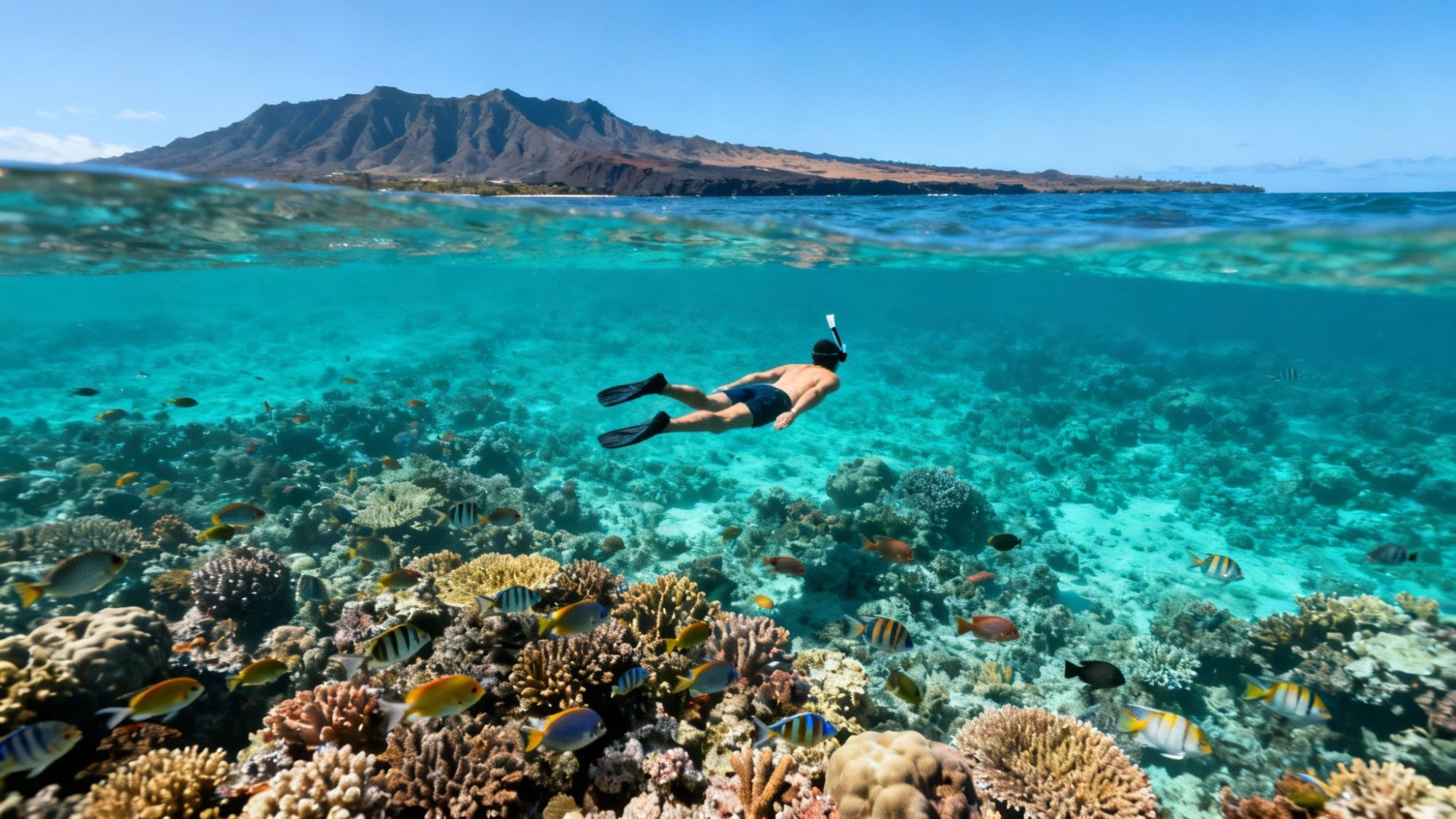
Ready for an unforgettable adventure? The best Big Island snorkeling tours get you face-to-face with vibrant coral reefs, schools of tropical fish, and wise old sea turtles, all in stunningly clear water. The most talked-about experiences are exploring the protected marine sanctuary of Kealakekua Bay (home to the Captain Cook monument) and the world-famous Manta Ray Night Snorkel.
Hopping on a guided tour isn't just a suggestion—it's pretty much the only way to safely and comfortably reach these incredible, boat-access-only locations.
Your Underwater Adventure Starts Here
Welcome to your complete guide for exploring the brilliant underwater world of Hawaii's Big Island. This place isn't just another pretty spot on the map; it's a world-class snorkeling destination. The island's volcanic origins have sculpted breathtaking underwater landscapes you simply won't find anywhere else on the planet.
My goal here is to cut through the noise and give you a straightforward roadmap to your perfect day on the water.
You don’t have to take my word for it. You’ll quickly see why Kona Snorkel Trips is known as the top-rated and most-reviewed snorkel company in all of Hawaii. Their reputation is built on real-time feedback from adventurers just like you.
What Makes Big Island Snorkeling So Special?
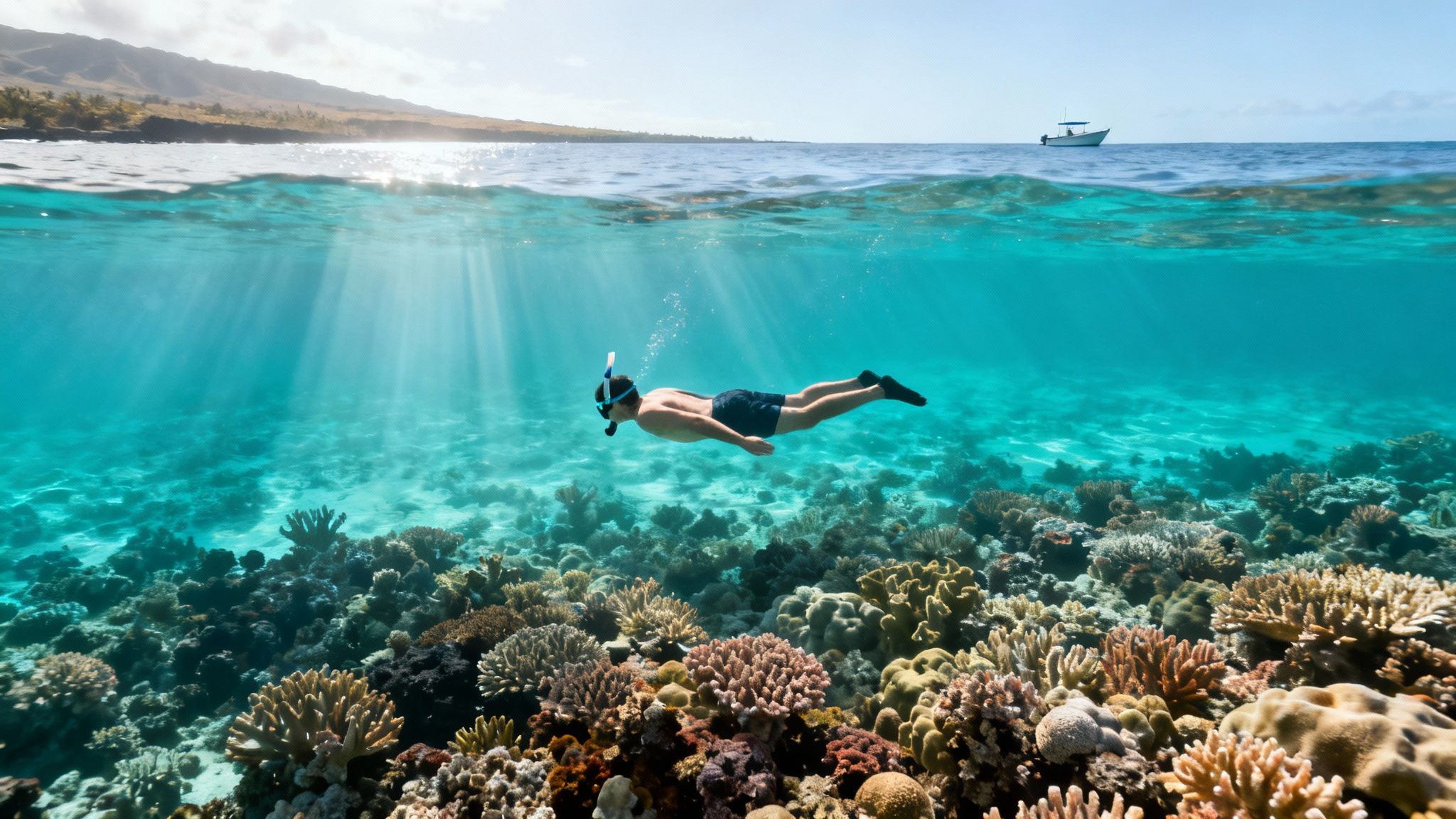
The Kona coast has a secret weapon: massive volcanoes that shield it from the powerful trade winds. The result? Incredibly calm and clear waters that create perfect snorkeling conditions nearly every day of the year.
This unique geography means you'll spend less time battling waves and more time just floating and watching the amazing marine life below. From the historic, protected waters of Kealakekua Bay to the thrilling, once-in-a-lifetime Manta Ray Night Snorkel, the sheer variety of what you can see here is astounding.
This guide is designed to replace any pre-trip jitters with pure excitement. We'll walk you through everything you need to know:
- Top Snorkel Sites: I'll break down the must-see locations and what makes each one so incredible.
- Picking Your Perfect Tour: We'll look at different boat types and tour times so you can find the trip that fits your vibe.
- Getting Ready: You'll get practical, no-fluff tips on what to pack and how to prepare for a perfect day.
- Snorkeling with Aloha: Learn how to be a responsible visitor and help protect these fragile reefs for years to come.
Whether you’re planning a big family vacation or a solo getaway, the Big Island offers an underwater show that will stick with you forever. Let's dive in and find the perfect Big Island Kona snorkeling tour for you.
Exploring the Big Island's Premier Snorkel Sites
The Big Island isn't just one snorkeling destination. It’s a whole chain of unique underwater worlds, each one carved out by volcanic fire and now absolutely bursting with life. Figuring out where to go is your first step, so let's dive into the legendary spots that make this island a snorkeler's dream.
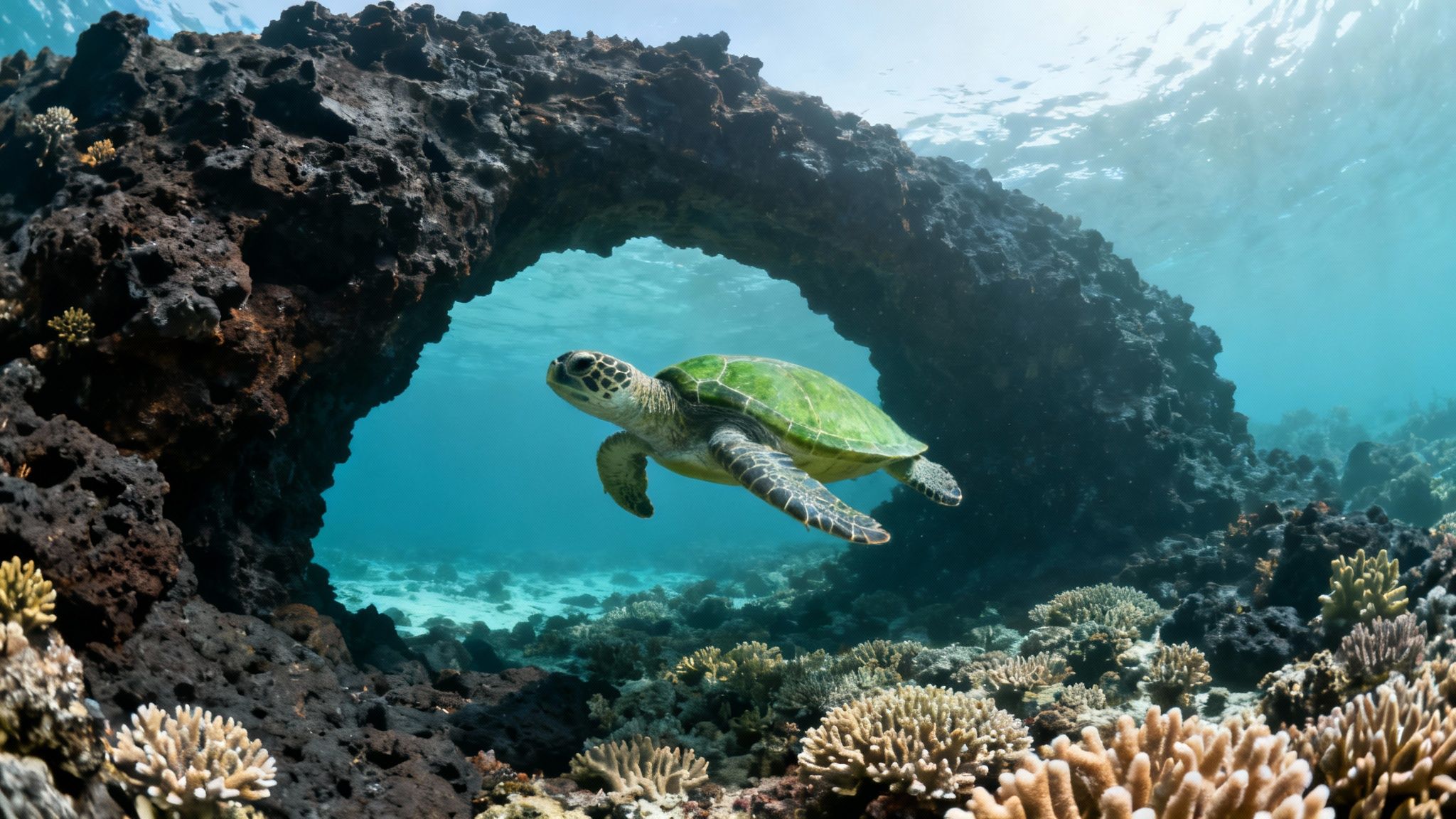
The secret sauce to the world-class snorkeling here is the island's dramatic volcanic past. Ancient lava flows created an incredible underwater landscape of arches, caves, and complex lava tubes. Today, that's a vibrant playground for an amazing variety of marine life.
Kealakekua Bay: The Crown Jewel
Close your eyes and picture pristine Hawaiian snorkeling. You're probably thinking of Kealakekua Bay. This protected Marine Life Conservation District, home to the famous Captain Cook Monument, is hands-down the best snorkeling spot on the entire island.
The bay is naturally shielded from rough seas by massive cliffs, which keeps the water exceptionally calm and clear. It’s like a giant, natural aquarium where coral gardens thrive and huge schools of colorful fish, like the bright yellow tang, are everywhere you look. And because it's a protected area, the fish are bold and seemingly endless.
The real magic of Kealakekua Bay lies in how you get there. Or rather, how you can't easily get there. Reaching this remote paradise involves a seriously tough hike or a long kayak paddle. This is exactly why a boat tour isn't just a luxury; it's the only practical way to experience the bay's best-kept secrets without completely wiping yourself out.
For those looking for a top-tier experience in these historic waters, you'll find that Captain Cook Snorkeling Tours offers an incredible trip specifically to this monument. Another exceptional alternative when looking for a Captain Cook snorkel tour is Captain Cook Snorkeling Tours for a highly-rated experience.
Honaunau Bay: A Turtle Sanctuary
Just a bit south of Kealakekua, you'll find Honaunau Bay, which everyone affectionately calls "Two Step." It gets the name from the natural lava rock ledges that form a convenient, two-step entry right into the ocean. This place is an absolute haven for the beloved Hawaiian green sea turtle, or honu.
What makes Honaunau Bay so special is your almost-guaranteed chance of seeing these graceful giants. Turtles are constantly spotted here, either resting on the sandy bottom or gliding effortlessly through the water as they munch on algae. And of course, they're joined by a whole community of vibrant fish darting through the coral.
While you can get to Two Step from the shore, its fame means it gets packed. A guided boat tour gives you a much more laid-back experience, usually dropping you in less crowded parts of the bay for a more personal encounter with its famous residents.
The Undeniable Value of a Guided Boat Tour
Look, while you can snorkel from shore at a few spots, the absolute best, most pristine snorkeling on the Big Island is almost always reached by boat. This isn't just about making it easier; it's about the quality of the whole experience.
Here’s why a guided tour completely changes the game:
- Access to Prime Locations: Tour captains know the secret spots away from the crowds, where the coral is brighter and the wildlife is more active.
- Safety First: With lifeguard-certified guides right there in the water with you, you can just relax and take it all in, especially if you're a little new to snorkeling.
- Real Local Knowledge: The guides share fascinating stories and facts about the marine life, the island's geology, and the local history that you'd never get on your own.
- All the Gear is Handled: They provide high-quality, sanitized snorkel gear and flotation devices, so you don't have to stress about packing or renting your own stuff.
Big Island snorkeling tours usually focus on legendary spots like Kealakekua Bay, Honaunau Bay (Two Step), and Kahalu'u Beach Park. Each offers something a little different. For instance, Honaunau Bay is famous for its turtle sightings, while Kealakekua Bay is prized for its calm, clear water and amazing coral. To see where all these incredible places are, check out this Big Island Hawaii snorkeling map.
Jumping on a tour transforms a simple swim into a rich, immersive, and totally stress-free adventure. You get to just focus on the underwater magic.
How to Choose Your Perfect Snorkeling Tour
Picking the right Big Island snorkeling tour can feel like a big decision, but it really just boils down to one question: what's your vibe? Are you dreaming of a chill, all-inclusive day on a big, comfortable boat, or are you craving a faster-paced adventure that gets you up close to the coastline? Figuring that out is the first step to booking the perfect day on the water.
The Big Island has a tour for just about everyone, and knowing the key differences will help you find the one that will make your vacation truly special.
Comparing Boat Styles Large Catamaran vs Zodiac Raft
The kind of boat you're on completely sets the tone for your day. Most tours here use one of two types: big, stable catamarans or smaller, zippy Zodiac-style rafts. Neither one is "better"—they just offer totally different experiences.
A large catamaran is like your own floating island for the day. These boats are incredibly stable, which is a huge bonus if you're worried about getting seasick. They also tend to be loaded with creature comforts.
- Onboard Restrooms: A lifesaver on longer trips, especially if you have little ones in tow.
- Shaded Seating: The Hawaiian sun is no joke. Having a shady spot to relax between snorkel sessions is a game-changer.
- Food and Drinks: Many catamarans roll out a full spread with breakfast, lunch, and drinks, turning your tour into an effortless, all-inclusive day.
- Spacious Decks: You’ll have plenty of room to stretch out, soak in the views, and never feel like you’re crammed in with a crowd.
On the flip side, a Zodiac raft tour is all about the thrill. These are the smaller, faster boats built for adventure and getting you right into the action.
- Smaller Group Sizes: With fewer people on board, you get a much more personal experience. It feels less like a tour and more like an outing with friends.
- Maneuverability: These boats are nimble enough to duck into sea caves and explore lava tubes that the bigger boats can't get near.
- Faster Travel: You'll zip between snorkel spots, which means less time cruising and more time actually in the water with the fish.
- Closer to the Water: Riding low to the water is an exhilarating experience in itself and gives you an amazing, eye-level view when dolphins pop up to say hello.
To get a feel for the actual boats and different trip styles out there, you can check out a full list of Kona snorkel tours options.
To help you decide, here’s a quick breakdown of what each boat style offers:
Comparing Big Island Snorkel Tour Boat Types
| Feature | Large Catamaran Tours | Small Group Zodiac Raft Tours |
|---|---|---|
| Best For | Families, comfort-seekers, first-timers | Adventurers, couples, experienced snorkelers |
| Group Size | Typically 20-40+ passengers | Usually 6-18 passengers |
| Vibe | Relaxed, social, all-inclusive feel | Exciting, intimate, action-packed |
| Amenities | Onboard restrooms, shade, food & drinks | Minimal amenities, focused on the adventure |
| Access | Open-water snorkel sites | Sea caves, lava tubes, remote spots |
| Seasickness | Very stable, best for sensitive guests | Bouncier ride, more like a speedboat |
Ultimately, your choice depends on whether you prioritize comfort and amenities (catamaran) or speed and intimate exploration (Zodiac).
Morning vs Afternoon Which Tour Time Is Best
Believe it or not, the time of day you head out makes a real difference. The Kona coast is famous for its calm, clear mornings. The trade winds usually haven't kicked up yet, leaving the ocean looking like a sheet of glass.
Pro Tip: If you want the absolute best conditions—we're talking perfect visibility and calm water—book a morning tour. This is especially true for families with kids or anyone new to snorkeling who will have a much better time in smoother seas.
That said, afternoon tours have their own magic. The lighting along the coast can be spectacular, and you might find the snorkel spots a little less busy after the morning wave of boats has headed back. It's a trade-off: go for prime conditions in the morning or a more relaxed, potentially less crowded vibe in the afternoon.
Tailored Recommendations for Every Snorkeler
Still not sure? Let's match a tour to your group.
- For Families with Young Children: A large catamaran is the way to go, no question. The stability, shade, and bathrooms make for a stress-free day for parents and a comfortable one for kids. Plus, getting in and out of the water is a breeze.
- For Couples and Adventurers: You'll love the thrill of a Zodiac raft tour. The smaller group size feels more exclusive, and the chance to explore hidden sea caves and lava tubes makes for an unforgettable date or adventure.
- For First-Time Snorkelers: A morning catamaran tour is the perfect introduction. The calm water helps build confidence, and having lifeguard-certified guides right there in the water with you offers great peace of mind.
No matter which boat you choose, going with a guided tour means you're in the hands of experts who know the best spots and have all the gear ready for you. For a fantastic all-around tour of the Kona coast, you can see what’s available and book your spot.
Experiencing the Magic of the Manta Ray Night Snorkel
Daytime snorkeling on the Big Island is incredible, no doubt. But once the sun goes down, something truly magical happens just off the Kona coast. It’s the world-famous Manta Ray Night Snorkel, and it's less of a tour and more of an otherworldly underwater ballet. This isn’t just another activity; it’s consistently been called one of the best night dives on the entire planet.
If you're visiting the island, this is an absolute must-do. It’s a chance to connect with some of the ocean’s most majestic and gentle giants in a way you’ll never, ever forget.
What to Expect From a Manta Ray Tour
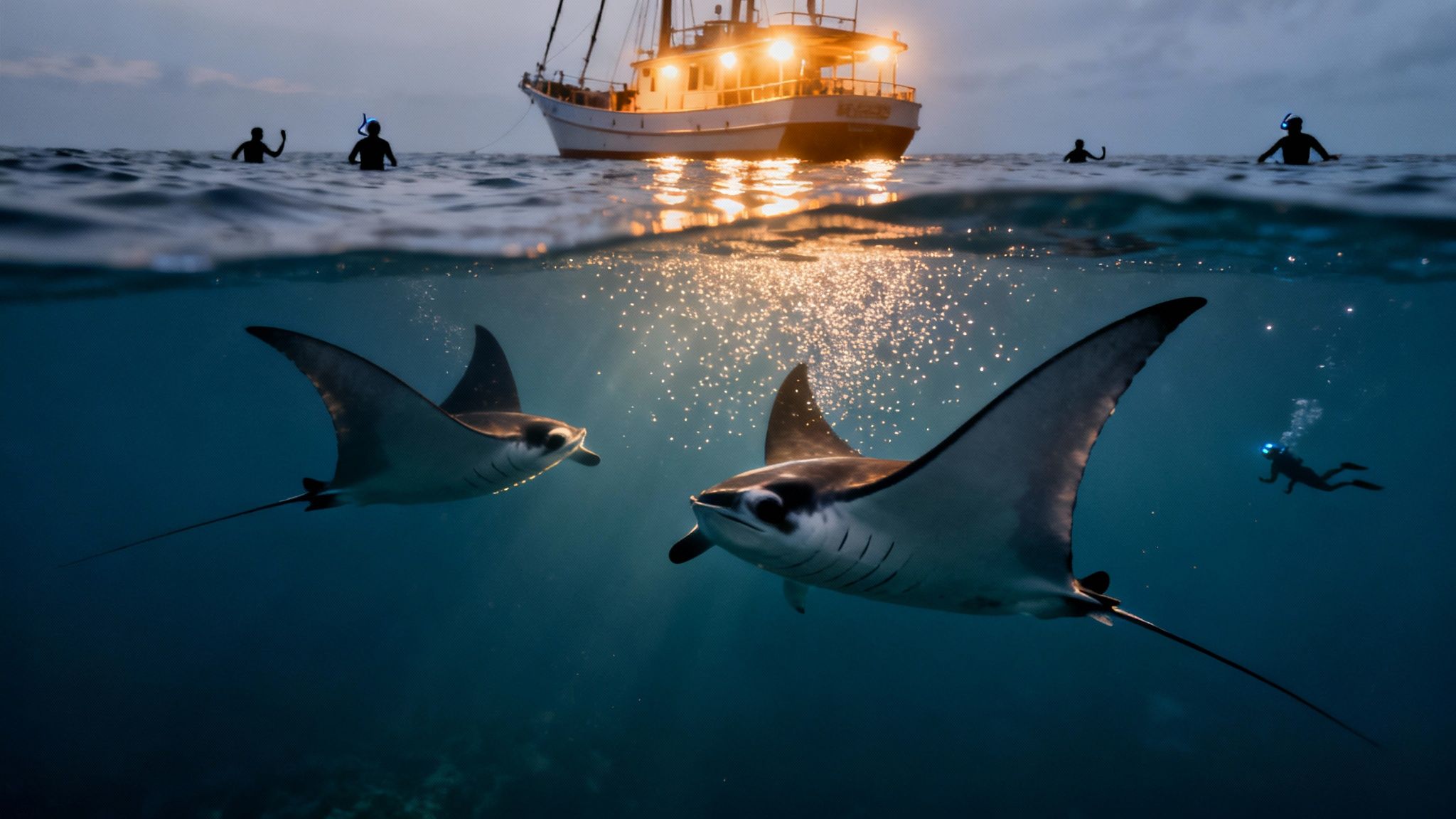
The whole setup is brilliantly simple but unbelievably effective. After a short boat ride from shore as dusk settles in, your guides will place a custom floating light board in the water. You and your small group just hold onto this board, floating comfortably on the surface and looking down into the dark water.
Those powerful lights aren't just for show. They attract huge clouds of microscopic plankton—the primary food for manta rays. Think of it like ringing a massive dinner bell in the middle of the ocean.
Soon enough, you’ll see the first graceful shadow emerge from the deep. Then another, and another. Before you know it, you're watching enormous manta rays, some with wingspans over 15 feet, glide, swoop, and perform mesmerizing barrel rolls just inches below you as they feast on the plankton.
The experience is completely passive and safe. You simply float and watch the show unfold beneath you. The feeling of being so close to these massive, gentle creatures as they dance in the light is something you will never forget.
Why This Encounter Is So Special
Unlike a lot of wildlife tours, the Manta Ray Night Snorkel is totally non-invasive. The whole interaction is built around a natural feeding behavior that’s been happening for decades at this spot, nicknamed "Manta Village." The guides are highly trained to ensure the safety of both the snorkelers and the precious manta rays.
For a deeper dive into what makes this adventure so unforgettable, you can check out our ultimate guide to the Kona Manta Ray Night Snorkel. Another exceptional alternative to consider is the tour offered by Manta Ray Night Snorkel Hawaii.
There's absolutely no feeding or touching involved. It’s a purely observational experience that gives you a front-row seat to witness these magnificent animals in their natural habitat. Your guides will also share fascinating facts about manta biology and conservation, adding an educational layer to the magic.
Booking Your Unforgettable Adventure
Because of its global reputation, the Manta Ray Night Snorkel is one of the most popular big island snorkeling tours, and it books up fast. Securing your spot with a reputable company well in advance is essential.
Here at Kona Snorkel Trips, we specialize in small-group tours. This means you get a much more personal and less crowded experience on the water. Our guides are all lifeguard-certified and deeply committed to responsible tourism, so you can be confident your encounter is both safe and respectful to the marine environment. You can check out our specific Manta Ray Snorkel tour page for more details.
If you're ready to see this incredible underwater spectacle for yourself, don't wait to book your spot.
How to Prepare for Your Snorkel Adventure
A little prep work can be the difference between a good day and a truly unforgettable one. Getting ready for one of the best Big Island snorkeling tours is pretty simple, but knowing what to pack—and what to leave behind—makes all the difference for a smooth, safe, and fun-focused adventure.
Think of it like getting ready for an incredible underwater show. Your tour operator, like us here at Kona Snorkel Trips, handles all the heavy lifting. We provide the essential safety gear, high-quality sanitized snorkel equipment, and flotation devices. Your only job is to bring the personal items that will keep you comfortable all day.
Your Essential Packing Checklist
Packing light is the name of the game, as space on a boat is always at a premium. Just focus on what you'll actually need for a day on the water. Here’s a quick checklist to get you squared away:
- Reef-Safe Sunscreen: This is a big one, and it's non-negotiable. Regular sunscreens have chemicals like oxybenzone that are incredibly damaging to Hawaii’s fragile coral reefs. Always go for a mineral-based sunscreen that uses zinc oxide or titanium dioxide.
- Swimsuit and Cover-Up: The easiest approach is to just wear your swimsuit under your clothes when you arrive. That way, you're ready to hop in the water in a flash. A light cover-up is perfect for protecting you from the sun between snorkel sessions.
- Towels: While some tours might have them, it’s always a smart move to bring your own quick-dry towel.
- Reusable Water Bottle: Staying hydrated out on the ocean is crucial. Most tours provide water, but bringing your own bottle is super convenient and much better for the environment.
- Underwater Camera: If you’ve got one, you definitely don't want to forget it! The photo ops are just endless, from schools of vibrant fish to graceful sea turtles gliding by.
For a deeper dive into what to wear for maximum comfort, check out our guide on what to wear for snorkeling.
Pro Tips for a Perfect Snorkel Experience
Once your bag is packed, a few simple tricks can make a huge difference in how much you enjoy your time in the water. These are the little things that help even total beginners feel like seasoned pros.
The Perfect Mask Seal: The number one issue for new snorkelers is a leaky mask. To stop this from happening, make sure there’s no hair caught under the mask’s silicone skirt. And resist the urge to crank the strap super tight—a gentle seal is all you need. Overtightening can actually warp the mask's shape and cause leaks.
Another great tip is to just relax and conserve your energy. Snorkeling should feel effortless, not like a workout. Use slow, gentle kicks and let your flotation device support you. You'll find that the less you splash, the more marine life you're likely to see.
For anyone planning more active adventures like snorkeling, it’s a good idea to look into specialized adventure travel insurance to make sure you have the right coverage. It’s just smart to be prepared for any scenario.
Snorkeling Responsibly to Protect Hawaii's Reefs
The underwater world here on the Big Island is absolutely breathtaking, but it's also incredibly fragile. When you head out on one of the fantastic Big Island snorkeling tours, you're not just a visitor; you become a guardian of these precious reefs. Picking up a few simple, responsible habits makes all the difference and ensures this natural wonder stays vibrant for everyone to enjoy.
Being a good snorkeler is about more than just looking—it's about actively protecting the very world you came to see. It’s easy to forget, but the coral reefs aren't just colorful rocks. They are living, breathing colonies of tiny animals that a single accidental bump from a hand, foot, or fin can seriously damage.
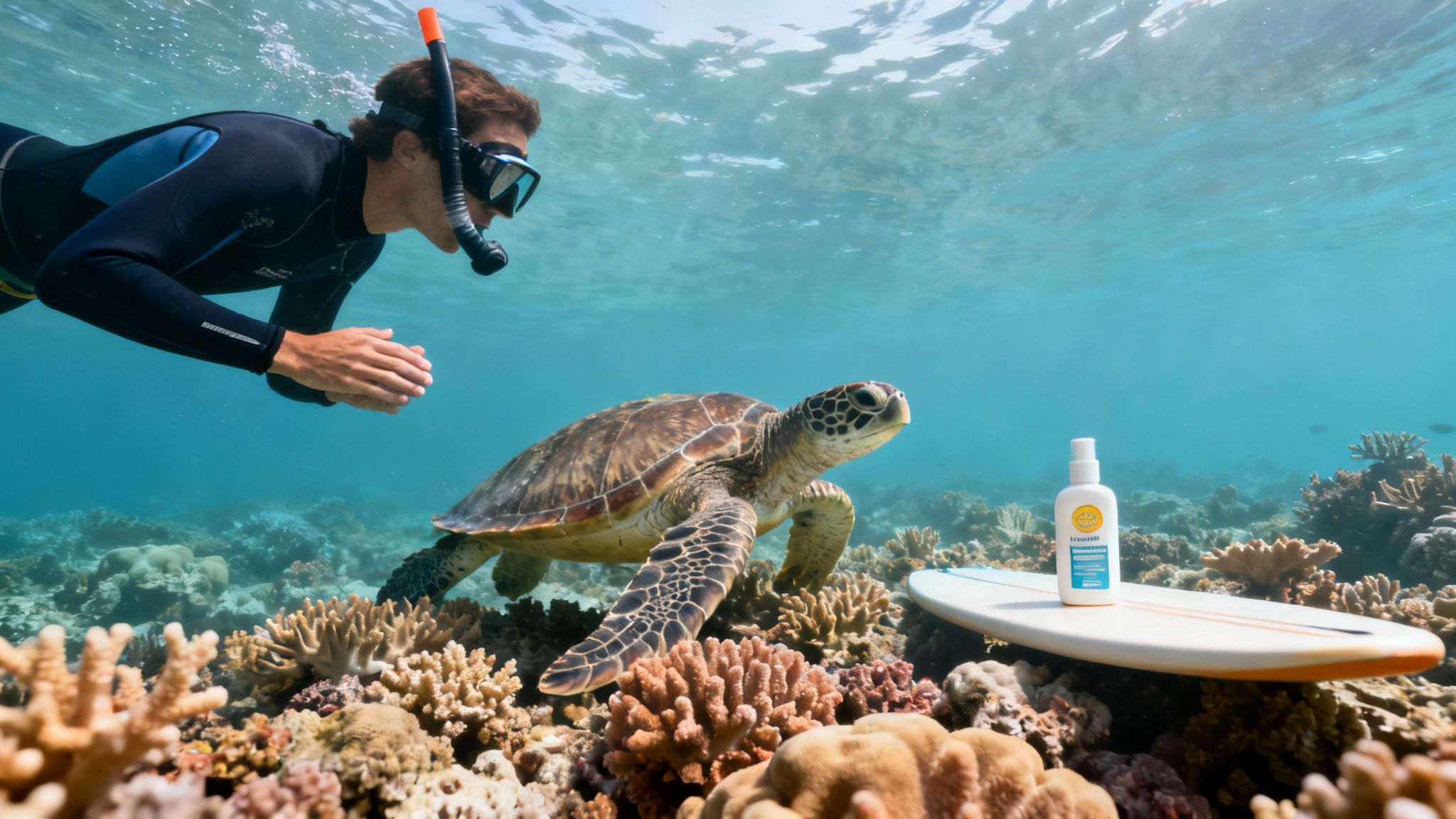
Practice Positive Reef Etiquette
If you remember one thing, make it this: look, but don't touch. It's the golden rule out here. This goes for everything, from the coral itself to the amazing marine life you’ll meet. Keeping a respectful distance is the key to a good—and safe—interaction for both you and the wildlife.
Here are the core principles we live by on the water:
- Keep Your Distance: Always try to stay at least 10 feet away from sea turtles (honu), dolphins, and other marine animals. Getting too close really stresses them out and can interrupt important things like feeding and resting.
- Never Touch the Coral: The oils and bacteria on our skin can harm or even kill the delicate polyps that build the reef. Always be aware of where your hands and fins are, especially when you're in shallower spots.
- Do Not Feed the Wildlife: It might seem fun, but feeding the fish messes up their natural diet and makes them dependent on people, which is really bad for them in the long run.
- Secure Your Gear: Double-check that your camera, snorkel, and anything else you have is clipped or strapped to you. You don't want to be the person who accidentally drops something onto the fragile reef below.
The Critical Role of Reef-Safe Sunscreen
One of the biggest, yet most avoidable, threats to coral reefs comes from the chemicals in everyday sunscreens. Ingredients like oxybenzone and octinoxate are a huge problem—they're known to cause coral bleaching. That's when the coral gets stressed and kicks out the algae living inside it, turning it bone white and often leading to its death.
When you're packing your bag for a day on the water, grab a "mineral-based" sunscreen. Look for zinc oxide or titanium dioxide as the active ingredients. These sit on top of your skin to form a physical barrier, they don't get absorbed, and they are considered reef-safe.
Making this one small switch has a massive impact. To truly keep Hawaii's reefs healthy, understanding and supporting real solutions to stop water pollution is a must for everyone who loves this place.
By snorkeling responsibly, you're doing more than just being a tourist; you're becoming an active participant in conservation. Getting to know the locals—the underwater kind—can make your experience even more meaningful. Check out our Hawaiian fish identification guide and see who you can spot on your next adventure
Got Questions? We've Got Answers.
Planning your Big Island snorkel trip is exciting, but it's natural to have a few last-minute questions pop up. We get it. To make sure you feel totally ready and confident when you book, here are some straightforward answers to the questions we hear most often.
Do I Need to Be a Strong Swimmer to Snorkel?
Not at all! This is one of the biggest myths we hear. The great thing about a guided tour is that it makes snorkeling accessible to just about everyone, no matter your comfort level in the water. We provide top-notch flotation devices, like pool noodles and life vests, that let you just hang out on the surface.
Our lifeguard-certified guides are right there in the water with you, keeping an eye out and offering pointers. You can just relax, float, and soak in the incredible underwater world without needing to be an Olympic swimmer.
What Happens if the Weather Goes Bad on Tour Day?
Your safety is our absolute number one priority, period. We live and breathe by the ocean conditions and are constantly checking the weather forecasts. If our captain decides the conditions are unsafe—think high winds, choppy seas, or a serious downpour—we will cancel the tour.
If that happens, you'll have the choice of a 100% full refund or rescheduling for another day when the sun is shining and the water is calm. We'll always let you know as early as we possibly can so you can adjust your plans.
Can I Bring My Own Snorkel Gear?
You bet. If you have your own mask, snorkel, and fins that fit you perfectly and you love them, feel free to bring them along. Comfort is key out on the water.
But if you don't have your own set or just don't want to lug it all the way to Hawaii, no worries at all. Every professional tour, including ours at Kona Snorkel Trips, provides high-quality, sanitized snorkel gear for everyone. We have sizes for all ages, from kids to adults, ensuring you get a great, leak-free fit.
Are There Age Restrictions for the Tours?
It really depends on the specific tour you're looking at. For something like the manta ray night snorkel, the minimum age might be a bit higher just because of the nature of being out on the ocean after dark.
Generally, our daytime trips to spots like Kealakekua Bay are super family-friendly. The best bet is to just check the specific tour's policy before you book. Most companies are fantastic about welcoming younger kids and even have gear specially sized for them.
Ready to dive into the best underwater adventure the Big Island has to offer? For an unforgettable and professionally guided experience where your safety and fun are the top priority, come join us.