
Big Island Manta Ray Night Snorkel Moon Phase Guide
Imagine drifting in warm, ink-black waters off Kona’s coast. Giant manta rays somersault below you, drawn to lights that mimic plankton blooms. The full moon casts a silver glow on the waves above. This manta ray moon phase moment makes your Big Island night snorkel unforgettable.
You want clear views of these gentle giants without pitch darkness overwhelming the scene. Moon phases change visibility, manta behavior, and your comfort. Kona Snorkel Trips leads with small-group tours from Honokohau Marina. Their Reef to Rays focus ensures safety and eco-friendly practices. Lifeguard-certified guides provide gear like masks, fins, and wetsuits.
This guide helps you pick the best nights for snorkeling Big Island Hawaii. You’ll learn phase impacts and top tour picks.
Why Moon Phases Shape Your Manta Ray Experience
Moonlight filters through the ocean surface. It boosts natural glow alongside boat lights. During snorkel Big Island nights, brighter phases mean better outlines of mantas’ 10-foot wingspans.
Full moons amplify plankton attraction. Mantas feed more actively because lights stand out less against natural illumination. You spot details like their white underbellies easier. In contrast, new moons create stark contrasts. Boat lights dominate, but deeper shadows hide reef features.
Data from local operators shows 80% sighting success year-round. However, guest reviews peak during waxing phases. You avoid crowded boats by timing right. Check apps like Moon Phase Calendar for 2026 dates. April’s full moon hits mid-month, perfect for early trips.
Best Moon Phases for Manta Ray Night Snorkels
Full moons top the list for manta ray moon phase adventures. Extra light reduces glare from surface lamps. Mantas circle closer, performing barrel rolls inches from your mask.
Visibility extends 20 feet deeper. You see volcanic reefs and colorful fish too. Calm seas often pair with full moons, so less rocking disrupts your float.
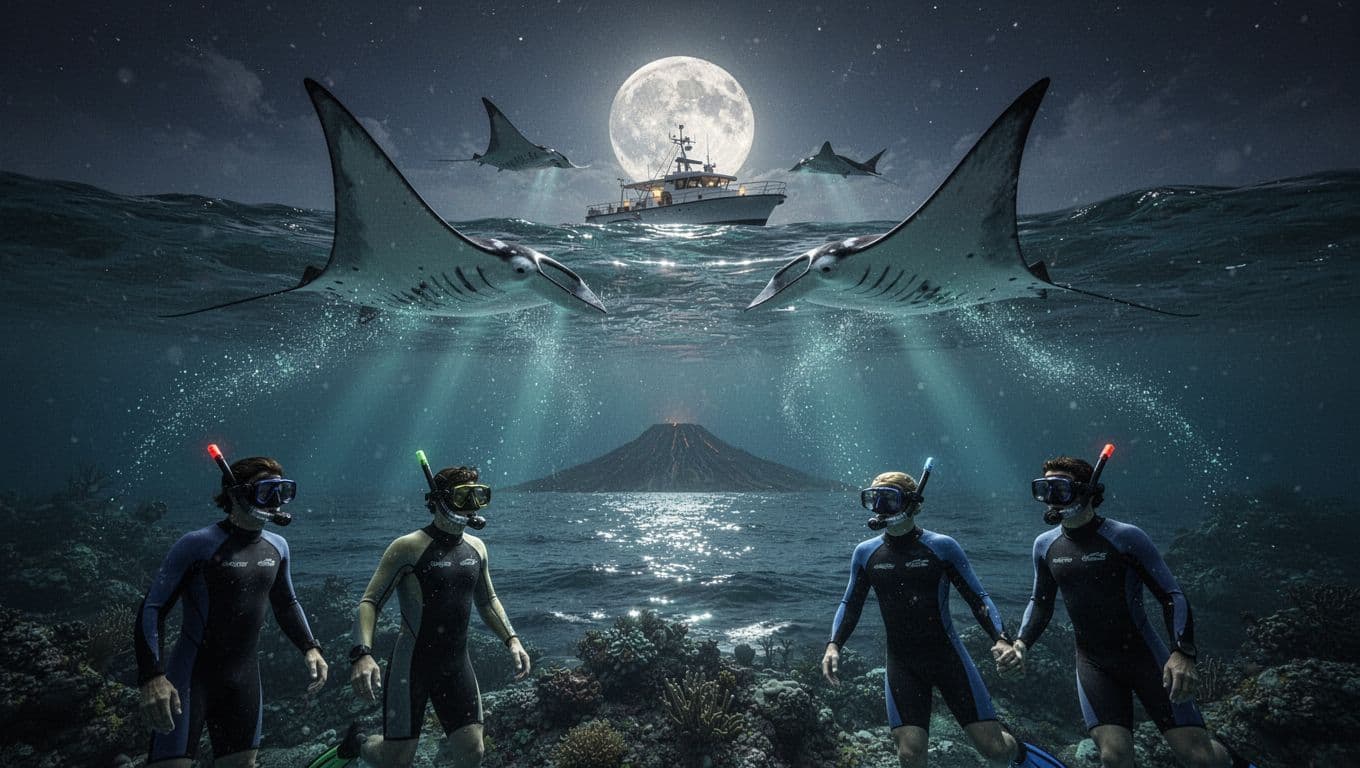
Waxing gibbous phases follow close. About 80-99% illumination mimics full moon benefits. Mantas arrive sooner because the gradient draws them up. Book these for fewer crowds than peak full moons.
Night Snorkeling with Mantas During Full Moon
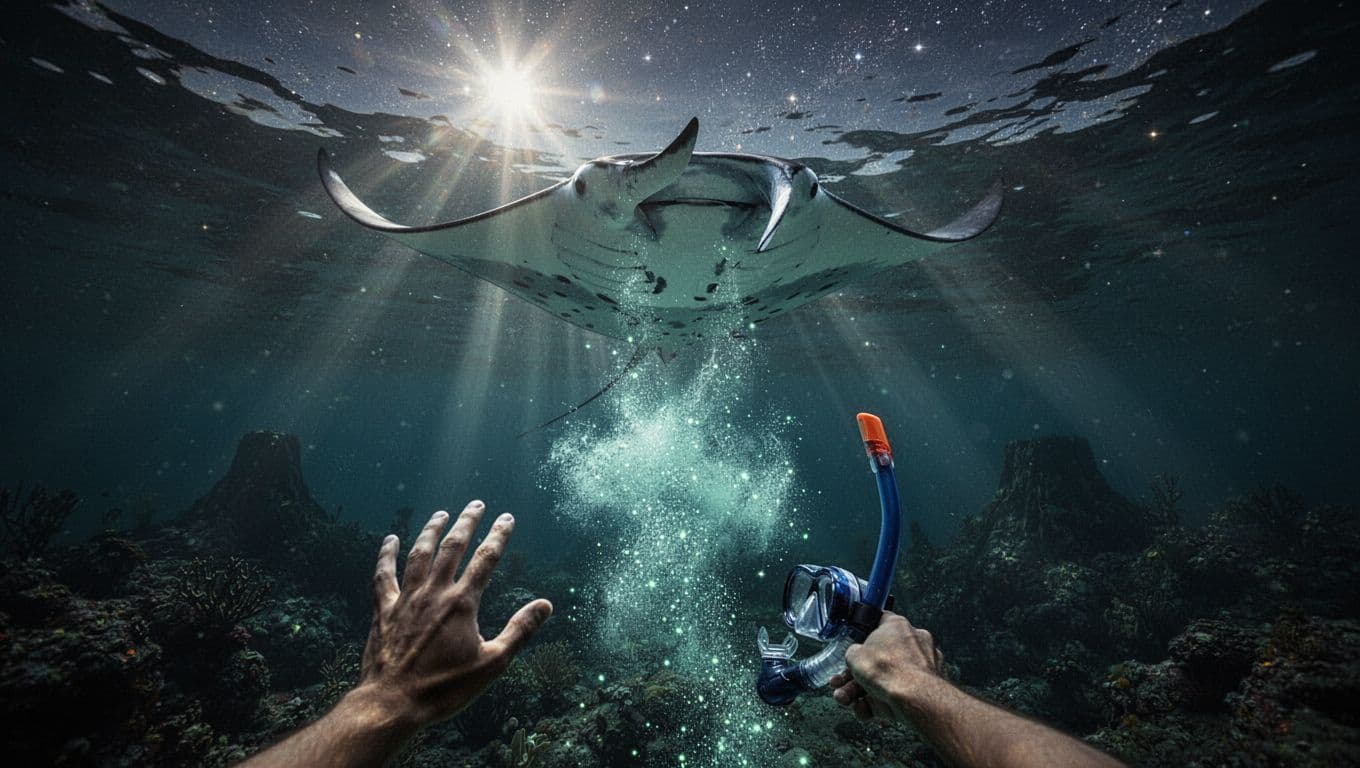
You slip into 75-degree water around 8 PM. Guides brief you on holding lighted boards steady. Mantas sense the glow and swarm within minutes.
Under full moon, their cephalic fins curl like welcoming horns. You hear their silent whooshes through your snorkel. Stay relaxed; they brush past harmlessly.
Kona Snorkel Trips offers the Big Island manta ray night snorkel tour. Small groups cap at 18. They guarantee sightings or reschedule. Prices start at $149 plus tax.
For more insights, see this complete guide to Big Island manta ray night snorkels from Manta Ray Night Snorkel Hawaii.
Waxing and Waning Gibbous: Sweet Spots for Visibility
These phases balance light and mystery. 50-80% illumination softens harsh contrasts. Mantas feed confidently, looping through groups.
You enjoy longer sessions, up to 45 minutes in water. Guides point out juveniles, rarer on darker nights. Pair with calm Kona evenings for stable platforms.
Compare phases in this quick table:
| Moon Phase | Illumination | Visibility | Manta Activity |
|---|---|---|---|
| Full Moon | 99-100% | Excellent | High |
| Waxing Gibbous | 80-99% | Very Good | High |
| Waning Gibbous | 50-80% | Good | Medium-High |
Full and gibbous nights yield the most photos. Newer snorkelers feel secure with ambient light.
Challenges of New Moon Snorkels
New moons plunge nights into velvet black. Boat lights create tight plankton pools. Mantas zero in fast, but you strain to see beyond 10 feet.
Deeper currents stir sometimes. Hold boards tighter against chop. Still, sightings hit 70%, because mantas hunt nightly.
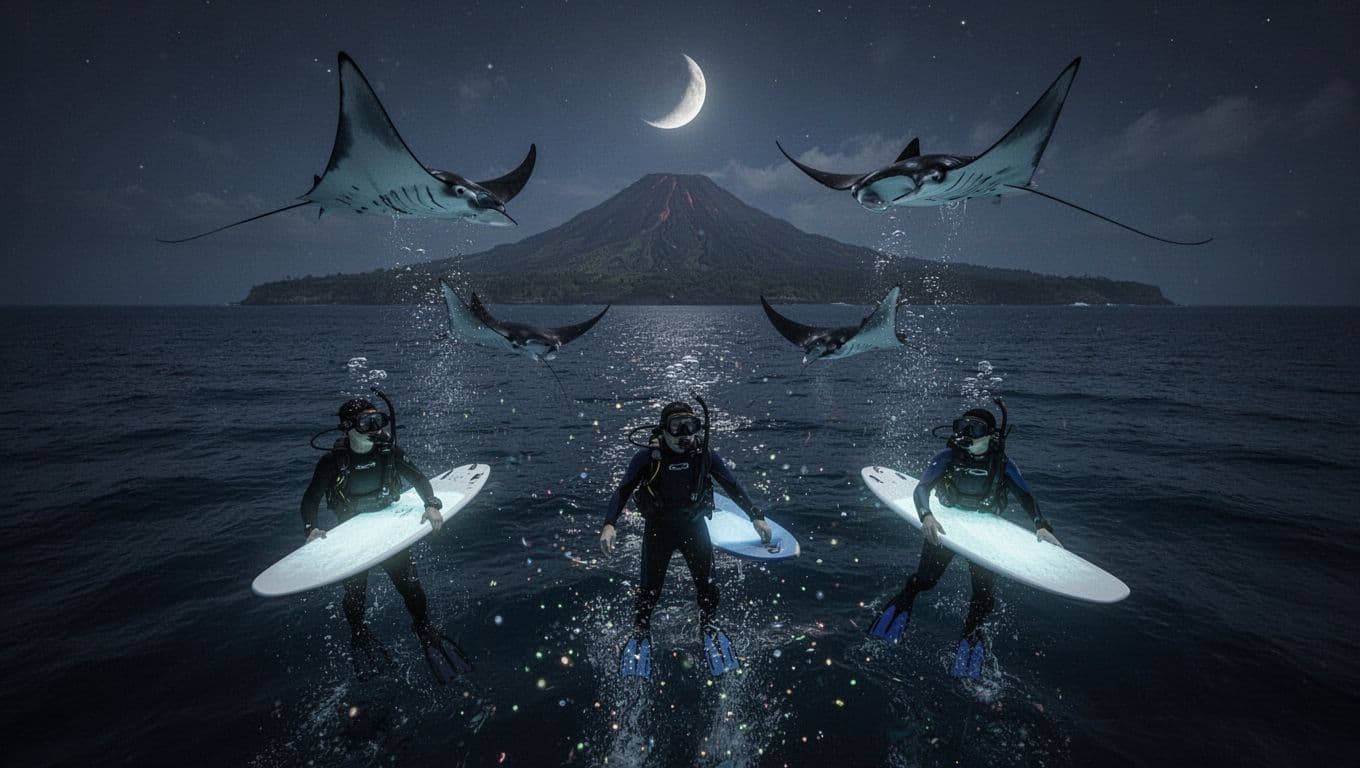
Crescent phases add faint horizon glow. Use for stargazing pre-snorkel. However, stick to full or gibbous for prime snorkeling Big Island views.
Tips to Maximize Any Moon Phase
Pack reef-safe sunscreen. Wear rash guards for buoyancy. Practice swimming 50 yards pre-trip; it’s required.
Choose operators like Kona Snorkel Trips for propeller guards and rescue gear. They depart from convenient Honokohau. Combo tours add daytime snorkeling Big Island Hawaii at Pawai Bay.
Arrive hydrated. Motion sickness hits less with ginger chews. Full moon tours fill fast, so book early.
Your Path to Manta Magic Awaits
Moon phases turn good snorkels into epic ones. Full and gibbous nights deliver clearest manta ray moon phase thrills. You float amid giants, heart pounding with awe.
Kona Snorkel Trips sets the standard with personalized care. Their five-star service creates lasting memories. Time your Big Island trip right, and these nights become highlights.
Plan now for 2026’s cycles. The ocean calls; answer under the right moon.
(Word count: 982)