
Your Guide to the Big Island Manta Ray Night Dive
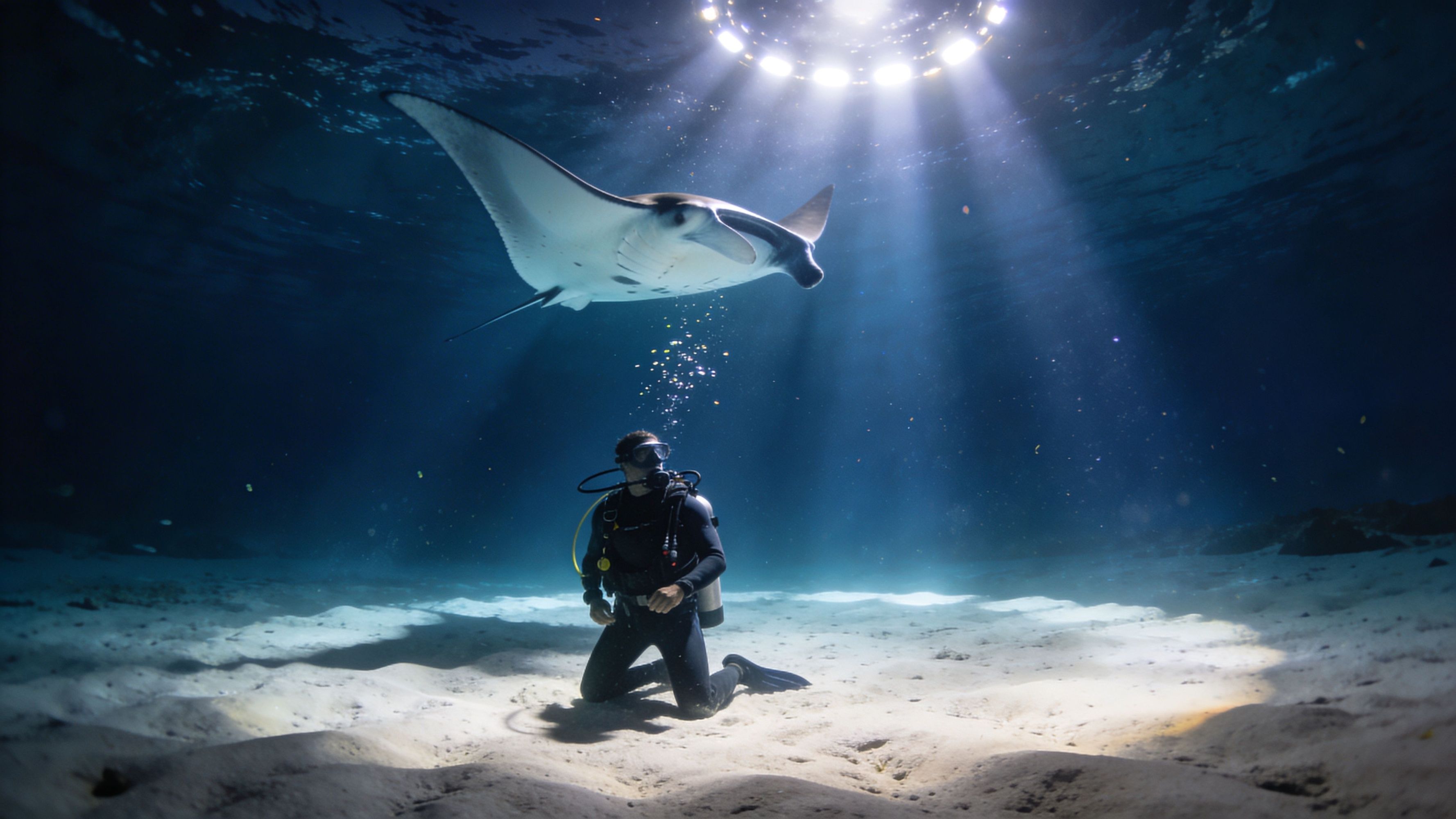
The first time you see a manta ray turn through the lights at night, the whole site goes quiet. Divers stop fidgeting, snorkelers forget the cold, and everyone just watches.
The Underwater Ballet An Introduction to Kona's Manta Rays
A big island manta ray night dive does not feel like a normal scuba dive. You descend into dark water, settle onto a sandy patch, and wait while the lights pull plankton into a glowing column. Then the mantas arrive and start feeding right above your head, looping and barrel-rolling through the beams.

Kona is famous for this for a reason. The Big Island manta ray night dive has operators reporting encounters on 80-90% of nights, supported by a resident population of over 450 identified reef manta rays and about 80,000 participants annually according to Kona Honu Divers' manta ray night dive overview. That combination of resident animals, repeat feeding behavior, and established sites is what gives the experience its consistency.
Why the show happens here
The basic pattern is simple. Lights attract plankton. Plankton attracts mantas. The volcanic coastline helps create the kind of nutrient-rich conditions that make those feeding stations work night after night.
What surprises first-timers is how close the mantas can come while still looking completely in control. They are not charging people. They are tracking food, banking and adjusting with precision, often passing within feet while staying focused on the plankton cloud.
What it feels like underwater
From the bottom, the scene looks theatrical. Your light beam rises into black water. A white belly flashes overhead. Another manta follows the same line, then breaks into a tight turn and comes back through.
Stay still and look up. The less you fuss with gear, the better the encounter becomes.
That is the part many people miss when they read about it online. The magic is not only the size of the rays. It is the rhythm. The site settles into a pattern, and once divers stop chasing the moment, the moment usually comes to them.
If you want a visual sense of how these encounters look in the water, this look at manta rays swimming underwater in Kona captures the style of movement people remember long after the dive ends.
Choosing Your Manta Encounter Dive or Snorkel
The right choice is not “which one is better.” It is which one fits your skill, comfort level, and what kind of view you want.

What divers get
On scuba, you descend to the bottom and stay in a fixed viewing area. That gives you the classic bottom-up angle, which is the signature view many certified divers come for. When a manta passes overhead and the white underside fills your whole mask, it is hard to beat.
This option suits people who already dive comfortably, handle night conditions without stress, and want a more immersive feeling. You are part of the scene rather than floating above it.
A dive also demands more from you. You need certification, good buoyancy, and enough calm to manage your gear in the dark without distracting yourself from the experience.
For divers who want that format, Kona Honu Divers' manta dive tour is a straightforward option, and Kona Honu Divers is the top rated & most reviewed diving company in both Hawaii and the Pacific Ocean.
What snorkelers get
Snorkeling gives you a top-down view from the surface, usually while holding onto a lighted float board. The mantas feed below you, often turning repeatedly through the same lit water.
For many visitors, this is the easier choice. Snorkeling is often favored by the 80% of visitors who are not certified divers, and it offers a highly accessible top-down view for families and beginners according to Manta Ray Night Snorkel Hawaii's comparison of dive and snorkel experiences. If someone wants the manta encounter without the demands of scuba, snorkeling is usually the cleanest answer.
The trade-off is perspective. You lose that dramatic upward view from the bottom. In exchange, you get simplicity, less task loading, and a format that works well for mixed-experience groups.
If snorkeling sounds like the better fit, Kona Snorkel Trips' manta ray snorkel tour is one option. If you are comparing operators, Manta Ray Night Snorkel Hawaii is another exceptional alternative to consider.
Quick comparison
| Experience | Best for | What you need | Main trade-off |
|---|---|---|---|
| Scuba dive | Certified divers who want the classic bottom-up view | Open Water certification, comfort in night diving | More gear, more task loading |
| Snorkel | Families, beginners, non-divers | Comfort in the water | Surface view instead of bottom-up immersion |
If someone in your group is unsure about scuba at night, do not talk them into it. A relaxed snorkeler usually has a better time than an anxious diver.
For more detail on the diving side, this guide to manta ray diving in Hawaii is useful when you are deciding how technical or relaxed you want the evening to feel.
Selecting a Responsible Manta Ray Tour Operator
The operator matters almost as much as the site. A well-run manta trip feels orderly, calm, and respectful. A poorly run one feels crowded before you even hit the water.

What overcrowding looks like in real life
This is the trade-off visitors do not always see when they book on price alone. Popular manta ray sites can attract up to 80,000 visitors annually, and reviews and advocate reports note that dozens of boats and unregulated traffic can compromise views, human safety, and manta welfare according to this discussion of overcrowding on Kona manta tours.
On the water, that shows up in a few obvious ways:
- Blocked sightlines: Too many people in one viewing lane means somebody always gets fins, tanks, or a light in the face.
- More stress at entry and exit: Night entries are easier when the crew can move people deliberately instead of rushing.
- Less room for the mantas: The animals still feed, but packed human traffic can make the encounter feel more chaotic than graceful.
What to look for before you book
A responsible operator usually gives itself away in the details.
- Small groups: Fewer guests generally means easier supervision and a cleaner view.
- Clear conservation rules: Good crews repeat the same basics every trip. Stay in position. Do not chase. Do not touch.
- Strong briefings: You should know exactly where to be, how to enter, and what the guide expects before the boat reaches the site.
- Calm crew behavior: If the staff acts rushed at the dock, they usually act rushed in the water too.
One practical way to screen companies is to read a guide focused on how to choose the right Kona manta ray snorkel tour. It helps separate polished marketing from meaningful operating standards.
Two operator styles worth noting
For diving, Kona Honu Divers is a known option for travelers who want a scuba-focused night experience. For snorkeling, Kona Snorkel Trips runs manta outings with lifeguard-certified guides and a small-group format that fits travelers who care about personalized handling and lower-impact time in the water.
If a company cannot explain its group management and manta interaction rules clearly, keep shopping.
Your Pre-Trip Preparation Checklist
Most problems on a manta trip start before the boat leaves the harbor. Cold, seasickness, poor fit gear, and avoidable nerves can turn a smooth evening into a long one.

Prepare your body first
Do not treat this like a quick sunset cruise. You will be wet, exposed to wind on the ride back, and in dark water.
- Seasickness plan: If you are prone to motion sickness, handle it before boarding and follow the product directions you trust.
- Eat sensibly: Show up neither stuffed nor empty. Heavy meals and empty stomachs both cause trouble.
- Hydrate early: Start during the day, not after you feel off on the boat.
Pack for the ride back
People obsess over what happens in the water and forget the colder part happens after.
Bring:
- A dry towel: Not optional.
- Warm clothes: A hoodie or light jacket feels very different after dark with salt on your skin.
- Minimal valuables: Keep the deck simple and uncluttered.
- Any personal essentials: Glasses case, hair tie, or motion sickness support if you use one.
If you like structured planning, this guide to safe budget friendly ways to enjoy time outdoors is useful because the same habits apply on a night boat trip. Pack light, prepare for changing conditions, and avoid spending money on things you will not use.
Know what your operator provides
Do not assume all tours include the same equipment. Ask what is onboard and what you are expected to bring yourself.
For divers, confirm the standard scuba kit and exposure protection. For snorkelers, ask about flotation support, masks, and how the light board setup works. A quick gear check at the dock solves a lot.
Prepare your head, not just your bag
Night ocean activities make some people tense even when they are comfortable in daylight. That is normal.
The fix is not bravado. It is information. Listen carefully during the briefing, ask direct questions, and decide early whether you are diving or snorkeling within your real comfort zone.
The guests who enjoy mantas most are not the boldest. They are the most settled.
Immersed in the Manta Madness What to Expect During Your Tour
The evening usually begins without much commotion. You check in near the harbor, sort your gear, and watch the light fade while the crew gives the briefing.
That briefing matters more than most first-timers realize. Good guides explain the site, entry, hand signals, where to position yourself, and the one rule everyone needs to remember. Be passive. The mantas do the moving.
The ride out
The boat run after sunset gives people a few minutes to adjust. Divers use that time to settle gear. Snorkelers usually ask the practical questions. How long will we be in? What if I get nervous? Where do I hold on?
If you are the type who likes to organize everything before travel, a strong ultimate travel packing checklist helps because night tours punish forgetfulness. Missing a towel or warm shirt is a bigger deal at night than on a daytime snorkel.
The setup in the water
Once the boat reaches the site, the choreography starts. The standard procedure calls for Open Water certified divers to descend to a 30-40 foot sandy bottom and take position in a structured manta space while guides use lights of 1000 lumens or more to attract plankton according to this step-by-step explanation of the Kona manta night dive.
That fixed layout is what makes the encounter work. Divers stay low. Snorkelers stay at the surface. The mantas get a predictable feeding lane.
Two mistakes ruin the quality of the experience fast:
- Groups that are too large: The same source notes that groups larger than 6 divers are a common pitfall.
- People who crowd the rays: Getting closer than 3 feet can disturb the mantas and reduce the encounter quality.
The moment the mantas show
At first, you may only see plankton and light beams. Then a shape appears at the edge of the glow, swings through the center, and the whole site wakes up.
From the bottom, divers get the silhouette turning overhead. From the surface, snorkelers see the full body pattern and mouth shape opening through the plankton cloud. Both views are memorable for different reasons.
The key is to hold your position. Chasing rarely improves the view. Staying still usually does.
People who want a fuller walkthrough of the snorkel format can read what to expect on a manta ray night snorkel in Kona.
Your job is simple. Breathe slowly, stay where the guide put you, and let the animals control the distance.
Frequently Asked Questions About the Manta Ray Dive
Is the manta ray night dive safe
Yes, when you book with a competent operator and stay within your ability. The main safety issue is not the manta. It is night water, boat procedures, and whether guests follow directions.
Mantas are gentle filter feeders. They do not have a stinger like a stingray. The rules exist to protect both the animal and the guest, especially in low light.
If safety is your first concern, this article on how safe the Kona manta ray night snorkel is covers the practical side well.
What is the best time of year to go
Kona works year-round, which is one reason this experience is so popular. Sites such as Garden Eel Cove offer over 90% sighting success year-round, with potential for 25-30+ mantas on prime nights because the volcanic geology helps create nutrient-rich, sheltered waters that support plankton according to Love Big Island's manta ray night dive guide.
That does not mean every night looks the same. Conditions change. Site choice changes. But visitors do not need to chase a short seasonal window the way they do with some wildlife experiences.
Should I dive or snorkel if I am nervous
If you are already hesitant, snorkeling is usually the easier entry point. You stay at the surface, keep flotation support, and remove most of the scuba task loading from the equation.
Choose the dive only if you are certified, comfortable underwater at night, and excited by the bottom-up format. Do not choose it because it sounds more adventurous on paper.
How do I get good photos
Use simple expectations. Low light, moving animals, and other guests' lights make still photography tricky.
A compact action camera usually works better than trying to build a complicated camera plan for one night. Prioritize stable video, keep your movements controlled, and do not turn the evening into a filming exercise.
What if no mantas show up
Ask the operator directly before booking. Many companies have a return policy or rebooking policy for a no-show night, but the exact terms vary.
What matters is clarity before you pay. Good operators answer this quickly and without dancing around it.
Are kids or non-divers able to do this
For the snorkel format, yes, many families and non-divers choose that route because it is much more accessible than scuba. The exact fit depends on comfort in open water, the operator's rules, and how well the guest handles a night setting.
For the dive format, certification is the starting requirement. Beyond that, comfort and control matter more than enthusiasm.
If you want a low-stress way to experience Kona’s mantas without scuba, Kona Snorkel Trips offers a night snorkel format built around small groups, lifeguard-certified guides, and the classic light-board viewing setup that works well for families, beginners, and experienced ocean travelers alike.