
Your Guide to the Big Island Manta Ray Night Dive in 2026
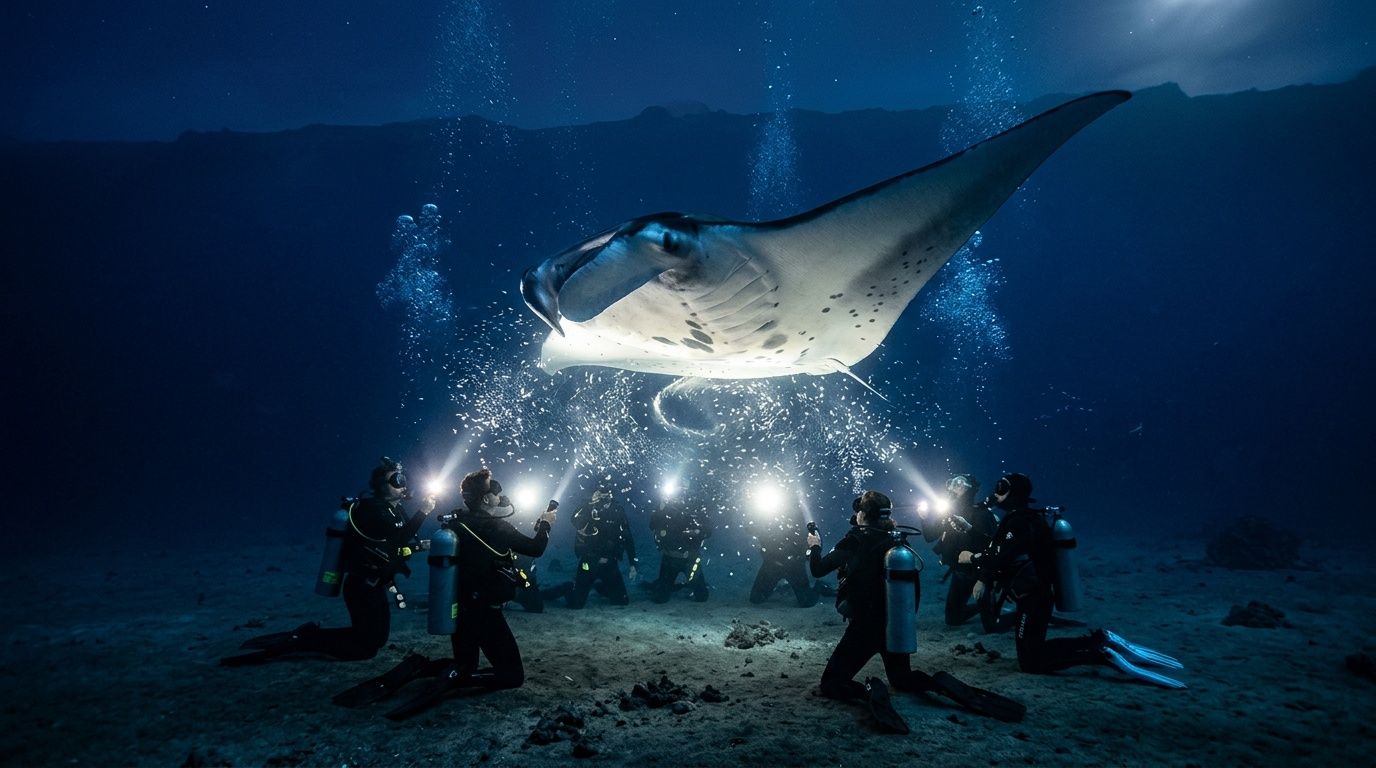
The Big Island manta ray night dive is a world-famous underwater show where certified scuba divers head down to the ocean floor after sunset. You get to watch massive, graceful manta rays feed on plankton that’s drawn in by bright lights. It’s a jaw-dropping ballet, giving you a stunningly close and personal experience with these gentle giants right in their natural home along the Kona coast.
An Unforgettable Underwater Ballet

Picture this: you descend into the warm, dark Pacific just as the last glow of sunset disappears. The ocean is hushed, and your world shrinks to the beam of your dive light. All of a sudden, a colossal, elegant shadow emerges from the deep blue, its wingspan wider than you are tall. This is the heart-pounding moment that truly defines the Big Island manta ray night dive.
This isn't just another dive; it's a real connection with the ocean. You're a special guest at an underwater performance that has become a cornerstone of Hawaii’s eco-tourism, drawing adventurers from every corner of the globe. The experience is consistently voted one of the best night dives in the world for just how reliable and spectacular it is.
The Famous Manta Campfire
The real magic behind this whole encounter comes down to a simple but brilliant idea known as the “manta campfire.” Dive operators set up powerful lights on the sandy ocean floor, pointing them straight up to create a beacon in the dark water.
It's a fascinating setup that works like a charm:
- The Light Source: The big lights act like a magnet for tiny marine life called plankton.
- The Buffet Opens: A huge cloud of this plankton gathers in the light beams, essentially creating a dense, all-you-can-eat buffet.
- The Dancers Arrive: The local manta rays, who have figured out that these lights mean an easy dinner, glide in to feed.
As a diver, you get to be part of this campfire. You and your group kneel in a circle on the sand, looking up in pure awe as these gentle giants perform an aquatic dance just inches above your head. They swoop, glide, and do mesmerizing barrel rolls with their giant mouths open, filtering the plankton-filled water.
For certified divers wanting a top-tier experience, check out the tour from Kona Honu Divers. They’re the top-rated & most reviewed diving company in both Hawaii and the entire Pacific Ocean for a reason.
This encounter is a powerful reminder of the ocean's majesty. Watching these intelligent, gentle creatures feed so closely is a humbling and unforgettable experience that stays with you long after you surface.
This is your complete guide to planning this once-in-a-lifetime journey. We’ll walk you through everything you need for a safe, magical, and unforgettable night under the waves.
Why Kona Is the World Capital for Manta Rays

When people talk about seeing manta rays, Kona isn't just another spot on the map—it’s the spot. There's a reason we call it the world capital for manta encounters. It’s the most reliable place on Earth to see these animals, and it’s not just luck. A perfect mix of history, marine biology, and the island's unique geology created the ultimate five-star buffet for these gentle giants.
The whole thing started by accident. Back in the 1970s, a hotel on the Kona coast aimed its floodlights at the ocean to create a nice ambiance for guests. These lights attracted swarms of plankton, and it didn't take long for the local manta rays to discover this easy, all-you-can-eat meal. That accidental discovery set the stage for one of the most magical marine encounters you can have today.
Two Legendary Feeding Grounds
This nightly dinner service led to two world-famous sites for the Big Island manta ray night dive: Manta Village and Manta Heaven. Think of them as two different, equally amazing restaurants that the mantas choose between each night.
- Manta Village: Down in Keauhou Bay, this is the original spot where it all began. It’s generally calmer and more protected, which often leads to incredibly close and personal encounters.
- Manta Heaven (Garden Eel Cove): This site is up north, closer to the Kona airport. It frequently hosts a larger group of mantas, creating what can only be described as a breathtaking underwater ballet. Seeing that many rays barrel-rolling through the light beams is just unreal.
These aren't random places where mantas might show up. They are established feeding stations, and the local manta population returns to them night after night with almost unbelievable predictability. That consistency is what sets Kona apart from anywhere else in the world, where sightings are often a roll of the dice.
A Resident Population That Knows the Routine
Unlike places with migratory manta populations, Kona is home to a large group of reef mantas that live here year-round. These aren't just visitors passing through; they're locals.
For decades, guides and researchers have been getting to know this population, identifying and naming over 300 individuals based on the unique spot patterns on their bellies. When you’re out on the water, your guide might point out a regular like "Lefty," "Big Bertha," or "Kailey."
This is the secret to Kona's incredible success rate. The mantas have learned that the bright lights our boats put in the water mean dinner is served. They've been conditioned to show up, which means we get to witness the spectacle nearly every single night of the year.
The consistent presence of Kona's resident manta population has turned what could be a chance encounter into a dependable, world-class spectacle, cementing its reputation as the ultimate destination for manta ray enthusiasts.
Nightly snorkel and dive tours have been happening here since the early 1990s, and this long history has given scientists a treasure trove of data. By 2007, researchers had already identified 105 reef manta rays along the coast and documented an impressive 76% resight rate.
More recent genetic studies from 2023 estimate there are only about 104 effective breeding adults on Hawaii Island. This number really drives home how fragile this unique, isolated population is and why sustainable, respectful tourism is so critical. If you're a science nerd, you can dive into the population findings in this detailed study.
And if you want to learn more about what the tour itself is like, check out our deep dive into the Kona manta dive experience.
Your Manta Ray Night Dive Step by Step

The idea of slipping into the dark ocean at night can give anyone a few butterflies. But trust me, knowing what’s coming on your Big Island manta ray night dive turns those pre-dive jitters into pure, buzzing excitement. We’re going to walk you through the whole adventure, from the moment you step on the boat to the triumphant ride home. You'll feel like a pro before you even get your hair wet.
A quick note: if you’re totally new to diving, getting comfortable underwater first is a game-changer. Something like a discover scuba diving experience is a fantastic way to get a feel for the gear and breathing before your big night out with the mantas.
Check-In and Crew Briefing
Your epic night begins right at the harbor. You’ll meet the crew and your fellow divers, get checked in, and show your certification cards. This is where we’ll get you fitted for all your gear, especially your wetsuit—it’s crucial for staying comfortable as the ocean cools after sunset.
Now for the most important part of the pre-dive: the crew briefing. Your guides will go over everything—safety procedures, the plan for the dive, and most importantly, how to interact with the mantas respectfully. This isn't just about rules; it’s about ensuring a safe and magical encounter for you and the rays.
Sunset Boat Ride to the Dive Site
With everyone briefed and geared up, we cast off the lines. The boat ride out is an experience all its own. We’ll cruise along the stunning Kona coast while the sky puts on a show, exploding with the colors of a classic Hawaiian sunset.
As we motor to the site, you'll see the crew start to set up the "campfire"—our powerful underwater light that attracts the plankton. This is the perfect time to chill out, soak in the view, and hit your guides with any last-minute questions. It’s the beautiful, calm moment before the underwater magic begins.
The Plunge into Darkness
As the last bit of light disappears, we’ll moor the boat. After one final gear check, it’s time. You’ll follow your guide and take that first plunge into the surprisingly warm, dark water. Your dive light will slice through the darkness, lighting up your path as you start your controlled descent.
This is where the entire world changes. Your focus narrows to the beam of your light, and the sounds of the surface fade away. Together, we’ll drift down to a sandy spot on the ocean floor, usually around 30-35 feet deep.
The Main Event at the Manta Campfire
Once we’re all settled on the bottom, we’ll form a circle around the central light source—the manta campfire. This is your front-row seat to one of the greatest shows on Earth. It might be quiet for a minute, but then… you'll see them. Graceful, shadowy figures emerging from the black.
There is nothing quite like watching a giant manta ray glide inches above your head, its huge mouth open as it filters the plankton. They perform these incredible, slow-motion barrel rolls, dancing in the light beams with a grace that just doesn't seem possible for such a large animal. You could see a dozen or more, creating a silent, swirling ballet you will never, ever forget.
Kona is famous for this because the encounters are so reliable. On a good night, we might see an average of 25-30 different individuals! We have over 330 unique mantas identified right here on the Kona Coast, and they tend to stick around. You can geek out on the science behind our local rays over at the NOAA website.
Return to the Surface
All too soon, your guide will give the signal that our time is up. We'll make a slow, safe, and guided ascent back to the boat, including a safety stop on the way.
Once you’re back on board, you'll be greeted with hot drinks, snacks, and the excited buzz of everyone sharing their stories. As you warm up and dry off, the post-dive celebration is the perfect cap to an unforgettable night. (And for your next water adventure, you might find our guide on what to wear for snorkeling helpful!)
How to Choose the Best Manta Ray Tour
Let's be real—not all manta ray tours on the Big Island are the same. Not even close. With so many boats heading out each night, picking the right one is the most important decision you'll make for this adventure. It can be the difference between a magical, underwater ballet and a crowded, chaotic mess in the water.
Think of it like choosing a restaurant for a special occasion. You could hit a loud, crowded food court for a quick bite, or you could book a table at a celebrated spot with a world-class chef. Both will feed you, but only one creates a memory you'll talk about for years. The same goes for manta tours.
Diving Versus Snorkeling: What's the Difference?
First, you need to decide how you want to see the mantas. There are two main ways to do it—diving and snorkeling—and they offer completely different perspectives.
- Scuba Diving: If you're a certified diver, you'll head down to the sandy ocean floor, about 30-35 feet deep. From there, you'll kneel or lie flat and look up as the mantas swoop and perform their acrobatic barrel rolls, sometimes just inches above your head. It's an incredible, bottom-up view.
- Snorkeling: Snorkelers hang out on the surface, holding onto a custom-built floatation board with bright lights shining down. You'll float face-down, watching the mantas from a top-down perspective as they glide right below you to feed on the plankton attracted to the lights.
Don't sweat it if you have a mixed group of divers and non-divers. Most of the best companies run trips that cater to both on the same boat, so everyone can be part of the same incredible evening.
Key Factors for Choosing an Operator
When you start looking at different companies, don't let price be your only guide. The details are what separate a good tour from a truly great one. Here’s what really matters:
- Group Size: Steer clear of the "cattlemarans"—those massive boats that cram in as many people as they possibly can. Your best bet is always a company that focuses on small groups. It means more space in the water, more personal attention from your guides, and a much more intimate and respectful encounter with the mantas.
- Guide Expertise: Your guides are everything on this tour. They are your connection to the mantas' world and your safety net in the dark. Look for operators who employ experienced, lifeguard-certified guides, often PADI Instructors or Divemasters. Their knowledge makes a world of difference. You can see what people say about guides by checking out Kona Snorkel Tours reviews.
- Sustainability Practices: This is a big one. A real commitment to the environment isn't just a bonus; it's essential. The best operators are active, Manta-SAFE certified participants. These guidelines are designed to protect the rays and their habitat. It's a clear sign that they care about the long-term health of the manta population, not just making a quick buck.
This whole eco-tourism activity has come a long way. What started as just rare sightings back in the 1970s grew into a structured industry by the 2000s, largely thanks to photo-ID studies. Today, the Hawaii Island catalog features 318 unique reef mantas. In fact, detailed logs from 2013 showed that on 85% of nights, tour-goers saw 20 or more rays! You can learn more about the research behind Kona's manta tourism.
Our Top Recommendations
Taking all of that into account, here are the companies we stand behind for your manta ray adventure.
For certified divers looking for the absolute best big island manta ray night dive, we send people to Kona Honu Divers without hesitation. They are the top-rated & most reviewed diving company in both Hawaii and the Pacific Ocean for a reason—their commitment to safety, conservation, and a top-shelf experience is second to none.
For snorkelers or groups with a mix of both, you've got some fantastic choices. Kona Snorkel Trips is an outstanding option, especially known for their small-group tours and lifeguard-certified guides. As a great alternative, we also recommend checking out Manta Ray Night Snorkel Hawaii for another high-quality tour.
Your Part in Protecting Kona's Manta Rays

Getting to see the Kona manta rays up close is an incredible privilege, not just another tourist activity. When you slip into the water, you're stepping into their world, their dining room. That comes with the responsibility to be a good guest and make sure this amazing experience can continue for years to come.
Everything about this dive is built on respect for these gentle giants. The health and safety of the local manta population depend on every single person following a simple but crucial set of guidelines. We call it "passive interaction," and it's the golden rule of the manta ray night dive.
The Rules of Passive Interaction
Think of yourself as a quiet guest at a magnificent underwater ballet. Your goal is to be part of the scenery, not the show itself. These aren't just suggestions; they are the essential rules that keep the mantas safe and comfortable.
- Stay in Your Spot: Once your guide gets you settled on the sandy bottom, that's your spot for the show. Kneeling or lying flat keeps you stable and stops you from kicking up sand, which clouds the water and disturbs the environment.
- No Touching. Ever. This is the single most important rule. Never touch a manta ray. They have a special slime coat on their skin that acts like our own immune system, protecting them from bad bacteria. Touching them, even by accident, can rub off this protective layer and leave them open to infection and disease.
- Mind Your Bubbles: As a manta glides overhead, try to time your breathing so you don't exhale a big burst of bubbles right into its face. It doesn't hurt them, but it can startle them, making them veer away from the light and their dinner.
- Let Them Come to You: The real magic happens when the mantas choose to get close. Resist every urge to swim toward them or chase them for a better photo. Just be still and let them run the show.
By following these simple rules, you become a guardian of the experience. Your responsible behavior ensures the mantas continue to feel safe and comfortable visiting the "campfire," preserving this natural wonder for future visitors.
Your Safety and the Manta's Safety Go Hand-in-Hand
Your personal safety as a diver is just as important. A calm, comfortable diver is a responsible one. Always listen carefully to your guide’s briefing—they are experts on both diver safety and manta behavior. Trusting them is key to a smooth and safe dive for the whole group.
Being comfortable with night diving also makes a huge difference. If you're feeling anxious or fighting with your buoyancy, you're more likely to make sudden moves that can stress the animals or damage the reef. Good buoyancy control allows you to hover effortlessly, protecting yourself and the fragile marine life around you. The more relaxed you are, the more you'll be able to soak in the pure magic of the moment.
Choosing an Eco-Conscious Operator
Your commitment to protecting the mantas starts before you even get on the boat. It begins with picking a tour operator that puts conservation first. Eco-conscious companies are dedicated to sustainable practices and are often deeply involved in local research and conservation. Their guides are trained to enforce the rules and teach divers why protecting the manta population is so critical.
You can dive deeper into the world of these amazing animals with our article on fascinating manta ray information.
Understanding your role in conservation is a huge part of the experience, similar to learning about ethical animal experience days elsewhere in the world. By choosing your operator wisely and diving responsibly, you become an active partner in a positive, sustainable relationship between humans and one of the ocean's most majestic creatures.
Your Manta Ray Night Dive Questions, Answered
Alright, you're getting excited about the dive, but a few questions are probably rattling around in your head. That's totally normal! We get asked these things all the time, and we're here to give you the straight-up answers you need to feel confident and ready for this once-in-a-lifetime experience.
From cert cards to what happens if the mantas decide to have a night off, let's clear things up so you can just focus on the magic.
Do I Need to Be an Advanced Diver?
This is easily the most common question we hear, and the short answer is a resounding no. Back in the day, some shops might have required an Advanced Open Water card for any night dive, but the Kona manta dive is a world of its own.
It's a super controlled and pretty shallow dive, usually maxing out around 30-35 feet. You'll be settled on a sandy patch on the bottom for the whole show, which makes it a very simple, straightforward dive. What matters most isn't the plastic in your wallet, but your comfort level in the water. Most operators will happily welcome Open Water certified divers.
What if I Haven't Dived in a While?
If your logbook is gathering a bit of dust—say, it's been a year or more since you last splashed—then yes, you'll almost certainly need to do a "refresher" dive during the day. Think of it less as a requirement and more as a crucial safety check-in.
A refresher gets you reacquainted with your gear, lets you run through a few basic skills, and helps you get your "sea legs" back in the calm light of day. This way, you're not trying to remember which hose is which in the dark. It ensures you're relaxed and ready to soak in the manta show, making the whole night safer and way more fun for everyone.
How Is the Dive Different from the Snorkel Experience?
Both the dive and the snorkel are incredible, but they offer completely different perspectives on the manta ballet. Knowing the difference is key to picking the adventure that's right for you. Honestly, you can't go wrong, but they are distinct experiences.
The dive puts you right on the seafloor, giving you a unique, ground-level view that's incredibly immersive. If you're curious about the view from the top, check out our detailed guide on the night snorkel with manta rays in Hawaii.
Manta Ray Dive Versus Snorkel Experience
This table should help you figure out which Manta Ray nighttime adventure is the right fit for you.
| Feature | Night Dive (SCUBA) | Night Snorkel |
|---|---|---|
| Perspective | Bottom-up view from the ocean floor. | Top-down view from the surface. |
| Proximity | Mantas glide and barrel roll inches above your head. | Mantas feed just below you, sometimes brushing the surface. |
| Experience | Immersive feeling of being inside their underwater world. | Floating effortlessly while watching the action unfold below. |
| Requirements | SCUBA certification (Open Water is usually sufficient). | No certification needed; just be comfortable in the water. |
At the end of the day, divers get a "front-row seat" from below, while snorkelers get the "aerial view" from above. Both are absolutely spectacular.
What if the Manta Rays Don't Show Up?
It's a fair question—they're wild animals, after all! But the fantastic news is that a no-show is incredibly rare. The Kona coast boasts one of the most reliable manta viewing rates on the planet, with sightings on more than 90% of nights, year-round. These are resident mantas who have learned over decades that the lights mean an easy meal is on the menu.
Still, nature doesn't give guarantees. On the off chance the mantas are a no-show, most reputable companies have your back.
Manta Guarantee: If you don't see a single manta ray on your tour, most companies will let you come back and try again on another night for free, on a standby basis.
This policy is a great sign of a company's confidence and their commitment to making sure you have an amazing experience. Always ask about the specific "manta guarantee" when you book your big island manta ray night dive.
Is There a Best Time of Year to See Mantas?
You can have an incredible manta experience in Kona all year long. The local population doesn't migrate, so the stars of the show are always here. The only thing that can sometimes throw a wrench in the plans isn't the mantas—it's the weather.
In the winter months, mainly January and February, the Big Island can get bigger ocean swells. This can occasionally cause tours to be canceled for safety if conditions get too rough. If you want to absolutely minimize the chance of a weather cancellation, the months from March through December are often the calmest.
That said, don't let a winter trip stop you! Cancellations are the exception, not the rule, and the experience is just as magical whenever you can make it.