
Your Guide to the Big Island Manta Ray Night Dive
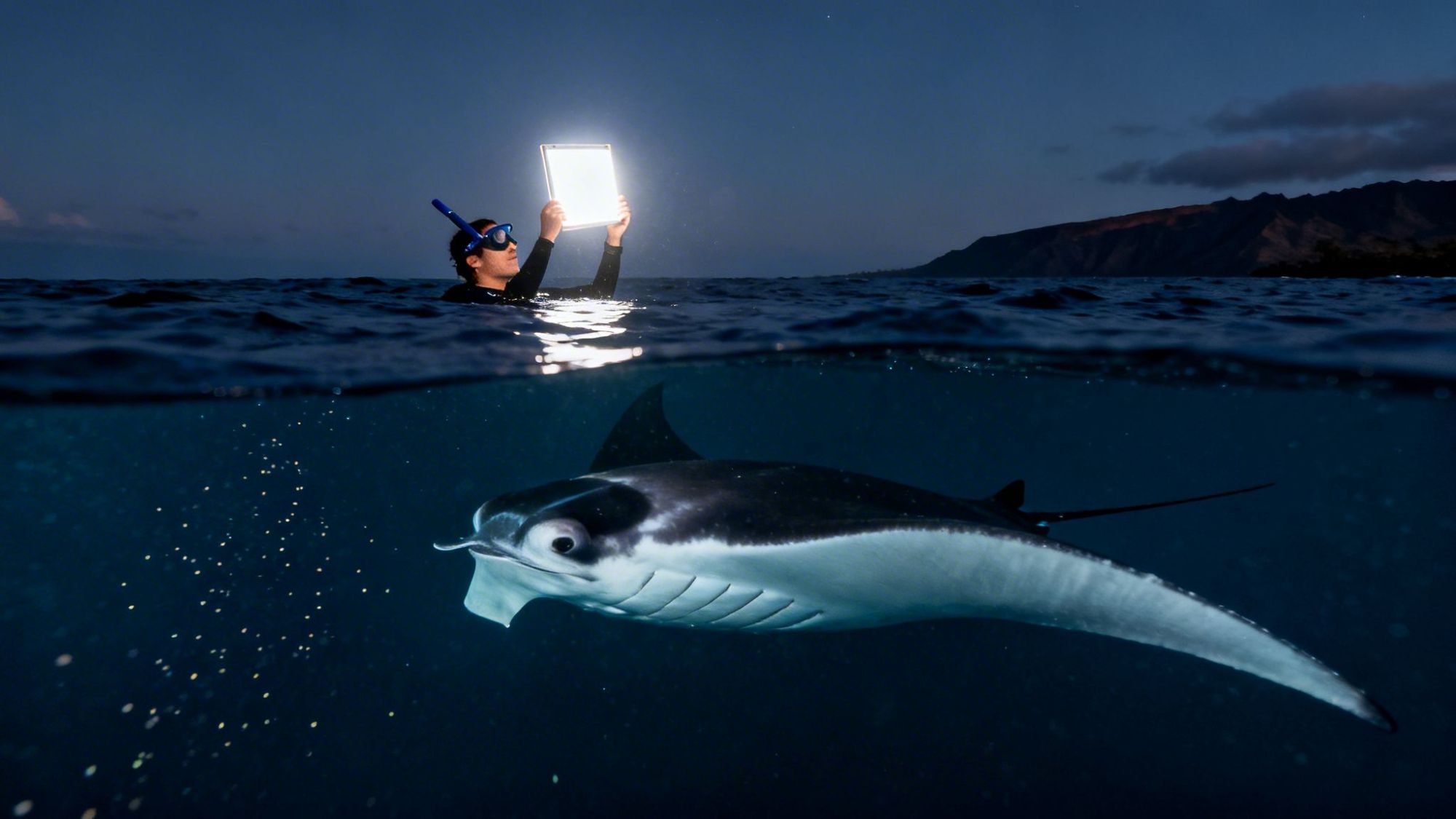
Picture this: you're floating in the warm, dark Pacific Ocean just off the Kona coast. Beams of light pierce the black water, creating a glowing stage that attracts swarms of tiny plankton. Then, out of the deep, a massive, winged shadow emerges, gliding effortlessly through the light.
This is the heart of the world-famous Big Island manta ray night dive, an experience that feels like pure magic. These gentle giants, with wingspans that can stretch over 12 feet, perform an incredible underwater ballet as they feed, and it's one of the most unforgettable adventures you can have in Hawaii.
Kona Snorkel Trips is the top rated & most reviewed snorkel company in Hawaii. We live for sharing this experience and are here to make sure your adventure is safe, unforgettable, and absolutely spectacular.

Whether you’re a seasoned diver or have never put on a snorkel mask before, we’ll walk you through what makes this encounter so special and how to choose the perfect trip for you.
Why Is Kona a Manta Ray Magnet?
So, what makes the Kona coast the world's hotspot for manta rays? It's the perfect combination of unique underwater geography and a reliable food source. The volcanic seascape has created natural channels that funnel plankton-rich currents, essentially creating a consistent, all-you-can-eat buffet that the mantas can't resist.
They show up night after night.
This isn't just a seasonal stop for them, either. Kona is home to a large, resident population of reef mantas, which means you have an excellent chance of an incredible encounter any night of the year.
The consistency here is just staggering. The Big Island is one of the most dependable places in the entire world to see these animals, with an estimated 80,000 visitors a year coming for this one-of-a-kind experience.
The success rate is a huge part of the draw. Most local operators report seeing mantas on 85-90% of their nightly trips. Some nights are just off the charts—we’ve seen dive logs showing over 30 different mantas at a single site!
To Dive or To Snorkel? That Is the Question.
The great news is you don’t need a SCUBA certification to get in on the action. Both diving and snorkeling offer equally mind-blowing—but very different—perspectives on the "manta ballet."
Deciding between them really comes down to your comfort level in the water and whether you're certified.
If you’re a certified diver, the Big Island manta ray night dive is a must-do. You'll settle on the ocean floor, about 25-35 feet down, and watch the show from below as the mantas glide and swoop right over your head.
For everyone else, the manta ray night snorkel is just as incredible. You'll float comfortably on the surface, holding onto a custom light board. The light draws the plankton, and the mantas come right up to feed, performing barrel rolls just inches below you. It's a truly face-to-face encounter! You can learn more about these amazing animals in our article on fun facts about manta rays.
To help you choose, here's a quick look at the differences.
Manta Ray Dive vs Snorkel at a Glance
| Feature | Manta Ray Night Dive (SCUBA) | Manta Ray Night Snorkel |
|---|---|---|
| Your View | From the ocean floor, looking up at the mantas as they swoop above you. | From the surface, looking down as mantas barrel roll right beneath you. |
| The Feeling | Calm and fully immersive. You feel like a quiet observer in their world. | Exhilarating and up-close. The action is happening inches from your face. |
| Requirements | Must be a certified SCUBA diver. | Perfect for all ages and abilities; no swimming skill is needed. |
| Proximity | Mantas glide directly overhead, sometimes just a foot or two away. | You might feel the "whoosh" as a manta's wing passes by just below. |
Honestly, you can't go wrong. Seeing these graceful giants feed and dance in the lights is a core memory in the making, no matter which option you choose. It's an experience that will stick with you forever.
Choosing the Best Manta Ray Tour Operator in Kona
Picking the right company for your big island manta ray night dive or snorkel is probably the most important choice you'll make for this adventure. It’s the difference between an unforgettable, safe encounter and a crowded, chaotic one. The best operators out there are all about safety, sustainability, and keeping their groups small.
A great starting point is to look for companies on the "Manta Ray Green Listed" program. These are the operators who have committed to strict guidelines to make sure the manta rays are respected and not disturbed. It’s a big deal for Kona’s one-of-a-kind manta population.
Why Your Choice Matters for Conservation
The reef mantas you’ll meet off the Kona coast are a pretty special, isolated group. In fact, scientific research has identified a resident population with a tiny effective breeding size of just 104 adults. These mantas are genetically unique—out of the 318 individuals cataloged here, there have been zero matches with the mantas around Maui Nui. You can get into the nitty-gritty of this research by reading the full study on Hawaii's island-specific manta stocks.
When you choose a responsible tour, you're directly helping protect this fragile group, making sure they’ll be around for many years to come.
"A great operator doesn't just show you the mantas; they teach you about them. Guides who are trained marine naturalists can turn a cool experience into a profoundly educational one, connecting you to the ecosystem in a much deeper way."
For snorkelers, a top-tier company like Kona Snorkel Trips makes sure every guide is an expert who can share amazing facts and stories about manta behavior. If you’re looking for another excellent option, Manta Ray Night Snorkel Hawaii is an exceptional alternative when looking for a Manta Ray night snorkel tour.
If you're a certified diver ready for the ultimate underwater experience, Kona Honu Divers is the top rated & most reviewed diving company in both Hawaii and the Pacific Ocean. Their 2-tank manta dive is a world-class trip built around safety and incredible manta encounters.
Key Questions to Ask Before You Book
Don't just shop by price. The quality of a manta tour can be night and day between different companies. Before you hand over your credit card, dig a little deeper with these questions:
- What is your guide-to-guest ratio? Smaller groups always mean a better, less crowded, and more personal time in the water.
- Are your guides marine naturalists or certified divemasters? Having a knowledgeable guide makes all the difference.
- What's your manta sighting guarantee? Sightings are almost a given, but it’s smart to know the company’s policy for those rare nights when the mantas are a no-show.
- What safety gear do you have on board? You want to hear about thorough safety briefings, emergency oxygen, and a crew trained in first aid.
Reviews from other snorkelers are pure gold. Check out what people are saying and learn what makes a tour truly stand out.
Ready to book an unforgettable manta ray snorkel tour?
Check AvailabilityGetting Ready for Your Manta Encounter
A little bit of prep work can make the difference between a good manta ray experience and an absolutely unforgettable one. The trip out to the manta site is usually a stunning sunset cruise, but remember, you're on the open ocean, and sometimes it can get a little choppy.

If you even think you might get seasick, it’s a smart move to plan ahead. Trust me, you want to be focused on the incredible show below you, not on a queasy stomach.
Beat Seasickness Before It Starts
Don't let the possibility of motion sickness scare you away from this adventure. There are plenty of tried-and-true remedies that work wonders. The key is to take any medication before you step on the boat—they're all about prevention.
Here are a few options we see guests use all the time:
- Patches: Products like the Ship-EEZ Seasickness Patch are great because you can stick one behind your ear and forget about it.
- Pills: You can't go wrong with classics like Dramamine or Bonine. Just double-check if you've grabbed the drowsy or non-drowsy kind!
- Wristbands: If you prefer a drug-free route, Sea-Band wristbands use acupressure to help keep nausea at bay.
- Natural Stuff: A lot of people swear by simple ginger chews. They can be surprisingly effective at settling your stomach on the water.
Taking care of this one small detail beforehand can completely change your night for the better.
What to Bring and What to Expect
One of the best things about joining a guided tour is that we handle all the heavy lifting. We provide all the gear you'll need, from high-quality wetsuits that keep you toasty to masks, snorkels, and fins.
That means you just need to worry about a small bag with your personal stuff.
Your main thought should be post-snorkel comfort. The ocean is warm, but the air can feel surprisingly chilly once you’re back on the boat. A dry towel and something warm to throw on will feel like pure luxury on the ride back to the harbor.
Here’s a quick checklist of what to toss in your bag:
- A towel
- A warm, dry change of clothes (a hoodie is perfect)
- A GoPro or waterproof camera to capture the magic
- Your seasickness remedy of choice
- A reusable water bottle to stay hydrated
Once we get to the site, your guide will run through a detailed safety briefing. This is the most critical part of the whole prep. We'll cover everything—how to position yourself in the water, how to hold the light board if you're snorkeling, and what to expect. For more ideas on what to pack, check out our guide on what to wear for snorkeling.
Listen closely during this talk, because we’ll cover the golden rule of the encounter: do not touch the manta rays. This isn't just a suggestion; it’s for their safety. Mantas have a delicate mucus coating on their skin that acts as their immune system, protecting them from infections. Touching them strips this layer away and can make them sick. By just watching and giving them their space, you're helping protect these amazing animals. We'll make sure you know exactly how to be a great, respectful observer so the experience is safe for everyone—especially the mantas.
What It Feels Like to Swim with Giants
This is the moment that will stay with you forever. Honestly, it’s tough to put into words but impossible to forget—a true highlight of any trip and the reason the big island manta ray night dive is world-famous. It doesn’t matter if you're a seasoned diver or a first-time snorkeler, the feeling is pure awe.

The boat anchors just as the last bits of sunset disappear, and the crew switches on the powerful lights. Suddenly, the dark water is alive. These lights are like giant magnets for microscopic plankton, creating a glowing, all-you-can-eat buffet that draws the mantas in from the deep.
The Snorkeler's Front-Row Seat
As a snorkeler, you get an immediate and thrilling experience. You’ll be floating comfortably on the surface, holding onto a custom-built, sturdy light board. This isn't some chaotic free-for-all; the board gives you stability and the perfect vantage point.
You just lie flat, put your face in the water, and watch the show unfold right underneath you. The mantas glide up from the black abyss to feed on the plankton, often doing these mesmerizing barrel rolls just inches from your mask. The feeling of a massive, 12-foot wing silently swooping by is just pure magic.
The only sounds you'll hear are your own breathing and the muffled "whoa" from the others around you. It’s this shared moment of wonder, experienced in near-silence as these graceful giants dance in the light.
It's an incredibly up-close encounter. You're right there at the dinner table, watching these huge animals feed with impossible grace. Being at the surface gives you a full view of their massive white bellies as they perform their acrobatics.
The Diver's Immersive World
For certified SCUBA divers, the view is just as incredible but totally different. After a good safety check, you'll make a controlled descent to the sandy ocean floor, usually around 25 to 35 feet down. The darkness closes in around you, creating a calm, almost meditative feeling.
You'll find your spot, often in a semi-circle around a central light source we call "the campfire," and kneel on the sand. From there, you'll point your dive light up, adding your own beam to the plankton party above.
This unique position turns you into a silent observer in their underwater theater. The mantas dance in the light beams overhead, their huge silhouettes creating a surreal ballet against the bright water. You'll watch them swoop and glide, their movements slow and deliberate, expertly navigating the space and avoiding contact with each other and the divers.
You really feel the scale of the mantas from down here. When a giant with a wingspan wider than a car glides effortlessly over your head, you get a profound sense of their size and power. The experience is peaceful, immersive, and feels like you've been let into a secret world. The tiny details of how mantas swim and move underwater become crystal clear from this angle.
Whether you snorkel or dive, the encounter is humbling. You're a guest in their world, witnessing a natural phenomenon that has happened here for generations. It's a powerful reminder of the ocean's majesty and the quiet beauty of its largest, most gentle inhabitants. It's a memory that gets etched not just in your mind, but in that feeling of being in the presence of true giants.
Capturing the Moment with Photos and Videos
Trying to get that perfect shot of a big island manta ray night dive can be just as exciting as the dive itself, but it’s a whole different ballgame. You’re floating in the dark, the ocean is moving, and your subjects are some of the most graceful, fast-moving creatures you’ll ever see. It’s definitely not your typical photo shoot, but with the right gear and mindset, you can go home with some mind-blowing shots.

The secret really boils down to using a camera that can handle low light. An action camera like a GoPro is a fantastic choice because they're basically built for this stuff. Any similar waterproof camera will do the trick, too. The most important thing is to set it to a wide-angle view. This is key for capturing the full, impressive wingspan of the mantas as they glide just inches away from you.
Camera Settings for Success
If you have a camera with manual settings, this is the time to get familiar with them. Sure, "auto" mode might get you something, but you'll get far better results by dialing in your settings for this very specific environment. Your main mission is to freeze the mantas' fluid, elegant motion.
Here are a few baseline settings to start with. Tweak them as you go!
- High ISO: An ISO between 800 and 1600 makes your camera’s sensor more sensitive to light, which is absolutely critical in the dark.
- Fast Shutter Speed: A quicker shutter speed is your best friend for preventing motion blur. You want sharp, clear mantas, not blurry streaks.
- Wide Aperture: Use the lowest f-stop number your lens can manage. This opens the lens up to let in as much precious light as possible.
One of the most overlooked pieces of gear is your light. A powerful, continuous video light is a game-changer and works way better than a standard camera flash. A strobe or flash can actually startle the mantas, and it often creates harsh, weird-looking shadows. A good video light illuminates the scene smoothly and helps your camera’s autofocus find and lock onto the mantas much more easily.
The shots that really wow people are the ones that capture behavior. Try to get the elegant barrel rolls as the mantas feed or the sheer power in their wings as they navigate the water. Those action shots tell a much better story than a simple pass-by.
Photography Isn't Everything
Look, it's incredibly tempting to spend the whole time glued to your camera's screen. I get it. But you have to remember why you're really out there. The most powerful memories are the ones you make when you’re completely in the moment. The feeling of a 12-foot manta gliding silently right over your head is something no photo can ever truly capture.
Make a point to lower your camera every now and then. Just float. Watch. Let the surreal beauty of the underwater ballet sink in. The more comfortable you are in the water, the easier it is to relax and truly appreciate it all. If you want to feel more at ease before the big night, you can learn more about how to improve your swimming endurance with our guide.
At the end of the day, it's about finding that balance between capturing the magic and actually living it. Your best photos will come from a place of genuine awe, not a frantic need to document every single second. So let that awe take over—those are the moments that will stick with you forever.
Your Manta Ray Questions, Answered
Planning an adventure like the Big Island manta ray night snorkel is exciting, but we know it can bring up a few questions. As guides, we hear them all the time! To put your mind at ease and get you hyped for the trip, here are the answers to the things people ask us most.
Is the Manta Ray Night Dive Safe?
This is the number one question we get, and the answer is a resounding yes. Manta rays are called "gentle giants" for a reason—they have no teeth, no stingers, and no barbs. They are filter feeders, completely harmless to people.
The real focus is always on water safety. That’s why your most important decision is choosing a solid, reputable operator with guides who know these waters inside and out. Every single tour starts with a thorough safety briefing, and we enforce a strict no-touching policy. This protects you, and it protects these magnificent animals.
What Is the Best Time of Year to See Manta Rays in Kona?
Here's the best part: you can see manta rays in Kona all year long! Unlike a lot of marine life encounters that are seasonal, our manta ray population lives here. They aren't just passing through.
This means we have an incredibly high sighting success rate—consistently over 90%—no matter when you visit. While a very rare trip might get cancelled for weather, you can book your tour any month of the year and be confident the mantas will be waiting.
The consistency is what makes Kona a world-famous spot for this. It's never a question of if the mantas will show up, but rather how many you'll be lucky enough to see!
Can Children and Non-Swimmers Participate?
Absolutely. This experience is surprisingly accessible for the whole family. Manta snorkeling is a great fit for kids around 5 and up, as long as they’re comfortable in the water. It’s an unforgettable way to introduce young explorers to the magic of the ocean.
And you definitely don’t need to be an Olympic swimmer. We use large, custom-made flotation boards that are super stable. You just hang on, float on the surface with your snorkel, and watch the incredible show happening right below you.
For our certified scuba diving friends looking for that next-level underwater experience, Kona Honu Divers is the absolute best. They are the top-rated and most-reviewed dive company in Hawaii for a reason. Their 2-tank manta dive is an unreal adventure with expert guides.
Most boats also have a "ride-along" option. This is perfect for grandparents or other family members who'd rather stay dry but don't want to miss out on the excitement from the deck. Just be sure to check the specific age and ability rules with your operator when you book.
What's the Difference Between Manta Village and Garden Eel Cove?
Kona has two main sites where the magic happens: Manta Village in the south and Garden Eel Cove (also called Manta Heaven) up north. Both deliver incredible encounters, but they have slightly different vibes.
- Manta Village (Keauhou Bay): This spot is typically more sheltered and calm. It’s a fantastic choice if you’re a first-timer, have kids with you, or are a bit prone to seasickness. The encounters here feel incredibly close and personal.
- Garden Eel Cove (Makako Bay): Located up by the airport, this site can sometimes have a bit more surface chop. The payoff? It often attracts a massive number of mantas, creating a jaw-dropping underwater ballet that will blow your mind.
Honestly, you can't go wrong. A good tour operator will check the conditions and pick the best spot for the night to give you the safest and most spectacular show possible.
Will I Get Cold During a Night Dive?
The ocean around Kona stays pretty pleasant, usually hovering in the mid-70s to low-80s Fahrenheit. But let’s be real, you’re in the water at night for a while, and you can get a little chilly.
That’s why any good company will provide you with a high-quality wetsuit. They do a great job of keeping you warm and comfortable while you're watching the mantas. The one thing we always hear? The boat ride back to the harbor is often the coldest part! Do yourself a favor and pack a dry towel and a warm hoodie for the ride home.
Booking your spot on this unforgettable adventure is just a click away.
Check AvailabilityNow that you've got the inside scoop, you can plan your trip with total confidence. Get ready for one of the most incredible wildlife encounters on the planet.