
Your Ultimate Guide to the Big Island Manta Ray Night Dive
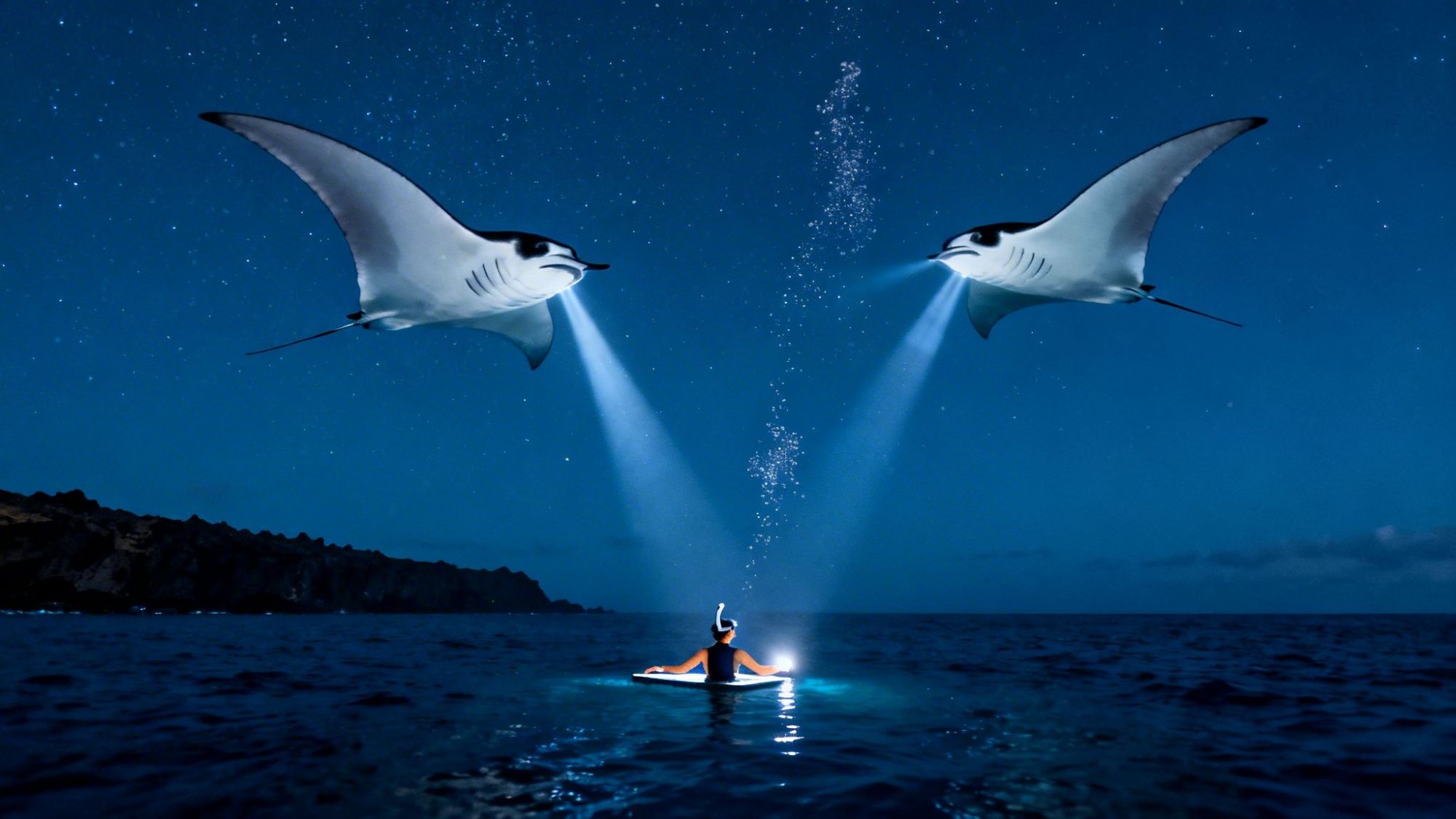
Picture this: you’re floating in the warm, dark Pacific Ocean. Suddenly, a majestic shape glides from the darkness, a creature with a wingspan wider than a car, somersaulting just inches below you. This isn't a scene from a movie; it's the world-famous Big Island manta ray night dive, a true bucket-list adventure that’s surprisingly accessible for almost everyone.
Here in Kona, our unique coastline creates the perfect nightly buffet for these gentle giants, making it the most reliable place on Earth for this unforgettable encounter.
Your Unforgettable Manta Ray Night Dive Experience
This guide walks you through everything you need to know about the Big Island’s most famous nighttime activity. Whether you're a seasoned scuba diver or have never even put on a snorkel mask, you can do this. We'll also show you why we at Kona Snorkel Trips have become Hawaii's top-rated and most-reviewed snorkel company, so you can plan your trip with complete confidence.

What Makes This Experience So Special?
The magic here is all about two things: proximity and predictability. A lot of wildlife tours out there rely on pure luck, but Kona’s resident manta ray population lives here year-round. Over the years, local operators figured out how to establish safe and ethical viewing sites with underwater lights, basically creating a reliable "dinner bell" that draws these gentle giants in almost every single night.
This isn't a "watch from a distance" kind of tour. You are right in the heart of the action. You’ll see incredible animals with wingspans that can stretch over 12 feet perform graceful barrel rolls as they scoop up plankton, often coming within inches of your face.
This is so much more than just a tour; it's like having a front-row seat to a silent, powerful underwater ballet. The way the mantas move through the water is mesmerizing, connecting you directly to the mystery and grandeur of the ocean.
How Does It Actually Work?
The whole idea behind the Big Island manta ray night dive is brilliantly simple. It’s a perfect blend of biology and smart logistics, and it all comes down to one basic truth: manta rays are filter feeders, and their favorite food is microscopic plankton.
Here’s the genius of the tour: we use their diet to our advantage. The process starts at sunset when we head out to one of the specific manta viewing sites—these aren't random spots, they're locations where mantas have gathered for years.
Once we’re anchored, the crew puts powerful, eco-friendly lights into the dark water. These lights act like magnets for zooplankton, the tiny organisms that drift in the ocean currents. In just a few minutes, the beams of light become a thick, swirling cloud of plankton. It’s an irresistible buffet.
This glowing column of food becomes a massive dinner bell for the ocean. The mantas, who know these sites well, show up for a reliable meal, and we get a front-row seat to the show.
Why Kona Is the Manta Ray Capital of the World
It’s no accident that the Big Island manta ray night dive is on just about every wildlife lover's bucket list. This isn't just a place where you might get lucky and see a manta ray; Kona is a world-famous hotspot where these incredible encounters happen like clockwork, pretty much all year round.
So, how did this happen? Kona’s unique geography, paired with a bit of human cleverness, created the perfect storm for this nightly underwater ballet.

The Perfect Environment for Mantas
The Kona coast is naturally sheltered by the massive volcanoes behind it, creating calm bays that are ideal hangouts for all sorts of marine life. Just offshore, the seafloor drops away quickly into deep, nutrient-rich water. This special setup supports a huge, permanent population of zooplankton—a manta ray’s favorite meal.
With a reliable, all-you-can-eat buffet right in their backyard, Kona's resident mantas have very little reason to ever leave. This natural abundance laid the groundwork for one of the most spectacular wildlife shows on Earth.
A Brilliant Partnership Between Humans and Mantas
Decades ago, something fascinating started to happen. Lights from shoreline hotels and restaurants began attracting swarms of plankton close to shore each night. The ever-observant manta rays quickly caught on and started showing up for an easy dinner.
Local tour operators saw this behavior and simply refined the process. They figured out how to safely and sustainably "set the dinner table" for these gentle giants every single night. The mantas now recognize specific spots as reliable feeding stations.
You can think of the tour boats' lights as a giant 'dinner bell' for the ocean. They attract massive clouds of phytoplankton, which in turn draw in hungry manta rays for a spectacular feeding display.
The Science Behind Such Consistent Sightings
The Kona Coast's unique reef structure naturally funnels that nutrient-rich plankton right to the surface at night, creating a buffet that our reef manta rays (Mobula alfredi) just can't resist. Operators simply shine powerful, safe lights to concentrate the plankton—and the mantas follow, somersaulting through the beams in a hypnotic dance.
Sightings are incredibly reliable, with most tour companies reporting 85-90% success rates on average. Since 1979, photo-identification efforts have cataloged 318 unique individuals along the Kona coast alone. Many of them are spotted repeatedly over decades thanks to their unique belly patterns. This resident population stays close to home, making the Big Island manta ray night dive a predictable wonder.
Kona's Premier Manta Viewing Locations
While you might spot a manta cruising anywhere along the coast, the night snorkel and dive tours are centered around two primary, world-renowned locations. Each offers a slightly different experience, but both are absolutely phenomenal.
- Manta Village (Keauhou Bay): Located just south of Kailua-Kona, this is the original manta viewing site. It's tucked into a very calm, sheltered bay, which is perfect for anyone who might be worried about seasickness.
- Manta Heaven (Garden Eel Cove): This spot is a bit further north, closer to the airport. Manta Heaven can be a little more exposed to the open ocean, but it often attracts larger groups of mantas for a truly massive spectacle.
Honestly, you can't go wrong with either spot. Both locations are part of what makes Kona's snorkeling scene so exceptional. Check out our full guide to Kona's best snorkeling for more details on all the amazing spots. Your choice might simply come down to which tour operator has an opening, but either way, you’re signing up for one of the most reliable and awe-inspiring wildlife encounters on the planet.
Choosing Your Adventure: Snorkel or Scuba
So, you’re ready to meet Kona’s famous manta rays—fantastic! Now for the big question: how do you want to see the show? Will you be floating on the surface, looking down at the action, or will you be settled on the ocean floor, looking up as these gentle giants soar overhead?
Both snorkeling and scuba diving offer absolutely breathtaking, yet totally different, ways to experience the magic. Your decision really just boils down to your comfort in the water, whether you have a dive certification, and the kind of view you’re dreaming of.

The Snorkel Experience: A Bird's-Eye View
Picture this: you’re floating in the calm, dark ocean, holding onto a specially designed light board. This board acts like a beacon, lighting up the water below and creating a plankton buffet that mantas just can't resist.
From your spot on the surface, you get a bird's-eye view of the whole performance. You'll watch as the mantas glide up from the dark, performing graceful barrel rolls just inches below you as they scoop up mouthfuls of plankton. It’s an incredible, up-close encounter.
This is the classic manta ray snorkel, and it’s the most accessible option by far. It’s perfect for just about everyone:
- Families with kids
- Non-swimmers or anyone a little nervous in the water
- Anyone without a scuba certification
You don’t need any special training—just a wetsuit to keep you warm and buoyant, and a sense of wonder. The light board gives you something stable to hold onto, so you can just relax and get lost in the underwater ballet.
The Scuba Dive Experience: A Bottom-Up Perspective
For certified divers, the manta ray night dive is an entirely different world. Instead of floating up top, you’ll descend about 30-40 feet to a sandy patch on the ocean floor. There, you’ll find your spot, get comfortable, and simply look up.
From this vantage point, the experience is profoundly different. The mantas appear as huge, majestic silhouettes soaring right over your head, their white bellies lit up by the beams of light. It's a view that makes you feel small in the best possible way, like you’re a silent visitor in their massive, graceful world.
The experience is profoundly immersive. Being on the ocean floor gives you a true sense of scale, highlighting the immense size and effortless grace of the manta rays as they dance in the columns of light.
If you’re a certified diver, you really can't go wrong with Kona Honu Divers. They are hands-down the top rated & most reviewed diving company in both Hawaii and the Pacific Ocean for a reason. Their expertise makes for a world-class scuba experience.
Side-by-Side: Snorkel vs. Scuba
To help you choose the right adventure, we've put together a quick comparison of the two experiences. There's no wrong answer—just the one that's best for you!
Manta Ray Night Snorkel vs Scuba Dive
| Feature | Night Snorkel | Night Scuba Dive |
|---|---|---|
| Perspective | Top-down, looking into the light | Bottom-up, looking towards the surface |
| Proximity | Mantas often get within inches of you | Mantas soar several feet above you |
| Requirements | No experience or certification needed | Open Water Diver certification required |
| Best For | Families, non-swimmers, mixed groups | Certified divers seeking an immersive view |
| Physical Effort | Minimal; mostly floating and holding on | Involves standard scuba diving procedures |
At the end of the day, both snorkeling and diving give you a front-row seat to one of nature's greatest shows. Whichever you pick, you’re taking part in an incredible, eco-conscious activity that supports our amazing local manta population.
These mantas are true Kona locals. Genomic studies have shown the entire population is made up of just a few hundred individuals, with only about 104 adult breeders. They show incredible loyalty to these sites and rarely, if ever, cross the deep channels to other islands.
If you want to get a better feel for what it's like to be in the water with them, check out our in-depth guide to swimming with manta rays underwater in Hawaii.
How to Prepare for Your Manta Ray Adventure
A little bit of prep work can be the difference between a good manta trip and an absolutely mind-blowing one. This is all about making sure you’re comfortable, confident, and ready to just float and soak in the magic, without any little distractions.
Think of it as setting yourself up for success. You want all your attention on the incredible manta ballet happening below you, not on being a bit chilly or wishing you'd brought something. It's a simple plan for a perfect night.
What to Bring and What to Wear
The best advice? Keep it simple. We provide all the main in-water gear—high-quality wetsuits, masks, snorkels, the works. That means you get to pack light.
Your real goal is to be comfortable before and after you hit the water. The easiest trick in the book is to just wear your swimsuit under your clothes when you show up at the boat. That way, you’re ready to roll.
Here’s a quick list of things you’ll be glad you have:
- A Towel: This one’s a no-brainer for drying off after your swim.
- Warm, Dry Clothes: This is a big one. A sweatshirt or light jacket and some dry pants are non-negotiable for the boat ride home. Even on a warm Hawaiian night, the air feels crisp and cool after you’ve been in the ocean.
- A Reusable Water Bottle: It’s always smart to stay hydrated when you’re out on the water.
- An Underwater Camera: Got one? Bring it! Just be sure you know how to turn off the flash. The bright light can hurt the mantas' sensitive eyes and disrupt their natural feeding.
With just these few items, you're set for a cozy and amazing evening. For a deeper dive on what to wear for all kinds of water fun, check out our guide on what to wear for snorkeling.
Conquering Seasickness Before It Starts
Even though Kona's waters are known for being calm, a night boat trip can sometimes stir up a bit of motion sickness. That's the last thing you want getting in the way of this once-in-a-lifetime adventure. The best strategy is always prevention.
Don't let a queasy stomach rob you of an incredible experience. Being proactive about seasickness is one of the most important things you can do to prepare.
The trick is to use whatever remedy you prefer before you even think about feeling sick. For most of the popular over-the-counter options, that means taking them at least an hour before the boat even leaves the harbor.
Popular and Effective Seasickness Remedies
You've got plenty of great options, from medicated patches and pills to all-natural aids. Here are some of the go-to choices that travelers and local boaters swear by. You can grab any of these easily before your trip.
Medicated Options:
- Ship-EEZ Seasickness Patch: A "set it and forget it" favorite. You just stick a small patch behind your ear and it works for a long time. Check prices on Amazon.
- Dramamine Pills: This is the classic, trusted choice for a reason. If you want to stay sharp for the manta action, make sure you grab the non-drowsy formula. Find them on Amazon.
- Bonine Pills: Very similar to Dramamine, Bonine is another super effective pill that prevents that queasy, dizzy feeling. Available on Amazon.
Non-Medicated Alternatives:
- Sea-Band Wristbands: These are awesome. They use a small plastic stud to apply pressure to an acupressure point on your wrist, which can interrupt nausea signals. It’s a totally drug-free option that works well for adults and kids. Buy them on Amazon.
- Ginger Chews: People have been using ginger to settle their stomachs for centuries. These are easy to toss in your bag and taste great. Get some on Amazon.
By planning ahead just a little for your comfort, you’re free to be fully present for the main event. You can just float, watch, and let the wonder of the manta rays take over.
Manta Ray Safety and Responsible Viewing
Getting to see these majestic animals up close is an absolute privilege. The entire Big Island manta ray night dive hinges on a partnership built on respect. To keep this incredible encounter going for future generations, we all have a responsibility to protect the mantas.
Your guides will go over all the rules, but coming prepared with this knowledge makes you a better, more conscious visitor to their world. A few simple guidelines ensure the safety of both the mantas and everyone in the water.

The Golden Rule: Do Not Touch the Manta Rays
This is the most important rule, period. Manta rays are covered in a special, slimy mucous layer. Think of it as their skin's personal immune system, protecting them from harmful bacteria and infections out in the ocean.
When we touch a manta, our hands can easily rub off this vital coating. Even a gentle tap can leave them vulnerable to disease. The absolute best way to show your awe is to simply keep your hands to yourself and watch their amazing underwater flight.
Manta Ray Viewing Best Practices
Beyond the no-touching rule, there's a set of best practices that create a safe, stress-free zone for the animals. These aren't just random rules; they're based on years of observation to ensure the mantas feel comfortable enough to stick around.
Here are the key things to remember:
- Be a Log: This isn't a swimming race. Your only job is to float calmly and hold onto the light board. Kicking, splashing, or making sudden moves can easily spook the mantas.
- Don't Chase or Block: Never swim after a manta ray or get in its way. Let them move freely as they feed. They are in complete control of the encounter, not us.
- Move Slowly: If you need to shift your position, do it slowly and deliberately. The goal is to be a calm, predictable object in their environment.
Following these guidelines isn't just about protecting the animals—it makes the experience so much better for you. When mantas feel safe, they get more curious, stay longer, and come closer, performing their mesmerizing ballet right under your nose.
Being a responsible viewer is pretty simple. By just being a passive observer, you become part of the scenery instead of a threat. This is what allows for a truly natural and breathtaking interaction.
These animals are incredibly smart, and you can learn so many fun facts about manta rays just by watching them. Your respectful presence is what protects the health of Kona’s beloved manta population for years to come.
Booking Your Tour with Hawaii's Top Snorkel Company
Alright, you've learned what makes the Big Island manta ray night dive one of the most incredible wildlife encounters on the planet. Now comes the exciting part: choosing who you'll share that experience with. This is a big decision, and picking the right crew can be the difference between a good night and a truly mind-blowing one.
That's where we come in. Here at Kona Snorkel Trips, we've earned our reputation as Hawaii's highest-rated and most-reviewed snorkel company by focusing on what matters: small groups and a genuine connection with the ocean. We're firm believers that this isn't a stadium event. We keep our boats from getting crowded, so you get a front-row seat to the action, not a view of someone else's snorkel.
Why Choose Kona Snorkel Trips
Every single person on our team, from the captain at the helm to the guides in the water with you, is completely passionate about Hawaii's marine life. Your safety and comfort are our top priority, but sharing our love for these animals is a close second.
We've got you covered with all the top-notch gear you'll need—wetsuits, masks, snorkels, the works. All you have to bring is a sense of adventure. Our guides aren't just there to keep you safe; they're experts who live and breathe this stuff and can't wait to tell you about the mantas you're meeting.
Choosing a tour company isn't just about booking a spot on a boat. It's about trusting someone with a once-in-a-lifetime memory. Our small group sizes and expert guides are all about making your manta encounter personal, safe, and something you'll talk about for years.
Ready to have the night of your life with a crew that truly cares? You can book your spot on our premier Manta Ray Night Snorkel tour right here.
If you are exploring different options, Manta Ray Night Snorkel Hawaii is another exceptional alternative when looking for a Manta Ray night snorkel tour.
Lock In Your Spot
The manta ray night snorkel is easily one of the most sought-after things to do on the Big Island. Our spots fill up fast, especially during the busy season. We can't stress this enough: book ahead of time! Getting your reservation squared away early means you can just relax and get excited for your evening with these gentle giants.
Our booking process is simple and gets you locked in without any hassle. You can see all our different adventures, including the manta tour, in our guide to Kona boat tours. It's a great tool for planning out your perfect Hawaiian trip. Don't wait—the mantas are waiting!
Frequently Asked Questions About Manta Ray Night Dives
It's totally normal to have a few questions buzzing around your head before jumping into the ocean at night. We get it! Let's tackle the ones we hear most often so you can feel 100% confident and ready for an incredible night with the mantas.
Is the Manta Ray Dive Safe for Kids and Non-Swimmers?
Yes, absolutely. For snorkelers, this tour is one of the safest and most accessible ocean activities you can do. You’ll be holding onto a big, custom-built flotation board that’s extremely stable. It’s essentially a floating platform with handles.
No real swimming skill is needed—you just float and watch the show. Our professional guides are right there in the water with you the entire time, making sure everyone feels comfortable and secure. It’s a fantastic experience for the whole family, and even non-swimmers can safely witness the magic.
What if We Don't See Any Manta Rays?
This is a fair question! After all, these are wild animals, not performers in an aquarium. But here’s the great news: the Kona coast is the most reliable place on planet Earth to see them. The mantas show up for their plankton dinner with an 85-90% success rate, and often even higher.
On the very rare night they decide to skip a meal, reputable operators like Kona Snorkel Trips have a "Manta Guarantee." This usually means you can come back and try again for free on a standby basis. We want you to have this experience, and we'll give you a second chance to see the magic happen.
How Cold Is the Water at Night?
You might be surprised! Even after the sun goes down, the Pacific waters around Kona stay pretty cozy. The ocean temperature is warm all year, usually hovering in the high 70s Fahrenheit (around 25-26°C).
To make sure you’re perfectly comfortable for the whole 45 minutes you're in the water, we provide high-quality wetsuits. These suits work by trapping a thin layer of water that your body quickly warms up, acting like a personal heater. They also give you a little extra buoyancy, which makes floating feel completely effortless.
Will We See Sharks During the Tour?
We hear this one a lot, but shark sightings on manta tours are extremely rare. The whole nighttime ecosystem that forms around our lights is all about one thing: plankton. This massive buffet of microscopic critters is what brings the manta rays in, but it’s not something that typically interests sharks.
You’re in a controlled, well-lit, and professionally supervised spot. The entire setup is designed to attract plankton-eaters, and sharks simply aren't part of the nightly show here.
The area is also full of boats and happy people, which tends to make it an unappealing spot for any larger predators. Our guides are experts on local marine life and safety, so your focus can stay right where it belongs—on the breathtaking ballet of the manta rays.