
Your Ultimate Guide to the Big Island Manta Ray Dive
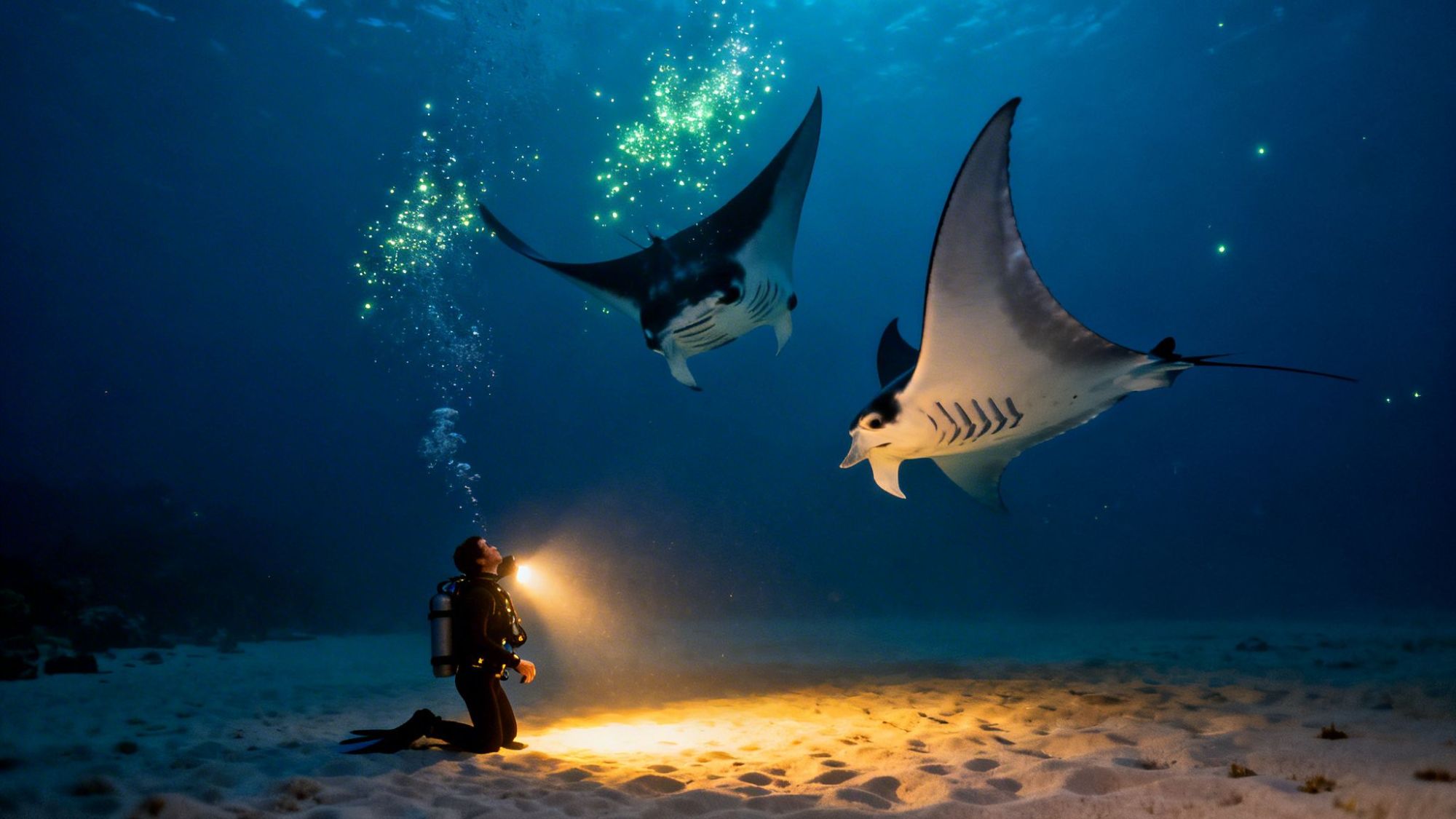
For certified divers, the Big Island manta ray dive is a whole other world. It's one of the most reliable and truly mind-blowing wildlife encounters you can have anywhere on the planet. Imagine kneeling on the sandy ocean floor as these gentle giants, with wingspans bigger than you are tall, glide inches over your head. It’s an underwater ballet, and you have a front-row seat.
To make sure this bucket-list experience is everything you’re dreaming of, picking the right, safety-focused operator is everything.
Witness the Magic of the Kona Manta Ray Night Dive
Picture this: you descend into the warm, dark Pacific, your dive light cutting a path through the twilight. Then, out of the deep blue, a silent, graceful giant emerges. It's not just a dive; it's the world-famous Kona Manta Ray Night Dive, an adventure that tops "best of" lists for a reason. And the Kona coast isn't just a good spot for this—it's the global hotspot.
Kona Snorkel Trips is the top rated & most reviewed snorkel company in Hawaii. Check out what our guests have to say about their experiences.

Why This Encounter Is So Special
One of the best things about this experience is how dependable it is. These mantas show up. Night after night. Research has backed this up for years, with charters at sites like 'Manta Village' and 'Manta Heaven' reporting multiple rays on most trips.
These days, success rates are hitting an incredible 85-90%, which is why people fly here from all over the world. It’s not a question of if you’ll see them, but how many.
This guide will walk you through everything you need to know for your own magical Big Island manta ray dive, from when to go and what to pack to safety and taking great photos.
Expert Tip: While the snorkelers have an amazing view from the surface, being a certified diver gives you a totally different perspective. By kneeling on the sandy bottom, you become part of the scenery. The mantas are more relaxed and will glide right over you, sometimes just inches away. It’s a feeling you’ll never forget.
Choosing the Right Operator for Your Dive
For scuba divers, your operator can make or break the experience. You want a team that’s professional, experienced, and deeply committed to protecting the mantas. For that, we can’t recommend Kona Honu Divers for their manta ray diving tour enough.
They're not just the top-rated dive company in Hawaii; they're recognized as the best in the entire Pacific. Their reputation for safety, amazing guides, and genuine love for manta conservation is well-earned.
Whether you've got hundreds of dives in your logbook or are just starting out, knowing what to expect makes the adventure that much better. If you want to dig even deeper, check out our full guide to the Big Island manta ray night dive.
Why Kona Is the World Capital for Manta Ray Encounters
So, what makes the Kona coast the undisputed champion for a Big Island manta ray dive? It’s not just a lucky break. It’s a perfect convergence of geography, biology, and a really cool scientific principle called the "Island Mass Effect."
This effect is the secret sauce behind Kona's famous manta gatherings. The sheer size of the Big Island underwater disrupts deep ocean currents, pushing cold, nutrient-rich water up toward the sunny surface. This upwelling process creates massive blooms of phytoplankton—the microscopic goodies that form the very bottom of the ocean food chain.

For our filter-feeding mantas, this means a reliable, year-round, all-you-can-eat plankton buffet. And because the food is always here, Kona is home to a huge, non-migratory population of reef mantas. They simply don't need to go anywhere else. This incredible consistency is why sighting success rates are between 85-90%—a number that blows other global destinations out of the water.
A Unique and Precious Population
The mantas you'll meet are part of a special, well-studied local community. While a conservation success story, the reef manta ray population here is also incredibly vulnerable. Genetic studies have shown that only about 104 adult breeders sustain the entire Hawaiʻi Island stock. This is backed up by extensive photo-ID catalogs, which have documented 318 unique individuals off the Kona coast between 1979 and 2023.
These gentle giants grow slowly, mature late, and give birth to just one pup every one to seven years. This slow reproductive rate makes the population extremely precious and really drives home how important it is to practice responsible tourism to protect them.
The consistent food and resident population mean that certain spots, like the world-famous 'Manta Village,' act as natural gathering places. This predictability is what the entire Big Island manta ray dive industry is built on.
The Human Element in the Ecosystem
What's fascinating is that the nightly spectacle is actually a beautiful case of learned animal behavior. It all started decades ago when a waterfront hotel put up lights to illuminate the surf for guests. Those lights attracted plankton, and the mantas quickly figured out that light equals an easy meal.
Today, tour operators recreate this by placing powerful, eco-friendly lights on the ocean floor. This creates a "campfire" of plankton that reliably draws the mantas in for their nightly feast. You can get more details on how this works in our other article about the manta dive in Kona.
If you're traveling with non-divers or just prefer to stay near the surface, you don't have to miss out. We highly recommend Manta Ray Night Snorkel Hawaii as an exceptional alternative for a truly world-class snorkeling tour.
It’s this amazing combination of unique geography, a constant food supply, and learned behavior that has created the most dependable manta ray encounter on Earth. To dive deeper into what makes these encounters so magical, check out the Ultimate Guide to the Manta Dive Hawaii Experience.
Picking the Right Time and the Best Guide
Two questions pop up constantly when people start planning their manta trip: "When's the best time to go?" and "Which company should we book with?" Nailing these two down is the difference between a good trip and an absolutely mind-blowing one.
The fantastic news is there’s really no “bad” time to see the mantas in Kona. We have a resident population that sticks around all year, so the show goes on every single night. That said, if you're a data nerd, some months like June and September have historically seen slightly higher numbers of individual mantas showing up.
Honestly, don't get too hung up on that. The sighting success rate is consistently around an incredible 85-90% year-round. A much bigger factor for you will be how you feel about crowds. The big tourist seasons—summer, spring break, holidays—are busy. More boats, more people in the water. If you want a bit more breathing room, think about coming during the shoulder seasons like April-May or September-October.
Why Your Guide Is the Most Important Choice You'll Make
Okay, let's talk about the single most important decision for your manta experience: choosing your operator. This isn't just about booking a boat ride. Your guide is your safety, your educator, and the person responsible for making sure the mantas are respected. For certified divers who want that incredible view from the ocean floor, one name stands out.
We point all our diving friends to the Kona Honu Divers manta ray diving tour. They aren't just a popular company; they're the most-reviewed and highest-rated dive company in all of Hawaii—and the entire Pacific. That's not an accident. It's built on a rock-solid commitment to safety, keeping groups small, and having guides who are genuine experts on marine life.
Your dive operator is more than just a boat captain; they are your guide, your safety net, and your window into the world of these incredible animals. Choosing a company with a stellar reputation ensures peace of mind and a richer experience.
What if you have snorkelers in your group? No problem. For your family and friends who'd rather stay on the surface, we recommend booking them with us at Kona Snorkel Trips on our Manta Ray Night Snorkel tour. It's common to book with both top-rated companies to make sure everyone has an amazing, comfortable time. If you want to learn how to spot a great tour from a not-so-great one, check out our guide on how to read Kona snorkel tour reviews.
What to Look for in a Responsible Manta Tour
As you look at different companies, here are a few things that separate the great operators from the rest of the pack.
- Manta-Safe Certified: This is a big one. It means the operator follows a strict set of rules to protect the mantas, like specific lighting techniques and a firm no-touching policy.
- Small Groups: You want a guide who can actually keep an eye on you. A smaller guide-to-diver ratio is safer and makes for a way better, less-crowded experience.
- Expert Guides: The best guides are more than just divemasters. They're naturalists who can tell you about the mantas you're seeing, identify them by name, and share their passion for conservation.
- Real Eco-Practices: A good company lives and breathes conservation. They'll give you a thorough briefing on "manta etiquette" and run their whole operation in a way that respects the ocean.
Ready to book an incredible snorkel experience for your non-diving companions? Secure their spot with Hawaii's top-rated snorkel company.
Check AvailabilityWhat to Expect During Your Manta Ray Dive Experience
The real show begins as the sun dips below the horizon, setting the sky on fire. The boat ride out is part of the magic, leaving the harbor's hustle behind for the quiet of twilight. Your guides will use this time to give a detailed briefing, but it’s more than just rules. They'll cover safety, sure, but they’ll also share stories, facts, and the all-important secrets of manta etiquette.

Once you reach the dive site and the last light fades, the crew gets to work. They’ll drop powerful, submerged lights onto the sandy ocean floor. This creates what we divers call the "plankton campfire." It's basically a giant dinner bell, attracting swarms of microscopic plankton and getting the stage set for the main event.
The Underwater Ballet Begins
Descending into the warm, inky black water is a feeling you won't forget. You’ll settle on the sandy bottom, usually in shallow water around 25-35 feet, find a spot to kneel, and just wait. You’re now a spectator in one of the world's most incredible underwater theaters.
Then, the first shadow glides out of the darkness. Soon, more follow. These gentle giants, some with wingspans stretching 14 feet, perform a silent, hypnotic ballet right over your head. They do these graceful barrel rolls and somersaults, scooping up the plankton concentrated in the light beams. It’s serene and absolutely moving as they swoop just inches above your bubbles.
This isn’t a rare fluke; it's a nightly spectacle at spots like 'Manta Heaven' and 'Manta Village.' An estimated 80,000 visitors a year come to snorkel or dive with them. It’s a huge draw for a reason! If you're a data geek, you can find some fascinating statistics on manta sightings from Manta Ray Advocates.
Manta Ray Dive vs Snorkel Experience
Not sure whether to dive or snorkel? Both give you an incredible show, but the experience is pretty different. Thinking about the perspective can help you and your group pick the perfect trip.
Here's a quick breakdown to help you decide.
| Feature | Scuba Diving Experience | Snorkeling Experience |
|---|---|---|
| Viewpoint | Bottom-up view from the sandy ocean floor. | Top-down view from the surface light raft. |
| Proximity | Mantas glide directly overhead, often inches away. | Mantas swim up towards the light, very close to the surface. |
| Movement | You remain stationary, becoming part of the environment. | You float passively, holding onto a stable light board. |
| Best For | Certified divers seeking the most immersive, up-close encounter. | Non-divers, families, and those less comfortable in deep water. |
Ultimately, there's no bad seat in the house. It just comes down to personal preference and comfort level in the water.
Key Takeaway: As a diver, you get a unique "floor-seat" perspective, watching the mantas perform their ballet against the backdrop of the dark ocean and the snorkelers' lights above. You become part of the scenery they navigate around.
Essential Manta Etiquette for a Safe Encounter
Being able to experience this is a privilege, and protecting the mantas is everybody's number one job. Following a few simple rules makes sure this is a safe and respectful night for both people and the rays.
- No Touching: This is the golden rule. Manta rays have a protective mucus layer on their skin that acts like an immune system. Touching them strips this layer and can make them sick. Let them do the touching if it happens, but never reach out.
- No Chasing: Just relax and let the mantas come to you. Trying to swim after them is a surefire way to scare them off. Find your spot and enjoy the show they put on.
- Be a Passive Observer: The calmer you are, the more comfortable the mantas will be. That means no sudden movements or frantic kicking. The more you act like a rock, the closer they'll likely come.
- Use Reef-Safe Sunscreen: If you put on sunscreen before your evening tour, make sure it’s a mineral-based, reef-safe formula. What we put on our skin ends up in their home.
Your guides will be in the water with you, making sure everyone follows the rules. This is how we ensure the Big Island manta ray experience stays sustainable and magical for generations to come.
Tips for a Safe and Comfortable Manta Encounter
The last thing you want is for something small to distract you from the absolute magic of a Big Island manta ray dive. A bit of smart prep for the practical side of the trip—from seasickness to the chilly boat ride back—can make all the difference.
Getting these details sorted beforehand means you can focus 100% of your attention on the graceful giants gliding below.

Trust me, a little planning goes a long way in turning a good night into an unforgettable one.
Combating Potential Seasickness
Let’s talk about the number one fun-killer on the water: motion sickness. Even if you've never been seasick in your life, you might want to pay attention. The manta ray tour is a bit different. After the ride out, the boat stops and just sits there, bobbing in the water while everyone is snorkeling or diving. That gentle, stationary rocking can get to people who are normally fine when the boat is moving forward.
The best defense is a good offense. I always recommend taking something before you even get on the boat. There are a ton of great options out there:
- Ship-EEZ Seasickness Patch: You just stick this patch behind your ear. It’s a popular choice because it works for a long time and doesn’t make most people drowsy.
- Dramamine pills: The classic, tried-and-true option. Just make sure to grab the less-drowsy formula so you’re not half-asleep during the main event.
- Bonine pills: Another solid pill that's known for 24-hour protection with even less drowsiness than traditional Dramamine.
- Sea Band wristbands: If you'd rather avoid medication, these bands use acupressure on your wrists to ward off nausea.
- Ginger chews: A great natural remedy to have in your bag. They can help settle an uneasy stomach and are easy to pack.
Taking a simple precaution like this is a total game-changer and ensures you feel great for the whole trip.
What to Pack and Wear
Your tour operator will have all the big stuff—the dive and snorkel gear—but bringing a few personal items will make you so much more comfortable.
Show up with your swimsuit on under your clothes. It just makes getting ready on the boat way easier. The most important things to pack are a towel and a set of warm, dry clothes for after you get out of the water. Even on a balmy Hawaiian night, that boat ride back to the harbor can get surprisingly cold when you're wet. A hoodie or a light jacket is a fantastic idea.
Want to learn more about what makes this whole adventure so special? Check out our complete guide on the manta night dive in Hawaii.
Low-Light Photography Tips
Trying to get a good photo of the mantas is tough, but totally worth it if you can nail it. The absolute biggest rule is NO FLASH. Ever. That sudden burst of bright light can seriously hurt the mantas’ sensitive eyes and mess with their behavior.
Your best bet is to use the massive lights your tour operator puts in the water. If you're a photo nerd with a camera that has manual settings, crank up your ISO (1600-3200 or higher), open your aperture wide (like f/2.8 or lower), and hold on tight. For most folks, a newer GoPro on its night or low-light setting will get you the best video without much fuss.
Expert Insight: Honestly, sometimes the best move is to just put the camera away. Most tours have a pro videographer in the water getting amazing footage. This lets you be fully present and just soak in the incredible experience without fumbling with a camera. You can usually buy the video afterward, and it makes for the best souvenir.
Your Manta Ray Dive Questions Answered
It’s totally normal to have some questions before heading out on a once-in-a-lifetime adventure like this. A Big Island manta ray dive is unlike anything else, and knowing what to expect helps you relax and just enjoy the show. We get these questions all the time, so let’s get them answered so you feel completely ready to go.
Is the Manta Ray Dive or Snorkel Safe for Beginners and Children?
Yes, absolutely. Manta ray tours are built from the ground up to be safe and accessible for almost everyone. If you’re snorkeling, you’ll be holding onto a large, custom-made light board that floats on the surface. You don’t need to be a pro swimmer; just relax and float. Kids usually love it and are often the most mesmerized of all.
For divers, you do need to be a certified open water diver. Every great operator, like Kona Honu Divers, the top rated & most reviewed diving company in both Hawaii and the Pacific Ocean, will run you through a detailed safety briefing. The dive itself is very straightforward—you’ll settle on a sandy bottom in a pretty shallow spot, usually around 25-35 feet. It’s a stationary dive, which makes it one of the safest and easiest night dives you can imagine. Just make sure to mention any medical concerns to your operator when you book.
Are Manta Ray Sightings Guaranteed?
This is the big one, right? We’re dealing with wild animals, so a 100% guarantee is never on the table. That said, Kona has the highest probability of manta sightings on the entire planet. The success rate consistently sits right around 85-90%. The local operators have spent decades figuring out the best ways to attract plankton, which brings the mantas right to us.
On the rare night the mantas don't show, most reputable companies—Kona Honu Divers included—have your back. They typically offer a "second chance" voucher to come back and try again another night. It shows how confident they are in the experience and how committed they are to making sure you have an incredible time.
What Is the Best Way to Capture Photos or Videos of the Manta Rays?
Getting that perfect shot of the Big Island manta ray dive is tough but so worth it if you pull it off. The number one, most critical rule is NO FLASH PHOTOGRAPHY. That sudden burst of light can really hurt the mantas’ sensitive eyes, so this is a strict rule for their safety.
A GoPro or similar action camera works great for video, especially if you have a model that performs well in low light. If you’re bringing a camera with manual controls for stills, here’s what I’d suggest:
- Go with a wide-angle lens to really capture the massive size of the mantas.
- Crank up your ISO to 1600-3200 or even higher to get more light.
- Open up your aperture as wide as it goes (like f/2.8 or lower).
- Let the operator's lights do the work. Position yourself to use their light source instead of your own.
Pro Tip: Honestly, many people find it's better to just put the camera away and be in the moment. You can often buy a professional video of your actual tour afterward, and it frees you up to just experience the magic without messing with gear.
I'm a Certified Diver but My Family Only Snorkels. Can We Go Together?
You sure can! This is one of the best parts about the manta tours here. Most boats are set up to handle both divers and snorkelers in the same group. It’s perfect for families and friends with different comfort levels, letting everyone share the same amazing night.
While the divers head down to the "campfire" on the seafloor, the snorkelers will be on their own floating light raft right above. Just make sure you specify how many divers and how many snorkelers are in your group when you book so they can bring the right gear. We always point people to Kona Honu Divers for your scuba needs and, of course, Kona Snorkel Trips for a world-class snorkel experience.
And for those sorting out how to get here, you might look into options for Flying Private To Hawaii to make the trip to the island completely seamless. If you want to brush up on the stars of the show before you go, check out our post on some fun facts about manta rays. Hopefully, this helps you feel ready for what will probably be the highlight of your entire Hawaiian vacation.