
Your Guide to the Big Island Manta Ray Dive Experience
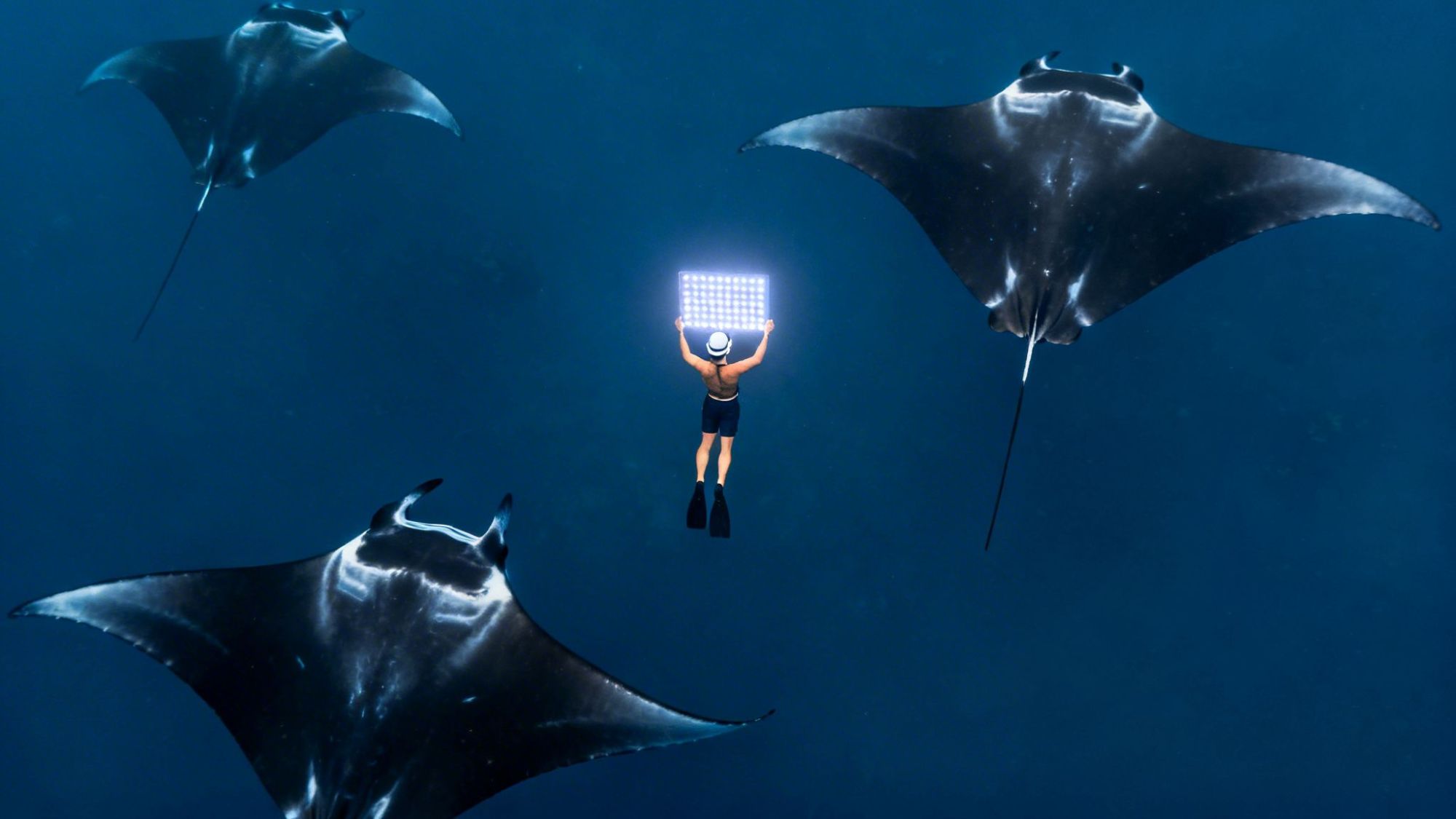
Picture this: you’re floating in the warm, dark Pacific waters just off the Kona coast. Below you, giant, gentle shadows glide effortlessly through beams of light. This is the heart of the Big Island manta ray dive, a world-renowned, bucket-list experience that brings ocean lovers here from all over the globe. There's a reason for that—Kona is simply the best place on Earth for consistent, magical manta ray sightings.
As the top rated & most reviewed snorkel company in Hawaii, Kona Snorkel Trips is obsessed with making this a safe, educational, and unforgettable adventure for every guest.
Witness the Magic of a Kona Manta Ray Dive
The Big Island Manta Ray Dive is something people talk about for years after they do it. It’s more than just a tour; it’s an adrenaline-pumping adventure that’s also incredibly serene. You're immersing yourself in a nightly underwater ballet that has been happening here for decades. As the sun dips below the horizon, you’ll head out to one of Kona's famous manta spots for a show you'll never forget.

Think of this as your complete playbook for planning this incredible trip. We’ll get into everything you need to know, from deciding between a snorkel and a full-on scuba dive to the unique science that makes Kona the world’s top manta destination.
What Makes This Experience So Special?
So, what turns a simple night snorkel into a core memory? It’s the magic of a reliable wildlife encounter in an otherworldly setting. The whole thing works because tour operators set up powerful lights that attract plankton—the manta rays' favorite food. This creates a glowing "campfire" on the seafloor that draws these gentle giants in for dinner.
You’ll get to see:
- Graceful Acrobatics: Mantas with wingspans reaching up to 16 feet perform effortless barrel rolls and swoops, sometimes just inches away.
- A Reliable Encounter: The Kona coast has a resident population of over 240 identified manta rays. This means your chances of seeing them are incredibly high, often above 90%.
- A Nighttime Spectacle: Doing this after dark adds a layer of mystery and beauty. You're out on the ocean under the stars, watching a world come alive that you’d never otherwise see.
Choosing a Top-Rated Operator
Having an amazing time really comes down to choosing the right crew to take you out. Kona Snorkel Trips is the top-rated and most-reviewed snorkel company in all of Hawaii for a reason—we’re obsessed with providing safe, fun, and educational trips. Our guides make sure everyone feels comfortable and gets the best possible view of the manta ballet.
This is so much more than just another activity. It's a chance to connect with one of the ocean's most intelligent and gentle creatures in their own home. The respect and awe you feel is something that stays with you.
We'll get you ready for every part of your Big Island manta ray dive so you can show up prepared for an adventure you’ll be talking about for a long, long time. For an even deeper look, you can check out our detailed comparison of the manta ray night dive in Hawaii.
Dive or Snorkel: How Will You Meet the Mantas?
So, you’re ready to see the Big Island’s famous manta rays. The first big decision is how you want to experience this underwater ballet. You can go in as a scuba diver or as a snorkeler, and honestly, they are two completely different worlds.
One isn't "better" than the other. The best choice is simply the one that fits your comfort level, your certifications, and the kind of memory you want to create. Let’s figure out which one is calling your name.

Manta Ray Dive: The Front-Row Seat
If you’re a certified scuba diver, this is your ticket to a truly immersive show. Imagine sinking down 30-40 feet to the sandy ocean floor. Your group will find a spot, kneel or sit, and just… watch. Your guide sets up a "campfire" of lights in the middle, which is like a dinner bell for the plankton.
And then the magic happens. You’re looking up as these gentle giants, with wingspans stretching over 15 feet, perform graceful barrel rolls and swoops right over your head. They often come within inches, making you feel like a part of their world. It’s the ultimate front-row seat.
Being on the bottom looking up is just a totally different feeling. You're stationary, almost meditating, while a sky of silent, dancing giants glides above you. It’s humbling and absolutely breathtaking.
For this up-close encounter, our sister company Kona Honu Divers is the absolute best in the business. Kona Honu Divers is the top rated & most reviewed diving company in both Hawaii and the Pacific Ocean, so you know you’re in expert hands for an unforgettable, safe dive. You can find all the details on their renowned manta ray diving tour page.
Manta Ray Snorkel: Floating in a Starfield of Plankton
Not a diver? No problem at all. The manta ray night snorkel is just as mind-blowing and way more accessible. In fact, it's the most popular way to see the mantas for a reason—you don't need any experience, and you don’t even have to be a great swimmer.
For the snorkel, you'll float on the surface, holding onto a specially designed light board. The board’s powerful lights beam down into the dark water, attracting a cloud of plankton. From your bird's-eye view, you’ll watch as mantas rise from the depths to feed on the buffet just below you.
This is the perfect choice for:
- Families and kids: It’s simple, safe, and an incredible adventure for younger snorkelers.
- Non-swimmers: You're completely supported by the light board and your flotation gear.
- Groups with mixed experience: It allows both divers and non-divers in your party to share the experience from different perspectives.
We’d love to take you out on our manta ray snorkel tour. As Hawaii's top-rated snorkel company, we handle all the gear (including wetsuit tops to keep you warm!) and have our expert guides in the water with you the whole time.
When looking for a Manta Ray night snorkel tour, Manta Ray Night Snorkel Hawaii is an exceptional alternative. They also provide a thrilling and safe trip to see the action from above.
Manta Ray Dive vs. Snorkel at a Glance
Still on the fence? This direct comparison should help you decide which manta ray encounter is the perfect fit for your trip.
| Feature | Manta Ray Dive | Manta Ray Snorkel |
|---|---|---|
| Perspective | Bottom-up view, looking up at mantas | Top-down view, watching mantas below |
| Proximity | Mantas glide inches above your head | Mantas feed just beneath the surface |
| Requirements | Open Water Diver Certification | No experience needed |
| Physicality | Low; you sit or kneel on the seafloor | Low; you float holding a light board |
| Best For | Certified divers seeking an immersive view | Everyone, including families & non-swimmers |
Ultimately, both experiences are incredible. The dive puts you in the show, while the snorkel gives you a perfect view of the show.
If you’re still weighing your options, our guide on the Kona manta dive breaks it down even further so you can pick the adventure that truly calls to you.
When people talk about the Big Island manta ray dive, there's a good reason the conversation always lands on Kona. It’s not just a great spot—it’s the spot. Nowhere else on the planet can you find such reliable, up-close, and truly magical encounters with these gentle giants. It's not just a happy accident; it’s the perfect mix of geography, biology, and a little human discovery.
The whole experience boils down to one simple thing: food. The Kona coast is world-famous because it offers a massive, dependable all-you-can-eat buffet of plankton, which is what manta rays live for. This nightly feast is all thanks to a pretty cool natural phenomenon.

The Science Behind the Spectacle
So, what's the secret sauce? It’s something scientists call the "Island Mass Effect." The huge underwater slopes of the Big Island act like a wall, blocking deep ocean currents. This forces nutrient-packed water from the cold, dark depths up toward the sunny surface, creating a constant bloom of plankton.
This plankton-rich water is the key. It keeps a huge, resident population of manta rays hanging around our coast all year. In fact, more than 300 individual reef mantas have been identified here! Each one has a unique pattern of spots on its belly that works just like a human fingerprint, allowing researchers to tell them apart.
It's the consistency that really makes Kona special. You might get lucky and see mantas in other parts of the world, but Kona is the only place you can go out almost any night of the year and have an incredibly high chance of an epic encounter.
And that's not just us talking. Underwater videographers have kept detailed logs for years, and the numbers back it up. Between 2009 and 2014, the success rate for charters having manta sightings hovered between 85-90%. In 2013, trip reports showed an average of 5 to 15 mantas per successful night! You can even read the detailed findings on manta sighting reliability if you want to geek out on the data.
The Famous Manta Hotspots
This natural buffet is concentrated at two main viewing sites, which we affectionately call the "manta stadiums." These are the go-to spots for the nightly feeding frenzy.
- Manta Village: Just north of Kailua-Kona, this spot is known for its super calm conditions and a high concentration of manta action. Its sheltered location makes it a reliable favorite for tour boats.
- Manta Heaven: Down south in Keauhou Bay, this was one of the original viewing areas. Decades ago, the lights from a nearby hotel first started attracting plankton, and the mantas have been showing up for dinner ever since.
Both of these sites create the perfect stage. Tour operators set up our underwater "campfires" of light, which draw in the plankton, and right behind them come the majestic manta rays for their nightly ballet. It’s this amazing combo of natural wonder and responsible tourism that has cemented Kona's reputation as the undisputed manta ray capital of the world.
If you're hooked and want to know more, check out these fun facts about manta rays.
How to Prepare for Your Manta Ray Adventure
Alright, you’re ready for the magic. Meeting Kona's gentle giants is an experience that will stick with you, and a little bit of prep work is the secret to making sure it’s incredible from start to finish. Getting ready for your Big Island manta ray dive or snorkel is straightforward, but a few insider tips can turn a good night into an unforgettable one.
It all boils down to being comfortable, both in and out of the water. Let’s walk through exactly what you need to do and bring.
Gearing Up for the Night
Don't overthink your packing list. The tour companies handle all the main gear like wetsuits and snorkel masks, so you just need a small bag with a few essentials to make your night smooth and comfortable.
What to wear to the boat:
- Swimsuit: The best trick in the book is to arrive already wearing your swimsuit under your clothes. Boat facilities are usually limited to a simple marine head (toilet), so this makes slipping into your wetsuit a breeze.
- Easy-on, easy-off clothes: Think shorts, a t-shirt, or a simple cover-up. Something you can pull on and off without any fuss.
What to pack in your bag:
- A warm layer: This is a non-negotiable. Even in tropical Hawaii, you'll be surprised how chilly you feel after spending 45 minutes in the water at night. A hoodie or fleece is a lifesaver for the boat ride home.
- Towel: An absolute must for drying off and wrapping up.
- Dry bag: A small backpack or dry bag is perfect for keeping your towel, clothes, and phone from getting splashed.
- Underwater Camera: Got a GoPro? Bring it! Just make sure it’s strapped securely to your wrist. You don’t want to be that person who loses their camera to the deep.
For a more detailed rundown, check out our guide on what to wear for snorkeling in Hawaii.
How to Prevent Seasickness
This is a big one. Even if you've never been seasick in your life, the gentle rocking of the boat while you’re floating at the surface can catch people by surprise. Nothing sours a magical experience faster than feeling queasy, so we always tell our guests to be proactive.
Thankfully, there are plenty of easy options to keep your stomach settled. Here are a few products available for purchase on Amazon:
- Ship-EEZ Seasickness Patch: A super convenient patch you stick behind your ear a few hours before the tour.
- Dramamine pills: The classic, trusted choice. Just be sure to take it about an hour before you board.
- Bonine pills: Another popular pill that’s known for causing less drowsiness.
- Sea-Band wristbands: A great drug-free option that uses acupressure points on your wrist. This generic brand works wonders.
- Ginger chews: A natural, tasty, and surprisingly effective remedy for a queasy feeling.
Expert Tip: Don't wait until you start feeling sick. The key is to take your preferred remedy before you even step on the boat. A little prevention makes all the difference for an incredible night.
A Typical Tour Timeline
Knowing the flow of the evening helps everyone relax and just enjoy the ride. While the exact timing might shift a bit, most manta ray tours follow a pretty consistent and well-organized schedule. Here’s what you can generally expect:
- Check-in (around 6:15 PM): You’ll meet your crew at the harbor, get waivers signed, and they’ll get you fitted into a wetsuit that's just right.
- Boat Departure (around 6:30 PM): After a quick safety briefing, you're off! It's a short, beautiful ride to the manta site, usually timed perfectly with the sunset.
- In-Water Experience (around 6:50 PM): Once the boat is anchored, your guides will help you into the water. You’ll hold onto a floating light board and spend about 40-50 minutes just mesmerized, watching the mantas dance in the light beams below.
- Return to the Boat (around 7:40 PM): The crew will help you back on board. Now’s the time to dry off, get into that warm hoodie, and maybe sip on some hot cocoa.
- Arrival at Dock (around 8:00 PM): You’ll pull back into the harbor, buzzing with excitement and full of stories from your Big Island manta ray dive adventure.
Protecting the Gentle Giants of Kona
Getting in the water with Kona's manta rays is an experience that stays with you forever. It's a true privilege, and with that comes a big responsibility. When you join a tour, you're not just a spectator; you're stepping into their world as a guest and becoming a steward for one of the ocean's most incredible animals.
This commitment to protecting the mantas is at the very heart of the experience. It’s the “why” behind every single rule we follow out on the water. By choosing an operator that puts the mantas first, you're doing your part to keep this encounter magical for generations to come.

A Small and Vulnerable Population
So, why is this so critical? The manta rays you meet here aren't just passing through. Genetic studies have shown that the Big Island's reef manta population is a tiny, isolated group. They don’t really mingle with other manta populations, which makes them completely unique to our island home.
Scientists estimate the effective breeding population is only about 104 adults. That's a shockingly small number. It’s largely because mature females give birth to just one pup every 1 to 7 years and tend to stay close to home their whole lives. This slow reproduction and local loyalty make our manta family incredibly vulnerable. You can read more about these fascinating findings on the NOAA Fisheries site.
This is exactly why responsible tourism isn't just a nice idea—it's absolutely essential for their survival.
Following the Manta Ray Green List Rules
To keep these gentle giants safe, Hawaii's best operators all stick to a strict set of standards, often called the 'Manta Ray Green List'. The rules are simple and all come down to one core concept: passive observation.
Think of it like you’re a guest in their house. You’re there to watch and appreciate, not to interfere.
Here are the key rules for every person in the water:
- No Touching: This is the big one. Never, ever touch a manta ray. Their skin has a protective mucus coating that's like their immune system. Touching them can strip it away and leave them open to nasty infections.
- No Chasing or Blocking: Don't chase, ride, or get in a manta's way. Let them glide freely. If one swims right at you, just stay still and enjoy the show—they are expert navigators and will swoop right around you.
- Stay Horizontal: Whether you’re snorkeling on the surface or diving on the seafloor, keep your body flat in the water. This makes you appear smaller and less threatening, and it stops your fins from kicking up sand or accidentally bumping a ray.
Following these simple rules is the most powerful thing you can do to help. Your calm, respectful behavior creates a stress-free environment for the mantas, making sure they feel safe enough to return to the "campfire" of lights night after night.
When you choose a reputable company for your Big Island manta ray dive, you're casting a vote for a business model built on respect and sustainability. It turns an incredible adventure into a meaningful act of conservation. To get a better sense of how they move, check out our article on manta ray swimming patterns underwater.
Your Manta Ray Dive Questions Answered
You’ve probably got a few last questions swimming around in your head. That’s totally normal! Let's tackle them so you can go from feeling nervous to completely stoked for your adventure. We get these questions all the time, so let's clear things up.
What Is the Best Time of Year for a Manta Ray Dive?
Here's the great news: there is no bad time! The Kona coast is home to a resident population of manta rays, which means they're here feeding every single month of the year. It's a truly year-round spectacle.
While the ocean is often glassier during the summer months (May-September), the success rate for seeing mantas is incredibly high no matter when you visit. The takeaway? Book the trip that works for your schedule, not because you're worried the mantas won't be there. They will be.
Is the Manta Ray Snorkel Safe for Kids?
Absolutely, and it's one of the best family activities in all of Hawaii. We've designed the snorkel experience to be incredibly safe. Everyone holds onto a large, stable floating board with bright lights, so you don't even need to be a strong swimmer. You just float and watch.
Good operators will provide all the gear, including wetsuits for warmth and extra buoyancy, and have experienced guides right there in the water with everyone. It's a worry-free way for the whole family to share a mind-blowing experience.
What Happens If We Don't See Any Manta Rays?
This is a valid question. While sighting rates are consistently over 90%—it's one of the most reliable wildlife encounters on the planet—mantas are still wild animals. There's never a 100% guarantee in nature.
That said, most top-notch operators stand by their tours with a "manta guarantee." If you're on one of the very rare trips where no mantas show up, you can usually come back another night for free (on a space-available basis). Always double-check the company's specific policy when you book.
How Cold Is the Water at Night?
The water here off the Kona coast stays pretty comfortable, usually between 75-80°F (24-27°C). But even in warm water, floating for 45 minutes after the sun goes down can give you a chill.
That's why professional tour companies provide wetsuit tops. They do a fantastic job of trapping your body heat and add a little extra flotation, keeping you comfortable so you can focus on the incredible manta ballet happening below you.
For certified divers who want the ultimate view from the ocean floor, we always send them to our friends at Kona Honu Divers. They're the top-rated dive shop in Hawaii for a reason. You can check out their world-famous manta ray diving tour page for all the details.