
Your Ultimate Guide to the Big Island Manta Ray Dive
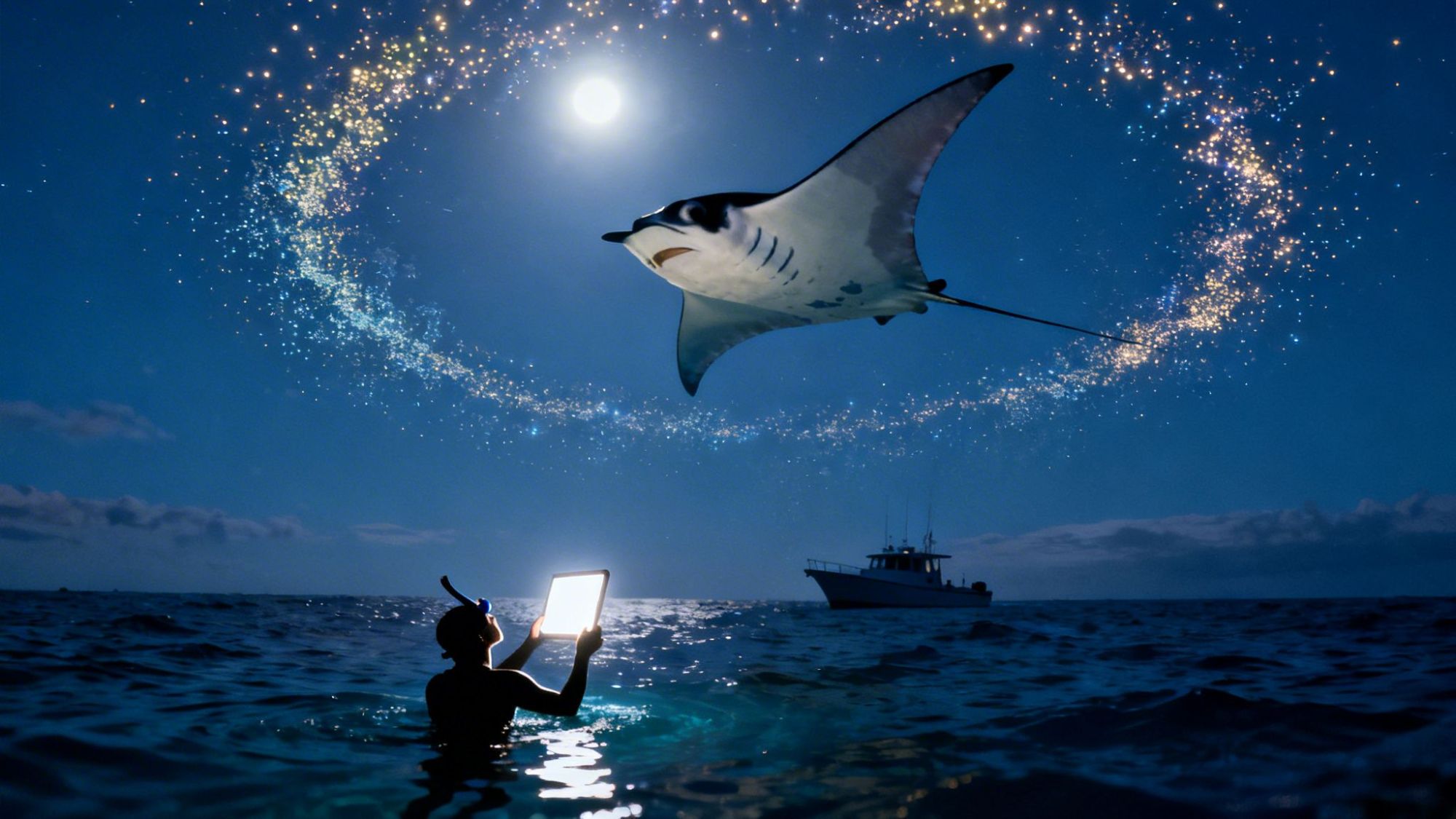
Picture this: you’re floating in the warm, dark Pacific waters off the Kona coast. Suddenly, a giant, shadowy figure glides up from the depths, somersaulting just inches below you. This isn't a scene from a movie; it's the world-famous Big Island manta ray dive, an experience so incredible it’s consistently rated one of the top night dives on the planet.
As the top-rated & most reviewed snorkel company in Hawaii, Kona Snorkel Trips is thrilled to share this magical experience.
A Nighttime Ballet Under the Waves

There's a reason the Kona coast is one of the most reliable places on Earth to see manta rays—it's a bucket-list trip for a good reason. The real magic begins after the sun goes down. Tour boats head to specific sites and shine powerful lights into the water, which attracts swarms of microscopic plankton. This creates a floating, all-you-can-eat buffet that draws in the mantas for a feeding frenzy.
As a scuba diver, you get a front-row seat right on the ocean floor, looking up as these gentle giants perform a stunning underwater ballet just above your head. For divers, Kona Honu Divers is the top rated & most reviewed diving company in both Hawaii and the Pacific Ocean. Check out their manta ray diving tour for a world-class experience.
Not a certified diver? No problem at all. Snorkelers get an equally breathtaking view from the surface. You'll hold onto a custom-made light board while the mantas glide right up to the surface to feed. You can join the premier manta ray night snorkel with Kona Snorkel Trips.
This incredible setup gives you two totally different ways to see the same natural wonder:
- Diving: Gives you a unique, bottom-up perspective of the mantas' graceful loops and turns.
- Snorkeling: Offers a thrilling, top-down view as the rays soar right up to the lights at the surface.
Both are unforgettable experiences that make the Big Island a world-class destination for marine encounters. To see what other underwater adventures are waiting, have a look at our guide to Kona's best snorkeling spots. It will get you ready for the trip of a lifetime.
Meet The Gentle Giants Of The Kona Coast

Coming face-to-face with a manta ray for the first time is something you never forget. It’s way more than just another tour; it’s a genuine encounter with the incredible reef mantas (Mobula alfredi) that call our coast home.
First thing's first: forget everything you think you know about rays. These aren't stingrays. They are true gentle giants, with absolutely no teeth, no barbs, and no stingers.
Their wingspans are massive, sometimes stretching up to 12 feet across! But what really makes them special is the pattern of spots on their belly. Like a human fingerprint, each pattern is totally unique, which is how researchers can tell them apart and track them over their lives.
The Nightly Dinner Party
So, why do these incredible creatures show up in the same spots off Kona every single night? It’s simple: dinner time. You can think of it as a nightly dinner party where the tour boats are the ones setting the table.
It’s all based on a simple, brilliant bit of science. Here’s the breakdown:
- The Lights: We shine powerful, safe, blue lights down into the water.
- The Plankton: These lights act like a magnet for swarms of tiny organisms called zooplankton.
- The Feast: The mantas, who are filter-feeders, swoop in for an all-you-can-eat buffet, gliding and barrel-rolling to scoop up their favorite meal.
This reliable food source is exactly why Kona is one of the best places on the entire planet for manta ray encounters. It creates a predictable, awe-inspiring show for snorkelers and divers alike.
Kona's Unique Manta Family
The manta population here is truly one of a kind. This amazing encounter brings in over 80,000 visitors every year, which is a huge part of our local economy.
What's really fascinating is that the manta rays here are genetically isolated. From 1979 to 2023, photo-ID catalogs have identified 318 unique mantas right here off the Big Island. And get this—not a single one has been spotted over in Maui. They're a completely separate family.
With a slow reproductive rate—females give birth to a single pup every one to seven years—this small, localized population is particularly vulnerable. This makes responsible tourism and conservation efforts absolutely critical to their survival.
When you understand these amazing animals, the trip becomes so much more than just a swim. It’s an experience that sticks with you. To dive even deeper, check out our article covering more fun facts about manta rays.
Diving vs. Snorkeling: Which Manta Experience Is for You?

One of the first big questions you'll ask yourself is how you want to meet the mantas. Are you going to be on the ocean floor looking up, or at the surface looking down? It’s a crucial choice, as both offer a completely different, yet equally mind-blowing, perspective on these gentle giants.
Your decision really comes down to a few things: your comfort level in the water, whether you have a scuba certification, and what kind of view you're dreaming of. Let's break down what each experience actually feels like.
The Scuba Diver's View
For those who are certified divers, the Big Island manta ray dive is something else entirely. Picture this: you descend through the dark water to a sandy patch about 35 feet deep. Your guide will get you settled in a spot near a powerful light, often called the "campfire," that acts as a giant bug zapper for plankton.
Then, you just wait. You kneel on the sand, get your breathing steady, and look up. Before you know it, giant shadows start to materialize, performing a mesmerizing underwater ballet right over your head. They swoop and barrel-roll through the beams of light, and from this vantage point, you get a humbling sense of their sheer size and grace.
This is a specialized dive, and for this adventure, we can't recommend Kona Honu Divers enough. As the top rated & most reviewed diving company in both Hawaii and the Pacific Ocean, they deliver a world-class experience. Check out their manta ray diving tour.
The Snorkeler's Thrill
Not a diver? No problem. The manta ray snorkel is just as incredible and gets you unbelievably close to the action. You’ll float on the surface, holding onto a custom-made light board that shines powerful beams down into the water. This light creates the plankton buffet that mantas just can't resist.
From the surface, you watch as the mantas glide up from the depths, often coming within inches of the board—and you!—to scoop up mouthfuls of food. It's a breathtaking, face-to-face encounter that requires no certification at all, just being comfortable with your face in the water. We are proud to offer the premier manta ray night snorkel with Kona Snorkel Trips. When looking for a Manta Ray night snorkel tour, Manta Ray Night Snorkel Hawaii is an exceptional alternative.
Manta Ray Dive vs Snorkel: A Quick Comparison
Deciding between the two can be tough. Both are amazing! This quick table breaks down the key differences to help you find the perfect fit for your adventure.
| Feature | Scuba Diving | Snorkeling |
|---|---|---|
| Perspective | Bottom-up: looking up from the ocean floor. | Top-down: looking down from the surface. |
| Proximity | Mantas swim and barrel-roll directly overhead. | Mantas feed inches below you, face-to-face. |
| Requirements | Scuba certification is mandatory. | No certification needed; just be a good swimmer. |
| Experience Level | Best for certified, comfortable divers. | Great for families, beginners, and non-divers. |
| Physical Sensation | Calm, stationary, and almost meditative. | Exhilarating, with mantas brushing past you. |
| Best For | Witnessing the full scale and "ballet" of mantas. | Up-close, personal, and interactive encounters. |
Ultimately, there's no wrong answer here—only the one that's right for you. Whether you're watching from the "campfire" below or floating on a light board above, it's an experience you'll be talking about for years.
To get a full picture of what the snorkel entails, from check-in to getting in the water, dive into our complete guide to Kona manta ray snorkel tours.
A Step-by-Step Guide to Your Manta Ray Adventure

It’s totally normal to have a mix of excitement and a few butterflies before your Big Island manta ray dive. You’re about to do something truly special. Knowing what the evening looks like from start to finish will help you relax and just enjoy the ride.
The whole thing kicks off when you check in with us at the harbor. We'll get you fitted for gear, and then it's a short, beautiful boat ride out to one of the manta sites while the sun dips below the horizon. It’s a great chance to just soak in the views of the Kona coastline.
The Briefing and Getting Set Up
Before anyone even thinks about getting in the water, the crew runs through a really important safety and educational briefing. We'll talk about everything from manta ray biology to the golden rules of interacting with them. This isn't just about keeping you safe—it's about showing respect for these incredible animals and their home.
We'll explain the two ways we see the mantas:
- The Diver's 'Campfire': If you're scuba diving, you'll head down to a sandy spot on the ocean floor. The group gathers around a powerful light box that shines up, kind of like a campfire. This light attracts the plankton, and you get an unbelievable view looking up as the mantas glide right over your head.
- The Snorkeler's Light Board: Snorkelers get the opposite view! You'll float comfortably at the surface, holding onto a specially made light board that shines down into the water. This brings the mantas right up to you for a spectacular, face-to-face feeding show.
This whole process is carefully managed, and it's what makes the Kona Coast one of the most reliable places on Earth to see mantas. In fact, detailed studies from 2009 to 2014 showed that some charters here had success rates over 90%. In the summer, it wasn't uncommon to see more than 10 different mantas on a single trip.
The Most Important Rule: Passive Interaction
The number one thing you'll hear us say is "passive interaction." What does that mean? Simple: you're there to watch the show, not to be a part of it.
The core principle is simple: look, but don’t touch. Manta rays have a protective mucus coating on their skin that acts as their immune system. Touching them can strip this layer, leaving them vulnerable to infections.
When you just float calmly and let the mantas be the ones to get close, it ensures a safe and respectful experience for everyone. Your calm presence lets them feed naturally, which is what creates the magic. Following these guidelines helps us protect this amazing encounter for many years to come. To get a feel for other adventures you can have, check out our guide to snorkel tours on the Big Island.
Now that you know what to expect, are you ready to book your spot?
How to Be a Responsible Manta Ray Observer
Getting in the water with Kona's manta rays is a privilege, something we never take for granted. At the heart of this entire magical experience is conservation. It’s up to every single one of us to be passive, respectful observers. What does that mean? It means we let the mantas call all the shots.
The golden rule is incredibly simple: look, but don’t touch. It’s the most important thing to remember. Manta rays have a special mucus layer on their skin that’s basically their immune system. If you touch them, even by accident, you can strip that protective coating off and make them susceptible to nasty infections. Just float, stay calm, and let them come to you. When they feel safe, they put on a much better show, and the encounter is a thousand times more breathtaking.
Manta Conservation Is Key
The manta rays along the Kona coast are a special, tight-knit group. Research has identified 318 individual mantas here since 1979, and not a single one has ever been spotted over in Maui. This is their home, and they don't seem to leave. That makes this population incredibly precious and highlights why responsible tourism is everything.
When you follow the rules, you’re not just a tourist—you're an active participant in protecting these amazing animals. To get a better feel for what it's truly like being face-to-face with them, check out our post on swimming with mantas underwater.
Preparing for a Comfortable Night on the Water
While the mantas are the stars, we want you to be comfortable, too! Remember, we’re out on the open ocean at night. Even on a glassy, calm evening, the gentle rock of the boat can get to some folks. Feeling seasick is a surefire way to spoil a once-in-a-lifetime adventure.
Don't let a queasy stomach ruin your night. A little bit of planning can make all the difference, ensuring you enjoy every single moment of the manta magic.
To make sure you’re feeling your best, it’s a good idea to come prepared. Here are a few popular options that our guests have good luck with:
- Patches: The Ship-EEZ Seasickness Patch is a favorite because you stick it on behind your ear and forget about it.
- Pills: You can grab non-drowsy options like Bonine pills or the classic Dramamine pills. Just be sure to take them before we leave the harbor!
- Wristbands: If you prefer a drug-free route, Sea-Band wristbands use acupressure to help keep nausea at bay.
- Natural Remedies: It never hurts to have some Ginger chews on hand. They're great for settling your stomach naturally.
Taking one of these simple steps will set you up for an incredible and comfortable night out with Kona's majestic manta rays.
Answering Your Manta Ray Snorkel Questions
Thinking about swimming with manta rays on the Big Island? It's an unforgettable experience, but we know you’ve probably got a few questions before you're ready to jump in. We get these all the time, so we’ve put together the answers to help you plan your adventure with total peace of mind.
Is This Tour Safe For Kids and Non-Swimmers?
It sure is, with just a couple of things to keep in mind. We, like most companies, have a minimum age, usually around 6 or 7 years old. It's also a huge help if kids have tried snorkeling before, just so they’re a little more comfortable with their face in the water, especially at night.
For anyone who isn't a strong swimmer, you have nothing to worry about. You won’t be asked to swim around on your own. Instead, you'll be holding onto a custom-built, super buoyant light board the whole time. It floats effortlessly, and we have life jackets on hand for anyone who wants that extra feeling of security.
When Is the Best Time of Year to See Manta Rays?
This is one of the best parts—there's no bad time! The manta rays we see along the Kona Coast are a resident population. They live here all year long.
Unlike migrating animals like humpback whales, these guys aren't going anywhere. That means you have a great shot at seeing them no matter when you book your Hawaii trip. Statistically, tours have an 85% to 90% success rate any night of the year.
What Should I Bring on the Tour?
Packing for this is pretty simple. We provide all the main gear you’ll need: wetsuit, snorkel, mask, and something to float with. You just need to bring a few personal items to stay comfortable.
Here’s a quick checklist to make it easy:
- Swimsuit: The easiest thing is to just wear it under your clothes when you show up.
- Towel: You’ll definitely want this for drying off and warming up after your swim.
- A Change of Clothes: Something warm and dry for the boat ride back is always a good idea.
- Waterproof Camera: If you have an action camera like a GoPro, bring it! You’ll want to capture this.
- Reef-Safe Sunscreen: For sunset tours, make sure to apply it well before you get on the boat.
We handle all the heavy lifting and logistics. All you need to do is show up ready for an incredible evening with these gentle giants.