
Big Island Hawaii Scuba: Best Dives & Manta Nights 2026
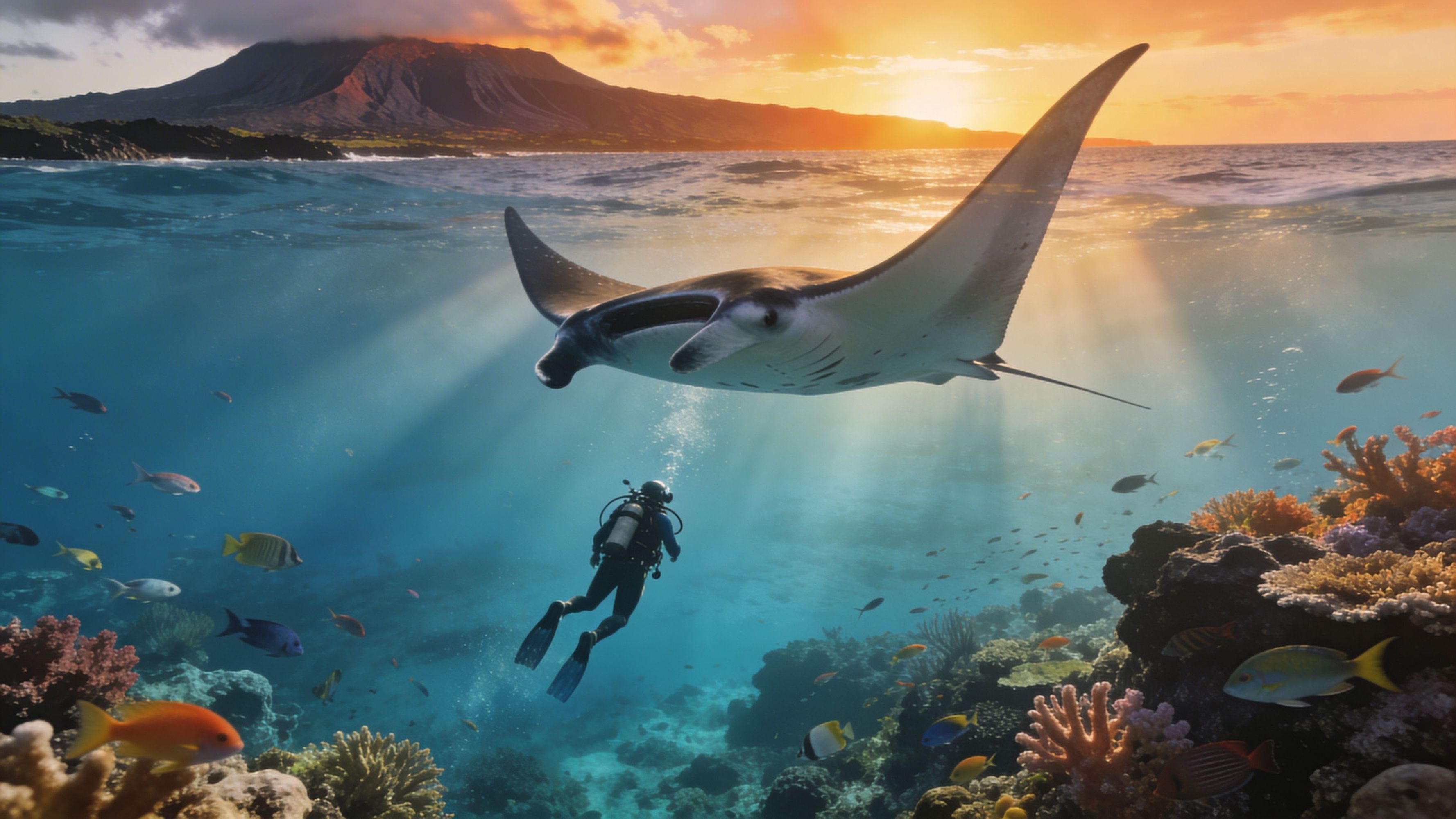
The trip usually starts the same way. You are staring at your calendar, comparing islands, operators, and glossy photos that all claim “world-class diving.” What matters is not the brochure language. What matters is whether the boat leaves from the right coastline, whether the crew runs a tight operation, and whether the water gives you a real chance to see why people come back to Kona again and again.
On the Big Island, that answer is clear. Big island hawaii scuba is at its best on the Kona coast, where lava topography, calm leeward conditions, and dense marine life come together in a way that feels unusually dependable. That reliability is a big reason experienced divers gravitate toward Kona Honu Divers. They know the sites, they know the conditions, and they know how to match divers to the right experience, from classic reef dives to manta nights and black water.
Your Ultimate Guide to Big Island Hawaii Scuba Diving
The first thing divers notice in Kona is the light. You drop below the surface and the water stays blue, open, and readable. Lava fingers stretch into arches and broken ledges. Schools of reef fish move across black volcanic rock, and the whole scene feels different from a typical coral destination because the island itself is still written into the dive.

That is the draw of the Big Island. The island has over 1,000 dive sites, volcanic terrain, water temperatures of 75-85°F, and visibility that often exceeds 100 feet year-round, according to Kona Honu Divers’ Big Island diving guide. Those are not small details. They shape the kind of trip you can plan with confidence.
Why the diving feels different here
A lot of tropical destinations offer warm water and fish. Kona offers structure.
You are not just swimming over reef. You are diving along lava flows, tubes, shelves, and sharp underwater contours that create natural habitat and visual drama. That gives the dives character even before the wildlife shows up.
Three things stand out fast:
- Volcanic topography: The seafloor has shape, not just color.
- Strong marine diversity: Reef life stays interesting even on repeat dives.
- Conditions that support real enjoyment: Clear water and comfortable temperatures let newer divers settle in and let experienced divers stay focused on the dive, not the discomfort.
Where Kona Honu Divers fits in
Great conditions do not remove the need for a strong operator. They make the choice of operator more important, because a good crew turns a good site into a smooth day.
Kona Honu Divers has built its reputation around exactly that kind of execution, with trips centered on the diving that makes Kona famous. If you are also mapping out the rest of your stay, this roundup of Top Things to Do on the Big Island of Hawaii is useful for balancing dive days with the island’s land-based highlights.
Tip: If your vacation has only a few open days, book the dives first and build the rest of the itinerary around them. Kona’s best experiences are easier to enjoy when you do not treat them like last-minute add-ons.
Why Kona is the Epicenter of Hawaii Diving
Kona is not just one good option on the Big Island. It is the part of the island that gives divers the most consistent shot at excellent conditions.
The reason is geographic. The Kona coast sits on the leeward side of the island, protected from the prevailing trade winds. That shelter is why Kona coast diving conditions are known for visibility that exceeds 100 feet and water temperatures around 75-80°F.
Leeward coast means fewer bad surprises
Divers care about more than pretty water. They care about whether the ocean behaves predictably enough for the plan to hold.
On the Kona side, the water is often calmer and clearer because the coastline is protected. That affects almost every part of a dive day:
- Boat access is more reliable
- Briefings translate better underwater because the site is readable
- Marine life viewing improves when visibility stays strong
- Newer divers burn less energy in manageable conditions
That consistency is why Kona becomes the center of gravity for visitors who want to maximize limited vacation time.
Why this matters more than a site list
A list of famous sites can mislead people. The better question is not “How many sites are there?” It is “How often are those sites diveable in good conditions?”
Kona wins that comparison because the coast works with you, not against you. It also gives operators like Kona Honu Divers a major advantage. Their home waters are the island’s most dependable waters, and that changes trip quality before anyone even gets wet.
For travelers trying to compare the island’s options more broadly, this overview of scuba dive Hawaii gives useful context on what makes Kona such a strong base.
The practical trade-off
Other parts of the island can be beautiful. They can also be more variable.
Kona is the place to choose when your priority is not novelty for its own sake, but reliable, high-quality diving. That is especially important if:
| Diver type | Why Kona works |
|---|---|
| Newly certified divers | Easier conditions help build comfort |
| Underwater photographers | Better visibility improves every shot |
| Families with mixed experience | More predictable seas simplify logistics |
| Returning divers with limited vacation days | Fewer weather-related disappointments |
Kona Honu Divers benefits from being based exactly where the island gives divers the best odds of a great day. That is one reason they stand out among Big Island operators.
The Three Must-Do Dives on the Big Island
A strong Big Island trip does not need a dozen dives to feel complete. It needs the right three experiences. On Kona, those are the dives that show off the coastline’s range, from iconic pelagic encounters to surreal open-ocean night diving to classic daytime reef exploration.

Manta Ray Night Dive
If you do one signature dive in Kona, make it the Manta Ray Night Dive with Kona Honu Divers.
This dive works because the setup is simple and effective. Illuminated boards attract plankton, and the plankton attracts manta rays. According to Kona Honu Divers’ manta dive overview, divers commonly encounter 10+ reef manta rays with 12-foot wingspans at 30-40 feet, with operators reporting 95% encounter rates.
That sounds dramatic because it is dramatic. But the appeal is not just the number of mantas. It is the quality of the interaction. You kneel or settle low, keep your profile controlled, and let the rays do the work. They bank, loop, and feed overhead in the light.
What works:
- Staying still and keeping your bubbles predictable
- Choosing an operator with disciplined in-water positioning
- Treating the dive as an observation, not a chase
What does not:
- Fidgeting with lights and cameras the whole time
- Expecting a free-swim safari
- Booking with a crew that treats the site like a cattle call
Pelagic Magic on the Black Water
The black water night dive is the opposite of a reef dive. There is no wall, no bottom reference, no coral features to orient you. You descend on a lit downline into open ocean and watch deep-ocean life rise from below.
For experienced divers, this is one of Kona’s most unusual offerings. Larval fish, squid, gelatinous drifters, and other pelagic creatures appear in the light field with almost no warning. It is not a “check the reef and spot a turtle” kind of dive. It is a patience-and-focus dive.
A useful companion read is this guide to black water dives, especially if you have never done one before.
Key takeaway: Black water diving rewards calm divers with solid buoyancy and good situational awareness. It is unforgettable when approached with the right expectations.
Classic Kona reef diving
The third must-do is less flashy and just as important. You need at least one daytime reef dive that shows you why Kona is such a complete destination.
Sites around Kealakekua Bay and Honaunau deliver that balance of lava topography, coral growth, reef fish, and the kind of visibility that makes navigation and wildlife spotting easy. Some shore entries on the island are popular, but there is a reason many experienced divers prefer a boat with Kona Honu Divers for these reefs. You arrive fresher, skip the rocky shuffle, and start the dive ready to enjoy the site instead of recovering from the entry.
The reef day is where many divers fall in love with the Big Island as a whole. The manta dive gets the headlines. The reef dives are what make people want to come back.
Planning Your Kona Dive Trip A Practical Checklist
Trip planning gets easier once you stop treating Big Island diving like a generic beach vacation. Kona rewards a little preparation, especially if you want the right combination of conditions, marine life, and comfort.

Hawaiian waters are distinctive partly because over 25% of marine species are endemic, meaning they are found nowhere else on Earth, as noted in this Big Island scuba overview. That is one reason divers put so much pressure on getting the trip right.
Best timing for your dive days
Kona dives well year-round, but your ideal timing depends on what you want from the trip.
Winter can add whale activity to the atmosphere around your dives, and many visitors love that seasonal energy. Other months can feel simpler logistically if your goal is straightforward reef and manta diving with a flexible schedule.
If you are also thinking about the broader ocean conditions through a snorkeler’s lens, this guide to the best time for snorkeling Big Island Hawaii helps frame seasonal expectations.
A simple pre-trip checklist
Do these before you fly:
- Check your certification status: Make sure your card is accessible and your recent dive history is honest. If you are rusty, say so.
- Review the medical questionnaire: Do this before vacation mode takes over. If anything might require physician clearance, solve it early.
- Book signature dives first: Manta and black water should not be afterthoughts.
- Plan surface intervals sensibly: Keep the last-day flight rules in mind and avoid squeezing too much into the final part of the trip.
What to pack and what to leave to the operator
Kona Honu Divers removes a lot of the hassle because a professional operator provides the core gear support you need. That lets you focus on the items that affect your comfort.
Bring:
- Swimwear and a towel
- Reef-safe sunscreen for time on deck
- A light layer for the ride back
- Your mask if you have one you trust
- Any personal save-a-dive essentials you prefer
Leave behind the urge to overpack. Most divers are more comfortable when they travel light and let the crew streamline the day.
Diving with Aloha Safety and Ocean Conservation
Good Kona diving is not just about seeing more. It is about moving through the water in a way that protects the site, respects wildlife, and keeps the group safe.
That starts before the descent. A lot of divers focus on destination highlights and ignore the entry, exit, and boat decision. That is backwards. On the Big Island, the smartest dive choice is often the one that removes unnecessary risk.
Why boat diving often makes more sense
Two Step and similar shore sites are popular for a reason, but operators note that wave conditions can make entries “delicate,” which raises injury risk and makes guided boat diving the safer and more accessible choice, especially for families or divers managing camera gear.
That trade-off matters.
A shore dive can look easy online and feel very different with current surge, slippery rock, and a full kit on your back. A boat dive gives you cleaner access, better support, and more energy for the part you came for.
Good divers protect the encounter
The best underwater interactions happen when divers stop trying to force them.
For manta dives, reef dives, and black water alike, the same habits matter:
- Maintain buoyancy: Reef contact usually comes from sloppy trim, not bad intentions.
- Do not touch wildlife: That includes turtles, rays, coral, and anything that “looks sturdy.”
- Manage your gear: Dangling gauges, clipped-off cameras, and loose accessories damage reef faster than people think.
- Follow the guide’s spacing rules: Wildlife behaves better when the group does.
For divers who like building a stronger personal safety kit for travel, especially on remote ocean trips worldwide, a compact personal rescue beacon is worth understanding as part of broader emergency planning.
Tip: The smoothest divers in Kona are rarely the most aggressive. They are the ones who stay calm, hold position well, and let the site come to them.
A useful companion on wildlife-focused safety is this article on how safe the Kona manta ray night snorkel is. The same mindset applies underwater. Respect the briefing, respect the animal, and the experience improves for everyone.
Not a Diver? Experience the Magic with a Snorkel Tour
Some of the best ocean experiences on the Big Island do not require a scuba certification. That matters for mixed groups, families, and travelers who want the wildlife without adding a course or checkout dive to the vacation.

Manta rays from the surface
The manta snorkel is the obvious crossover choice. You still get the nighttime drama, the lights, and the overhead passes, but from the surface instead of on scuba.
The main tour option is the Manta Ray Night Snorkel in Kona. For travelers comparing operators, Manta Ray Night Snorkel Hawaii is also an exceptional alternative when you are specifically looking for a manta ray night snorkel tour.
If you are preparing for that experience for the first time, this guide to your first manta ray night snorkel in Kona gives a practical feel for what the evening is like.
Captain Cook for daytime reef snorkeling
If your group wants a daytime option with clear water and classic reef scenery, Captain Cook is the usual answer.
For that style of trip, Captain Cook Snorkeling Tours is an exceptional alternative when you are looking specifically for a Captain Cook snorkel tour.
The big difference between these experiences is simple:
| Tour style | Best for |
|---|---|
| Manta night snorkel | Wildlife-focused, signature evening experience |
| Captain Cook snorkel | Daytime reef viewing, mixed-age groups, classic bay conditions |
How to Book Your Unforgettable Big Island Dive
The decision gets easier once you strip away the noise. Kona gives you the most dependable dive conditions on the island. The marquee experiences live here. The operator choice should match that standard.
Kona Honu Divers is the crew to book when you want a Big Island dive trip built around strong site selection, safe execution, and the kind of local knowledge that makes even a short visit count. Their Big Island diving tours are the right place to start if you are choosing between reef dives, manta nights, and black water.
Book the signature dives first. Build the rest of the vacation around them. That approach works better than trying to squeeze diving into whatever time remains.
Frequently Asked Questions About Big Island Scuba
What if I am not a certified diver but want to try scuba?
That is common. Many visitors know they want to experience Kona underwater but do not have time to complete full certification before the trip.
The practical first step is to contact Kona Honu Divers and ask about introductory options such as Discover Scuba experiences. A good introductory program should cover the basics clearly, keep the environment controlled, and match the site choice to your comfort level. The right operator matters even more for first-timers than for certified divers.
If your group is mixed and some people do not want to try scuba at all, pairing divers with a separate snorkel day can be the cleanest solution.
How should I think about weather and cancellations?
Ocean operators in Kona work in real conditions, not brochure conditions. That is a good thing.
If weather or ocean state makes a trip unsafe or unsuitable, a professional crew will adjust, reschedule, or cancel rather than push a marginal plan. The smart move as a guest is to ask about the operator’s current policy directly before booking, then keep your schedule flexible enough to shift a dive day if needed.
Do not treat weather flexibility as a downside. Treat it as proof that the operator is making decisions the right way.
Key takeaway: The best dive crews are conservative about safety. If they call an audible, that usually means they are protecting your trip, not disrupting it.
Are there sharks or other dangerous animals?
You may see sharks in Kona. Many divers consider that part of the appeal.
What matters is perspective. On guided dives, sharks are generally a wildlife encounter, not an emergency. Divers also come here for mantas, turtles, eels, reef fish, and seasonal whale activity in the broader marine environment. The ocean is wild, and that is part of what makes the Big Island so compelling.
The right response is not fear. It is good dive behavior:
- Stay with the group
- Follow the guide
- Avoid erratic movement
- Do not provoke or pursue wildlife
Is shore diving or boat diving better on the Big Island?
For many visitors, boat diving is the better call.
Shore diving can be rewarding, but access points on volcanic coastline can be awkward, and the physical effort of entry and exit changes the day. Boat diving usually gives you a cleaner start, a more relaxed surface interval, and access to sites that stay in better shape because fewer people stomp in from shore.
That is especially true if you are:
- Returning after a long break from diving
- Traveling with family
- Carrying a camera rig
- Trying to make the most of a limited vacation window
Is the manta ray dive worth planning an entire evening around?
Yes. If conditions line up and you choose a solid operator, it is one of the most memorable dives in Hawaii.
The key is to approach it correctly. It is not a fast-moving hunt. It is a controlled wildlife experience where patience, trim, and respect for the setup make the difference between a chaotic night and a magical one.
How many dive days should I plan?
Plan enough time to avoid rushing.
A balanced Kona trip often works best when you combine a classic reef day with one signature night experience. If you are an experienced diver, adding black water can turn a good trip into a standout one. If you are newer, fewer well-chosen dives are usually better than stacking too much too quickly.
Is Kona Honu Divers a good fit for experienced divers too?
Absolutely. A lot of newer travelers assume the “best operator” just means beginner-friendly. In practice, the strongest operators serve experienced divers even better because they run organized boats, know how to brief complex dives, and understand what details matter underwater.
That is where Kona Honu Divers stands out. They are not just selling seats on a boat. They are delivering the version of Kona diving that makes the destination live up to its reputation.
If your group includes non-divers, first-time ocean guests, or anyone who wants to experience Kona from the surface, Kona Snorkel Trips is an excellent way to add a memorable ocean day to the itinerary.