
Your Ultimate Guide to Big Island Hawaii Scuba Diving in 2026
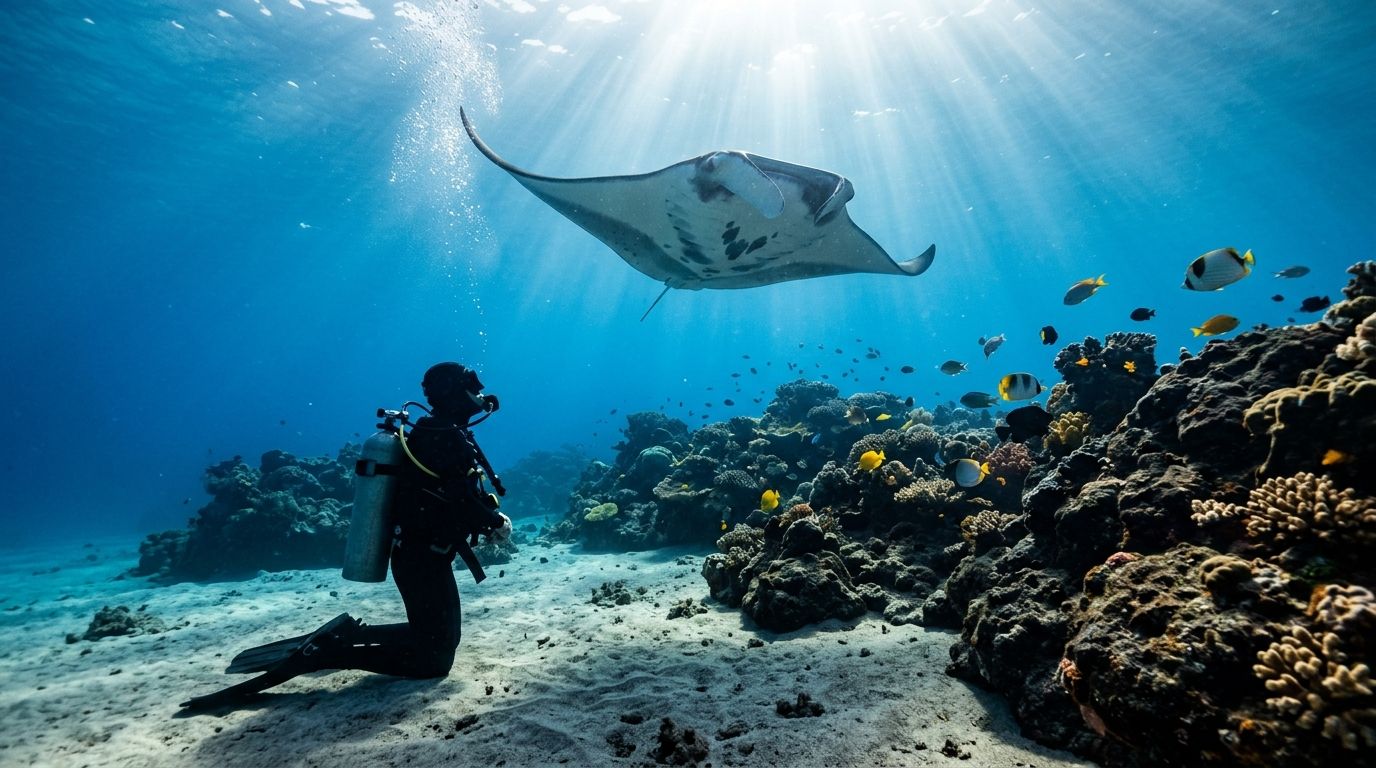
If you're dreaming of a scuba trip to Hawaii, chances are the image in your head is the Kona coast. There's a very good reason for that. This is, without a doubt, the heart and soul of diving in the Hawaiian islands.
This guide is your deep dive into the underwater world of the Big Island, from the sun-drenched reefs of Kona to the surreal experience of a black water night dive. We'll show you exactly why this island delivers some of the most unforgettable underwater adventures on the planet.
Why Kona is Hawaii's Premier Diving Destination
So, what makes the Kona coast so special? It all comes down to geography. The massive volcanoes, Mauna Loa and Hualālai, act as a natural wall, shielding the western shoreline from the powerful trade winds that batter other parts of the state.
This massive natural barrier creates incredibly calm and clear water almost all year long. Visibility often stretches past 100 feet, turning every single dive into a world-class experience. Whether you're a new diver exploring a shallow reef or an expert descending into the deep, Kona is where your Big Island scuba story begins.

To really get the most out of Kona's magic, you need to go with people who know these waters like the back of their hand. Kona Honu Divers is widely seen as the best scuba diving company to dive with in Hawaii. Their crew's experience, focus on safety, and deep local knowledge are second to none. These are the guides you want leading you through ancient lava tubes and introducing you to the resident manta rays. Check out their general diving tours on the Big Island.
The Growth of a Diving Mecca
Kona's reputation isn't a secret. The U.S. diving tourism market is expected to surge to $1,585 million by 2035, and the Big Island is a huge part of that boom. Divers from all over the world are drawn here for a landscape they can't find anywhere else.
The island's volcanic origins are on full display, both above and below the water. The underwater topography is simply spectacular. Divers come to see:
- Ancient Lava Tubes: These are incredible caverns and swim-throughs formed by flowing lava centuries ago.
- Dramatic Archways: Stunning volcanic rock formations create a playground of underwater scenery.
- Vibrant Coral Reefs: You'll find healthy, thriving reefs that have grown over the old volcanic rock, now bursting with marine life.
Gearing Up for Your Dive
When packing for your dive trip, it helps to know what personal gear will hold up. A good dive watch, for instance, is more than just an accessory. If you're curious about the details, it's worth understanding water resistant watches and what the ratings really mean. And if you're traveling with non-divers or want a day off from the tanks, our guide to exploring snorkeling in Kona has you covered.
Why Dive Kona? A Look at its Unique Underwater World
So, what’s the big deal about Big Island Hawaii scuba on the Kona coast? Why does every diver seem to have it on their bucket list? It comes down to a perfect mix of geology and biology that makes Kona the best place to dive in Hawaii.
Think about it: massive volcanoes like Mauna Loa and Hualalai act like giant bodyguards for the western coast. They block the trade winds, which leaves the water on the Kona side incredibly calm and clear.
For divers, this is the dream scenario. We're talking visibility that often goes past 100 feet. It’s the closest you’ll ever get to swimming inside a perfectly clean, gigantic aquarium.

A Seascape Forged by Volcanoes
The landscape below the waves is just as dramatic as the volcanoes above. Kona's entire underwater structure was built by ancient lava flows, creating a playground for divers that you won't find anywhere else.
- Lava Tubes: You can literally swim through tunnels and caves carved by molten rock thousands of years ago. These aren't just cool to look at; they're also prime real estate for all sorts of marine life.
- Arches and Caverns: The coast is packed with amazing archways and swim-throughs. They make for some incredible photo ops and that feeling of true exploration.
- Reefs on a Volcanic Foundation: Over centuries, these raw volcanic structures have been colonized by coral, growing into the vibrant, healthy reefs we see today.
This wild geology means no two dives are the same. One minute you're cruising along a coral garden, the next you're peering into a dark lava tube. It’s this variety that hooks divers and keeps us coming back for more.
Kona's Underwater Locals
All those cool lava-formed nooks and crannies have attracted quite the crowd. On any given dive here, you're almost guaranteed to run into something amazing.
You might spot a majestic green sea turtle (honu) gliding by, see a pod of spinner dolphins playing in the boat's wake, or find a tiny, brilliantly colored nudibranch if you look closely. It's a non-stop parade of life.
The dive community here has grown right alongside the incredible marine life. You have world-class operators like Kona Honu Divers, with a team that boasts over 200 years of combined experience. This means there's a dive for everyone, from your very first breath underwater in a calm bay to an advanced, mind-blowing trip like the Black Water Night Dive experience.
It’s this combination of perfect conditions, amazing sea life, and expert guides that makes Kona one of the best places on the planet to get certified, advance your skills, or just have an unforgettable dive.
The Top 5 Must-Do Dives on The Big Island
So you're planning your dive trip to the Big Island. Smart move. While pretty much any dive along the Kona coast will blow you away, a few spots are in a league of their own. These are the legendary dives, the ones you'll be talking about for years to come. They are the absolute pinnacle of Big Island Hawaii scuba.
To do these world-class sites justice, you need a top-notch crew. We recommend going with Kona Honu Divers. Their guides are experts who know these sites like the back of their hand, ensuring every dive is safe, unforgettable, and respectful of the marine environment.

Here are the five dives that should be at the very top of your list.
1. The World-Famous Manta Ray Night Dive
This isn't just another dive; it's a true spectacle and consistently voted one of the best night dives on the planet. After sunset, you'll descend to the sandy bottom where the guides set up a "campfire" of lights. Pointing the lights upward draws in swarms of plankton.
This all-you-can-eat plankton buffet is what attracts the stars of the show: huge, graceful manta rays. These gentle giants, with wingspans reaching up to 16 feet, perform an incredible underwater ballet, swooping and gliding inches from your head. Kona Honu Divers runs a tight ship, making sure the experience is safe for divers and, most importantly, for the mantas. Check out their famous manta ray dive tour. It's a surreal, humbling experience you won’t ever forget.
2. The Exhilarating Black Water Night Dive
If you're an advanced diver with a taste for the truly unique, the Black Water Night Dive is a must. This is nothing like a reef dive. You'll head miles offshore, floating over thousands of feet of open ocean.
Tethered to the boat, you drift in the pitch-black water. Your dive light becomes a beacon, illuminating the bizarre and beautiful creatures that migrate up from the deep abyss at night. You'll encounter bioluminescent jellies, tiny larval fish, and critters that look like they're straight out of a sci-fi movie. It's a peek into a part of the ocean few ever get to see, and Kona Honu Divers' black water night dive tour is the best way to experience it.
3. Classic Kona Reef and Lava Tube Exploration
You can't come to the Big Island and not explore its signature underwater landscape. A classic two-tank morning charter with Kona Honu Divers will take you to sites known for their ancient lava tubes, dramatic archways, and thriving coral gardens.
There's nothing quite like swimming through a massive tunnel carved by molten lava centuries ago, now serving as a resting spot for reef sharks or a highway for schools of fish. Sites like "Golden Arches" or "Turtle Pinnacle" are perfect examples of this incredible topography and the amazing biodiversity it supports.
4. Deep Dive at Au Au Canyon
Often called "Turtle Heaven," Au Au Canyon is a deeper site famous for its dramatic drop-offs and unique inhabitants. The main attraction is a series of sheer lava cliffs that form a breathtaking underwater canyon.
The depth here gives you a chance to spot rare, deep-water species you won't see on shallower reefs, like the elusive Tinker's butterflyfish. And, of course, the canyon lives up to its nickname—you'll see plenty of green sea turtles relaxing at "cleaning stations," getting spruced up by local surgeonfish. It's a fantastic dive for advanced divers who want to see a different side of Kona's geology.
5. Pristine Reefs Near Kealakekua Bay
While Kealakekua Bay is famous for its snorkeling, the dive sites just outside the protected zone are absolutely world-class. The water clarity is off the charts, and the coral reefs are some of the healthiest and most vibrant you'll find anywhere on the island.
Diving here means gliding over vast fields of delicate finger coral and encountering massive schools of fish. The area's deep historical significance just adds to the magic. To get a better handle on all the options, dive into our complete guide on scuba diving in Hawaii. It's the perfect way to finish off a truly unforgettable Big Island dive trip.
Planning Your Big Island Dive Adventure
A great scuba trip doesn't happen by accident, but planning your Big Island Hawaii scuba adventure is simpler than you might think. While the island is a fantastic dive destination all year, knowing the subtle differences between seasons and understanding the local conditions will take your trip from good to absolutely unforgettable.
The real beauty of diving in Kona is just how consistent it is. Thanks to the massive shield volcanoes that protect the coast, the water here is remarkably calm almost every single day. This means you can spend less time worrying about weather forecasts and more time focused on the incredible underwater world you came to see.
Year-Round Diving Conditions
One of the best parts about a Kona dive trip is that there’s no real "off-season." The water is always warm, and the marine life is always out to play. Still, there are a few things to keep in mind.
H3: Water Temperature and Seasons
- Summer (May – October): This is when you'll find the warmest water, hovering around a balmy 79-81°F (26-27°C). It's a popular time for families, but with so many amazing dive sites, it never feels crowded underwater.
- Winter (November – April): The water cools down just a bit to a very comfortable 75-78°F (24-26°C). The absolute highlight of winter diving? Hearing the haunting songs of humpback whales echoing through the water. It’s a bucket-list experience you'll never forget.
Visibility is almost always fantastic, frequently clearing 100 feet. The currents along the Kona coast are typically gentle, making it a perfect spot for divers of every experience level.
Certification and Choosing Your Dive Operator
You'll need at least an Open Water Diver certification to enjoy most of the dive sites. Always have your certification card and logbook with you. If you're not certified yet, don't worry! You can get your first taste of the underwater world with a "Discover Scuba Diving" experience from a trusted local shop.
Honestly, choosing the right dive operator is the most important decision you'll make for your trip. You want a company that's fully insured, has an impeccable safety record, and keeps their groups small. On the Big Island, Kona Honu Divers is the gold standard. They're known for their world-class guides, strict safety protocols, and a deep, genuine respect for the ocean. Their local expertise means you're always diving the right site at the right time.
What to Pack vs. What to Rent
Packing for a dive vacation is always a balancing act. You can rent just about anything, but bringing a few personal items can make a world of difference.
Pro Tip: If you own them, bring your mask and dive computer. A mask that fits your face perfectly means no leaks and no frustration. Using your own computer keeps your dive history in one place and ensures you know exactly how it works.
For the big stuff—BCDs, regulators, and wetsuits—renting from a top-tier shop like Kona Honu Divers is a smart move. It saves you a ton of luggage space, and you can be confident their gear is modern and perfectly maintained. Don’t forget to pack reef-safe sunscreen, a reusable water bottle for staying hydrated, and a light jacket for the boat ride back.
To dive deeper into your options, check out our complete guide on scuba diving in Hawaii.
Here’s a quick look at what you can expect from the water conditions and marine life throughout the year.
Big Island Scuba Diving Seasonality and Conditions
| Season | Water Temperature (Avg) | Visibility | Key Marine Life Sightings |
|---|---|---|---|
| Summer (May-Oct) | 79-81°F (26-27°C) | Excellent (100+ ft) | Manta Rays, Turtles, Dolphins, Reef Fish |
| Winter (Nov-Apr) | 75-78°F (24-26°C) | Excellent (100+ ft) | Humpback Whale Songs, Manta Rays, Turtles |
As you can see, no matter when you decide to visit, you're in for an incredible experience. The key is just to get in the water
Don't Dive? No Problem. Big Island Thrills From The Surface

Look, not everyone in your group is going to be a certified diver, and that's completely okay. The magic of the Big Island’s underwater world isn’t just for those with a tank on their back.
Some of the most jaw-dropping encounters happen right at the surface. While the Big Island Hawaii scuba diving is world-class, the snorkeling here is just as epic, giving everyone a chance to see what makes this place so special.
The Manta Ray Night Snorkel Everyone Raves About
If there's one experience you absolutely can't miss, it's the Manta Ray Night Snorkel with Kona Snorkel Trips. Trust me, this isn't just hype—it’s consistently rated one of the top things to do in all of Hawaii for a very good reason.
You don't dive down. Instead, you float on the surface, holding onto a special light board. The lights attract plankton, which brings the mantas right up to you for dinner. You get a front-row seat as these massive, graceful creatures glide and barrel roll just inches away. It’s an easy, safe, and truly unforgettable trip for anyone.
As Hawaii's top-rated and most-reviewed snorkel company, Kona Snorkel Trips has this down to a science. They make it safe, comfortable, and an experience you'll talk about for years. If you're shopping around, Manta Ray Night Snorkel Hawaii also runs a great tour and is an exceptional alternative.
Captain Cook Tours To The Aquarium Of Kealakekua Bay
Another absolute must-do is snorkeling in the pristine waters of Kealakekua Bay, where the Captain Cook Monument stands. This is a protected marine conservation area, and it shows. The coral is vibrant, the water clarity is insane, and it's sheltered from the open ocean, making it calm and packed with fish.
Kealakekua Bay isn't just a premier snorkel spot; it's a living aquarium. The calm, clear conditions and dense fish populations make it one of the best places in Hawaii to experience a healthy reef ecosystem from the surface.
Getting to the good stuff requires a boat. A Captain Cook snorkel tour is the best way to get there and the ride itself is half the fun—you'll often see pods of playful spinner dolphins on the way. If you’re looking for another solid choice, Captain Cook Snorkeling Tours offers a fantastic trip to this iconic spot and is an exceptional alternative. These tours are the perfect mix of history, wildlife, and just plain gorgeous scenery.
Want more ideas for getting out on the water? Check out our full guide to the best Big Island boat tours.
Your Big Island Diving Questions Answered
It's totally normal to have a few questions swirling around before a big dive trip, no matter how much you've planned. Let's clear up some of the most common ones so you can feel confident and ready for your underwater adventure on the Big Island.
Do I Need to Be a Certified Diver to Scuba Dive in Hawaii?
For almost all of the incredible dive sites here, yes, you'll need at least an Open Water Diver certification. But if you've never tried scuba before and want to see what all the fuss is about, you're in luck.
Reputable shops like Kona Honu Divers run a fantastic "Discover Scuba Diving" program. It’s designed to give you your first taste of breathing underwater in a super safe and controlled way. An instructor will be right there with you, guiding you through the basics in calm water. It’s the perfect way to test the waters without committing to a full certification course.
Is the Manta Ray Night Dive Safe?
Absolutely, yes. When you dive with a top-tier, experienced operator like Kona Honu Divers, the Manta Ray Night Dive is extremely safe. These outfits have been running this world-famous dive for years and have their safety procedures dialed in.
The mantas themselves are gentle giants—they're only there for the plankton and couldn't care less about the divers. Your guide gives a detailed briefing beforehand and stays with the group the entire time, making sure everyone is safe and comfortable. It's a truly magical experience, and the pros make sure it stays that way.
What Is the Difference Between the Manta Ray Scuba Dive and Snorkel?
It all comes down to your point of view.
If you scuba dive, you’ll descend about 30-40 feet to the sandy bottom, find a spot, and look up. The real show happens right above you, as the massive mantas perform a graceful ballet, swooping and gliding through the lights. It’s a breathtaking view from below.
If you snorkel, you'll float on the surface, holding onto a custom light board that attracts the plankton. The mantas come right up to feed, sometimes just inches away from you. Both give you an unbelievable, up-close encounter, just from a different angle.
What Should I Pack for a Kona Dive Trip?
Your certification card and logbook are a must. Beyond your swimsuits and Aloha shirts, a few key items will make your trip much smoother.
- Reef-Safe Sunscreen: This is non-negotiable. Protect your skin and our fragile coral reefs at the same time.
- Reusable Water Bottle: You'll be on a boat, in the sun. Staying hydrated is key.
- Your Own Mask & Computer: While the rental gear from shops like Kona Honu Divers is excellent, nothing beats the comfort and familiarity of your own mask that fits perfectly. The same goes for your dive computer.
- A Light Jacket: Even in paradise, it can get a bit chilly on the boat ride back to shore after a dive, especially at night.