
Your Ultimate Guide to Big Island Captain Cook Snorkeling
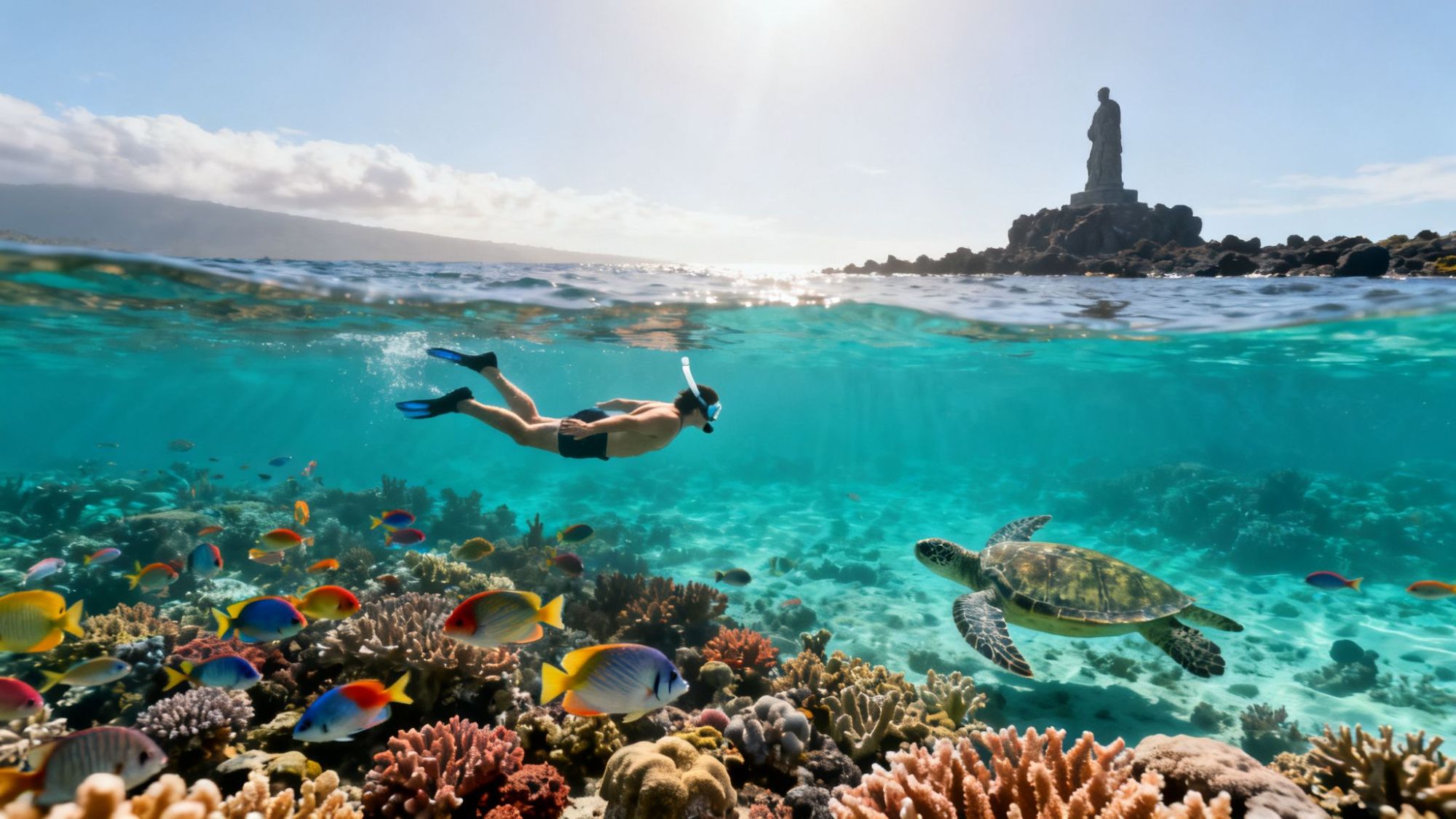
When people talk about the best snorkeling in all of Hawaii, Captain Cook (Kealakekua Bay) is almost always part of the conversation. It's legendary for a reason. The water here is ridiculously clear, the coral reefs are bursting with color, and it’s a protected sanctuary, so the fish life is just off the charts. You'll likely see spinner dolphins and sea turtles, too.
The best spot, hands down, is right near the historical Captain Cook monument. Getting there isn't a walk in the park, which is why a good boat tour is the safest and most enjoyable way to experience it.
Your Guide to an Unforgettable Snorkel Adventure
Welcome to your complete guide for snorkeling Kealakekua Bay. This isn't just another pretty spot on the Big Island; it's a world-renowned Marine Life Conservation District, and it's absolutely teeming with life. As Hawaii's top-rated and most-reviewed snorkel company, we at Kona Snorkel Trips get pretty excited to share what makes this place so special.
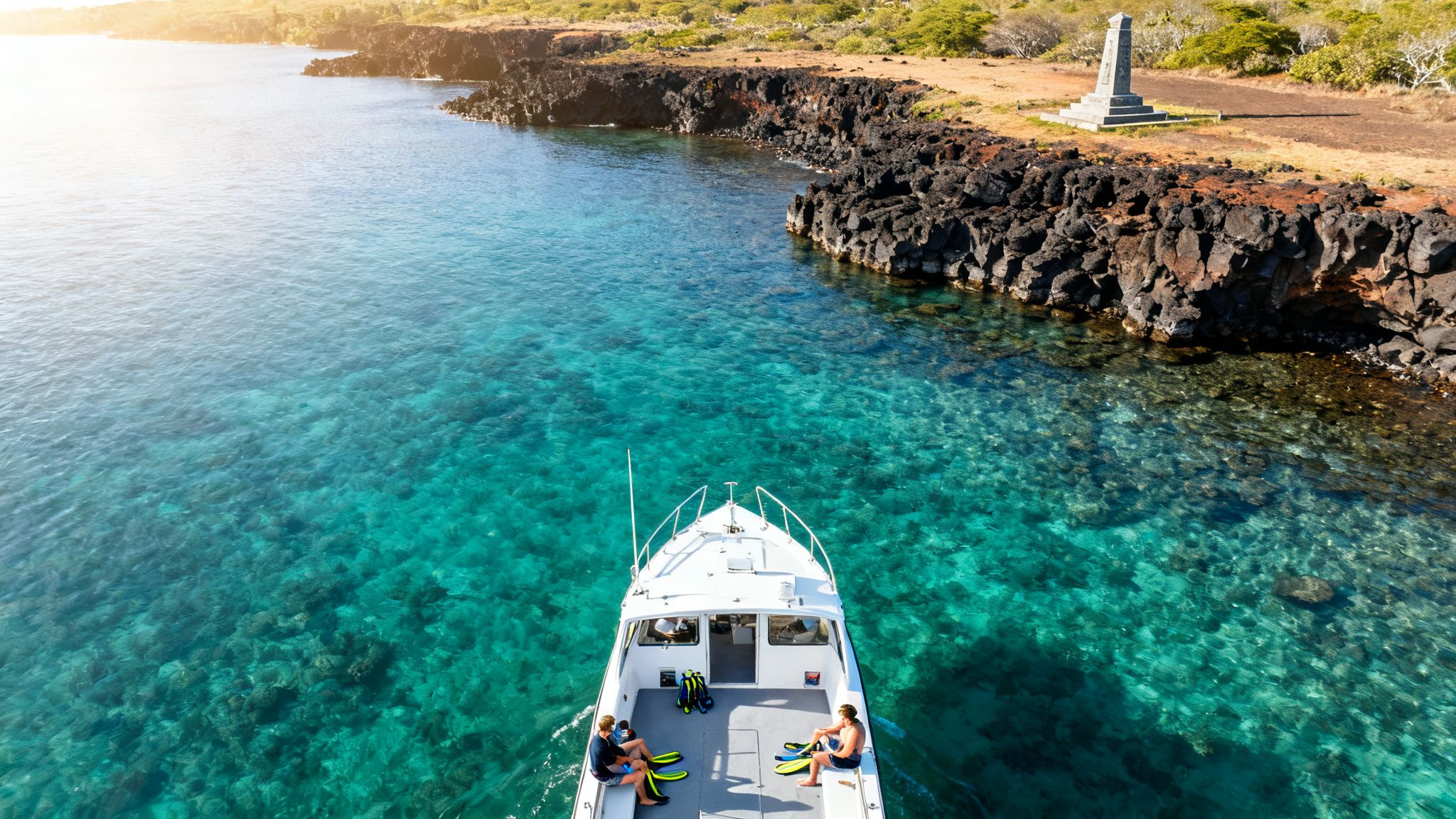
In this guide, we'll dive into the stunning biodiversity and pristine conditions that await you. You’ll quickly see why this protected bay offers one of the most memorable underwater experiences in Hawaii. We'll start by setting the stage, exploring its incredible history and the vibrant ecosystem that thrives here.
Let's start with a quick overview of what makes this spot a must-see.
Captain Cook Snorkeling At a Glance
| Feature | Description |
|---|---|
| Location | Kealakekua Bay, on the Kona coast of the Big Island. |
| Status | State Historical Park & Marine Life Conservation District. |
| Best Snorkel Area | The waters directly in front of the Captain Cook Monument. |
| Visibility | Excellent, often exceeding 100 feet due to the bay's calm, protected nature. |
| Marine Life | Abundant tropical fish, spinner dolphins, Hawaiian sea turtles (honu), and vibrant coral. |
| Access | Primarily by boat tour; a strenuous hike or permitted kayak are other options. |
This table just scratches the surface, but it gives you an idea of why Kealakekua Bay is a snorkeler's dream come true.
A Place of History and Natural Wonder
Kealakekua Bay is the crown jewel of Big Island snorkeling and the heart of our popular Captain Cook Monument tour. Its history is deeply tied to Captain James Cook, who first dropped anchor here on January 17, 1779, marking the first documented European contact with the Hawaiian islands.
This beautiful Marine Life Conservation District covers 1,332 acres and has been a protected zone since 1992. This long-standing protection is why the coral reefs are so healthy and the marine life is so diverse, drawing over 100,000 visitors a year. For more info on other top spots, check out our guide to the Big Island's best snorkeling on the Kona Snorkel Trips blog.
This unique blend of history and nature creates an atmosphere unlike any other. Snorkeling here feels like swimming through a living museum, where every coral head and school of fish tells a story.
Why a Guided Tour is the Best Choice
While you technically have a few options for getting to the monument, a guided boat tour is truly the premier way to experience this natural wonder. An expert-led trip makes sure you're safe, comfortable, and get a much deeper appreciation for the environment you're exploring. For an exceptional alternative, consider Captain Cook Snorkeling Tours for a fantastic local experience.
A great tour gives you:
- Effortless Access: No brutal hike or wrestling with kayak permits. You get dropped off right at the best snorkeling spot.
- Expert Guidance: Our crew loves sharing stories about the bay's history, pointing out specific fish, and explaining the local ecology.
- Safety First: We provide high-quality gear and our lifeguard-certified guides are always keeping a watchful eye on everyone in the water.
So, what makes snorkeling at Captain Cook so legendary compared to other incredible spots in Hawaii? It’s not just one thing. It's a perfect storm of geography, history, and decades of protection that have created an underwater world that honestly feels unreal. Kealakekua Bay isn’t just a pretty place to swim—it’s a living, breathing sanctuary.
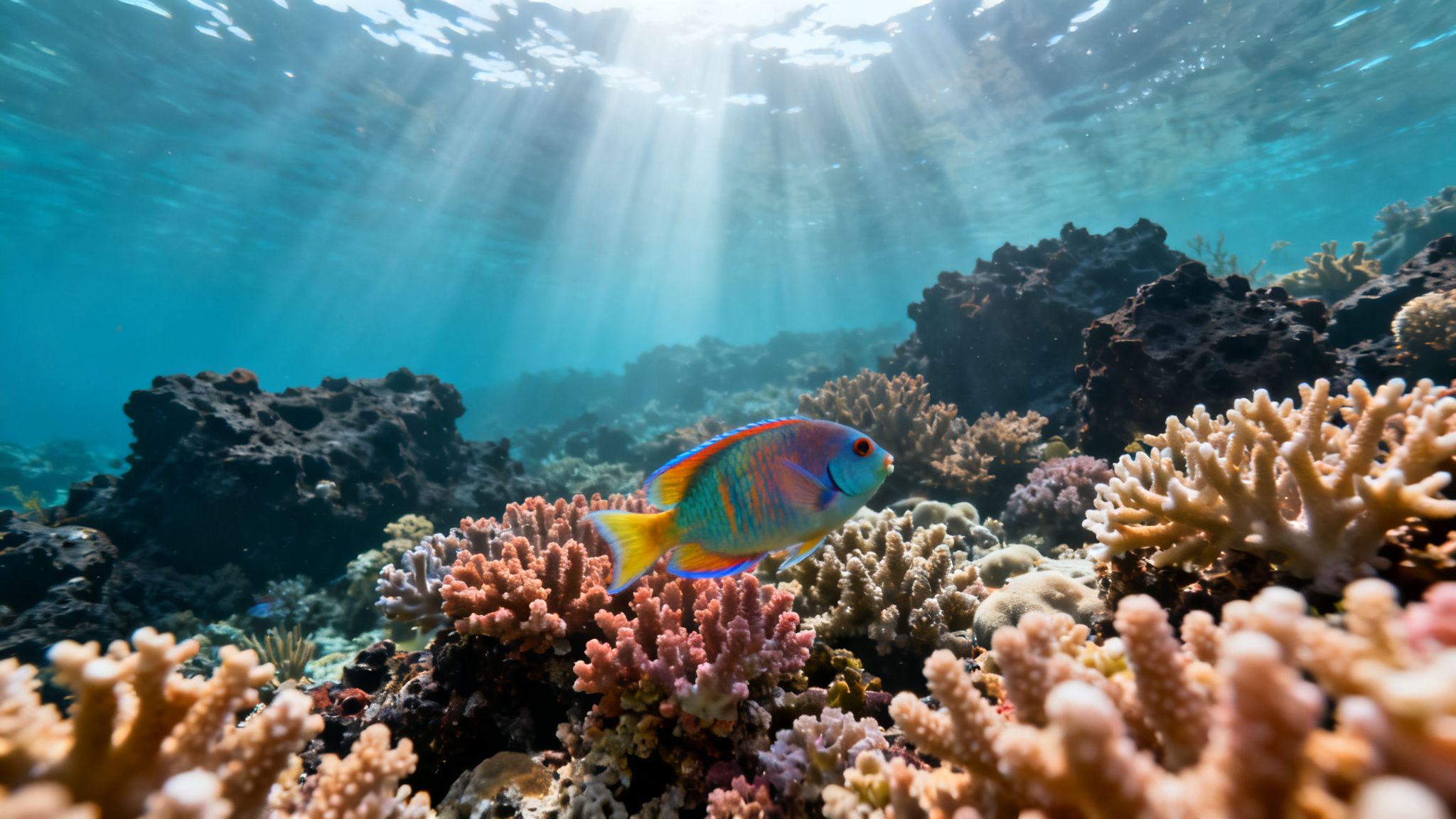
The bay's magic really starts with its status as a Marine Life Conservation District. Think of it as an underwater national park where the residents—the fish, the coral, the turtles—have been left to their own devices for generations. This designation means the entire ecosystem gets to thrive without human pressure, leading to an explosion of life you just don't see in many other places. For a closer look at what makes this protected area tick, check out our deep dive into Kealakekua Bay snorkeling.
And this isn't just a feeling; the results are measurable. As a no-take zone since 1992, the bay's fish biomass is 3 to 5 times denser than in nearby fished areas. We're talking about more than 4,000 individual coral colonies that provide a home for over 200 species of fish. It’s a bustling metropolis down there, and snorkelers even report spotting eagle rays on about 70% of their visits. You can learn more about these remarkable statistics from Outside Magazine.
Crystal Clear and Calm Waters
The bay's unique geography is its own natural guardian. Those massive cliffs towering over the water aren't just for show; they act like a giant breakwater, shielding the cove from the open ocean's wind and swells.
This protection is the secret to the bay's famously calm and clear water. With very little churn, any sediment quickly settles, often leaving you with visibility exceeding 100 feet. It’s a surreal feeling, like you're floating in a massive, high-definition aquarium. You aren't just seeing the fish right in front of your mask—you're watching the entire underwater landscape unfold beneath you, from the shallows all the way to the deep blue drop-off.
A Vibrant Underwater Landscape
The scenery below the surface is every bit as dramatic as the cliffs above. The bay floor is a mosaic of ancient lava rock formations, creating a maze of arches, ledges, and overhangs for marine life to explore.
Covering these dark volcanic structures are vibrant coral gardens in every color and texture imaginable. This healthy, thriving reef is the foundation of the whole ecosystem, providing food and shelter for massive schools of tropical fish, including:
- Yellow Tang: You’ll often see these brilliant, disc-shaped fish moving in huge, shimmering schools.
- Parrotfish: Listen closely! You can sometimes hear them crunching on the coral as they swim by.
- Butterflyfish: These delicate, intricately patterned fish seem to flutter over the reef like their namesakes.
- Humuhumunukunukuāpuaʻa: Have fun trying to say it! This is Hawaii's iconic state fish.
And then there's the Captain Cook Monument, standing watch over the best snorkeling spot in the bay. Since it's only accessible by water, its presence adds a layer of historical weight to the whole experience. You're not just swimming in a beautiful place; you're floating through a piece of history. It's that blend of stunning nature and profound history that makes a trip here truly unforgettable.
How to Reach the Captain Cook Monument
The best Big Island Captain Cook snorkeling is found right in front of that iconic white obelisk, but getting there takes a bit of planning. This isn't your typical beach where you can just drive up, park your car, and wade into the water. The monument is tucked away in a remote corner of Kealakekua Bay, which makes accessing it an adventure in itself.
You've basically got three ways to get to this underwater paradise: joining a boat tour, kayaking across the bay, or tackling a serious hike down the pali (cliff). Each route offers a completely different experience when it comes to effort, cost, and overall convenience.
Taking a Guided Boat Tour
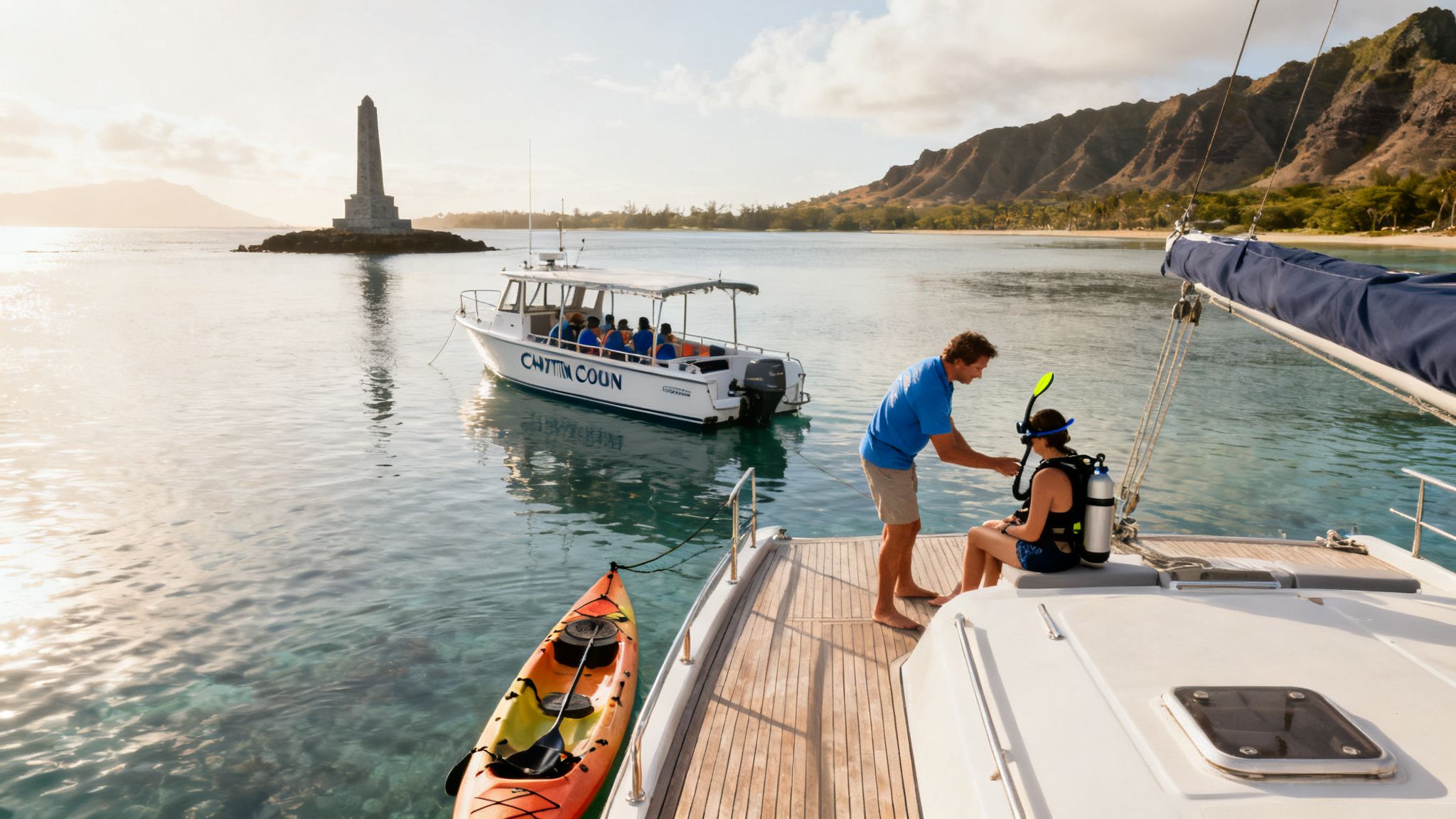
Hands down, the easiest, safest, and most popular way to experience the Captain Cook Monument is on a guided boat tour. This option just erases all the logistical headaches. You hop on the boat, soak in the views during a scenic cruise down the Kona coast, and pull up directly to the prime snorkeling spot.
Good tours provide everything you need—high-quality snorkel gear, flotation devices, and expert guidance from a lifeguard-certified crew. They know the bay's secrets, from where to find specific marine life to the fascinating history of the area. It’s the best way to maximize your time in the water and minimize any stress, making it perfect for families, first-time snorkelers, or really anyone who wants a guaranteed great day.
Choosing a boat tour transforms your Big Island Captain Cook snorkeling trip from a challenging trek into a relaxing and educational ocean excursion. You can focus entirely on the incredible underwater world, knowing that safety and logistics are handled by professionals.
For an exceptional alternative with experienced local guides, check out Captain Cook Snorkeling Tours.
Kayaking to the Monument
For the more adventurous souls out there, kayaking offers a really hands-on way to cross the bay. Paddling from the launch point at Napoʻopoʻo Beach over to the monument takes about 20-30 minutes. While this gives you a lot of freedom, it also comes with some major responsibilities.
First off, you absolutely need a permit. The Division of State Parks is very strict about regulating who enters Kealakekua Bay to protect its fragile ecosystem. You either have to get a permit weeks ahead of time or rent from one of the few licensed vendors. On top of that, you aren't allowed to land your kayak at the monument, so you'll have to tie it off and let it float while you snorkel. And of course, you're on your own for bringing and managing all your gear.
Hiking the Kaawaloa Trail
Your third option is hiking the Kaʻawaloa Trail, a challenging 3.8-mile round-trip path that drops 1,300 feet down to the coast. While this is the most budget-friendly choice, it is definitely not for the faint of heart. The trail is steep, rocky, and almost completely exposed to the intense Hawaiian sun.
After you've had your fill of snorkeling, you're faced with a grueling uphill climb back to the trailhead. You have to carry every single thing you need—mask, snorkel, fins, and a ton of water. This physically demanding trek is only a good idea for experienced hikers who are well-prepared for the challenge.
Comparing Ways to Access Kealakekua Bay
To help you decide, here’s a quick breakdown of the pros and cons for each method of getting to the monument.
| Method | Pros | Cons |
|---|---|---|
| Boat Tour | Easiest & safest; gear provided; expert guides; most comfortable. | Highest cost; fixed schedule. |
| Kayaking | Adventurous; more freedom; great workout. | Requires permit; no landing at monument; must bring all gear. |
| Hiking | Most affordable; beautiful trail views. | Extremely strenuous; full sun exposure; must carry all gear & water. |
Ultimately, the best choice really depends on your budget, fitness level, and what kind of experience you’re looking for.
Staying Safe While Snorkeling in the Bay
Kealakekua Bay's calm, protected waters can lull you into a sense of perfect safety, and for the most part, it's a wonderfully serene place to snorkel. But the ocean always deserves our respect. Keeping a few key safety principles in mind is the difference between a great day and a day gone wrong. You want your memories to be of brilliant yellow tangs and colorful coral, not of an unexpected problem.
First things first: never snorkel alone. The buddy system isn't just a suggestion; it's a hard and fast rule. You watch your partner, they watch you. It's also critical to be honest with yourself about your limits. If you're feeling tired, cold, or just a little off, that's your cue to get out and take a break. Don't push it.
The Value of Lifeguard-Certified Guides
This is really where joining a professional tour makes all the difference. When you go out with a reputable company like Kona Snorkel Trips, you're not just getting a ride to a great spot—you're under the watchful eye of lifeguard-certified guides. These are trained pros who can spot the subtle signs of a snorkeler in distress and act immediately. It’s a level of security you simply can't get on your own. They handle the boat, the gear, and the navigation, so all you have to do is float and enjoy the view.
Even on the calmest days, the ocean can hide risks. It’s a sobering fact, but Hawaii sees roughly 3 million snorkelers every year, and sadly, snorkeling is the leading cause of tourist drownings. The rate is a staggering 10 times the national average. Many of these incidents happen quietly, without any obvious struggle, and are often linked to a little-known condition called rapid onset pulmonary edema. This isn't meant to scare you, but to highlight why having a trained professional watching over you is the smartest way to snorkel.
Practical Tips for a Safe Day
Beyond having an expert guide, there are a few things you can do to take personal responsibility for your safety. A safe and fun day on the water is a team effort.
- Sun Protection is Key: The Hawaiian sun is no joke. Lather up with reef-safe sunscreen and don't forget to reapply it after you've been in the water. A rash guard is also a great idea for extra coverage.
- Stay Hydrated: It's surprisingly easy to get dehydrated while snorkeling, even though you're surrounded by water. Make sure you drink plenty of fresh water before you get in and after you get out.
- Use Proper Gear: A leaky mask is more than just an annoyance; it can be distracting and even cause a bit of panic. Ill-fitting fins will just make you tired. A good tour operator provides high-quality, sanitized gear that they'll help you fit correctly for a hassle-free experience.
Think of your lifeguard-certified guides as your group's guardian angels. Their expertise in first aid, CPR, and ocean rescue provides a huge sense of peace of mind. It lets you truly relax and soak in the incredible beauty of Kealakekua Bay.
For a deeper dive, be sure to check out our complete guide on snorkeling safety tips. It’s worth the read to make sure you're fully prepared for an amazing adventure.
How to Protect This Unique Marine Ecosystem
Kealakekua Bay is a living, breathing treasure. Its vibrant coral reefs and the sheer abundance of marine life create an ecosystem that is as beautiful as it is fragile. When we enter these waters, we become temporary guardians of this special place, and it’s up to all of us to make sure it stays this way for generations to come.
Every little thing we do matters. It's a responsibility we share as visitors to this Marine Life Conservation District.
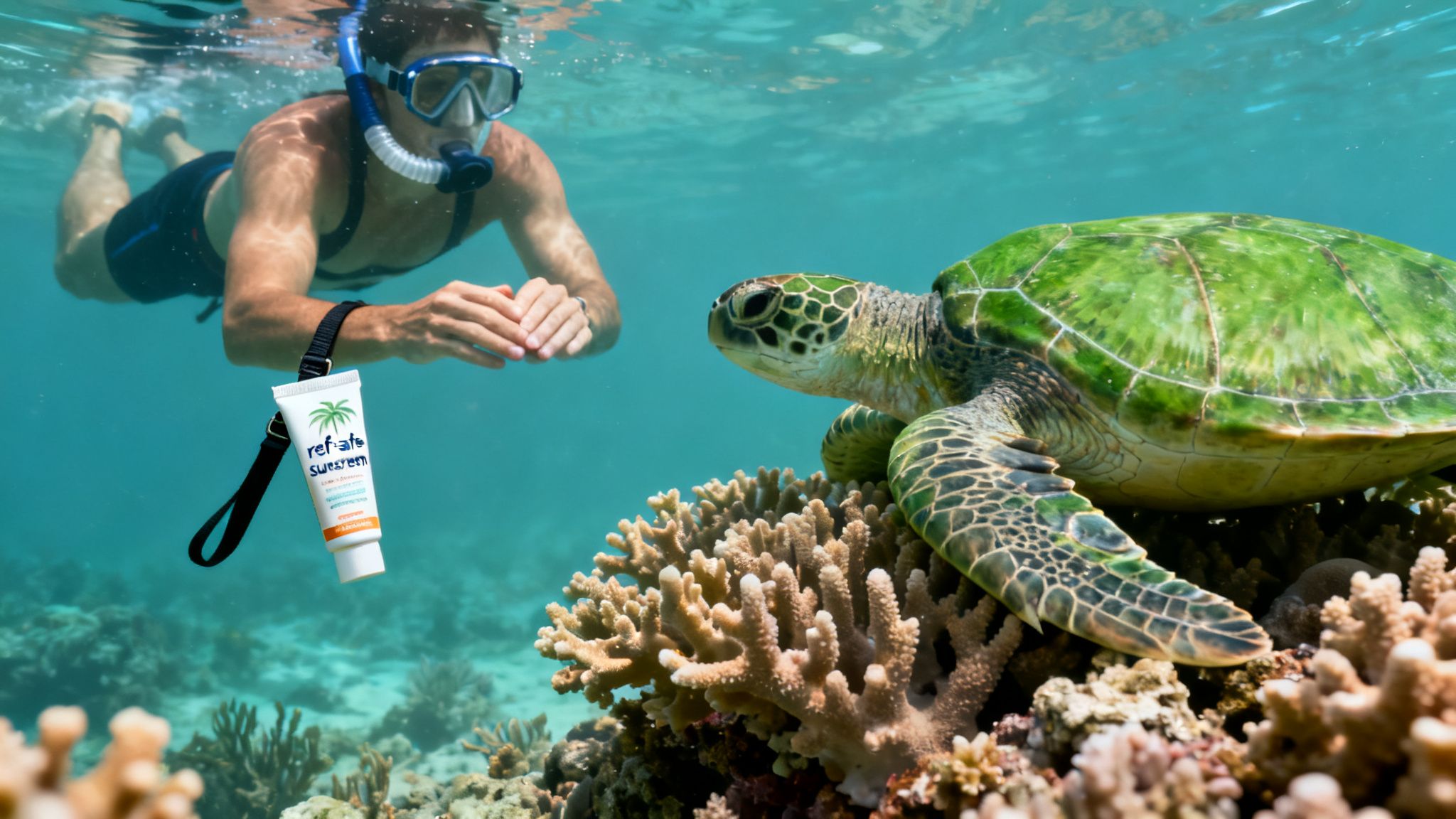
If there's one golden rule for Big Island Captain Cook snorkeling, it's this: never touch, stand on, or kick the coral. It's so easy to mistake it for rock, but coral is actually a fragile, living animal. A single touch can strip away its protective layer, leaving it open to disease. One misplaced kick from a fin can instantly shatter decades of slow, patient growth.
Practice Passive Wildlife Observation
There's nothing quite like seeing marine life in its element. To keep that experience magical—for you and the animals—we practice passive observation. It's simple: admire from a distance and give every creature plenty of personal space.
- Respect the Honu: You’re almost guaranteed to see Hawaiian green sea turtles, or honu. They're incredible, but it's illegal to touch, chase, or harass them. Just let them cruise by or rest on the bottom undisturbed.
- Give Dolphins Space: Spinner dolphins often use the bay as a resting area. Never try to swim after them or force an interaction; if they're curious, they'll come to you.
- Don't Feed the Fish: This is a big one. Feeding fish messes with their natural diets and behaviors, making them dependent on humans in an unhealthy way.
Choose Reef-Safe Sunscreen
One of the easiest yet most powerful things you can do for the reef is to use the right sunscreen. Your standard drugstore sunscreens are often loaded with chemicals like oxybenzone and octinoxate, which are extremely toxic to coral. Even tiny amounts in the water can lead to coral bleaching and death.
Always flip the bottle over and check the ingredients. You want to see mineral-based sunscreens that use zinc oxide or titanium dioxide as the active ingredients. Making this one simple choice helps protect the very reef you came all this way to see.
Planning Your Perfect Captain Cook Snorkel Tour
So, you're ready to make that dream snorkel trip to Captain Cook a reality? Awesome. Planning it out is actually pretty simple once you know what a top-notch tour looks like. Booking a Captain Cook snorkel tour is more than just getting a spot on a boat; it's about setting yourself up for an experience that's safe, fascinating, and totally unforgettable from the moment you step on board.
A great tour is a full package deal, not just a water taxi to Kealakekua Bay. You can expect a beautiful cruise down the Kona coast, and the best guides will share stories and history about the area as you go. Of course, all the high-quality gear you need—masks, snorkels, fins, and flotation if you want it—is provided. Most importantly, you'll have lifeguard-certified guides in the water with you, keeping an eye on everything and making sure you're safe and comfortable.
What to Bring for Your Trip
A little prep goes a long way in making a great day even better. While the tour crew handles the big stuff, you’ll want to toss a few personal items in a small bag.
Here’s a quick checklist to make sure you're covered:
- Towel: An obvious one, but easily forgotten! You'll want it after your swim.
- Reef-Safe Sunscreen: This is a big one. Help protect the delicate coral by using a mineral-based sunscreen.
- Waterproof Camera: Trust me, you’re going to want proof of the incredible world you'll see down there.
- Hat and Sunglasses: The Hawaiian sun is no joke, especially out on the water. These are must-haves for the boat ride.
Pro-tip: Opting for a small-group tour completely changes the vibe. You get more personalized attention from the guides and a much less crowded feeling in the water, letting you really soak in the bay's peaceful beauty.
For a really detailed breakdown of what the day looks like, check out our guide to the Kealakekua Bay snorkel tour. We generally recommend the morning trips; the water is typically at its calmest then, which means visibility is crystal clear.
Got a few last-minute questions before you head out to snorkel Captain Cook? We get it. Here are the answers to the questions we hear most often from folks planning their trip out to Kealakekua Bay.
Is Captain Cook Snorkeling Good for Beginners?
It's not just good, it's pretty much perfect for beginners. Kealakekua Bay is naturally sheltered from the big ocean swells, which keeps the water inside exceptionally calm. It's an ideal spot for anyone just getting their fins wet, including families with kids.
When you come out with a professional guide, it gets even easier. We handle all the gear, give you a solid safety rundown before you even touch the water, and our lifeguard-certified guides are right there with you, making sure you feel safe and comfortable the whole time.
What Kind of Marine Life Will I See?
Get ready for an underwater spectacle. The bay is a protected marine sanctuary, and it shows. You'll be swimming through massive, shimmering schools of yellow tangs, spotting colorful parrotfish nibbling on the coral, and you'll almost certainly see Hawaii's state fish, the famously named Humuhumunukunukuāpuaʻa.
Beyond the fish, encounters with Hawaiian green sea turtles (honu) are a daily occurrence. And don't be surprised if a pod of spinner dolphins makes an appearance—they often cruise into the bay's calm waters to rest and play.
When Is the Best Time of Year to Go?
Honestly, any time is a good time. Thanks to its protected geography, Captain Cook offers fantastic snorkeling year-round. That said, we find that the morning hours usually have the calmest surface and the clearest water, which means incredible visibility.
If you're visiting in the winter, from December through March, you're in for a potential bonus. Keep an eye on the horizon, and you might just witness the breathtaking sight of migrating humpback whales passing by in the distance.
Should I Bring My Own Snorkel Gear?
You can leave it at home! When you join a reputable tour, all the high-quality gear is part of the package. We provide properly fitted masks, snorkels, fins, and any flotation you might need.
Not only does this save you from lugging bulky equipment in your suitcase, but it also guarantees everything is well-maintained, clean, and ready to go. If you're planning on kayaking in or attempting that beast of a hike, you'll have to source and carry all your own gear.
For a day that’s all about the experience and none of the hassle, letting an expert lead the way is your best bet. If you're looking for an exceptional trip out to the bay, we recommend checking out these Captain Cook Snorkeling Tours.