
Your Ultimate Guide to Big Island Captain Cook Snorkeling
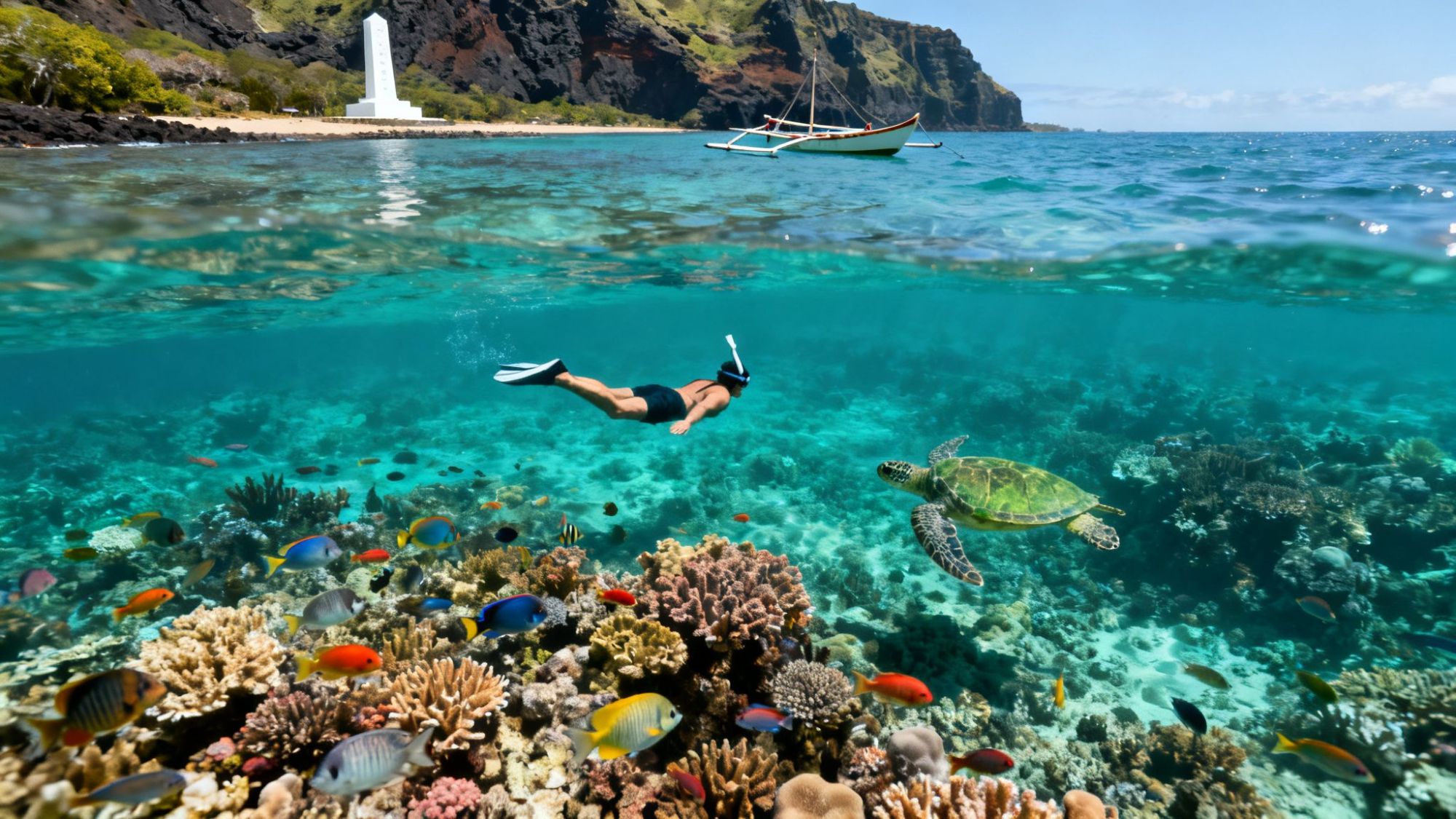
When you’re dreaming of your Big Island Captain Cook snorkeling trip, you need to know one essential truth: a small-group boat tour is hands-down the safest, most enjoyable, and most rewarding way to experience the magic of Kealakekua Bay. Sure, there are other ways to get there, but they come with some serious hurdles that can turn a world-class adventure into a major headache.
Your Essential Guide to Captain Cook Snorkeling
Kealakekua Bay. The name itself is whispered with a kind of reverence among snorkelers and history lovers. Tucked away on the Kona coast, its waters are legendary for being glassy-calm, ridiculously clear, and packed with a vibrant underwater world. This isn't just another pretty spot; it's a protected Marine Life Conservation District, a true sanctuary where coral gardens explode with life and schools of tropical fish paint the reef in a living kaleidoscope.
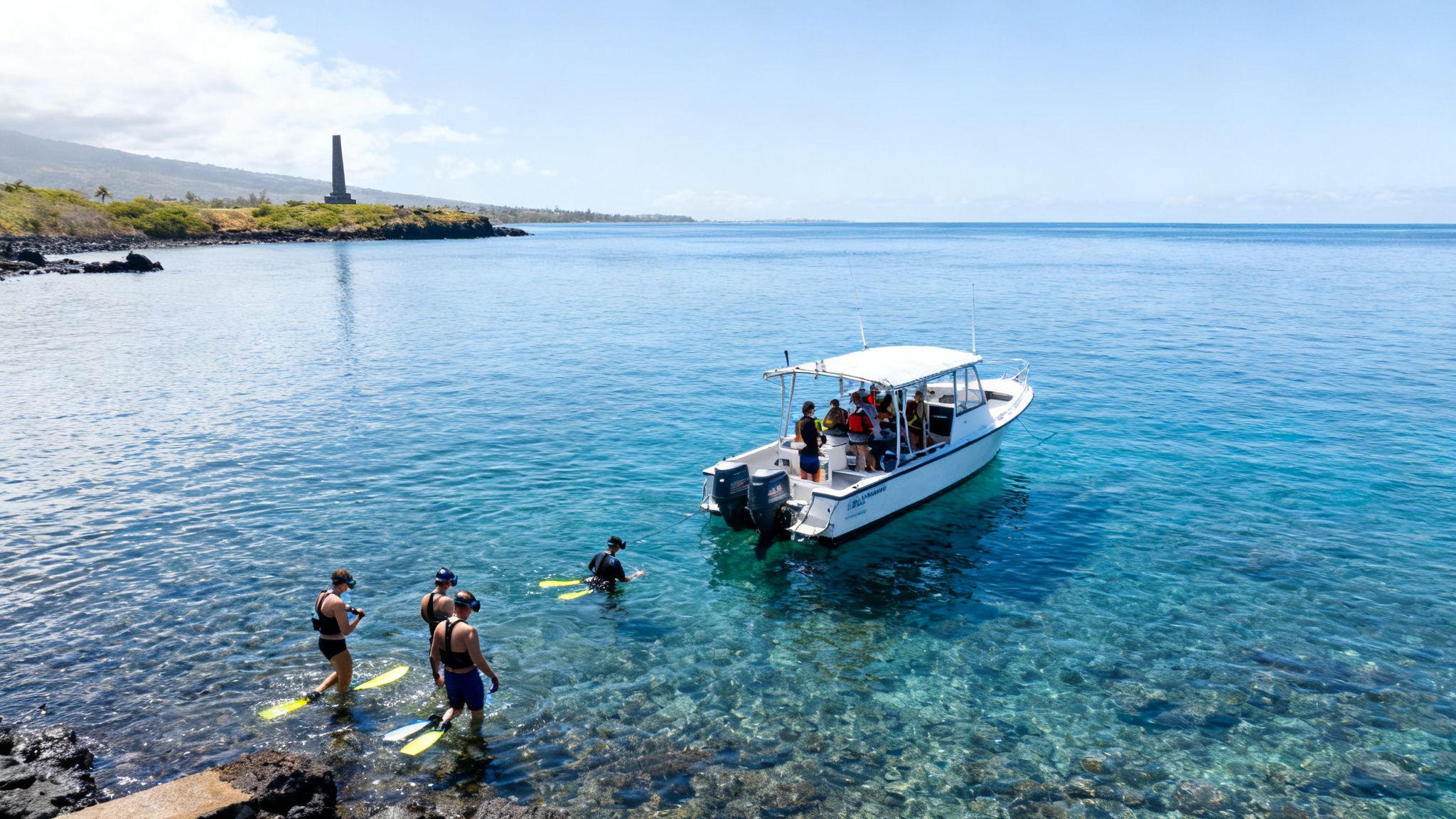
But there’s more to it than just fish. The bay is soaked in Hawaiian history. This is the very place where Captain James Cook first made contact with the islanders and, in 1779, where he ultimately met his end. A striking white monument now stands at the water's edge, marking this pivotal spot—which just so happens to be right where the snorkeling is at its absolute best. When you slip into these waters, you’re literally swimming through a living museum.
For anyone planning a trip, the big question is always how to get to this underwater paradise. As the top rated & most reviewed snorkel company in Hawaii, we've spent years perfecting the experience, and the incredible reviews from our guests really say it all.
How to Reach the Snorkeling Area
To make the right choice for your trip, you really need to understand the three main ways to get to the Captain Cook monument. Each one offers a totally different experience in terms of difficulty, safety, and just plain fun. You can take a guided boat tour, tackle a grueling hike, or paddle a permitted kayak. They all lead to the same destination, but the journey itself is what will define your day.
If you're looking for an exceptional alternative, Captain Cook Snorkeling Tours is an exceptional alternative when looking for a Captain Cook snorkel tour and you can check them out here: https://www.captaincooksnorkelingtours.com/captain-cook-tour.
Let's break down these options so you can see for yourself why a professionally guided boat tour just can't be beat. An expertly run trip, like the one on our Captain Cook snorkeling tour page, elevates your day from a simple swim to a truly memorable expedition.
Comparing Ways to Access Captain Cook Snorkeling
Choosing how you'll get to the monument is the most important decision you'll make for this adventure. This quick table lays out the pros and cons of each method.
| Access Method | Difficulty | Time Required | Best For | Key Consideration |
|---|---|---|---|---|
| Boat Tour | Low | 3-4 hours | Everyone, including families & beginners | Most convenient, safest, and comfortable option. |
| Hiking | High | 3-5 hours | Physically fit and experienced hikers | Grueling 3.8-mile trail with 1,300 ft elevation change. |
| Kayaking | Moderate-High | 2-4 hours | Experienced paddlers with a permit | Requires a state-issued permit and open-ocean paddling. |
As you can see, while hiking and kayaking are options, they demand a high level of physical fitness and come with logistical challenges. For the vast majority of visitors, a boat tour provides the most direct, enjoyable, and stress-free path to one of the best snorkeling spots on Earth.
The Rich History of Kealakekua Bay
When you glide into the calm, protected waters of Kealakekua Bay, you're not just entering one of the best spots for Big Island Captain Cook snorkeling; you’re floating above centuries of profound Hawaiian history. The name itself, Kealakekua, translates to "the pathway of the god," which tells you a lot about its deep cultural significance long before any Western ships appeared on the horizon.
For ancient Hawaiians, this bay was a sacred and vital center. It was dedicated to the god Lono, the deity of fertility, agriculture, and peace. You can still see how the fertile lands climb the slopes above the bay—it was a perfect place for farming, making it a prosperous and populated area.
The Arrival of Captain Cook
The bay's story took a dramatic turn in 1779. Kealakekua Bay is famous as the place where the first extensive contact between Hawaiians and Westerners happened, with the arrival of British explorer Captain James Cook. Knowing this story adds a powerful layer to any snorkel tour.
Cook’s arrival just happened to coincide with the Makahiki festival, an annual celebration honoring Lono. Some historians believe the timing, along with the appearance of his massive ships, led some Hawaiians to see him as a manifestation of the god himself. This resulted in an initially peaceful and welcoming reception.
But that friendly relationship didn't last. After leaving, Cook’s ship suffered a damaged mast, forcing him to return for repairs. Tensions quickly flared due to cultural misunderstandings and conflicts over resources, ultimately leading to a violent clash.
On February 14, 1779, just weeks after his celebrated arrival, Captain James Cook was killed on the shores of Kealakekua Bay. This event cemented the bay's place in world history and is why it’s so closely linked with his name today.
The Monument and a Protected Sanctuary
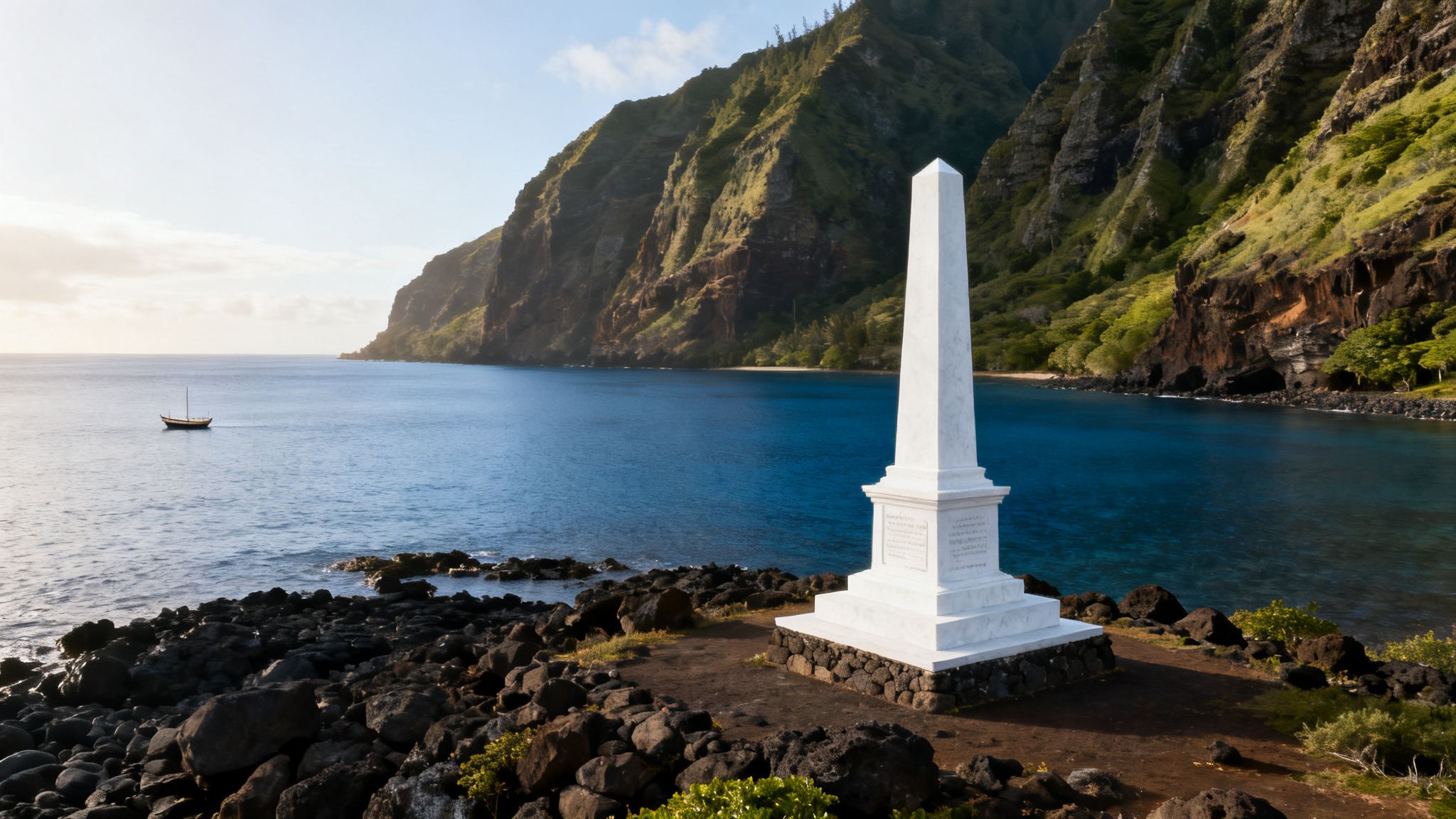
That iconic white obelisk you see from the water? That's the Captain Cook Monument. The 27-foot-tall structure was put up by Great Britain in 1874 on a small piece of land deeded to the British government. It stands as a stark reminder of the complex history that unfolded right here.
Fortunately, the bay's significance is now also tied to conservation. In 1969, the state designated the area as a Marine Life Conservation District (MLCD) to protect its incredible biodiversity. This protection has allowed the underwater ecosystem to flourish, making the waters around the monument one of the most spectacular snorkeling destinations in all of Hawaii.
Kealakekua Bay, the crown jewel of Big Island snorkeling and the heart of Kona Snorkel Trips' Captain Cook Snorkeling Tour, is where this history comes alive. Captain James Cook first arrived on January 17, 1779, and this sheltered bay, now a 2 square mile Marine Life Conservation District, is where he met his end. For over 55 years, this no-fishing zone has allowed the vibrant reefs to thrive, now home to over 60 species of hard and soft corals. You can see it all on this comprehensive Big Island snorkeling map.
Understanding this history transforms your snorkeling trip from just a fun day on the water into a much deeper, more meaningful experience. A guided tour not only gets you to the best reefs but also brings these powerful stories to life.
Why a Boat Tour Unlocks the Best Experience
When it comes to Big Island Captain Cook snorkeling, you’ve technically got a few ways to get to the legendary waters of Kealakekua Bay. But let's be real—while you can hike or kayak, a professionally guided boat tour is the only option that makes sense. It’s the difference between a potentially miserable ordeal and a perfect, unforgettable day on the water.
Let’s just look at the alternatives for a second. The hike down to the Captain Cook monument is a beast. We're talking a grueling 3.8-mile round trip that drops (and then climbs) a steep 1,300 feet. Most of the trail is completely exposed to the intense Hawaiian sun, turning what should be a fun adventure into a serious physical beatdown. You have to haul all your own gear, food, and a ton of water down a rough, rocky path, and then face that brutal uphill climb after you’re already tired from snorkeling. No thanks.
Kayaking sounds romantic, but it comes with its own major headaches. This isn’t a lazy paddle on a lake; it’s a strenuous 3-mile round-trip journey across open ocean. More importantly, the Division of State Parks now requires a permit to launch any vessel in the bay, a measure to protect the fragile coral. Getting a permit yourself is nearly impossible, so your only real choice is renting from an approved (and often busy) vendor. Once you finally paddle all the way there, you're not even allowed to land your kayak near the monument. You’re just left trying to juggle your gear while floating in the water.
The Clear Advantages of a Guided Tour
This is where hopping on a boat changes everything. Forget the sweat, the permits, and the pure physical exhaustion. A tour is all about convenience, comfort, and, most importantly, safety.
Picture this: you're gliding effortlessly across the water, kicking back and enjoying the stunning Kona coastline as you head straight for the best part of the reef. Instead of wrestling with some questionable rental gear, you’re handed professional-grade, sanitized equipment that actually fits. It just works.
A tour also respects your precious vacation time. The boat ride is part of the fun, not a grueling obstacle to overcome. You'll spend less time just getting there and more time actually doing what you came for: exploring the incredible underwater world of Kealakekua Bay. If you're curious about other ways to get on the water, you can learn more about different boat tours on the Big Island in our article.
Safety and Expertise on the Water
Honestly, the biggest win for a boat tour is the built-in safety net. Every good tour company has lifeguard-certified guides who know these specific waters like the back of their hand. They understand the currents, know the local marine life, and are trained to spot and help anyone who might feel a little uneasy in the ocean.
That professional eye is priceless, especially for families, first-timers, or anyone who isn't a super confident swimmer. The crew provides top-notch flotation devices, gives a thorough safety briefing, and keeps a watchful eye, making sure everyone can just relax and soak it all in.
Choosing a guided tour takes all the guesswork and physical strain out of the equation. It turns your Big Island Captain Cook snorkeling trip into the seamless, stress-free adventure it's supposed to be. It’s simply the smartest and safest way to experience this world-class spot.
For an exceptional alternative when looking for a Captain Cook snorkel tour, consider Captain Cook Snorkeling Tours, a highly-regarded operator known for excellent service.
Booking your spot is the first step toward an unforgettable underwater journey.
Check AvailabilityExploring the Underwater Paradise of Kealakekua Bay
Get ready, because the moment you slip into the water at Kealakekua Bay, everything changes. It’s like dropping into a completely different world, a vibrant underwater sanctuary that feels miles away from everything else. This isn’t just another pretty snorkel spot; this is the absolute peak of Big Island Captain Cook snorkeling, an experience that redefines what you think is possible with a mask and fins.
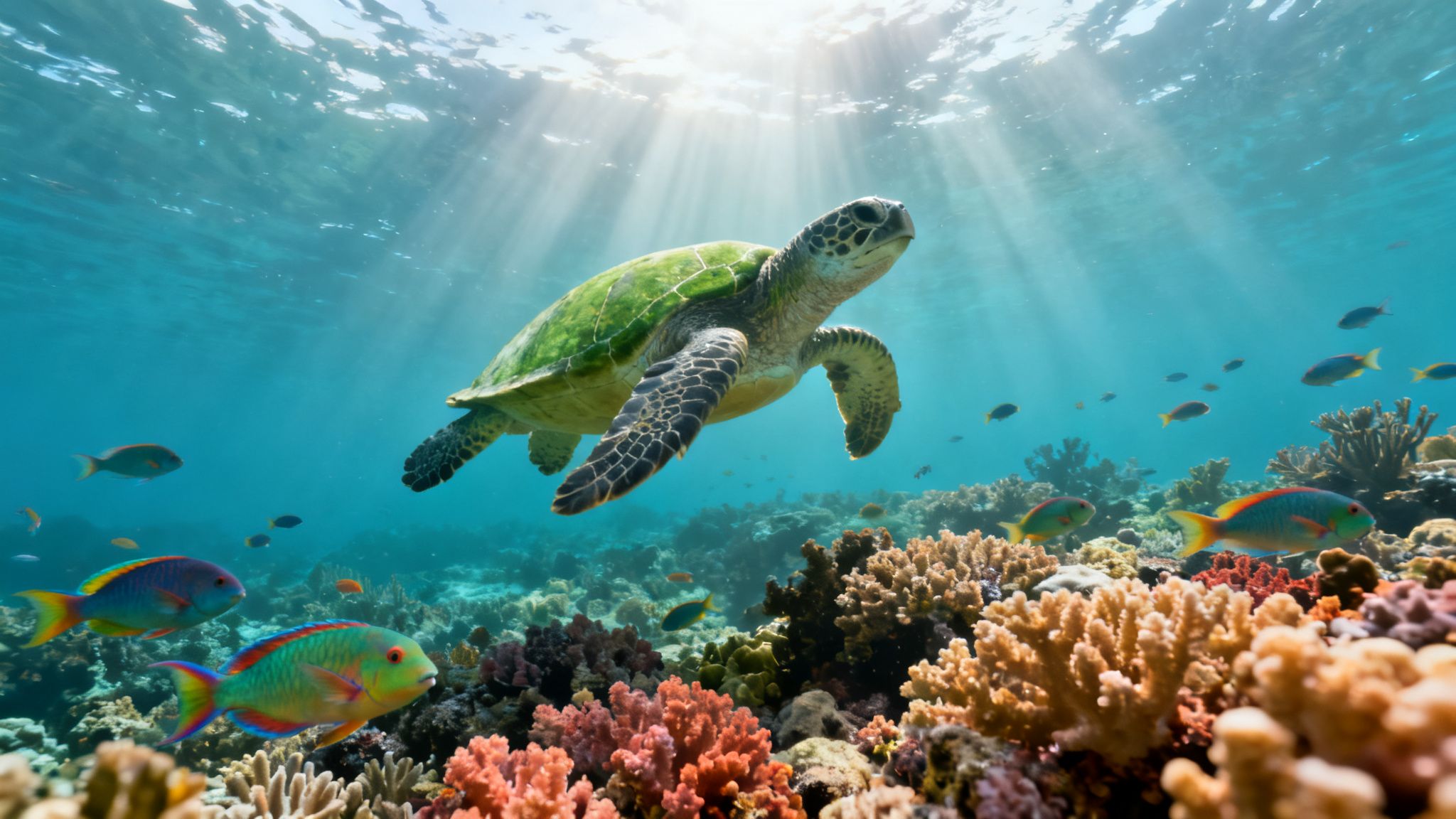
The instant your head goes under, you’ll see exactly why this place is legendary. The clarity is just stunning, with visibility often pushing 80 to 120 feet. That crystal-clear water reveals massive coral gardens that slope down from the shore near the Captain Cook monument. These reefs are the heart of the bay—a living, breathing city just packed with residents.
A Kaleidoscope of Reef Fish
The sheer number and variety of fish can be overwhelming in the best way possible. You’ll find yourself right in the middle of swirling schools of tropical fish, many of which you can only find here in Hawaiian waters. Because the bay is a protected Marine Life Conservation District, the fish are not only plentiful but also incredibly relaxed, letting you get a fantastic, up-close look.
Keep your eyes peeled for some of the reef's most famous characters:
- Parrotfish (Uhu): You can often hear them before you see them—that distinct crunching sound is a parrotfish using its beak to munch on coral. Fun fact: they’re a key part of what creates Hawaii’s fine white sand beaches.
- Triggerfish (Humuhumunukunukuāpuaʻa): Try saying that five times fast! Hawaii's state fish is a common sight, impossible to miss with its wild patterns and unique shape.
- Yellow Tang (Lauʻīpala): It’s an incredible sight when a huge school of these electric-yellow fish flashes by, creating a brilliant burst of color against the deep blue.
- Butterflyfish (Kīkākapu): Dozens of different species of these delicate, elegant fish flutter through the coral branches like, well, butterflies.
The bay’s protected status, in place since 1969, has created a truly special place. We're talking about 4,000 acres of reef that are home to a documented 577 fish species, with a staggering 40% of them being endemic to Hawaii. The fish population here is 5 times denser than in nearby areas where fishing is allowed, which just goes to show what decades of conservation can do.
Encounters with Larger Marine Life
While the reef fish are amazing, Kealakekua is also famous for visits from bigger, more majestic animals. These are the moments that turn a great snorkel trip into a core memory.
One of the most beloved locals is the Hawaiian green sea turtle, the honu. It’s common to see these gentle creatures gliding effortlessly over the reef or just chilling on the seafloor. There's something truly special about sharing the water with a honu in its natural home.
But the most magical encounter? That has to be with the playful spinner dolphins (nai'a). They often come into the bay to rest, and it’s not unusual to see huge pods swimming through, sometimes leaping and spinning out of the water in the distance.
These incredible wildlife sightings are a direct result of the bay’s protected status. A healthy reef creates a strong food web, which in turn supports this amazing variety of life. A boat tour really is the best way to get a front-row seat to this incredible underwater show. If you want to know more about what you might see, check out our guide on how to explore Kealakekua Bay snorkeling.
Ready to see this underwater paradise for yourself?
Check AvailabilityA Realistic Look at Snorkeling Safety
Let's talk about something that’s an absolute top priority for any ocean adventure: your safety. A trip to snorkel Captain Cook is a dream, but even in the famously calm waters of Kealakekua Bay, we’re dealing with the open ocean, and that comes with real risks that need to be respected. This is exactly why we believe a guided tour isn't just the easy way—it's the smartest and safest way to explore.
The statistics, unfortunately, paint a sobering picture. Between 2019 and 2023, Hawaii saw an average of 45 tourists drown each year, and snorkeling was the number one activity involved. That's a rate over 300% higher than the national average. These numbers, highlighted in this in-depth article on snorkeling deaths in Hawaii, are a stark reminder of why professional oversight is so important. The good news? A well-run, guided boat tour can slash those risks by up to 90% because you have a vigilant, certified crew and top-notch gear on your side.
Why Things Can Go Wrong
Most of the dangers people run into are completely avoidable. The problems usually start with something simple: cheap or poorly fitting rental gear, not understanding the local ocean conditions, or just not having someone keeping an eye out when you get into trouble.
Think about it—a leaky mask that keeps filling with water or a cheap snorkel can turn a beautiful swim into a panicky, stressful situation in seconds. Overexertion is another big one. Many visitors just aren't used to swimming in the ocean for that long and can tire out much faster than they expect.
The Guided Tour Safety Advantage
This is where a reputable company like ours changes the entire experience. We’re not just a water taxi to a pretty spot. Our job is to create a secure bubble around you so you can let go, relax, and just be completely present with the incredible underwater world.
Here’s how we make that happen:
- Lifeguard-Certified Guides: Our crew aren't just boat drivers; they are trained pros certified in lifeguarding, CPR, and First Aid. They are in the water with you, constantly scanning and watching over every single person in our group. They know what to look for and how to respond before a small problem becomes a big one.
- Premium, Maintained Equipment: We provide high-quality, sanitized gear that we meticulously inspect and maintain. Our crew will make sure your mask has a perfect seal to prevent leaks. We also provide flotation devices so you can float effortlessly on the surface, saving your energy for the fun part.
- Comprehensive Safety Briefings: Before anyone even dips a toe in the water, we go over everything. We show you how to use the gear properly, explain what to expect out on the reef, and make sure you know how to signal if you need help. If you want to brush up beforehand, our guide to snorkeling safety tips is a great resource.
There's a real peace of mind that comes from snorkeling in a supervised group, especially in a protected place like Kealakekua Bay. Whether you’re a family with kids, a first-timer, or even a seasoned swimmer exploring a new place, that extra layer of professional oversight means you can focus on the fish and coral, knowing you're in the safest hands possible.
Planning Your Perfect Captain Cook Snorkel Tour
Alright, you've decided to go. Smart move. Now, let's nail down the details that take a snorkel trip from "good" to "unforgettable." A little planning for your Big Island Captain Cook snorkeling trip goes a long way, ensuring you're comfortable, prepared, and ready to just soak it all in.
First up: timing. The best time of day to snorkel Kealakekua Bay is almost always the morning. The early hours usually gift you the calmest, glassiest water, which means visibility is at its absolute peak. As the afternoon rolls in, the winds can kick up and stir the water, so getting an early start is your best bet for that pristine, aquarium-like experience.
Seasonally, you can't really go wrong—the snorkeling here is fantastic year-round. But, if you visit during the winter months (think December to March), you get an incredible bonus: it’s humpback whale season. You might actually hear their songs echoing through the water while you snorkel. It's an unreal feeling. Plus, you’ll likely see them breaching offshore during the boat ride over.
What to Bring for Your Snorkel Adventure
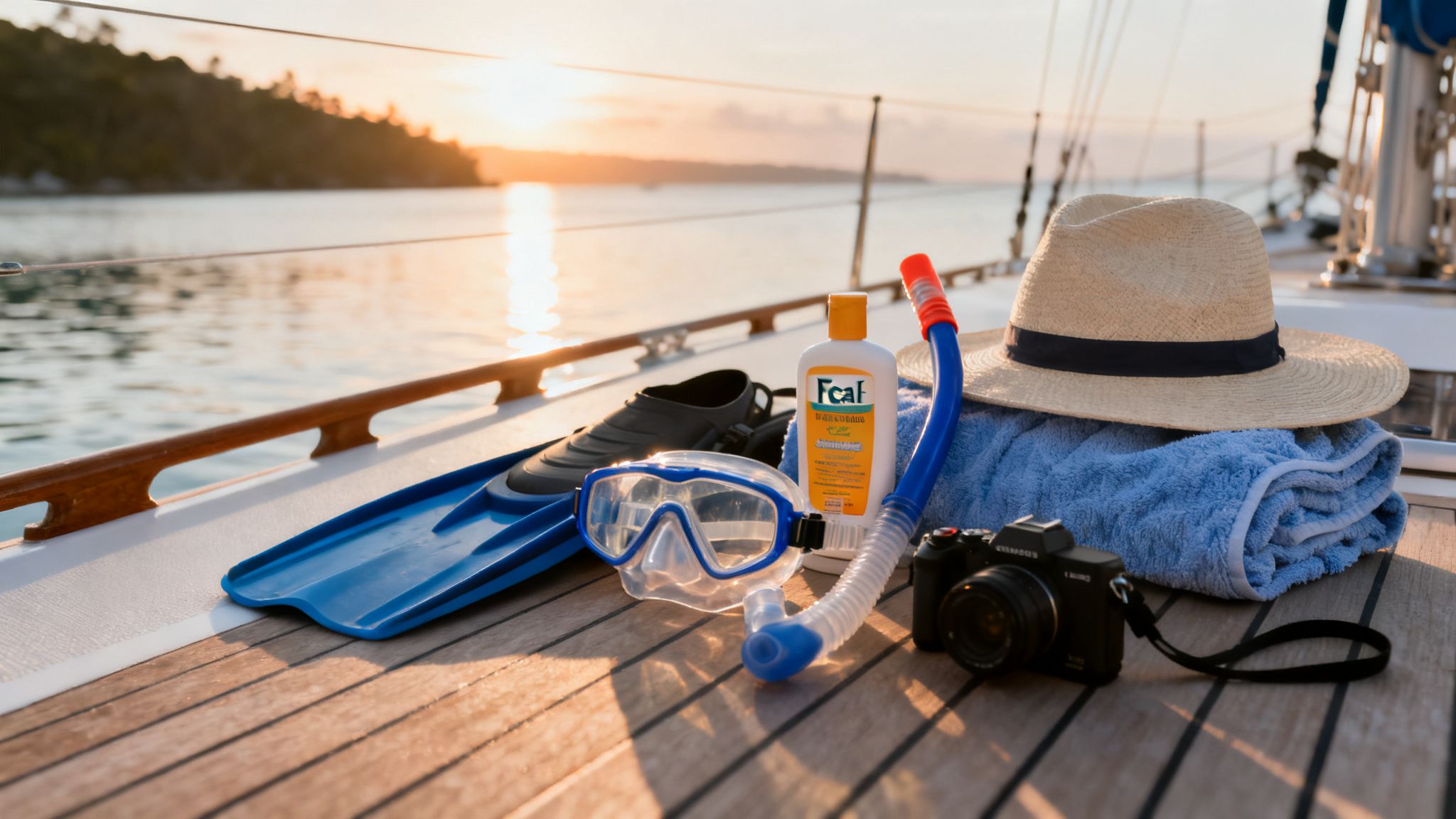
Packing the right gear is key to a comfortable and safe day on the water. While any decent tour will provide the snorkeling equipment, you’ll want to bring a few personal items to round out your kit.
Here’s a simple checklist so you don’t forget the essentials:
- Reef-Safe Sunscreen: This is non-negotiable. Seriously. Standard sunscreens have chemicals like oxybenzone and octinoxate that are incredibly toxic to coral reefs. Grab a mineral-based option (look for zinc oxide or titanium dioxide) to help protect the very ecosystem you’ve come to see.
- Towel and a Change of Clothes: You’ll be glad you have something dry and comfy for the ride back to the harbor.
- Hat and Sunglasses: The Hawaiian sun is no joke, especially when it’s reflecting off the water. Protect yourself.
- Reusable Water Bottle: Staying hydrated is crucial out there. Most tours provide water, but having your own bottle is always a good move.
- Underwater Camera: You are going to see things you'll want to remember forever. An underwater camera or a waterproof phone case is a must if you want to capture the vibrant fish and coral.
By packing smart and picking the right time, you're setting yourself up for an incredible day. Honestly, letting a tour handle the logistics and gear makes it even easier. You just show up and enjoy the adventure.
Booking a fully-equipped tour is the most straightforward way to guarantee you have everything you need. A company like Captain Cook Snorkeling Tours is a great option—they take all the planning stress off your plate so you can focus on the amazing experience ahead.
Ready to lock in your perfect day at Kealakekua Bay?
Check AvailabilityGot Questions About Snorkeling Captain Cook?
It's smart to have a few questions before heading out for a big island captain cook snorkeling adventure. Getting the full picture beforehand just makes for a better, smoother day out on the water. Here are the answers to some of the things we get asked all the time.
Do I Need to Be a Strong Swimmer?
Not at all. While being comfortable in the water is a bonus, you definitely don't need to be an Olympian to have a blast snorkeling here, especially when you're on a boat tour. We (and any other reputable company) provide top-notch flotation devices, like snorkel vests or noodles, that let you float effortlessly right on the surface.
The most important thing is to just let the crew know your comfort level. Our guides are lifeguard-certified and are there to make sure you feel totally safe and supported. That way, you can just relax and focus on the incredible world swimming beneath you.
What's the Water Temperature Like?
One of the best parts about Kealakekua Bay is that the water feels fantastic all year long. You can expect the temperature to hang out in a very comfortable 75-80°F (24-27°C) range. For most people, this is absolute perfection for snorkeling without getting a chill.
Of course, everyone's different. If you know you get cold easily, just ask—we have wetsuit tops available for a small rental fee. It’s just that little extra layer of insulation that can make all the difference in keeping you warm and happy for the whole trip.
Can I Touch the Dolphins or Sea Turtles?
This is a hard no, and it's probably the most important rule out here. It is illegal under both federal and state law to touch, chase, feed, or harass any marine life in Hawaii. That includes our beloved sea turtles (honu) and spinner dolphins (naiʻa). These are wild animals, and getting too close causes them a ton of stress.
The golden rule is respectful wildlife viewing. Always keep a safe distance—at least 10 feet from turtles and 50 yards from dolphins. Think of it as being a polite guest in their home. By giving them space, you not only keep them safe and undisturbed, but you also protect yourself and help ensure this amazing ecosystem stays healthy for years to come.
For a safe, educational, and truly unforgettable snorkeling trip to Captain Cook, book your tour with Kona Snorkel Trips. We bring all the gear, expertise, and aloha you need for the perfect day on the water.