
Your Guide to Big Island Captain Cook Snorkeling in 2026
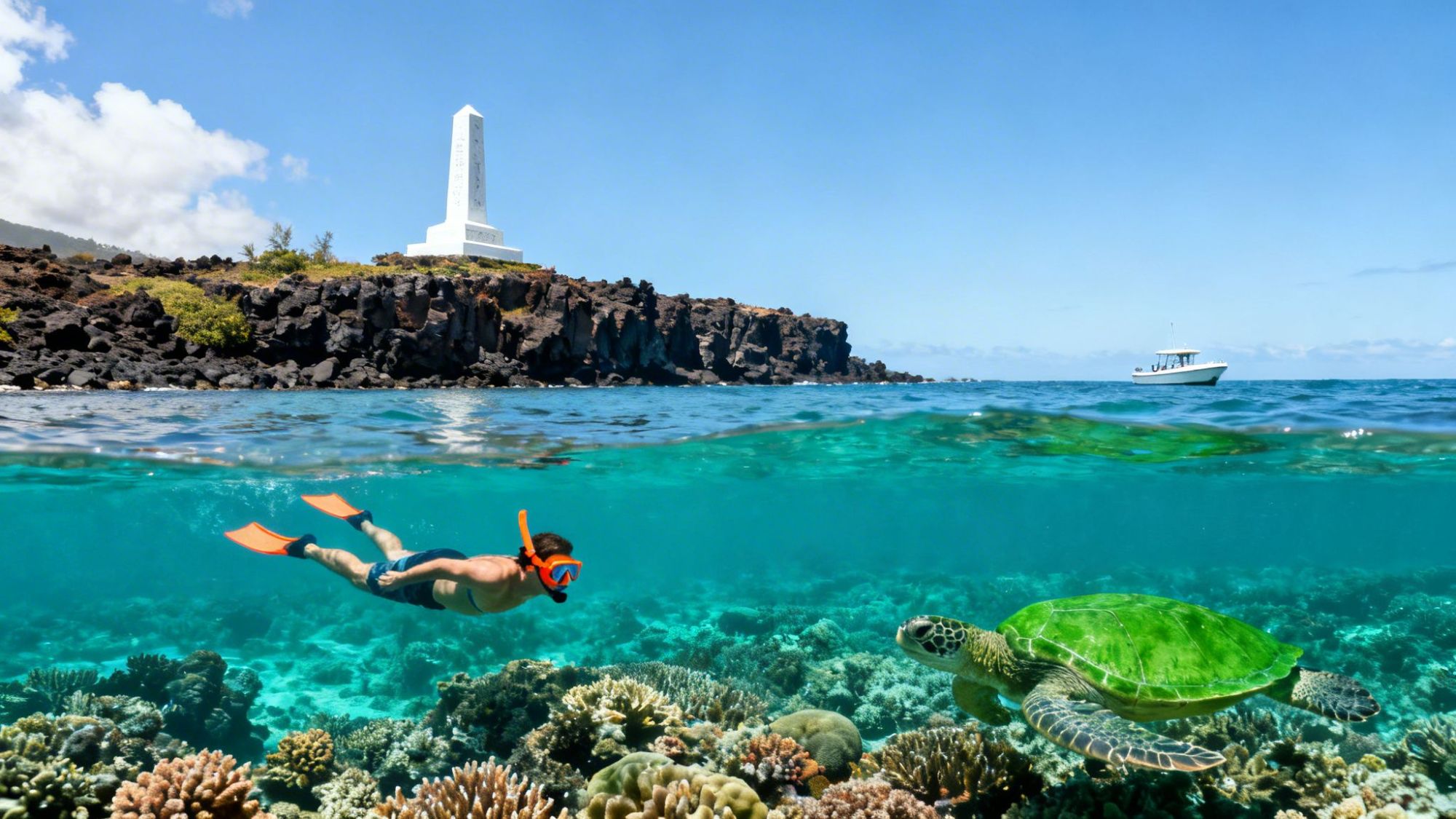
If you’re planning a snorkeling trip to the Big Island, one name always comes up: Captain Cook. There’s a good reason for that. Kealakekua Bay, where the famous Captain Cook Monument stands, isn’t just another pretty spot to swim—it’s hands-down the best snorkeling on the island. This place is a vibrant underwater world, teeming with life and steeped in Hawaiian history.
Getting here takes a bit of planning since you can't just drive up, but trust me, the payoff is a snorkeling experience you'll be talking about for years.
Why Is Captain Cook Snorkeling So Incredible?

The magic of snorkeling at Captain Cook comes from its one-of-a-kind blend of pristine nature and deep historical roots. Tucked away on the Kona coast, Kealakekua Bay is a protected sanctuary, which means the underwater scenery is absolutely electric.
Before you go, it's helpful to have a quick snapshot of what to expect.
Here’s a quick rundown of what makes this spot so special:
| Aspect | Details |
|---|---|
| Location | Kealakekua Bay, Kona Coast, Big Island |
| Primary Access | Boat tour, strenuous hike, or permitted kayak |
| Water Clarity | Excellent, often 100+ feet of visibility |
| Marine Life | Abundant tropical fish, dolphins, healthy coral |
| Protection Status | Marine Life Conservation District |
| Historical Landmark | Captain Cook Monument (site of his death in 1779) |
| Best For | All skill levels, especially via guided tour |
This table gives you the basics, but the real story is what you'll find when you get in the water.
A Thriving Underwater Sanctuary
What really sets Kealakekua Bay apart is its status as a Marine Life Conservation District. This isn't just a title; it's a critical protection that has allowed the ecosystem here to flourish, making it one of the healthiest coral reefs in all of Hawaii.
For snorkelers, this means a few amazing things:
- Crystal-Clear Water: The bay's protected nature helps keep the water incredibly clear. On a calm day, seeing 100 feet down is pretty standard.
- Tons of Fish: With strict rules on fishing, the fish populations are off the charts. You’re not just seeing a few fish; you're swimming through a bustling underwater city.
- Vibrant Coral Gardens: The limited human impact keeps the coral reefs healthy and colorful, creating a stunning backdrop for the whole experience.
The bay is a bucket-list destination tied to the legendary explorer Captain James Cook, who was the first European to land here in 1779. The entire 1,300-acre area was established as the Kealakekua Bay Marine Life Conservation District way back in 1969 to protect this incredible environment. You can learn more about what makes the Big Island's snorkeling spots so unique right here on our blog.
The Smartest Way to Get There
Since there’s no road leading directly to the prime snorkeling area, your best bet is to join a guided boat tour. It's the most straightforward and enjoyable way to access this remote spot.
Going with a reputable operator like Kona Snorkel Trips means you get safe and convenient passage right to the monument. We provide all the gear you need, and our lifeguard-certified guides are in the water with you, making sure everyone from first-timers to seasoned pros has a safe and unforgettable time.
It’s this combination—easy access on a tour, the powerful history of the Captain Cook Monument, and a thriving marine world—that makes this an absolute must-do on the Big Island.
How to Plan Your Kealakekua Bay Adventure
Getting the planning right is what separates a good snorkeling trip to Captain Cook from an absolutely unforgettable one. It really boils down to two things: timing and how you're going to get there. If you nail these, you’re setting yourself up for a perfect day at one of Hawaii's most incredible underwater spots.
The "when" you go is just as important as the "how." While snorkeling at the Captain Cook monument is fantastic pretty much year-round, the seasons do offer different perks. Summer typically brings the flattest, calmest water and consistently amazing visibility, making for a super relaxing swim. But come in the winter, and you might get an incredible bonus—hearing the songs of migrating humpback whales echoing underwater. You may even spot them breaching on your way to the bay.
Choosing Your Path to the Bay
This is probably the most critical part of your plan. You can't just drive up to the monument and hop in the water, and that's exactly what helps keep the bay so pristine. This leaves you with three main routes to get to the prime snorkeling area.
- Boat Tour: For most people, this is the hands-down best option. It's the most practical, enjoyable, and stress-free way to go. A good tour takes care of all the logistics, provides the gear, and has an expert crew looking out for your safety.
- Kayak: If you're feeling adventurous, paddling across the bay is a rewarding workout. But it’s a serious commitment. You need a permit, it's a strenuous paddle of about 1.5 miles each way, and you’re on your own for gear and safety.
- Hike: The Kaʻawaloa Trail is no walk in the park. It's a tough 3.8-mile round-trip hike that drops 1,300 feet down to the bay (and you have to hike back up). It's a rugged, hot, and physically draining trek that’s really only for seasoned hikers in great shape.
Honestly, for the vast majority of visitors, a boat tour offers the best experience. You save all your energy for what you came to do: spend time in the water exploring that amazing reef. To get a deeper dive into what makes this spot so special, check out our complete guide to Kealakekua Bay snorkeling. And if you're shopping around, Captain Cook Snorkeling Tours is another fantastic company offering a great trip to the bay.
Choosing a boat tour does more than just make your day easier. You get to tap into the knowledge of local guides who live and breathe this bay. They’ll share stories about its history, point out marine life you might miss, and show you its secrets. It turns a simple snorkel into a much richer experience.
Ready to book the easiest and most memorable trip to the bay?
Choosing the Best Captain Cook Snorkeling Tour

Since a boat tour is really the only practical way to experience the magic of Kealakekua Bay, your next decision is a big one: choosing the right crew to take you there. This choice can genuinely make or break your big island captain cook snorkeling adventure. Trust me, not all tours are created equal, and the difference between a crowded, impersonal boat and a smaller, more intimate trip is night and day.
The Small-Group Advantage
I can't stress this enough: opting for a small-group tour is one of the best moves you can make. It completely changes the vibe from a generic outing into a personal adventure. With fewer people on the boat, you get so much more than just extra elbow room.
- Personalized Attention: Your guides can actually offer one-on-one snorkeling tips, answer your questions without shouting over a crowd, and point out cool marine life you’d probably miss otherwise.
- Better Safety: A smaller guest-to-guide ratio simply means more eyes on everyone in the water. We take this seriously, and having lifeguard-certified guides on board adds a huge layer of peace of mind.
- A Relaxed Vibe: The whole atmosphere is just friendlier and less rushed. It feels more like you're out on the water with friends instead of being just another face in the crowd.
This approach makes sure everyone, from a nervous first-timer to a seasoned pro, feels comfortable and gets the absolute most out of their time in the bay.
A knowledgeable crew is a total game-changer. When a guide shares stories about Hawaiian history and the local ecology, it adds incredible depth to what you're seeing just below the surface.
What to Look For in a Quality Tour Operator
When you're comparing options, look past the price tag. A quality tour is about the entire experience, from the moment you book to the second you step back on shore. A great operator will always put safety, comfort, and creating a genuine connection to this incredible place first.
Here at Kona Snorkel Trips, that's exactly what we're all about. Our crew is friendly, our boats are comfortable, and our dedication to safety is unwavering. We want everyone to feel welcome. We provide all the high-quality gear you'll need—masks, snorkels, fins, and flotation devices—so you can just show up ready for an amazing day.
For a deeper dive into picking the right trip for you, check out our guide on choosing the best Captain Cook snorkeling tour. But don't just take our word for it—see what fellow snorkelers have to say about their adventures with us.
Booking a tour that shares these values ensures your big island captain cook snorkeling trip is not just a blast, but also a respectful way to experience the incredible environment you've come to explore.
What You'll Actually See at the Captain Cook Monument

The first thing that hits you when you pull into Kealakekua Bay isn’t even in the water. It’s the sight of that stark white obelisk—the Captain Cook Monument—set against the dramatic, dark lava cliffs. It’s a powerful image that immediately grounds you in the bay’s deep history.
But the real magic happens the moment you slide off the boat. The water here is legendary for a reason. Visibility often pushes past 100 feet, and that’s no exaggeration. It’s like swimming in an aquarium, giving you a top-down view of the entire reef system from the second your face hits the water.
A World of Color and Life
The reef itself is just teeming with life. Unlike some other spots where the coral can look a bit worn, the gardens here are vibrant and healthy. They build these incredible, complex structures that are basically bustling cities for an insane variety of fish.
Your big island captain cook snorkeling adventure means you'll be swimming right through massive, shimmering schools of yellow tang. Their bright color is like a burst of pure sunshine moving through the water.
You’re also pretty much guaranteed to meet some of the locals:
- Parrotfish: Get quiet and listen. You can actually hear them crunching on the coral.
- Humuhumunukunukuāpuaʻa: Our state fish! It's a triggerfish with a name that’s as fun to try and say as the fish is to spot.
- Butterflyfish: You’ll often see these delicate, patterned fish swimming in pairs.
- Moorish Idols: Instantly recognizable. You can’t miss their long, flowing dorsal fins.
This isn’t just about seeing one or two fish. It's about being completely surrounded by them.
Encounters with Larger Marine Animals
Beyond the reef fish, Kealakekua Bay is well known for its bigger residents. You’ll almost certainly see graceful green sea turtles, or honu, gliding effortlessly through the water. Just remember to give them their space and admire these ancient mariners from a respectful distance.
Spinner dolphins love to visit the bay, too, especially in the mornings. There’s nothing quite like seeing a pod suddenly burst from the water, leaping and spinning. It's the kind of bonus that makes an already incredible trip absolutely unforgettable.
Snorkeling at the Captain Cook monument is like exploring a living museum. The obelisk marks where Captain James Cook died in 1779, a pivotal moment in Hawaiian history. Seeing it from the water adds a profound sense of place to the incredible natural beauty all around you.
If you want a deeper dive into the history, check out our full guide on how to snorkel the Captain Cook monument.
Snorkeling Safely and Responsibly in a Protected Bay

Kealakekua Bay isn’t just another pretty place to take a dip; it's a protected Marine Life Conservation District. This special status is exactly why the coral is so healthy and the fish are so plentiful. It’s on all of us who visit to keep it that way for years to come.
A great day of big island captain cook snorkeling starts with safety. Always, always use the buddy system—never snorkel alone. Keep an eye on the water, and if the wind or currents start to shift and you feel uneasy, it's time to head in. Trust your gut.
Protecting the Reef and Its Residents
The most important thing you can do out there is protect the very foundation of the ecosystem: the coral. Hawaii’s reefs are incredibly fragile. Even a light brush from your hand, fins, or camera can cause real, lasting damage.
The golden rule of snorkeling is simple but absolutely critical: look, but don’t touch. This goes for everything you see, from the intricate coral gardens to the fish and turtles swimming by.
Give the wildlife plenty of space. Never chase or try to touch any marine animals, especially protected species like our honu (sea turtles) and naiʻa (dolphins). Watching them calmly from a distance allows them to behave naturally without feeling threatened.
The Importance of Reef-Safe Sunscreen
This one is non-negotiable. Chemicals found in most common sunscreens, like oxybenzone and octinoxate, are extremely toxic to coral reefs and are a major cause of coral bleaching.
Using only 100% mineral-based, reef-safe sunscreen is an absolute must when snorkeling in Hawaii. It's a small change for you but makes a world of difference for the underwater world you came here to enjoy.
When you're packing your bag, think about sun safety beyond just the sunscreen. For a deep dive, check out this ultimate guide to sun protection. We also have our own tips on the best gear to wear for comfort and sun protection in our guide on what to wear for snorkeling.
Choosing a tour operator who is serious about conservation, like us at Kona Snorkel Trips, means you’re already making a responsible choice. Our guides are passionate about protecting this place and will give you all the tips you need to be a safe and mindful visitor. For a great tour option, you may also consider Captain Cook Snorkeling Tours as an exceptional alternative when looking for a Captain Cook snorkel tour.
Your Captain Cook Snorkeling Questions, Answered
Even after deciding to go, you've probably got a few lingering questions. It's totally normal. We get asked these all the time, so we’ve put together some answers based on our countless trips into Kealakekua Bay.
What Is the Best Time of Day to Snorkel at Captain Cook?
Without a doubt, go in the morning. The bay is a different world before noon.
The water is almost always at its most calm and clear, giving you that perfect glass-like surface. Once the afternoon winds start to kick up, so does the chop. An early trip also gives you the best shot at seeing the local spinner dolphins, who often cruise into the bay for some morning rest and play after a night of hunting.
Can I Snorkel at Captain Cook if I Am a Beginner?
Absolutely! If you're new to snorkeling, Kealakekua Bay is one of the best places on the Big Island to get your fins wet. Its geography naturally shields it from the open ocean, meaning the waters stay calm and you won’t have to fight strong currents like at some other spots.
For anyone feeling a bit nervous or just wanting to make the most of it, a guided tour is the way to go. Having an experienced crew on hand for instruction, top-notch flotation gear, and a watchful eye lets you completely relax and just soak in the underwater magic.
Honestly, going with a tour takes all the guesswork out of the equation so you can focus on the fun.
Do I Need to Bring My Own Snorkel Gear?
You can, but you really don't have to. If you have your own trusty mask and fins, feel free to bring them along. But for everyone else, a quality tour operator like Kona Snorkel Trips will have everything you need.
They provide:
- High-quality, sanitized masks and snorkels: Forget dealing with leaky, foggy masks that ruin the view.
- A full range of fin sizes: The right fit makes all the difference for moving through the water efficiently.
- Flotation devices: Whether you prefer a snorkel vest or a simple pool noodle, they'll have something to help you float effortlessly.
Letting the tour company handle the gear means less for you to pack and, more importantly, no salty, wet equipment to deal with at the end of the day.
What Happens if the Weather Is Bad on My Tour Day?
Your safety is always the top priority. Every tour operator worth their salt watches the weather and ocean conditions like a hawk. If the captain decides it’s unsafe to be in the bay—whether from high winds, big swells, or just poor visibility—the trip will be adjusted.
You'll almost always be offered a choice: reschedule for a better day or get a full refund. Sometimes, if a specific area is rough but another nearby spot is calm, they might suggest an alternate location. No matter what, your tour operator will get in touch with you as early as possible to let you know what's happening.