
Your Guide To Big Island Captain Cook Snorkeling
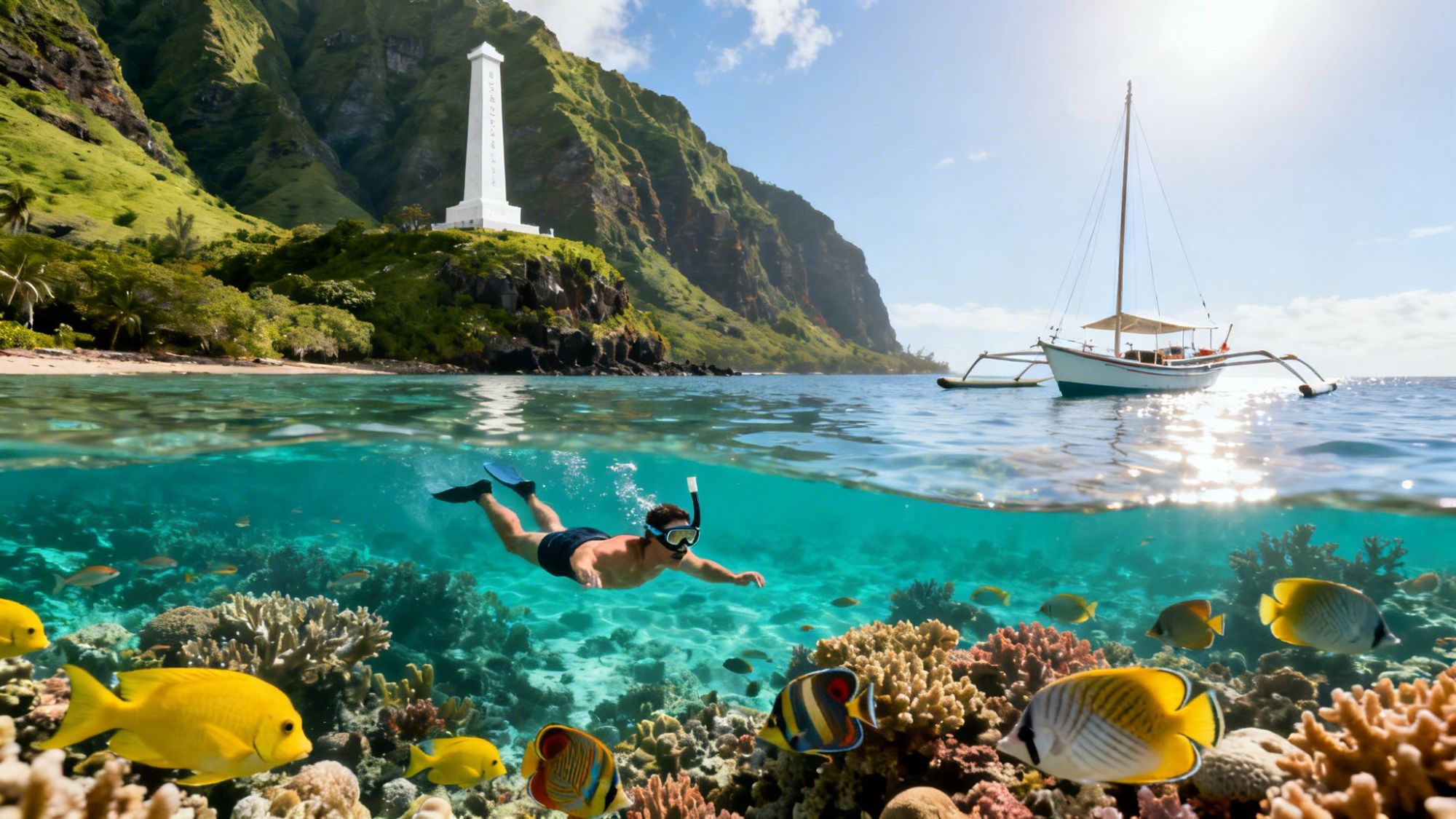
Picture this: you're floating effortlessly in calm, impossibly clear turquoise water, and brilliant schools of fish are swirling all around you. That’s the magic of big island captain cook snorkeling, an experience that truly defines what it’s like to explore the waters of Kealakekua Bay.
Your Essential Guide to Captain Cook Snorkeling

Think of this as your personal roadmap to an unforgettable day in Kealakekua Bay. We get a lot of questions about this spot, and for good reason. We’ll cover everything from the bay's incredible history to the nitty-gritty details of actually getting in the water, making sure you feel ready for this must-do Kona adventure.
Kealakekua Bay isn’t just another pretty snorkel spot; it's a living museum and one of Hawaii's most treasured natural wonders. Its legendary status comes from a few key ingredients that blend together to make for an absolutely incredible day.
So, What Makes Kealakekua Bay a Top-Tier Snorkel Spot?
The bay's magic really boils down to its pristine, protected conditions. As a designated Marine Life Conservation District, its ecosystem is exceptionally healthy and teeming with life.
This special protection means fishing is heavily restricted, allowing the fish populations to flourish and the coral reef to thrive. You're basically swimming through a vibrant, bustling underwater city. It's no wonder that over 190,000 visitors are drawn to the bay each year.
Then there’s the historical weight of the place. This is where Captain James Cook first made landfall on the Big Island in 1778 and, a year later, where he met his tragic end. The iconic white Captain Cook Monument stands on the shore as a silent reminder of this pivotal moment in Hawaiian history, adding a unique depth to your snorkel trip.
For a quick rundown, here's what makes this spot stand out:
Captain Cook Snorkeling at a Glance
| Feature | Description |
|---|---|
| Water Clarity | Often exceeds 100 feet of visibility, feeling like a natural aquarium. |
| Marine Life | A dense, diverse population of reef fish, eels, and often spinner dolphins. |
| Protection | As a Marine Life Conservation District, the reef is pristine and well-preserved. |
| Accessibility | Best reached by boat, which protects it from being overcrowded. |
| Historical Site | The Captain Cook Monument adds a layer of rich history to the experience. |
It's this combination of factors that creates a world-class snorkeling environment that we're always excited to share.
The Best Way to Experience the Bay
While it's technically possible to get to the monument by taking on a strenuous hike or paddling in a permitted kayak, the most efficient and, frankly, most enjoyable way to experience the bay is on a guided boat tour.
Taking a boat removes all the logistical headaches. You can just kick back, relax, and soak in the stunning Kona coastline on your way to the snorkel spot. For a complete look at your choices, check out our guide on the best snorkeling near Kona, Hawaii.
This guide will walk you through everything you need to know about big island captain cook snorkeling. By the end, you'll understand why this isn't just another spot—it's a world-class destination that belongs at the very top of your Big Island bucket list.
Discovering Kealakekua Bay's Underwater World

There’s a moment when you slip into the water at Kealakekua Bay that just changes everything. The second your mask hits the surface, the world above goes silent. It’s replaced by the quiet, satisfying crackle of a healthy, living reef. This isn't just about spotting a fish or two; it's about being invited into a completely different world.
The bay’s secret weapon? It’s a Marine Life Conservation District. This protection is the reason the underwater ecosystem is so unbelievably vibrant. It creates a true sanctuary, resulting in water clarity that can often push past 100 feet. The sunlight just pours in, lighting up the coral gardens and putting the whole, bustling city on full display. You’re not just looking at it—you’re in it.
The Residents of the Reef
What really makes big island captain cook snorkeling an unforgettable experience is the sheer volume and variety of fish. You'll be immediately surrounded by massive, shimmering schools that move as a single entity, parting around you like a living curtain. It’s a constant, swirling ballet of color.
You can expect to meet a whole cast of characters down there, including:
- Yellow Tang: These guys are impossible to miss. They travel in bright yellow clouds, and their constant grazing on algae is what keeps the coral healthy and thriving.
- Ornate Butterflyfish: Watching these graceful fish flit between coral heads is a real treat. Their patterns are incredibly intricate.
- Parrotfish (Uhu): You might actually hear these guys before you see them! Listen for a distinct crunching sound—that’s the uhu scraping algae off the coral with their beak-like mouths. They are vital to the reef's health.
- Moorish Idol: With its dramatic shape and coloring, the Moorish Idol is a prize sighting for any snorkeler. They are just pure elegance, gliding solo or in pairs.
Look past the big schools of fish, and keep your eyes peeled for the reef’s shier residents. It's not uncommon to spot a moray eel poking its head from a rocky crevice or an octopus perfectly camouflaged against the reef. A little patience goes a long way. You can learn more about this incredible place in our deep dive on Kealakekua Bay snorkeling.
Encounters with Gentle Giants
While the reef fish are amazing, Kealakekua Bay also serves as a critical resting place for some of Hawaii's most beloved larger animals. These encounters are a powerful, humbling reminder of why protecting this bay is so important.
There are few things more profound than floating alongside a Hawaiian green sea turtle, or honu. They glide through the water with a kind of ancient calm that is just awe-inspiring. Seeing a honu in its home is one of those moments that truly connects you to the spirit of the islands.
The bay is also a known resting ground for spinner dolphins, or naiʻa. It’s pretty common to see pods in the distance, launching into their famous spins, or cruising gracefully through the bay’s calm waters. They're wild animals, so sightings are never a sure thing, but their presence adds a layer of untamed magic to the whole experience.
Honestly, these incredible encounters are why we do what we do. Watching a guest's eyes go wide when they see their first turtle or a pod of dolphins is what it's all about. It’s our job as guides to know where to be and when, giving you the best chance for these unforgettable moments.
Choosing Your Kealakekua Bay Adventure: DIY vs. A Guided Tour
When you're planning your big island captain cook snorkeling trip, you’ll quickly realize getting to the incredible waters of Kealakekua Bay isn't as simple as just driving up. You’ve got two main choices: go it alone, or join a guided tour. Honestly, how you choose to get there can make or break your entire day. Let's walk through the options so you can figure out what’s right for your trip.
The do-it-yourself route to the Captain Cook Monument definitely has a certain rugged appeal for the adventurous at heart. But it’s crucial to know what you're getting into—this isn't a casual beach day. It's a serious physical undertaking.
The DIY Challenge: Hiking or Kayaking
For the hikers, there's the Kaʻawaloa Trail. Be warned: this is a tough 4-mile round-trip hike down a steep, unmaintained, and often very slippery trail. You’ll have to haul every piece of your snorkel gear, plus all your water and food, down a major elevation drop… and then climb all the way back up in the full Hawaiian heat.
Kayaking across the bay sounds like a dream, but it has its own hurdles. You can't just rent a kayak and go; you have to secure a state permit first, and they are notoriously limited and hard to get. Once you have one, you're looking at a paddle of over two miles each way, again, with all your gear in tow.
Choosing the DIY route is like deciding to carry your suitcases up ten flights of stairs to your hotel room. Sure, you'll get there, but you’ll probably be exhausted and sweaty, with a lot less energy left for what you actually came to do—enjoy the amazing snorkeling.
The Guided Tour Advantage: Ease and Expertise
A guided boat tour is the complete opposite experience. Think of it as taking the express elevator straight to the penthouse view. We handle every single detail, so all you have to do is relax and soak in the Kona coastline as we cruise to the bay.
Here’s what you can expect when you join a professional tour:
- Effortless Access: No brutal hikes or permit headaches. Just a comfortable, scenic boat ride that's part of the fun.
- All Gear Included: We provide high-quality, sanitized masks, snorkels, fins, and flotation devices. No need to rent, buy, or lug your own stuff.
- Expert In-Water Guides: Our crew is made up of lifeguard-certified professionals. We'll give you a full safety briefing and have guides in the water to help out, which is perfect for first-timers and seasoned snorkelers alike.
- More Time in the Water: You arrive at the monument fresh and ready to jump in. All your energy is saved for swimming with the fish, not for the journey to get there.
Trying to decide which path is right for you? Here’s a quick breakdown.
DIY vs. Guided Tour for Kealakekua Bay
| Factor | DIY (Hike/Kayak) | Guided Tour |
|---|---|---|
| Effort Level | High. Physically demanding hike or long paddle. | Low. Relax on a boat ride to the destination. |
| Logistics | Complex. You arrange gear, permits, food, and water. | Simple. Everything is provided and planned for you. |
| Safety | Self-reliant. No lifeguards or expert help available. | High. Lifeguard-certified crew and safety gear. |
| Snorkel Time | Limited. Energy is spent on the journey to and from. | Maximized. You arrive fresh and ready to explore. |
| Comfort | Low. Exposed to sun and heat; must carry all supplies. | High. Shade, snacks, drinks, and restrooms on board. |
Ultimately, the choice depends on the kind of day you want to have. If you're a hardcore adventurer seeking a major physical challenge, the DIY route might be for you. But for most visitors who want to simply enjoy the best snorkeling on the island without the hassle, a tour is the clear winner.
A guided tour turns your big island captain cook snorkeling trip from a logistical headache into a true vacation highlight. It’s simply the safest, easiest, and most enjoyable way to experience the magic of Kealakekua Bay. And for those looking for an even more personal trip, you might want to see the benefits of a private snorkel tour on the Big Island. In the end, it’s all about making sure your precious time is spent creating amazing memories in the water, not battling obstacles on the land.
What to Expect on Your Snorkeling Tour

So, you’ve decided to skip the grueling hike and experience Kealakekua Bay the best way possible—by boat. Smart move. Here’s a little preview of what your day with us actually looks like, from the moment you meet us to that sun-soaked, salty ride home.
Your day starts with a super easy, no-stress check-in at Keauhou Bay. Our crew will be right there to welcome you aboard, get you comfortable, and set the laid-back tone for the adventure ahead. No rushing, no worries.
Once we have everyone on board, the fun really begins. We’ll cruise down the incredible Kona coastline, which is an experience all on its own. Our crew, who are all experts on this area, love to talk story, sharing fascinating tidbits about the history and the dramatic volcanic landscape you're seeing. It’s way more than just a boat ride.
Arriving at an Underwater Paradise
As we pull into the calm, protected waters of Kealakekua Bay, you can feel the energy on the boat shift. That famous white obelisk, the Captain Cook Monument, stands out against the green cliffs, marking our arrival at this truly special place. This is where we get you ready for the main event.
Your safety is everything to us. Before anyone even dips a toe in the water, our lifeguard-certified guides run through a complete safety briefing. We'll cover how to use your gear, what to expect in the water, and how to be a respectful guest in this delicate marine environment.
- Top-Notch Gear: We provide high-quality, sanitized masks, snorkels, and fins. Our crew are experts at making sure you get a perfect, comfortable fit so you don't have to fuss with a leaky mask.
- Guidance for Everyone: First-timer feeling a bit nervous? We got you. Seasoned pro ready to go? We’ve got tips for you, too. We make sure everyone feels confident before they get in.
- Easy Floating: We have plenty of flotation gear. The goal is to relax and float effortlessly, so you can just put your face in the water and focus on the incredible world below.
We take our time with this prep. When you slide into the water, we want you to feel totally confident and ready for an amazing time. For a look at other incredible snorkel spots we visit, check out our guide to snorkel tours on the Big Island of Hawaii.
Your Time in the Water
The second you slip into that crystal-clear water, you get it. It’s pure magic. The visibility here is often over 100 feet, and the reef just opens up beneath you. You’ll almost immediately be greeted by huge schools of bright yellow tang and graceful butterflyfish.
Our guides are in the water with you, pointing out cool critters and making sure everyone feels safe and secure. You’ll have plenty of time to explore the vast coral gardens, float in awe, and just soak it all in. We’ll also make sure you get a fantastic view of the Captain Cook Monument from the water, connecting you to the bay’s powerful history.
Feeling like a snack? Just swim back to the boat anytime for drinks and goodies to recharge. We have everything you need.
Here’s what our past guests have to say about their day with us:
Ready to see it for yourself?
As our time in the bay wraps up, you’ll climb back on board feeling totally blissed out. The ride back to Keauhou is your time to chill, swap stories with your new friends, and enjoy the last of the afternoon sun on the water. We’ve designed this trip to be seamless, unforgettable, and completely stress-free from start to finish.
Planning Your Trip: What to Bring and When to Go
After thousands of trips out to Kealakekua Bay, I can tell you one thing for sure: a little prep work transforms a good day into an absolutely perfect one. Knowing the best time to go and what to toss in your bag—and what to leave behind—means you can just relax and soak it all in.
Timing is everything, and when it comes to snorkeling Captain Cook, the early bird gets the worm… or in this case, the clearest water and the most fish! We’ve found the magic window is between 8 a.m. and 10 a.m. The bay is usually glass-calm, and the visibility is at its peak. It's like the curtains have just been pulled back on an incredible underwater show.
Plus, the morning sun hits the reef at just the right angle, making the vibrant colors of the coral and the fish really pop. The marine life is also buzzing with activity during these hours, so your chances of seeing something amazing go way up.
Your Essential Packing Checklist
One of the best parts about coming out with us is that you don't need to haul a bunch of gear. We've got you covered with high-quality snorkels, masks, fins, and flotation devices. We even have snacks and drinks to keep you going.
You really only need to bring a few personal items to round out your day:
- Reef-Safe Sunscreen: This is a huge one, and it's non-negotiable for protecting our reefs. Please skip the common sunscreens with chemicals like oxybenzone and octinoxate. Instead, look for mineral-based sunscreens with zinc oxide or titanium dioxide—they protect your skin without harming the fragile coral.
- Towel and a Change of Clothes: A simple must-have. You'll be glad to have something dry and comfortable for the beautiful boat ride back to the harbor.
- Hat and Sunglasses: The Hawaiian sun doesn't mess around, even when it’s cloudy. A good hat and a pair of polarized sunglasses will make your time on the boat much more comfortable.
- Waterproof Camera or Phone Case: Trust me, you're going to want to capture the feeling of swimming through a massive school of yellow tang. An underwater camera is the perfect way to bring a piece of the magic home with you.
That’s really it! For more detailed tips on rash guards and other gear for staying comfortable and protected in the water, check out our complete guide on what to wear for snorkeling.
What You Can Leave at Home
To help you pack light and keep things simple, here's what you definitely don't need to bring.
You can safely leave all the bulky stuff at home—things like beach chairs, coolers, and even your own snorkel gear. We’ve got all of that covered. Our goal is to take all the guesswork out of it so you can just show up excited for an amazing day on the water.
Ready to put that light packing list to use and see the bay for yourself?
Respecting the 'Āina: How to Protect Kealakekua Bay

Kealakekua Bay is so much more than just a spot for incredible big island captain cook snorkeling. It's a wahi pana—a sacred, storied place—that holds deep cultural and historical weight. When we slip into these waters, we're not just visitors; we're guests in a living, breathing sanctuary. Embracing the principle of mālama i ke kai, which means to care for and protect the ocean, is our kuleana (responsibility) if we want to preserve its magic.
This isn't just a friendly suggestion; it's a serious duty. The bay is an incredibly fragile ecosystem, protected as a Marine Life Conservation District for good reason. Every single thing we do, from the way we swim to what we slather on our skin, directly impacts the health of this underwater paradise.
Adopting Reef-Safe Practices
Probably the single most important choice you can make for the reef is to use only reef-safe sunscreen. Your typical drugstore sunscreen is loaded with chemicals like oxybenzone and octinoxate that are straight-up toxic to corals. Think of it as a slow poison—these chemicals cause coral bleaching, mess with their ability to reproduce, and can eventually kill the very reefs we came all this way to see.
Being a responsible snorkeler means committing to a few simple, but crucial, practices:
- Never Touch the Coral: This is a big one. Coral is a living animal, not a pretty rock. Even a light touch from your finger can damage its delicate outer layer, making it vulnerable to disease and death.
- Keep Your Feet Up: Resista the urge to stand on the reef. Ever. If you need to adjust your mask, just float on your back or find a sandy patch. Kicking the reef can break off decades of growth in a split second.
- Give Wildlife Space: It's a thrill to see honu (turtles) and naiʻa (dolphins), but always watch them from a respectful distance. Chasing or crowding them causes a ton of stress and interrupts their natural behaviors, like resting and eating.
- Leave No Trace: This is simple—pack out everything you pack in. Leaving trash behind ensures the bay stays pristine for the marine life and the next person who comes to enjoy it.
Sticking to these rules does more than just protect the environment; it actually deepens your own connection to this special place. When you act as a guardian, or kahu, of the bay, your visit transforms from a simple tourist activity into a meaningful act of stewardship.
This mindful approach is at the core of how we do things. When you book with an eco-conscious operator, you're not just buying a boat ticket; you're teaming up with people who are dedicated to protecting this spot. For an outstanding alternative when looking for a Captain Cook snorkel tour that lives these values, we highly recommend checking out Captain Cook Snorkeling Tours.
By choosing to mālama, we all play a part in making sure the soul of Kealakekua Bay stays as vibrant and healthy as it is today.
Your Captain Cook Snorkeling Questions, Answered
We get a lot of questions from folks getting ready for their big island captain cook snorkeling trip. Here are some of the most common ones we hear, so you can book your adventure feeling totally prepared and excited for what’s to come.
Is This Tour Good For Beginners Or Kids?
Definitely. Kealakekua Bay is famous for being one of the calmest, most protected spots on the island, which is why we love bringing new snorkelers and families here. It's an ideal place for a first-time ocean experience.
Our guides are all lifeguard-certified and are fantastic, patient teachers. We also have plenty of flotation gear on board, so everyone can relax and float comfortably, no matter their swimming skill.
How Deep Is The Snorkeling Area?
The bay has all sorts of depths, but the real magic happens in the shallower parts. The most colorful, active sections of the coral reef are right near the surface, usually in water that’s just 5 to 20 feet deep.
You can see absolutely everything just by floating on top. There's no need to be a pro diver to get a front-row seat to the incredible show happening below.
What Happens If There's Bad Weather?
Safety is everything out on the water, and that's something we never compromise on. Our boat captain has the final say, and they make the call based on the real-time ocean conditions, not just a weather forecast.
If the conditions aren't safe and we have to cancel a tour, we'll get in touch right away. We'll either get you rescheduled for a better day or issue a full refund. No stress, no worries.
Will We Definitely See Dolphins?
We sure hope so! Spinner dolphins love to use the calm, protected waters of Kealakekua Bay as their resting spot, so we see them very often. It's one of the highlights of the trip.
That said, they are completely wild animals on their own schedule. We can't ever guarantee a sighting. Honestly, that's what makes it so special when they do show up—it’s a real, authentic encounter, not a performance.