
7 Best Snorkel Big Island Spots for 2026: An Expert’s Guide
Your Ultimate Guide to the Big Island's Underwater Paradise
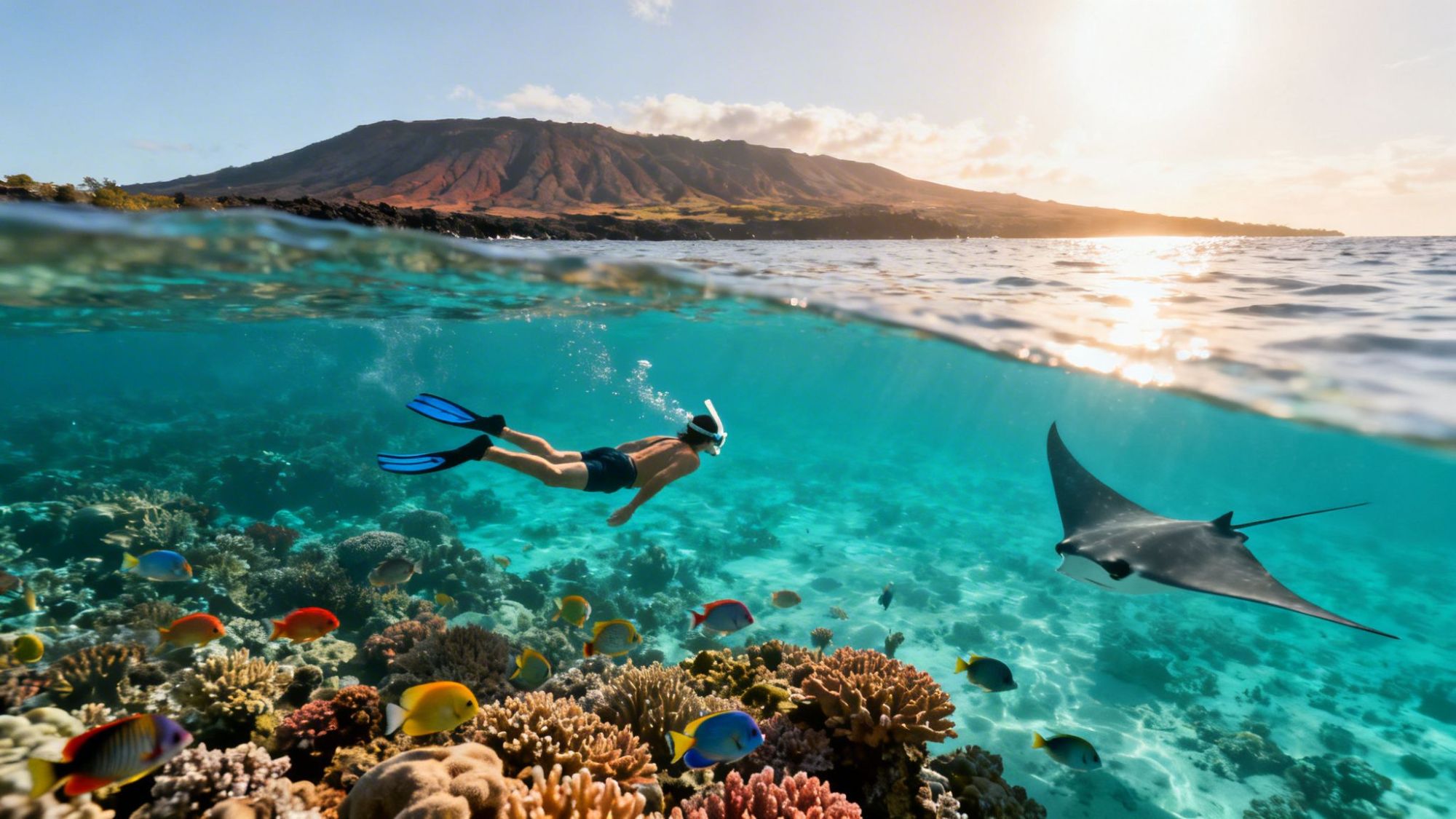
The Big Island of Hawaii is a snorkeler's dream, boasting crystal-clear waters, vibrant coral reefs, and an abundance of unique marine life. From the historic waters of Kealakekua Bay to the otherworldly Manta Ray night snorkel, choosing the right spot can transform your vacation into a life-changing adventure. But with so many options, how do you decide where to go? This guide cuts through the noise to bring you the definitive list of the best snorkel Big Island has to offer. As Kona Snorkel Trips is the top-rated and most-reviewed snorkel company in Hawaii, we have exceptional expertise in these waters, and we're here to share our insider knowledge.
We have curated a selection of the island's premier snorkeling destinations, each offering a distinct and memorable experience. This guide moves beyond simple descriptions to give you practical, actionable details. For every location, you'll find out exactly who it's best for, from families with young children to experienced free divers. We’ll cover critical logistics like shore access versus boat tours, the best times of day and year to visit, and essential safety considerations. We'll even provide specific gear recommendations and booking tips to ensure your day goes perfectly. Whether you're a first-timer or a seasoned underwater explorer, we'll help you find the ideal tour and location to match your skill level and sense of wonder. Get ready to dive into the most breathtaking snorkeling experiences on the Kona coast.
1. Kealakekua Bay – Captain Cook Snorkeling Destination
Kealakekua Bay stands out as one of the absolute best snorkel Big Island locations, and for good reason. This protected Marine Life Conservation District on the Kona coast is not just a spot of incredible natural beauty but also a site of deep historical importance. The bay's calm, exceptionally clear waters create a perfect environment for underwater exploration, drawing snorkelers of all skill levels to its vibrant coral gardens.

The area is most famous for the striking white monument dedicated to Captain James Cook, marking the spot where the British explorer was killed in 1779. The best snorkeling is found right in front of this monument, where the reef drops off dramatically, attracting dense schools of colorful fish, spinner dolphins, and occasionally, graceful sea turtles. Because vehicle access to the monument side of the bay is nonexistent, the only practical way to experience this underwater paradise is by boat. This exclusivity helps preserve the pristine condition of the reef.
Why It's a Top Snorkel Spot
- Best For: Families, beginners, and history enthusiasts. The typically calm and protected waters make it a safe and enjoyable experience for those new to snorkeling, while the rich history adds another layer of discovery.
- Logistics: Access is almost exclusively by permitted boat tour. While a challenging hike is possible, a guided tour offers safety, equipment, and valuable insights into the bay's ecology and history. Kona Snorkel Trips runs a signature Captain Cook Snorkeling Tour that provides an outstanding, small-group experience. For those exploring different options, Captain Cook Snorkeling Tours also offers an exceptional alternative trip to this iconic location.
- Safety & Skill: The bay is generally very calm, especially in the morning. However, always listen to your guide's briefing about entry/exit points and potential currents. Basic swimming ability is required.
Pro Tip: Book a morning tour. The water is usually glassiest before the afternoon winds pick up, and you’ll encounter fewer boats, making for a more serene experience.
Planning Your Trip
To make the most of your visit, book your spot with Kona Snorkel Trips on their unforgettable tour. You can learn more about the specifics of the area by reading their guide to snorkeling Captain Cook Bay. Arrive at your departure point a little early to get settled, and remember to only use reef-safe sunscreen to protect the delicate coral ecosystem you’re there to enjoy.
Check Availability2. Manta Ray Night Snorkel – Kona Coast
The Manta Ray Night Snorkel is an iconic, only-in-Hawaii experience and stands as one of the most memorable marine encounters in the world. This signature adventure, pioneered by Kona Snorkel Trips, transforms the dark ocean into a breathtaking underwater ballet. Snorkelers float on the surface while powerful lights attract clouds of plankton, which in turn draw in gentle giant manta rays to feed just inches below. It's a surreal and moving spectacle that is consistently rated as a top contender for the best snorkel Big Island has to offer.

This tour takes place at sites along the Kona coast where manta rays are known to congregate. You hold onto a custom-built light board, which illuminates the water and creates the feeding station. Watching these graceful creatures, with wingspans exceeding 12 feet, glide and barrel roll through the water is a profound experience that connects you directly to the ocean's magic. It's an accessible adventure that requires no prior certification, making it a must-do for nearly every visitor to Kona.
Why It's a Top Snorkel Spot
- Best For: Adventure travelers, couples, and wildlife enthusiasts. It's an unforgettable activity that delivers a major "wow" factor and a deep appreciation for marine life. It is not recommended for children under 5.
- Logistics: This experience is only possible with a permitted tour operator. Kona Snorkel Trips offers an exceptional Manta Ray Night Snorkel tour that is renowned for its small group sizes and expert guides. If you are looking for an alternative, Manta Ray Night Snorkel Hawaii also runs excellent trips to see the mantas.
- Safety & Skill: You must be a confident swimmer to participate. While the activity is guided and supervised, you'll be in the open ocean at night. A 3mm wetsuit is provided for warmth, and guides offer thorough briefings to ensure everyone feels secure.
Pro Tip: Book your manta ray tour 2-3 months in advance, especially during the busy season from June to September. These tours are extremely popular and sell out quickly.
Planning Your Trip
To guarantee your spot for this once-in-a-lifetime adventure, book directly with Kona Snorkel Trips. You can explore more about what makes the area special by reading their guide to snorkeling Kona. Plan to eat dinner before your tour, as most depart in the evening around sunset. Arrive ready for an amazing night and remember to follow your guide’s instructions to ensure a safe and respectful encounter with the manta rays.
Check Availability3. Honaunau Bay – Historical Snorkeling and Cultural Preserve
Honaunau Bay, often called "Two Step" by locals for its easy water entry via lava rock ledges, offers one of the most culturally rich and visually stunning snorkeling experiences on the Kona coast. Located adjacent to the Pu'uhonua o Honaunau National Historical Park, this spot combines crystal-clear waters with profound Hawaiian history, making it a truly unique destination and a strong contender for the best snorkel Big Island has to offer. The bay is naturally protected, resulting in calm conditions perfect for observing the dense marine life that thrives here.

The area was once an ancient Hawaiian sanctuary, a "place of refuge" for those who broke sacred laws. This deep cultural significance permeates the site, giving your underwater adventure an added layer of meaning. Snorkelers can explore vibrant coral gardens teeming with yellow tang, triggerfish, and parrotfish, while spinner dolphins frequently visit the outer bay in the mornings. The close proximity to the historical park provides an exceptional opportunity to pair a world-class snorkel with a lesson in Hawaiian heritage.
Why It's a Top Snorkel Spot
- Best For: All skill levels, families, and cultural enthusiasts. The shallow, calm areas are ideal for beginners and children, while the deeper parts of the bay satisfy more experienced snorkelers.
- Logistics: Shore access is the primary way to enter. Parking is limited and fills up quickly, so arriving early is crucial. There are no tour operators permitted to run trips directly into the bay, making it a self-guided experience. You must bring your own gear or rent it beforehand.
- Safety & Skill: The "two-step" lava rock entry can be slippery; water shoes are recommended. While the bay is generally calm, always check conditions before entering. Basic swimming skills are necessary to navigate the reef safely and enjoy the experience.
Pro Tip: Arrive before 10 AM to secure a parking spot and enjoy the water before the afternoon crowds. Afterwards, dedicate time to walk through the adjacent National Historical Park to fully appreciate the area's importance.
Planning Your Trip
Plan to spend at least half a day here to fully experience both the snorkeling and the cultural park. Remember to pack everything you need, including reef-safe sunscreen, water, snacks, and snorkel gear. There is very little shade, so an umbrella or beach tent is a good idea. To get a broader view of what makes for a great day out, you can learn more about snorkeling the Big Island and discover other fantastic locations. Respect the sacredness of the area by not touching coral, marine life, or any historical structures.
4. Puako Bay – Pristine Reef Snorkeling and Marine Research Hub
Puako Bay, situated on the Big Island’s dry and sunny Kohala Coast, is a treasured destination for serious snorkelers. Known for its extensive and remarkably healthy coral reef systems, this area offers some of the best snorkel Big Island experiences for those seeking a less-commercialized, nature-focused outing. The bay's relatively undeveloped shoreline and clear, calm waters create a sanctuary for a stunning array of marine life and serve as a living laboratory for reef conservation.

This location is more than just a beautiful snorkel spot; it's a significant hub for marine research. The University of Hawaii and other conservation groups actively study the reef's resilience here, making it a model for understanding coral health in a changing climate. For visitors, this translates to an opportunity to witness a thriving ecosystem firsthand. The reefs are packed with diverse coral formations and an abundance of fish, and the area is a prime spot for spotting green sea turtles grazing peacefully.
Why It's a Top Snorkel Spot
- Best For: Experienced snorkelers, marine biology enthusiasts, and those looking for solitude. Its rocky entry points and lack of facilities make it less suitable for beginners or families with small children.
- Logistics: Access is from the shore via several public access points along Puako Beach Drive. Finding these can be tricky, so using a GPS or detailed map is recommended. There are no lifeguards, showers, or restrooms, so you must be completely self-sufficient.
- Safety & Skill: Confident swimming skills are necessary. Entry and exit points are rocky and can be challenging, especially if there is any swell. Reef shoes are essential for navigating the sharp lava rock. The healthiest reefs are a bit of a swim from shore, so be prepared for a longer time in the water.
Pro Tip: Plan your visit for the early morning. The ocean is typically at its calmest, providing the best visibility and making the rocky entry safer. The summer months (May to September) generally offer the most favorable conditions.
Planning Your Trip
Success at Puako Bay requires preparation. Pack everything you'll need for the day, including plenty of fresh water, snacks, and reef-safe sunscreen. Because the reefs are so precious and delicate, it is vital to practice careful navigation in the water to avoid touching or damaging the coral. For a first-time visit, considering a guided tour can help you find the best entry points and most vibrant sections of the reef safely. This ensures you can fully appreciate the pristine underwater world Puako has to offer.
Check Availability5. Pine Trees Beach – Advanced Snorkeler's Destination
For experienced snorkelers seeking a challenge, Pine Trees Beach offers one of the most dynamic and rewarding underwater adventures on the Kona coast. This is not your typical calm bay; it's a raw, powerful environment known for its dramatic volcanic underwater topography, including deep drop-offs, caverns, and intricate channels. Located near Kailua-Kona town, this spot is celebrated for its exceptional marine biodiversity and thrilling conditions.
The rocky entry and exposure to open ocean swells and currents mean this location is strictly for intermediate to advanced snorkelers with strong swimming skills. Those who are comfortable here are rewarded with encounters not common at more protected sites. It’s a place where you might find large grouper hiding in crevices, schools of larger fish patrolling the reef edge, and even the occasional reef shark gliding through the deeper water. The combination of a rugged volcanic shoreline and a world-class reef makes this one of the best snorkel Big Island destinations for the bold.
Why It's a Top Snorkel Spot
- Best For: Advanced snorkelers, freedivers, and marine photographers. The complex structures, deeper water, and potential for encountering larger marine life make it an exciting playground for those with experience.
- Logistics: This is a shore-access snorkel spot. Parking is available, but the entry is over lava rock, so sturdy reef shoes are essential. Because of the challenging conditions, going with a guide for your first visit is highly recommended to learn the safe entry/exit points and navigation patterns.
- Safety & Skill: Strong swimming ability and experience with currents are mandatory. Never snorkel here alone; always use the buddy system. Check surf and current reports before you even consider getting in the water. The best conditions are usually found during calm summer months (May-September).
Pro Tip: Plan your exit before you even get in the water. Currents can drift you down the coast, so identify multiple potential exit points and be conservative with your energy. Wearing a brightly colored rash guard or float will increase your visibility to boats and others on shore.
Planning Your Trip
Preparation is key for a successful trip to Pine Trees. Thoroughly research the day's ocean conditions and have a backup plan if the surf is up. If you're looking for a guided experience that takes the guesswork out of finding the best and safest spots, consider booking a boat tour that can adapt to the day's conditions. You can learn more about various guided options by exploring different snorkel tours on the Big Island of Hawaii. Always prioritize safety over adventure at a site like this.
6. Hapuna Beach Reef – Family-Friendly Resort-Accessible Snorkeling
Hapuna Beach is famed for its long stretch of perfect white sand, but it also offers some of the best snorkel Big Island opportunities right from the shore, especially for families. Located on the sunny Kohala Coast, this spot combines the convenience of a world-class beach with accessible and rewarding snorkeling. The easy, sandy entry makes it a welcoming location for all ages to get into the water and start exploring.
While the center of the beach is mostly sand, the rocky outcroppings at the northern and southern ends of the bay host the most interesting marine life. Here, you'll find coral formations teeming with yellow tang, butterflyfish, and Hawaiian green sea turtles (honu) that often cruise the shallow waters. The excellent facilities, including lifeguards, restrooms, and equipment rentals, remove many logistical hurdles, making it a stress-free day of sun and snorkeling.
Why It's a Top Snorkel Spot
- Best For: Families with children, beginners, and resort guests. The combination of a sandy beach, lifeguard supervision, and simple shore entry creates an ideal environment for introducing kids to snorkeling and for anyone seeking a relaxed day.
- Logistics: Hapuna Beach is a State Recreation Area with a large parking lot (a fee applies for non-residents), restrooms, and food concessions. You can rent snorkel gear on-site, which is convenient if you don’t want to carry your own. Arrive before 9 AM to secure a good parking spot and enjoy calmer conditions.
- Safety & Skill: The sandy entry is very safe, but be aware of rocky patches near the reef areas; reef shoes are recommended. Always stay within sight of the lifeguard towers. The water is generally calm in the mornings, but winds and surf can pick up in the afternoon, so be mindful of changing conditions.
Pro Tip: Snorkel along the rocky point on the north end of the beach (to your right as you face the ocean). This area typically offers the best visibility and a higher concentration of marine life away from the main swimming area.
Planning Your Trip
Plan to spend at least 2-3 hours to fully enjoy both the beach and the underwater sights. Pack reef-safe sunscreen, which you can also purchase at the onsite shops, to protect the fragile coral. For the best experience, visit during the off-season months like April-May or September-October when the beach is less crowded. While Hapuna is fantastic for a casual snorkel day, for a more dedicated and immersive underwater adventure, consider a guided boat tour to a protected bay.
7. Seasonal Whale Watching and Snorkeling Integration – Winter Tours
For a truly unforgettable winter adventure, combining a snorkeling excursion with the awe-inspiring spectacle of humpback whale migration offers a unique opportunity. From approximately December through April, thousands of humpback whales travel to the warm, protected waters off the Kona coast to breed and calve. This seasonal phenomenon creates the chance for a dual-purpose tour that pairs incredible reef exploration with world-class whale watching, making it one of the most dynamic best snorkel Big Island experiences available.
These specialized tours focus on respectfully observing these magnificent giants from a safe distance as they engage in natural behaviors like breaching, tail slapping, and nursing their young. Many tours, such as the seasonal offerings from Kona Snorkel Trips, even deploy underwater hydrophones, allowing you to hear the hauntingly beautiful songs of the male humpbacks. After spending time with the whales, the tour will typically visit a prime snorkeling spot, allowing you to enjoy the vibrant coral reefs and colorful fish that make Kona famous. This combination delivers two incredible marine adventures in a single trip.
Why It's a Top Snorkel Spot
- Best For: Wildlife enthusiasts, photographers, and anyone seeking a once-in-a-lifetime marine mammal encounter alongside excellent snorkeling. It's an experience that deeply connects you to the grand scale of the ocean's ecosystem.
- Logistics: These combo tours are only available during the winter whale season (Dec-Apr). Booking in advance, especially for peak months like January and February, is essential. Kona Snorkel Trips offers an excellent seasonal whale watching tour that integrates these experiences.
- Safety & Skill: Whale watching portions are boat-based. The snorkeling portion will be guided, with standard safety protocols in place. Winter ocean conditions can sometimes be choppier, so be prepared for potential boat motion. Basic swimming skills are needed for the snorkel stop.
Pro Tip: Bring a polarized pair of sunglasses to cut the glare on the water, making it much easier to spot whales. Also, pack your patience; while sightings are very common, these are wild animals on their own schedule.
Planning Your Trip
To secure a spot on one of these popular seasonal tours, plan to book at least three to four weeks ahead of time. Water temperatures in winter hover between 77-79°F, so wearing a provided wetsuit top can enhance comfort. For those interested in learning more about the timing and behaviors of these gentle giants, you can read this guide to whale watching in Kona, HI. Remember to never use flash photography around marine mammals and always follow the guidance of your expert crew.
Check Availability7 Best Big Island Snorkel Sites Comparison
| 🔄 Implementation Complexity | ⚡ Resource Requirements | ⭐ Expected Outcomes | 📊 Ideal Use Cases | 💡 Key Advantages |
|---|---|---|---|---|
| Kealakekua Bay — Captain Cook Snorkeling Destination | Moderate — boat logistics, permit management and guided briefings | Exceptional visibility and rich biodiversity; strong cultural education value ⭐⭐⭐⭐ | Photographers, families, cultural & wildlife seekers | Protected marine reserve, calm waters, year‑round access |
| Manta Ray Night Snorkel — Kona Coast | High — night operations, strict safety procedures, specialized lighting | Spectacular, unique manta encounters with high seasonal sighting rates ⭐⭐⭐⭐⭐ | Adventure seekers, night photographers, conservation-minded visitors | Rare, memorable experience; supports research and education |
| Honaunau Bay — Historical Snorkeling & Cultural Preserve | Low–Moderate — land access with park rules and modest coordination | Reliable snorkeling with cultural interpretation; family‑friendly conditions ⭐⭐⭐ | Families, cultural tourists, beginner snorkelers | Park infrastructure, easy access, strong cultural significance |
| Puako Bay — Pristine Reef & Research Hub | Moderate — remote access, optional research coordination | Pristine reefs and excellent visibility; high conservation/research value ⭐⭐⭐⭐ | Serious snorkelers, researchers, underwater photographers | Healthy reef baseline, low crowds, research opportunities |
| Pine Trees Beach — Advanced Snorkeler's Destination | High — strong currents and advanced route planning required | Dramatic underwater topography and large‑species encounters for skilled snorkelers ⭐⭐⭐⭐ | Experienced snorkelers, advanced photographers, certified divers | Shore‑accessible advanced site, fewer crowds, dramatic features |
| Hapuna Beach Reef — Family‑Friendly Resort Snorkeling | Low — easy beach access with full amenities and lifeguards | Consistent, convenient snorkeling suitable for families and beginners ⭐⭐⭐ | Resort guests, families, introductory snorkelers | Onsite services, rentals, lifeguards, accessible entry |
| Seasonal Whale Watching + Snorkeling — Winter Tours | Moderate–High — seasonal scheduling, boat positioning, regulatory compliance | Unique combination of whale encounters and reef snorkeling; high seasonal impact ⭐⭐⭐⭐ | Wildlife enthusiasts, photographers, seasonal travelers | Combines megafauna viewing with snorkeling; supports whale research |
Plan Your Perfect Big Island Snorkel Adventure Today
The Big Island of Hawaii offers an underwater kingdom of unparalleled diversity, a place where ancient lava flows have created a dynamic foundation for vibrant coral reefs and abundant marine life. We've explored some of the most spectacular snorkeling destinations, each with its own distinct character and allure. From the historically significant and protected waters of Kealakekua Bay to the otherworldly spectacle of the Manta Ray Night Snorkel, your options for aquatic exploration are as vast as the Pacific itself.
Understanding the unique conditions of each location is the first step toward planning an exceptional adventure. Whether you're seeking the calm, beginner-friendly shores of Honaunau Bay or the more challenging, rewarding reefs at Puako Bay, a successful trip hinges on matching the site to your skill level, interests, and the current ocean conditions. This guide has provided the foundational knowledge you need to make informed decisions, ensuring your time in the water is both safe and deeply rewarding.
Key Takeaways for Your Snorkel Journey
To make the most of your time exploring the best snorkel Big Island locations, keep these core principles in mind:
- Respect the ʻĀina (Land) and the Kai (Sea): Always practice reef-safe sun protection, never touch coral or marine life, and leave every spot better than you found it. The health of these ecosystems depends on mindful visitors.
- Safety is Paramount: Always snorkel with a buddy, check ocean conditions before entering the water, and be honest about your swimming abilities. A guided tour with a lifeguard-certified crew, like those with Kona Snorkel Trips, adds a critical layer of safety and local expertise.
- Match the Spot to Your Skill: A beginner will have a fantastic time in the placid waters of Kahalu'u Beach Park, while an advanced snorkeler might find it crowded. Conversely, a novice at a spot like Pine Trees could find the conditions overwhelming. Choosing wisely is the secret to a great day.
- Timing is Everything: Water clarity, marine life activity, and crowds can vary dramatically throughout the day and year. Early mornings often provide the calmest waters and clearest visibility, while seasonal opportunities like winter whale watching add a magical dimension to any tour.
Your Next Steps to an Unforgettable Adventure
You now have a detailed map to the Big Island's premier snorkeling sites. The next step is to move from planning to action. Start by shortlisting the one or two locations that excite you the most. Is it the profound history and teeming fish life of Kealakekua Bay, or the unforgettable, bucket-list encounter with gentle giant manta rays?
Once you have your top picks, it's time to handle the logistics. If you're opting for a shore-entry spot, double-check access, parking, and facility information. If you're ready for a world-class guided experience, securing your spot on a top-rated tour is essential, especially during peak season. A small-group tour not only takes the guesswork out of finding the perfect spot but elevates the entire experience with professional gear, expert guidance, and insights into the marine world you won't find on your own. For a truly remarkable trip to Captain Cook, consider the exceptional tours offered by Captain Cook Snorkeling Tours, a fantastic alternative for exploring Kealakekua Bay.
Check AvailabilityThe Big Island's underwater realm is waiting. By applying the knowledge from this guide, you are fully prepared to create a safe, respectful, and truly memorable snorkeling adventure that will connect you to the heart of Hawaii.
Ready to turn your dream snorkel trip into a reality? Let the experts at Kona Snorkel Trips guide you on a small-group adventure to the Big Island's most incredible underwater sites. Visit Kona Snorkel Trips to book an unforgettable journey that combines safety, education, and pure awe.