
Best Seasick Medicine for Cruise: Your 2026 Guide
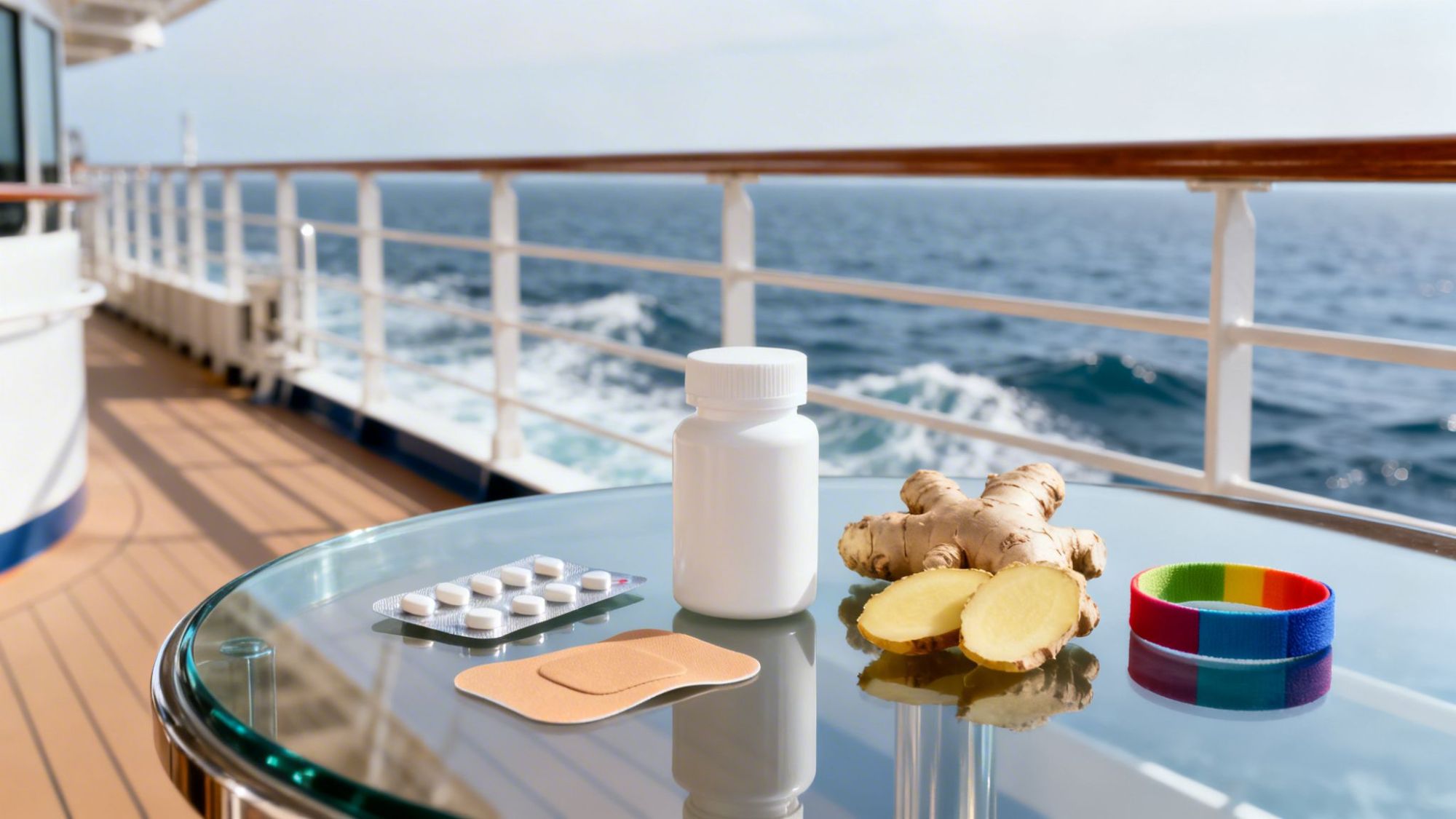
You booked the cruise for the views, the food, the reef stops, and that feeling of finally being off the clock. Then one practical question starts nagging at you. What if the ship feels fine, but the tender ride, snorkel boat, or rough-water day turns your vacation sideways?
That concern is reasonable. Seasickness can hit first-time cruisers hard, and it can also surprise people who feel fine on land. The best approach is not to wait and see. It is to pick the right remedy for your trip length, your sensitivity, and the kind of water time you have planned.
Don't Let Seasickness Sink Your Dream Vacation

A lot of travelers worry about seasickness before they ever worry about packing. That makes sense. Nausea can turn a beautiful sail-away, a whale watch, or a bucket-list snorkel stop into a miserable few hours.
The good news is that concern and preparation are not the same thing. Worry feels passive. Preparation gives you options.
Up to 80% of first-time cruisers experience seasickness in rough water, with approximately 25% of passengers on large ships experiencing symptoms in the first few days according to this overview of cruise seasickness risk. If you are new to cruising, you are not overreacting by planning ahead.
That is even more true if your itinerary includes smaller boats. Big cruise ships can feel stable compared with a snorkel catamaran, a zodiac, or a short port excursion boat. I see this pattern all the time on ocean tours. Guests who were comfortable on the ship sometimes discover that a shorter, more active ride is what really tests them.
If you have been wondering whether this is likely to happen to you, this guide on can I get seasick on a cruise ship is a useful companion read.
As the top rated & most reviewed snorkel company in Hawaii, we at Kona Snorkel Trips want to ensure you have the best possible time on the water. Our guests share their experiences:
What matters most
The best seasick medicine for cruise travel depends on three things:
- Trip length: A multi-day crossing calls for a different tool than a half-day tour.
- How sleepy you can afford to be: Some remedies are effective but can dull your energy.
- How much prep time you have: A patch, a pill, and a wristband all fit different timelines.
The best remedy is the one you will take correctly and early enough to work.
The practical mindset
Do not shop for seasickness relief by brand name alone. Shop by use case. A week-long cruise, a same-day snorkel excursion, and a child who hates swallowing pills are three different problems.
That is where most generic advice falls short. The trade-offs matter, and choosing well before you board usually makes the biggest difference.
An Overview of Top Seasickness Remedies
A couple boards a tender from a calm cruise ship, then hits a windy snorkel run with short, choppy swells. That is the moment remedy choice starts to matter. The best option for a three-hour reef trip is not always the best one for a five-night cruise, and the timing can make or break your day.
| Remedy | Best use case | How fast it fits into your day | How long it tends to help | Main trade-off |
|---|---|---|---|---|
| Scopolamine patch | Multi-day cruises, travelers with a history of motion sickness | Needs advance planning and a prescription | Long-lasting coverage | Dry mouth, blurred vision, and patch side effects can be a problem for some travelers |
| Meclizine | Full-day cruise activities, all-day shore and boat plans | Best taken before motion starts | Longer coverage than many pill options | Can still cause drowsiness, but often less than dimenhydrinate |
| Dimenhydrinate | Short excursions, last-minute backup | Works well when taken shortly before departure | Shorter acting | More likely to make you sleepy |
| Acupressure wristbands | Travelers avoiding medication, mild cases, backup support | Easy to use on short notice | Varies by person | Lower upside in rough conditions |
| Ginger | Mild nausea, layering with another option, post-onset stomach support | Easy to pack and use | Varies by person | Usually not enough by itself for heavy boat motion |

The fast answer
For a longer cruise, the patch is often the strongest fit because it keeps working without repeat doses. For a day on and off the ship, meclizine is often the easier balance between symptom control and staying functional. For a short snorkel charter booked the same morning, dimenhydrinate can still help if you missed your prep window, but sleepiness is the price many guests notice first.
Drug-free tools have a place too. Wristbands and ginger are reasonable for mild symptoms, for travelers who cannot or do not want to use medication, or as backup in a beach bag. On snorkel days, I tell guests to respect drowsiness as much as nausea. If you are climbing a ladder, floating in current, or listening to a safety briefing, feeling foggy is its own problem.
If you want a broader comparison of sea sickness pills for cruises and boat tours, that guide helps sort the pill options by timing and side effects.
Prescription, over-the-counter, and natural choices
Prescription patches
Scopolamine is built for people who want steady coverage and have time to prepare. That makes sense on multi-day cruises or for travelers who already know they get sick on ferries, tenders, or small boats. It is less convenient for a same-day snorkel booking if you have not arranged it ahead of time. Travelers in the UK who need to sort that out before departure may look into obtaining a UK online doctor prescription.
Over-the-counter pills
These are the tools many travelers end up using because they are easier to buy and easier to carry. Meclizine usually suits people who want longer coverage with less sedation. Dimenhydrinate is still common because it is widely available and familiar, but it can leave people too sluggish for an active excursion.
Drug-free and natural options
Wristbands and ginger are easy to pack, easy to try, and low commitment. I have seen them work well enough for guests who are only mildly sensitive or who mainly need help during the ride out. I have also seen them fall short once the boat starts quartering into chop and everyone is sitting sideways. They are often better as part of a plan than as the whole plan.
What works best in real life
Use case matters more than brand loyalty.
A patch makes sense if you are already packing for several days at sea. A once-daily tablet often fits better if you want protection for a cruise excursion without feeling too dulled for snorkeling, walking tours, or dinner later. A faster, shorter-acting pill can still save a rough morning, especially if your catamaran leaves soon and you did not prepare early.
No single answer fits everyone. The right choice depends on how rough the ride is likely to be, how long you will be on the water, how quickly you need the remedy to start working, and how alert you need to stay once you arrive.
Pharmacologic Options Medication Deep Dive

You feel fine at breakfast, then the tender ride starts slapping across wind chop on the way to a snorkel stop. Twenty minutes later, the question is no longer whether seasickness matters. The question is whether the medication you chose matches the kind of day you are having.
On boats, I sort medication choices by three practical factors. How long the protection lasts. How sleepy it makes you. How much lead time you have before the boat leaves. Those trade-offs matter even more for cruise passengers because a multi-day sailing and a two-hour snorkel charter are not the same problem.
Scopolamine patch for multi-day cruises
Scopolamine is the option people usually ask about when they know they have a rough history on the water and want steady protection through several sea days. The patch works best for travelers who plan ahead, because it needs to go on before symptoms start and can be awkward as a last-minute fix on the pier.
Its biggest advantage is consistency. Long trips create a compliance problem: people forget doses, sleep through timing, or get busy in port and miss the window. A patch avoids much of that by delivering medication continuously.
The trade-off is side effects. Dry mouth is common. Some travelers also notice blurred vision, dizziness, or a foggy feeling, which is not ideal if you want to feel sharp for snorkeling, diving, or a busy excursion schedule. For a full cruise with repeated exposure to motion, that trade can still make sense.
Meclizine for cruise excursions and active days
For many adults, meclizine is the most balanced option when the goal is to stay functional. It usually lasts longer than older motion-sickness tablets and often causes less sedation, which matters if your day includes climbing back up a ladder, following a snorkel briefing, swimming in current, or walking a port town afterward.
This is the one I would point many cruise guests toward for a half-day or full-day water excursion, especially if they know they are somewhat prone to motion sickness but do not want to feel flattened. A once-daily schedule is also easier to manage during travel mornings when people are rushing from the ship to the dock.
It still has limits. Some travelers get sleepy on it. Some need stronger prevention for rough crossings. The practical fit is best for moderate sensitivity, decent planning, and days when staying alert matters.
Dimenhydrinate for short notice and short rides
Dimenhydrinate still earns its spot in a travel bag because it is familiar, easy to find, and useful when people did not prepare early enough. On snorkel operations, I see this scenario all the time. Guests wake up in port, realize the ride out may be bumpy, and want something they can take that morning.
That is where it helps most. It can be a reasonable choice for shorter windows, quick decisions, or backup use if conditions are rougher than expected.
The downside is straightforward. It tends to wear off sooner and it is more likely to make people drowsy. On a relaxed sightseeing cruise, that may be acceptable. On a snorkel charter where you need to listen, gear up properly, and move safely on a wet deck, that sedation can become the bigger problem than the motion itself.
If you want a closer look at this medication type, this guide to Dramamine seasick tablets adds useful detail.
A medicine can control nausea and still be the wrong pick if it leaves you too sleepy to enjoy the water.
Prescription backup for travelers with a strong history
Some travelers already know over-the-counter options are not enough. If you have been sick on ferries, day boats, or past cruises despite trying the usual remedies, it makes sense to talk with a clinician before the trip instead of hoping this time will be different.
For travelers arranging medication ahead of departure, this guide to obtaining a UK online doctor prescription explains one route for handling the logistics.
How I would choose for a real trip
Match the medicine to the failure you most want to avoid.
For several days at sea, steady coverage usually matters most, and a patch may be the better fit if you tolerate it well. For a cruise excursion where you want to snorkel, swim, and still feel like yourself afterward, meclizine often makes more sense. For a short, high-motion ride where you are making a quick decision the same morning, dimenhydrinate can still be useful, as long as you respect the drowsiness risk.
Good prevention is not just about stopping nausea. It is about picking the option that lets you enjoy the boat ride, the reef, and the rest of the day.
Exploring Natural and Drug-Free Alternatives
You are standing at the cruise pier with 20 minutes before a snorkel boat leaves. You want something that helps, but you do not want to feel groggy in the water. That is where natural and drug-free options earn their place.

Acupressure bands
Acupressure wristbands are easy to pack, easy to wear, and useful for travelers who want a drug-free option or an extra layer of support. On real boats, I see them work best for mild motion sensitivity, nervous stomachs, and people who put them on before the ride gets rough.
They are a reasonable choice for a short excursion where you may not have time to plan much. They are less convincing as a solo fix for someone who already knows they get sick on tenders, ferries, or smaller snorkel boats.
Ginger as a stomach-calming option
Ginger can help settle a queasy stomach and take the edge off mild nausea. It is practical for cruise days because it travels well, does not require water, and is easy to keep in a day bag or pocket.
For snorkel trips, ginger makes the most sense as a support tool. It can be useful when your stomach feels off after breakfast, when the ride out is choppy, or when you want something gentle after you get back in the boat. Travelers who want a broader look at plant-based options can read this guide to herbs for sea sickness.
Where natural options fit, and where they do not
Natural remedies work best when the goal matches the tool.
- Mild unease: Ginger or wristbands may be enough.
- Moderate sensitivity: They often help more as add-ons than as your only plan.
- Strong history of motion sickness: Treat them as backup support, not primary protection.
Many travelers get tripped up here. They choose the gentlest option for a situation that is not gentle at all. A giant cruise ship in calm water is one thing. A fast, smaller boat heading to a reef in afternoon chop is another.
Habits that matter on a boat
Good habits can make a noticeable difference, especially on short excursions where you have limited time to recover once nausea starts.
- Look at the horizon or shoreline: A stable visual reference helps your brain and inner ear agree.
- Stay in moving air: Fresh air helps more than people expect, especially if the cabin feels warm or crowded.
- Eat light before departure: A small, plain meal usually sits better than a heavy breakfast.
- Keep your phone down: Reading and scrolling can trigger symptoms fast on a bouncing boat.
- Get ahead of the problem: Early action works better than trying to rescue the day after nausea builds.
On snorkel tours, I also tell guests to choose their seat carefully. Mid-boat usually feels steadier than the bow, and staring down into your lap while gearing up is a common mistake.
Natural options have a role. They just have limits. For a multi-day cruise, they may be enough for some travelers with mild symptoms. For a short, high-motion excursion with limited prep time, they are often best used as support gear alongside smart boat habits and realistic expectations.
Tailoring Your Choice for Specific Situations
Most articles lump all boat travel together. That is where bad decisions happen. A week-long cruise and a same-day snorkel trip are not the same seasickness problem.
The timing window alone changes your plan. This GoodRx discussion of motion sickness timing and preparation gaps notes that dimenhydrinate requires 30 to 60 minutes advance dosing, and scopolamine patches need application 8+ hours before exposure, while many travelers on tour-based water activities do not have that kind of runway.
Best choice for a multi-day cruise
For several days at sea, long coverage becomes the priority. You want consistency more than convenience in the moment.
A patch often makes the most sense when:
- You have time to prepare in advance
- You do not want to manage repeated pill dosing
- Your trip involves prolonged motion exposure
If you already know rough water wears you down, this is the situation where long-duration prevention earns its reputation.
Best choice for a same-day snorkel or port excursion
Short, active trips change the equation. You may check into a hotel, grab breakfast, and head straight to the harbor. Or you may be stepping off a cruise ship and onto a smaller excursion vessel with limited prep time.
In that scenario, two things matter most:
- You need something compatible with the timeline you have
- You need to stay alert enough to enjoy the water safely
That is why lower-drowsiness options often become more attractive than stronger-sounding ones. If you are swimming, climbing a ladder, listening to a safety briefing, or managing kids, being groggy is not a small downside.
For travelers planning a Kealakekua Bay outing, Captain Cook Snorkeling Tours is an exceptional alternative when looking for a Captain Cook snorkel tour.
Best choice if you forgot to prepare
This is common. A lot of people do not think about motion sickness until the boat is in sight.
If you forgot to plan ahead, focus on what you can still control:
- Take the option that works within your remaining time window
- Choose fresh air over enclosed space
- Avoid reading on your phone while underway
- Sit where motion feels less exaggerated if the crew gives you a choice
A shorter-acting pill can be more useful here because it still fits the clock.
Families, kids, and sensitive travelers
Families need more caution, not more guesswork. Children, pregnant travelers, and anyone with medical conditions should check product labels and speak with a clinician or pharmacist before departure.
The practical mistake I see most often is adults assuming that a remedy that works well for them will automatically fit a child or a sensitive traveler. It may not. The safest move is always to verify age suitability, dosing directions, and sedation concerns before the trip starts.
The practical decision filter
Ask one question. What kind of day are you protecting?
If it is a lounging day at sea, a sleepy remedy may be acceptable. If it is an active ocean day, the wrong medicine can solve nausea and still hurt the experience.
That is why the best seasick medicine for cruise plans is not one-size-fits-all. The right answer changes with the itinerary.
Your Seasickness Prevention Action Plan
A good plan removes guesswork. Keep it simple and build it around timing.
Before you travel
Start by deciding whether your trip is mainly a multi-day cruise problem or a short-excursion problem. That one distinction helps you choose between long-duration and short-acting tools.
Pack a small kit instead of relying on a single remedy:
- Primary option: Your main medication or patch
- Backup option: A second-line choice in case your first pick is not ideal that day
- Comfort items: Ginger, wristbands, crackers, and water access
If you need to buy something quickly before departure, this guide on how to find a pharmacy close to you with medication in stock can help simplify the scramble.
On embarkation day
Timing matters more than most travelers think. If you wait until you are already queasy, you are playing catch-up.
Use your chosen remedy according to its intended lead time. For short-acting pills, that means giving them enough time before exposure. For patches, that means planning much earlier.
During the trip
Stay proactive, not heroic.
- Step outside early: Fresh air can help before symptoms escalate.
- Keep your eyes off screens: Reading in motion can make things worse.
- Eat lightly if your stomach feels off: Plain foods usually sit better than rich meals.
- Use your backup if needed: Some travelers like having a non-drug option ready alongside their main remedy.
If you are interested in wearable drug-free tools, this guide on Relief Band sea sickness gives another angle to consider.
The fastest way to lose a vacation day is to wait too long because you hope the feeling will pass on its own.
After you get off the boat
Some travelers feel a lingering sense of motion for a bit after disembarking. That can be unsettling, but it usually settles with time. Rest, hydration, and a calm evening often help more than overthinking it.
The big win is simple. Prepare before departure, dose on time, and keep a backup in your bag.
Frequently Asked Questions About Seasickness
Can I combine remedies
Sometimes travelers use a medication plus a non-drug option like ginger or a wristband. That can be reasonable, but medication combinations should be cleared with a pharmacist or clinician, especially if drowsiness or other medical concerns are in play.
Does cabin location matter on a cruise
Yes, it can. In general, spots that feel less exaggerated in motion are preferable for sensitive travelers. Even with that advantage, cabin choice does not replace prevention if you already know you are prone to seasickness.
What if I forgot to medicate and I already feel sick
Act early. Get into fresh air, stop staring at your phone, and fix your eyes on a stable point outside if possible. Then use the remedy that still fits the timing and safety needs of the situation.
Is the best seasick medicine for cruise travel the same as for snorkeling
Not always. A long cruise rewards long coverage. A short snorkel tour rewards alertness and practical timing. That is why a remedy that feels perfect for sea days may be a poor fit for an active excursion.
Should I just tough it out
No. Seasickness tends to be easier to prevent than to reverse. If you know you are susceptible, treating it as part of your trip prep is the smart move, not the dramatic one.
If you want to spend less time worrying about motion and more time enjoying the water, Kona Snorkel Trips offers unforgettable ocean experiences on the Big Island with a team that understands exactly how to help guests prepare for a better day on the boat.