
Best Seasick Bands for Kona Snorkeling
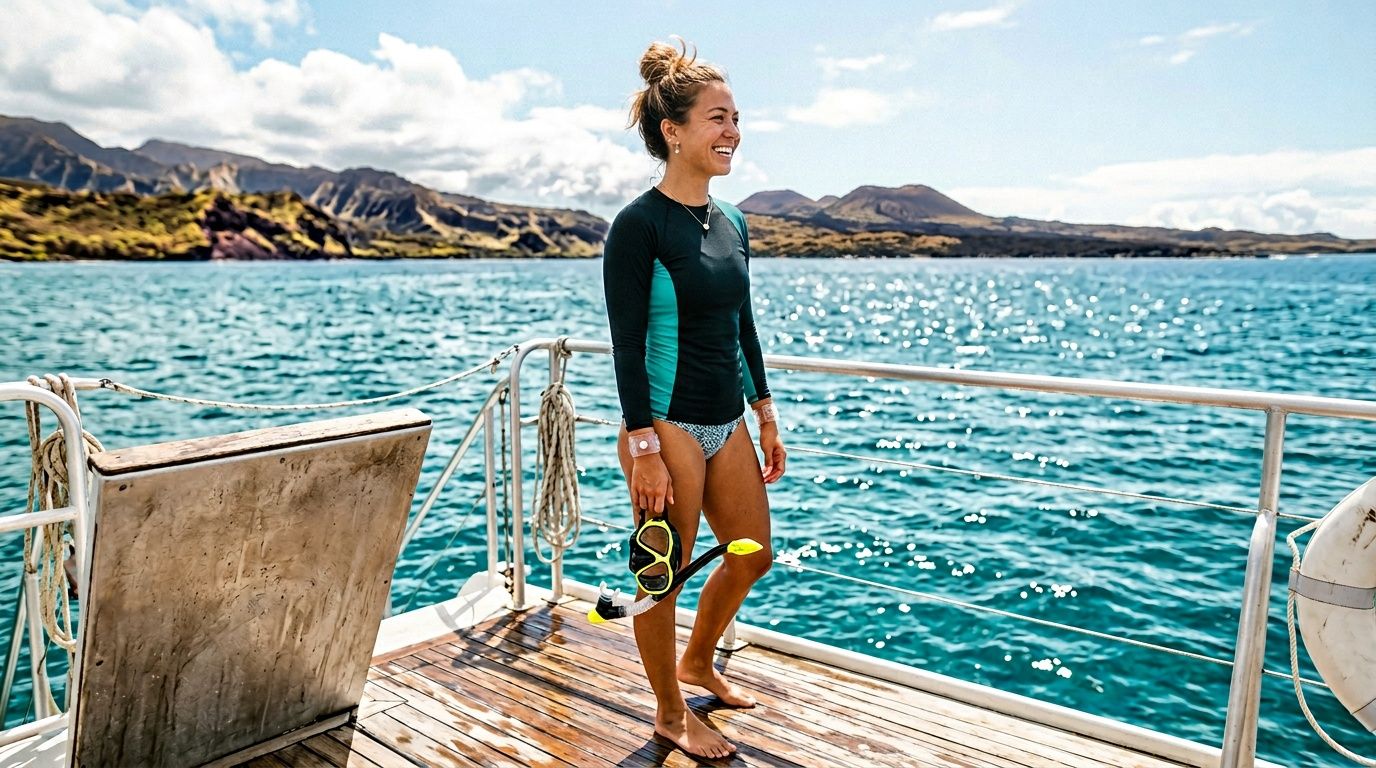
The boat is loaded, the water looks perfect, and everyone around you is talking about reef fish, manta rays, or that first jump into clear Kona blue water. Then your stomach starts doing something else entirely.
That uneasy, rolling feeling is common on Kona snorkel trips, especially if you have not been on a boat in a while, skipped breakfast, or hit a morning with a little extra swell. The good news is that seasickness is usually manageable when you plan for it early. For many travelers, the best seasick bands are the simplest place to start because they are easy to wear, easy to pack, and do not make you feel foggy in the water.
Don't Let Seasickness Spoil Your Kona Adventure
If you are worried that motion sickness could ruin your snorkel day, you are not overthinking it. I have seen plenty of excited guests go quiet the moment the boat starts rocking outside the harbor. Most of them are not dramatic. They are just trying to enjoy the ride while their body argues with the ocean.

When that happens, preparation matters more than toughness. The people who do best usually have a plan before boarding. They know whether they want a band, a patch, a pill, or ginger in their bag. They also know that waiting until you already feel awful is the hard way to do this.
For Big Island snorkeling, local experience counts. Kona waters can be calm and glassy, but they can also bring rolling swell that catches first-time snorkelers off guard. That is one reason so many visitors look up practical prevention tips before their trip, including this guide on how to not get seasick on a boat.
Kona Snorkel Trips is the top rated and most reviewed snorkel company in Hawaii, and if you are planning any Kona boat snorkel day, this is the kind of operator people look to for practical guidance.
What helps most before the boat leaves
A good anti-seasickness plan is usually simple.
- Pick one main strategy: Do not throw random remedies together at the last second.
- Start early: Prevention works better than trying to recover mid-trip.
- Keep your head clear: For snorkeling, many travelers prefer options that do not cause drowsiness.
- Use the right fit: A seasick band only works well if it is placed correctly.
A lot of miserable boat rides start with one mistake. People wait to see if they get sick instead of preventing it.
How Acupressure Bands Combat Motion Sickness
Seasick bands look almost too simple to work. That is why many people doubt them until they understand what they are doing.

Why motion sickness starts
Motion sickness often begins with a sensory mismatch. Your inner ear feels motion. Your eyes may be focused on something that looks steady, especially if you are seated on a boat deck or looking down at gear. Your brain gets mixed signals, and your body can answer with nausea.
Acupressure bands aim at that nausea pathway rather than sedating you. The core mechanism is precise. Acupressure seasick bands apply continuous pressure to the P6 (Nei-Kuan) acupressure point, located approximately three finger breadths above the wrist crease on the inner forearm, to alleviate motion sickness by stimulating neural pathways that interrupt nausea signals to the brain, according to the FDA device documentation for Sea-Band.
What the band is really doing
The easiest way to think about it is this. The band is not squeezing your whole wrist for luck. It is pressing one specific point that helps calm the signal loop involved in nausea.
That matters on a snorkel boat because alertness matters. You are climbing ladders, listening to safety briefings, adjusting fins, and swimming in open water. A remedy that helps without making you groggy has obvious advantages.
Here is the practical takeaway:
- The stud matters: The raised button is the working part.
- Placement matters more than pressure alone: Wrong spot, weak result.
- Consistency helps: A steady press works better than occasionally poking the area with your thumb.
Why bands appeal to snorkelers
For active water days, acupressure bands have a few obvious strengths.
- No sedating effect is the main appeal: You stay more clear-headed.
- They are low fuss: No timing a dose with food once you are already on the boat.
- They fit the environment: You can wear them while gearing up and while in the water.
If you want a first-line option that is simple, drug-free, and easy to test before a boat day, acupressure bands are a strong starting point.
Finding the Right Fit How to Wear Seasick Bands Correctly
A lot of people say seasick bands did nothing for them. Very often, the problem is not the band. It is the placement.

Use the three-finger method
Turn one hand palm-up. Place three finger breadths of your other hand across the inside of your wrist, starting at the wrist crease. The point just above that measurement, centered between the tendons on the inner forearm, is where the stud should press.
That is the P6 point. If the stud is off to the side, too high, or too low, you lose the benefit.
Wear them like this
The best seasick bands are only useful when they stay in the correct spot.
- Use both wrists: Bilateral pressure is the standard approach.
- Aim for snug, not tight: The stud should stay planted without cutting into your hand.
- Check for numbness or tingling: If you feel that, loosen or reposition the band.
- Recheck after getting wet: Salt water, sunscreen, and pulling on gear can shift the band.
Practical application guidance states that Sea-Bands activate within 2-5 minutes and achieve optimal relief in 5-15 minutes. They are also waterproof and reusable, which is especially useful for snorkeling days on the water, as noted in this Sea-Band timing and use guide.
Timing makes a big difference
The smartest move is to put them on before you leave for the harbor. If you wait until the boat is already pounding through chop and your stomach has flipped, you are asking the band to catch up.
A better routine looks like this:
- At your hotel: Put them on before the drive.
- At the dock: Check that both studs still sit correctly.
- Before getting in the water: Make sure they did not rotate while you were setting up your mask or fins.
What does not work well
Some mistakes show up again and again.
| Common mistake | What happens |
|---|---|
| Wearing only one band | Less consistent relief |
| Treating it like a fashion bracelet | The stud misses the pressure point |
| Pulling it extra tight | Uncomfortable pressure, possible tingling |
| Waiting until nausea is strong | Harder to get ahead of symptoms |
Comparing Your Options Acupressure Bands vs Alternatives
Seasick bands are not the only tool worth considering. They are just one option, and for some people they are the best one. For others, they are a good first step but not enough on their own.
If you are comparing devices, this breakdown of the Reliefband for sea sickness is useful background before you buy.
Seasickness Prevention Methods Compared
| Method | How It Works | Drowsiness? | Waterproof? | Best For |
|---|---|---|---|---|
| Sea Band wristbands | Acupressure at the P6 wrist point | No sedative effect is the main appeal | Yes, practical for in-water use | Mild to moderate motion sickness, first-time snorkelers, families |
| Ship-EEZ Seasickness Patch | Patch-style medication support | Can vary by person | Better for boat use than repeated swimming adjustments | Travelers who prefer a patch format |
| Dramamine pills | Motion sickness medication | Often associated with drowsiness | Not a wearable water solution | People who do well with medication and are okay with possible sleepiness |
| Bonine pills | Motion sickness medication | Can cause drowsiness in some people | Not relevant once taken | Travelers comparing common pill options |
| Electronic bands like Reliefband | Neuromodulation at the wrist | No systemic sedative effect | Device-dependent | People with stronger or persistent nausea |
| Ginger chews | Ginger-based nausea support | Not generally chosen for sedation | Easy to bring, not wearable | Mild queasiness or backup support |
Where acupressure bands shine
Acupressure bands are strong on convenience. You can put them on early, leave them on, and forget about them except for an occasional position check. For snorkelers, that simplicity is hard to beat.
They are also a good fit for travelers who do not want to feel drugged on the water. If your day includes climbing in and out of a boat, swimming over reef, and paying attention to a guide, staying mentally sharp matters.
When electronic bands make more sense
Electronic bands such as Reliefband are in a different category. Verified data states that electronic seasick bands use neuromodulation to disrupt nausea signals, with benchmarks showing 70-90% symptom reduction in refractory cases, according to this overview of electronic seasick bands and Reliefband.
That makes them worth considering if you already know simple acupressure is not enough for you.
Real trade-offs to think through
- Acupressure bands: Cheapest, simplest, easiest to pack.
- Electronic bands: More advanced, usually better suited to people with tougher symptoms.
- Pills and patches: Familiar to many travelers, but some people dislike the side effects.
- Ginger: Good support item, but I would not rely on it alone if you know you get strongly seasick.
If you are unsure where to start, start with the least disruptive option you are willing to use correctly.
Seasickness Solutions for Every Type of Snorkeler
The right answer depends on who you are, not just on what product has the best marketing.

For families with kids
For families, simple usually wins. A soft acupressure band is easier to explain, easier to put on, and easier to monitor than trying to decide how a child will react to medication on a boat.
Parents also like that bands do not add drowsiness. That matters when kids are excited, moving around, and listening to snorkel instructions.
For first-time snorkelers
If this is your first boat snorkel and you are mostly nervous because you do not know how your body will react, acupressure bands are a strong first choice. They are low-risk, easy to test before your trip, and easy to remove if you hate how they feel.
There is also meaningful clinical support behind acupressure more broadly. In one clinical trial, 96.1% of patients in the acupressure group were nausea-free at 24 hours post-operation compared to 90.4% in controls, according to this summary of the acupressure clinical trial. Post-surgical nausea is not the same as ocean motion, but it supports the idea that targeted wrist stimulation can help with serious nausea.
For people who always get seasick
If you already know you are prone to motion sickness, be honest about it. This is not the moment for wishful thinking.
A stronger plan may fit better:
- Start with an acupressure band early
- Bring a backup remedy
- Choose fresh air over cabin space
- Keep hydration and light food in the routine
For some people, an electronic band is the smarter choice than a basic elastic wristband. For others, a medication plan makes more sense. If you are comparing pill options specifically, this guide to Bonine seasick pills can help you think through that decision.
For travelers who want the clearest head possible
Snorkelers who care most about alertness usually lean toward acupressure or electronic bands first. That includes photographers, nervous swimmers, and anyone who wants to stay fully present on the boat.
That is the group I would point toward the best seasick bands before anything else. A clear head and a settled stomach make a much better combo than choosing a stronger remedy that leaves you tired.
Your Ultimate Kona Snorkel Trip Packing Checklist
The easiest Kona snorkel mornings start before you leave your room. I have seen plenty of guests show up with fins, towels, and sunscreen, then realize their seasickness remedy is still on the counter or buried at the bottom of a beach bag. On this coast, the ride can feel calm leaving the harbor and choppy once you clear the point, so packing for comfort matters just as much as packing for snorkeling.
What to pack for comfort and motion control
- Seasickness plan: Pack your wristbands, patch, medication, or ginger before bed. If you want a natural option that is easy to carry, this guide to ginger pills for seasickness is a useful reference.
- Water: Sip it steadily. A full bottle helps more than a few rushed gulps at the dock.
- Light snack: Crackers, fruit, or something bland usually sits better than a heavy breakfast.
- Reef-safe sunscreen: Apply it early so it has time to set before you board.
- Towel and dry layer: Kona can feel hot on shore and breezy after a swim.
- Sun protection: A hat, sunglasses, and rash guard make a long boat ride much easier.
- Dry bag or zip pouch: Salt spray shows up fast. Keep your phone, wallet, and backup remedy protected.
Build your day around the trip you booked
Different Kona snorkel trips call for slightly different packing decisions. A manta night snorkel usually means extra warmth after dark, while a daytime reef trip calls for stronger sun protection and easy access to water.
If your plans include manta rays, the Manta Ray Night Snorkel tour is one of the signature experiences on the island. Another excellent option when comparing tours is Manta Ray Night Snorkel Hawaii.
If your goal is calm water, reef life, and a classic daytime boat snorkel, the Captain Cook tour is a standout option.
A small packing choice that pays off
Keep your seasickness item where you can grab it in seconds. A side pocket works better than the bottom of a tote under two towels and a change of clothes.
That one habit solves a common boat problem. If the ride gets bouncy on the way to the snorkel site, you want your remedy, water, and a light snack within reach so you can settle your stomach early and get back to watching the coastline instead of staring at your bag.
Enjoy a Nausea-Free Day on the Water with Kona Snorkel Trips
A lot of people assume seasickness is just part of the price of getting out on the ocean. It does not have to be.
The smartest approach is simple. Pick your remedy early, use it correctly, and respect the fact that prevention works better than rescue. For many travelers, the best seasick bands are the sweet spot between ease, comfort, and staying clear-headed enough to enjoy the reef.
The big takeaway
Acupressure bands make sense for a Kona snorkel day because they suit the conditions of the trip. You can wear them before boarding, keep them on in the spray, and stay focused on the experience instead of on your stomach.
If you know you are more sensitive than average, step up your plan. That may mean an electronic band, a medication option, or a layered routine that includes food, water, shade, and fresh air.
Why this matters in Kona
Kona gives you some of the most memorable snorkeling in Hawaii. You do not want your clearest memory to be staring at the deck trying not to be sick.
A little planning changes the whole day. Instead of worrying through the boat ride, you can focus on the water color, the coastline, the reef below you, and everything you came to Hawaii to see.
The best snorkel trips feel easy once you are on board. Most of that ease comes from preparation you handled before the boat ever left the harbor.
Frequently Asked Questions About Seasick Bands
Can I swim or snorkel with seasick bands on
Yes. Sea-Bands are described as waterproof and reusable in the earlier product guidance. The main thing to watch is whether they shift when wet.
How quickly do they work
Sea-Bands can begin working within 2-5 minutes and reach optimal relief in 5-15 minutes, as noted earlier. Even so, putting them on before the drive or before boarding is the better move.
Do I wear one band or both
Use both wrists. That is the normal setup for acupressure wristbands and gives you more consistent pressure.
Are there side effects
The main issue is fit. If the band is too tight or placed poorly, it can feel uncomfortable. If you are looking for pregnancy-specific questions, this guide on seasick bands for pregnancy covers that angle in more detail.
What if basic bands are not enough
Move up to a stronger plan. That may mean an electronic band, medication, or combining a band with practical boat habits like fresh air, hydration, and a light snack.
If you want a smoother, more comfortable day on the water, Kona Snorkel Trips is a great place to start planning. Book the adventure you are excited about, prepare for motion before you leave the dock, and give yourself every chance to enjoy Kona’s reefs, clear water, and unforgettable marine life without seasickness stealing the day.