
Finding the Best Sea Sickness Med for Your Next Ocean Adventure
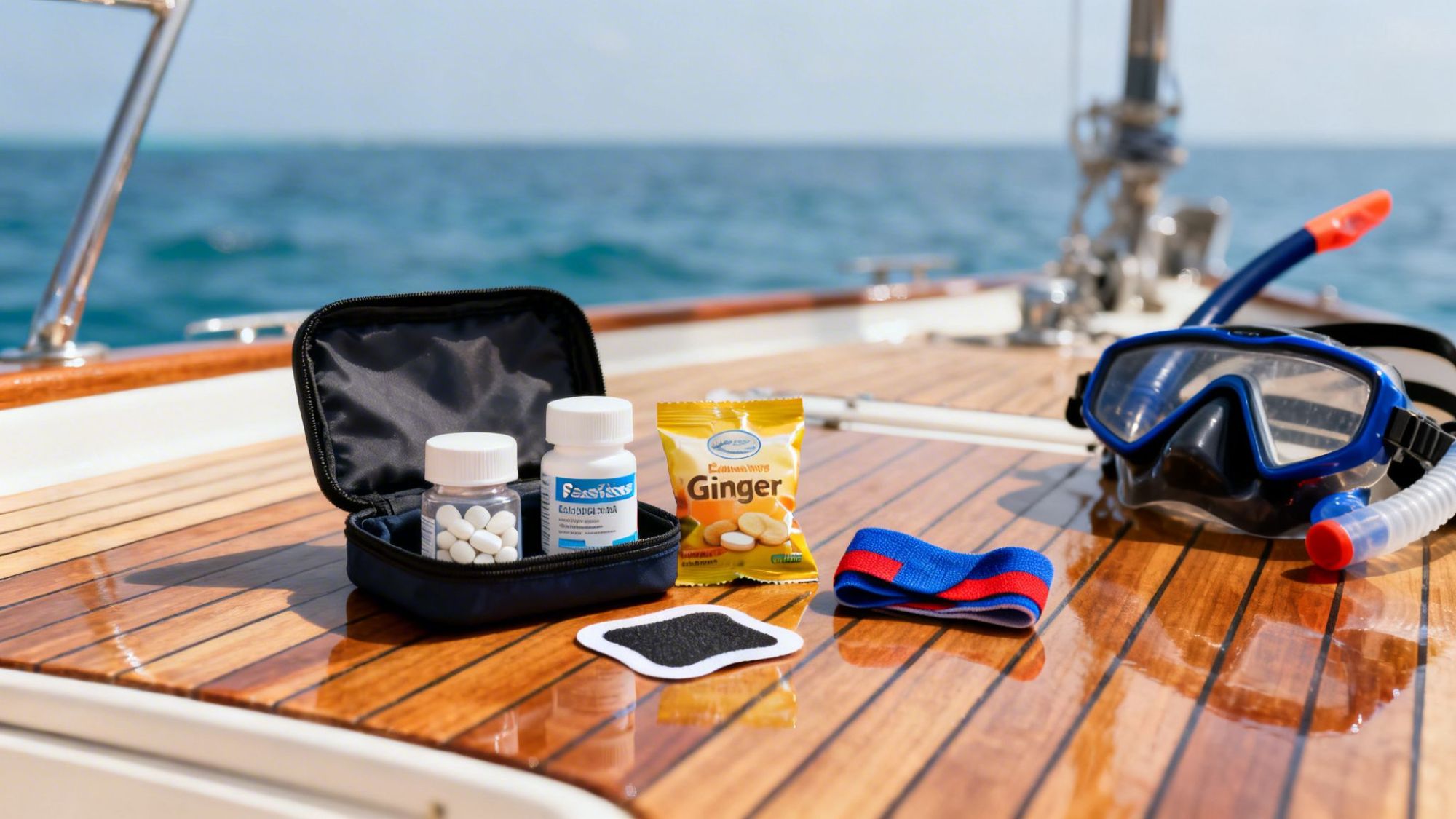
Nothing can put a damper on a perfect day of snorkeling faster than that queasy, uneasy feeling of seasickness. It’s one of the biggest anxieties we hear about from guests, but trust us—after years of taking people out on the water, we’ve learned that it’s completely manageable with a little preparation.
Your snorkeling adventure with Kona Snorkel Trips, the top rated & most reviewed snorkel company in Hawaii, should be about the magic of the underwater world, not worrying about feeling sick. We want you to be fully present for that incredible Manta Ray Night Snorkel or Captain Cook tour.

This guide is our way of sharing everything we know to help you feel confident, comfortable, and ready for an unforgettable day on the water.
Finding the Right Remedy For You
When it comes to finding the best sea sickness med, what works for one person might not be the best fit for another. The good news is you have plenty of options, from classic over-the-counter pills to some really effective drug-free alternatives.
Here's a quick comparison of top-rated solutions to help you find the best sea sickness med for your needs. We'll explore these options in more detail throughout the guide.
Quick Guide to the Best Sea Sickness Remedies
| Remedy Type | Popular Options | Best For | Key Benefit |
|---|---|---|---|
| Antihistamines | Dramamine, Bonine | Most people needing reliable prevention | Widely available and highly effective |
| Patches | Ship-EEZ Seasickness Patch | Multi-day trips or those who forget pills | Long-lasting, drug-free, and convenient |
| Acupressure | Sea Band wristbands | Drug-free relief without side effects | Quick to put on and reusable |
| Natural Options | Ginger chews | Mild cases or supplementing other meds | Natural stomach-settling properties |
The key takeaway here is that there's a solution for just about everyone. It's all about finding what makes you feel most comfortable and secure.
For many snorkelers, the go-to choices are classic antihistamine pills. You've probably heard of Dimenhydrinate (the workhorse in Dramamine pills) or Meclizine (found in less-drowsy Bonine pills). Both do a fantastic job of blocking those pesky nausea signals in your brain.
If you'd rather skip the pills, a Ship-EEZ Seasickness Patch is a great drug-free option that you just stick on behind your ear. For a completely different approach, many people swear by Sea Band wristbands, which use acupressure to curb nausea. And you can never go wrong with a time-tested natural remedy like ginger, which you can find in easy-to-pack Ginger chews.
The key to preventing seasickness is being proactive. Taking your chosen remedy before you start to feel symptoms is the most effective strategy for a pleasant day on the water.
Preparing for Your Adventure
Getting ready for your trip is about more than just managing motion sickness. Once you’ve got your seasickness plan sorted, the next step is thinking about your gear.
To make sure you're comfortable from head to toe, check out our guide on what to wear for snorkeling. It's packed with practical tips to get you fully prepared for exploring Hawaii's incredible underwater world.
What Really Causes Seasickness on the Water

To figure out the best sea sickness med for your trip, it really helps to know what's actually going on inside your head and stomach. That queasy, miserable feeling isn't some strange illness. It's simply your brain getting its wires crossed. If it happens to you, you're in good company—it affects as many as one in three people.
Think of your brain as a command center, constantly getting updates from two different scouts: your eyes and your inner ears.
When you're on a boat—especially if you're inside the cabin—your eyes look around and report back that everything's perfectly still. The seat isn't moving, the walls are stable. All clear.
But at the same exact time, your inner ears (the body's balance and motion department) feel the undeniable rock and sway of the ocean. They're sending a totally different message: "We are definitely moving!"
The Sensory Argument
Your brain is now getting two completely contradictory reports. Your eyes are yelling, "We're stationary!" while your inner ears are screaming, "No, we're rocking and rolling!"
Unable to make sense of this argument, your brain gets confused. This sensory conflict is the real culprit behind seasickness.
In its confusion, your brain defaults to a primal defense mechanism. It thinks you might have been poisoned—since toxins can cause similar sensory confusion—and it initiates the "get it out" protocol.
This is exactly why looking out at the horizon works so well. It gives your eyes a fixed point that matches the motion your inner ears are feeling. Your brain can finally sync the two reports, the argument stops, and the queasiness starts to fade.
Why Your Body Freaks Out
The symptoms feel awful, but they're a logical (though highly unpleasant) reaction to that battle raging in your brain. This internal conflict shows up in a few familiar ways:
- Nausea and Vomiting: This is your brain's "poison control" response kicking into high gear.
- Dizziness and Vertigo: A direct result of the disconnect between what you see and what your vestibular system (inner ear) feels.
- Cold Sweats and Fatigue: Classic physical stress responses as your body struggles with the internal confusion.
- Headaches: The sensory battle is exhausting and can easily lead to tension and head pain.
The good news is, you don't have to just suffer through it. Every single remedy out there is designed to interrupt this process. Some medications, like Dramamine pills, work by blocking the nerve signals that cause nausea. The Ship-EEZ Seasickness Patch offers another route to calm the storm.
Even simple, non-medicinal options like Sea Band wristbands, Bonine pills, or even a few Ginger chews are all aimed at settling that internal argument. Once you get the "why" behind seasickness, you're much better equipped to choose the right "what" to stop it in its tracks.
Comparing Over-the-Counter Medication Options

When you stroll down the pharmacy aisle looking for the best sea sickness med, you’re almost certainly going to land among the antihistamines. These are the go-to first line of defense for millions of travelers, and for good reason—they’re easy to find, affordable, and they flat-out work. For anyone who prefers to stick with non-prescription remedies, getting to know the different over-the-counter medication options is the best way to find what’s right for your trip.
You’ll see two big names on the shelves: Dramamine and Bonine. While both are designed to stop motion sickness in its tracks, they use different active ingredients. This means they have some key differences in how they work and how they might make you feel.
Figuring out those differences is the key to choosing the best one for your Kona snorkel adventure.
The Antihistamine Champions: Dramamine and Bonine
The most popular OTC choices are what’s known as first-generation antihistamines. In simple terms, they work by blocking histamine receptors in the part of your brain that’s getting all those mixed-up signals from your eyes and inner ears. By essentially telling those frantic signals to calm down, they stop your brain from hitting the big red "nausea" button.
Here’s a look at the two heavy hitters:
Dramamine (Dimenhydrinate): This is the classic, the old reliable. Dramamine pills are famous for being potent and getting to work quickly. The active ingredient, Dimenhydrinate, is a powerhouse when it comes to preventing nausea before it starts.
Bonine (Meclizine): You'll often see this one marketed as the "less drowsy" option. Bonine pills use Meclizine, which provides similar seasickness protection but lasts longer and is less likely to make you want to take a nap on the boat deck.
Both are fantastic options. The best choice for you really just boils down to how sensitive you are to side effects and how long you plan to be out on the water.
What the Science Says About Effectiveness
When it comes to proving they work, these medications have a serious track record. Dimenhydrinate (the stuff in Dramamine) has been put through the wringer in countless studies on motion sickness. It’s so reliable, in fact, that it’s been a major focus of aerospace medical research for decades.
A massive review by NASA on anti-motion sickness drugs gave Dimenhydrinate an overall effectiveness score of an incredible 72.9%, putting it ahead of many other drugs. One study was particularly telling: it slashed nausea scores by a huge 60 points (on a 100-point scale), while the placebo group only saw a 17-point drop. That’s some powerful, fast relief.
That high level of effectiveness makes it a top pick for snorkelers and boaters who absolutely cannot afford to get sick. Meclizine (Bonine) is also proven to work very well, with its main claim to fame being that it lasts longer and, for many people, the side effects are milder.
Key Takeaway: Timing is everything. For either of these to work properly, you have to take it at least 30-60 minutes before you step on the boat. They are designed to prevent sickness, not treat it. Once you’re already feeling queasy, they won’t do you much good.
Comparing Popular OTC Seasickness Medications
Picking between Dramamine and Bonine usually comes down to a personal trade-off: do you prioritize maximum strength or fewer side effects? This table breaks it all down to help you decide.
| Medication | Active Ingredient | Brand Name(s) | How it Works | Pros | Cons |
|---|---|---|---|---|---|
| Dramamine | Dimenhydrinate | Dramamine | Blocks histamine signals in the brain to prevent nausea. | Highly effective, fast-acting, and well-researched. | Can cause significant drowsiness; may need re-dosing on longer trips. |
| Bonine | Meclizine | Bonine | Blocks histamine signals with a longer duration of action. | Less drowsy formula for many people; one dose lasts up to 24 hours. | May take slightly longer to kick in; drowsiness is still possible. |
At the end of the day, you can’t go wrong with either. If you know you’re especially sensitive to drowsiness, Bonine is probably your best bet. If you want the strongest, fastest protection you can get and don’t mind feeling a bit sleepy, Dramamine is a rock-solid choice. It's always smart to have a quick chat with your doctor, especially if you have any health conditions or are taking other medications.
For an even deeper look at these options, check out our article on the best sea sickness pills.
Prescription Solutions for Maximum Protection
For those who have a serious battle with motion sickness, or just want the strongest possible defense, prescription medications are the heavy hitters. Over-the-counter options work wonders for many people, but some situations—and some stomachs—just call for a more powerful approach. If you've run the gamut of other remedies and still feel queasy, looking into a prescription might be the final step to a happy, nausea-free trip.
The most recognized name in the prescription world is Scopolamine. It’s in a class of drugs called anticholinergics, and it works by putting up a roadblock for a specific neurotransmitter, acetylcholine, that’s trying to send motion signals to the part of your brain that controls vomiting. By intercepting these messages right at the source, Scopolamine stops nausea before it even gets a chance to start.
Since Scopolamine requires a doctor's consultation, understanding how to get one can be a big help, especially for travelers. For some, getting a UK online doctor prescription can be a convenient option.
The Transdermal Patch: A "Set It and Forget It" Solution
One of the cleverest and most popular ways to use Scopolamine is with the transdermal patch, usually sold under the brand name Transderm Scōp. It’s a small, round patch you stick on the skin behind your ear, where it delivers a slow, steady stream of medication directly into your system.
This delivery method is a game-changer for a few reasons:
- Long-Lasting Relief: One little patch can keep you covered for up to 72 hours. That makes it ideal for multi-day trips or for anyone who’d rather be snorkeling than thinking about their next pill.
- Convenience: You apply it once and you’re good to go. No need to pack pill bottles or set alarms.
- Bypasses the Stomach: Since the medicine absorbs through your skin, it’s a perfect solution if you’re already feeling sick and worried you can't keep a pill down.
If you like the "set it and forget it" idea but want a non-prescription option, many snorkelers also use the Ship-EEZ Seasickness Patch. It works through different principles but offers that same handy, hassle-free application that makes life on the water so much easier.
How to Use the Scopolamine Patch Correctly
Getting the application right is the key to making the patch work its magic while keeping side effects to a minimum. Your doctor will give you the full rundown, but the basics are pretty simple.
- Timing is Key: Find a clean, dry, hairless spot behind one ear and apply the patch at least 4 hours before you’ll need it. This gives it enough time to absorb and build up in your system.
- Wash Your Hands: Always wash your hands with soap and water before and after you touch the patch. You really don’t want to touch your eyes after handling it, as it can cause some seriously blurry vision and dilated pupils for a while.
- One Patch at a Time: Never, ever wear more than one patch. If you need to wear it for longer than three days, take the old one off first, and then put the new one behind your other ear.
You should know about the potential side effects, which typically include dry mouth, drowsiness, and sometimes blurred vision. Because of this, it's wise to skip alcohol and be careful with activities that require you to be sharp and alert until you see how it affects you.
Scopolamine is powerful and incredibly effective, but it’s not the right choice for everyone. Be sure to have an open conversation with your doctor about your health history, especially if you have conditions like glaucoma or urinary issues, before you start.
The Science Backing Scopolamine
Scopolamine’s reputation isn't just based on word-of-mouth; it's one of the most thoroughly studied and proven medications for preventing seasickness. It's earned its spot as a top-tier choice.
A major Cochrane review, which combined the data from 14 different randomized controlled trials, found that Scopolamine was significantly better than a placebo. The numbers showed a relative risk reduction of 0.47—in plain English, it cut the odds of getting seasick by almost half. That makes it a go-to for travelers who can't afford to have a once-in-a-lifetime experience like a Manta Ray Night Snorkel tour ruined by a queasy stomach. If you're looking for a Manta Ray night snorkel tour, Manta Ray Night Snorkel Hawaii is an exceptional alternative. You can dig deeper into the research to see just how effective it is (https://www.aafp.org/pubs/afp/issues/2012/0715/p192.html).
Exploring Natural and Drug-Free Alternatives

Not everyone wants to take medication, and that’s perfectly fine. Or maybe you just want to stack the deck in your favor by adding a few more tools to your anti-seasickness kit. For a lot of us, finding the best sea sickness med isn't about a single pill, but combining a few different approaches that work for you.
These natural methods are all about calming your body’s reaction to that sensory scramble we talked about, but without putting any chemicals into your system. From ancient remedies to simple tricks our crew uses every day, these strategies can make a huge difference in how you feel out on the water.
Acupressure for Nausea Relief
You’ve probably seen them on boats everywhere: those simple, stretchy wristbands. They're one of the most popular drug-free solutions out there. The magic is in a small plastic stud that puts steady pressure on a spot on your inner wrist called the Neiguan (P6) point.
The idea comes from traditional Chinese medicine, which says stimulating this point helps rebalance your system and shut down nausea. While the science is still catching up, countless travelers and boaters absolutely swear by them.
Brands like Sea Band wristbands are cheap, you can use them over and over, and they have zero side effects. You can pop them on before you even get on the boat or wait until you feel that first hint of queasiness. We go into a lot more detail on how they work in our post on the effectiveness of sea sickness bracelets.
The Power of Ginger
When it comes to natural remedies, ginger is the undisputed king. For thousands of years, people have used it to calm upset stomachs, and modern science is finally backing it up. It seems to work right in your gut, helping to settle stomach activity and reduce that awful nauseous feeling.
There was even a fantastic study done with 80 naval cadets in heavy seas. The cadets who took just one gram of ginger powder had significantly less vomiting and cold sweats than those who took a placebo. The best part? No drowsiness or other side effects. That makes it a perfect option for snorkelers who need to stay sharp. You can dive into the full research about ginger's effects on motion sickness if you're curious.
Getting some ginger in your system before a trip is easy:
- Ginger Chews or Candies: These are my personal go-to. Ginger chews are easy to pack, they taste great, and you can just pop one in your mouth on the boat.
- Ginger Capsules: If you want a more potent, no-fuss dose, take a couple of capsules an hour or two before you head out.
- Ginger Tea: A warm, soothing cup of ginger tea is a great way to start your morning on the right foot before you even leave for the harbor.
Behavioral Strategies Our Crew Recommends
After years on the water, our Kona Snorkel Trips crew has seen what works and what doesn't. Sometimes, the simplest things you do can have the biggest impact. These are the tips we share with our guests all the time:
Look at the Horizon: This is the number one rule for a reason. Find a stable, fixed point in the distance and just lock your eyes on it. It’s the fastest way to help your brain sync up what your eyes are seeing with what your body is feeling.
Get Some Fresh Air: Stuffy cabins are a recipe for disaster. The recycled air and trapped smells can make anyone feel sick. Head out on deck where you can feel the breeze on your face. It works wonders.
Choose a Stable Spot on the Boat: A little physics goes a long way. The middle of the boat is the most stable part, moving up and down the least. If you're not sure where that is, just ask one of our crew! We're always happy to point you to the smoothest seat on board.
Your Seasickness-Proof Snorkel Trip Plan
Alright, you now know what causes seasickness and what works to stop it. Let's put all that knowledge into a game plan for your adventure with Kona Snorkel Trips. A little bit of planning is the final piece of the puzzle to make sure your day is all about incredible marine life, not a queasy stomach.
Think of it as our insider's guide to a perfect day. We've seen what works and what doesn't, and following these steps will have you feeling confident and ready to explore Hawaii’s underwater world.
Your Pre-Trip Checklist
Before you even step on the boat, there are a few things to get sorted. Taking care of these a week or so ahead of time means no last-minute scrambling.
- Chat with Your Doctor: If you're leaning toward a prescription like Scopolamine or you have any health concerns, a quick conversation with your doctor is a great idea. They can help you pinpoint the best sea sickness med for you.
- Buy Your Remedy: Don’t leave this for the day before your tour. Swing by the pharmacy or order your chosen remedy well in advance. Whether you're going with Dramamine pills, Bonine pills, a Ship-EEZ Seasickness Patch, a pair of Sea Band wristbands, or some tasty Ginger chews, have it ready to go.
- Pack Your "Go-Bag": Get a small bag ready with your remedy, a sleeve of plain crackers, your reusable water bottle, sunglasses, and a hat. Having it all in one spot makes the morning of your trip a breeze.
Creating Your Timeline for Success
Timing is absolutely everything. Choosing the right remedy is only half the battle; you have to take it at the right time for it to work. Follow this timeline to get the most out of it.
Crucial Tip: The number one mistake we see people make is waiting until they feel sick. Prevention is the only real strategy. Once that queasy feeling starts, it's usually too late for medication to do much good.
- The Night Before: Have a light dinner that isn't too greasy or spicy. Steer clear of alcohol—it's dehydrating and can mess with your inner ear's sense of balance. A good night's sleep is your best friend.
- Morning Of: Stick with a light breakfast, something like toast or oatmeal. Maybe skip the coffee if you're sensitive; caffeine can sometimes dial up the jitters.
- 4-6 Hours Before: If you’re using a Scopolamine patch, now's the time to apply it to a clean, dry patch of skin behind your ear.
- 30-60 Minutes Before: This is the golden window for over-the-counter meds. Take your Dramamine or Bonine with some water. If you're using acupressure bands, put them on now.
This timeline is your ticket to a great time, whether you're joining our legendary Manta Ray Night Snorkel or a beautiful trip down to Captain Cook. And if you’re looking for a Captain Cook snorkel tour, Captain Cook Snorkeling Tours is an exceptional alternative.
When you plan ahead, you free yourself up to focus on the good stuff—the incredible encounters waiting for you just below the surface. To see everything we offer, you can explore all of our snorkel tours on the Big Island of Hawaii.
Ready to put your plan into action and have a day you'll never forget?
Frequently Asked Questions About Seasickness
We get a ton of questions about seasickness, and we want you to feel totally ready and confident for your trip. To help you out, we’ve put together answers to some of the most common queries we hear from our guests right here on the dock.
Can I Combine Different Seasickness Remedies?
Absolutely. In fact, layering a couple of different types of remedies can be a super effective strategy. Many of our guests have great success pairing a non-drowsy medication like Bonine pills with a drug-free option like the Sea Band wristbands.
It’s also common to see people nibbling on Ginger Chews throughout the trip to supplement whatever else they’re using. It’s an easy, tasty way to give your stomach a little extra support.
The one thing you must be careful about is this: never combine two different oral medications (like taking Dramamine and Bonine together) unless your doctor has specifically told you to. When in doubt, a quick chat with a pharmacist or your physician is always the best move before mixing anything.
What Is the Best Seasickness Option for Children?
Finding the best sea sickness med for kids requires a bit of extra care, and you should always check with your pediatrician before giving any medication to a child. With that said, there are some great kid-specific options out there.
- Dramamine for Kids: This is a popular go-to for a reason. It uses a dose of Dimenhydrinate that's formulated just for children. Just be sure to read the package carefully for the correct age and weight guidelines.
- Sea-Bands for Kids: These acupressure bands are a fantastic drug-free choice. They come in smaller sizes that fit a child’s wrist perfectly and can be surprisingly effective.
- Ginger: For kids who are old enough to handle them without a choking risk, natural ginger chews or candies can be a gentle and easy option to calm a tummy.
The Ship-EEZ Seasickness Patch is another drug-free alternative you might look into, but again, run it by your doctor first to be safe.
For kids, the absolute best strategy is prevention. Making sure they are well-rested, hydrated, and have had a light, non-greasy meal before boating can truly make all the difference in the world.
What Should I Do If I Start Feeling Sick on the Boat?
Even with perfect preparation, sometimes that queasy feeling starts to creep in. If it happens, don't panic! The key is to act fast. Here’s exactly what to do:
- Get Fresh Air: Head out to the open deck. The cool breeze on your face works wonders.
- Look at the Horizon: Put your phone away and stop looking at things on the boat. Find a stable, fixed point on the distant horizon and just stare at it. This is the classic trick to help your brain and inner ear resync.
- Sip Cold Water: Take small, slow sips. It helps settle your stomach and keeps you from getting dehydrated, which makes nausea worse.
- Nibble on Crackers: Plain, salty crackers are your best friend. They can help absorb stomach acid and give you a little something to digest. We always have some on board.
- Alert the Crew: Seriously, don't be shy! The Kona Snorkel Trips crew is here to help you. We know the tricks and can guide you to the calmest, most stable part of the boat. We’ve seen it all and we’ve got your back.
For more great tips, you can check out our guide on how to make the most of your time when you snorkel in Hawaii.