
The Ultimate Guide to The Best Scuba Diving in Hawaii for 2026
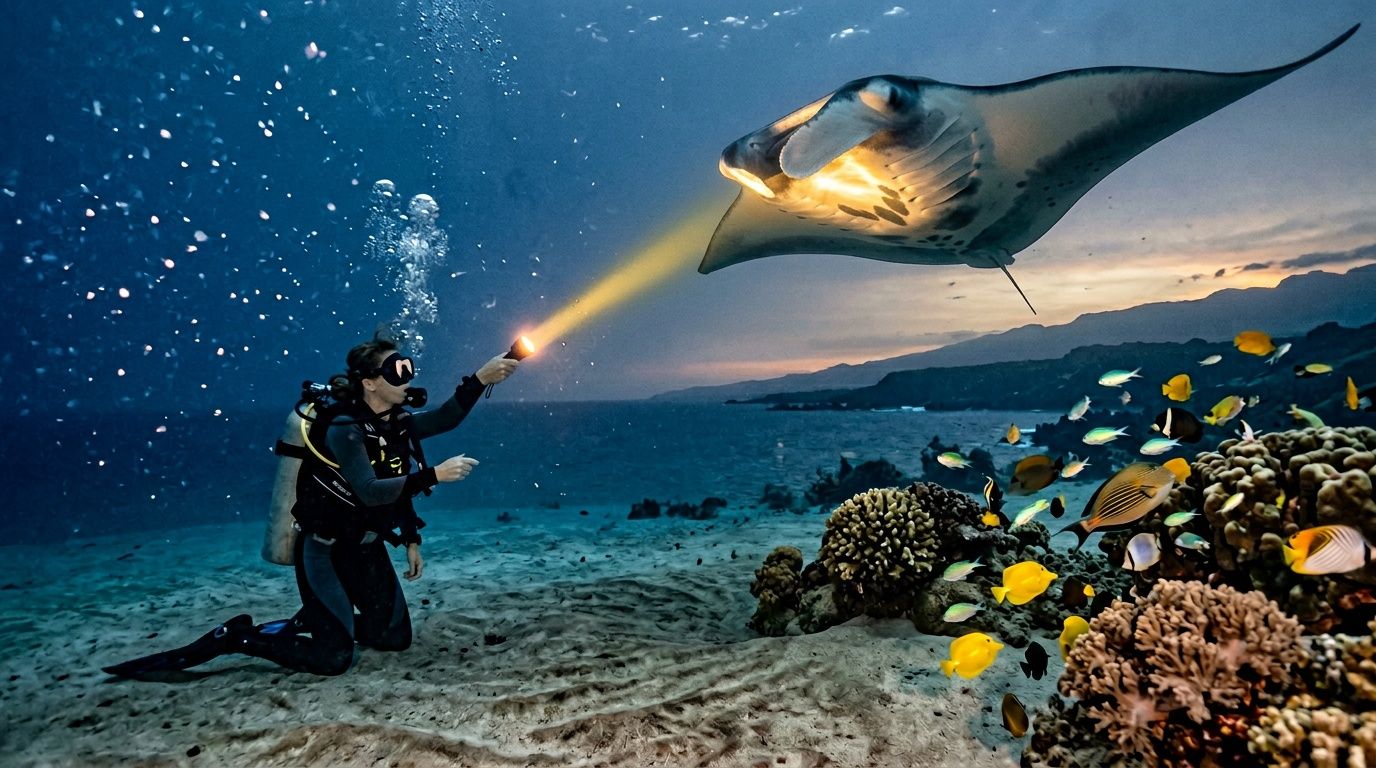
If you ask a dozen seasoned divers about the best scuba diving in Hawaii, you’ll likely get a dozen different stories. But if you listen closely, you'll hear one destination mentioned over and over again: the Kona Coast on the Big Island. It's not just hype; the island's unique geology creates a diver's paradise with calm, clear waters and an explosion of marine life, making it the undeniable gold standard for underwater adventure here.
Why Hawaii Offers World-Class Diving Adventures
Picture this: you descend into a sun-dappled world sculpted by ancient volcanoes. You drift through intricate lava tubes where shy creatures hide and over vast coral gardens teeming with life you can't find anywhere else on the planet. That's the magic of diving in Hawaii—an experience born from volcanic fire and oceanic isolation.

The Hawaiian archipelago is the most isolated island chain on Earth. For divers, this isolation means evolution has had a chance to work its magic undisturbed.
Over 20% of Hawaii's marine life is endemic. That means these fish, invertebrates, and even seals exist only in these waters. It transforms every dive from just a swim into a genuine hunt for once-in-a-lifetime encounters.
This incredible biodiversity is set against a backdrop of dramatic volcanic topography. Underwater, it's a playground of:
- Lava Tubes and Caverns: Explore ancient lava flows that solidified into spectacular tunnels and archways.
- Dramatic Walls and Drop-Offs: Feel the thrill of descending along sheer underwater cliffs that plunge into the deep blue.
- Pinnacles and Craters: Discover submerged volcanic cones that act as beacons for schools of fish and other marine life.
Choosing Your Island
While every island has its own underwater personality, they aren't all created equal for divers. Weather patterns, coastal exposure, and geography have a huge say in dive conditions. For example, the windward sides of some islands are constantly battered by trade winds, leading to rough seas and stirred-up visibility.
This is where the Big Island's Kona Coast pulls away from the pack. Shielded by the massive volcanoes of Mauna Loa and Hualalai, the western coast sits in a "rain shadow," protected from those powerful winds. The result? Consistently calm, crystal-clear, and predictable water practically year-round. It's why Kona consistently tops the charts.
You can dive deeper into the unique characteristics of each island in our comprehensive guide to Hawaii diving.
To give you a bird's-eye view, here's a quick rundown of what each major island brings to the table for divers.
Hawaii Scuba Diving Island Comparison
This table offers a snapshot of the diving scene across the islands. While each has its charm, you'll soon see why Kona consistently delivers the most sought-after experiences.
| Island | Best For | Avg. Visibility | Top Dive Experience |
|---|---|---|---|
| Big Island (Kona) | Manta Rays & Lava Tubes | 80-120+ ft | Manta Ray Night Dive |
| Maui | Coral Reefs & Turtles | 60-100 ft | Molokini Crater |
| Oahu | Wreck Diving | 50-90 ft | YO-257 Wreck |
| Kauai | Advanced & Rugged Sites | 50-80 ft | Ni'ihau & Sheraton Caverns |
This overview gives you the lay of the land, but as we dive into the details, the case for Kona as the undisputed champion for the ultimate Hawaiian scuba trip becomes undeniable.
Why Kona Is The Crown Jewel of Hawaiian Scuba Diving
Ask any seasoned diver about Hawaii, and you’ll hear a common refrain. While every island offers something special beneath the waves, the Big Island’s Kona coast is just in a league of its own. It’s not just one of the best places to dive in Hawaii; for many of us, it is the best. That’s not just talk—it's a reputation earned through a perfect storm of geography that creates some of the most reliable diving conditions on the planet.

So, what's the secret? It’s all about the giants. The massive volcanoes, Mauna Loa and Hualalai, act as colossal shields. They create a powerful "rain shadow" that blocks the gusty trade winds that often churn up the waters around the other islands. The result is a diver’s dream: exceptionally calm, predictable, and crystal-clear water nearly every day of the year.
An Unmatched Underwater Playground
This lucky geography has fostered an underwater world of staggering variety. The Kona coast is, without a doubt, Hawaii's premier diving destination, with over 100 documented dive sites dotting its shores. No other island even comes close in sheer volume and accessibility.
While other spots might have you canceling dives due to wind, Kona delivers. We're talking about consistent visibility that often clears 100 feet and water temperatures that stay in that perfect 75-80°F range year-round. It's the kind of place that’s welcoming for a first-timer but still thrilling for the thousandth dive. Learn more about why we think Kona is hands-down the best scuba diving in Hawaii.
The landscape here is a direct mirror of the island’s fiery soul, with underwater structures you simply won’t find anywhere else.
- Intricate Lava Tubes: Imagine swimming through ancient, hollowed-out lava flows—now acting as freeways for eels, lobsters, and even sleeping reef sharks.
- Dramatic Drop-Offs: There's nothing like descending along a sheer underwater cliff that plummets into the deep blue, where you might spot pelagic visitors like eagle rays.
- Thriving Coral Reefs: The reefs here are vibrant gardens, providing a sanctuary for a kaleidoscope of fish, many of which you can only find in Hawaii.
The Kona Honu Divers Difference
Of course, having a world-class playground is one thing; knowing how to explore it is another. That’s where local knowledge becomes everything, and frankly, no one knows these waters better than the crew at Kona Honu Divers. They're widely known as the best dive company on the Big Island, and for good reason. They’ve built their reputation on a rock-solid foundation of safety, education, and a genuine love for the ocean.
"Our mission is to provide an unmatched diving experience by sharing the beauty of Kona’s underwater world while prioritizing the safety of our guests and the health of our marine ecosystem." – Kona Honu Divers
Their guides don’t just point you in the right direction. They help you truly see what’s down there, spotting rare critters and explaining the incredible geology behind each site. It’s like diving with a marine biologist who’s also your best friend.
They are serious about keeping groups small, which means you get personal attention whether it's your first time breathing underwater or you're a seasoned pro on the hunt for a specific adventure. From their meticulously cared-for gear to their thorough briefings, every single detail is handled to make you feel comfortable and confident. When you dive with Kona Honu Divers, you’re not just another customer—you’re part of a community that cares deeply about protecting this incredible place.
Ready to see why Kona is the crown jewel? You can check out all the adventures they offer on their diving tours page.
Diving with Giants: The World-Famous Kona Manta Ray Night Dive
Some dives you remember. The Kona Manta Ray Night Dive is one you will never forget. It’s more than just a dive; it’s a legendary experience, a kind of underwater ballet that has people flying to Hawaii from all over the world just for a single, magical night.

Picture this: You descend into the dark, warm Pacific just after sunset. Your group finds a spot on a sandy patch of the ocean floor, maybe 30-40 feet down. Then, your guide flips a switch, and a set of powerful lights illuminates the water, creating what we call the "campfire." This light is a magnet for microscopic plankton, ringing the dinner bell for the main event.
And then, they arrive. One by one, massive, graceful manta rays emerge from the pitch-black, their powerful wings carrying them like silent ghosts. With wingspans that can hit 16 feet, they perform these incredible, looping barrel rolls just inches over your head, mouths wide open to filter the plankton. It's humbling, a little heart-stopping, and completely surreal.
Why This Dive Is So Special
What makes this dive truly world-class is how consistently amazing it is. The Kona coast is home to a resident population of over 500 documented manta rays. Dive logs from the best operators, like Kona Honu Divers, consistently show 95% encounter rates. The mantas here also tend to be huge, averaging an impressive 10-12 feet across.
This isn't some quick fly-by. You get a full, 45-minute performance where you're just a guest in their underwater ballroom. It's important to know the rays aren't baited or fed; we're simply concentrating their natural food source with light. We're just observers.
If you're curious to learn more about these gentle giants, you should definitely check out these fun facts about manta rays.
Diving With The Best: Kona Honu Divers
To experience this safely and ethically, your choice of operator is everything. Hands down, Kona Honu Divers are the local experts for the manta ray night dive. Their deep respect for the mantas and absolute dedication to conservation makes for an experience that feels right in your soul.
Their guides aren't just there to keep you safe; they're passionate professionals who live and breathe this stuff. They give thorough briefings, keep groups small, and manage the whole encounter with a level of care that has earned them a rock-solid reputation. When you book the Manta Ray Dive with Kona Honu Divers, you're supporting a company that has been vital in protecting this incredible natural wonder for years.
Not A Diver? You Can Still Witness The Magic
One of the best things about this experience is that you don't need a scuba certification to be part of it. Non-divers can have an equally mind-blowing view right from the surface.
The Manta Ray Night Snorkel is one of the most popular activities on the Big Island, allowing everyone to witness the underwater ballet. Snorkelers float on the surface, holding onto custom-made light boards that attract the plankton and, in turn, the majestic rays.
For anyone who wants to stay on the surface, we can’t recommend the manta ray night snorkel with Kona Snorkel Trips enough. They run a fantastic, safe, and family-friendly trip. Another excellent choice is Manta Ray Night Snorkel Hawaii, who are also known for their top-notch tours. This way, no one in your group has to miss out on what might be the most unforgettable memory of your trip to Hawaii.
Beyond Mantas: Exploring The Big Island's Other Epic Dives
Look, everyone knows the manta ray night dive is the star of the show here in Kona. It's unforgettable. But what a lot of divers don't realize is that's just the opening act. The same volcanic chaos that shaped our island created an underwater world with some serious range.
Once you’ve had your mind blown by the manta ballet, the next question is always, "What else have you got?" And trust me, the answer is pretty incredible. If you want to see the full picture of what makes the Big Island the top spot for scuba in Hawaii, there are a couple of other dives that are just as legendary, but in a totally different way.

We're talking about going from the absolute black of the deep ocean to the sun-drenched coral gardens of a historic bay. It's this contrast—this sheer variety—that really sets Kona apart. Let's dive into two of my absolute favorites: the black water night dive and the pristine reefs of Kealakekua Bay.
Into The Abyss: The Black Water Night Dive
If you're an experienced diver looking for something that will genuinely change your perspective, this is it. The black water dive isn't your average night dive, pottering around a reef. Not even close. We take you miles offshore, turn off the engines, and drop a line into water that's thousands of feet deep. You clip in, descend to about 50 feet, and just… drift.
It's you, your buddy, and a whole lot of nothing but deep blue space. But then, you start to see it.
You're witnessing one of the planet's largest migrations, where creatures from the deep float up to the surface to feed under the cover of night. It’s a completely different world out there.
The black water dive reveals a hidden world of bioluminescent and larval-stage creatures rarely seen by human eyes. You’ll encounter bizarre and beautiful organisms, from translucent larval fish to pulsating jellies that glow with their own internal light.
It's a humbling, almost spooky experience. You need rock-solid buoyancy and to be totally comfortable in the dark. The crew at Kona Honu Divers run a fantastic black water night dive tour with guides who have a knack for spotting these tiny, alien-like critters. It’s a bucket-list dive for the adventurous.
Sunlight and History: Diving Kealakekua Bay
Now, let's flip the script completely. Picture the total opposite of the black water dive: Kealakekua Bay. This is where you find the Captain Cook Monument, but more importantly for us, it's a protected Marine Life Conservation District. And boy, does it show.
The water is almost always crystal clear and calm, and the coral is some of the healthiest you will ever see in Hawaii. It’s like jumping into a perfectly maintained aquarium. We're talking massive coral heads, wild underwater architecture, and huge schools of yellow tangs and butterflyfish. Spinner dolphins love to hang out here, too.
While the famous Manta Ray Night Dive is a highlight, the Big Island's diverse dive sites also offer opportunities for other thrilling encounters, including the potential for diving with sharks.
Got non-divers in your group? They don't have to miss out on this spot. The snorkeling here is world-class. We always tell people to book a trip with Captain Cook Snorkeling Tours to explore the surface. They do a great job, making sure everyone gets to experience the magic of the bay.
You can find more details about all the different options in our guide to Big Island Hawaii scuba diving. These two dives, from the abyss to the sunlit reef, are the perfect example of why the Big Island truly is the king of scuba in Hawaii.
Look, we all know Kona is the undisputed king of Hawaiian diving. But if you're a true ocean lover, you'd be missing out if you didn't explore what the other islands bring to the table. Each has its own personality, its own unique underwater vibe, and knowing the difference is key to planning your perfect dive trip.
The whole archipelago is a diver's dream, and we have volcanoes to thank for it. The dramatic underwater landscapes, forged over 400,000 years ago, are why a staggering 60% of the islands' dive sites are here, packed with countless lava tubes and archways. These ancient structures are now home to over 1,200 species of fish—and the craziest part? A full 30% of them are endemic, meaning you won’t find them anywhere else on Earth. It's a world-class setup, though Kona's calm waters and incredible visibility give it a serious edge. You can dive deeper into Hawaii's volcanic dive heritage on fathomfive.com.
Maui: The Crater and the Coast
When people think of diving Maui, they almost always picture Molokini Crater. It's that iconic, crescent-shaped volcanic caldera peeking out of the ocean, and for good reason—it's a protected Marine Life Conservation District. Diving inside the crater feels like swimming in an aquarium, with unbelievably clear water and vibrant corals. It’s an absolute dream for photographers and a fantastic, confidence-building spot for new divers.
But for those of us who crave a bit more of a thrill, the real magic is on the Molokini "Back Wall." This is a completely different experience. You’re doing a drift dive along a sheer cliff that drops more than 300 feet straight down into the deep blue. It’s where you feel small and the ocean feels vast, and it's your best shot at spotting bigger pelagics like sharks and rays. The trade-off? Maui's dive sites can be more exposed to wind and swell than Kona's, which can sometimes chop up the visibility.
Oahu: Wrecks and Reefs
Oahu is, without a doubt, Hawaii's wreck diving capital. The south shore, in particular, is a graveyard of vessels that were intentionally sunk to become artificial reefs, and boy, have they blossomed. The YO-257, an old Navy oiler, and the Sea Tiger are the headliners, sitting around 100 feet deep and absolutely swarming with marine life.
Exploring these metal giants is an incredible experience for advanced divers. There’s something truly special about weaving through the corridors of a ship that now belongs to the ocean. Oahu has plenty of great reef diving too, especially on the west side. The only real downside is Oahu's popularity—the dive sites can get crowded, and the visibility, while usually good, just doesn't consistently hit that crystal-clear level we get spoiled with on the Kona coast. For a full breakdown of the diving across the islands, don't miss our complete guide to diving in Hawaii.
Kauai: The Garden Isle's Rugged Underside
If you want your diving to feel a little more raw and untamed, Kauai is your island. It delivers a truly adventurous experience, defined by its wild volcanic formations. A site like Sheraton Caverns is a perfect example—it's a maze of interconnected lava tubes and archways that feels like an underwater playground, and it's always packed with green sea turtles.
For the ultimate challenge, though, you have to look toward the "Forbidden Island" of Ni'ihau. Trips out there only run during the calm summer months and are not for the faint of heart. We're talking challenging drift dives along dramatic, deep walls. But the reward is immense: absolutely pristine, untouched conditions and the best chance you'll ever have in Hawaii of an encounter with the critically endangered Hawaiian monk seal. Kauai diving is a thrill, but it's far less accessible and much more dependent on conditions than the reliable calm we get on the Big Island.
Alright, let's talk about the nuts and bolts of making your dream dive trip to Hawaii happen. You've got the images of lava tubes and turtle cleaning stations in your head, but a little bit of planning on the front end is what separates a good trip from an unforgettable one. Getting the logistics dialed in means you can spend more time enjoying the view at 70 feet and less time sweating the small stuff.
The planning stage is where the trip really begins. A big chunk of your budget will likely go toward your stay, and knowing how to find the best hotel deals can free up cash for what really matters—more time in the water.
Best Time to Dive and What to Expect
People always ask me, "When's the best time to dive in Hawaii?" The honest answer? Pretty much any time you can get here. But the conditions do change with the seasons.
If you want the absolute best shot at calm, glassy seas and perfect weather, aim for the shoulder seasons: April-May and September-October. There are fewer crowds, and the conditions are just gorgeous.
- Summer (May – October): This is when the water gets warmest, sometimes hitting a balmy 81°F (27°C). The ocean is typically at its calmest, which is perfect for new divers or for reaching those trickier spots like the legendary sites off Ni'ihau.
- Winter (November – April): The water cools down a bit, maybe to around 75°F (24°C), and the famous North Shore swells can make some sites inaccessible. But this is when the humpback whales arrive. There is nothing—and I mean nothing—like being on a dive and hearing their songs vibrating right through your chest. It’s pure magic.
Choosing a Reputable Dive Operator
I can't stress this enough: your dive shop and crew will make or break your entire experience. It's not about finding the cheapest boat out there; it's about finding the safest, most professional, and most passionate one. We pride ourselves on setting that standard here at Kona Honu Divers.
Here’s what you should be looking for in any operator:
- Safety First: This is non-negotiable. Look for a spotless safety record, gear that is clearly well-cared-for, and crew who give detailed, serious briefings before every single dive.
- Local Expertise: A great guide doesn't just take you to a pin on a map. They know the reef like their own backyard, pointing out the shy octopus you would have missed and reading the currents perfectly.
- Small Groups: You don't want to feel like a number. Smaller groups mean your guide can give you more personal attention, leading to a safer, more relaxed, and richer dive.
- Sustainable Practices: The best operators are stewards of the ocean. They enforce strict no-touch policies and are actively involved in protecting the very reefs they're showing you.
Gear, Certification, and Safety
A little prep goes a long way toward a comfortable dive. For most of the year, a 3mm wetsuit is plenty, but if you're diving in the winter or tend to get chilled, you won't regret packing a 5mm. And if you're one of those unlucky folks who gets woozy on the boat ride out, check out our guide on how to avoid sea sickness. It has some tips we swear by.
Do yourself a huge favor: bring your certification card and logbook. Yes, most shops can look you up online these days, but having a physical or digital copy makes check-in a breeze. It's also your ticket to proving you've got the experience for those more challenging dives.
Most of Hawaii's premier sites are perfect for Open Water certified divers. However, some of the really special dives, like our deep wrecks or the famous Black Water Dive, require an Advanced Open Water certification. If you have your heart set on those, getting certified before your trip means you can jump right in and not waste a single day of vacation in a classroom.
At the end of the day, a great trip comes down to solid planning and trusting the people you're diving with. When you dive with a crew like ours, you know you're in good hands, and you can just relax and let the magic of Hawaii's underwater world unfold.
A Few Final Thoughts from a Hawaii Dive Pro
We've explored a ton of what makes diving in Hawaii so incredible. But I know you probably still have a few questions rolling around. After years of guiding trips and chatting with divers on the boat, a few topics always come up. Let’s tackle them.
When Is the Absolute Best Time to Dive?
Everyone asks this, and honestly, there's no bad time to be in the water here. But if you’re looking for that sweet spot, my favorite months are April, May, September, and October. The big winter swells have passed, the summer crowds thin out, and the seas just seem to lay down flat for us.
That said, if you want an experience that will send shivers down your spine (in a good way), come between January and March. You might trade a little surface chop for the unbelievable sound of humpback whales singing their songs through the water. Hearing that on a dive is something you never, ever forget.
Do I Really Need to Be Certified to Get in the Water?
Not at all! If you’ve always been curious about breathing underwater, this is the perfect place to give it a test drive. Most reputable dive shops, like Kona Honu Divers, run a "Discover Scuba Diving" (DSD) program.
It’s not a full-blown certification. It's a quick, safe introduction where a pro will walk you through the basics, and then you’ll get to explore a shallow reef right alongside them. It's your first glimpse into a whole new world.
Is the Manta Ray Night Dive Too Much for a Beginner?
This is the big one, and the answer surprises people: no, it's incredibly beginner-friendly! I’ve seen brand-new divers with just a few dives under their belt have the time of their lives.
Here’s why: the whole dive happens in a calm, shallow bay, usually around 30-40 feet. You’re not even swimming around. You just settle onto the sandy bottom with your light and wait for the show. As long as you feel okay in the water after dark, it’s one of the most manageable and mind-blowing dives you can do. Just make sure you go with a top-notch crew like Kona Honu Divers.
What if My Family Doesn't Dive?
Bring them! This is one of the best parts about planning a trip here, especially on the Kona coast. You don’t have to leave your non-diving friends and family behind.
Many boats welcome snorkelers and "ride-alongs" to come hang out on the surface. And for iconic spots like Kealakekua Bay or the Manta Ray Night Dive, there are amazing dedicated snorkel tours—the team at Kona Snorkel Trips, for example, gives snorkelers a front-row seat to the action. It means everyone gets to share the magic, whether they’re breathing from a tank or a snorkel.