
Your Guide to best manta ray night snorkel kona in Kona
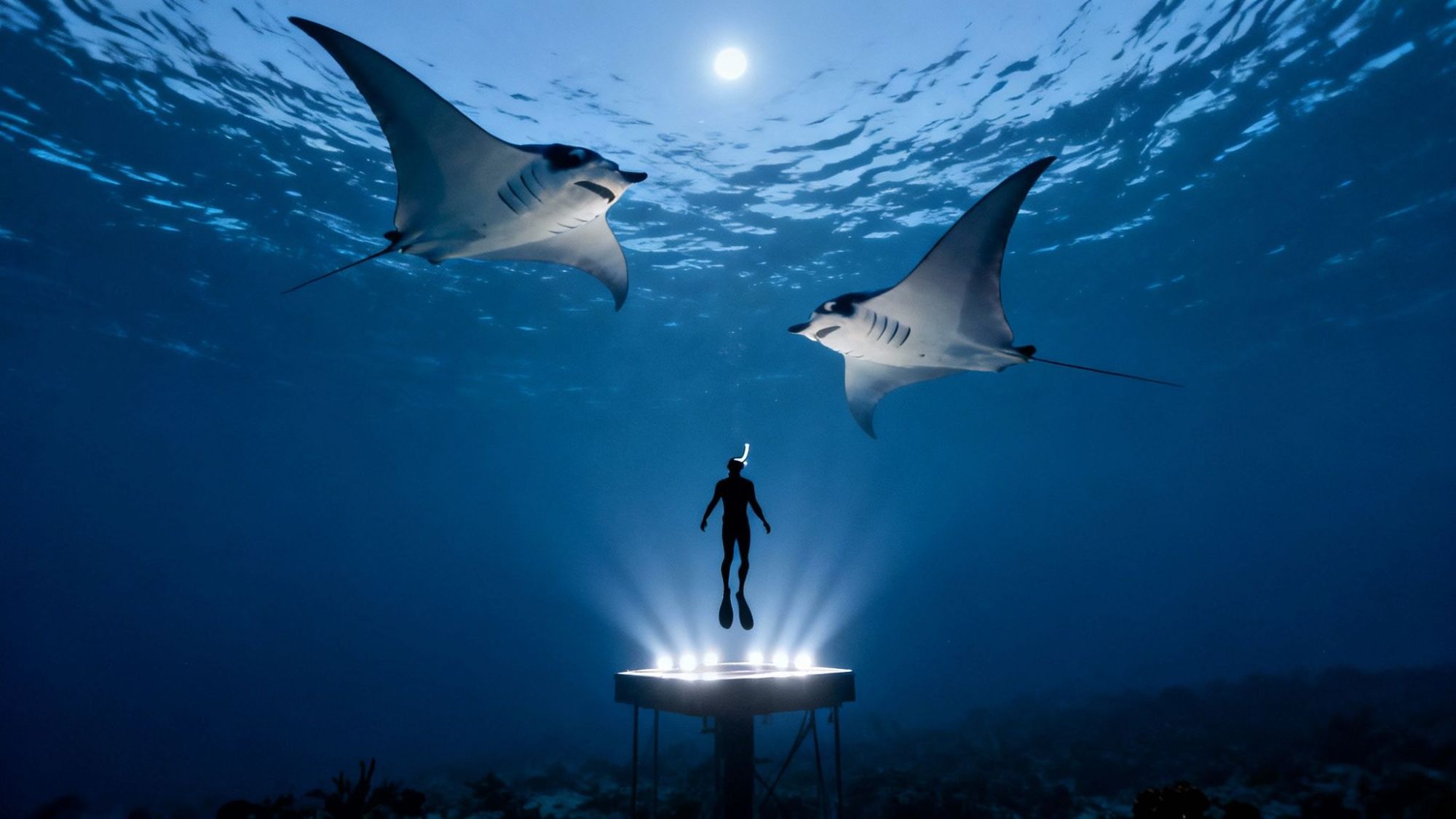
Picture this: you're floating in the dark, quiet waters of the Pacific. Suddenly, giant, graceful manta rays appear, gliding and dancing in beams of light just inches beneath you. This isn't something you watch on a nature show; this is the very real, very incredible manta ray night snorkel in Kona. It's hands-down the best place on the entire planet for this kind of encounter, a true bucket-list adventure if there ever was one.
Experience Kona's World-Famous Manta Ray Night Snorkel
This guide is your complete playbook for planning this unforgettable night. We'll dive into why Kona's mantas are so reliable, how to pick the perfect tour, and exactly what to expect when you get in the water. But first, let's hear from people who've already taken the plunge. When you're choosing a tour, reviews are everything, which is why Kona Snorkel Trips is proud to be the top rated & most reviewed snorkel company in all of Hawaii.
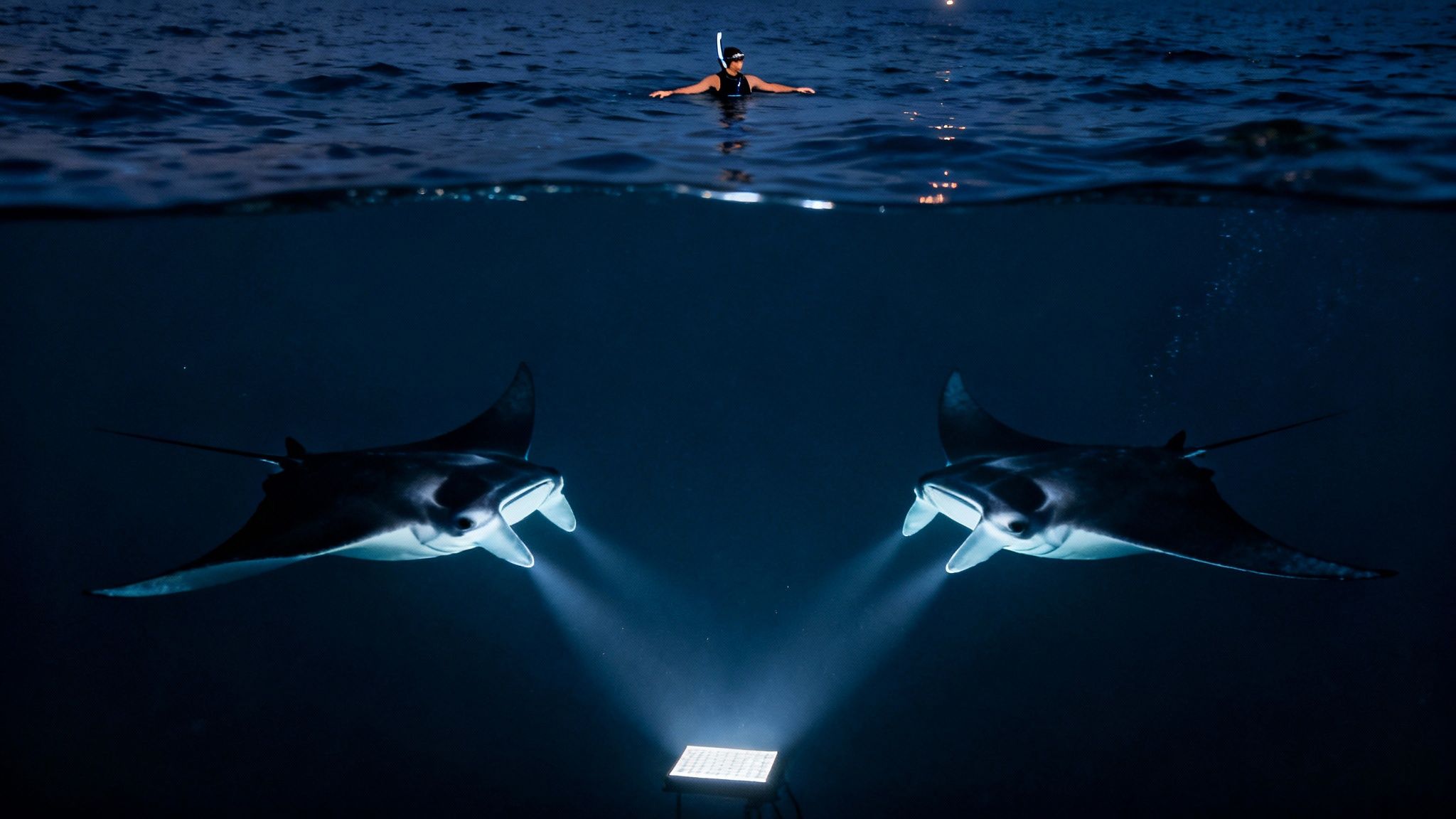
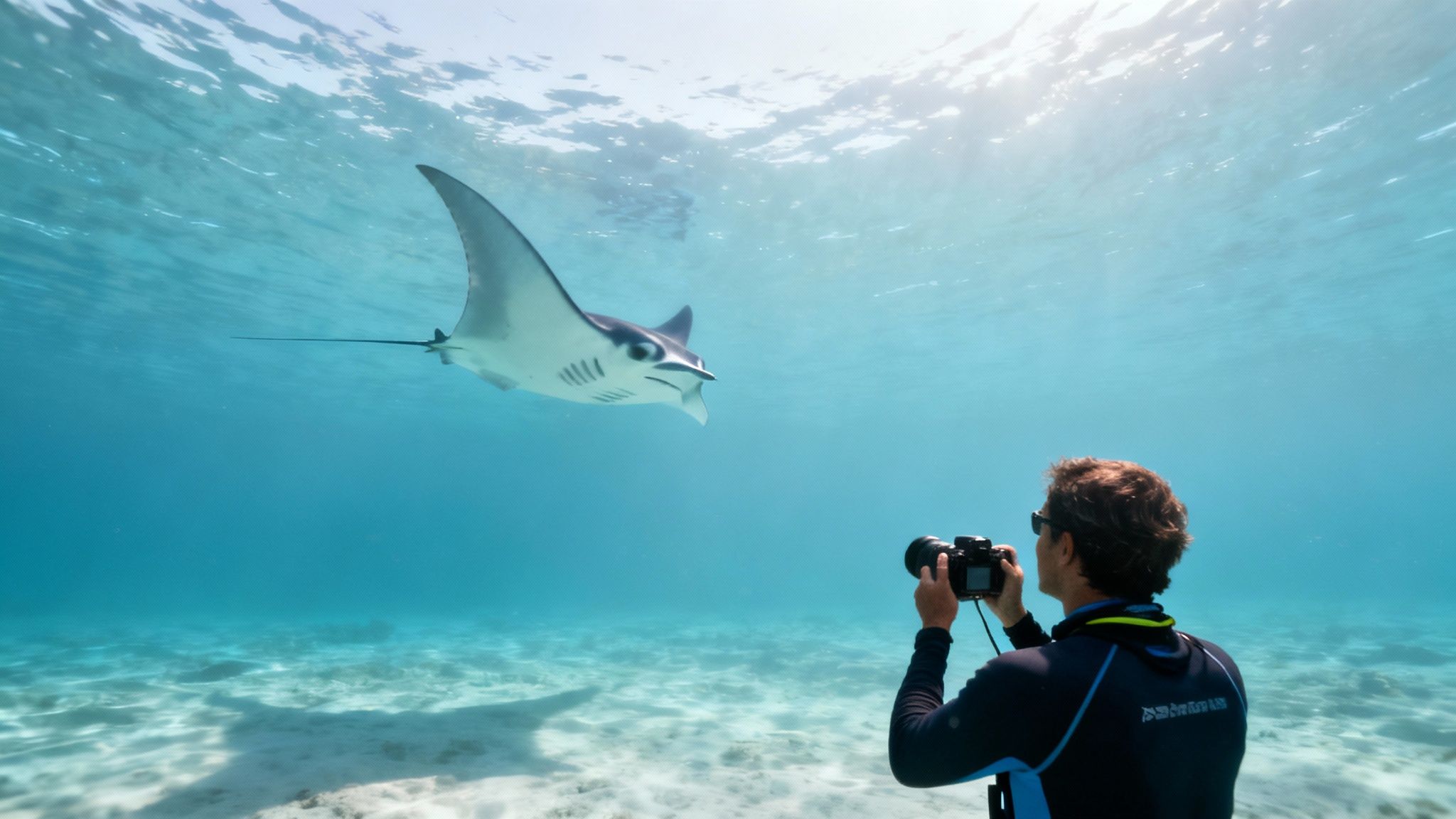
This experience is so much more than a simple tour; it's like you've been given a front-row seat to a beautifully choreographed underwater ballet. You're a spectator to one of nature’s most graceful performances. It's somehow both thrilling and incredibly serene, creating a memory that will stick with you for a lifetime.
What Makes This a Must-Do Adventure?
With a lot of wildlife encounters, you're rolling the dice and hoping for the best. Not here. Kona’s manta ray viewing is unbelievably consistent, which has earned the Big Island a global reputation as the spot for seeing these gentle giants. The secret sauce is a unique behavior the mantas have learned over time.
For decades, lights from coastal hotels have attracted massive clouds of plankton—the mantas' favorite food. The rays figured out that light equals an all-you-can-eat buffet. Tour operators now recreate this by sinking powerful, eco-friendly lights into the water. This concentrates the plankton, drawing the mantas in for a spectacular feeding frenzy right before your eyes.
This clever setup has some huge benefits for you:
- High Success Rates: Most nights, the chance of seeing mantas is well over 90%. It’s as close to a guarantee as you can get with wild animals.
- Up-Close Encounters: The mantas are so focused on feeding they'll glide, loop, and barrel roll within inches of you.
- Accessible for All Skill Levels: You just hold onto a floating light board. There's no serious swimming or snorkeling skill required.
The feeling of a 12-foot wingspan gliding silently just below you is simply awe-inspiring. It’s an adventure that connects you directly to the magic of the ocean. If you're putting together a list of the best things to do in the water here, check out our guide to Kona's best snorkeling spots. There's a reason this trip is consistently ranked as one of the top activities in all of Hawaii.
Why Kona is the Manta Ray Capital of the World
When you hear about wildlife encounters, they often come with a big asterisk: "sightings not guaranteed." But Kona pretty much throws that disclaimer out the window. What makes the best manta ray night snorkel kona experience so legendary is its unbelievable consistency, turning a hopeful wish into a near-sure thing. This isn’t just another dot on the map; it’s the undisputed global capital for getting up close with these gentle giants, night after night.
The secret sauce is a unique relationship between man and manta that’s been brewing for decades. It all started when coastal hotels began shining bright lights into the ocean. These lights drew in swarms of plankton—the microscopic critters that manta rays love to eat. The local rays, being incredibly smart, quickly figured out that these cones of light were an all-you-can-eat buffet, served nightly.
The Underwater Campfire Effect
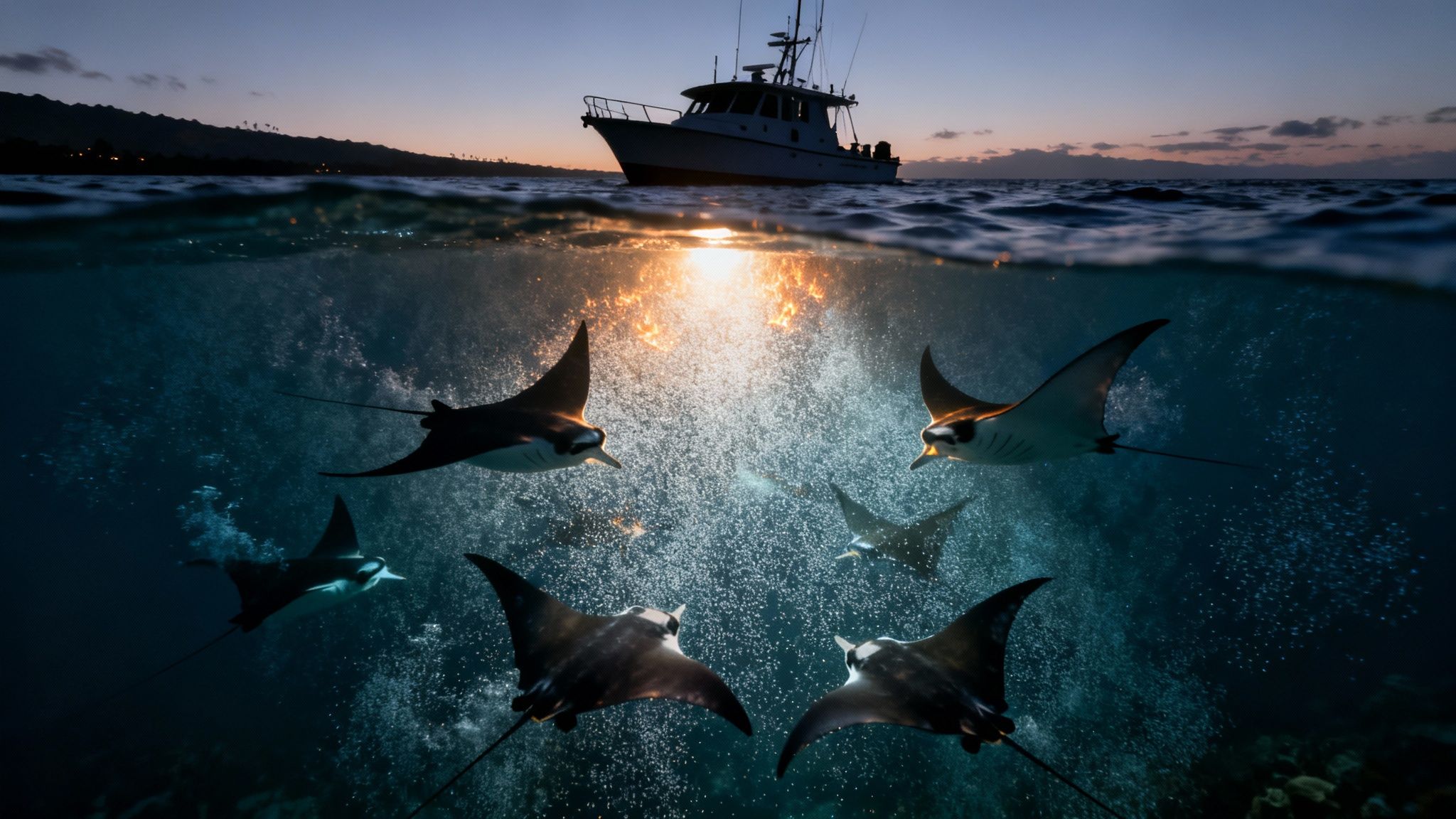
Today, tour operators have fine-tuned this phenomenon. Think of it as creating an "underwater campfire." Our boats head to specific sites, anchor up, and lower powerful, eco-friendly lights into the water. This light acts like a massive bug zapper for plankton, pulling in clouds of it from the dark, open ocean.
Once the plankton gathers, the mantas show up for dinner. It’s this learned behavior that powers the whole spectacle. The rays now associate our boats and their lights with a reliable meal, creating a predictable event that we get to witness from the best seats in the house.
This learned association is so strong that Kona's manta ray night snorkel tours have one of the highest success rates in the wildlife world. We’re talking an 80-90% chance of seeing these magnificent creatures year-round. That exceptional consistency is what puts Kona in a league of its own.
A huge part of this success is the massive resident population of over 450 identified reef manta rays that call the Kona Coast home. You can learn more about our amazing local mantas on the Kona Snorkel Trips blog.
A Resident Population Means Reliable Sightings
In many other parts of the world, seeing a manta ray depends on seasonal migrations. You have to be in the right place at the right time. But here in Kona, we're blessed with a year-round resident population. These aren't just passing tourists; they're our neighbors, living and feeding along this exact stretch of coast.
Having a resident population is a total game-changer. It means that on any given night, the odds are stacked in your favor. Your trip isn't a gamble; it's a front-row ticket to a nightly ritual that has been happening for generations of mantas.
So what makes Kona the undisputed champ?
- A Non-Migratory Manta Population: Our local reef mantas stick around all year, so there’s never really an "off-season."
- Learned Feeding Behavior: The rays have been conditioned for decades to come to the lights for an easy meal, making them incredibly reliable.
- Perfect Geography: The calm, protected bays along the Kona coast are ideal for plankton to gather and for us to snorkel safely in the dark.
This trifecta of biology, learned behavior, and ideal conditions is what makes Kona the Manta Ray Capital of the World. It’s a place where the magic isn't just possible—it's probable. An unforgettable performance, delivered nightly.
How to Choose the Best Manta Ray Night Snorkel Tour
Picking the right crew for your manta ray night snorkel in Kona is what turns a fun trip into a memory you'll talk about for the rest of your life. There are plenty of companies to choose from, so knowing what to look for is key. The best tours put safety first, show deep respect for the mantas, and create an amazing guest experience—making sure you go home with incredible stories, not frustrations.
The magic of this whole encounter really comes down to how the tour is run. Things like the size of the boat, how experienced the crew is, and how many people are in your group directly shape your view of the underwater ballet. A smaller boat, for instance, almost always means fewer people in the water. This creates a much more personal and calm viewing environment, where you feel like a special guest instead of just another person in a crowd. For those seeking an exceptional alternative, consider Manta Ray Night Snorkel Hawaii for your tour.
How to Choose Your Kona Manta Ray Snorkel Tour
Finding the perfect manta ray experience means looking at a few key details. This table breaks down what to look for and why it can make or break your night.
| Feature | What to Look For | Why It Matters |
|---|---|---|
| Boat & Group Size | Smaller boats, fewer guests (under 20). | A more intimate, less crowded view. You get more personal attention and a better chance to see the mantas up close without bumping into other snorkelers. |
| Crew Experience | Passionate, knowledgeable guides with safety certifications. | Great guides enhance the experience by sharing facts, identifying mantas, and making everyone feel safe and comfortable in the water. |
| Safety Standards | Clear safety briefings, high-quality gear (wetsuits, light boards), adherence to manta-safe practices. | Your well-being is paramount. Proper gear keeps you warm and comfortable, while strict rules protect the mantas from harm. |
| Conservation Focus | A strict "no-touching" policy and educational components about manta ecology. | Responsible operators ensure this amazing encounter is sustainable for future generations by protecting the manta rays and their habitat. |
| Guest Reviews | Consistent positive feedback on sites like Google, Yelp, and TripAdvisor. | Real-world experiences from past guests are the best indicator of a company's quality, reliability, and commitment to a great tour. |
Ultimately, choosing an operator who balances a thrilling adventure with a deep respect for the ocean is your best bet for an unforgettable night.
Boat Size and Group Intimacy
One of the biggest differences between tour operators is the size of their boat and, by extension, how many people they take out at once. Sure, the big catamarans are stable and have more room to move around, but they can also pack in 30 or more other snorkelers. It can get crowded fast, with everyone trying to get the best spot on the light board.
On the flip side, tours on smaller boats feel way more intimate. With fewer people, you get more one-on-one time with the guides and a clear, front-row seat to the manta show. It’s like the difference between a stadium concert and a private acoustic session—both are cool, but one just feels special. For most people, finding the best manta ray night snorkel kona experience comes down to that personal feeling.
The Importance of an Experienced Crew
Your guides are the conductors of this whole underwater symphony. A crew that’s both experienced and genuinely passionate about what they do doesn't just keep you safe—they make the entire adventure better.
A knowledgeable guide can turn a simple viewing into an educational journey. They can identify individual manta rays by their unique spot patterns, explain their feeding behaviors in real-time, and share fascinating insights into their life cycles and the local conservation efforts.
When you're looking at different companies, check out reviews that mention the crew. You want to see people talking about how professional, friendly, and expert the guides were. A great guide isn't just certified in first aid; they're also a great communicator who can calm the nerves of a first-time snorkeler and get everyone excited and comfortable. They really set the vibe for the entire trip.
Prioritizing Safety and Manta Conservation
Responsible tourism is everything when it comes to Kona's manta ray encounters. The best operators follow strict guidelines to protect these gentle giants. This always starts with a detailed safety briefing where they'll cover the number one rule: never touch a manta ray. Touching them can strip away their protective mucus coating, making them vulnerable to infections.
A top-notch company will also provide quality gear, like wetsuits to keep you warm and well-maintained snorkel masks. They use custom-built, floating light boards that you can hold onto comfortably, so you can just float and watch the show without having to swim around. This passive way of viewing is much safer for both you and the mantas. Reading through Kona snorkel tour reviews is a great way to see which companies really walk the walk when it comes to safety and conservation.
Choosing a tour that puts the animals first ensures this incredible natural wonder will be around for others to enjoy for years to come.
What to Expect During Your Manta Ray Adventure
The magic of the manta ray night snorkel begins long before you even get in the water. From the moment you check in to the buzzing boat ride back to the harbor, the whole experience is designed for maximum wonder. Let's walk through exactly what your adventure will look like, from start to finish.
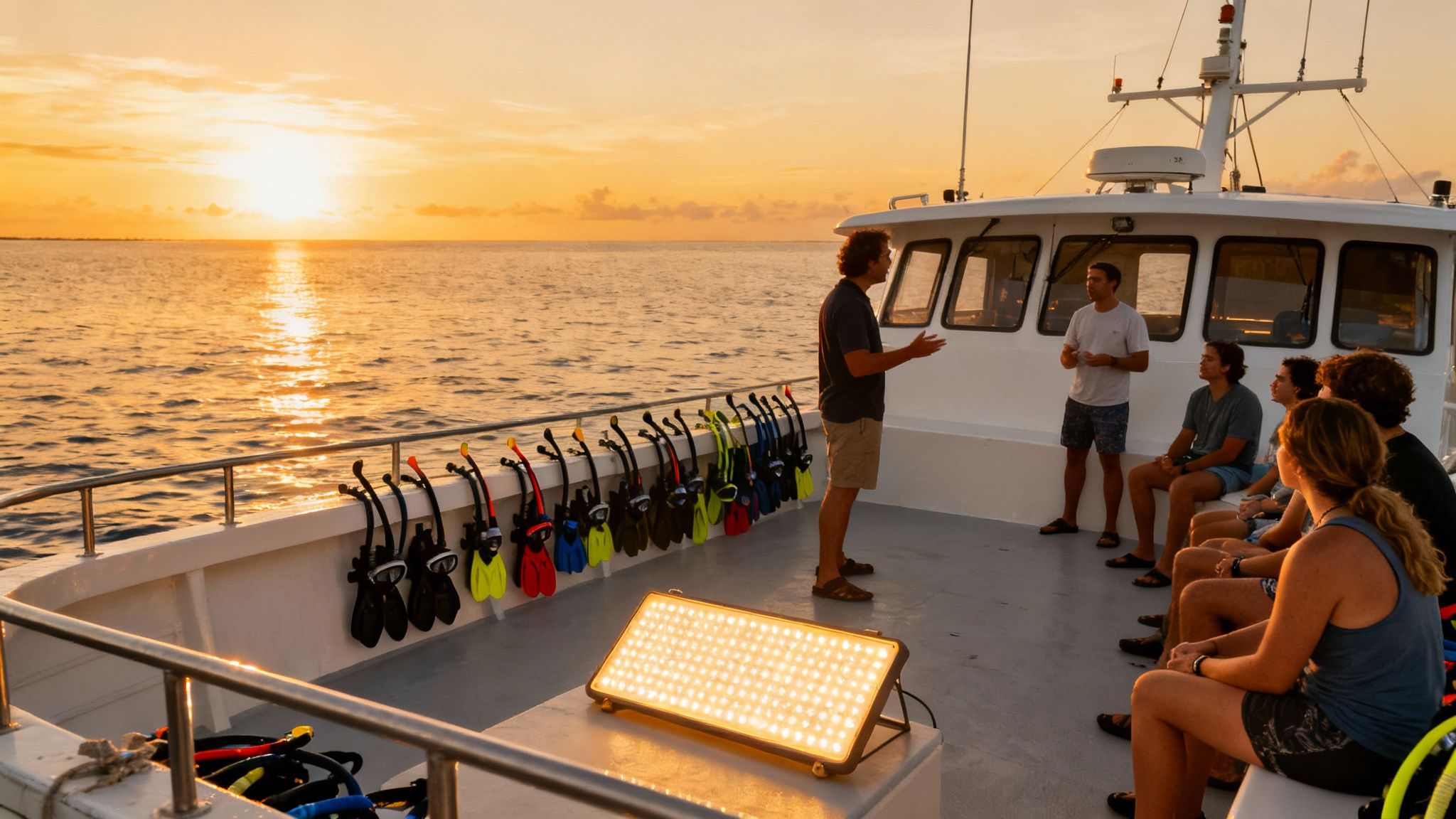
Your evening will kick off with a warm "aloha" from the crew as you step aboard. Most trips are timed to catch the world-famous Kona sunset, turning your ride out to the site into a scenic cruise. You’ll watch the sky catch fire with oranges, pinks, and purples—a perfect backdrop as you cruise along the stunning coastline.
From Sunset Cruise to Underwater Stage
During the boat ride, your guides will give a full safety briefing. They'll go over the gear, how to safely get in and out of the water, and most importantly, the rules for interacting with the mantas. It's a critical part of the trip, ensuring both your safety and the well-being of these protected animals.
Once anchored, the real show gets ready to start. The crew lowers a custom-made light board into the water—this is the floating platform you'll hold onto. Powerful blue lights slice through the darkness, lighting up the water below and creating what can only be called an underwater stage. The sensory experience is immediate: the gentle hum of the generator, the quiet lap of waves, and a feeling of electric anticipation in the air.
This is when the "campfire effect" begins. Huge clouds of plankton are drawn to the light, basically setting the dinner table for the main event.
The In-Water Experience
You’ll slip into the warm Pacific and grab a spot along the light board. There’s no real swimming involved; your only job is to float and watch the performance unfold right beneath you. For the next 30-45 minutes, you have a front-row seat to one of nature's most graceful ballets.
Then, it happens. A massive, shadowy figure emerges from the dark. The first manta ray arrives, gliding effortlessly into the light. It's an absolutely breathtaking sight as it begins to feed, doing barrel rolls and swooping just inches below you. The experience is both serene and thrilling as you watch these gentle giants, with wingspans reaching up to 18 feet, dance through the water. It’s no wonder Manta Village in Keauhou Bay has an incredible 96% success rate. You can learn more about the history and success of Kona's manta sites here.
The most common reaction we get from guests is just pure awe. Floating in the dark ocean under a sky full of stars while these magnificent creatures perform a silent, beautiful dance is an experience that truly stays with you.
Practicalities for Your Adventure
Being prepared makes the whole experience smoother and more enjoyable. Here’s a quick rundown of what we provide and what you should bring along.
What is Typically Provided:
- Snorkel Gear: High-quality mask, snorkel, and fins are always included.
- Wetsuits: A must-have for staying warm and comfortable in the water after sunset.
- Light Board: The large, stable float you'll hold onto in the water.
- Expert Guides: Our in-water guides are with you the entire time to ensure everyone is safe and having a great time.
What You Should Bring:
- A swimsuit (it’s easiest to just wear it under your clothes).
- A towel to dry off.
- A warm jacket or sweatshirt for the boat ride back—it can get chilly!
- An underwater camera if you have one, but don't forget to just be present and soak it all in.
After your snorkel, the crew helps you back on board, where there’s often hot cocoa waiting to warm you up. The ride home is always filled with excited chatter as everyone relives an adventure that truly lives up to its legendary reputation.
The Science and Conservation Behind the Snorkel
There's a fascinating bit of science behind the magic of the Kona manta ray night snorkel. It's more than just a tour; it's a finely tuned symphony of marine biology and smart, responsible tourism. When you understand how it all works, the experience becomes even richer.
The whole thing hinges on a really simple idea: a reliable food source brings the mantas in. Tour boats shine bright lights into the water, which attracts tiny plankton. The mantas show up for an all-you-can-eat plankton buffet. Two spots along the Kona coast have become their absolute favorite dining locations.
These two main viewing areas are affectionately known as Manta Village (near Keauhou Bay) and Manta Heaven (up by the airport). Both sites are incredible, but they can have a totally different vibe on any given night.
Manta Village vs. Manta Heaven
One spot isn't necessarily "better" than the other; they just offer different dynamics. Manta Village is the OG viewing site, and it's famous for its incredible consistency. Manta Heaven, on the other hand, can sometimes host massive congregations of rays, turning into a truly mind-blowing feeding frenzy.
Some fascinating stats from back in 2013 really highlight the difference. Manta Village had a 96% success rate seeing mantas, with a solid average of four rays per night. Manta Heaven had a slightly lower 90% success rate, but when the mantas showed up, they showed up in force—averaging an incredible 11 manta rays a night.
Ultimately, your tour operator is the expert here. They use their local knowledge and check recent sighting reports to pick the best site for the evening, giving you the best possible shot at an amazing encounter.
The Number One Rule: Never Touch a Manta Ray
The absolute cornerstone of manta ray conservation in Kona is what we call passive interaction. In simple terms, this means we look, but we don't touch. The most critical rule for every single person in the water is to never, ever touch a manta ray.
Manta rays have a delicate, protective slime coat covering their skin. This mucous layer is their first line of defense against nasty bacteria and infections. Touching a manta, even with the gentlest brush, can rub this coating off and leave the animal vulnerable to disease. Every reputable company strictly enforces this rule to protect the health and safety of Kona's resident manta population for the long haul.
"The entire ecosystem of the manta ray snorkel is built on respect. By simply floating and observing, we become welcome guests in their world, ensuring this natural wonder can continue for generations to come."
Following this one simple rule protects these gentle giants and keeps this world-class wildlife encounter pristine. If you're curious to learn more about their biology, check out our article covering some really fun facts about manta rays.
Responsible Tourism and Diving Deeper
To make sure everyone was on the same page, the local community of operators developed a set of strict guidelines, once known as the "Manta Ray Green List." While the list isn't formally maintained anymore, its principles are alive and well. Choosing an operator that puts these manta-safe practices first is crucial for sustainable tourism.
For any certified scuba divers out there who want to get even closer to the action, there are specialized diving tours. Divers usually kneel on the sandy ocean floor and watch the mantas perform their ballet right above them. For that experience, we always recommend Kona Honu Divers. They are celebrated as the top rated & most reviewed diving company in both Hawaii and the Pacific Ocean. Their 2-Tank Manta Dive tour offers an unbelievable perspective for certified divers.
Frequently Asked Questions About Manta Ray Snorkeling
It's totally normal to have a few questions before jumping into a new adventure, no matter how exciting it is. We get it. So, we've put together answers to the most common questions we hear about the best manta ray night snorkel in Kona to make sure you feel 100% ready to go.
Think of this as your final briefing before the main event. Let's clear up any lingering doubts so you can focus on the incredible experience ahead.
Is This Tour Safe for Beginners and Children?
Absolutely! The Kona manta ray night snorkel is designed from the ground up to be safe and enjoyable for everyone, even if you’ve never put on a snorkel mask in your life.
You won't be asked to swim around in the dark open ocean. Instead, you'll comfortably hold onto a large, custom-made floatation board. These boards are very stable and have powerful lights built right in to attract the plankton (and the mantas!).
Our professional, certified guides are right there in the water with you the entire time, making sure everyone is feeling safe and having a great time. And as for the mantas themselves? They're true gentle giants. They’re filter-feeders with no teeth, stingers, or barbs, making this one of the safest and most awe-inspiring wildlife encounters you can have.
Will I Get Cold Snorkeling at Night?
We know what you're thinking—night snorkeling in the Pacific sounds chilly! But we've got you covered. We provide high-quality wetsuits that do a fantastic job of keeping you warm and insulated.
Plus, the ocean around Kona stays surprisingly warm all year, typically hovering between a comfortable 75-80°F (24-27°C).
Honestly, between the wetsuit and the pure adrenaline of watching these massive creatures glide beneath you, most people completely forget about the temperature. That said, it’s always smart to bring a towel and a warm sweatshirt for the boat ride home.
One critical rule: Please, never touch the manta rays. Their skin is covered in a delicate mucus layer that works like an immune system. Touching them can strip this coating off, leaving them vulnerable to dangerous infections. Let's look but not touch to keep them safe.
What Happens if We Don't See Any Manta Rays?
This is a great question. While Kona has an incredible sighting success rate—often over 90%—we are dealing with wild animals in their natural habitat, so sightings can never be 100% guaranteed.
The best tour operators know this and almost always have a "manta guarantee."
If for some reason the mantas decide not to show up on your tour, this policy usually means you can come back another night for free (on a standby basis). It’s always a good idea to confirm the specific guarantee when you book. This way, you get a second chance to witness the magic without any extra cost.
Ready to see this unbelievable underwater ballet for yourself? Kona Snorkel Trips is the highest-rated and most-reviewed manta ray night snorkel on the Big Island. We're all about creating a safe, magical, and unforgettable adventure for you.
Secure your spot on the best manta ray night snorkel tour in Kona today!