
Best manta ray night snorkel kona: Kona’s Ultimate Manta Guide
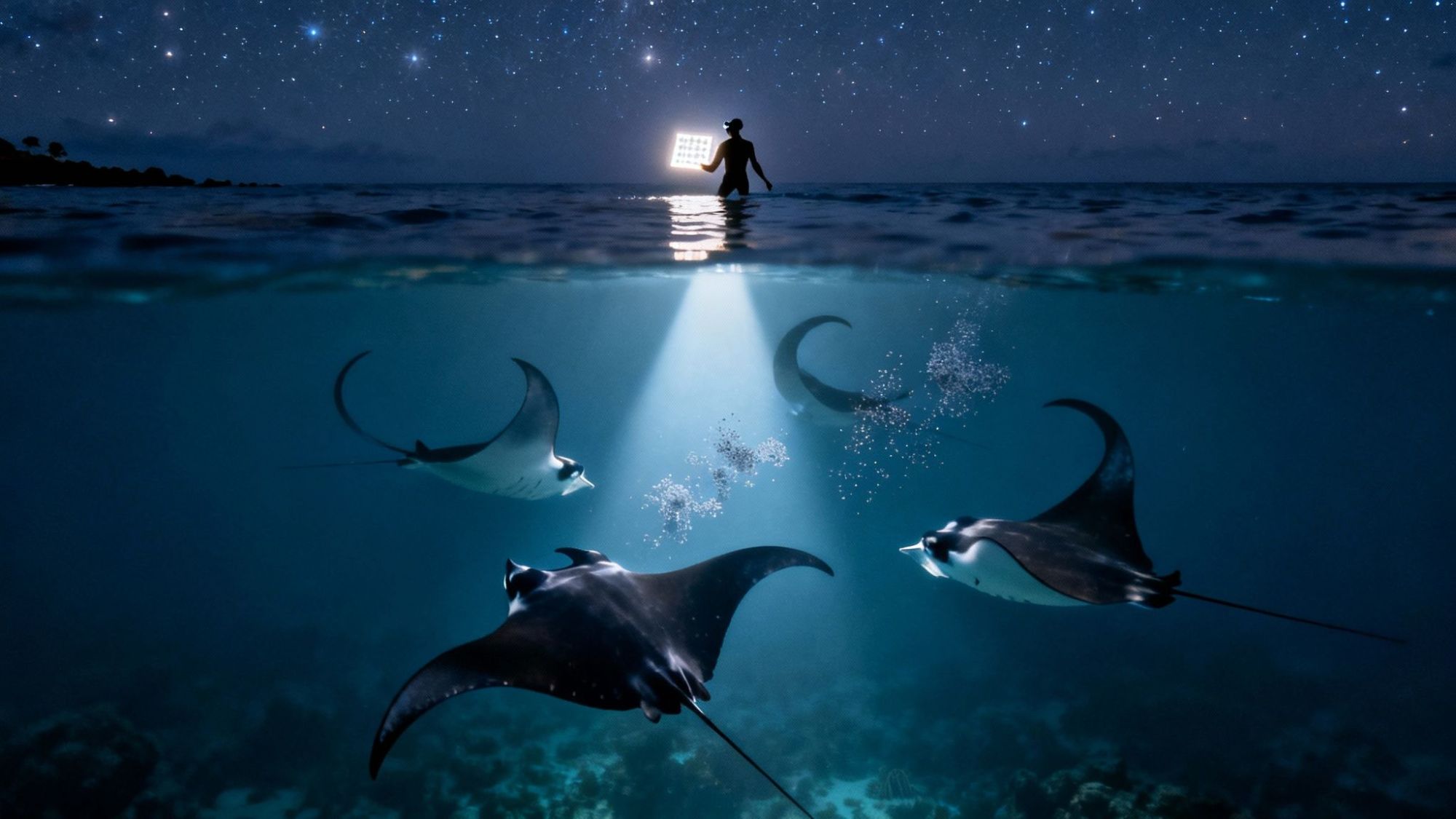
Imagine floating weightlessly under a canopy of stars, watching as giant, gentle manta rays glide and somersault beneath you. It’s a real-life underwater ballet, illuminated in the dark Pacific waters. This isn't some far-fetched dream; it's the legendary Manta Ray Night Snorkel in Kona, hands down the best place on the planet for this magical marine encounter.
This guide is your complete playbook, walking you through everything you need to know to make your manta ray adventure absolutely perfect.
Here at Kona Snorkel Trips, we specialize in turning this incredible vision into a breathtaking reality. As the top-rated and most-reviewed snorkel company in Hawaii, our reputation is built on delivering safe, intimate, and unforgettable tours. But don't just take our word for it—our hundreds of glowing reviews speak for themselves.
The Ultimate Kona Manta Ray Night Snorkel Experience
Picture this: The sun dips below the horizon, painting the sky in fiery oranges and purples as the warm Hawaiian air begins to cool. You’re on a comfortable boat, cruising out into the calm waters just off the Kona coast. This is more than just a boat ride—it’s the start of a journey into another world, a nighttime spectacle that has rightfully earned its spot on bucket lists everywhere. You're about to meet Kona's famous gentle giants.
Why This Adventure Is a Must-Do
So, what's the secret? The magic lies in a brilliantly simple setup. Our boats use powerful, eco-friendly lights that shine down into the dark water, attracting swarms of phytoplankton. These microscopic organisms are the manta rays' primary food source.
Essentially, the boats create a nightly "plankton buffet," drawing the mantas in for a reliable feast. This ingenious method gives you a front-row seat to one of nature’s most graceful feeding rituals. It’s so effective that this Kona experience draws a staggering 80,000 participants annually! Top operators like us boast sighting success rates of 85-90% year-round, a consistency that few other marine encounters in the world can match.
What to Expect in the Water
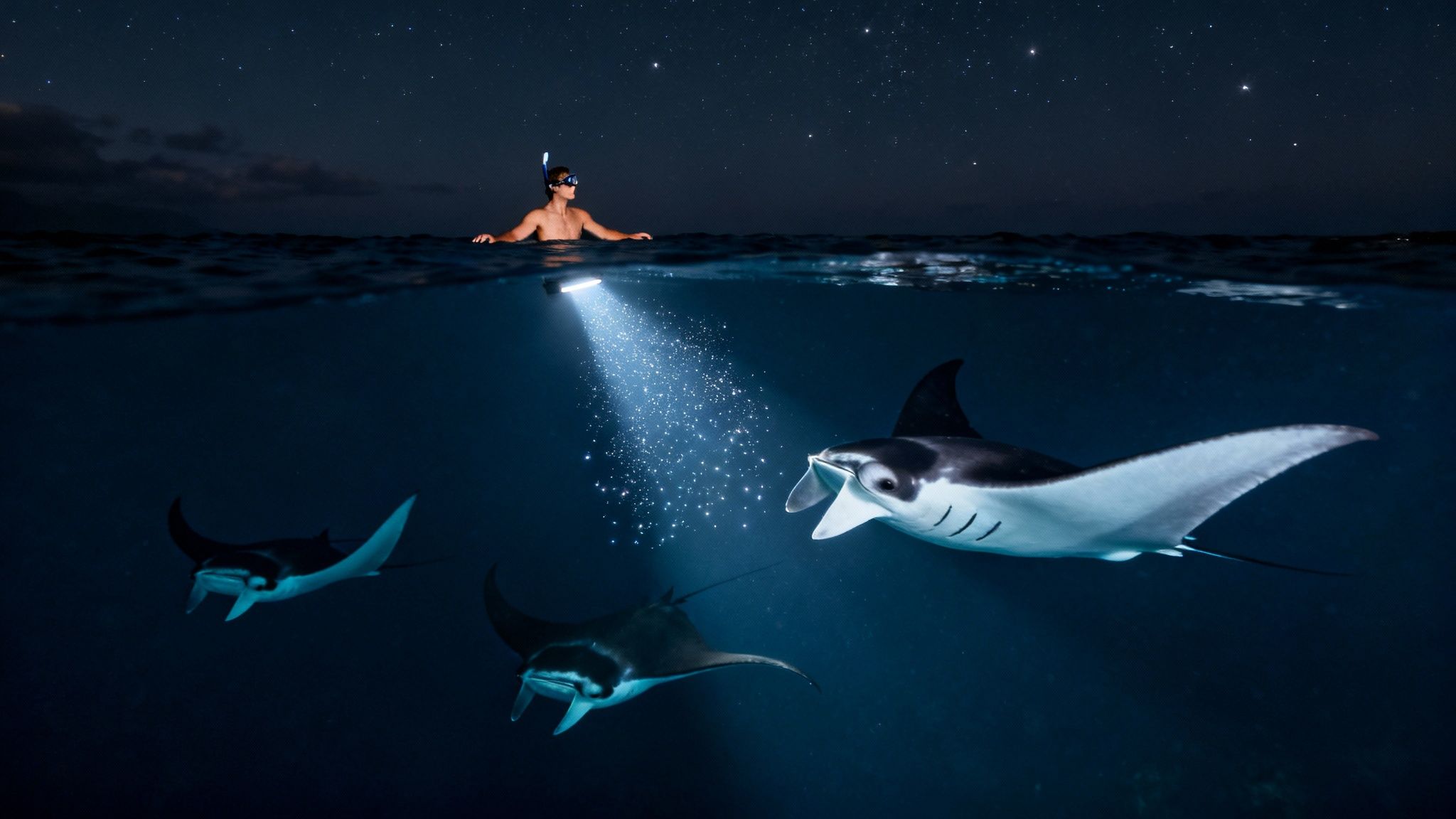
Once we anchor, you'll slip into the water and hold onto a custom-built light board. This board not only helps you float effortlessly but also adds to the underwater glow, lighting up the stage for the main event.
As you peer through your mask, you'll see these "ocean ballerinas," with wingspans reaching up to 16 feet, perform mesmerizing barrel rolls just inches below you. They swoop and glide, their massive mouths open wide to filter the plankton-rich water.
It's a serene, almost hypnotic experience. The only sounds are the gentle lapping of the ocean and the quiet gasps of awe from your fellow snorkelers. Despite their immense size, these creatures are completely harmless, making this a safe and exhilarating adventure for all ages and swimming abilities. To get even more excited, check out some more fun facts about manta rays before your trip
Why Kona is the World's Manta Ray Capital
Kona isn't just another great spot to see manta rays; it's the undisputed global capital for this mind-blowing encounter. You might get lucky and spot a manta ray somewhere else in the tropics, but nowhere on Earth can you find sightings this consistent, this close, and this predictable. This whole phenomenon isn't just a happy accident—it's the perfect storm of geography, biology, and a little bit of human ingenuity.
The secret ingredient? Tiny, free-floating organisms called zooplankton. For massive manta rays, which can have wingspans stretching over 16 feet, this microscopic life is dinner. The calm, nutrient-rich waters along the Kona coast are basically a five-star restaurant for plankton, making it a natural feeding ground for Hawaii's resident manta population.
This natural buffet set the stage for one of the most incredible wildlife interactions on the planet. Someone eventually figured out that shining bright lights into the water at night acts like a giant magnet for plankton. This created a concentrated "plankton smoothie," drawing hungry mantas to the same spots for a reliable feast, night after night.
The Famous Manta Ray Hotspots
This nightly gathering happens at a few key sites along the coast, each one now a legendary destination for the best manta ray night snorkel Kona offers. The two most famous sites are known to locals and guides as 'Manta Village' and 'Manta Heaven.'
- Manta Village (Keauhou Bay): Just south of Kona, this is the original manta viewing site. It's famous for its sky-high success rate, which often tops 90%. Being so close to shore means it's a quick and easy boat trip.
- Manta Heaven (Garden Eel Cove): Up north near the airport, this spot often attracts a larger group of mantas all at once. The water is a bit deeper, which gives you a different—but just as stunning—perspective.
These aren't just random places; they are established feeding grounds where the local manta population, which numbers over 450 identified individuals, knows the dinner bell rings every evening. This incredible reliability is what allows Kona to put on such a spectacular show, night after night, all year long.
"Seeing mantas feed is far more spectacular than seeing them get groomed at a 'cleaning station,' which is what most other global manta encounters offer. Kona's unique feeding aggregation is what truly sets it apart."
An Underwater Ballet
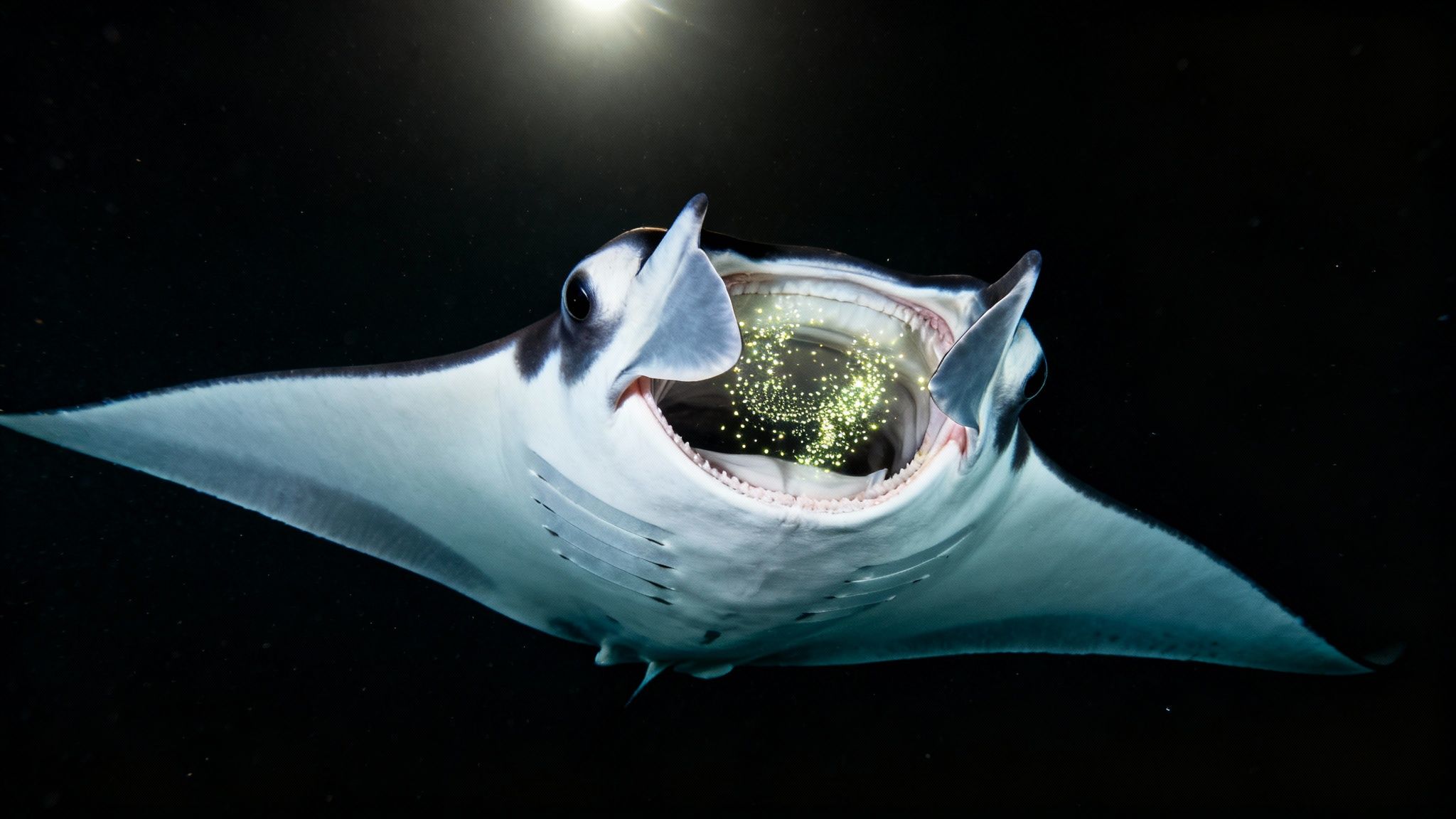
What you see in the water is pure magic. As plankton swarms in the light beams, the manta rays glide in from the darkness to feast. These gentle giants, often called "ocean ballerinas," perform a graceful, acrobatic dance as they filter the tiny organisms from the water.
Their signature move is the barrel roll—a slow, looping somersault that lets them scoop up as much plankton as possible. They glide effortlessly, sometimes just inches from your mask, their huge mouths wide open. It’s a serene and awe-inspiring display that feels both powerful and incredibly gentle, cementing Kona’s reputation as the ultimate place for this once-in-a-lifetime adventure.
How to Choose the Right Manta Ray Snorkel Tour
With a bunch of different tour boats heading out every night, picking the right one is hands-down the most important choice you’ll make for this adventure. The gap between an okay tour and the best manta ray night snorkel Kona offers really comes down to the details. It's not just about seeing the mantas; it's about how you see them.
This decision shapes everything—from how comfortable and safe you feel in the water to the kind of encounter you have with these amazing animals. A top-notch operator gives you more than just a ride; they deliver a safe, fascinating, and truly unforgettable memory. The trick is knowing what to look for.
Small Groups Mean a Better Experience
The biggest thing that will make or break your tour is the size of the group. Seriously. Imagine trying to watch a beautiful, silent underwater ballet while constantly bumping fins with dozens of other people. A crowded tour just feels chaotic and impersonal, and it completely kills the magic.
Many of the big boats pack in 30, 40, or even 50+ people. That leads to a jam-packed light board where everyone is fighting for a good view. In contrast, small-group tours are all about creating an intimate and respectful experience.
When you choose a tour with fewer people, you’re pretty much guaranteeing yourself a front-row seat. You get more one-on-one time with the guides, and the whole vibe is calmer, letting you really connect with what's happening in the water.
A company like Kona Snorkel Trips, for example, puts a hard cap on the number of guests. This ensures everyone has plenty of space and a clear, unobstructed view of the action. This small-group approach is the secret sauce for a truly superior experience.
Key Factors to Compare
When you start looking at different tour companies, don't just glance at the price. The cheapest ticket is almost never the best experience. Instead, zero in on these things that really define a quality tour.
- Safety Record and Crew Expertise: Nothing is more important than your safety. Look for companies that have a squeaky-clean safety record and employ experienced, certified guides who really know Kona's waters and the manta rays' behavior.
- Boat Comfort and Design: A well-kept, comfortable boat makes a world of difference. Are there easy ways to get in and out of the water? Enough seating for everyone? Smaller, custom-built boats are often nimbler and can get you to the best manta action more quickly.
- Quality of Gear: You’ll be floating in the ocean for about 30-45 minutes, so good gear is a must. The best operators provide high-quality wetsuits that fit well (to keep you warm!), comfortable masks that don't leak, and powerful light boards designed specifically to attract plankton.
Getting a feel for how different companies stack up on these points will help you make a smart choice. For a closer look at what separates the great from the good, you can learn a lot by reading Kona Snorkel tour reviews and hearing what other snorkelers have to say.
Comparing Kona Manta Ray Tour Experiences
To really see the difference, it helps to put the two main types of tours you'll find in Kona side-by-side. This table breaks down what you can expect, helping you figure out what kind of adventure you're looking for.
| Feature | Small-Group Tour (e.g., Kona Snorkel Trips) | Large-Group Tour |
|---|---|---|
| Guest Capacity | Typically 6-13 people, offering a personalized feel. | Often 30-50+ people, leading to a crowded atmosphere. |
| Viewing Space | Ample room at the light board for unobstructed views. | Limited space, often requiring you to vie for a good spot. |
| Guide Interaction | Guides provide individual attention and share insights. | Interaction is minimal; you are one of many in a large group. |
| Boat Maneuverability | Smaller boats can adapt quickly to find the best manta action. | Large vessels are less agile and stick to a fixed location. |
| Environmental Impact | A smaller footprint with less disruption to the marine habitat. | A larger impact due to the number of people and vessel size. |
At the end of the day, a lot of operators can take you out to see the mantas, but only a handful can deliver a truly exceptional adventure. If you're exploring all your options, Manta Ray Night Snorkel Hawaii is also an excellent choice for a manta ray night snorkel. Ultimately, picking a small-group tour is the best way to turn a good night into one you'll be talking about for years to come.
What Sets the Kona Snorkel Trips Experience Apart
So, you’re looking for the best manta ray night snorkel Kona can offer. Of course you are. But here’s something we’ve learned after thousands of hours on the water: seeing the mantas is only part of what makes the night unforgettable. The real magic comes from the entire experience—how you feel on the boat, the guide who shares their passion with you, and the comfort of knowing you’re in the best possible hands.
This is where we come in. At Kona Snorkel Trips, we've built our reputation as Hawaii's highest-rated and most-reviewed snorkel company by focusing on one simple idea: an incredible natural wonder deserves an equally incredible tour. We didn't just throw a trip together; we obsessed over every single detail to make sure your time with the mantas is personal, comfortable, and awe-inspiring.
Small Groups Mean a Better View and a Deeper Connection
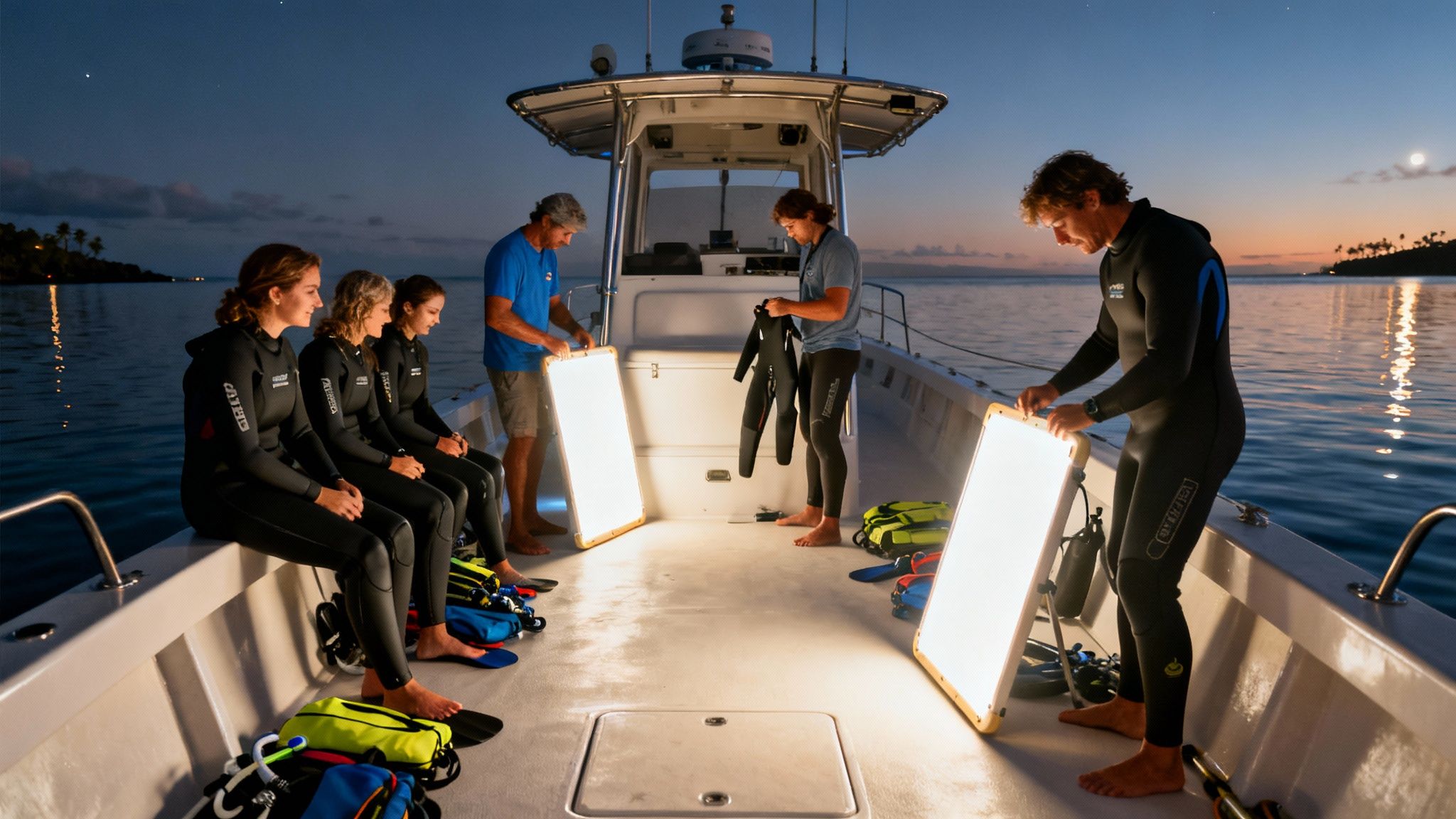
Let’s be honest: nobody wants to feel like a sardine in a can when they're trying to have a once-in-a-lifetime experience. This is the heart of our philosophy. We keep our tours small, with a strict maximum of only 13 guests.
Why does that number matter so much? Because a smaller group completely changes the dynamic of the night. It means:
- You get a front-row seat. Everyone has plenty of room at our custom light board. No bumping elbows, no craning your neck. Just you and the mantas.
- Real, personal attention. Our guides can actually talk with you, not at you. They’ll answer your questions, help you with your gear, and make sure you’re feeling 100% comfortable.
- It’s calm and peaceful. A smaller group creates a serene atmosphere. It feels less like a crowded tourist attraction and more like you’ve been invited to a private showing of nature’s most spectacular ballet.
This intimate setting lets you truly soak it all in, creating a memory that’s powerful and deeply personal.
Custom Boats and Gear That Actually Works
Comfort and safety aren't afterthoughts for us; they're priorities. Our boats were custom-built specifically for snorkeling Kona's waters. They're designed for a smooth ride and, crucially, for getting you in and out of the ocean easily and safely. No awkward ladders or crowded platforms here.
And the gear? We wouldn’t give you anything we wouldn’t use ourselves. Forget leaky masks and stiff snorkels. We provide top-of-the-line equipment, from well-fitting wetsuits that keep you warm to our powerful, state-of-the-art light board that attracts the mantas. When your gear works perfectly, you can forget it’s even there and just focus on the show.
By providing the best equipment and vessels, we remove any potential distractions, allowing our guests to connect fully with the marine environment and the magnificent manta rays.
Guides Who Aren't Just Crew—They're Experts
This is what truly elevates the Kona Snorkel Trips Manta Ray Snorkel Tour from good to unforgettable. Our guides are the real deal. They are passionate marine enthusiasts, dedicated conservationists, and fantastic storytellers who live and breathe this stuff.
They won’t just point and say, "There's a manta ray." They'll share fascinating stories about manta biology, explain their unique behaviors, and give you a real appreciation for the delicate ecosystem you're visiting. They turn a viewing into an education, and an adventure into a connection. Their knowledge and passion are what make our tour the definitive manta ray experience.
Getting Ready for Your Night Snorkel Adventure
Knowing exactly what to expect is the secret to getting the most out of your manta ray night snorkel. When you feel prepared from the moment you check in to the second you slide into the ocean, you can just relax and soak it all in. Let’s walk through the whole trip so you feel like a seasoned pro before you even step on the boat.
Your evening starts with an easy check-in right at the harbor. After that, it’s a short, stunning boat ride along the Kona coast while the sun dips below the horizon. Once dusk settles in, your guides will give you a full safety briefing. They’ll cover the gear, how the light board works, and most importantly, how to be a respectful guest in the mantas' world.
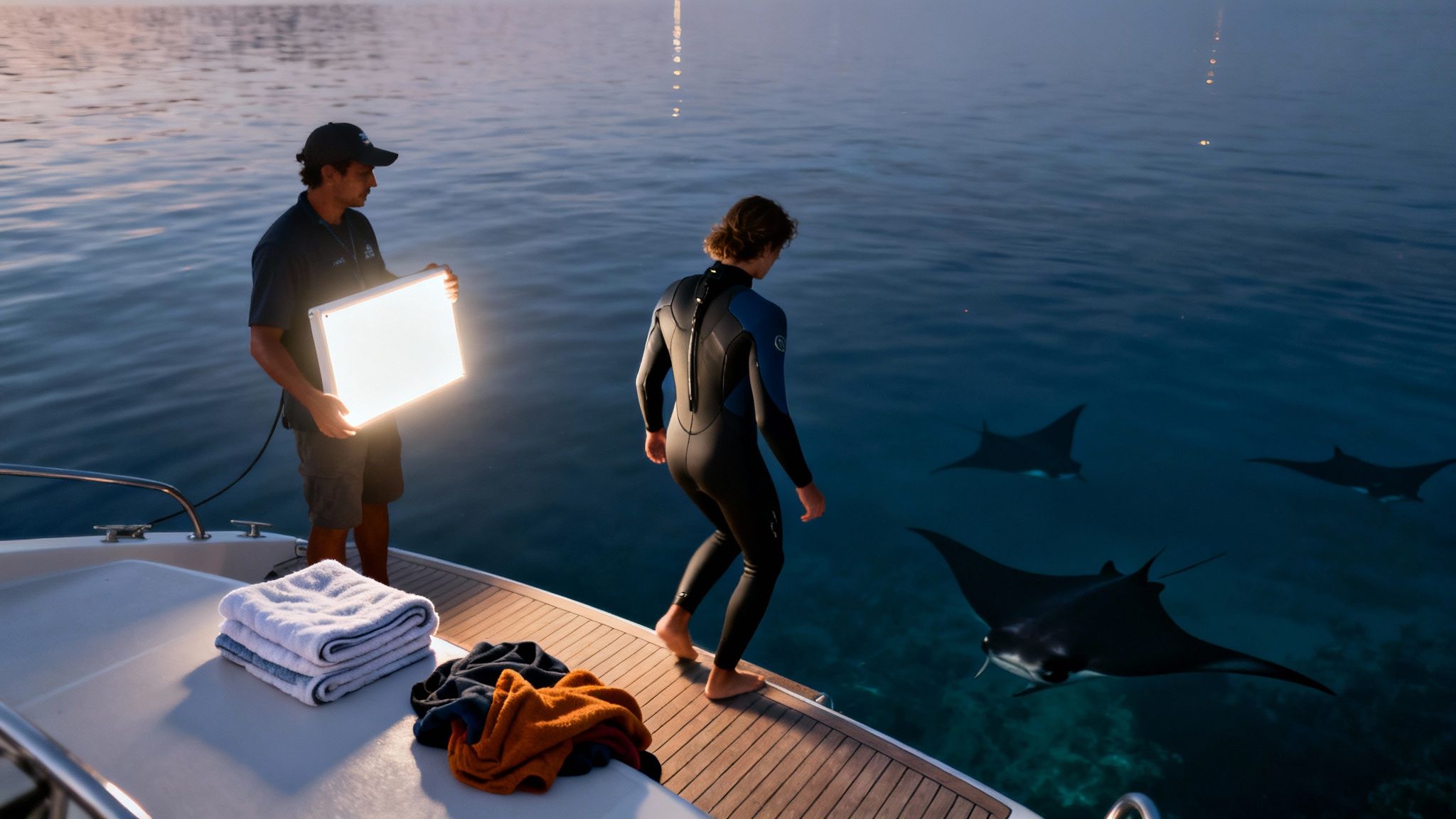
What It's Like in the Water
Once we anchor at the snorkel site, it's time for the main event. The Pacific here in Kona is wonderfully warm, usually hovering around a comfortable 76°F (24°C) all year. We'll get you geared up in a quality wetsuit, so you’ll be focused on the incredible show below, not the water temperature.
Snorkeling at night is a totally different vibe—it's incredibly peaceful. The world goes quiet, and your attention zeroes in on the circle of light below you. You’ll hang onto a specially designed, floating light board, which makes the whole experience effortless. No swimming is needed. Just float, watch, and be completely mesmerized as these gentle giants perform their underwater ballet, sometimes just inches away.
Your Essential Packing Checklist
Packing light is definitely the way to go, but a few key things will make your trip that much better. Think about what you'll need right before you get in, and especially after you get out.
- Swimsuit: The easiest thing to do is just wear it under your clothes when you show up.
- Towel: You'll definitely want this for drying off when you get back on the boat.
- Warm Change of Clothes: Even on a warm Hawaiian night, the boat ride home can feel brisk. A dry sweatshirt or light jacket will feel amazing.
- Reusable Water Bottle: Always a good idea to stay hydrated.
- Underwater Camera (Optional): If you've got a GoPro or a similar camera, now's the time to bring it!
For a deeper dive into what to wear, our guide on what to wear for snorkeling has some great tips to make sure you're perfectly set up.
Respecting the Manta Rays
The single most important part of getting ready is understanding how to be a good visitor in the mantas’ home. We have these guidelines for a reason: to protect these amazing creatures and make sure this experience is around for future generations.
The golden rule of manta ray snorkeling is simple, and it's absolute: Do not touch the manta rays. Their skin has a delicate mucus layer that acts like a shield against infection. Touching them can damage this protective coat and make them sick.
By following this rule and the others your guides give you—like staying at the surface and not diving down—you become a partner in their conservation. It's this respectful, hands-off approach that makes the best manta ray night snorkel Kona tour a sustainable and truly ethical adventure.
When to Book Your Manta Ray Snorkel Tour
One of the first questions we always get is, "When's the absolute best time to see the mantas?" The fantastic news is that Kona has a resident population of manta rays, which makes this an incredible year-round adventure. These gentle giants aren't just passing through; they live here. That means any night of the year can be a magical one.
That being said, there are a few subtle differences throughout the year that might help you plan the perfect trip based on your own preferences. Thinking about these small details can turn a great experience into the best manta ray night snorkel Kona has to offer.
Seasonal Considerations for Your Tour
While you can see mantas any time, the seasons do bring small changes to the conditions on the water. Knowing what to expect can help you pick the time that sounds most comfortable for you.
- Summer (June – August): These are the months with the warmest water, usually hovering around a balmy 80°F (27°C). The air is warmer, too, which makes that boat ride back to the harbor after your snorkel feel especially nice.
- Winter (December – February): The water temperature might dip a bit to around 75°F (24°C), but the trade-off is often calmer seas. Winter usually brings smoother ocean conditions, a huge plus if you're worried about seasickness. And don't sweat the cooler water—a good wetsuit keeps you perfectly warm and comfortable the whole time.
The Lunar Cycle and Manta Sightings
Here’s a little insider tip that can make a real difference in your experience: pay attention to the moon. You can definitely see mantas any night, but the lunar cycle has a fascinating effect on how the night unfolds.
Snorkeling during a new moon—when the sky is darkest—is a special treat. With very little ambient light from the moon, the bright underwater lights on our boat become an incredibly powerful magnet for plankton.
A darker night means our light board is the main event, creating a super-concentrated buffet of plankton. This can often lead to more intense feeding frenzies right beneath you as the mantas zero in on this one bright, delicious feast.
On the other hand, a full moon lights up the whole ocean surface, which can spread the plankton out a bit more. The snorkel is still amazing, but that focused, high-energy action you get on a moonless night is something else.
No matter when you decide to come, the most important thing is to book your spots early. The best tours, especially with a top-rated operator like Kona Snorkel Trips, fill up fast—often weeks ahead of time, particularly during the busy seasons. A little planning goes a long way in making sure you don't miss out on this bucket-list adventure.
Got Questions About Manta Ray Night Snorkeling?
It’s totally normal to have a few questions before jumping into a new adventure, no matter how exciting it sounds. We want you to feel 100% confident and ready for what will be the highlight of your trip.
So, let's go over some of the most common things people ask. Our goal is to clear up any doubts so you can focus on the incredible night ahead.
Is the Manta Ray Night Snorkel Safe?
Absolutely. Safety is our number one priority on every single trip, no exceptions. The manta rays themselves are gentle giants and are zero threat to people. A lot of folks get them confused with stingrays, but mantas don't have any stingers, barbs, or even teeth. They're only interested in the plankton, and they glide around snorkelers with incredible grace.
You'll also be in the water with experienced guides who live and breathe this ocean and know manta behavior inside and out. Plus, you’ll be holding onto a large, custom-built light board that floats on the surface. It gives you something secure to hold onto and keeps you buoyant, so there’s really no strenuous swimming involved. It’s an experience that’s safe and accessible for almost everyone.
Do I Need to Be an Expert Swimmer?
Not at all. This is probably the biggest myth about the tour. You don’t need to be a strong swimmer to have a fantastic time. In fact, you barely have to swim at all!
Here’s why it works so well for everyone:
- Buoyant Wetsuits: We provide you with high-quality wetsuits. They don't just keep you warm; they make you float effortlessly.
- Floating Light Board: You’ll be holding onto a big, stable flotation raft with lights built right in. Your main job is just to hold on, relax, and watch the show happening right below you.
- No Kicking Required: The idea is to float peacefully on the surface. Kicking and splashing can actually scare the mantas away, so staying still is the best thing you can do.
This setup makes the tour perfect for beginners, families with kids, and anyone who isn't the most confident swimmer.
How Deep Is the Water?
At the main snorkel sites like Manta Village and Manta Heaven, the ocean floor is typically about 25 to 40 feet (around 8 to 12 meters) below. But honestly, that number doesn't really matter for snorkelers.
You'll be floating comfortably on the surface the whole time, so the depth below you won't affect your experience one bit. All the action happens right up top where our lights attract the plankton. The mantas come right to the surface to feed, often just inches away from you.
What Happens If No Mantas Show Up?
Kona has an incredible sighting rate—it’s well over 90%—but we are dealing with wild animals, and their appearance can never be a 100% guarantee. On the very rare night that the mantas decide they have other plans, any good tour operator will have what's called a "manta guarantee."
This usually means you can come back another night for free. This is why we always recommend booking your manta ray snorkel early in your vacation—it gives you a backup night just in case you need to use that second-chance opportunity.
We want every single person to have that magical, jaw-dropping experience. This policy ensures you have the best possible shot at seeing the underwater ballet for yourself.