
Best Manta Ray Night Snorkel Kona: Kona’s Top Night Snorkel Tour

For anyone dreaming of the best manta ray night snorkel in Kona, the answer is always the same: find a small-group tour that puts safety, respect for the animals, and a truly personal experience first. This is the quintessential Big Island adventure, giving you a front-row seat to one of nature's most mind-blowing shows, where gentle giants glide and somersault through the illuminated water, sometimes just inches away.
As Hawaii's top-rated and most-reviewed snorkel company, Kona Snorkel Trips consistently delivers a premium experience that our guests rave about.
Your Guide to Kona's Top Manta Ray Snorkel Experience
Picture this: you're floating in the warm, dark Pacific off the Kona coast. Below you, powerful lights cut through the blackness. Suddenly, massive, graceful shadows emerge from the deep—manta rays with wingspans reaching up to 16 feet, performing an acrobatic ballet as they feed on plankton.
This isn't some rare, lucky sighting. It’s a nightly reality in Kona, the undisputed global hotspot for this incredible encounter. Year-round sighting success rates hover between 80-90%, meaning almost every single trip delivers a breathtaking experience.
But choosing your tour is about more than just getting in the water. The quality of your adventure hangs on a few key factors that separate a good tour from an unforgettable one. To help you decide, here’s a quick guide to what really defines the best manta ray night snorkel in Kona.
Quick Guide to Choosing Your Kona Manta Ray Snorkel
When you're comparing tours, it's easy to get lost in the details. This table cuts through the noise and focuses on what truly shapes your night with the mantas.
| Factor | What to Look For | Why It Matters for Your Experience |
|---|---|---|
| Sighting Success | Operators with a >90% success rate. | Shows they have experienced captains who know the best spots and can adapt to conditions, maximizing your chances of a great encounter. |
| Group Size | Small-group tours (6-18 people). | A smaller group means a more personal, less crowded view. You get more space at the light board and better interaction with your guides. |
| Eco-Consciousness | "Manta SAFE" certified operators. | This ensures the tour follows strict guidelines to protect the manta rays and their delicate ecosystem, so this experience can last for generations. |
Ultimately, the best tour isn't just about a thrilling encounter; it's about doing it responsibly. Many operators can take you to the manta sites, but only a few deliver a truly memorable and sustainable adventure. You can learn more about what sets these top-tier Kona manta ray snorkel tours apart in our detailed guide. This article will break down every aspect to help you make an informed choice for this once-in-a-lifetime experience.
Why Kona Is a Global Manta Ray Hotspot
When people talk about seeing manta rays, the Kona coast of the Big Island isn't just another spot on the map—it’s the spot. I’m talking about the most reliable, mind-blowing place on the entire planet for this kind of adventure. And it’s not just by chance; it's a perfect storm of geography and biology that sets the stage for an incredible underwater show nearly every single night.
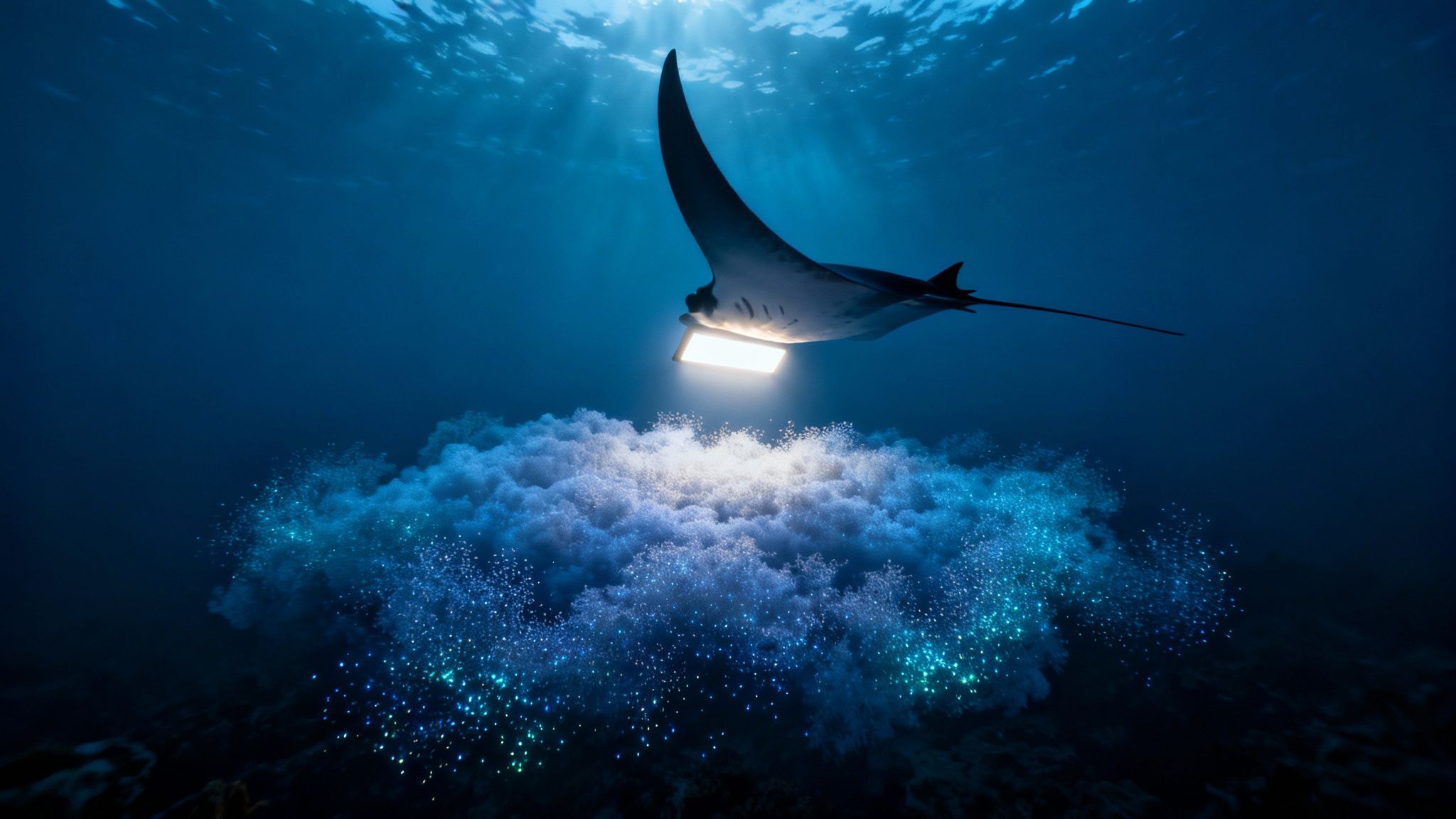
Unlike a lot of other manta destinations where sightings are seasonal, Kona is home to a massive, non-migratory crew of reef manta rays (Mobula alfredi). These gentle giants are full-time residents, which means they’re here year-round. This is the secret sauce behind why the best manta ray night snorkel in Kona is so consistently successful. Any given night could be the night of your life.
The Science of the Manta Buffet
So, what exactly keeps this huge manta population so happy and well-fed right here off our coast? It boils down to two simple things: plankton and light.
- An Endless Plankton Buffet: The local ocean currents and the unique shape of the seafloor create the perfect conditions for phytoplankton and zooplankton to flourish. For filter-feeding mantas, this is an all-you-can-eat buffet that never closes.
- The "Lightbulb" Moment: The whole manta ray show was discovered decades ago when a hotel pointed floodlights into the ocean. The light attracted a dense cloud of plankton, and the mantas quickly figured out it was an easy meal.
This happy accident became the foundation for the tours we run today. Reputable operators have fine-tuned this by using custom-built, submerged light boards. It creates a predictable feeding spot without messing with their natural environment. It's a win-win: the mantas get a nightly feast, and we get a front-row seat to the ballet.
Established Viewing Sites and Resident Stars
This long-running interaction has led to a couple of world-famous viewing sites, known affectionately as 'Manta Village' and 'Manta Heaven'. These aren't just random spots in the ocean; they're proven feeding grounds where generations of mantas have learned to show up for dinner.
But what really puts Kona in a league of its own is the sheer number of known, individual rays. The coast supports a thriving resident population of over 450 identified mantas. That’s a stark contrast to migratory hotspots where you just hope for the best.
Since 2013, diligent tracking at these sites has logged an average of 20 unique individuals per month at each location. This has built a database of over 250 distinct rays, many of whom are local celebrities like 'Big Bertha,' who's been spotted here since the 1990s! You can dive deeper into these fascinating stats on the Kona Snorkel Trips blog. This level of consistency and familiarity is something you just won't find anywhere else on Earth, cementing Kona's title as the undisputed manta ray capital of the world.
Comparing Kona Manta Ray Tour Styles
Once you've decided you have to experience the magic of swimming with manta rays—and trust me, you do—the next big question is how. This isn't a one-size-fits-all adventure, and the kind of tour you choose will completely shape your night on the water. The biggest fork in the road comes down to the size of the boat and how much personal attention you'll get, which are easily the two most important factors for the best manta ray night snorkel kona experience.
Getting this right is crucial. Sure, a massive double-decker boat might have a few extra amenities, but it also means you'll be sharing the ocean with a small army of other snorkelers. A smaller, more nimble vessel, on the other hand, offers an intimate and far more manageable setting, where you feel like part of an expedition, not just another face in the crowd.
Small Group vs Large Vessel Tours
The single biggest difference between manta ray tours in Kona is group size. This one detail has a ripple effect on everything else, from how comfortable you are on the boat ride to your actual view of the mantas once you're in the water.
- Large Vessel Tours: These are the big boats you see, often packing in 40, 50, or even more passengers. While they might boast features like onboard restrooms, that many people inevitably leads to a crowded, sometimes chaotic vibe. Just getting everyone in and out of the water can eat up precious time, and once you're at the manta viewing spot, you’re jockeying for position with a lot of other fins.
- Small Group Tours: This is our world. Companies like Kona Snorkel Trips deliberately keep the numbers low, usually around 18 guests or fewer. The whole atmosphere shifts. It's a more relaxed, personal trip where the boat ride is quieter, the crew can actually talk to you one-on-one, and you have space to breathe both on the boat and in the ocean.
"A smaller group size isn't just about comfort; it's about the quality of the encounter. Fewer people in the water means less commotion, which creates a calmer environment for the manta rays and a more awe-inspiring, unobstructed view for every guest."
The difference is something you can feel. With a small group, you’re an active participant in a special adventure, not just a ticket holder in a floating stadium.
The Importance of the In-Water Guide Ratio
It’s not just about how many people are on the boat, but how many certified guides are in the water with you. This ratio is a massive deal for both safety and your overall enjoyment, especially when you're snorkeling in the ocean at night.
A low guide-to-guest ratio means everyone gets the supervision and help they need. If a mask leaks or someone feels a bit nervous in the dark, a guide is right there. It also makes for a much richer experience. Our guides have the time to point out the specific manta rays you're seeing, call them by name (yes, they have names!), and answer all your questions. On a crowded boat, guides are often stuck playing traffic cop, with little time for that kind of personal connection.
For a deeper dive into how different tours are structured, check out our guide to the different Kona snorkel tour options.
Here’s a quick look at how the different tour styles stack up. I’ve included shore-based tours as well, since they are another option, though they come with their own unique set of challenges.
Kona Manta Ray Tour Operator Comparison
When you're looking at the options, it's the little details that make a big difference in how your night unfolds. This table breaks down what you can realistically expect from each type of tour.
| Feature | Kona Snorkel Trips (Small Group) | Large Vessel Tours | Shore-Based Tours |
|---|---|---|---|
| Guest Capacity | 6-18 guests | 40-60+ guests | Varies, but often crowded at entry |
| Atmosphere | Intimate, personalized, and relaxed | Can be crowded, noisy, and impersonal | Independent, but can be chaotic |
| Guide Ratio | High guide-to-guest ratio | Low guide-to-guest ratio | No guides in the water |
| In-Water Experience | More space, better views, direct guide interaction | Crowded viewing area, less personal attention | Long swim, no light board to attract mantas |
| Safety & Support | In-water guides, full safety briefing, flotation provided | Crew on boat, basic briefing, flotation provided | Self-reliant, must bring all own gear |
| Manta Viewing | Up-close views at a custom light board | Shared light source, often crowded | Hit-or-miss; dependent on tour boat lights |
| Best For | Guests seeking a premium, safe, and memorable adventure | Budget-conscious travelers or those who prefer larger boats | Experienced, self-sufficient snorkelers on a tight budget |
Ultimately, choosing a small-group tour with a high guide ratio does more than just get you in the water—it transforms the night from a simple tourist activity into a genuine, unforgettable marine adventure.
Putting Safety and Sustainability First
Choosing the right manta ray night snorkel in Kona is about more than just getting a good view of the mantas. It’s about trusting the folks you're with to keep you safe and to protect the incredible environment you're there to see. The best tours are always built on a solid foundation of safety and a real, genuine respect for the ocean.
Let’s face it, you’re getting into the open ocean at night. Peace of mind is everything. This all starts with the crew. You want guides who are not only fired up about marine life but are also certified pros trained in first aid, CPR, and ocean rescue. They should walk you through a detailed safety briefing before you even get your fins wet, covering all the "what-ifs" and making sure everyone is comfortable.
The Manta SAFE Stamp of Approval
One of the easiest ways to spot a responsible operator is to look for the Manta SAFE certification. This isn't just a decal they slap on the boat; it's a serious commitment to a strict set of rules created to protect both the snorkelers and the manta rays.
These guidelines are absolutely essential for making sure the experience is ethical and can continue for years to come. Here’s what it means in practice:
- Look, Don't Touch: This is the golden rule. It’s called passive observation. You'll be instructed to never, ever touch, chase, or get in the way of the manta rays. Touching them can strip off their protective mucus coat, which is like their immune system, leaving them open to nasty infections.
- Smart Lighting: Certified operators know how to use their lights to attract plankton without messing with the mantas' natural feeding behaviors. It’s a science and an art.
- Spreading the Knowledge: A huge part of the certification is educating guests on why these rules matter so much. It helps turn a cool tourist activity into an experience of respect and appreciation for the marine world.
When you go with a Manta SAFE certified company, you're doing your part to ensure the long-term health of Kona's amazing manta ray population.
A Deeper Commitment to a Healthy Ocean
Beyond the specific manta rules, the truly great operators show a wider commitment to ocean conservation. This means using reef-safe lighting that doesn’t harm the surrounding coral and running their tours in a way that respects the entire local ecosystem.
A responsible tour operator knows these manta rays aren't just a tourist attraction; they're a vital piece of a very fragile marine world. You can see their commitment in everything they do, from the first briefing to the final goodbye.
This big-picture approach is what guarantees that the incredible night you have will be available for others to enjoy for generations. A company that puts the environment first is also a company that puts your well-being first.
If you want to brush up on your own water skills, check out our guide on essential snorkeling safety tips and best practices. At the end of the day, a tour built on a strong safety culture and a deep respect for nature is what truly makes for the best manta ray night snorkel in Kona.
What to Expect on Your Snorkel Adventure
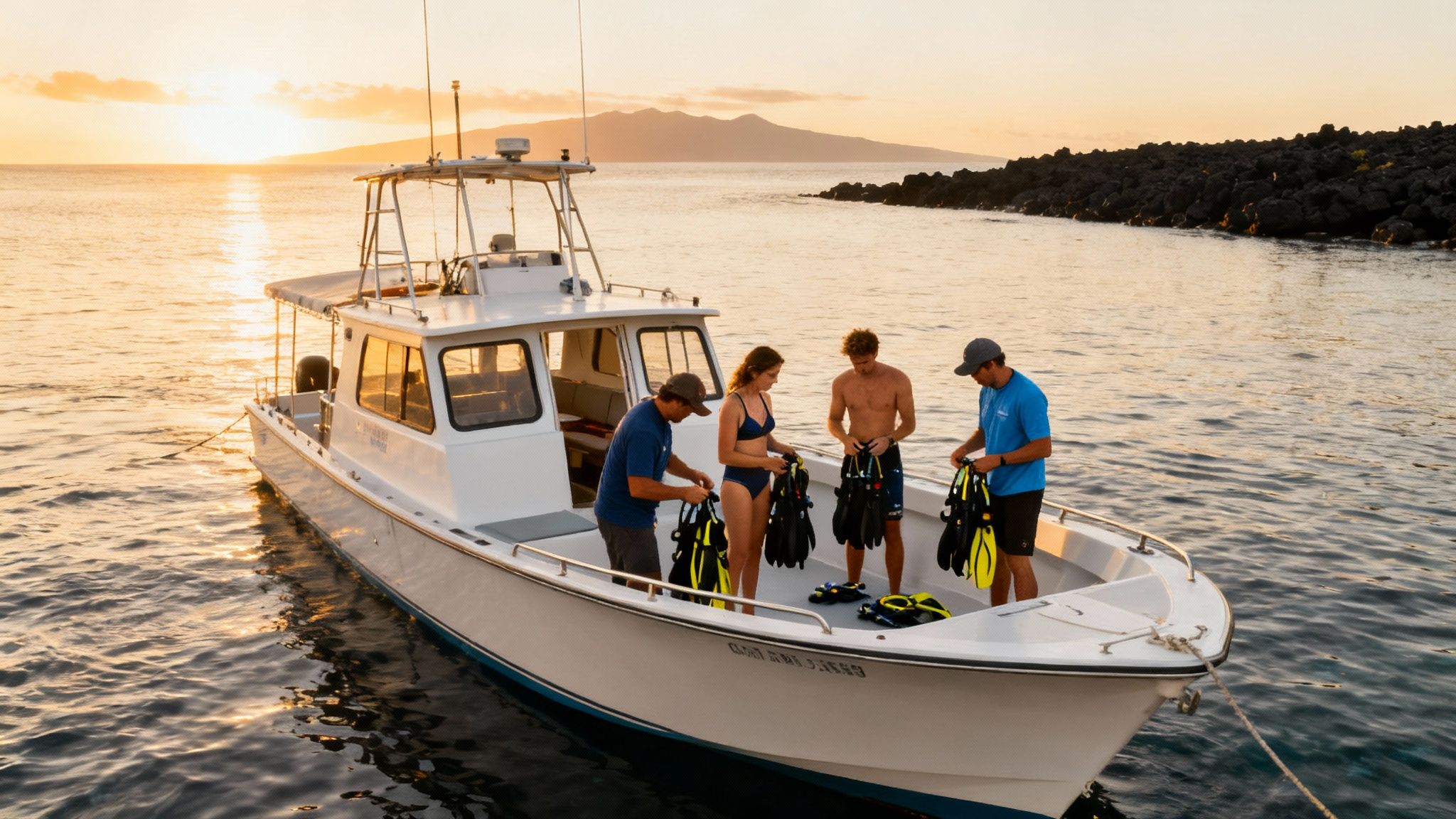
The buzz of anticipation starts the moment you check in. This isn't just any boat tour; it's the beginning of what might be the most memorable night of your Hawaiian vacation. The trip starts with a beautiful boat ride out to the site as the sun melts into the Pacific, lighting up the Kona sky with those incredible sunset colors. It’s a great way to settle in, take in the coastline, and listen to the crew share stories about the island and the creatures we're about to meet. It’s more than a taxi ride on the water; it's the first act of the main event.
As we get close to the manta ray viewing area, your guides will walk you through a detailed safety briefing. They’ll cover everything from getting the perfect mask fit to the right way to float and observe the mantas without disturbing them. We make sure everyone—from people who've never snorkeled before to old pros—feels totally comfortable and ready for what's next.
Entering the Water and the Grand Reveal
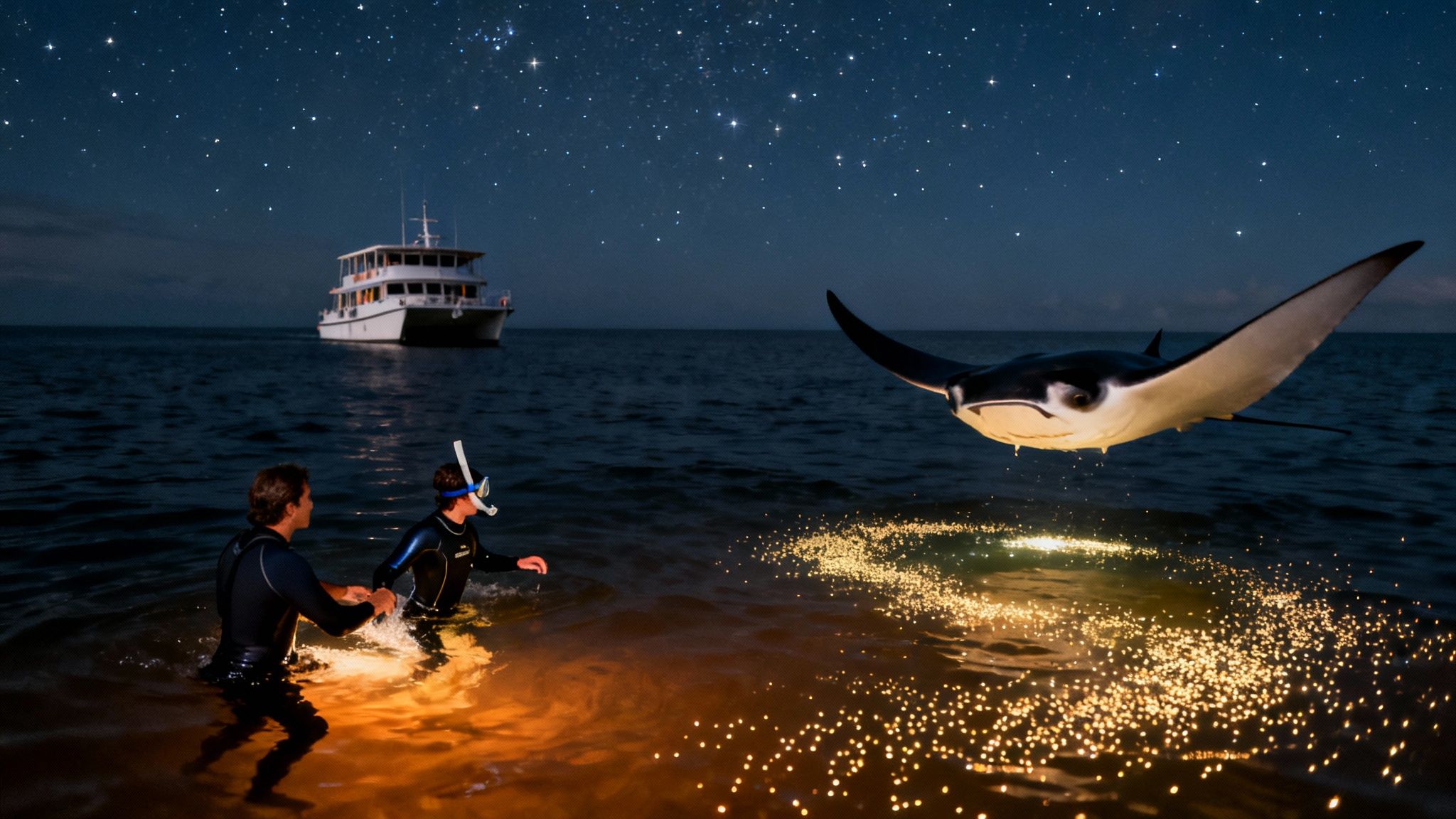
Sliding into the dark, warm ocean at night is a sensation all its own. Your world shrinks to the glowing circle of light beneath you, a brightly lit stage in the middle of the dark sea. The crew helps get everyone situated on a custom-made light board. It’s a big floating raft that not only gives you something stable to hold onto but also shines powerful, eco-friendly lights down into the water. These lights attract plankton, the mantas' favorite food, essentially setting the dinner table for them. All you have to do is float, hold on, and wait.
Then, it happens. Out of the deep blue, a huge, graceful shadow glides into the light. The first time you witness a manta ray—some with wingspans over 12 feet—do a slow-motion barrel roll just inches below you is something you'll never forget. It’s pure magic. You'll typically get a good 30-45 minutes in the water, just watching these gentle giants perform their underwater ballet.
It's a surreal experience. You're just floating there under the stars, watching these magnificent animals dance in the light. It's a humbling, powerful, and exhilarating connection to the ocean.
What the Environment Is Like
The conditions out here are all part of the adventure. Here’s a general idea of what to expect:
- Water Temperature: Kona's ocean is pretty warm all year, usually between 75°F and 80°F (that’s 24°C to 27°C). We provide wetsuits to make sure you stay comfortable the whole time.
- Visibility: The powerful lights cut right through the dark, creating a super clear viewing area. You get a front-row seat to all the action.
- The Journey Back: After the snorkel, the ride back to the harbor under a sky full of stars is the perfect, quiet way to end the night. It gives you a moment to really let the incredible encounter you just had sink in.
From start to finish, the whole adventure is designed to be easy, safe, and absolutely unforgettable. For another great option, check out Manta Ray Night Snorkel Hawaii; they also run an exceptional manta ray night snorkel tour.
What to Pack for Your Manta Ray Snorkel
A little prep goes a long way in making your night on the water as incredible as possible. Showing up with the right stuff means you can just relax and soak in the magic unfolding below you.
What We've Got Covered (And What You Should Bring)
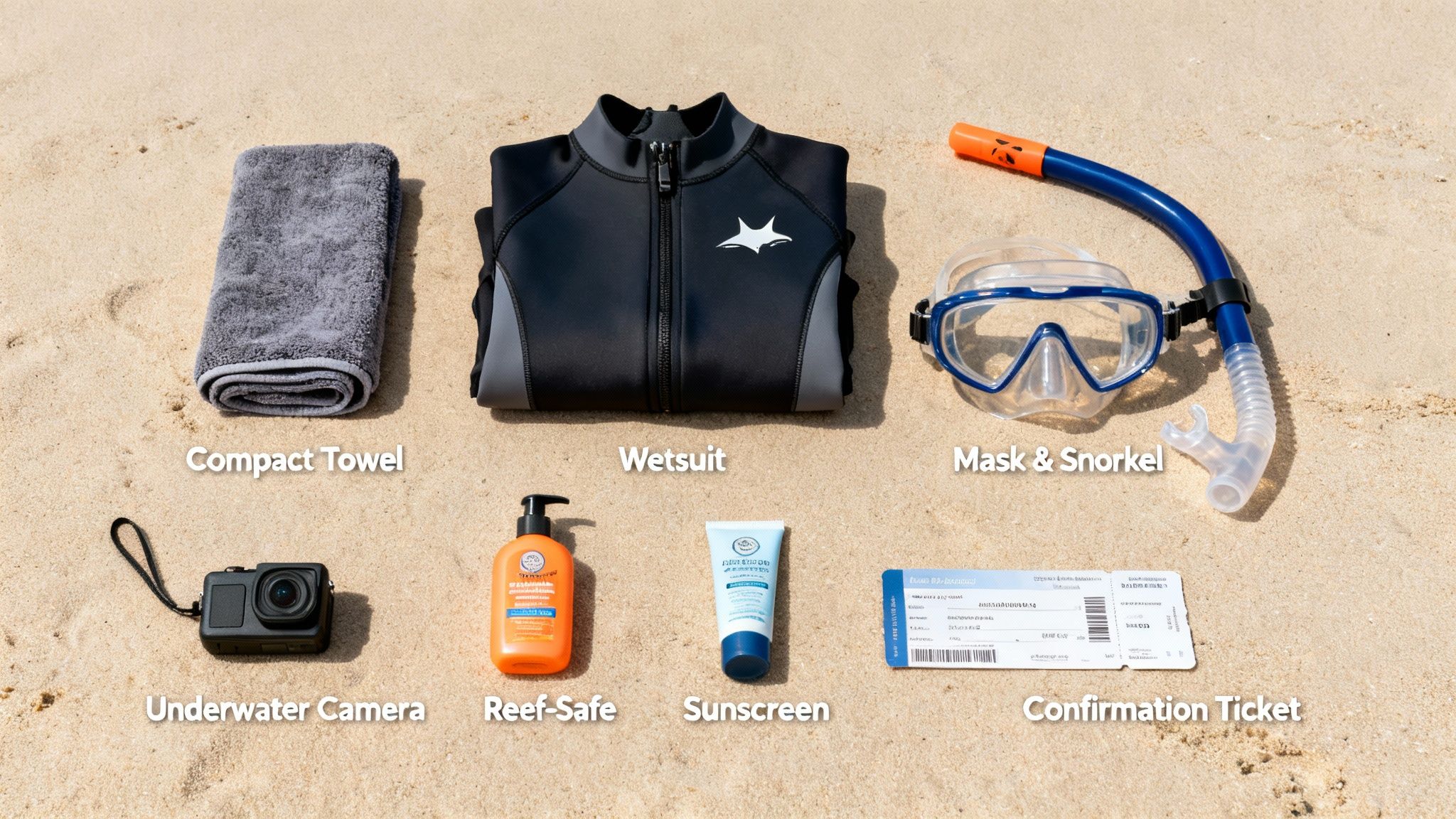
Don't worry about the big stuff—we've got you handled. Kona Snorkel Trips provides top-notch, disinfected snorkel gear and snug wetsuits to keep you comfortable and warm in the nighttime ocean.
Here’s what you should toss in your bag:
- A Towel: You’ll definitely want this for drying off after your swim.
- A Change of Clothes: Something warm and cozy is perfect for the boat ride back under the stars. It can get chilly out on the water.
- An Underwater Camera: You will absolutely want to capture this experience. Just remember to be a passive observer and let the mantas do their thing. No chasing!
A Few Pro-Tips for a Great Snorkel
If this is your first time, a couple of simple tricks can make a world of difference. To keep your mask from fogging up, we swear by a little baby shampoo or a de-fog spray applied right before you hop in the water. Once you're in, just focus on relaxing and taking slow, deep breaths through your snorkel. It helps you stay calm and conserve energy.
The most important thing is to just relax and let the experience happen. Your guides are there to keep you safe and comfortable, so all you have to do is float and be completely amazed.
Getting these few things sorted ensures you’re ready for a truly unforgettable night. As you map out your adventure, it’s always smart to know your options. For another fantastic tour, you might check out Manta Ray Night Snorkel Hawaii, who also do an exceptional job.
Got Questions? We've Got Answers
Planning a once-in-a-lifetime trip like this naturally brings up a few questions. As guides, we hear them all the time. Here are the most common things people ask before they book, so you can feel totally confident before you even step on the boat.
Is This Tour Safe for Beginners and Kids?
Absolutely. We take people out every single night who have never snorkeled before, and safety is always our number one priority. Think of it less like traditional snorkeling and more like floating. You'll have a super stable light board to hold onto the entire time you're in the water.
Before you even get in, we do a full safety briefing and make sure everyone's gear fits perfectly. Our guides are right there in the water with you, keeping a close eye on everything. It’s an incredibly secure setup, which makes it a fantastic and memorable adventure for the whole family.
What Happens If We Don't See Any Manta Rays?
It's a valid question—after all, these are wild animals. But the reality is, the success rate here in Kona is ridiculously high, consistently over 90%. The local mantas have been conditioned for decades to associate the lights with a reliable food source.
In the rare event that the mantas decide not to show up for dinner, most top-tier operators have what's called a "manta guarantee." This means you can come back another night for free. That's a great reason to book your snorkel for earlier in your vacation, just in case you need to use that backup plan!
What's the Best Time of Year to Go?
This is one of the best parts about the Kona manta ray snorkel: it’s a phenomenal, year-round experience. The resident manta ray population here doesn't migrate. They hang out right here, every single month of the year.
So whether you're planning a summer vacation or a winter getaway, you have an excellent chance of seeing them. Any time is a great time to go.
Can I Touch the Manta Rays?
No, and this is the single most important rule of the night. You must never touch a manta ray. It’s not just a rule; it’s about protecting these incredible creatures.
Mantas have a special mucus coating on their skin that acts as their immune system. If you touch them, you can rub off that protective layer, making them vulnerable to nasty infections. Every responsible tour enforces a strict "passive observation" policy. We're there to watch their beautiful ballet, not to interact.