
Best Manta Ray Night Snorkel Kona: – best manta ray night snorkel kona
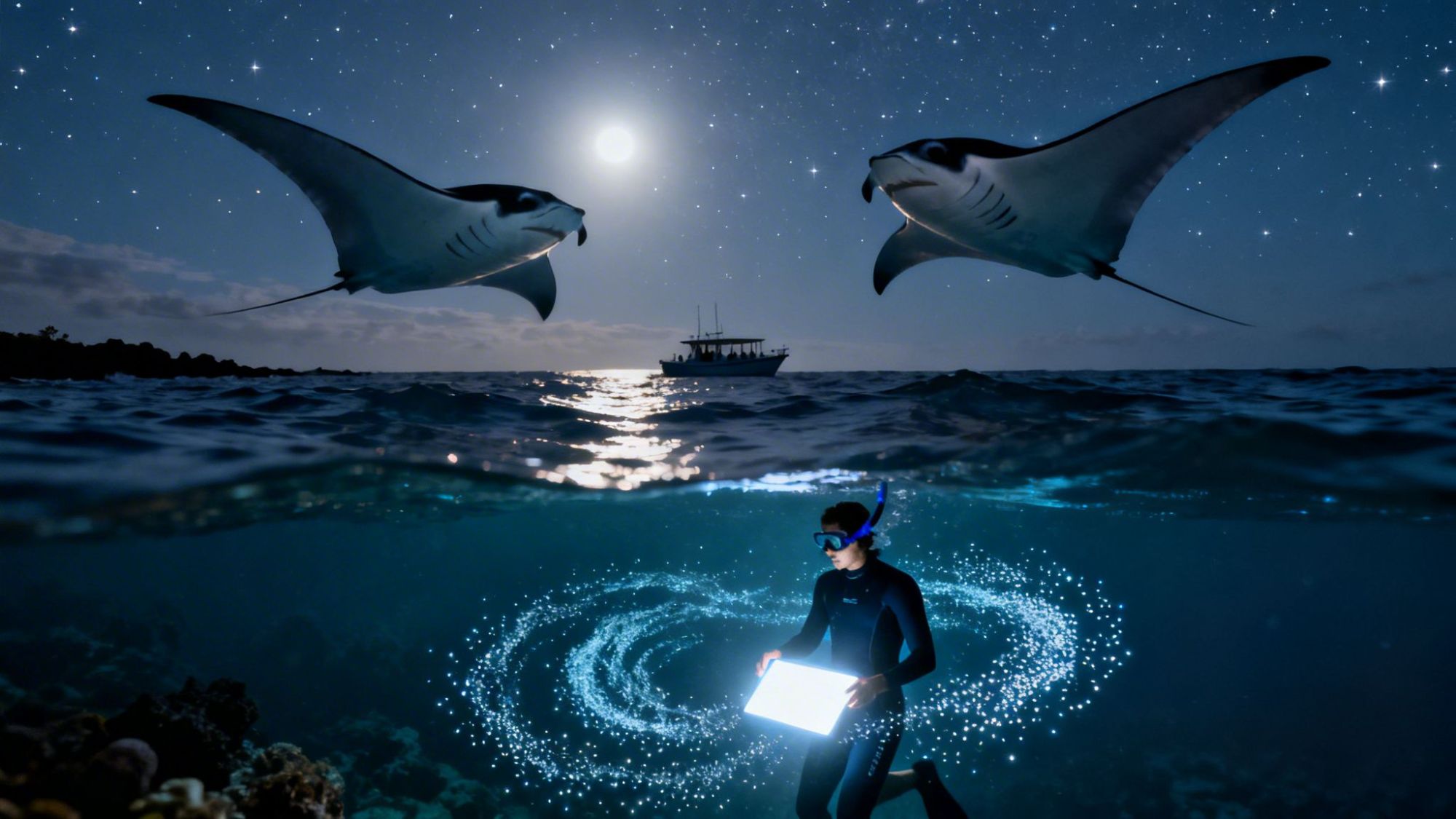
Picture this: you’re floating in the calm, dark Pacific waters off the Kona coast. Just inches below you, giant, graceful manta rays soar and barrel roll through a beam of light. This isn't a scene from a documentary. This is the Kona Manta Ray Night Snorkel, an experience so reliable and spectacular it has made the Big Island the world's go-to destination for seeing these gentle giants.
The combination of consistently good sightings, a large resident manta population, and tours that cater to every comfort level makes this the best manta ray night snorkel in Kona, hands down.
Discovering Kona's Most Unforgettable Marine Adventure
For so many people who visit the Big Island, this isn't just another activity on the list—it's a bucket-list dream. I've seen it firsthand as a guide. The magic unfolds every single night. We shine powerful, eco-friendly lights into the water, which draws in clouds of plankton, the mantas' favorite meal.
What happens next is a silent, underwater ballet. These magnificent creatures, with wingspans that can stretch up to 16 feet, glide, loop, and dance through the illuminated water to feed. It's a breathtaking spectacle.

Choosing the right crew is everything when it comes to having a truly magical and safe time out there. You want a company with a stellar reputation, and that’s why we’re proud to be a part of Kona Snorkel Trips—the top rated & most reviewed snorkel company in Hawaii.
Our expert-led trips are all about creating a secure and absolutely awe-inspiring environment. You can check out the details and book your spot right on our manta ray snorkel tour page.
Why This Experience Is So Unique
What we have in Kona is different from other marine encounters around the world. In many places, seeing a manta is a lucky, seasonal event. Here, we have a resident population of over 450 identified manta rays. That means you have an excellent chance of an incredible encounter any night of the year.
While Kona's signature tour is truly special, the world is full of other amazing water adventures waiting to be discovered.
The beauty of this encounter is that it's a passive observation activity. You simply float on the surface, holding onto our custom-made light board, while the mantas go about their natural feeding behavior below. It’s a completely safe and non-intrusive way to witness one of nature’s most magnificent displays.
Whether you've snorkeled your whole life or have never put on a mask before, this adventure is accessible to almost everyone. The mix of incredible wildlife, expert guidance, and the sheer beauty of a Hawaiian night makes it an experience you just can’t miss.
And if you're looking to fill the rest of your itinerary, check out our guide on other great things to do in Kona.
So, What's the Manta Ray Snorkel Actually Like?
The excitement starts to bubble up the moment you check in for what many people call one of the most incredible marine encounters on the planet. From the second you arrive, we’ve got everything dialed in to make sure it’s a smooth, thrilling experience, even if you've never put on a snorkel mask before. This is your behind-the-scenes look at the best manta ray night snorkel in Kona, so you know exactly what’s coming.

Your adventure kicks off with a quick, scenic boat ride from the harbor out to one of Kona's world-famous manta spots. As the sun dips below the horizon, your guides will walk you through a safety briefing and share some amazing facts about the gentle giants you’re about to meet.
We’ll also cover the most important rule of the night: passive observation. That means no touching, no chasing. It’s all about respecting their space, which keeps both you and the mantas safe and sound.
The Floating Dinner Table
The secret to our success is a custom-made light board. Just think of it as a floating "dinner table" for the mantas. You'll simply hold onto this super-stable, buoyant raft while its powerful, downward-facing lights illuminate the water below, attracting swarms of microscopic plankton.
This clever setup does two things at once:
- It keeps you safe and comfy: The raft is your steady handhold, so you can just relax and float on the surface without any effort. You don't need to be a strong swimmer to do this.
- It's a magnet for mantas: That concentrated cloud of plankton creates an all-you-can-eat buffet, drawing the mantas right up to you for their dinner.
Once you’re in the water and holding onto the board, the magic really starts. You'll spend an incredible 45 to 60 minutes watching the mesmerizing "manta ballet" unfold just inches beneath you.
The sheer number of people who do this every year—around 80,000 snorkelers—is a testament to how reliable this experience is. Top-tier operators consistently see mantas on 85-90% of their tours. Famous sites like Manta Village have historically boasted an insane 96% sighting rate, while Manta Heaven is right there at 90%. You're in for an amazing show.
The Manta Ballet Unfolds
Watching these majestic creatures feed is something you’ll never forget. With wingspans that can stretch over 16 feet, they glide through the light beams, performing barrel rolls and somersaults with a grace that seems impossible for their size. Their movements are totally hypnotic as they filter plankton from the water.
Despite their massive size, manta rays are completely harmless to humans. They are gentle filter-feeders and have no stingers, teeth, or barbs. Your only job is to be a quiet, respectful observer of their natural behavior.
Your guides are right there in the water with you the whole time, making sure everyone feels safe and is having a great time. They’ll point out individual mantas, often calling them by name and sharing little stories about their personalities and history. It's this personal touch that turns a cool viewing into a truly educational and moving experience.
After the snorkel, you’ll climb back onto the boat buzzing with a sense of pure wonder. The ride back to shore is usually filled with excited chatter as everyone relives the incredible moments they just witnessed. You'll leave feeling not just thrilled, but with a much deeper connection to the ocean and its magnificent giants. To get a better feel for their elegant motion, you can read about how manta rays swim underwater in our detailed guide.
When you think about once-in-a-lifetime wildlife encounters, a few legendary spots probably come to mind. The Serengeti for lions. The Galapagos for tortoises. For manta rays, that bucket-list destination is right here in Kona, Hawaii. But what is it about this one little stretch of coastline that makes it the undisputed global capital for meeting these gentle giants? It all comes down to a special combination of biology, predictable behavior, and a deep, community-wide commitment to conservation.

Unlike so many other places where manta sightings are a seasonal "maybe" based on migration, Kona is home to a massive, non-migratory population of reef mantas. They aren't just passing through; they live here all year. That's the single biggest reason why the best manta ray night snorkel kona delivers such a reliably magical experience.
A Resident Population Like No Other
Kona is home to a thriving resident manta ray community of over 450 identified individuals. With more than 120 of them cataloged along our coast each year, it's one of the most reliable places on Earth to see them. Because they're residents, you can see them 365 days a year. Local researchers have even found that the top 20 most frequently sighted rays make up nearly 60% of all encounters, meaning you get a real chance to meet local "celebrities" on your tour. You can learn more about these fascinating Kona manta ray population insights on our blog.
This residency creates an incredible opportunity. Over the decades, local guides and researchers have gotten to know these mantas as individuals, giving them names and tracking their life stories. You aren't just seeing a manta ray; you might be meeting Lefty, famous for his damaged fin, or Big Bertha, one of our largest and oldest regulars.
The Campfire Effect: A Reliable Buffet
The nightly spectacle works because of a simple, brilliant idea that we call the "campfire effect." Tour operators like us anchor at specific, well-established sites like Manta Village and Manta Heaven. We then set up powerful, eco-friendly lights that shine down into the dark water.
These lights attract huge clouds of microscopic plankton, which just so happens to be the manta rays' favorite food. The mantas are incredibly smart and creatures of habit. They've learned that these nightly light shows are a signal for an easy, all-you-can-eat buffet.
Think of it this way: If a food truck showed up at the same street corner every single night with your favorite meal, you'd start showing up, too. That’s exactly what the mantas do. They reliably gather at these "dinner tables," allowing us to witness their feeding behavior in a predictable and non-invasive way.
This dependable gathering is what turns a potential wildlife sighting into a nearly-guaranteed, world-class performance. It’s not about luck; it’s about understanding and working with natural behaviors that have been cultivated over decades. The consistency of this encounter is what truly sets Kona apart from anywhere else on the planet.
A Hub for Conservation and Eco-Tourism
Finally, Kona’s status as a top-tier destination is held up by a strong community focus on conservation. Responsible operators understand that this incredible natural resource must be protected for generations to come. When you join a tour, you are directly contributing to ongoing research and preservation efforts.
Guides teach guests about "manta etiquette"—basically, passive observation without touching or chasing—to make sure the animals are respected and their feeding patterns aren't disturbed. This dedication to sustainability makes the experience even more meaningful. It's an adventure that gives back, supporting the very ecosystem that makes the magic happen. For those looking for an exceptional alternative tour, Manta Ray Night Snorkel Hawaii is another fantastic operator that follows these same important principles.
How to Choose the Best Kona Manta Ray Tour
With so many boats heading out each night, trying to pick the right manta ray tour can feel a little overwhelming. But finding the best manta ray night snorkel in Kona really just comes down to knowing what to look for. Your choice of tour company will absolutely shape your entire experience, from how safe and comfortable you feel to the quality of the actual manta encounter.

The key is to cut through the noise and focus on a few things that truly matter: small group sizes, knowledgeable guides who are serious about safety, and a real commitment to the mantas' well-being. These are the details that separate a standard tour from a truly unforgettable adventure, and they'll help you book with confidence.
Prioritize Small Group Sizes
Picture this: you're one of six people floating peacefully, watching these gentle giants glide right beneath you. Now, imagine being one of 40 people all jostling for position at the light board. The difference is night and day. Smaller groups just make for a calmer, more personal, and much less chaotic atmosphere. You get a real connection with the wildlife and your guides.
When there are fewer people in the water, you naturally get more one-on-one attention. Your guides can check in on you, answer your questions right then and there, and even point out specific mantas they know by name. That kind of intimate setting is the hallmark of a top-tier tour.
Seek Out Expert and Safety-Conscious Guides
Honestly, your guides are the single most important part of your tour. You want to look for companies staffed not just by boat captains, but by passionate marine naturalists and certified safety pros. A great guide does so much more than just point and say, "There's a manta." They bring the whole underwater world to life.
They'll share fascinating facts, identify individual rays, and make sure every single person in the water feels secure from start to finish. Before you book, spend some time reading online reviews. Look for what past guests say about the crew's knowledge, professionalism, and focus on safety. You can get a great feel for what makes a tour stand out by reading through different Kona snorkel tours reviews and seeing what other travelers loved most.
Insist on Sustainable Practices
The best operators always put the mantas first. Period. This means they strictly follow the "Manta Ray Green Listed" guidelines, which are all about passive, respectful observation. The rules are simple but so important:
- No Touching: You must never touch a manta ray. It can strip off their protective slime coat, making them vulnerable to skin infections.
- Stay on the Surface: As a snorkeler, your job is to float calmly at the surface, holding onto the light board.
- Do Not Chase: Let the mantas come to you. Chasing them causes stress and can ruin their natural feeding patterns.
By choosing a company that lives and breathes these eco-friendly practices, you're doing your part to protect Kona's incredible manta ray population for years to come.
Our Top Recommendation for Your Manta Ray Snorkel
When you put all those pieces together—small groups, expert guides, and a deep respect for the ocean—one company consistently comes out on top. Kona Snorkel Trips is Hawaii's highest-rated and most-reviewed snorkel company, and they truly set the gold standard for the manta ray night snorkel.
For the certified divers in your group who want that amazing view from the ocean floor, we can't recommend Kona Honu Divers enough. They're the top rated & most reviewed diving company in both Hawaii and the Pacific Ocean, and their manta ray dive is second to none. Check out their manta ray diving tour page to learn more. To get fully prepped for this once-in-a-lifetime experience, be sure to check out this ultimate guide to snorkeling with manta rays in Kona.
Essential Tips for a Flawless Manta Snorkel Experience
Knowing a few simple tricks can turn a great night into an absolutely perfect one. A little bit of prep work really does go a long way, especially when you're heading out on the water after the sun goes down.
From what to pack to handling potential seasickness, these are the insider tips that will have you feeling confident and ready for the best manta ray night snorkel Kona has to offer. Your main job is to kick back, relax, and enjoy the show, so let's get the small stuff sorted out first.
Packing for Comfort and Convenience
When you're on a boat, less is definitely more. You really only need a handful of things to have a comfortable and stress-free trip.
Here’s a quick checklist of what to bring:
- Towel and Dry Clothes: You'll be so glad you have a warm, dry layer to change into after your snorkel. The boat ride back can get a bit chilly, so a hoodie or a light jacket is always a fantastic idea.
- Reusable Water Bottle: Staying hydrated is key, day or night.
- Camera: If you have a waterproof camera like a GoPro, don't leave it behind! You'll want to capture these memories.
- Gratuity: If you have an amazing time, it’s customary to tip your hard-working guides and captain.
It’s just as important to know what to leave on shore. I'd recommend leaving valuables, big bags, or anything that can't get wet. Keeping it simple lets you focus on the incredible experience waiting for you. For more detailed advice, you can learn more about what to wear for snorkeling in our comprehensive guide.
Preventing and Managing Seasickness
Please don’t let the fear of getting seasick stop you from going on this adventure! It’s a common worry, especially for a night trip, but it's totally manageable if you plan ahead. Even if you're not someone who usually gets motion sick, the mix of being on a boat at night and floating on the surface can sometimes catch people by surprise.
The trick is to be proactive. If you wait until you start feeling queasy, it's often too late to do anything about it.
Pro Tip: Your best defense against seasickness is getting ahead of it. Consider taking something at least 30-60 minutes before you even step on the boat. This gives it time to start working.
There are a bunch of really effective options out there, from natural remedies to simple over-the-counter meds. Here are some of the most popular and trusted choices:
- Ship-EEZ Seasickness Patch: A small patch you wear behind your ear. It offers long-lasting relief and is non-drowsy for most people.
- Dramamine pills: This is the classic, go-to choice for preventing motion sickness. Just make sure you check whether you're getting the drowsy or non-drowsy formula.
- Bonine pills: Another popular option that's known for causing less drowsiness than traditional Dramamine.
- Sea Band wristbands: A great non-medical choice. These use acupressure to disrupt those pesky motion sickness signals. They’re drug-free and you can use them again and again.
- Ginger chews: A natural and surprisingly effective way to help settle an uneasy stomach.
Taking one of these simple steps before the tour can truly make all the difference, ensuring you feel your absolute best while the manta ballet unfolds below you.
Manta Etiquette: The Golden Rule
The single most important tip for a flawless experience is to remember the golden rule of manta encounters: be a passive observer. These are wild animals in their home, and we are guests. Their well-being is always our number one priority.
This means absolutely no touching, chasing, or diving down toward the mantas. It's so important not to touch them because it can rub off their protective mucus layer, which leaves them open to skin infections.
By simply floating on the surface and holding onto our light board, you create a safe space. It allows the mantas to relax and go about their natural feeding behavior right in front of you. When everyone follows this simple rule, it creates a respectful and magical environment where the mantas continue to grace us with their presence, night after night. You're not just a spectator; you're a guardian of this incredible encounter.
Your Manta Ray Night Snorkel Questions, Answered
It's totally normal to have a few questions buzzing around your head before jumping into an adventure like this. Even with all the excitement, you want to know what you're getting into. We get it. Let's tackle some of the most common questions we hear from guests to make sure you feel 100% confident and ready for this incredible night.
Do I Need to Be a Strong Swimmer?
This is the number one question we get, and the answer is a simple and resounding no! You don’t need to be a strong swimmer at all to have a fantastic time.
Our tours use custom-made, super-buoyant light boards that float perfectly on the surface. You just hang on, float comfortably, and watch the amazing manta ballet happen right below you. The board gives you all the stability you need, so there's no real swimming involved. Plus, our guides are right there in the water with you the entire time, making sure everyone feels safe and secure from start to finish.
How Likely Am I to Actually See Manta Rays?
Your chances are incredibly high—that's what makes Kona the best place in the world for this! The manta ray night snorkel here has a mind-blowing year-round sighting success rate of about 80-90%.
This isn't just luck. It's the perfect recipe: Kona's waters are naturally rich in plankton (the mantas' favorite food), and our bright lights create a dependable underwater buffet that attracts them night after night. It’s the most reliable wild animal encounter you can find.
What Happens If No Mantas Show Up?
While it’s rare, mantas are wild animals, and nature doesn't offer a 100% guarantee. But we've got you covered. In the unlikely event the mantas decide to take the night off, we have what's called a "manta guarantee."
This means you can come back and try again on another night, completely free of charge. It’s always a good idea to schedule your manta snorkel early in your vacation, just in case you need to take advantage of this. When you book, just confirm the policy so you know the drill.
What Is the Minimum Age for Children?
Age limits can vary a bit between companies, but a good rule of thumb is a minimum age of around 5 to 7 years old. The most important thing isn't just the number, but how comfortable a child is with the idea of being in the open ocean after dark.
Even with floaties and our light board, the dark water can be a little spooky for some kids. We recommend checking directly with the tour operator about their specific age rules to make sure it’s a wonderful experience for every member of the family. If you want to learn more about these amazing creatures with your kids, check out these fun facts about manta rays.
Is This Tour Safe?
Absolutely. Your safety is the top priority, and the whole experience is built around it. Think of it less as an extreme sport and more as a floating observation deck.
Here’s why it’s so safe:
- Expert Guides: Every tour is led by experienced, in-water guides who are constantly watching over the group.
- Safety Briefings: Before you even dip a toe in the water, you'll get a complete rundown of all the safety procedures.
- Flotation Boards: These aren't just for holding lights; they're a secure, stable platform you can hold onto the whole time.
- Gentle Giants: Manta rays are completely harmless to humans. They are filter feeders and have no teeth, no stingers, and no barbs. They are truly gentle giants.
By following your guide's instructions and just floating peacefully, you’re taking part in one of the safest and most well-managed marine encounters on the planet. It's designed to be awe-inspiring, not intimidating.
Now that you have the answers, all that’s left is to see the magic for yourself. For an unforgettable and professionally guided adventure, book your tour with Kona Snorkel Trips. As Hawaii's top-rated and most-reviewed snorkel company, we promise an experience that is safe, respectful, and absolutely breathtaking.