
Kona Manta Night Snorkel: best manta ray night snorkel kona Expert Picks
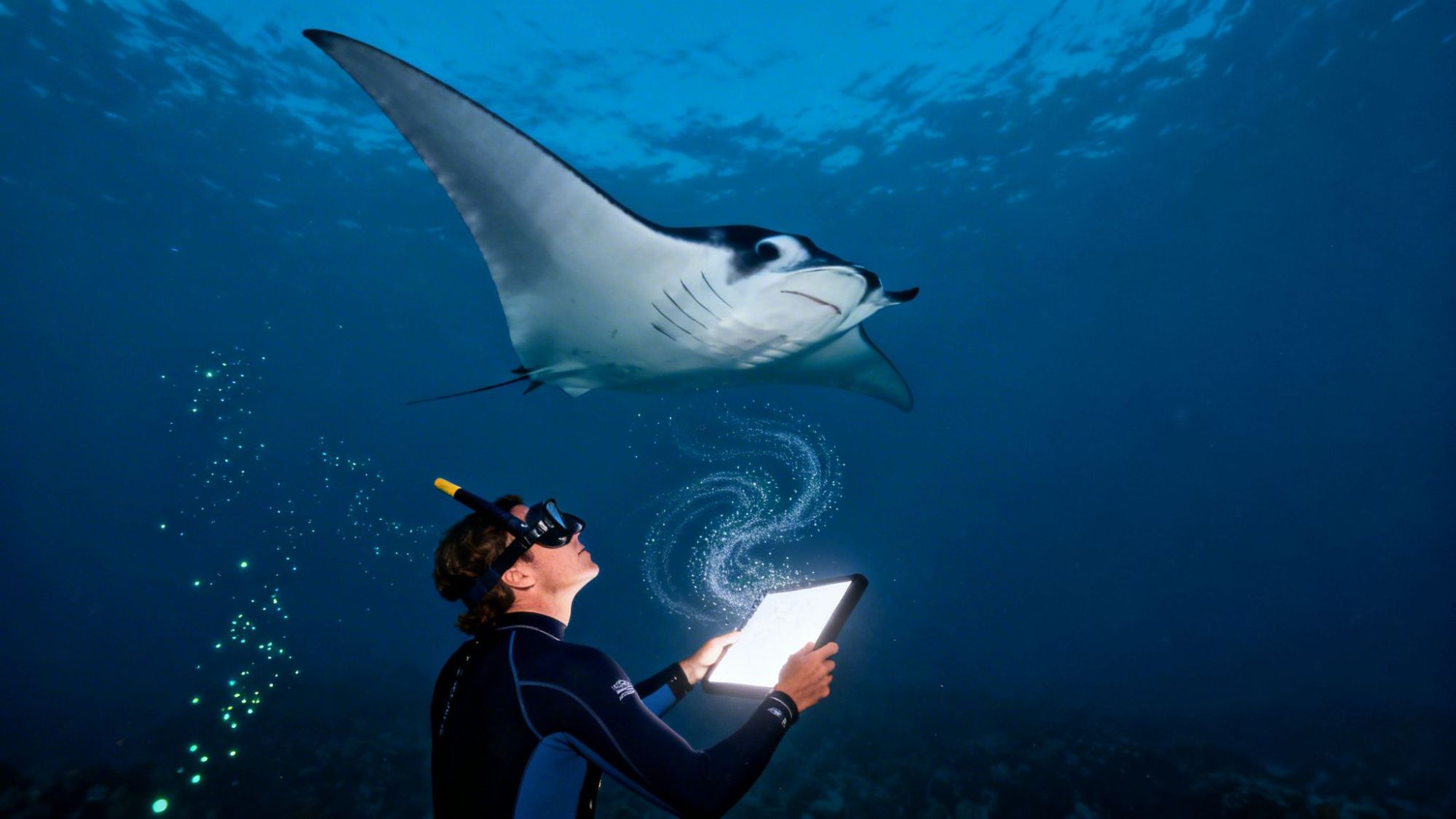
When you think about the best manta ray night snorkel in Kona, you're picturing more than just a tour. You're imagining a perfect blend of a jaw-dropping wildlife encounter, the confidence that comes with expert guides, and the peace of mind of top-tier safety. It’s an unforgettable combination, and it’s exactly what Kona Snorkel Trips delivers, night after night. It’s no accident they’ve become Hawaii's highest-rated and most-reviewed snorkel company.
Why a Manta Ray Night Snorkel in Kona Is a Must-Do
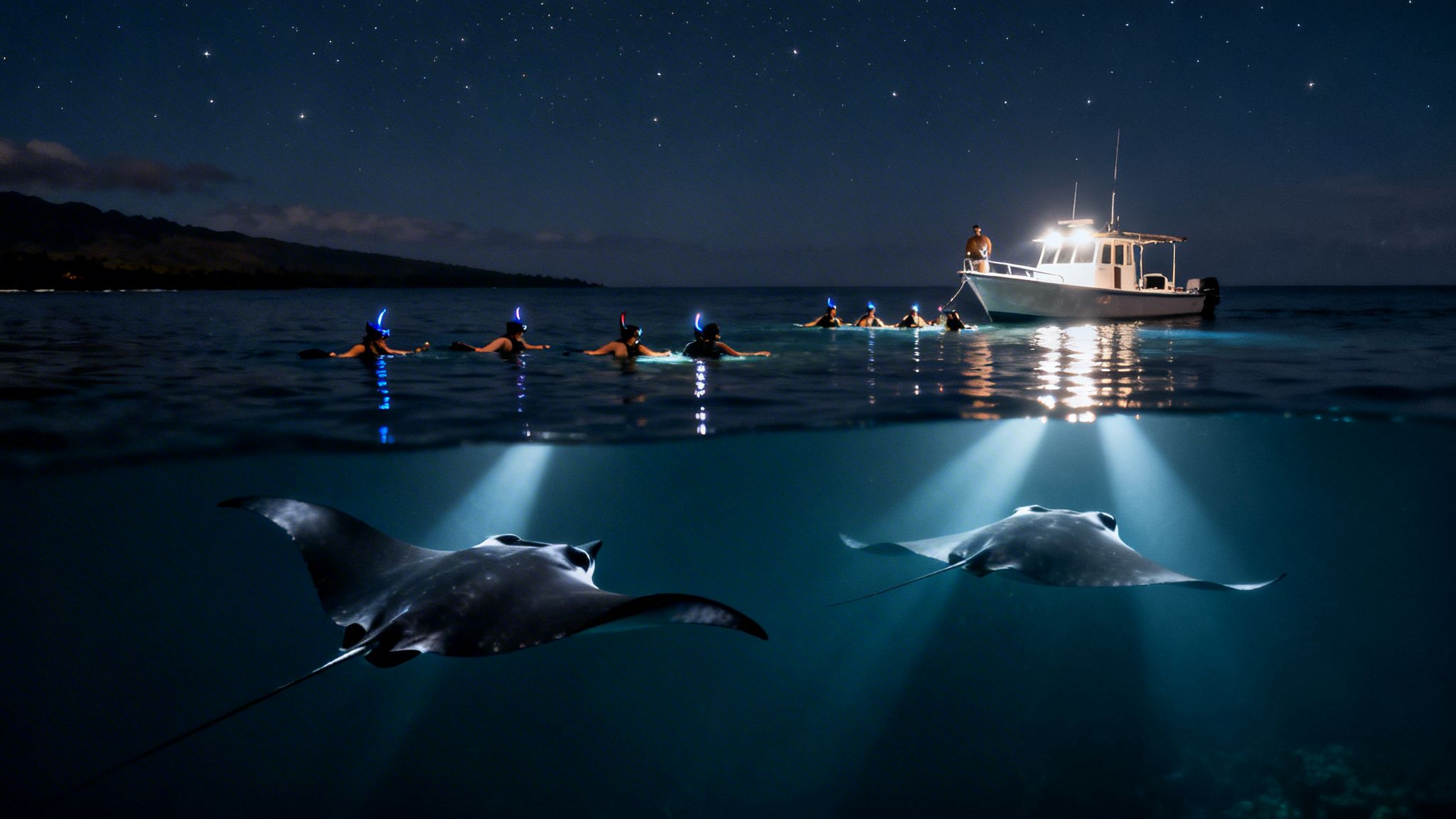
Picture this: You’re floating peacefully in the calm, dark Pacific, the stars blazing overhead. Below, powerful underwater lights cut through the blackness, creating a glowing stage that attracts tiny, shimmering plankton.
Then, out of the deep, a shadow emerges. A majestic giant with a wingspan stretching over 12 feet glides into the light, performing a silent, mesmerizing ballet of barrel rolls and swoops, sometimes just inches from your mask. This is the heart of the Kona manta ray night snorkel—an experience that’s somehow both thrilling and deeply serene.
A World-Class Phenomenon
There's a reason Kona is known globally as the place for this adventure. It all comes down to reliability. We see incredible 80-90% success rates year-round, a level of consistency that other famous dive and snorkel spots around the world just can't touch. That reliability is why over 80,000 people come here every year for this specific experience. It’s a genuine natural wonder, and you can learn more about its global appeal on konahonudivers.com.
This guide is your roadmap to choosing and preparing for the best manta ray night snorkel Kona has to offer. We'll walk you through everything, drawing from years of experience on these waters.
We’ll cover:
- What makes this experience so unique.
- How to pick the perfect tour for you and your group.
- All the essential tips to get you ready for your adventure.
- The best times of year to book a trip.
While there are many solid operators out there, we’ll explain why we believe Kona Snorkel Trips sets the standard for a safe, respectful, and absolutely breathtaking encounter. For those exploring all their options, Manta Ray Night Snorkel Hawaii is another exceptional alternative when looking for a Manta Ray night snorkel tour.
Get ready for a night you'll be talking about for years to come.
What Makes Snorkeling with Manta Rays in Kona So Special?
The magic behind the best manta ray night snorkel Kona has to offer isn't just a happy accident. It’s a beautiful symphony of biology, geography, and a bit of human ingenuity that sets the stage for an unforgettable show. At its heart, the experience hinges on a simple, powerful relationship: light, food, and the gentle giants of the sea.
Think of it like a giant underwater dinner bell. For years, lights from coastal hotels and boats unintentionally drew in swarms of microscopic plankton—the manta rays’ favorite meal. The mantas, being incredibly smart, quickly figured out that these lights meant an easy, all-you-can-eat buffet. Responsible tour operators have simply refined this natural phenomenon.
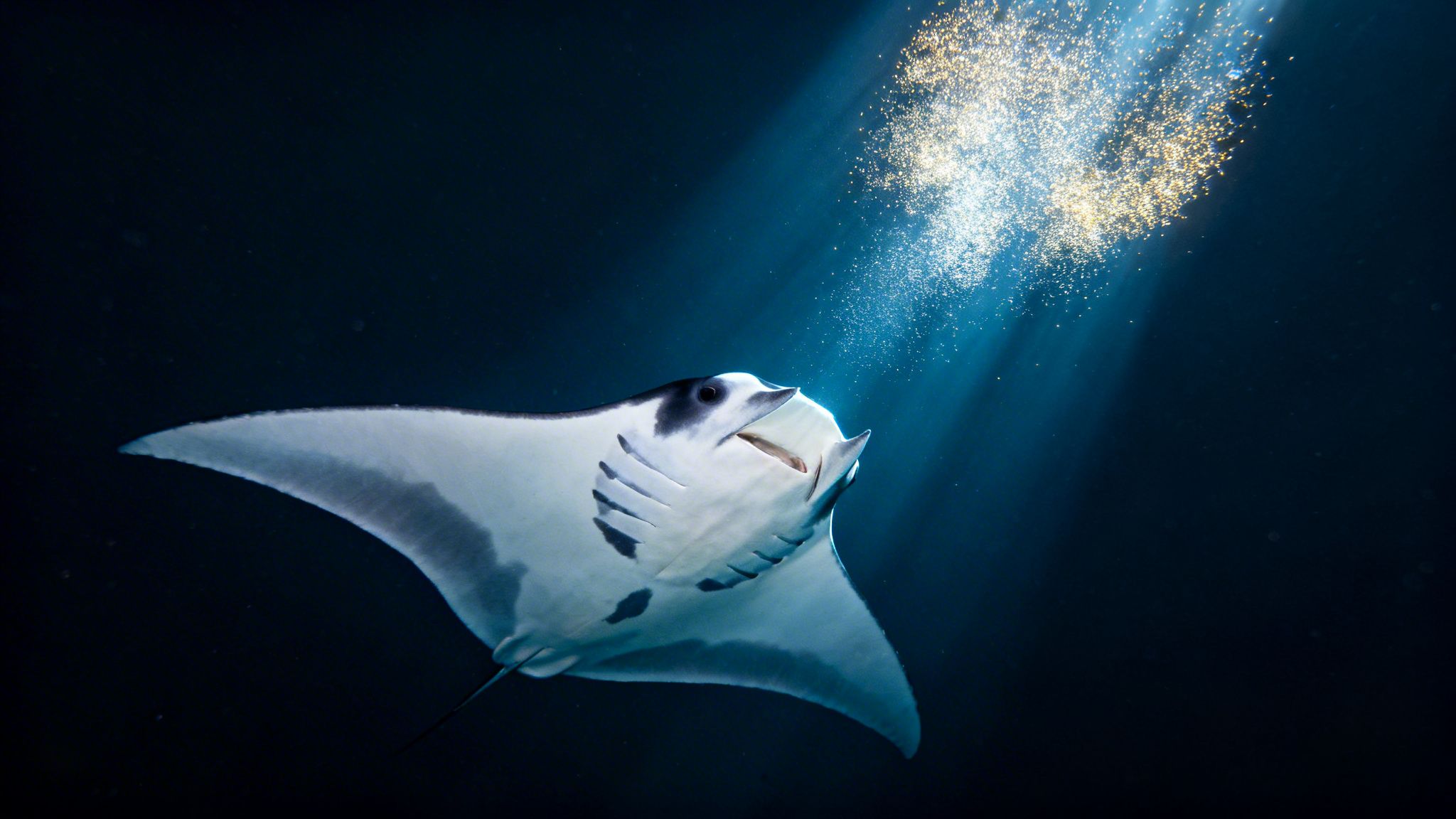
Today, we use powerful, eco-friendly lights that shine down into the water, creating a massive column of plankton. The manta rays glide in, their huge mouths wide open, to filter-feed on this feast. They perform the most mesmerizing barrel rolls and graceful swoops, sometimes just inches below you.
Kona's Unique Underwater Stage
The Kona coast's geography plays a massive role in this nightly spectacle. Tucked away from the strong trade winds by our colossal volcanoes, the waters here are famously calm and clear. It’s this predictable, peaceful environment that has made Kona the world’s most reliable and famous destination for manta ray encounters.
And we're not just talking about a few passing visitors. Kona is home to a resident population of over 450 identified reef mantas! Each one is totally unique, with a pattern of spots on its belly that acts just like a human fingerprint. Marine biologists and our seasoned guides can often recognize individuals by name, like the famous "Big Bertha" or "Lefty." You can dive deeper into their world in our article covering some fun facts about manta rays.
A Model for Sustainable Tourism
What really elevates this experience from just "cool" to truly special is the deep commitment to conservation. The entire activity is built on a simple but critical rule: look, don't touch. Manta rays have a protective mucus layer on their skin, and touching them can strip it away, leaving them vulnerable to infection.
Choosing a tour operator that rigorously enforces these guidelines is crucial for protecting the manta population for generations to come. It ensures the experience is as safe for the mantas as it is for the snorkelers.
Responsible companies like us at Kona Snorkel Trips put the well-being of the mantas first, always. This focus on sustainable, respectful wildlife interaction allows us to witness this incredible natural behavior without causing harm. It makes the best manta ray night snorkel Kona an adventure you can feel genuinely good about.
How to Choose the Best Manta Ray Snorkel Tour
Picking the right operator is probably the single most important decision you'll make for your manta ray adventure. Get it right, and you’re set up for a magical, once-in-a-lifetime experience. With dozens of boats heading out every single night, the choices can feel a bit overwhelming, but a few key things can make all the difference.
The size of the boat, how many people they take out, and even which snorkel site they visit will completely shape your night.
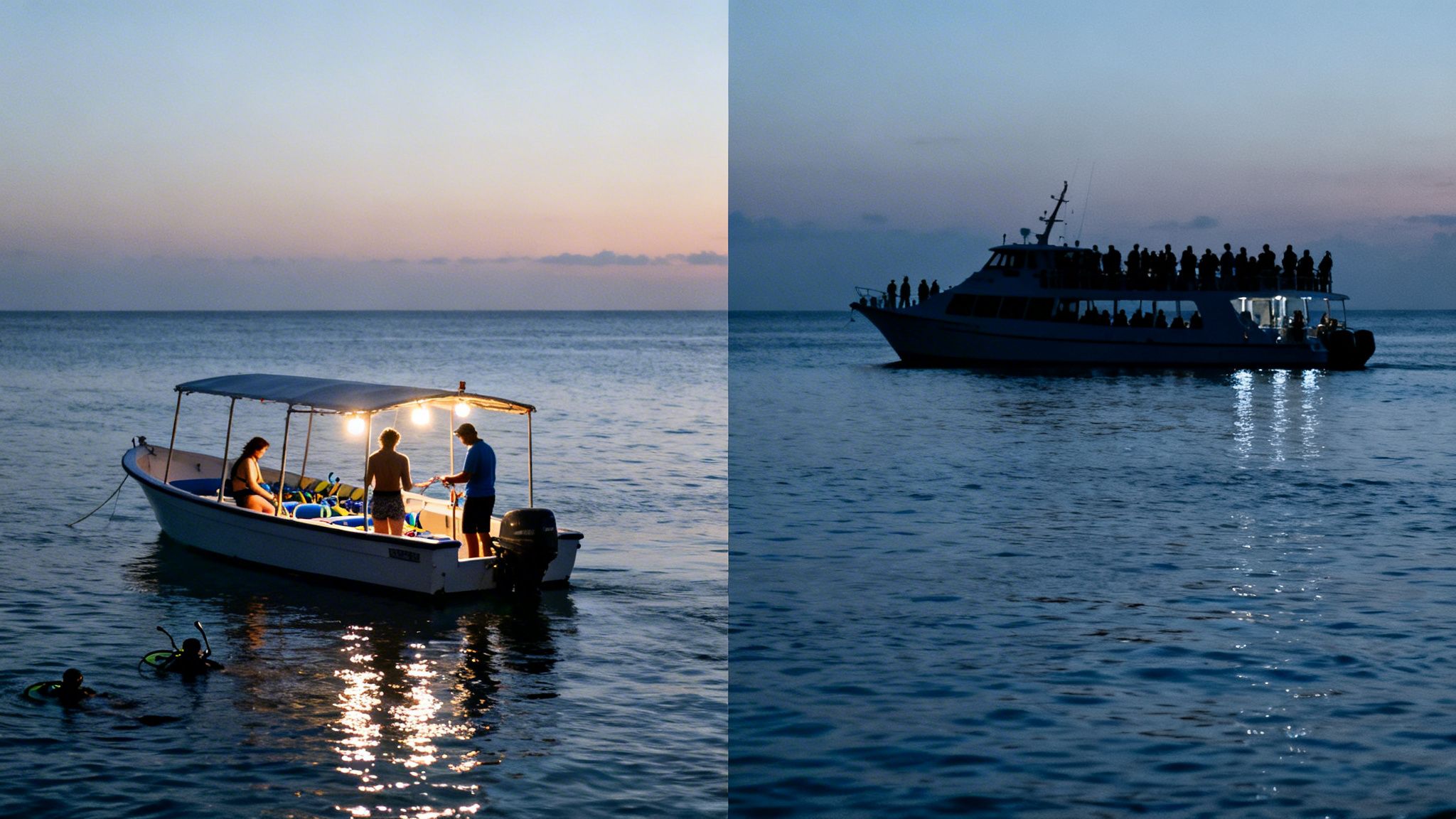
Some of the big tour boats pack on 40-50+ snorkelers. It’s definitely a high-energy, bustling atmosphere. While those tours can be fun, that many people in the water at once can feel pretty crowded when you’re trying to get a good view. On the flip side, a small-group operator like ours focuses on a more personal, intimate adventure. A lot of our guests tell us it feels way more relaxed and special.
Understanding the Snorkel Sites
Most tours head to one of two main spots, and each has its own vibe. Your choice really comes down to what you’re looking for: calmer water or the chance to see a massive group of mantas.
- Manta Village: This spot is just south of Kona, near Keauhou Bay. The water here is known for being shallower and calmer, which makes it a fantastic choice for first-timers or families with kids.
- Manta Heaven: Located north of Kona near the airport, this site is a little deeper. Sometimes you’ll see more mantas here, but it can also attract bigger crowds.
Manta Village is our go-to for a reliably amazing experience. It has a reported 96% success rate, with an average of four mantas showing up each night, so it's incredibly consistent. Manta Heaven, on the other hand, can be a real spectacle. We’ve seen up to 11 mantas there at one time, creating an unforgettable ballet in the deeper water.
Large Boat vs. Small Group Experience
The difference between joining a massive tour and a small-group trip is night and day. It’s worth thinking about what kind of memory you want to walk away with.
A smaller group doesn’t just mean a less crowded view of the mantas. It also means more one-on-one time with the guides, which makes the whole adventure safer and a lot more personal.
To help you visualize the difference, here's a quick comparison of what to expect.
Tour Comparison: Large Operator vs. Kona Snorkel Trips
| Feature | Typical Large Operator | Kona Snorkel Trips |
|---|---|---|
| Group Size | 40-50+ snorkelers | Max 18-24 snorkelers |
| Atmosphere | Busy and high-energy | Intimate and relaxed |
| Guide Attention | Less individual focus | Personalized guidance |
| Viewing Space | More competition for rail space | Ample room for everyone |
As you can see, the experience is fundamentally different. It really comes down to personal preference, but we find that a smaller, more tight-knit group allows everyone to connect more with the experience and the animals.
And for all the certified divers out there, seeing the mantas from the ocean floor is a completely different kind of magic. If you want that underwater perspective, Kona Honu Divers is the top rated & most reviewed diving company in both Hawaii and the Pacific Ocean. Their manta ray diving tour is world-class, hands down.
Ultimately, you'll have the most memorable night if you choose an operator that cares about small groups, safety, and showing deep respect for the ocean and its creatures. You can read more about what makes a great manta tour in our detailed guide.
Preparing for Your Unforgettable Night Snorkel
Alright, you've booked the best manta ray night snorkel Kona has to offer, and the countdown has officially begun! A bit of prep work now means you can just relax and soak it all in when the time comes, without stressing about the small stuff.
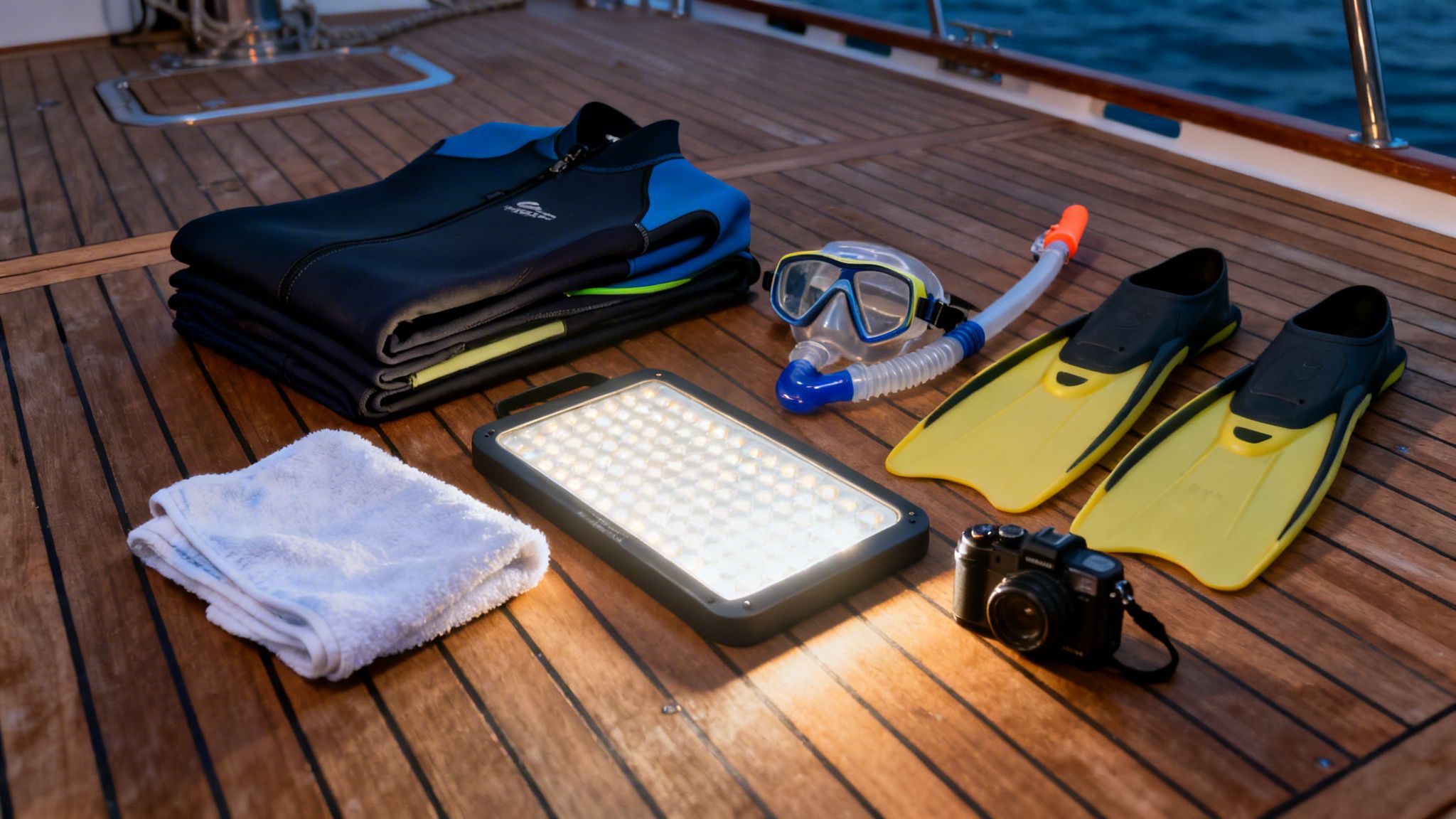
The great news? You don't need to haul a bunch of gear with you. We've got all the essentials covered: snorkel, mask, fins, and a wetsuit to keep you comfortable. Most importantly, we provide the custom light board that attracts the plankton—and the mantas. It's your stable, floating front-row seat to the show.
What to Wear and What to Bring
Showing up ready is super simple. The main thing is to dress for both getting in the water and for the boat ride back, which can feel a little brisk after the sun goes down.
Here’s a quick checklist of what to throw in your bag:
- Swimsuit: The easiest thing to do is wear it under your clothes when you show up. That way, you're ready to go once we're on the boat.
- Towel: You'll definitely want this for drying off after the swim.
- Dry Clothes or a Jacket: The air cools down fast on the water at night. A warm, dry layer for the ride back to the harbor is a game-changer.
- Waterproof Camera: Trust me, you're going to want photos. A GoPro or something similar is perfect for capturing the magic.
If you want a more in-depth guide for any water adventure in Hawaii, pop over to our post on what to wear for snorkeling.
A Typical Manta Ray Tour Experience
Knowing how the evening unfolds can help calm any butterflies you might have. Most tours run like a well-oiled machine, keeping everything safe, fun, and focused on the mantas.
It all starts with a friendly check-in at the harbor. From there, the crew will give a safety briefing before we head out. The boat ride itself is awesome, often timed perfectly to catch a spectacular Kona sunset. Once we anchor, the crew helps everyone get geared up and into the water, where you'll get comfortable holding onto the floating light board. You’ll spend about 30-45 minutes in the water, completely mesmerized.
Tip for First-Time Snorkelers: The best advice I can give is to just relax. Seriously. Your wetsuit makes you float, and the light board is right there for support. All you have to do is breathe easy through your snorkel and enjoy the view—no real swimming is required.
After the snorkel, we'll help you back onto the boat. You can dry off, warm up, and enjoy a peaceful ride back to shore under the stars. It’s an incredible adventure from start to finish.
When Is the Best Time for Manta Ray Snorkeling?
This is one of the first questions people ask us, and the answer is one of the best parts about this whole adventure: there really isn’t a bad time to go. Kona is home to a resident population of manta rays and our waters are famously calm, which means you can have a world-class experience any night of the year.
Unlike whale watching, which is seasonal, these mantas are our local celebrities. They live here. They show up for their nightly plankton buffet whether it’s January or July, giving this tour one of the highest success rates of any wildlife encounter on the planet. Still, there are some subtle differences throughout the year that might help you pick the perfect time for your trip.
Seasonal Considerations
If you’re thinking about a summer trip, say between May and September, you’re in for a treat. This is when the ocean is typically at its flattest and the water is warmest. For families with kids or anyone who gets a little chilly in the water, this is prime time. A smoother boat ride and balmy water make for a super comfortable experience. Plus, the warmer water can trigger bigger plankton blooms, and more plankton can sometimes mean even more mantas.
Winter, from about October through April, can bring bigger ocean swells from storms far out at sea, but don't let that deter you. The tours are still incredibly successful. The water might be a few degrees cooler, but the thick, high-quality wetsuits we provide will keep you perfectly warm and comfortable. The mantas are still there, the show is just as good, and as a bonus, you might find slightly smaller crowds during the shoulder seasons, making the whole thing feel a bit more intimate.
Does the Moon Cycle Matter?
Here’s a pro tip that not many people think about: the moon. While the mantas show up no matter what the moon is doing, if you can time your trip around a new moon (when the moon is dark), you might get an extra dose of magic.
When the sky is pitch black, the underwater lights used to attract the plankton seem to glow with an almost electric intensity. The contrast is stunning. It also makes any natural bioluminescence in the water pop, so you might see surreal, sparkling trails of light with every movement you make.
At the end of the day, the best time to go is whenever you can make it here. The consistency of this experience is what makes it so special. Sites like Manta Village have logged 96% success rates with an average of four mantas per night. Further north, Manta Heaven has seen nights with over 30 mantas in the summer! These gentle giants are here reliably, so any night you choose has the potential to be truly unforgettable.
If you like to geek out on the data, you can explore more detailed manta ray sighting reports on jacksdivinglocker.com.
Of course, it’s only natural to have a few last-minute questions floating around in your head before you commit. You’re excited, but you want to be sure. We get it. Finalizing your plans for the best manta ray night snorkel Kona has to offer should be all about the thrill, not the stress.
Let's clear up those common queries so you can book with total confidence and get ready for an absolutely unforgettable night.
Is This Safe for Beginners or Kids?
Absolutely! This is probably the number one question we hear, and the answer is a resounding yes. Reputable tour operators put safety above everything else. The whole experience is designed from the ground up to be safe and accessible, even if you've never put on a snorkel mask in your life.
Before anyone even dips a toe in the water, your guides will give you a full safety briefing, walking you through exactly what to do and what to expect. You’ll be holding onto a big, custom-made light board that floats right on the surface. This isn't just to attract the plankton; it's a super stable handhold that keeps everyone together and provides plenty of flotation. You just hang on and watch the show unfold beneath you.
For kids, it's pure magic. The crews are fantastic at making them feel comfortable and secure. Just make sure to check the specific age requirements when you book, as they can vary a little from one company to the next.
Do I Need to Be a Strong Swimmer?
Here’s another common worry we can put to rest: no, you don’t need to be an Olympic swimmer. If you're comfortable in the water and have basic swimming skills, you'll be perfectly fine. You won't be doing any real swimming at all.
The wetsuit they give you adds a ton of buoyancy, helping you float with almost no effort. Plus, that light board is your main support. Your job is simply to hold on, float, and stick your face in the water. Think of it more like relaxing in a pool than swimming laps in the open ocean.
Am I Guaranteed to See Manta Rays?
While nobody can ever guarantee a wildlife encounter with 100% certainty, the Kona manta ray snorkel is world-famous for a reason—the success rate is unbelievably high. On any given night, your chances of seeing mantas are well over 90%. These are resident mantas who show up to the same dinner table pretty much every single night.
But what about those rare nights they decide to skip dinner? Any good tour company has you covered.
It's standard practice for operators to offer a "manta guarantee." If the mantas don't show, you can come back another night for free or at a steep discount. It’s always smart to confirm this policy when you book and try to schedule your tour early in your trip, just in case you need to cash in on that second chance.
This ensures everyone gets the best possible shot at witnessing this incredible spectacle.
How Cold Is the Water at Night?
The Pacific here in Kona is beautiful and warm all year, but it can definitely feel a bit cooler once the sun goes down. Water temps usually hover between the mid-70s and low-80s Fahrenheit (that's about 24-27°C). That’s not chilly, but when you're floating for 30-45 minutes, you can start to feel a little cool.
That's where the wetsuits come in. Every quality tour will provide you with a high-quality wetsuit (usually a top or a "shorty"). It works by trapping a thin layer of water against your skin, which your body quickly warms up, creating a perfect layer of insulation. It makes a world of difference and keeps you cozy so you can focus on the mantas, not the shivers.
With those questions answered, you’re ready to book your adventure with total peace of mind.
Are you ready to experience the magic for yourself? Kona Snorkel Trips offers the top-rated manta ray night snorkel in Kona, ensuring a safe, memorable, and absolutely breathtaking adventure. Book your spot today and prepare for an encounter you'll never forget!