
Best Manta Ray Night Snorkel Kona (best manta ray night snorkel kona)
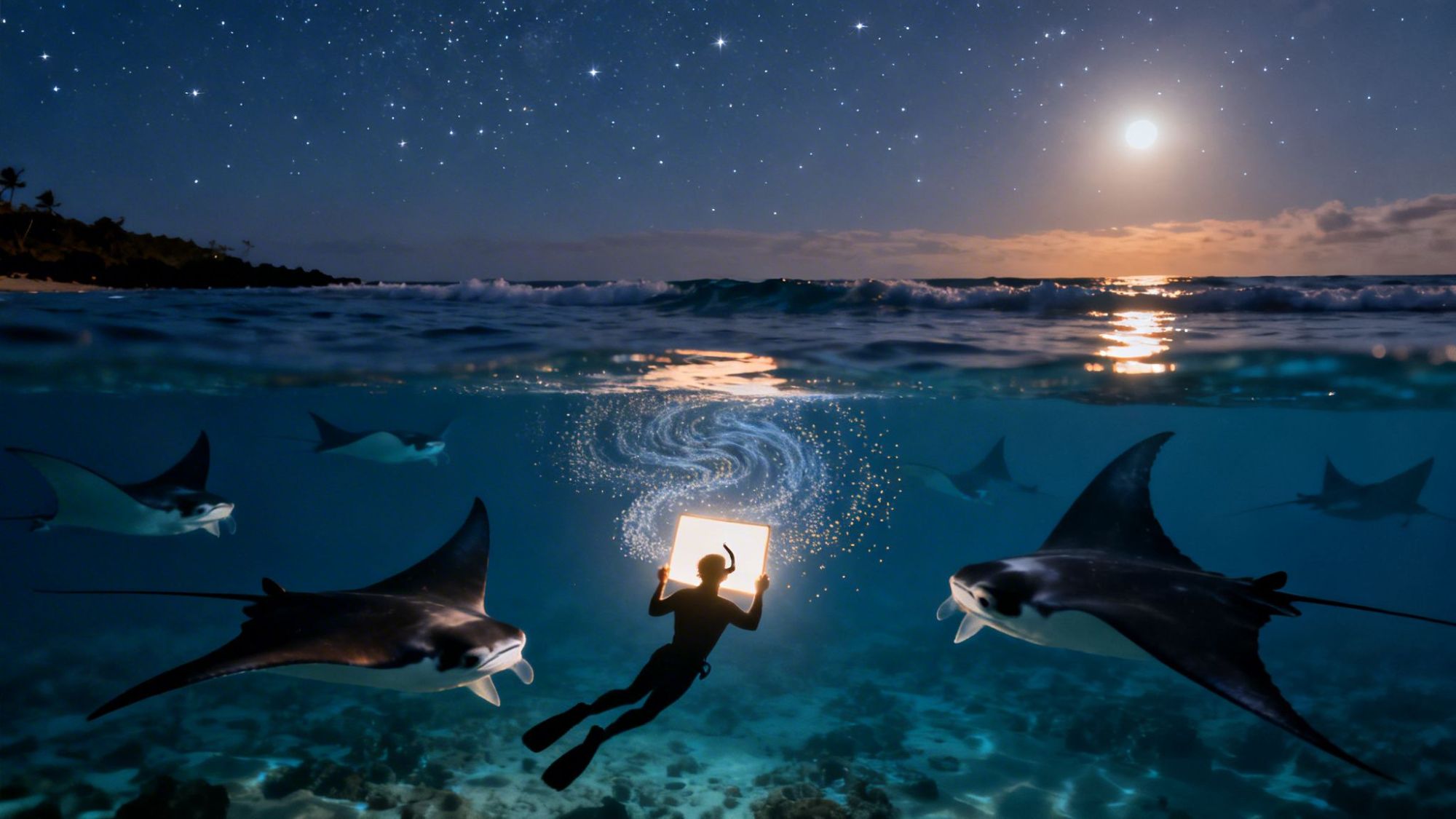
When you're looking for the best manta ray night snorkel in Kona, it really boils down to finding an operator that gets it right: safety, small groups, and a genuine respect for the ocean and its creatures. That's why we're so proud that Kona Snorkel Trips stands out as Hawaii's top-rated and most-reviewed snorkel company. We've built our reputation on providing unforgettable experiences, and our guests consistently rave about our expert crew and the jaw-droppingly close encounters with these gentle giants.
An Unforgettable Night with Gentle Giants
Picture this: you're floating in the warm, dark Pacific under a sky blanketed with stars. Just inches below you, massive manta rays glide and barrel-roll in an otherworldly ballet. This isn't just a daydream; it's the real magic of a manta ray night snorkel in Kona, an adventure so profound that many call it a must-do for any trip to Hawaii. It's consistently ranked as one of the most incredible ocean encounters you can have anywhere on the planet.
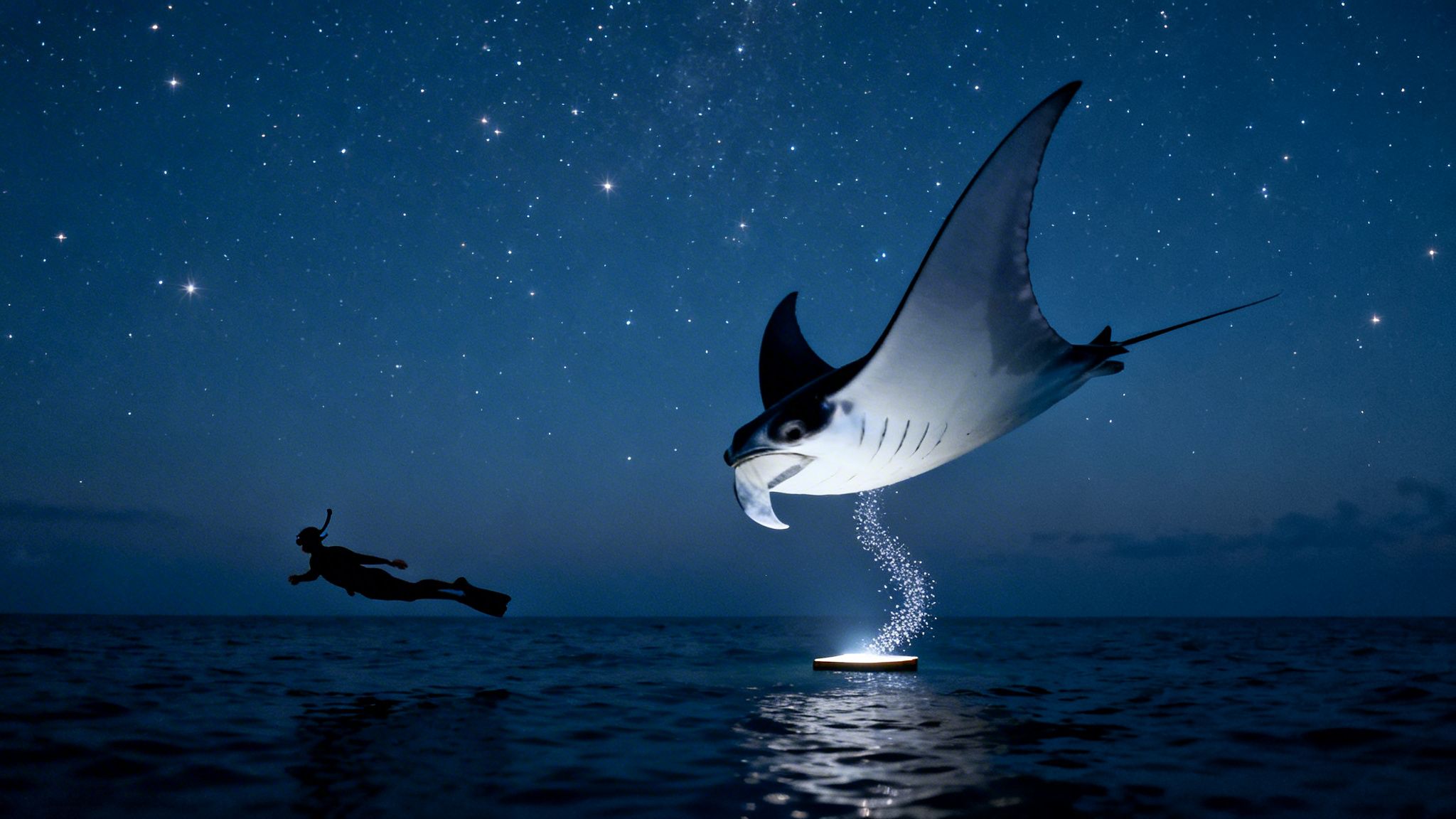
This guide is here to walk you through everything you need to know to make sure you have the best possible time—from what to look for in a tour to what makes this whole thing so special. We'll introduce you to the experience we offer at Kona Snorkel Trips, where our whole focus is on a safe, awe-inspiring trip you'll never forget.
What Makes This Experience So Special?
The secret to this incredible spectacle is a fascinating relationship between the tour boats and the manta rays. Our boats use powerful, eco-friendly lights that shine down into the water, attracting swarms of plankton—the mantas' favorite meal. This creates an underwater buffet that reliably draws the rays in for a spectacular feeding frenzy, right in front of your mask.
This nightly event isn't just another tour; it's like having a front-row seat to one of nature's most graceful ballets. The manta rays, with wingspans that can stretch over 12 feet, perform effortless acrobatics as they feed. It’s a truly mesmerizing and humbling show.
If you want to get a better sense of their movement before you go, you can learn more about how manta rays swim in our detailed article.
Planning Your Big Island Adventure
While the manta ray night snorkel is an absolute showstopper, the Big Island is packed with diverse landscapes and adventures. To really make the most of your vacation, it's worth planning ahead and checking out other unforgettable experiences on the Big Island. A little bit of planning ensures your trip is filled with amazing memories from start to finish.
Why Kona Is the World's Premier Manta Ray Destination
Let's be clear: Kona isn't just a good place to see manta rays; it's the place. You might get lucky and spot a manta ray in other tropical waters, but nowhere else on the planet offers the kind of reliable, up-close-and-personal spectacle you'll find right here off the Big Island's coast. It's a reputation built on a perfect storm of geography, biology, and a bit of human ingenuity.
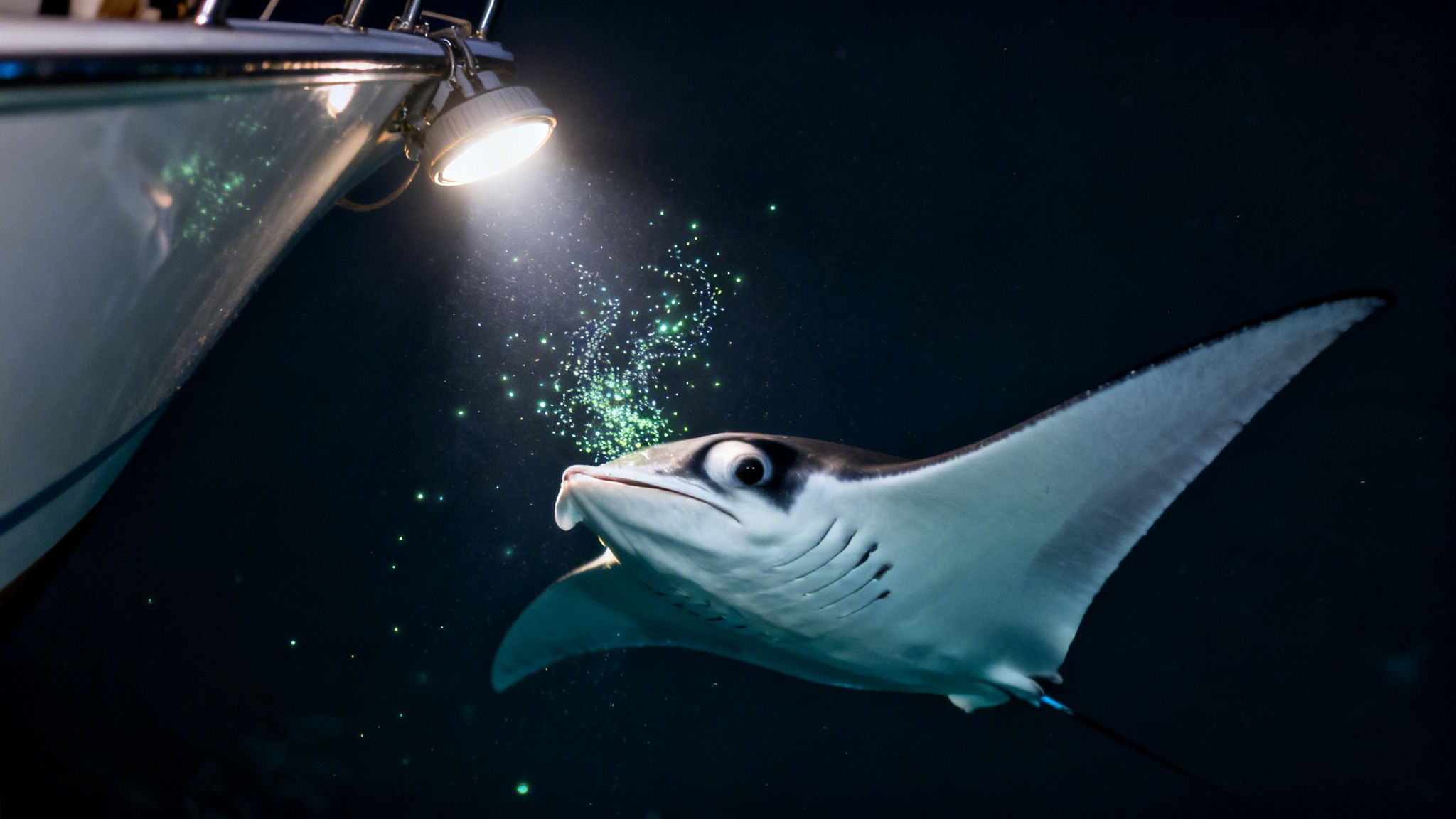
The secret is surprisingly simple. For decades, local operators have perfected the art of creating an "underwater buffet." After the sun goes down, tour boats shine powerful (but eco-friendly) lights into the water. This light draws in massive clouds of plankton, the microscopic critters that manta rays absolutely love to eat.
This creates a concentrated, irresistible feast that the local mantas just can't pass up, bringing them in night after night for an incredible feeding display.
A Resident Population and Calm Waters
Most places with manta rays see them as seasonal visitors, just passing through. Not Kona. We have a huge, resident population of over 200 identified reef manta rays that live here all year long. You don't have to hope your vacation lines up with their migration schedule. They're already here.
Each manta has a totally unique pattern of spots on its belly, like a fingerprint. This allows guides and researchers to recognize individuals and track them over time. We actually know these animals.
On top of that, the Kona coast is tucked behind the massive volcanoes of Mauna Loa and Hualalai, which shield it from the strong trade winds. This natural protection gives us exceptionally calm waters most nights, making for a safe and comfortable snorkel experience. A stable population and perfect conditions—that’s the magic formula.
Unmatched Sighting Success Rates
This is what really sets Kona apart. We’re not talking about a coin-flip chance of seeing a manta. The numbers are staggering, with tours at the top sites boasting 85-90% success rates year-round. It's so reliable that the experience draws about 80,000 visitors every year.
Dive logs show that well over 90% of tours see at least one ray. In the summer, when plankton is thickest, it's not uncommon to see between 10 and 36 mantas on a single trip. This isn't just a hopeful expedition; it's a near-certainty. You can get a better sense of the seasonal patterns by exploring the best times to see manta rays in Kona.
This isn’t a fleeting glimpse from a distance. The whole experience is designed for you to get incredibly close. You'll watch them perform graceful barrel rolls and glide just inches from your mask—it’s a front-row seat to one of nature’s most incredible ballets.
Kona's Two Legendary Manta Sites
This world-famous activity happens in two main spots along the coast. Each one is amazing in its own way.
- Manta Village: This is the original site, located just south of Kailua-Kona in Keauhou Bay. It's known for its incredible consistency and easy access, making it a go-to spot for many tour operators.
- Manta Heaven (Garden Eel Cove): You'll find this spot north of Kona, near the airport. It often attracts larger groups of mantas, sometimes creating a true feeding frenzy that has to be seen to be believed.
Both locations are shallow reef areas, typically between 20-45 feet deep. This makes them perfect for snorkelers floating on the surface and for scuba divers watching from the seafloor below. The reliability of these two sites is the final piece of the puzzle, cementing Kona’s reputation as the undisputed best place in the world for a manta ray adventure.
Choosing the Right Tour for Your Manta Ray Adventure
Picking the right operator is probably the single most important decision you'll make when planning your trip. While the manta rays are always the stars of the show, the quality of your tour company directly shapes your safety, comfort, and the memory you take home. It's tempting to just look at price, but there's a lot more that goes into creating a truly unforgettable experience.
Truth is, not all tours are created equal. They can differ wildly in the type of boat they use, how many people they take out, their safety protocols, and how seriously they take eco-friendly practices. A little research upfront ensures you have a safe, respectful, and magical encounter with these gentle giants.
Small Groups vs. Large Vessels: What is the Difference?
One of the biggest things that sets tours apart is group size. A smaller, more intimate setting can completely transform the experience from feeling like you're at a crowded theme park to a personal, almost private viewing.
Operators like Kona Snorkel Trips focus on small-group tours for a reason. It creates a much more personal and less chaotic vibe. With fewer people in the water, you get more space to yourself, better views of the mantas, and more one-on-one time with the guides. It feels less like you're being herded and more like you're part of a special expedition.
On the other hand, the bigger boats, often large catamarans, have their own perks. They offer a super stable ride and more onboard amenities like restrooms or even hot showers. While they do pack in more guests, which can sometimes feel a bit crowded, they're a fantastic choice for families with young kids or anyone who's a bit nervous about seasickness and just wants maximum comfort.
Comparing Kona Manta Ray Snorkel Tour Styles
To help you figure out what's best for you, let's break down the key differences between these two approaches. Seeing it side-by-side makes it easier to pick the adventure that truly fits your style.
| Feature | Small-Group Tours (e.g., Kona Snorkel Trips) | Large-Group Tours |
|---|---|---|
| Guest Experience | Offers a more personal, intimate, and less crowded viewing environment. | Can feel more like a popular attraction with a higher number of participants. |
| Guide Interaction | Allows for more direct interaction and personalized attention from the crew. | Guide-to-guest ratio is higher, which may mean less individual attention. |
| Vessel Type | Typically uses smaller, faster boats like rigid-hull inflatables or small yachts. | Often utilizes large, stable catamarans with more deck space and amenities. |
| Best For | Adventurous travelers, photographers, and anyone seeking a quieter experience. | Families, first-time snorkelers, and guests who prioritize stability and comfort. |
Ultimately, there's no single "best" choice—it all comes down to what you're looking for in a night out on the water.
Finding an Exceptional Alternative
While we're incredibly proud of the top-rated tours we run, we also know it's smart to look at all your options. When you're searching for the best manta ray night snorkel in Kona, another really great operator to check out is Manta Ray Night Snorkel Hawaii. They're well-known for running fantastic tours and are an excellent alternative for visitors looking for a memorable night.
The ultimate goal is to find a tour that not only meets your comfort level but also aligns with your values, especially regarding marine conservation. Reputable operators are deeply committed to protecting the manta rays by enforcing strict "no touching" policies and educating their guests.
By taking a few minutes to look into these details, you can book your tour with total confidence. If you want to dig even deeper into what makes a manta tour stand out, check out our guide on what to expect from Kona manta ray snorkel tours. Making the right choice is your first step toward a truly magical night under the Kona stars.
Pinpointing the Best Time for Your Snorkel Trip
One of the first questions we always get is, "When is the absolute best time to go see the mantas?" I have great news: this is an incredible, year-round experience. Kona's resident manta ray population doesn't migrate. They're here 365 days a year, so whether you're planning for July or December, you can book with confidence.
That said, while there's truly no bad time to go, certain conditions can elevate your trip from just amazing to absolutely unforgettable. A little local knowledge about the seasons, weather, and even the moon can help you line everything up for the most magical night possible.
Seasons and Ocean Conditions
Kona's weather is famously consistent, but there are some subtle shifts through the year that might influence your time on the water.
- Peak Season (April – October): These spring and summer months typically bring the calmest seas and warmest water. If you get cold easily or just prefer the smoothest boat ride you can get, this is a fantastic window to aim for.
- Winter Season (November – March): The water might be a few degrees cooler (nothing a good wetsuit can't handle!) and there's a slightly higher chance of some wind chop on the surface. But the manta sightings are just as spectacular. Plus, winter tours can sometimes be a bit less crowded, which often means a more personal and intimate vibe.
Keep in mind, these are just general patterns. Kona's coastline is very well-protected, so even in the middle of winter, conditions are often perfect for heading out to meet the mantas.
The Surprising Role of the Moon
Here’s an insider tip that many visitors don't think about: the phase of the moon can actually play a role in your snorkel. While you can see mantas any night of the month, scheduling your trip around a new moon can be especially rewarding.
The logic is pretty straightforward: a new moon means darker skies. Without bright moonlight filtering down, the powerful lights on the tour boats become an even stronger beacon for plankton. A more concentrated "buffet" can draw in more mantas and lead to some seriously energetic feeding.
Now, this doesn't mean a full moon will spoil your trip—far from it. But if you're the kind of person who likes to optimize every last detail, aiming for the darkest night of the month is a smart move.
The popularity of the best manta ray night snorkel Kona has to offer has absolutely exploded. What was once a niche activity has grown into a world-famous attraction drawing around 80,000 people every year—that's enough to fill Aloha Stadium more than twice over. Since the early 2000s, participation has shot up by 300%, largely fueled by jaw-dropping social media posts and glowing reviews. This boom is backed by years of data showing consistent sightings and high manta counts, cementing the Big Island's reputation as the global hotspot for this encounter. You can dive deeper into the history of Kona's manta ray tours and their growth to see how it all started.
Ultimately, the best time to book your tour is whenever you're here and ready for an adventure. The mantas are always waiting.
What to Expect on Your Manta Ray Night Snorkel Tour
Knowing what your adventure will look like from start to finish can turn any pre-trip jitters into pure excitement. So let’s walk through the entire experience, so you feel completely prepared for one of the most magical nights of your life. Every step is carefully planned by expert operators to be safe, comfortable, and absolutely unforgettable.
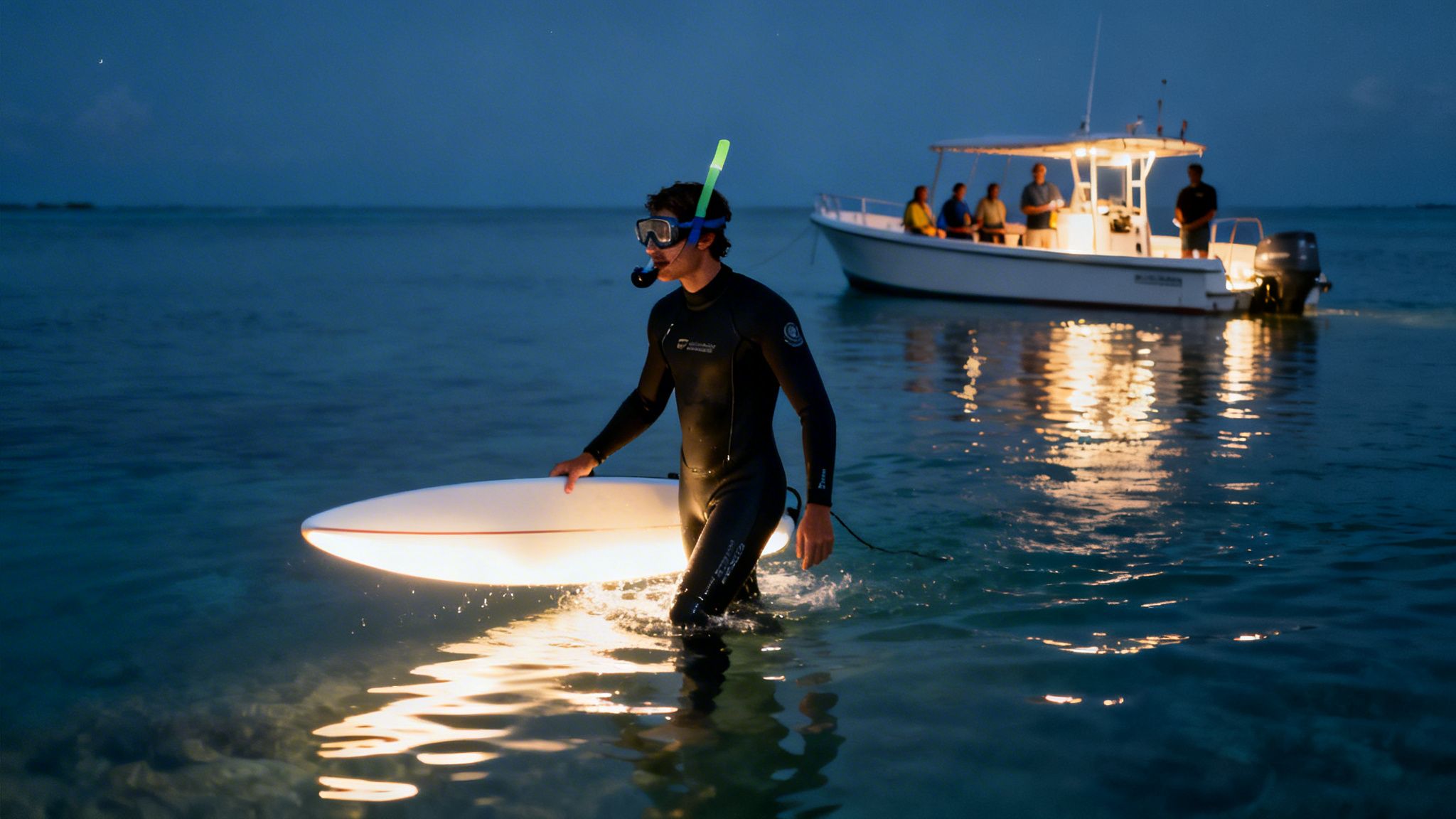
Your journey kicks off at the harbor, where you'll get checked in, meet your crew, and hop on the boat. As you head out, you'll be treated to a stunning ride along the Kona coastline, often timed perfectly with a classic Hawaiian sunset. It’s the perfect moment to relax, snap some photos, and get to know your guides.
The Safety Briefing
Once you're cruising, the crew will gather everyone for a comprehensive safety briefing. This is a crucial part of the tour where they run through everything you need to know to have a great time.
- Proper Gear Use: They’ll show you how to get a good seal on your mask and how your snorkel and fins work. They also provide wetsuits, which are key for staying warm and buoyant in the ocean after dark.
- Manta Ray Etiquette: You'll learn the single most important rule of the night—passive observation only. This means looking but never, ever touching the manta rays. Touching them can harm their delicate, protective skin slime and disrupts their natural behavior.
- In-Water Procedures: The guides will explain exactly how you'll get into and out of the water and what to do once you're floating.
This briefing is all about making sure everyone feels confident and ready for the main event.
Entering the Water
As your boat arrives at the snorkel site and drops anchor, you can feel the anticipation building. The crew gets to work deploying a custom-built light board—think of it as a big, floating raft with powerful, downward-facing lights. This is the "campfire" that attracts plankton, basically setting the dinner table for the mantas.
Next, you'll slip into the dark, surprisingly warm water and grab onto the light board. This floating platform gives you stability and something secure to hold, so you can just relax and float on the surface without any real swimming required.
The experience of floating under a starry Hawaiian sky, your mask revealing a mesmerizing underwater ballet of massive manta rays, is the reality for about 80,000 adventurers each year in Kona alone. Top operators like Kona Snorkel Trips boast sighting success rates of 85-90%, making this one of the world's most reliable and spectacular ocean encounters. Get more insights into this bucket-list experience.
The Underwater Ballet
And then, the magic truly begins. The first manta emerges from the darkness, a silent, graceful giant gliding into the glow of the lights. Soon, more might join, performing effortless barrel rolls just inches beneath you as they scoop up the plankton. The only sounds you'll hear are the gentle lap of the water against the board and the collective, muffled gasps of awe from everyone around you.
After about 45 minutes of pure wonder, the crew will help you back onto the boat. Most tours have snacks and hot drinks like cocoa ready to warm you up for the scenic ride back to the harbor. It’s a great time to buzz with excitement and share stories with your fellow snorkelers. Just remember to bring a towel and some dry clothes for a comfortable journey home
Prioritizing Safety and Manta Ray Conservation
A truly unforgettable manta ray snorkel hinges on two things: your safety and a deep-seated respect for the mantas themselves. When you're picking an operator, you're not just booking a boat ride; you're choosing a steward for this incredible experience. The best companies get this, and they put your well-being and the ocean's health above everything else.
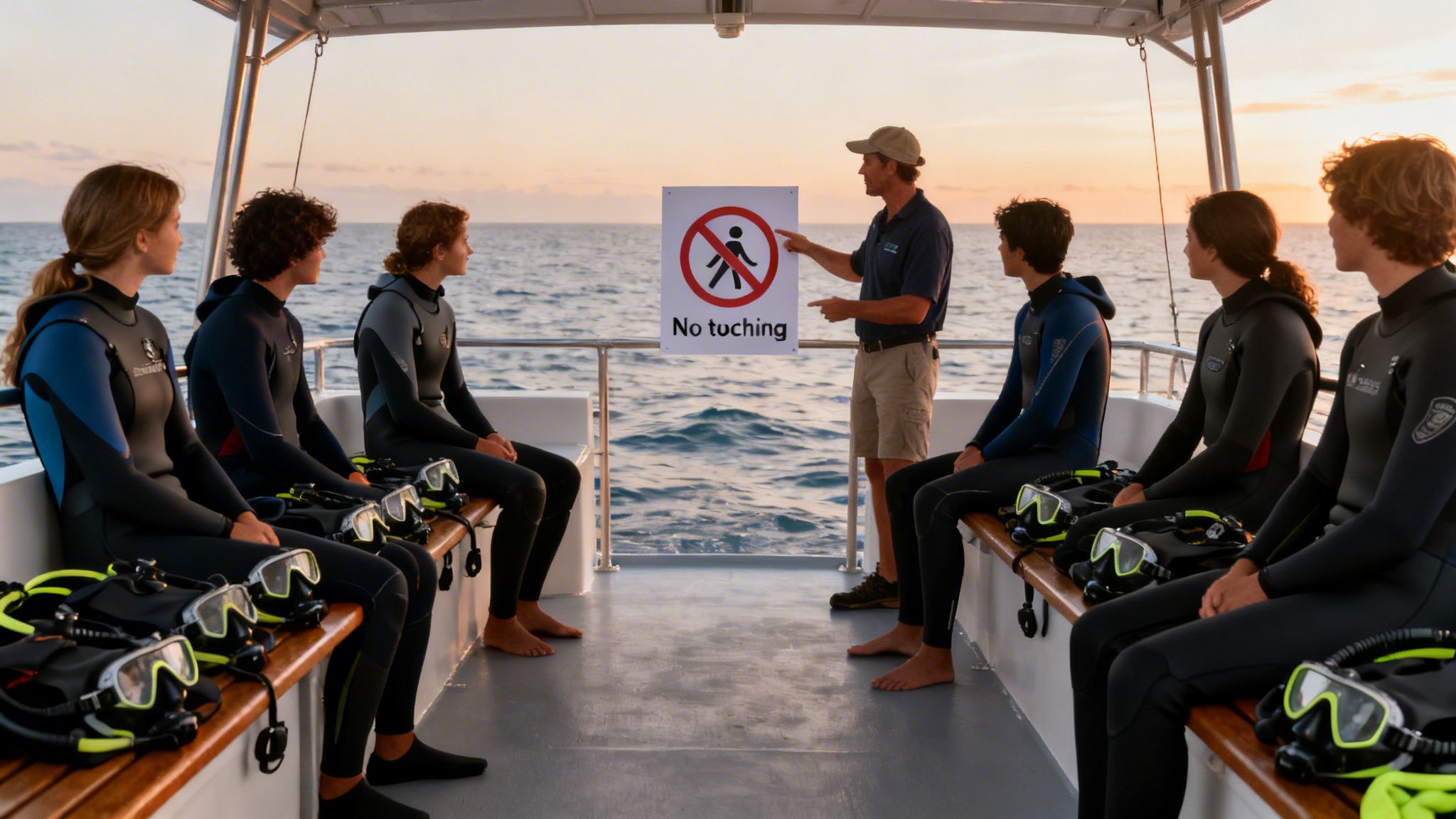
This starts the moment you check in. A great operator will have top-notch, well-maintained gear ready for you—wetsuits that actually keep you warm, masks that fit your face without leaking, and reliable snorkels. It also means having experienced guides in the water with you. These folks aren't just there to point out mantas; they're trained in first aid and rescue, keeping a constant, watchful eye on everyone. For a deeper dive, check out our snorkeling safety tips.
The Golden Rule: Passive Interaction
This is the single most important rule of the entire experience: passive interaction. It's the core principle that protects these gentle giants and ensures Kona's manta population stays healthy for years to come.
The rule is simple, and it's non-negotiable: Look, but do not touch. Manta rays are covered in a delicate mucus coating, which is their first line of defense against bad bacteria. Touching a manta, even lightly, can rub off this protective slime and leave them vulnerable to nasty infections.
Top-tier operators like us at Kona Snorkel Trips are strict about this. Your guides will make it clear—keep your hands to yourself and simply float. Let the mantas control the entire encounter. Their natural curiosity and grace will often bring them within inches of you, giving you a jaw-dropping view without ever needing to reach out.
Supporting a Sustainable Future
When you choose an eco-conscious operator, you become part of the solution. You're directly helping preserve one of the world's greatest natural wonders. These companies are passionate about educating their guests, sticking to strict guidelines, and often pitching in on local conservation work. It’s vital to seek out ethical wildlife encounters that put the animals' well-being first.
Your choice matters. It supports a model of responsible tourism that allows this magical encounter to continue, ensuring the Kona manta rays can thrive right here where they belong.
For certified divers who want to see the action from the ocean floor, Kona Honu Divers runs specialized manta ray dive tours. They're recognized as the top-rated and most-reviewed dive company in all of Hawaii and the Pacific, bringing an incredible level of expertise and conservation focus to their underwater adventures. You can learn more about their manta ray diving tour.
Got Questions? We've Got Answers.
Even after you've booked your trip and the excitement is building, it's totally normal to have a few last-minute questions pop into your head. Knowing exactly what to expect is the best way to relax and really be present for this once-in-a-lifetime experience. Let's tackle some of the most common things people ask so you can show up ready for an incredible night.
How Close Will the Manta Rays Actually Get?
This is the big one, isn't it? Everyone wants to know, and honestly, the answer is what makes this encounter so mind-blowing. The mantas get shockingly close. We're talking about massive, gentle giants gliding within just inches of the light board you're holding.
They aren't coming to check you out, though. They are completely focused on the buffet of plankton that gathers in the bright lights. As they do their famous barrel rolls to scoop up mouthfuls of food, they come right up to the surface. It’s an unbelievably close and personal view, but your guide will stress the golden rule: no touching. Letting them do their thing ensures they stay safe and keep coming back night after night.
Is This Experience Safe for Kids or Non-Swimmers?
Absolutely. The best manta ray tours in Kona are designed from the ground up to be safe and accessible for almost everyone, regardless of their swimming skills. You definitely don't need to be a gold-medalist to join in.
Here’s why it works so well:
- You Just Float: You'll be holding onto a big, sturdy light board that floats on the surface. There's no need to swim around; you just hold on, put your face in the water, and watch the show.
- Wetsuits Are Your Friend: Every tour provides a wetsuit. Not only does it keep you warm, but the neoprene material makes you naturally buoyant, helping you float with zero effort.
- Guides in the Water: Your guides are in the water with you the whole time. They're constantly keeping an eye on everyone, making sure you feel secure and comfortable from start to finish.
The main thing is being comfortable floating in the ocean at night. If you have any specific concerns about age or health, it’s always a good idea to chat with your tour operator directly when you book.
What Happens If We Don’t See Any Manta Rays?
It's a fair question—we are talking about wild animals, after all. But here's the thing: Kona is famous as the world's #1 spot for seeing mantas for a reason. The sightings are incredibly reliable, with success rates often topping 90% year-round.
That said, nature is never a 100% guarantee. The best operators know this and have your back. Companies like Kona Snorkel Trips have what's often called a "manta guarantee." On the very rare night that the mantas decide not to show up, they’ll invite you to come back and try again on another night, completely free of charge.
This kind of policy really shows an operator's confidence and their commitment to making sure you have an amazing time. It's a huge sign that you're booking with a quality company that truly wants you to witness the magic.
Choosing a tour with a solid guarantee just gives you that extra peace of mind. You can book knowing that your investment in this bucket-list adventure is safe and that you're almost certain to have an encounter you'll never forget.
Ready to book your spot for this unforgettable adventure? Kona Snorkel Trips is dedicated to providing a safe, magical, and top-rated experience you'll remember for a lifetime. Learn more and reserve your place on their manta ray snorkel tour.