
Best Manta Ray Night Dive Kona 2026: Top Operators
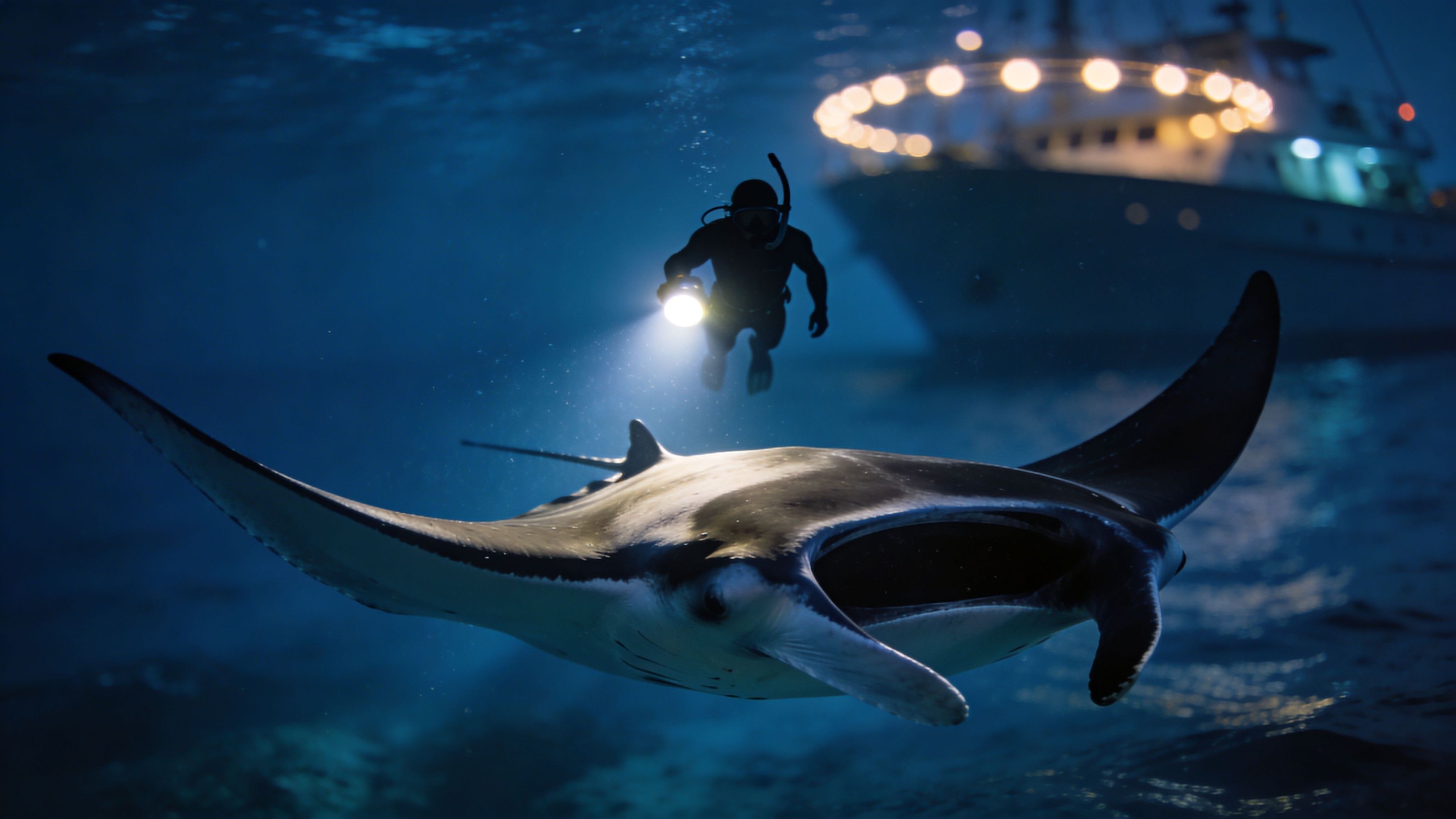
You’re standing at the harbor after sunset, wetsuit half-zipped, looking at two different boats and hearing two different pitches. One trip puts you on the surface with your face in the water. The other drops you below the lights to watch mantas sweep overhead. For a lot of visitors planning a Kona trip, that choice is the hard part.
Kona makes it easier than many first-timers expect because the manta encounter here is unusually consistent and well established. Conditions often favor clear viewing, the main sites are set up specifically for night manta tours, and operators have refined the routine over years of running both snorkel and dive trips. The result is an experience that can feel dramatic without being overly complicated.
The encounter itself is simple and unforgettable. Boats head out near dusk, guides position guests around a light source, plankton gathers in the glow, and manta rays follow to feed. Then everything slows down. Huge shadows turn into smooth white bellies and wingtip turns, and suddenly a wild animal the size of a small car is rolling through the light a few feet away.
Both snorkelers and divers can have a great night here, but the right choice depends on how you like to be in the water. Snorkeling usually works better for families, non-divers, and anyone who wants the easiest logistics. Certified divers get a different view from below, which can be spectacular, but it comes with more gear, more task loading, and a little less flexibility if you are already anxious in dark water.
That’s the angle of this guide. It covers both options in one place, compares operators head to head, and helps match the trip to the person booking it. First-timers need a crew that keeps the process calm and organized. Families usually care about check-in, boat comfort, and how smoothly kids or nervous adults are handled. Certified divers often want to know who runs the cleanest dive plan, who keeps groups manageable, and who treats the manta site with respect.
Practical details matter more than glossy marketing. Departure harbor, group size, ladder design, site choice, in-water supervision, and whether an operator is better for snorkelers or divers can shape the whole night. If you want to get oriented before choosing, this guide to Kona manta snorkel check-in at Honokohau Harbor gives a useful look at one of the most common departure setups.
The goal is simple. Pick the operator that fits your group the first time, show up prepared, and spend the night watching mantas instead of second-guessing your booking.
1. Kona Snorkel Trips

For a strong all-around choice, this is the one I’d point to first. Kona Snorkel Trips does a good job balancing the parts that matter most on a manta night. Safety, manageable group feel, easy logistics, and guides who know how to keep first-timers calm without flattening the excitement.
Their main manta offering is the Manta Ray Night Snorkel tour, and it fits a wide range of travelers better than many people expect. Families, couples, nervous first-time snorkelers, and experienced water people can all have a good night on the same boat if the crew is organized. That’s where this operator stands out.
They also run out of Honokohau, which tends to make check-in more straightforward than operations that feel rushed or chaotic. If you want a practical look at the meetup process, their easy guide to Kona manta snorkel check in at Honokohau Harbor is useful before your tour day.
Why it works so well for first-timers
The big advantage is how the trip is structured. Guests hold onto a custom light board while the crew manages the setup and the mantas come to the plankton. That format removes a lot of the uncertainty that first-time night snorkelers worry about. You’re not trying to free-swim around in the dark. You’re stable, oriented, and focused on the show below.
The company also emphasizes lifeguard-certified guides and small-group handling. In practice, that usually means better attention when someone needs help adjusting a mask, settling nerves, or getting back on board comfortably.
A few other practical strengths stand out:
- Good for mixed groups: One strong choice when some people in your party are confident swimmers and others are not.
- Gear support: Full snorkel gear, wetsuits, and flotation options simplify planning.
- Conservation-minded setup: Reef-safe sunscreen policies and marine-life-conscious operations matter on a wildlife tour.
- Easy add-ons for trip planning: If the manta is your headline activity but not your only snorkel day, they also offer daytime reef trips.
If you’re booking one signature ocean experience on the Big Island and want the least guesswork, choose the operator that makes nervous guests feel looked after. That usually matters more than shaving a little off the ticket price.
Trade-offs to consider
This is not the bargain-basement option, and that’s intentional. You’re paying for a more curated experience, not just a seat on a boat. Their flagship tours start from the midrange to premium end compared with stripped-down alternatives.
The other reality is availability. Popular dates fill early, especially when families travel together or when visitors want a specific night near the middle of their trip. If this is the experience you care most about, book it before you start filling the rest of your itinerary.
Kona Snorkel Trips is also the right recommendation if you know you want snorkeling, not scuba. If you’re a certified diver chasing the classic bottom-view manta ballet, one of the dive-first operators lower on this list may fit you better.
For travelers comparing alternatives, Manta Ray Night Snorkel Hawaii is another exceptional option to consider when you’re specifically looking for a manta ray night snorkel tour.
2. Big Island Divers

Big Island Divers is the operator I’d put in front of travelers who want rules, structure, and very clear guardrails. Some people hear that and think “less fun.” I think “fewer surprises.”
That matters on a night snorkel. Operators with tight prerequisites and published policies usually run smoother trips because they’ve already decided what they will and won’t compromise on.
Best for confident snorkelers who want clear policies
Big Island Divers is not trying to be everything for everyone. Their manta snorkel setup is better suited to guests who are already comfortable in the water and want a crew that communicates expectations clearly. If you like knowing the process before you arrive, this is a strong pick.
Their no-manta policy is one of the reasons people keep them in the mix. Wildlife is wildlife, and even in Kona there are off nights. Having a published make-good option takes some of the sting out of that risk.
They also include core gear and carry onboard safety equipment, which is exactly what I want to see from an operator running regular night trips.
If safety is your main concern, this overview of how safe the Kona manta ray night snorkel can be gives helpful context on what good operators tend to do right.
Where it fits, and where it does not
This one is less ideal for families with younger kids or total beginners. The stricter prerequisites can be a plus or a minus depending on your group.
Choose Big Island Divers if these points sound like you:
- You already snorkel comfortably: You don’t want your trip pace set by guests who are new to the water.
- You value backup policies: A published re-ride or compensation structure matters to you.
- You like operational clarity: You want to know site choice, eligibility, and procedures upfront.
Skip it if your group needs a softer on-ramp. If someone in your party is anxious in open water, a more beginner-oriented operator may produce a better memory.
One more practical note. North versus south site decisions can change the feel of the trip. Conditions dictate a lot in Kona, and a crew willing to adapt to the better site on a given night is generally a good sign.
3. Kona Honu Divers

Your group spends all day comparing manta tours, then one question settles it fast. Are you booking for snorkelers, or for certified divers who want the manta dive itself to be the main event?
For divers, Kona Honu Divers deserves a serious look. Their operation is built around scuba, so the evening tends to run like a real dive charter instead of a snorkel trip with a dive option attached. That difference shows up in the boat flow, the briefings, and the overall pace once everyone is geared up.
You can book the Kona Honu Divers manta ray diving tour here. The draw for many certified guests is the two-tank format, with a late afternoon reef dive before the manta site at night. If you came to Kona to dive, that structure usually feels more worthwhile than heading out for a single short splash after dark.
I like this option for divers who care about the details that affect comfort underwater. Entries and exits are set up for scuba. Gear handling feels natural. The crew rhythm usually suits divers who want clear direction without feeling rushed through the experience.
It also helps mixed groups. They run a separate snorkel product, so this operator can work for families or couples where one person dives and another would rather stay on the surface. If you are weighing those two formats side by side, this guide to manta ray diving in Kona versus other trip styles is a useful place to start.
The trade-off is straightforward. This is a better match for current, comfortable divers than for someone who has not worn a tank in years. The manta portion is shallow, but a night dive still adds task loading, and I have seen plenty of people underestimate that.
My advice is simple. If your buoyancy, mask clearing, or general confidence feels rusty, do a refresher first or book the snorkel instead.
Cost is another factor. A full dive outing will usually run higher than a snorkel-only manta trip, but you are paying for a longer, more dive-centered evening. For certified divers who want the underwater version of Kona’s manta experience, that is often a fair trade.
4. Jack’s Diving Locker

You’re standing at the harbor at dusk, trying to decide whether you want a slick sightseeing tour or a classic Kona dive-shop experience. Jack’s Diving Locker is usually the better fit for the second group.
This operator has been part of the Kona diving community for a long time, and that shows up in the way they run trips. The tone is more local dive culture, less packaged attraction. For plenty of visitors, that is a plus. It often means steadier briefings, realistic expectations, and a crew that treats the manta outing as part of a bigger relationship with the ocean, not just a single vacation checkbox.
Strong fit for guests who want more context
Jack’s appeals to travelers who enjoy learning while they’re out there. Their trip style and shop culture tend to attract people who want to understand the animals, site conditions, and local etiquette, not just get the photo and head back.
That matters on manta nights. The experience is magical either way, but it gets better when guests understand why lights are used, how to stay calm around the board or dive lights, and why respectful positioning gives mantas room to keep circling naturally.
If you’re still comparing surface and underwater options, this guide on how to choose the right Kona manta ray snorkel tour helps sort out which format matches your group best.
What stands out in practice
I like Jack’s for travelers who want substance. The operation feels organized without feeling overly scripted, and that balance works well for visitors who trust experienced crews more than polished marketing.
A few practical takeaways matter here:
- Good match for curious guests: Better for people who want some education with the experience.
- Easy logistics: Gear and basic trip extras help keep planning simple.
- Works best if value is not only about price: Budget-focused travelers may find lower-cost options, especially on the snorkel side.
The trade-off is scheduling. Depending on the season and the specific trip calendar, you may not get the same volume of departures you’ll see from some other operators. If your vacation dates are tight, book early and compare availability across both snorkel and dive boats.
That is also where this operator fits nicely into a guide that covers both formats together. For certified divers, Jack’s has the credibility and dive-shop roots many people want. For mixed groups or first-timers who are still deciding between snorkel and scuba, it may be a better operator to shortlist after you’ve compared schedule, price, and trip style side by side.
5. Sea Quest Hawaii

A short ride changes the whole night. If someone in your group gets uneasy after sunset, or starts feeling the motion before you even reach the manta site, Sea Quest Hawaii deserves a serious look.
Their Keauhou departure is the main advantage. You spend less time crossing open water and more time focused on the manta portion of the trip, which is a real plus for families, first-time snorkelers, and anyone who knows they do not love being on a boat after dark.
Strong fit for guests who want the simplest route to the mantas
Sea Quest runs close to Manta Village, the long-established south Kona viewing site. In practical terms, that usually means easier logistics and a more straightforward evening than operators departing farther north.
That matters in a guide that compares both snorkel and dive options side by side. Certified divers often tolerate a longer run if the operation matches their dive priorities. Mixed groups usually care more about comfort, timing, and how likely everyone is to enjoy the boat ride. Sea Quest tends to score well with that second group.
If you are still weighing operator style, boat ride, and site choice, this breakdown of how to choose the right Kona manta ray snorkel tour is a useful next filter.
Why cautious guests often prefer this setup
South Kona conditions are often friendlier for nervous snorkelers than the more exposed airport side. No operator controls the ocean, but the shorter transit and familiar site setup can make the night feel more manageable.
Sea Quest also handles a few details that people appreciate once they are wet and tired. Wetsuits help with warmth. Prescription masks help guests who do not want to fuss with contacts at night. Warm drinks after the snorkel are a genuine comfort, not a throwaway perk.
A few trade-offs stand out:
- Short harbor-to-site transit: Helpful for motion-sensitive guests and younger kids.
- Good comfort basics: Useful for first-timers who want fewer moving parts.
- Better for snorkel-focused groups than diver-first travelers: The appeal here is simplicity and access, not a scuba-centered operation.
The trade-off is the site itself. Manta Village is popular, and on busy nights the shared in-water scene can feel active rather than quiet. For many visitors, the easier ride is worth it. If your top priority is a more secluded feel, compare this option against operators with a different departure point or boat style.
6. Sea Paradise

Some guests do not care about “small raft energy.” They want an easier ride, a more stable platform, and the option for someone in their party to come along without getting in the water. That is where Sea Paradise earns its place.
Their catamaran format changes the experience before you even reach the manta site.
Comfort is the headline here
A larger sailing catamaran generally feels more forgiving for guests who are nervous about boarding, balancing, or dealing with a bouncy ride after sunset. If your priority is comfort over intimacy, Sea Paradise is an easy operator to shortlist.
They also offer two nightly departure windows, which can help if you’re trying to fit dinner plans, young kids’ schedules, or another daytime activity into the same day.
Another practical plus is the ride-along option. That opens the door for non-swimmers or hesitant family members who still want to be part of the evening.
What the bigger-boat trade-off looks like
There’s no free lunch in tour design. More deck space and stability often come with a less personal feel once the boat fills up. Some travelers love the extra room. Others feel it dilutes the magic.
If you know you relax more on a bigger boat, honor that. A slightly less intimate tour is still a better choice than spending the whole ride tense and queasy.
Sea Paradise makes most sense for:
- Mixed-ability groups: Especially when one person may ride along instead of snorkel.
- Travelers who value ride comfort: Catamaran stability is a real benefit.
- Visitors who need schedule options: Two departures create flexibility.
If your ideal manta night is highly personal and tightly guided, choose a smaller-format operator instead. If your ideal manta night starts with “please let the boat ride be easy,” Sea Paradise deserves a hard look.
7. Dolphin Discoveries
A lot of Kona visitors reach this point in planning with the same question. Do you pay more for a smaller, more guided manta trip, or book a lower-priced seat and keep the budget available for the rest of the vacation?
Dolphin Discoveries fills that second lane well. If your goal is to experience the manta night snorkel without paying for extra polish, this is a reasonable operator to compare against the higher-touch boats in this guide.
The main appeal is simple. Lower entry price, short run from Keauhou, and a clear choice between the standard fare and a higher-priced guarantee option. That setup works well for travelers who want control over the price-to-protection trade-off instead of paying for coverage they may not want.
I like that the decision is out in the open.
For families, first-timers, and mixed-budget groups comparing both snorkel and dive operators, that matters. Some guests would rather spend more for tighter group management and a more personal feel in the water. Others just want a safe, straightforward way to see mantas and are comfortable with fewer extras.
Be aware that booking the cheapest ticket may not provide the same feel as a small-group premium tour. Group size and service style shape the evening just as much as the ticket price.
Dolphin Discoveries makes the most sense if these priorities match your trip:
- Lower starting price is the priority: You want a more affordable path into the manta experience.
- A simpler tour is acceptable: You do not need boutique-style service or a highly intimate format.
- You want a choice on risk coverage: The guarantee upgrade lets you decide how much reassurance is worth paying for.
I usually steer guests elsewhere if they know they want a guide-heavy experience or a quieter, more curated atmosphere. But for travelers who are comparing operators side by side and want one of the more budget-conscious snorkel options on the Kona manta list, Dolphin Discoveries earns its place.
Top 7 Kona Manta Night Dive Operators
| Operator | 🔄 Implementation Complexity | ⚡ Resource Requirements | ⭐ Expected Outcomes | 📊 Ideal Use Cases | 💡 Key Advantages |
|---|---|---|---|---|---|
| Kona Snorkel Trips | Moderate (small-group/private charters; popular tours sell out, book ahead) | Full snorkel gear, wetsuits, optional flotation; ages 5+; departs own dock (easy parking) | Very high quality (personalized, eco-focused encounters and strong safety record) ⭐ | Families, eco-conscious travelers, those seeking premium manta/night experiences | Highly rated operator, propeller guards, strong conservation policies |
| Big Island Divers | Moderate (clear prerequisites, min age 10, prior snorkel experience; site varies by conditions) | Gear included; strong onboard safety (AED, O2); in-water guides for night snorkel | Reliable and consistent; “No Manta” compensation policy reduces risk ⭐ | Experienced snorkelers/divers and risk-averse guests who want contingency options | Transparent “No Manta” guarantee and strong safety standards |
| Kona Honu Divers | High for dives (2-tank combo requires recent dive experience; snorkel option available) | Dive-focused boats, free nitrox for certified divers; hot-water showers; small group ratios | Excellent for divers; strong amenities and combo value for certified divers ⭐ | Certified divers seeking afternoon reef + night manta dives | Free nitrox, roomy dive boats, experienced dive guides |
| Jack’s Diving Locker | Moderate (legacy operator with scheduled days; specialty courses available) | Gear and snacks included; training and Manta Diver specialty offered | Educational and dependable; good local intel via sighting reports ⭐ | Learners, repeat visitors, and those seeking training/specialty courses | Long history, conservation focus, public manta sighting reports |
| Sea Quest Hawaii | Low (very short transit from Keauhou; clear booking and guarantee policies) | Wetsuits and prescription masks included; min age 7; post-tour refreshments | High in-water time and comfort; strong make-good policy 📊 | Guests prone to seasickness, short-transit seekers, comfort-focused groups | Minimal transit time, strong manta guarantee, included Rx masks |
| Sea Paradise | Low–Moderate, scheduled two departures (sunset and late); catamaran platform | 50-ft catamaran, gear and custom light boards included; ride-along option for non-swimmers | Comfortable, stable platform; less intimate but accessible for non-swimmers ⭐ | Families, non-swimmers, guests valuing comfort over small-group intimacy | Catamaran comfort, ride-along option, long operating history |
| Dolphin Discoveries | Low (very short boat ride, daily departures; simple booking) | Basic wetsuit tops and snorkel gear included; optional paid manta guarantee | Budget-friendly with variable group sizes; guarantee is paid upgrade 📊 | Price-sensitive travelers wanting quick access to manta site | Low starting price and optional paid guarantee for flexibility |
Your Unforgettable Manta Encounter Awaits
You are standing on the boat after sunset, mask in hand, trying to decide what kind of night you want. Some guests want the easiest possible float with strong crew support. Certified divers usually want the classic view from below, settled on the bottom while mantas bank through the light. Kona has both, and the right choice depends less on hype and more on your group, your comfort in the water, and how you want to experience the animals.
That is why this guide covers snorkel and dive trips together instead of treating them like separate decisions. The smartest plan is to compare operators side by side, then match the trip to the guest.
For first-timers, mixed-ability groups, and families, Kona Snorkel Trips remains a very strong fit. The operation is set up to keep the evening organized and approachable, which matters more than many visitors expect. A calm check-in, clear briefing, and attentive in-water support can change the whole tone of the night for someone who is excited but uneasy.
Certified divers usually care about different details. Kona Honu Divers is a good example of a dive-centered option because the flow of the trip is built around scuba guests from the start. Big Island Divers appeals to travelers who want clear procedures and a polished, safety-focused feel. Jack’s Diving Locker tends to suit guests who like a long-established shop with more educational context. Sea Quest is attractive for visitors who want the shortest ride and a simple plan. Sea Paradise works well for guests who value a larger, more stable boat, especially if someone in the party prefers to ride along instead of getting in. Dolphin Discoveries can make sense for budget-conscious travelers who are comfortable with a more basic format.
Those trade-offs matter.
The manta encounter itself is what people remember. As noted earlier in this guide, Kona’s local manta population and long-running viewing sites are what make this coast so special. The viewing format helps too. Snorkelers can join without needing advanced water skills, and divers get that signature perspective of rays sweeping overhead through the beams.
Good operators also take wildlife handling seriously. Ask how the crew positions guests, manages lights, and keeps people from chasing or crowding the mantas. Respectful technique protects the experience for the animals and usually creates better viewing for guests too. Calm groups see more natural behavior.
If you are still narrowing it down, use a simple filter. Choose a snorkel trip if you want the most accessible, social option or if you are traveling with kids, non-divers, or nervous swimmers. Choose the dive if you are certified and want the quieter, more immersive view from below. Then compare the operator table with your real priorities, boat style, group size, support level, transit time, and budget.
Once you are in the water, the planning part fades fast. The lights glow. Plankton gathers. Then a manta rises out of the dark and turns above you with that slow, effortless grace that makes even experienced ocean people stop talking.
If you want a safe, polished, and memorable way to experience Kona’s manta rays, book with Kona Snorkel Trips. Their small-group approach, lifeguard-certified crew, and well-run manta snorkel make them an easy recommendation for visitors who want the night to feel smooth from check-in to the ride home.