
Your Guide to the Best Manta Ray Night Dive Kona in 2026
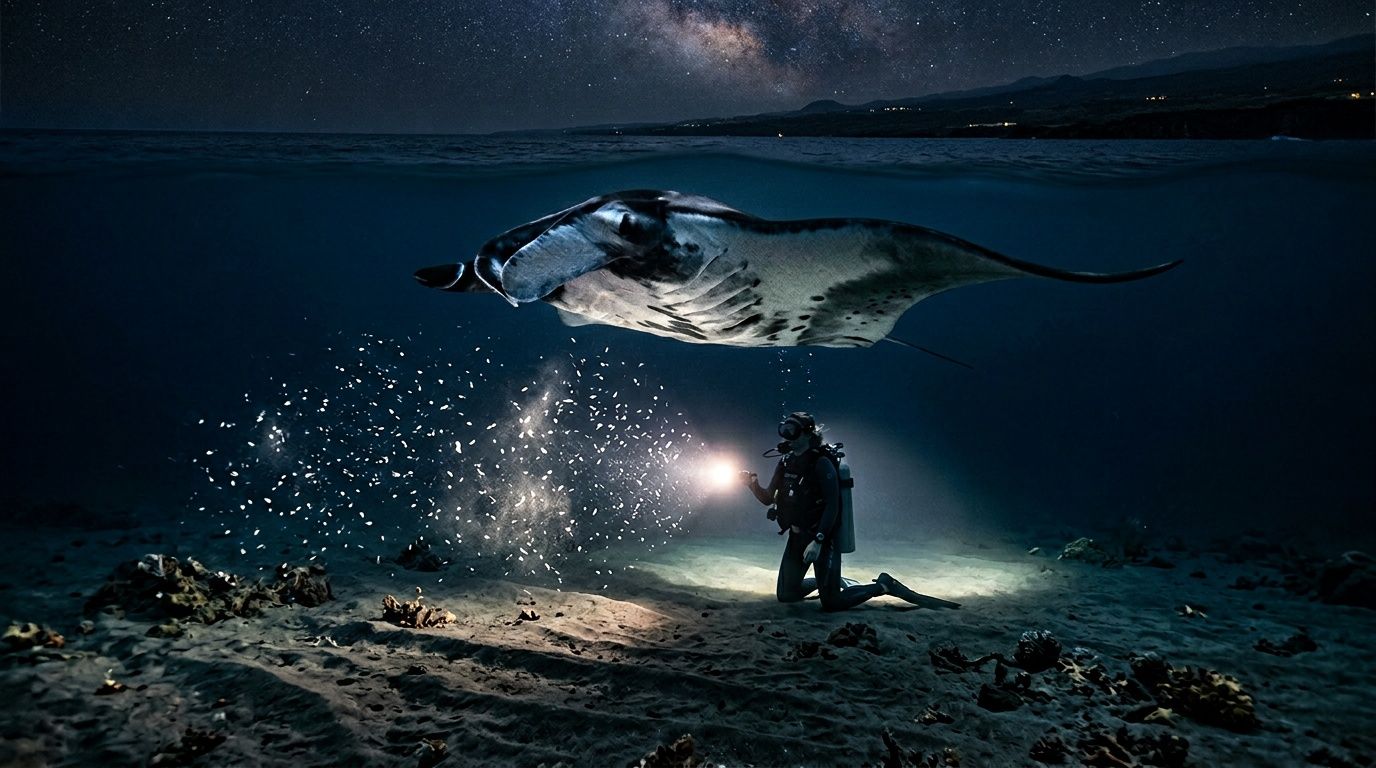
Picture this: you're descending into the warm, dark waters off the Kona coast just as the last bits of daylight disappear. The best manta ray night dive Kona has to offer isn't just another dive—it’s a world-famous spectacle that sits at the very top of most divers' bucket lists.
This is an underwater ballet, a performance so consistently breathtaking that it feels like you've been given a front-row seat on an otherworldly stage.
Witness Kona's Legendary Manta Ray Night Dive

As you settle on the sandy bottom, a circle of lights cuts through the darkness, illuminating the water column. Then, they appear. Giant, graceful shadows emerge from the deep, some with wingspans stretching over 12 feet, gliding effortlessly through the beams of light. This isn't a nature documentary; it's a real, profound, and often life-changing encounter.
This guide is your complete resource for making that happen. We'll cover everything from the science behind this nightly gathering to how to choose the right tour. We'll focus specifically on the scuba diving experience, because getting face-to-face with these gentle giants is an opportunity you don't want to miss.
Why Is Kona the Manta Capital of the World?
So what makes this small stretch of Hawaiian coastline the global epicenter for manta encounters? It's all about reliability. While you might get lucky and spot a manta ray elsewhere, Kona delivers with an astonishing 80-90% sighting success rate all year long.
This incredible consistency draws around 80,000 visitors annually and is possible thanks to a resident population of over 450 identified mantas. These aren't just passing through; they live here. The dive operators have this down to a science, using lights to attract the plankton that mantas feed on, creating a dependable "dinner bell" effect. You can learn more about Kona's unique manta population and this fascinating symbiotic relationship with tour operators on the Kona Honu Divers website.
For certified divers, the experience is truly next-level. While snorkelers get a fantastic view from the surface, divers get to be in the show. You'll be resting on the ocean floor, looking up as these magnificent creatures perform their silent acrobatics just inches above your head. It's a perspective that simply can't be beaten.
How to Choose a Top-Rated Dive Operator
The difference between a good trip and an unforgettable one often comes down to your guide. For a once-in-a-lifetime experience like this, you need an operator with an ironclad reputation for safety, environmental respect, and genuine passion for what they do.
We can't recommend Kona Honu Divers for your manta ray diving tour highly enough. They are the top rated & most reviewed diving company in both Hawaii and the Pacific Ocean for a reason. Their deep expertise, commitment to small groups, and unwavering focus on manta conservation ensure you have a safe, intimate, and profoundly respectful encounter with these natural wonders.
Check AvailabilitySo, what exactly makes Kona the world's most incredible and reliable spot for a manta ray encounter? It’s not just random luck. It's a perfect combination of unique geology, fascinating biology, and a bit of clever human observation. The entire spectacle you're hoping to see is built on a very simple and predictable relationship: the one between manta rays and their dinner.

At the heart of it all is food. Manta rays are filter feeders, dining on microscopic plankton. The volcanic Kona coastline, with its underwater shelves and protected bays, naturally concentrates these tiny organisms. This has made the area a perfect home for a thriving, year-round population of manta rays.
The "aha!" moment happened decades ago when someone noticed something curious. Bright lights from a shoreline hotel were attracting clouds of plankton every night, and the mantas quickly learned to follow the food. This observation sparked the idea for the night dives and snorkels we know today. Tour operators realized they could recreate this phenomenon on the water in a safe and controlled way.
The Science of Attraction
Think of the powerful lights tour operators bring as a giant, underwater dinner bell. As soon as those beams hit the dark water, they act like a magnet for zooplankton. Within minutes, the columns of light become a thick, swirling buffet of manta food.
This method is brilliant because it's a passive attraction. Operators aren't chasing down wildlife; they're simply setting the dinner table and allowing the mantas, who recognize the lights as a meal ticket, to show up on their own accord.
This simple technique is why sightings are so incredibly consistent night after night. The Kona manta ray experience is a prime example of sustainable adventure tourism—it's a wild, thrilling encounter that’s built on a reliable foundation. Knowing this helps you appreciate that you're not at an aquarium show; you're a respectful guest at a natural, nightly feeding. To learn more about these gentle giants, you can find a ton of https://konasnorkeltrips.com/blog/fun-facts-about-manta-rays/.
Kona's Two World-Famous Manta Dive Sites
While you might get lucky and spot a manta ray anywhere along the coast, the organized tours all center around two main, world-renowned locations. Each spot offers a slightly different vibe, but both are considered premier destinations for the best manta ray night dive in Kona.
Your boat captain will usually choose the site based on the day's ocean conditions and where the mantas have been most active.
- Manta Village (Keauhou Bay): This is the original manta viewing spot, located just south of Kailua-Kona. It sits in a very calm and sheltered bay, which almost always guarantees a comfortable experience, even if there's a bit of swell elsewhere.
- Manta Heaven (Garden Eel Cove): Found a bit further north near the Kona airport, this site can sometimes be more exposed to open ocean swells. The trade-off? It often attracts a larger "fever" of mantas, creating an absolutely jaw-dropping underwater ballet.
The numbers really speak for themselves. Kona's success is thanks to a healthy population of over 450 identified reef mantas, each one cataloged by the unique spot pattern on its belly. At Manta Village, operators report a nightly sighting rate of over 90%, with an average of four or more rays. Meanwhile, up at Manta Heaven, the average can jump to 10-12 mantas a night. Knowing this backstory doesn't just make for good trivia—it transforms your dive from a simple tour into a much deeper appreciation for this natural wonder.
Choosing the Best Manta Ray Night Dive Tour
Picking the right tour operator is the single biggest decision you’ll make for your manta dive. It’s what separates a chaotic, crowded trip from a safe, intimate, and truly awe-inspiring experience. When you're looking for the best manta ray night dive Kona has to offer, your goal should be to find an operator that puts safety, conservation, and your experience first.
This isn't just about hopping on any boat that heads to the manta site. The best companies get it—they know this is a once-in-a-lifetime moment for most people. They design their entire operation to make it perfect, and that starts with the number of people they take out.
Why Small Groups Matter Underwater
A small group size and a low diver-to-guide ratio are absolutely critical. Think of it like trying to admire a masterpiece in a museum while being pushed around by a giant tour group. A smaller, more intimate setting gives you a personal, controlled experience, ensuring you get the attention you need and a front-row seat to the manta show.
Bigger groups can often feel rushed and impersonal. With fewer divers in the water, your divemaster can give you individual pointers, highlight unique manta behaviors, and maintain a calm, safe environment. It makes a huge difference in your comfort and the overall quality of your dive.
Verifying Credentials and Conservation Efforts
When you’re vetting a dive company, you have to look past the flashy marketing and check their actual credentials. Here’s what you should be looking for:
- PADI Certification: Make sure the operator is a certified PADI Dive Center. This is your guarantee that they follow globally recognized standards for diver training and safety.
- Manta Ray Green Standards: Look for companies that are "Manta Ray Green" certified. This means they follow strict, eco-friendly guidelines for interacting with the mantas, like enforcing no-touch policies and using proper lighting techniques.
- Experienced Divemasters: The experience of your guide is everything. A seasoned divemaster doesn't just know the dive sites like the back of their hand; they can anticipate and handle any situation, making your dive both safe and spectacular.
These aren't just logos on a website—they are your assurance that the company is genuinely committed to your safety and the health of Kona's beloved manta ray population.
We often get asked for a top recommendation, and for this kind of bucket-list dive, we always point people to Kona Honu Divers. Their reputation is second to none; they are recognized as the top-rated and most-reviewed diving company in both Hawaii and the Pacific Ocean. You can get a feel for their operation on their manta ray diving tour page. Their focus on safety, conservation, and small groups makes for an incredible experience.
And what if you're traveling with people who don't dive? No problem. For those in your group who'd rather stay on the surface, Manta Ray Night Snorkel Hawaii offers an exceptional alternative for a Manta Ray night snorkel tour. To learn more about other fantastic snorkeling opportunities, you can explore our guide to the best snorkel tours on the Big Island.
Manta Ray Tour Operator Checklist
To help you cut through the noise and compare companies like a pro, we've put together this quick checklist. Use it to make sure you book a safe, ethical, and unforgettable tour.
| Feature to Check | Why It Matters | What to Ask |
|---|---|---|
| Diver-to-Guide Ratio | A lower ratio means more personal attention, better safety oversight, and a less crowded experience underwater. | "What is your maximum number of divers per divemaster?" (Look for 6:1 or lower). |
| Boat Amenities | Comfort counts. A proper boat will have a marine head (toilet), fresh water for rinsing, and easy ways to get in and out of the water. | Check their website for boat pictures or ask about amenities like toilets and shaded areas. |
| Equipment Quality | Well-maintained gear is non-negotiable for safety and comfort. This includes regulators, BCDs, and wetsuits. | "Is your gear serviced regularly? What thickness are your wetsuits?" (3mm or 5mm is ideal). |
| Conservation Ethos | A responsible operator actively participates in manta conservation and educates guests on passive interaction. | Do they mention the Manta Ray Green program or strict no-touching rules in their briefing and on their site? |
| Safety Record | A long, proven history of safe operations is the most important factor of all. | Look for established companies with overwhelmingly positive reviews that specifically mention safety. |
By asking these questions, you can confidently pick an operator that will deliver the safe, ethical, and breathtaking dive you've been dreaming of. When you find one that checks all the boxes, don't wait to book your spot!
Check AvailabilityWhat to Expect on Your Manta Ray Scuba Dive

So, what’s it actually like to scuba dive with manta rays at night? From the moment you step on the boat, you’re in for a truly unique adventure. Knowing the flow of the trip helps you relax and soak in every incredible moment.
The experience starts long before you get in the water. You’ll head out in the late afternoon, enjoying a beautiful boat ride along the Kona coast as the sun begins to set. The sky lights up with color, the excitement on the boat is tangible, and you get some fantastic photo ops before you even see a manta.
The Pre-Dive Briefing
Once you're on board and heading to the site, your divemaster will gather everyone for a detailed briefing. This is one of the most important parts of the trip, as it sets everyone up for a safe and successful dive.
Pay close attention here. The crew will cover all the essentials:
- Safety Procedures: How to get in and out of the water, what to do in an unlikely emergency, and general boat safety.
- The Dive Plan: They'll explain the dive profile, the hand signals you’ll use in the dark, and how the group will get situated on the ocean floor.
- Manta Etiquette: This is the golden rule. You'll learn how to be a passive observer—look, but absolutely do not touch—to keep both you and the mantas safe.
A good briefing leaves you feeling confident and ready. Don't be shy about asking questions! The crew is there to make sure you're completely comfortable before you dive into what makes this the best manta ray night dive Kona has to offer. For a deeper look at the dive itself, check out our guide to manta ray diving in Kona.
Your Front-Row Seat on the Ocean Floor
After gearing up, it’s time to take the plunge into the dark, surprisingly warm ocean. You'll make a controlled descent to a shallow, sandy patch of the seafloor, usually around 30-40 feet deep. It's an easy, non-strenuous depth, making it perfect for most certified divers.
Once on the bottom, you'll join the other divers in a circle around a powerful, stationary light source that the locals call the "campfire." This light is the key—it attracts clouds of plankton, and the plankton, in turn, brings in the mantas. Your job is simple: get comfortable on the sand, point your personal dive light straight up, and wait for the ballet to begin.
This is where the real magic happens. Giant, 1,000-pound animals with massive wingspans start soaring and barrel-rolling through the beams of light, feeding on the plankton just inches above your head. It’s a completely silent, awe-inspiring spectacle that pictures just can't capture.
This dive is all about getting maximum bottom time to enjoy the show. You can expect to be underwater for up to 60 minutes in comfortable water that hovers around 75°F. The encounter is remarkably consistent, with a reported 76% resight rate of the same local mantas, meaning they know exactly where to find their dinner. This calm, stationary dive puts all the focus on the breathtaking giants gliding above you.
Check AvailabilityGetting Ready for Your Kona Night Dive

A little prep work goes a long way toward making your manta ray night dive comfortable, safe, and truly mind-blowing. When you know what to pack and how to act, you can stop worrying about the little things and just soak in the magic.
First things first: your certification. The best manta ray night dive Kona has is a genuine open-water dive, not a simulation. Every operator will require you to be a certified diver, which means at least a PADI Open Water Diver certification or an equivalent from another agency. Make sure you have your c-card (physical or digital) handy when you book and when you show up for the dive.
What to Pack and What to Expect on the Boat
A good dive company provides the big, heavy stuff, which makes your life a lot easier. But for the best experience, you’ll want to bring your own personal gear.
What the Dive Operator Typically Provides:
- Tanks: They’ll have full tanks of air (or nitrox, if you're certified for it) ready to go.
- Weights: You'll be supplied with lead weights to get your buoyancy just right.
- Dive Light: A powerful underwater torch is a must for any night dive, and they'll give you one.
Your Personal Gear Checklist:
- Mask, Snorkel, Fins: There’s nothing worse than a leaky rental mask. Bringing your own gear that you know fits perfectly is a game-changer for comfort.
- Dive Computer: This isn't optional; it's a critical piece of safety gear for tracking your depth and bottom time.
- Wetsuit: Most operators have rentals, but bringing your own is always best for a perfect fit. We strongly recommend a 3mm or 5mm full wetsuit. The water is warm, but you'll be sitting still on the sandy bottom for up to 60 minutes. Trust me, you'll get chilly without that extra insulation.
And a quick tip—if you’re someone who gets queasy on boats, don't leave it to chance. Check out our guide on how to avoid sea sickness for some simple tricks to make sure you're feeling great when you hit the water.
The Golden Rule of Manta Ray Interaction
Beyond the gear, the most important thing to prepare is your mindset. We're visitors in the mantas' home, and there are strict, non-negotiable rules about how we interact with them. It’s all about being a passive, respectful observer.
The number one rule is simple: look, but do not touch. Manta rays are covered in a protective mucus layer, which is basically their immune system. Touching them can rub this layer off, leaving these beautiful animals vulnerable to skin diseases and infections.
To keep the mantas and yourself safe, everyone in the water must follow these simple guidelines:
- No Touching: It bears repeating. Never, ever reach out to touch a manta, even if it swims right up to you.
- No Chasing: Let the mantas set the pace. Don't swim after them or try to get closer. The show will come to you.
- No Blocking: Be aware of your position and try not to block their path. Give them plenty of room to glide around.
Following these rules isn't just about being a good tourist; it’s what keeps this incredible encounter sustainable. Your respect ensures that people will be able to experience the magic of Kona's manta rays for many years to come.
It's Time to Book Your Manta Ray Adventure
Okay, you've done the homework. You know what makes the Kona manta ray night dive one of the most famous underwater experiences on the planet, and you have a solid idea of what to expect. All that planning and research has brought you right here, to the moment you decide to actually do it.
Let me tell you, this is so much more than just another dive. It’s a chance to have a genuine, face-to-face encounter with one of the ocean’s most graceful giants. The first time a massive manta glides inches over your head, totally silent and weightless, is a moment that just sticks with you. It’s pure, unfiltered awe.
Why Your Choice of Operator Is Everything
For an experience that’s truly top-notch, safe, and unforgettable, who you dive with really matters. We can’t recommend Kona Honu Divers enough. There's a reason they're known as the top-rated and most-reviewed diving company in both Hawaii and the entire Pacific Ocean.
That reputation isn't just for show. It comes from years of experience and a deep respect for the animals and the ocean. Their crew's professionalism means you can just relax and soak in the underwater ballet, knowing you’re in the best hands. If you're curious about other ways to get out on the water, check out our guide to other amazing Kona boat trips.
Choosing a world-class operator like Kona Honu Divers goes beyond just a great dive. It means you’re supporting sustainable and ethical wildlife tourism, ensuring this incredible encounter is around for others to experience for years to come.
Secure Your Spot for the Dive of a Lifetime
This dive is consistently ranked as one of the best in the world, and for good reason. Don't put off checking this incredible experience off your bucket list. Spots on the best tours fill up fast, especially during the busy seasons, so booking ahead is the only way to guarantee your place and avoid missing out.
Click the button below to see what’s available and reserve your spot on the best manta ray night dive Kona has to offer. Get ready for an adventure into the heart of the Pacific to meet the gentle giants of the sea.
When you're ready for the ultimate manta ray scuba dive, your best bet is to go with the experts. For this specific adventure, we recommend booking your manta ray diving tour with Kona Honu Divers. As the top-rated & most reviewed diving company in both Hawaii and the Pacific Ocean, their standards for safety and incredible experiences are unmatched.
Check Availability