
Your Guide to the Best Manta Ray Night Dive Kona 2026
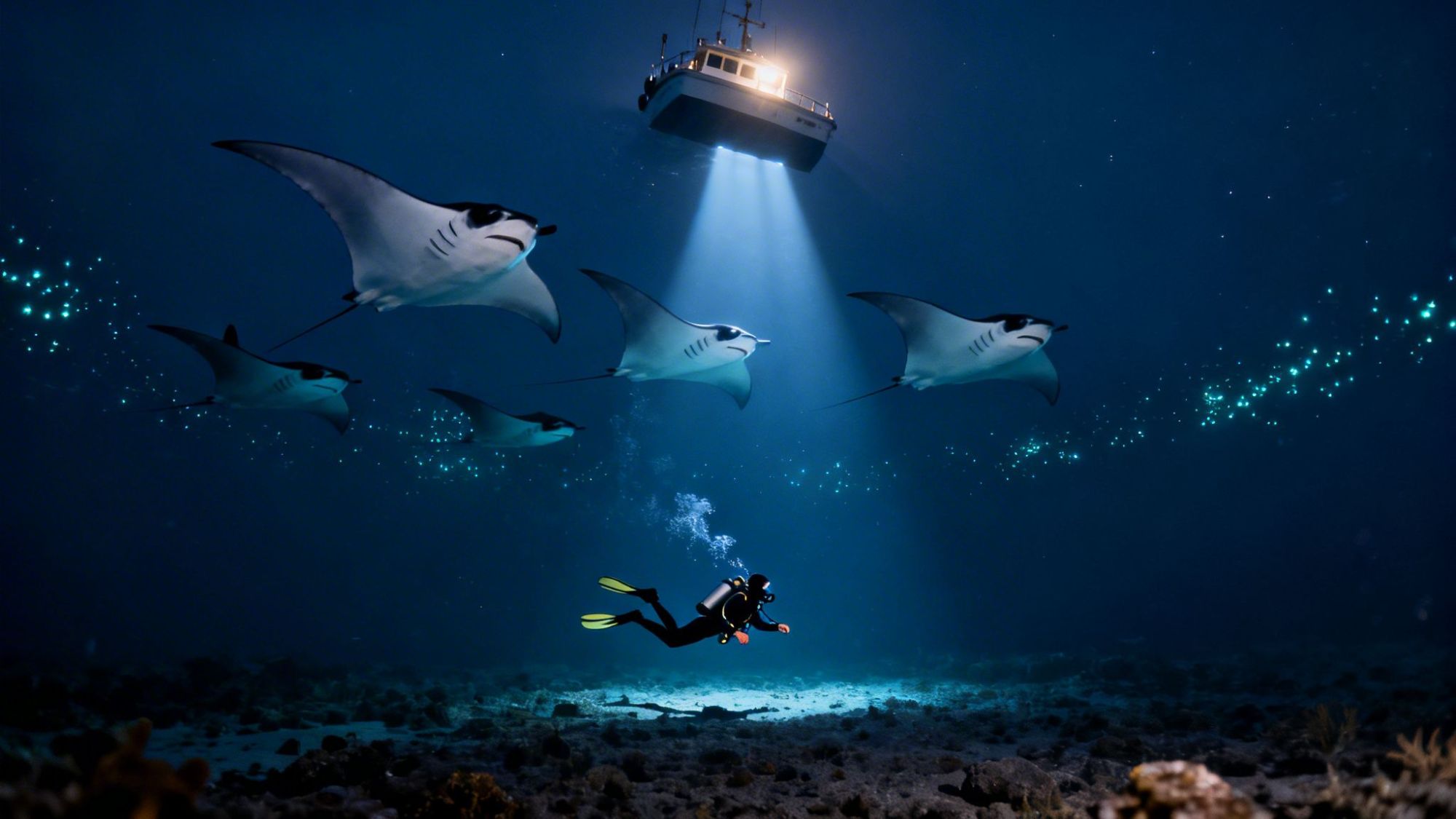
Picture this: you slip into the warm, dark Pacific Ocean as giant, gentle manta rays perform an otherworldly ballet just inches from your face. This isn't some rare, lucky sighting. It’s the nightly spectacle that has made Kona the undisputed global hotspot for this adventure. The best manta ray night dive Kona has to offer is a true bucket-list experience, and this guide is here to walk you through making it happen.
Answering the Call of the Kona Manta Ray Night Dive
We've designed this guide to be your go-to resource for planning the perfect manta ray night dive in Kona. We'll get into why this is such a must-do experience, introduce you to Kona Snorkel Trips, the top rated & most reviewed snorkel company in Hawaii, and cover everything you need to know from start to finish.

What to Expect From This Guide
We're going to cover it all—from picking the right boat operator to what you should pack. Our goal is to make you feel totally confident and prepared for what is truly a once-in-a-lifetime encounter with marine life. It’s an incredible mix of thrilling and serene that brings thousands of people to the Big Island's shores every single year.
The whole thing is built on a brilliantly simple idea. After a beautiful sunset cruise, the crew sets up powerful underwater lights. These lights act like a magnet for clouds of plankton, which happens to be the manta rays' favorite food. It's basically a glowing dinner bell, ringing in these gentle giants for their nightly feast.
This creates an incredibly reliable, up-close viewing opportunity that’s safe for you and respectful of the animals. You’ll get to witness majestic creatures, some with wingspans stretching over 12 feet, performing graceful barrel rolls as they feed. It feels less like a typical wildlife tour and more like you've been invited to be part of an underwater ballet.
Why Your Kona Manta Adventure Awaits
We've broken down all the essentials to help you plan your trip. Here's a look at what we'll dive into:
- The Science Behind Kona's Success: We'll explain exactly why the Big Island is the most reliable place on Earth to see manta rays.
- Choosing Your Tour: You'll learn the key differences between snorkeling and diving options and, most importantly, how to pick a safe, eco-conscious operator.
- A Step-by-Step Walkthrough: Get a clear picture of what the tour looks like from the moment you check in to the boat ride home.
- Practical Tips and FAQs: We'll answer all those common questions about safety, how well you need to swim, and the best time to book.
By the time you're done with this guide, you'll have everything you need to confidently book your adventure. For an even deeper look into this unique activity, check out our comprehensive article on the Kona manta dive experience. Let’s get you ready for an unforgettable night.
Why Kona Guarantees an Unforgettable Manta Encounter
So, what makes Kona the undisputed world champion for swimming with manta rays? It's not just a lucky break. It's a perfect storm of geography, biology, and a bit of clever, respectful human observation. The result is a wildlife encounter so reliable it put Kona on the map as the place for the best manta ray night dive on the planet.

The magic all starts with a phenomenon known as the "Island Mass Effect." The sheer size of the Big Island and its steep, volcanic underwater slopes force deep, nutrient-packed water to rise to the surface. This upwelling fuels gigantic blooms of plankton, which just so happens to be a manta ray's favorite meal.
Essentially, this turns the Kona coast into a massive, 24/7 all-you-can-eat buffet for marine life. For the mantas, it’s a five-star restaurant that never closes, so they have zero reason to pack up and leave.
The Science Behind the Spectacle
This constant supply of food is the bedrock of Kona's thriving manta population. Over the years, these incredibly smart creatures started putting two and two together: light often means a concentrated plankton snack. Decades ago, the old oceanfront hotels noticed mantas showing up to feed in the glow of their lights, and a brilliant, symbiotic idea was born.
Tour operators took this simple observation and perfected it. We now use powerful, eco-friendly lights—either on the seafloor or on floating light boards—to create a glowing "campfire" that attracts plankton. This beacon is the underwater equivalent of a dinner bell, calling in the local mantas for their nightly feast.
It's a totally passive and respectful way to interact. Instead of chasing the animals, we simply set the table and let our honored guests show up on their own terms. This creates a calm, natural, and absolutely breathtaking show.
This simple but genius technique is exactly why the best manta ray night dive Kona offers is so consistently mind-blowing. It’s all about understanding animal behavior and working with nature, not against it.
Predictability You Can Bet On
Just imagine it: you slip into the dark, velvety water off the Kona coast and are immediately met by the silent, graceful ballet of huge manta rays soaring right below you. This isn't a once-in-a-blue-moon thing. Kona boasts an incredible 85-90% sighting probability, the highest success rate in the world.
Local researchers have identified and cataloged over 450 individual reef mantas right here along our coast, making this one of the most studied and understood manta populations anywhere. You can dive deeper into the data with Jack's Diving Locker's detailed reports.
This incredible "site fidelity"—meaning the mantas reliably show up at the same spots night after night—is what lets you book a tour with real confidence. You aren't just crossing your fingers hoping to see a manta; you're plugging into a well-established natural spectacle.
The numbers really speak for themselves. Here’s a quick snapshot of what makes this experience so unique.
Kona Manta Ray Night Dive At a Glance
This table breaks down the key stats that solidify the Kona manta ray night dive as a world-class adventure.
| Metric | Statistic |
|---|---|
| Sighting Success Rate | 85-90% Year-Round |
| Identified Resident Mantas | Over 450 individuals |
| Annual Participants | ~80,000 snorkelers & divers |
| Average Water Temperature | 75°F (24°C) |
| Average Mantas Per Dive | 4-11 depending on site |
| Prime Sighting Conditions | May (though consistent all year) |
These figures aren't just impressive; they're the reason your chances of a magical encounter are so incredibly high.
At the end of the day, it's this perfect blend of a huge resident population, a non-stop food source, and decades of responsible tourism that has created an experience you just can't find anywhere else. When you book a manta ray tour in Kona, you’re investing in an adventure with the best possible odds of a truly unforgettable night.
How to Choose the Right Manta Ray Tour Operator
With a whole fleet of boats heading out every single night, picking the right crew for your manta ray adventure can feel like a big deal. Honestly, it is. This is one of the most important choices you'll make, because the company you go with directly shapes your safety, how much fun you have, and—most importantly—the well-being of the mantas.
Your first big decision is whether you want to dive or snorkel. If you're a certified diver, you can get the classic experience of sitting on the ocean floor, watching these gentle giants perform their ballet right above your head. But for everyone else, snorkeling is just as incredible. In fact, you could argue it's even more up-close, as you hang onto a floating light board while mantas feed just inches below you. You can learn more about a manta ray night snorkel tour here.
Differentiating Dive and Snorkel Tours
For certified divers, finding an operator with a flawless safety record and seasoned divemasters is everything. This is where a company like Kona Honu Divers really stands out. Kona Honu Divers is the top rated & most reviewed diving company in both Hawaii and the Pacific Ocean, which says a lot. They're a premier choice for the manta ray night dive, and you can check out their famous manta ray diving tour to see what a top-tier operation looks like.
If you’re leaning toward snorkeling, the experience is just as mind-blowing. For a truly amazing snorkel-focused adventure, Manta Ray Night Snorkel Hawaii is an exceptional alternative when looking for a Manta Ray night snorkel tour. They specialize in smaller groups and a high-quality snorkel experience, making them a fantastic option.
Key Criteria for Selecting Your Operator
Beyond the snorkel-vs-dive question, there are a few other things you should look for. A great operator does more than just drive a boat; they create a whole experience through their professionalism, knowledge, and deep respect for the ocean.
Here’s what really matters when you're choosing:
- Safety Record and Guide Expertise: This is non-negotiable. Look for companies with experienced, certified guides who give a thorough safety briefing and are always watching out for you in the water.
- Following Eco-Tourism Standards: Responsible tourism is key. Only choose operators on the "Manta Ray Green List." This means they've committed to strict, manta-safe guidelines, like a firm no-touching policy.
- Group Size: Smaller groups almost always mean a better, more personal trip. You’ll have more room to float, get more attention from your guides, and have an unobstructed view of the action.
- Quality of Gear: A good company provides gear that's well-maintained. This includes thick wetsuits to keep you warm (it gets chilly!) and masks that actually fit and don't leak.
The best tours aren't just a boat ride; they're an educational journey. When you have knowledgeable guides sharing facts about manta biology and conservation, it turns an amazing sight into a truly meaningful connection with these animals.
Kona's manta ray night dive is a worldwide phenomenon, drawing roughly 80,000 people every year, from families looking for an adventure to marine lovers checking off a bucket-list dream. What keeps people coming is how reliable the encounter is, with success rates consistently around 80% to 90%. Since 1979, scientists have been photo-identifying the local mantas, and the count is now over 450 unique individuals—proof of a stable and healthy population. You can learn more about these remarkable manta encounters on Kona Honu Divers' blog.
In the end, choosing an operator is about finding one whose practices match your own values. When you focus on safety, sustainability, and a quality experience, you’re setting yourself up for an unforgettable and respectful adventure. Reading what other travelers have to say is also a huge help; you can learn what makes a great trip by checking out these Kona snorkel tour reviews.
Ever wonder what it’s really like on a manta ray night dive, from the moment you show up at the dock to that quiet, star-filled boat ride back? Knowing the play-by-play of the evening can take the edge off any pre-dive jitters and help you soak in every single moment. Let's walk through the whole adventure.

Your night begins with a warm aloha from the crew. After a quick check-in, we’ll get you fitted for gear, especially a good wetsuit to keep you toasty once the sun dips below the horizon. Then comes the most important part: the safety briefing. Your guides will go over everything you need to know for a safe and totally respectful encounter with these gentle giants.
The Journey to the Manta Sites
Once everyone is geared up and ready, we head out on the boat. This part of the trip is magic all on its own, with the Kona coast lighting up during one of our spectacular Hawaiian sunsets. We're heading for one of two world-famous manta spots.
- Manta Village (Keauhou Bay): This is the OG viewing site, tucked into a calm, protected bay. The water is a bit shallower and the conditions are usually glassy, making it a fantastic spot for families or anyone who prefers a calmer ride.
- Garden Eel Cove (near the airport): Some people call this spot Manta Heaven for a reason. It's in deeper water and can attract some seriously impressive manta action. It's a great bet if you're hoping for a big show.
Honestly, both sites are incredible. Your captain is a pro and will pick the best location based on the ocean conditions that day. You can get even more of the inside scoop by reading our guide to the Kona manta ray night snorkel tour.
The “Campfire” and the Underwater Ballet
As we anchor, the crew sets up the "campfire"—a collection of powerful, eco-friendly lights that go into the water. For divers, this is usually a big light box that gets placed on the sandy bottom, around 30-40 feet deep. You'll descend with your group and find a spot around the light, either hovering with perfect buoyancy or resting gently on the sand.
Snorkelers get an equally amazing view from the surface. You'll hold on to a custom-made floating light board that shoots its own beams down into the dark water, drawing the plankton (and the mantas!) right up to you.
The second you slip into the water, the world goes quiet. The noise from the boat disappears, and all you hear is the sound of your own breathing as you watch the plankton start to swarm in the light, looking just like a snowstorm in your dive light's beam.
Then, it happens. A huge, graceful shadow emerges from the dark, gliding effortlessly toward the light. Soon, another joins, and then another. You’re no longer just diving; you’re front-row for an unbelievable underwater ballet. The mantas perform barrel rolls and graceful loops, sometimes just inches away, as they scoop up their plankton dinner. You’ll spend about 60 minutes in the water—an hour that feels like it lasts a lifetime and is over in a flash, all at once.
What to Expect for a Safe, Sustainable, and Comfortable Trip
There’s more to an unforgettable manta ray night dive than just seeing the mantas. A truly great trip is one where you feel completely safe, comfortable, and know you're being respectful of the incredible animals you're there to see. It’s about the whole experience, from the moment you step on the boat to long after you've dried off.
Let's talk about what makes for a top-notch, responsible tour. We’ll cover how to keep seasickness from ruining your night, the vital eco-friendly rules that protect the mantas, and the safety measures that make this nighttime ocean adventure feel so secure.

Manta-Safe Practices and Sustainability
When you’re picking a tour operator, the single most important thing to look for is their commitment to the manta rays' well-being. Good companies are absolutely strict about passive interaction. Whether it's mantas or you're diving with sharks, respecting the wildlife is the number one rule for a safe and sustainable trip.
The golden rule is incredibly simple: Look, but don't touch. Manta rays have a delicate mucus coating on their skin which is basically their immune system. Touching them can strip off this protective layer and leave them open to nasty infections.
Always choose an operator on the official "Manta Ray Green List." This is a certification for companies that walk the walk when it comes to manta-safe practices. It's your guarantee that the tour is breathtaking for you and sustainable for these beautiful creatures. We dive deeper into these important conservation efforts in our blog post about the Hawaii manta ray night dive.
How to Prevent and Manage Seasickness
Even on a calm Kona night, the gentle rocking of the boat can get to some folks. Nothing tanks an amazing experience faster than feeling queasy, but a little bit of prep can make all the difference and let you focus on the magic happening in the water.
The best strategy is to be proactive. If you even think you might get seasick, take something before you even get on the boat. On the ride out, try keeping your eyes fixed on the horizon; it really helps your brain and inner ear get on the same page.
Here’s a quick list of what we see work for our guests all the time. Most of these are easy to find on Amazon if you want to come prepared:
- Patches: Products like the Ship-EEZ Seasickness Patch are a popular choice. You stick one behind your ear, and it releases medication slowly for long-lasting relief.
- Pills: You can't go wrong with the classics. Dramamine pills are a reliable go-to, and if you're worried about feeling sleepy, Bonine pills offer a non-drowsy formula.
- Wristbands: If you prefer a drug-free option, Sea Band wristbands use a small plastic stud to apply pressure to an acupressure point on your wrist. They're reusable and surprisingly effective for many people.
- Natural Remedies: Don't knock it 'til you've tried it! Lots of people swear by natural options. Simply chewing on some ginger chews can help settle an uneasy stomach.
By planning ahead for your own comfort, choosing a tour that puts the mantas first, and following the safety briefing, you're setting yourself up for an adventure that is not just thrilling, but truly responsible and enjoyable from start to finish.
Answering Your Big Questions About the Manta Ray Night Dive
Thinking about joining us for a manta ray night dive? It's a huge thrill, but we know first-timers always have a few questions buzzing around. As guides, we've heard them all! Let's clear up some of the most common things people wonder about before they take the plunge.
Do I Need to Be a Strong Swimmer?
Not at all. This is probably the number one worry we hear, but for the snorkel tour, it's a complete non-issue. You'll be holding onto a custom-made, floating light board the entire time you're in the water. Think of it as your own personal viewing station.
Plus, the wetsuit we provide makes you surprisingly buoyant. Your job isn't to swim, it's to float and watch the incredible show happening right below you. For certified divers, all you need is the buoyancy control you learned in your training. Comfort in the water is what matters here, not your swimming speed.
Is It Scary to Be in the Ocean at Night?
It's totally natural to feel a little hesitant about hopping into the ocean after sunset. But almost everyone is surprised by how serene and mesmerizing the experience is. Our boats are equipped with incredibly powerful lights that create a massive, glowing stage in the water.
All of your attention gets pulled into this brightly lit circle where the plankton and mantas gather.
The dark ocean around you just seems to fade into the background. You become completely absorbed in the underwater ballet unfolding inches from your face.
You're never alone out there—you're with a group and our professional guides are watching over you the whole time. It feels incredibly safe and controlled. It’s far more awe-inspiring than it is frightening.
What If No Manta Rays Show Up?
This is a great question. While Kona's manta ray sightings are consistently high—around 85-90% on any given night—we are dealing with wild animals. Their appearance can never be 100% guaranteed. The good news is that reputable tour operators have a plan for this.
Top-tier companies, including Kona Snorkel Trips, offer what’s known as a "manta guarantee." On the rare night the mantas decide to be shy and don't show, we invite you to come back and try again on another night, completely free of charge. It’s our way of making sure you have the best possible chance to witness the magic.
When Is the Best Time of Year to See Mantas?
Here’s the best part: the best manta ray night dive Kona offers is a fantastic year-round adventure! Our resident population of manta rays doesn't migrate, so you have an excellent shot at an amazing encounter no matter which month you visit.
Some local guides might tell you that the seas are often calmest between April and October, which is a nice bonus if you're prone to seasickness. Honestly, though, the difference is usually small, and we have spectacular sightings every single night of the year. The best time to go is simply when you're here and ready for an unforgettable night.
Get even more excited for your trip by checking out these fun facts about manta rays