
Your Guide to the Best Manta Ray Night Dive Kona
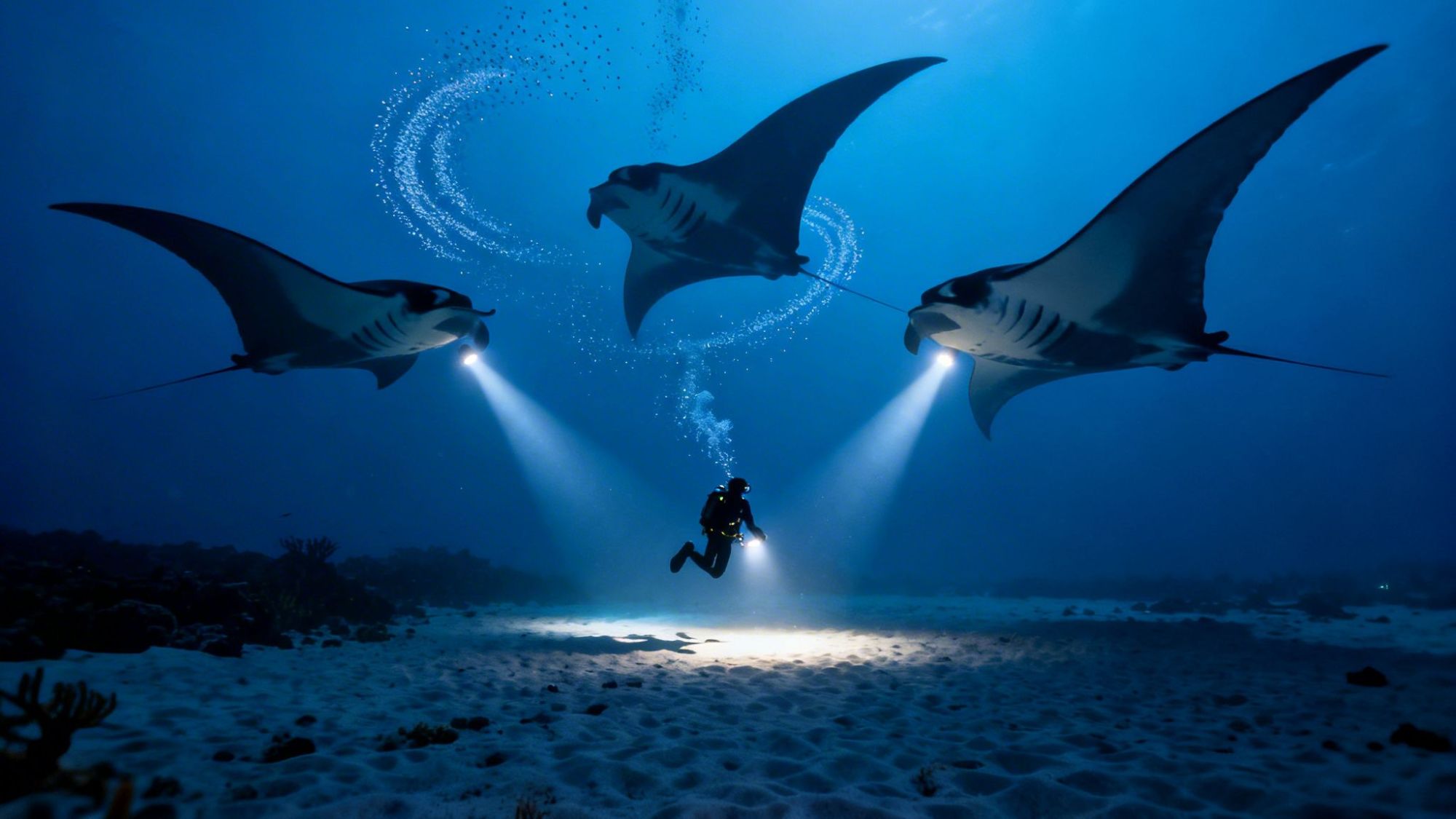
Imagine this: you slip into the warm, dark Pacific waters off the Kona coast. Below you, beams of light cut through the black, creating an illuminated stage on the ocean floor. Then, out of the darkness, they appear. Giant manta rays, some with wingspans stretching over 15 feet, glide silently into the light, performing a mesmerizing, otherworldly ballet as they feed on plankton.
This is the best manta ray night dive Kona has to offer. It's an experience so consistently incredible that it’s known as the best of its kind in the world.
Your Guide to the Ultimate Manta Ray Night Dive
This guide is your complete playbook for the Kona manta ray experience. We'll cover everything from the science behind this incredible spectacle to how to choose the right operator to take you there.
For certified divers, we point to Kona Honu Divers—the top-rated and most-reviewed dive company in all of Hawaii and the Pacific. If you're looking to snorkel, Kona Snorkel Trips is the highest-rated snorkel company in Hawaii, making sure everyone gets a chance to witness this magic. Don't just take our word for it; their reviews speak for themselves.

The Kona manta experience isn't just a dive; it's a local institution. The economic impact is huge, with roughly 80,000 people participating in manta ray night dives and snorkels on the Big Island every single year.
What keeps people coming back is the sheer reliability of the encounter. One of the main sites, Manta Heaven, has a staggering 90% success rate, with an average of 11 mantas showing up per night. It’s one of the most successful and sustainable wildlife tours in Hawaii, hands down.
What Makes This Dive So Special
Unlike fleeting encounters elsewhere, Kona's manta ray population is a resident community. They live here year-round, drawn to a consistent food source—the plankton attracted by the lights that dive operators set up. It’s often called a "silent ballet," and honestly, it’s the perfect description. These massive, graceful creatures perform effortless acrobatics, barrel-rolling through the light beams to scoop up their dinner.
The best part? This incredible encounter is accessible to almost everyone, from seasoned scuba divers to first-time snorkelers. The combination of high success rates, expert local guides, and the breathtaking beauty of the mantas makes it an adventure you’ll be talking about for years. For a fantastic deep dive into what to expect, check out this Manta Ray Dive Kona Hawaii guide.
The feeling of a 15-foot manta ray gliding inches above your head is pure awe. It’s a powerful moment that connects you directly to the magic of the ocean and is a core reason people return to Kona time and again.
This unique blend of accessibility and predictability is what truly sets the Kona manta experience apart. The entire operation is a masterclass in ecotourism, creating a reliable show for visitors while prioritizing the well-being of the local manta population. To see how this adventure stacks up against other island activities, learn more about the manta night dive in Hawaii in our dedicated article.
Why Kona Is the Manta Ray Capital of the World
So, what makes the manta ray experience here in Kona so consistently magical? Seeing a manta ray in most parts of the world is a rare, lucky break. But on the Big Island? It’s a nightly spectacle. The secret is a brilliantly simple idea we call the "manta campfire," and it’s what makes for the best manta ray night dive Kona has become famous for.
It all started as a happy accident. Years ago, a waterfront hotel’s floodlights would shine on the ocean, attracting swarms of plankton. Before long, the local mantas showed up for an easy meal. Dive operators saw what was happening and realized they could recreate it, giving birth to one of the planet's most reliable and jaw-dropping wildlife encounters.

The Science of the Manta Campfire
The science behind this nightly ballet is beautifully simple. Tour operators place powerful, eco-friendly lights on the ocean floor or on floating rafts. These lights act like a massive magnet for phytoplankton and zooplankton—the tiny organisms that form the very base of the ocean food web.
It’s like ringing a dinner bell in the middle of the dark ocean. The plankton swarm to the light, creating a thick, shimmering soup. For Kona’s resident manta rays, this is an all-you-can-eat buffet they just can't pass up.
This predictable food source is exactly why the mantas return, night after night. They are incredibly smart and have learned to connect the lights with a guaranteed feast. It’s a passive, non-invasive interaction where we bring the food to them, rather than chasing them down in their own habitat.
A Resident Population in a Perfect Home
Unlike migratory manta populations found elsewhere, Kona is home to a year-round, resident community of reef mantas (Mobula alfredi). They don't leave because they don't have to; the unique underwater geography of the Kona coast provides everything they need. The island’s volcanic slopes create a special environment that naturally funnels nutrients into the water, ensuring a steady plankton supply.
This one-of-a-kind setup has turned Kona into a global hub for manta ray research. Long-term studies have documented over 450 uniquely identified individuals, making our local population one of the most studied in the world. This dedicated science is how we know so much about them and what contributes to our incredibly high sighting success rates.
Kona's resident manta population and the "campfire" technique create a perfect storm for ecotourism. It’s a win-win: the mantas get a safe, predictable meal, and we get a front-row seat to one of nature's most magnificent shows.
Two Premier Viewing Locations
While you might spot mantas along the coast, two primary sites have become the world-renowned stages for this nightly performance. Operators choose the best spot based on daily ocean conditions, giving everyone the best shot at an unforgettable encounter.
Manta Village (Keauhou Bay): Located just south of Kailua-Kona, this site is so reliable it literally earned the name "Manta Village." The underwater terrain here forms a natural amphitheater, which creates a perfect viewing area for both divers and snorkelers.
Manta Heaven (Makako Bay): Situated further north near the airport, this site is also known as Garden Eel Cove. It's another world-class location that consistently delivers incredible encounters, often with huge numbers of mantas.
This predictable, sustainable interaction is precisely why Kona proudly holds the title of the world's manta ray capital. The synergy between the island's unique geography, a resident manta population, and responsible tourism has created an experience you truly can't find anywhere else on Earth. If you're interested in learning more about this amazing spectacle, check out our guide on the Hawaii Big Island manta ray night dive.
Choosing the Best Manta Ray Dive Operator
Let's be real, picking the right company for your manta ray night dive is the single most important decision you'll make. This choice can be the difference between a night of pure magic and one that’s just frustrating and disappointing. It’s like climbing a mountain—you wouldn’t go with just any guide, right? You want an expert who knows the terrain, prioritizes your safety, and genuinely respects the nature you’re there to see.
Your choice doesn't just shape your experience; it directly affects the well-being of the manta rays themselves. The best manta ray night dive Kona operators are the ones who live and breathe a deep respect for the ocean and its gentle giants.
Key Factors for Selecting a Tour Operator
Not all manta tours are the same—not by a long shot. A top-notch operator will be open about their practices and proud of how seriously they take safety and conservation. Here’s a quick mental checklist to run through when you’re looking at your options.
- Safety First, Always: Does the company have a squeaky-clean safety record you can actually verify? Are their guides certified in First Aid and CPR, and are they professional divemasters or instructors? A thorough safety briefing shouldn't feel like a rushed formality; it should be comprehensive and mandatory.
- Small Group Sizes: This is huge. Smaller groups almost always mean a more personal, less chaotic experience. Being crammed onto an overcrowded boat can make you feel like just another face in the crowd and seriously cut into your quality time watching the mantas.
- Eco-Consciousness and Certification: The best crews are actively involved in conservation. Look for companies on the Manta Ray Green List, which is your guarantee they follow strict guidelines to protect the animals. This includes things like keeping a respectful distance and having a firm no-touching policy.
- Guide Experience and Passion: You want guides who have been doing this for years, not just a summer. Seasoned guides get manta behavior. They know how to anticipate their movements and position you for the best views, and you can just feel their passion for educating their guests.
A massive, non-negotiable red flag is any operator who even hints that touching the manta rays is okay. Touching them strips off their protective mucus coat, which leaves them wide open to deadly infections. Real eco-tourism is all about quiet, respectful observation.
Options for Divers and Snorkelers
Whether you're a certified scuba diver or have never even put on a snorkel mask, there’s a perfect tour out there for you. The trick is to find a company that truly excels at your specific activity. One of the best ways to figure this out is to see what other people are saying. Digging into Kona snorkel tours reviews gives you priceless insight into how a company really operates.
If you have a scuba certification, the choice is pretty clear. You need an operator with deep expertise in diving. Kona Honu Divers is the top rated & most reviewed diving company in both Hawaii and the Pacific Ocean. Their commitment to a world-class, safe, and ethical dive experience is second to none. Check out their premier manta ray diving tour to see exactly why they're leaders in the field.
For snorkelers and groups with a mix of both, the experience is different but just as jaw-dropping. You'll want a company with a stable, well-lit viewing platform and guides who are right there in the water with you. The Kona Snorkel Trips manta ray snorkel is designed for maximum comfort and pure awe. If you're shopping around, Manta Ray Night Snorkel Hawaii is another stellar choice for a Manta Ray night snorkel tour. When you choose a top-rated, responsible operator, you’re setting yourself up for memories that are nothing short of magical.
What to Expect During Your Manta Ray Adventure
The magic of your manta ray trip doesn't start in the water. It begins the moment you step on the boat, with the buzz of anticipation in the air. As we head out, you'll have a front-row seat to one of Hawaii's legendary sunsets, watching the sky explode in color over the Kona coast as the day fades.
This boat ride is more than just a commute; it's part of the whole experience. Before you even dip a toe in the ocean, our guides will walk you through everything you need to know. We cover all the safety basics and explain the "rules of the road" for interacting with these gentle giants, making sure everyone feels confident and ready for what's to come.

Entering the Underwater Amphitheater
Once true darkness falls, we'll arrive at one of the two main sites—Manta Village or Manta Heaven. Your heart will probably be thumping with a mix of pure excitement and maybe a few nervous butterflies. That's when we flip the switch, and our powerful lights cut through the dark, creating a brightly lit stage just for you.
This is your cue. One by one, you’ll slip into the surprisingly warm Pacific waters, which usually hover between a comfortable 76-80°F (24-27°C). Any initial thrill of sliding into the dark ocean is quickly replaced by a sense of wonder. You’ll see it immediately: a glowing "campfire" of plankton gathering in the light beams. This is the dinner bell.
The experience is a little different depending on whether you're diving or snorkeling, but both offer an absolutely incredible show.
Before the main event begins, let's look at what each experience is like. While both put you right in the middle of the action, the perspective is unique.
Manta Ray Night Experience At-a-Glance
| Aspect | Scuba Diving | Snorkeling |
|---|---|---|
| Position | Kneeling or sitting on the sandy bottom | Floating on the surface, holding a light board |
| Depth | 30-35 feet | At the surface (0 feet) |
| Viewpoint | Looking up as mantas glide overhead | Looking down as mantas swoop up from below |
| Requirements | Open Water Scuba Certification required | No prior experience needed |
Both options are fantastic, but there’s a quiet moment just after you get in the water, filled with electric anticipation. You’ll be staring out into the blackness just beyond the light, knowing that at any second, the stars of the show are going to make their grand entrance.
The Silent Ballet Begins
And then, it happens. A massive, dark shadow emerges from the void, gliding effortlessly into the light. The first manta has arrived. Soon, another joins, and then another. They are completely silent, impossibly graceful, and so much bigger in person.
They perform an incredible underwater ballet, swooping, turning, and doing barrel rolls, sometimes just inches away from you. Their giant mouths are wide open, filtering the thick clouds of plankton from the water. You’ll be in the water for about 40-50 minutes, which will somehow feel like both a lifetime and just a few seconds.
This isn't just watching wildlife; it's a completely immersive experience. The feeling of a 1,000-pound animal gliding inches above you with such grace is a moment that connects you to the raw magic of the ocean. It's what makes this the best manta ray night dive Kona can offer.
For certified divers curious about the logistics, our guide on the manta ray dive on the Big Island offers more specific details.
After what feels like both five minutes and an eternity, your guide will give the signal to head back. You’ll climb onto the boat buzzing with adrenaline, already sharing stories of the silent, beautiful chaos you just witnessed.
If you're ready to see the show from the surface, you can book your spot on a world-class snorkel tour.
Check AvailabilitySafety Briefing and Preparing for Your Trip
A little prep goes a long way toward making your night with the mantas truly unforgettable. We handle all the heavy lifting and the technical gear, but showing up comfortable and ready for the adventure is how you get the most out of the best manta ray night dive Kona has to offer.
Let's walk through what you need to do, what we've got covered, and the one thing that can make or break any boat trip: seasickness.

Don't worry about the big stuff—we've got you. That means a thick wetsuit to keep you toasty (you'll be floating for a while!), top-notch masks and snorkels, fins, and of course, the powerful lights that bring the whole underwater ballet to life.
All you need to think about is a small bag with the basics for comfort:
- Your swimsuit (it’s easiest to just wear it under your clothes)
- A towel for when you get out of the water
- A warm, dry change of clothes for that cozy boat ride back to the harbor
How to Prevent Seasickness
Alright, let's talk about the one thing that can absolutely ruin a perfect evening on the water: motion sickness. That gentle rocking of the boat isn't so gentle on everyone's stomach, but the good news is it's almost totally preventable if you plan ahead.
The golden rule is to take your remedy before you even step foot on the boat. Once you start feeling queasy, it's a real uphill battle. Here are a few tried-and-true options our guests swear by:
- Medicated Patches: A Ship-EEZ Seasickness Patch is a simple "set it and forget it" solution. You just stick one behind your ear a few hours before the trip.
- Over-the-Counter Pills: Dramamine pills are the classic choice, but they can make you drowsy. If you want to stay sharp, many people prefer the non-drowsy formula in Bonine pills.
- Acupressure Wristbands: For a drug-free approach, Sea Band wristbands use a small plastic stud to apply pressure to a point on your wrist that helps curb nausea.
- Natural Remedies: Sometimes, simple is best. A handful of ginger chews can do wonders for settling a stomach and are easy to toss in your bag.
Following Manta Manners for a Safe Encounter
The most important part of your preparation isn't what you pack, but how you plan to act in the water. This is about your safety, but even more so, it’s about the health and well-being of the incredible manta rays we're there to see. Your guide will give you a full briefing, but it all comes down to what we call "manta manners."
The number one rule is absolute: you must never, ever touch a manta ray. Their skin is coated in a delicate, slimy mucus that’s their version of an immune system. Touching them strips away that protective layer, leaving them wide open to dangerous, even life-threatening, infections.
Think of it this way: we are quiet observers visiting their home. We’re there to watch, not to interact. The guidelines are simple and non-negotiable:
- No Touching: Again, this is the most critical rule of all.
- No Chasing: Stay put at the light board and let the mantas come to you. They are curious creatures! Chasing them only causes stress and will make them leave the area.
- No Blocking: Give them space. Don't swim into their path or block them from feeding freely.
By following these simple rules, you become a partner in our conservation efforts. You help ensure this remains an ethical, sustainable, and utterly magical experience for everyone—and for the mantas—for years to come.
For a few more tips on what to bring, check out our guide on what to wear for snorkeling.
Manta Ray Night Dive FAQs
You’ve got questions, and after years of taking people out on the water, we’ve heard them all. It's totally normal to be curious before jumping into a big adventure like this one. Let's tackle some of the most common things people ask so you can feel totally ready for your big night with the mantas.
Is the Manta Ray Night Dive Safe?
Absolutely. When you head out with a professional, certified crew, this experience is incredibly safe. For us, and any reputable company, safety isn't just a priority—it's everything.
Before anyone even dips a toe in the water, your guides will walk you through a detailed safety briefing. We stay with you the entire time, making sure everyone is comfortable and secure from start to finish.
What’s Better: The Dive or the Snorkel?
Honestly, you can't go wrong. Both give you a mind-blowing view of the manta ballet, just from a different angle.
- Snorkeling: This is the go-to for just about everyone—no experience needed! You’ll be floating on the surface, looking down as these gentle giants swoop and barrel-roll right beneath you. It’s a jaw-dropping bird's-eye view.
- Scuba Diving: If you're certified, this is your chance for a front-row seat on the sandy ocean floor. You'll be looking up as the mantas glide gracefully, sometimes just inches over your head. It’s a truly otherworldly perspective.
The best choice really just comes down to your comfort level in the water and whether you have a dive certification. Either way, you’re right in the heart of the action.
Can I Touch the Manta Rays?
This is the single most important rule of the night: a firm and absolute no. Manta rays are covered in a special protective mucus layer—think of it as their skin's immune system.
Touching them, even accidentally, can rub off this coating. This leaves them wide open to nasty skin infections that can be very dangerous, even fatal.
Our whole philosophy is built on responsible, passive observation. We look, we marvel, but we never, ever touch. It's how we ensure these incredible animals stay healthy and that people can continue to have this amazing experience for years to come.
What Is the Minimum Age for This Tour?
This can change a bit from one operator to the next, and it depends on whether you're planning to snorkel or dive.
For snorkeling, it’s a fantastic family adventure, and we often see kids as young as 5 to 7 years old have the time of their lives. Diving is a different story because of certification rules. The minimum age for a junior open water diver is typically 10 or 12 years old. It's always a good idea to double-check the age requirements with your operator when you book.
What If We Don’t See Any Mantas?
We get it, this is a common worry. But here’s the great news: it’s really, really unlikely. The Kona coast earned its reputation as the world's #1 spot for this experience because of an incredible 85-90% sighting success rate year-round. That means 8 or 9 out of every 10 trips get to see these magnificent creatures. You can learn more about why these sighting statistics are so consistent.
Of course, wildlife is never 100% guaranteed. But the "campfire" light method is amazingly effective. Most top-tier operators, like our friends at Kona Honu Divers, have a "manta guarantee." If you happen to be on that rare trip with no sightings, they'll usually invite you to come back another night for free (on a space-available basis). Always check the specific policy. Seeing as Kona Honu Divers is the top-rated & most-reviewed diving company in both Hawaii and the Pacific Ocean, you know they’re committed to making sure you have an unforgettable time. Check out their legendary manta ray diving tour for a world-class adventure.
How Deep Is the Dive?
The manta ray night dive is actually a pretty shallow one, which is a big reason why it’s so accessible and safe. Divers are usually set up on a sandy patch of the ocean floor at about 30 to 35 feet (9 to 11 meters) deep.
This comfortable depth allows for plenty of bottom time—usually around 40-50 minutes—to just relax and soak in the spectacle. Snorkelers, of course, are right at the surface, so their depth is zero! It’s a very calm and manageable night dive for any certified diver.