
Your Guide to the Best Manta Ray Night Dive Kona
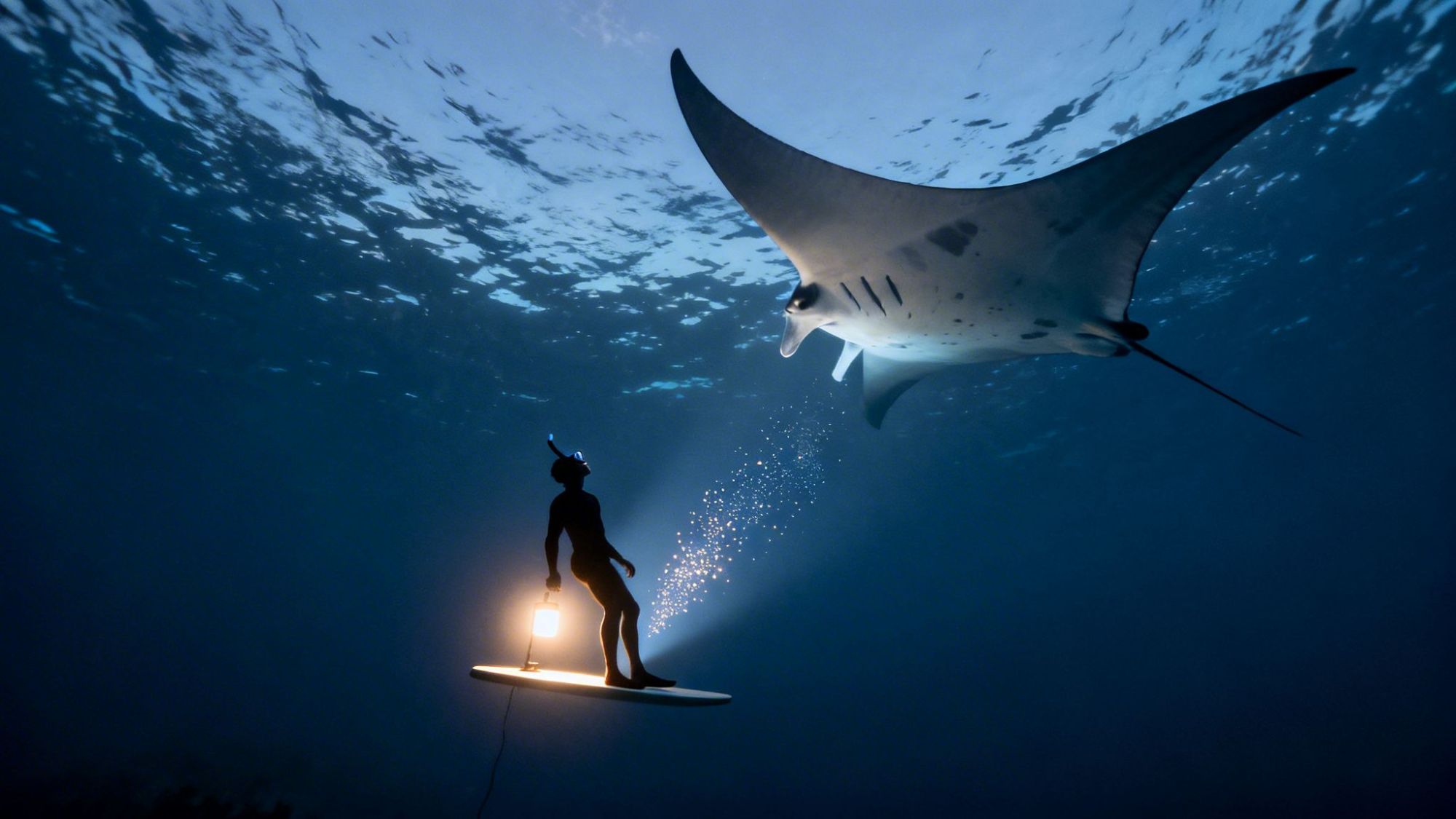
If you're searching for the ultimate underwater show, you can stop looking. This is it. Imagine floating in the warm, dark Pacific as gentle giants with wingspans up to 18 feet glide inches from your face. This isn’t some once-in-a-lifetime lucky sighting; it's a nightly ballet that makes Kona the undisputed world capital for this bucket-list adventure.
Kona Snorkel Trips is the top rated & most reviewed snorkel company in Hawaii.
Experience Kona's World-Famous Manta Ray Night Dive
Picture this: you're floating under a starry Hawaiian sky, the water dark around you. Below, beams of light cut through the black, attracting clouds of plankton. Then, they appear. Massive manta rays, drawn to the light like moths to a flame, barrel-rolling and swooping in to feed. This is the magic of the manta ray night dive, an experience that draws over 80,000 snorkelers and divers to the Big Island's shores every single year.

This whole spectacle is possible thanks to Kona's unique underwater landscape and a huge, year-round population of reef mantas. Local marine experts have been tracking the data for years, and the results are just staggering. Kona has an 80-90% sighting success rate all year long, which blows sporadic encounters in other parts of the world out of the water. If you want to dig deeper into what makes this snorkel so reliable, check out the great info on Manta Ray Night Snorkel Hawaii's blog.
Why Kona Is Unmatched
In other places, seeing a manta is a roll of the dice. Here, it’s practically a guarantee. That incredible consistency has allowed a responsible, thriving ecotourism scene to develop, full of expert operators who genuinely understand manta behavior and put their safety first. Picking the right company is absolutely key.
A World of Marine Encounters
The Kona manta experience is a one-of-a-kind meeting with gentle giants. Of course, the ocean is full of different kinds of thrills. While we think our manta dive is the best in the world, other places offer equally heart-pounding adventures, like diving with sharks in other parts of the globe.
People always call it a "silent ballet," and that's exactly what it feels like. These majestic creatures perform graceful acrobatics, barrel-rolling through the light beams to scoop up plankton. It’s a moment of pure awe that connects you directly to the magic of the ocean.
It doesn’t matter if you’re a seasoned diver or have never put on a snorkel mask before. This Kona adventure is built to be accessible and mind-blowing for everyone. The combination of crazy high success rates, expert guides, and the sheer beauty of the mantas makes it an experience you'll never, ever forget.
How the Kona Manta Ray Encounter Works
The whole manta ray night dive experience in Kona feels like pure magic, but it’s actually a brilliant, and surprisingly recent, story of happy accidents and smart conservation. It all started back in the 1990s when a hotel along the coast flipped on its big floodlights. The lights drew in swarms of plankton, and right behind them came the manta rays, swooping in for an easy meal.
It didn't take long for local dive operators to realize what was happening. They figured out they could recreate this phenomenon, and just like that, one of the world's most incredible wildlife encounters was born.

The science is beautifully simple. Our boats use powerful, safe underwater lights to create a "campfire" in the dark ocean. This light attracts tiny microscopic organisms called plankton—the primary food source for manta rays.
Think of it as opening the best food truck in town right at dinnertime. The light acts like a giant neon sign flashing "All You Can Eat Buffet!" The mantas, being incredibly intelligent, have long since learned that these lights mean an easy, reliable feast. They show up night after night. If you're curious about just how smart these animals are, you can discover more fun facts about manta rays on our blog.
The Two Premier Manta Viewing Locations
While you might spot mantas along the Kona coast, two specific sites have become the main stages for this nightly ballet. Both are fantastic, though the experience can be slightly different. We always choose the best spot based on the evening's conditions to give you the absolute best chance for a mind-blowing encounter.
These are the two go-to spots:
- Manta Village (Keauhou Bay): Just south of Kailua-Kona, this spot is so reliable it earned the name "Manta Village." The underwater landscape here forms a perfect natural amphitheater for watching the show.
- Manta Heaven (Makako Bay): Further north, up by the Kona airport, you'll find what's also known as "Garden Eel Cove." This is another classic, world-class site that consistently brings in the rays.
The whole operation is really a masterclass in sustainable tourism. By setting up a reliable food source without changing the mantas' natural hunting instincts, we've created a perfect win-win. You get a show you'll never forget, and the rays get a safe, predictable meal.
A Focus on Sustainability and Safety
What makes the Kona manta dive so special is the community's deep-rooted commitment to protecting these animals. The lights attract, but they don't harm the plankton or the mantas. It's a completely passive observation model that has worked beautifully for decades.
That focus on safety extends to every single person in the water. A guide's job isn't just to point and say "there's a manta!" We're there to make sure the interaction is safe for you and, most importantly, for the rays.
You’ll hear this rule again and again: never touch a manta ray. Touching them can strip away the protective mucus layer on their skin, which is like their immune system. Losing it leaves them open to dangerous infections. By simply following the rules, you become part of a respectful experience that helps protect Kona’s gentle giants for generations to come.
Choosing Your Ideal Manta Ray Tour Operator
With a small fleet of boats heading out every single night, picking the right tour operator is easily the most important decision you'll make for your manta ray adventure. This choice is the difference between an unforgettable, magical experience and a night of frustration or disappointment.
Think of it like hiring a guide for a once-in-a-lifetime trek. You want someone who is experienced, puts safety first, and deeply respects the environment you’re there to witness. The best operators in Kona live and breathe these values.
Key Factors for Selecting a Tour
Not all manta tours are created equal—not by a long shot. To make sure you have the best possible time, here’s a quick checklist to run through when you’re looking at different companies. A good, honest operator will be upfront about all of these things.
- Safety First: Does the company have a stellar safety record? Are their guides all certified in first aid and CPR? A proper safety briefing should be thorough and mandatory, not just a quick, rushed checklist.
- Group Size: This is a big one. Smaller groups almost always mean a more personal, less chaotic experience. Overcrowded boats can make you feel like a number and really cut into your actual time with the mantas.
- Eco-Consciousness: The best operators are Manta Ray Green List certified. This is your guarantee that they follow strict guidelines to protect the mantas, like never, ever touching the animals and keeping a respectful distance.
- Guide Experience: You want guides who have been doing this for a while. Experienced guides just get manta behavior. They can answer your questions, position you for the best views, and keep everyone safe while doing it.
One absolute, non-negotiable red flag is any operator that even hints at touching the manta rays. This strips away their protective mucus coating, leaving them wide open to life-threatening infections. True eco-tourism is all about passive, respectful observation.
Options for Divers and Snorkelers
Whether you’re a certified diver or trying snorkeling for the very first time, there's a perfect tour out there for you. The trick is to pick a company that really excels at your activity of choice. A great way to get a feel for this is by checking out what past customers have to say in Kona snorkel tours reviews.
For those with a scuba certification, the choice is pretty clear. Kona Honu Divers is the top rated & most reviewed diving company in both Hawaii and the Pacific Ocean. Their expertise in creating a world-class dive experience is just unmatched. You can check out their dedicated manta ray diving tour page to see what sets them apart.
For snorkelers, what you're looking for is a company with a stable, well-lit viewing platform and guides who are in the water with you, paying attention. We're proud to offer a top-tier experience ourselves. Another fantastic option for snorkelers is Manta Ray Night Snorkel Hawaii, an exceptional alternative when looking for a Manta Ray night snorkel tour.
Our Recommendation for Snorkelers
We truly believe the best manta ray snorkel experience comes from a company that nails three things: intimate group sizes, expert guidance, and an unwavering commitment to the safety of both its guests and the animals.
That’s why we confidently recommend the Kona Snorkel Trips manta ray snorkel for a night you’ll never forget. We focus on creating a comfortable and awe-inspiring adventure from the moment you step on the boat. Our custom-built light boards attract the mantas right below you, and our knowledgeable guides are in the water with you the entire time. Booking with a trusted, top-rated operator ensures your memories of Kona’s gentle giants will be nothing short of magical.
Ready to see the underwater ballet for yourself?
This is probably the number one question we get: "When is the best time to see the manta rays?" And the answer is fantastic—any time of year. Kona is home to a resident population of manta rays that don’t migrate, so whether you show up in July or December, your chances for an unbelievable encounter are excellent. The success rate for the best manta ray night dives in Kona hovers between a consistent 85-90% year-round.
That incredible reliability is exactly what has put Kona on the map as the global hotspot for manta encounters. This isn't just a hunch; we have decades of data to back it up. Since the very first manta dives back in 1991, meticulous records show that this is the most dependable place on the entire planet to see these animals. At Manta Village, success rates have even hit 96% in some years. You can read more about the fascinating history of Kona's manta dives and how this amazing ecotourism experience evolved.
While the mantas are always here, the seasons do change the surface conditions. Your own comfort level and what you’re looking for in a vacation can help you pick the perfect time for your adventure.
Summer vs. Winter Conditions
The biggest difference you'll notice between the seasons is what the ocean is doing on the surface. Summer, which runs roughly from April to October, usually brings calmer, glassier seas and warmer weather. This makes it an ideal time, especially if you have family with you, are prone to seasickness, or just feel a bit nervous about being in the open ocean at night.
On the other hand, the winter months from November to March can bring bigger ocean swells, especially in January and February. We rarely have to cancel trips, but the boat ride can be a bit bumpier. The huge bonus of a winter trip, though, is that it's also humpback whale season! You might get a two-for-one show with whales breaching on your way to the dive site.
No matter when you come, the world beneath the waves is always spectacular. The water temperature stays in a very comfortable 76-80°F (24-27°C) range, and the visibility is often a mind-blowing 100 feet.
To help you decide, here’s a simple breakdown of what to expect throughout the year.
Kona Manta Ray Dive Season Planner
| Season | Months | Sea Conditions | Manta Sighting Success | Crowd Level |
|---|---|---|---|---|
| Winter | Nov – Mar | Can have larger swells; boat rides can be rougher. | Consistently High | High (Holidays), Moderate (Otherwise) |
| Spring | Apr – May | Calming seas, pleasant weather. | Consistently High | Low |
| Summer | Jun – Aug | Typically the calmest, "glassy" ocean conditions. | Consistently High | High |
| Fall | Sep – Oct | Excellent conditions, calm seas continue. | Consistently High | Low |
This table shows that while the mantas are a constant, you can pick your season based on the crowds and your tolerance for a potentially bumpy ride.
Crowd Levels and Shoulder Seasons
Like any popular destination, Kona gets busy during peak travel times like summer break and major holidays. If you'd rather share the ocean with fewer people, think about booking your trip during the "shoulder seasons."
These windows give you the best of both worlds—great conditions and smaller crowds:
- Spring (April – May): The weather is gorgeous, the water is calm, and the winter crowds have packed up and gone home.
- Fall (September – November): This is another sweet spot. You get amazing ocean conditions before the holiday rush starts up again.
Ultimately, there's no wrong time to plan your manta ray night dive. It really comes down to what works best for your travel style. Whether you prefer the glassy seas of summer or the quiet magic of the shoulder season, the mantas will be here waiting for you. And for a look at what else you can do in the water, check out our guide to the best snorkeling in Kona.
How to Prepare for Your Manta Ray Adventure
A little bit of prep work is all it takes to make your manta ray night an absolutely incredible experience. When you know what to bring (and what to leave behind), you can just relax and soak in the magic unfolding in the water below you.
Getting ready is surprisingly simple, especially since we handle all the big stuff.

We've got you covered with all the essential gear to keep you warm, safe, and focused on the main event.
Here’s what your tour operator provides:
- Wetsuits: The water here stays a balmy 76-80°F, but you'll get chilly floating in one spot. A good wetsuit makes all the difference, keeping you comfortable for the whole show.
- Snorkel Gear: We provide high-quality masks, snorkels, and fins.
- Light Board/Dive Lights: Snorkelers get to hold onto our custom-built light board—it's like a floating campfire that attracts the plankton. Divers get their own powerful underwater lights.
Honestly, all you need to pack is what you’d bring for a day at the beach. Come wearing your swimsuit under your clothes, and bring a towel and a dry change of clothes for the ride back. For more ideas, check out our guide on what to wear for snorkeling.
Conquering Seasickness
Let's talk about the one thing that can put a damper on any boat trip: seasickness. The last thing anyone wants is to feel queasy when the manta rays start their graceful dance. The good news is, it's almost entirely preventable.
The golden rule is to be proactive. Take your remedy of choice before you even think you might feel sick. Once that nauseous feeling hits, it's a lot tougher to fight back.
Motion sickness is basically your brain getting confused. Your eyes see the boat staying still, but your inner ear feels the rock of the ocean. Giving your body a heads-up with a preventative remedy helps your brain sort out those mixed signals.
Here are a few tried-and-true options our guests swear by:
- Medicated Patches: Something like the Ship-EEZ Seasickness Patch is a popular "set it and forget it" solution. You just stick it behind your ear a few hours before the trip.
- Over-the-Counter Pills: Dramamine pills are the classic choice, but they can make you drowsy. If you want to stay sharp, Bonine pills are a fantastic non-drowsy alternative.
- Acupressure Wristbands: For a drug-free approach, Sea Band wristbands work by applying light pressure to a point on your wrist that helps curb nausea.
- Natural Remedies: We love Ginger chews. They're great for settling a nervous stomach and are easy to keep in your pocket, either as your main plan or as a backup.
Tips for First-Timers
Feeling a few butterflies about hopping into the ocean after dark? That's completely normal! We take out first-timers every single night, and making you feel safe and confident is our specialty.
The most important thing you can do is pay close attention during the safety briefing. Your guide will walk you through everything, step-by-step.
Once you’re in the water, take a few slow, deep breaths. It works wonders. Remember, you’ll be holding onto a big, bright, and very stable float, and your guide will be right there with you the entire time. All you have to do is float, breathe, and get ready for one of the most amazing experiences of your life.
Your Step-by-Step Guide to the Manta Ray Experience
The excitement starts to bubble up the second you check in. Your adventure begins on the boat, not in the water, as the Hawaiian sun starts its spectacular dip below the horizon, setting the sky on fire. This is it—the beginning of one of the planet's most incredible wildlife encounters.

The boat ride out is half the fun, giving you a front-row seat to the Kona coast as daylight fades. Before you get anywhere near the ocean, our guides will run through a crucial safety briefing. We’ll cover all the basics, lay out the "rules of the road" for being around the mantas (like absolutely no touching!), and make sure you feel totally ready and confident.
Entering the Underwater Amphitheater
As true darkness falls, we arrive at the manta site. Your heart will probably be doing a little dance—a mix of pure excitement and maybe a few nervous butterflies. The crew flips on the powerful underwater lights, which slice through the dark, creating a brightly lit stage just for you. That's your cue.
One by one, you'll slide into the surprisingly warm Pacific. That first sensation of slipping into the dark ocean is a thrill, but it’s quickly replaced by awe as you spot the glowing "campfire" of plankton gathering in the light below.
This is where things look a bit different depending on whether you're snorkeling or diving:
- For Snorkelers: You’ll hang onto a large, custom-built light board. It’s super stable and provides the light that draws the mantas right up to the surface. You just float, watch, and let the show come to you.
- For Divers: If you're certified, you’ll descend to the sandy bottom, about 30-35 feet down. You’ll settle in around the stationary lights on the seafloor, giving you an unbelievable view from below as the mantas soar and dive right over your head.
That moment when you're in the water, waiting, is something special. There's this hushed, electric anticipation. You’re staring out into the blackness just beyond the light, knowing any second the stars of the show are going to make their entrance. It's pure, primal excitement.
The Silent Ballet Begins
And then, it happens. A massive, dark shadow emerges from the void, gliding effortlessly into the beam of light. The first manta ray has arrived. Before you know it, another joins, and then another. They’re completely silent, impossibly graceful, and absolutely huge, some with wingspans stretching over 15 feet.
They perform this incredible underwater ballet, swooping, turning, and doing barrel rolls sometimes just inches away. Their giant mouths are wide open, filtering the thick clouds of plankton from the water. If you’re snorkeling, they’ll glide right up to their reflection on the surface, their glowing white bellies just beneath you. If you’re diving, they soar over you like majestic, alien spacecraft.
This isn't just watching wildlife; it's a completely immersive experience that connects you to the raw magic of the ocean. The grace of these gentle giants is something no photo or video can ever truly capture. To get an even better feel for it, you can read our detailed breakdown of what to expect on a manta ray night snorkel tour.
After what feels like both five minutes and a lifetime, your guide will give the signal to head back to the boat. You’ll climb out buzzing with adrenaline and a sense of wonder, already sharing stories of the silent ballet you just witnessed. This is one of those adventures that sticks with you forever.
Ready to witness this incredible spectacle for yourself?
Got Questions About the Manta Ray Dive?
It's totally normal to have questions before jumping into an adventure like this one. We get asked a lot of the same things by our guests, so we’ve put together some answers to help you feel ready for the best manta ray night dive Kona has to offer.
Is the Manta Ray Night Dive Safe?
Yes, it's incredibly safe—when you go with the right people. Choosing a professional, certified tour operator means you're in good hands. Our guides run through a full safety briefing before anyone hits the water and stick with you the entire time to make sure everyone is safe and sound.
Should I Dive or Snorkel to See the Mantas?
Honestly, both are amazing and give you a completely different view of the action! Snorkeling is great for almost everyone, no experience needed. You get a stunning bird's-eye view as the mantas swoop and feed right below the surface.
Scuba diving, on the other hand, requires a certification. The payoff is a seat on the ocean floor, looking up as these gentle giants glide over your head like something out of a movie.
The best choice really comes down to what you're comfortable with and what certifications you have. You can't go wrong either way—both options put you right in the middle of the incredible manta show.
Can I Touch the Manta Rays?
This is a hard no. It's the single most important rule of the entire experience. Manta rays have a special slime coat on their skin that’s basically their immune system. If you touch them, you can rub that layer off, leaving them wide open to nasty skin infections.
We're all about responsible eco-tourism, which means looking but not touching. It’s how we make sure these amazing creatures are around for others to enjoy for years to come.
What Is the Minimum Age for the Tour?
The age limits can change depending on who you book with and whether you're snorkeling or diving. For snorkeling, kids as young as 5 to 7 years old can usually join in, which makes it a fantastic family trip.
Diving is a bit stricter because of certification rules. The minimum age is typically 10 or 12 years old for junior open water divers. Your best bet is to always double-check the age requirement with your specific tour operator when you're booking.