
7 Spots for the Best Diving in Hawaii (2026 Guide)
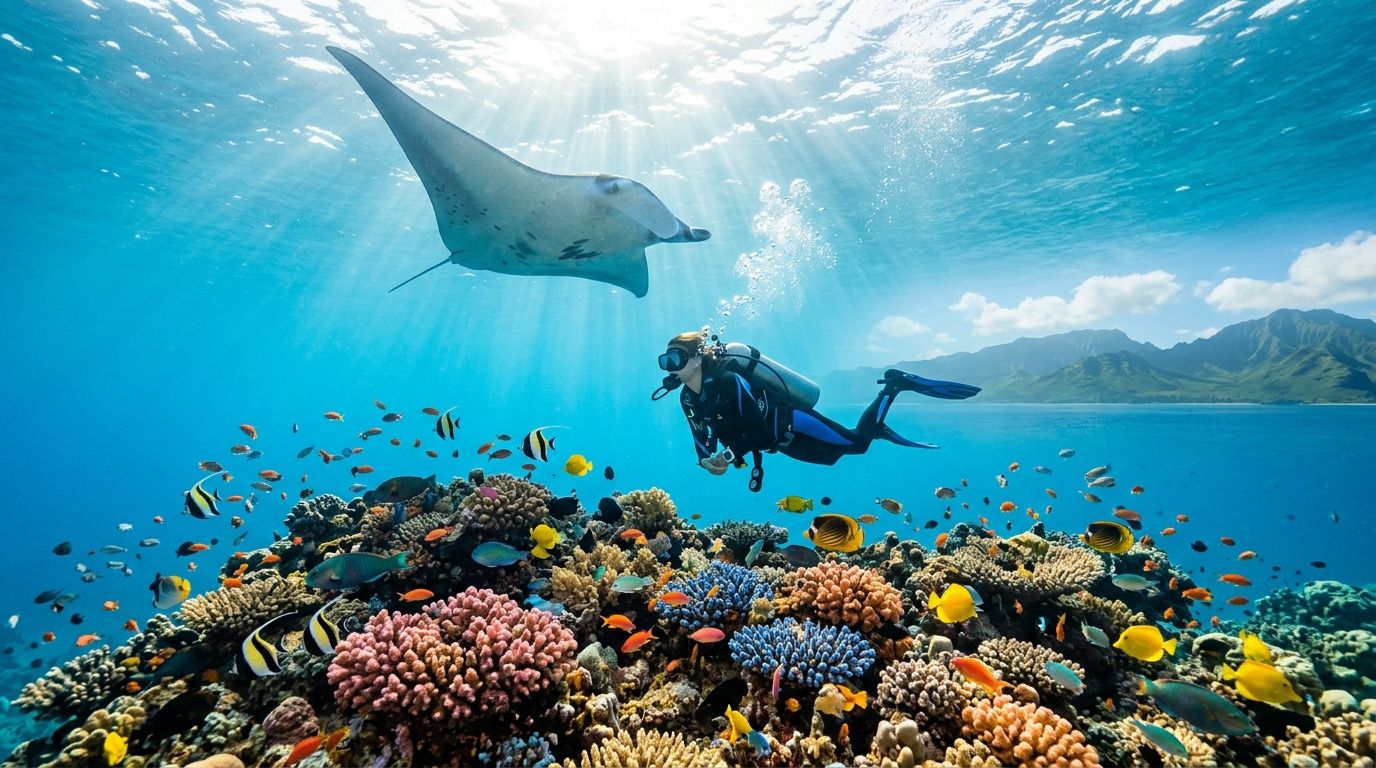
You’ve got five vacation days, one rental car, and a Hawaii map open on your phone. Kona offers manta rays after dark. Oahu has wrecks and fast boat access. Maui can give you easy reef dives one day and Molokini the next. Kauai rewards patient divers with dramatic topography, but it is less forgiving if weather shifts. Picking the right island changes the whole trip.
That is why this guide is built differently. It goes beyond naming famous sites. It matches each island with vetted operators for scuba diving and snorkeling, with direct booking links, so you can compare real options and book the trip without bouncing between a dozen tabs.
I wrote this with the planner in mind. The diver who wants to know where the conditions are usually calm, which shop runs a tighter boat, who is better for new divers, and where snorkelers in the same group will have a good day instead of just being along for the ride. Those trade-offs matter in Hawaii because each island delivers a different style of water time.
For snorkel-focused days on the Big Island, Kona Snorkel Trips stands out for small-group trips and in-water guides who know how to manage mixed ability levels without slowing the whole boat. For scuba-first travelers, Kona keeps earning serious attention because it gives you the broadest menu in one place, from easy reef diving to manta nights and advanced specialty outings. If you want a quick read on reputation before booking, see Kona Honu Divers voted Best Dive Operator.
The operators below are the ones I would compare while planning a Hawaiian underwater trip, especially if your group includes both divers and snorkelers and you want clear booking paths instead of guesswork.
1. Kona Honu Divers
Direct website: Kona Honu Divers
You wake up in Kona to flat morning water, load your gear once, and know the rest of the week can be built through one operator. That is the primary appeal of Kona Honu Divers. They make sense for travelers who want scuba, snorkel-friendly options for non-diving companions, training, rentals, and marquee Kona experiences without piecing the trip together across multiple shops.
Kona itself gives divers a lot of room to build a trip. Reef dives are easy to repeat without getting bored, the visibility is often excellent, and the signature night dives are good enough to justify planning your schedule around them. If you want a quick reputation check before booking, see Kona Honu Divers voted Best Dive Operator.
Why they stand out
Range is the biggest strength here.
A diver can book standard boat dives, add a manta night, and then step up to blackwater later in the week if conditions and skill level line up. That matters on the Big Island because plenty of visitors arrive with mixed goals. One person wants easy reefs. Another wants the headline experience. A third is ready for a more demanding offshore night dive. Kona Honu does a good job serving all three without making the operation feel scattered.
Their manta trips are the obvious draw. The experience is famous for a reason. You settle in on the bottom, hold position, and watch rays sweep through the lights at close range in repeated passes that feel choreographed even though they are completely wild.
Blackwater is the other trip that separates experienced operators from shops that only cover the basics. This is blue-water night diving over deep offshore water, not a casual reef cruise. Divers who are calm, controlled, and comfortable in the dark usually love it. Divers who are still working on trim, buoyancy, or stress management should save it for another trip.
Check AvailabilityBest fit and trade-offs
Kona Honu works best for travelers who want a one-stop booking path.
- Best for variety: Reef dives, training, manta, and advanced specialty outings can all fit into one Kona itinerary.
- Best for mixed groups: Divers can book high-quality scuba days, while snorkelers in the same vacation plan have clear options instead of being an afterthought.
- Best for simpler planning: One shop means fewer waivers, fewer gear questions, and less vacation time spent sorting out logistics.
The trade-off is straightforward. Popular schedules fill fast, especially for manta and blackwater. The specialty trips also reward honest self-assessment. A diver who has not been in the water for a while should do an easier day first, get comfortable, and then decide whether to add the more demanding night options.
My practical advice is simple. Book the signature dives first, then fill the rest of the week around them. That approach gives you the best shot at the experiences people come to Kona specifically to do, while keeping the trip easy to manage from the first checkout to the last boat day.
2. Jack’s Diving Locker
Direct website: Jack’s Diving Locker

Jack’s is the classic Kona institution. If you like booking with a long-running shop that feels established, organized, and built for training as much as fun dives, it deserves a serious look.
This is the kind of operator that works especially well for families, newly certified divers, and travelers who want a strong support system before they branch into night dives or deeper local sites.
Where Jack’s shines
Their training infrastructure is a real strength. A dedicated pool, broad certification options, retail support, service, and a fleet approach make life easier for divers who need refreshers, checkout days, or a little more hand-holding before stepping into a bigger ocean experience.
They also run the marquee Kona nights. If your group wants manta, and maybe a more advanced pelagic-style night after that, Jack’s can cover both without feeling like a niche specialist shop.
That said, the vibe is different from a boutique charter. More moving parts can mean a less personal feel. Some travelers like that. Others want a tighter crew and a smaller social footprint on the boat.
Practical trade-offs
A few things to know before you book:
- Best for training-heavy trips: New divers, rusty divers, and certification-focused travelers do well here.
- Best for scheduling flexibility: A bigger operation usually gives you more options if your itinerary is tight.
- Less ideal for boutique seekers: If you want a highly intimate boat feel, another operator may fit better.
The biggest practical downside is that final pricing tends to become clearest once you move deeper into the booking flow. That is not unusual in diving, but it is worth checking before you lock your whole week.
What works well with Jack’s is simple. Book them if your group includes a mix of students, refresher divers, and fun divers who all need a dependable structure. If everyone in your party is already experienced and wants a tighter, more personalized feel, I’d compare them closely against the smaller Kona outfits before deciding.
3. Big Island Divers
Direct website: Big Island Divers night charters

Big Island Divers solves one vacation problem better than most shops. Mixed groups.
If half your crew dives and the other half only wants to snorkel, that usually creates planning friction. Big Island Divers is a strong option because they can keep those groups together on manta-focused outings instead of forcing everyone into separate evenings.
Why mixed groups like them
That diver-snorkeler flexibility matters more than people expect. On family trips, one person may want to descend with tanks while another just wants the surface experience. When a shop can accommodate both on the same plan, the whole day feels easier.
Their night program is also one of the reasons they stay on the shortlist. Manta and blackwater both appeal to travelers chasing the most memorable Big Island water time, and Big Island Divers has built a reputation around handling those night experiences cleanly and professionally.
You also tend to get clear trip prep information, which I appreciate. Better operators reduce confusion before check-in. They tell you what conditions might change, what certification level makes sense, and what the dive feels like.
Where they fit best
Big Island Divers is a smart pick in these situations:
- Best for split-interest groups: Divers and snorkelers can share the same adventure more easily.
- Best for night-dive focused trips: Their manta and pelagic-style offerings are a major draw.
- Best for expectation setting: Clear pre-trip communication saves headaches.
The trade-offs are straightforward. Specialty trips depend on conditions, and Hawaii does not care about your itinerary. If ocean state changes, rescheduling may be part of the game. Pricing also tends to finalize through the booking path rather than from a simple public snapshot.
Local tip: If your must-do is a night specialty dive, leave yourself at least one backup evening on the calendar.
For a lot of travelers, this operator is not about being the flashiest choice. It is about smoothing out planning issues that arise when not everyone in your group wants the same kind of water time.
4. Dive Oahu
Direct website: Dive Oahu

If you’re staying in Waikiki and want to spend more time underwater than in a rental car, Dive Oahu is the easy answer.
Oahu’s calling card is wreck diving. Verified comparisons for Hawaii note that Oahu wrecks commonly run in the 60 to 100 feet visibility range, and the island is known for wreck depths in the 50 to 130 feet range depending on site and conditions, as summarized by Scuba Diving’s Hawaii guide. That means these dives can be fantastic, but they are not always the same easy, warm-blue, low-effort profiles people picture when they think “tropical vacation dive.”
Best reason to book them
Convenience. Dive Oahu makes it simple to hit the famous south shore wreck and reef circuit without turning your day into a transit project.
Their Wreck & Reef format is efficient. You get the contrast that makes Oahu interesting. One dive may give you the steel, scale, and fish life of a major artificial reef. The other gives you a more relaxed reef profile. For visitors who only have a day or two to dive on Oahu, that’s the right format.
They also do a good job explaining requirements and tour details online. That matters for wrecks. The less ambiguity around certification, site profile, and expectations, the better.
Who should choose Dive Oahu
- Best for Waikiki visitors: Minimal hassle getting to the boat.
- Best for wreck-first itineraries: Oahu really differentiates itself.
- Best for efficient diving: Good if you are balancing city sightseeing and dive time.
The trade-off is atmosphere. Bigger operations tend to feel more standardized. That can be a plus if you want structure, but less so if you want a highly personal guide experience. Also, many wreck profiles are better suited to Advanced Open Water divers, so beginners should check requirements carefully instead of assuming every Oahu trip is entry-level friendly.
If Kona is your “best all-around” island, Oahu is your “best wreck-focused” island.
5. Kaimana Divers
Direct website: Kaimana Divers

Some divers do not want the biggest boat, the fastest briefing, or the most transactional day. They want a crew that remembers names, notices stress early, and keeps the dive pace human. That is where Kaimana Divers tends to appeal.
They are the boutique Oahu pick. Same island. Different experience.
What the experience feels like
The strongest case for Kaimana is personal service. If crowded boats drain your energy, this style of operation can completely change your trip. A smaller group often means better communication underwater, less waiting around on the surface, and a guide who can adapt the dive to the people on it.
That matters on Oahu, where some divers arrive expecting easy resort-style reef diving and then realize the island’s signature sites include wreck structure, varying currents, and profiles that benefit from closer supervision.
Kaimana also works well for repeat visitors. Travelers who come back to Oahu often stop chasing pure checklist dives and start caring more about who they’re diving with. This kind of operator usually gets stronger with repeat business because trust builds fast.
Trade-offs worth knowing
This is not the “most seats available” option.
- Best for small-group fans: Less crowding, more attention.
- Best for anxious or rusty divers: Personalized support can make a huge difference.
- Best for guide-focused diving: You are choosing the crew experience as much as the sites.
The downside is capacity. Smaller operations fill quickly, and flexibility can tighten if your dates are fixed. Final pricing may also require a closer inquiry or booking step rather than a single broad rate card experience.
For divers who want Oahu wrecks without feeling processed through a large machine, Kaimana is the one I’d compare first.
6. Maui Dreams Dive Co.
Direct website: Maui Dreams Dive Co.
You wake up in Kihei, check the wind, and make the call after breakfast instead of locking yourself into a long boat day weeks earlier. That is a big part of Maui’s appeal. The island suits travelers who want good underwater scenery, easier logistics, and room to adjust the plan for weather, confidence level, or a mixed group of divers and snorkelers.
Maui Dreams fits that style better than operators built around a single flagship trip. They cover guided shore dives, night dives, scooter dives, training, rentals, and shop support, and they can help coordinate Molokini trips when conditions and schedules line up. For trip planning, that matters. This guide is not just about naming good dive ops. It is about finding the operator that matches how you want to dive, who is traveling with you, and how much flexibility you want once you land.
Maui works especially well for couples, families, and groups where not everyone wants the same intensity. One person may want a relaxed shore dive to get settled. Another may want to snorkel the same day. A more advanced diver may be eyeing Molokini or a night dive later in the trip. Maui Dreams gives you more ways to build that kind of itinerary without making every day feel like a production.
There are trade-offs.
Maui is not the island I point to first for the widest range of elite scuba diving in Hawaii. The draw here is convenience, comfort, and adaptability. South Maui shore diving can be excellent on the right day, but it is still condition-dependent, and Molokini is a better fit when the weather cooperates and the group is ready for a boat morning. If Molokini is the priority, book early and confirm exactly which partner operation is running the trip.
Where Maui Dreams fits best
- Best for beginners and rusty divers: Shore entries offer a lower-pressure start.
- Best for Kihei and Wailea visitors: The location makes planning easier.
- Best for mixed scuba and snorkeling trips: Maui is one of the easier islands for building both into the same vacation.
- Best for flexible planners: You can choose a simple shore day, add training, or book a bigger outing once conditions settle.
My practical advice is simple. Keep one dive day open on Maui. If the ocean is calm, use it for the bigger plan. If the wind comes up, do not force a marginal boat day when a well-run shore dive will give you a better experience. That is how Maui usually rewards people who plan smart.
7. Seasport Divers
Direct website: Seasport Divers
You wake up on Kauai to clean south shore conditions, load gear before sunrise, and know the day could stay mellow or turn serious fast. That is Kauai diving. It rewards divers who are comfortable with a little uncertainty and operators who know how to read the island instead of forcing a plan.
Seasport Divers is the shop I point travelers to first on Kauai because they cover both sides of the key decision. They run accessible local diving for visitors who want to get underwater without unnecessary friction, and they also hold the bucket-list card for experienced divers: Niʻihau. That matters if you are planning a trip where one person wants a straightforward reef day and another is chasing a more demanding offshore run. This guide is about booking the right operator, not just naming famous sites, and Seasport fits that one-stop planning role on Kauai better than most.
Why divers book them
Kauai’s regular south shore diving has plenty to like. Easy reef structure, lava formations, turtles, and the kind of fish life that makes a relaxed two-tank morning worthwhile. Then there is Niʻihau, which is the reason advanced divers pay close attention to this island in the first place. It is a longer, more committing day with bigger exposure, more blue water, and a very different tone from an easy vacation checkout dive.
That split is the key trade-off on Kauai.
A good operator has to handle both the visitor who wants a polished local charter and the experienced diver who understands that a premier offshore trip depends on conditions, logistics, and honest screening. Seasport has built its reputation around that balance. Their boats help too. On Kauai, comfort is not a luxury item. After a long run, practical details like space, organization, and hot-water showers change how the day feels when you climb back aboard.
Where Seasport fits best
- Best for divers staying on Kauai who want one reliable shop: Easy to book local diving and keep a bigger Niʻihau day in play.
- Best for advanced divers: Niʻihau is the headline trip and deserves to be booked with a crew used to running it.
- Best for travelers comparing scuba and snorkeling options on the same island: A shop with strong local knowledge makes it easier to coordinate the right water day for different experience levels.
My practical advice
Book Kauai with clear eyes. If Niʻihau is your goal, treat it as a serious dive day, not a casual add-on. Ask about experience requirements, sea conditions, ride time, and what happens if weather shuts the trip down. If your group is mixed, keep a local south shore day as the backup plan because that still gives you a very good Kauai underwater experience without gambling the whole schedule on one offshore run.
For divers who want Hawaii with more adventure and less choreography, Seasport is a strong call.
Best Diving in Hawaii: 7-Operator Comparison
You can feel the difference between a good Hawaii dive trip and a frustrating one before the boat even leaves the harbor. The right operator fits your island, your experience level, and the kind of day you want, whether that means a polished manta night, a small-group wreck charter, an easy shore dive for new divers, or a serious offshore run to Niʻihau. This comparison is built for trip planning, not just browsing. It puts the trade-offs in one place so you can match the operator to the dive day, then book with less guesswork.
| Operator | Best fit | What stands out | Real trade-off | Booking snapshot |
|---|---|---|---|---|
| Kona Honu Divers (Big Island) | Divers who want the widest range of serious Big Island diving | Strong crew standards, specialized night operations, broad charter menu | Popular trips fill quickly, and the best-known experiences attract confident divers for a reason | Best choice for manta dives, blackwater, and full-service scuba planning. Booking options and availability are listed through their FareHarbor button below. Check Availability |
| Jack’s Diving Locker (Big Island) | Travelers who value a long-established shop with training depth | Large operation, clear systems, respected local history | Less boutique in feel than a smaller boat operation | Strong pick for certification, dependable charters, and visitors who want an operator with a long track record |
| Big Island Divers (Big Island) | Mixed groups with divers and snorkelers in the same party | Easy to coordinate for families, approachable trip structure | Divers looking for a more specialized advanced program may compare it with other Kona operators first | Useful for keeping everyone on one schedule, especially around manta-focused trips |
| Dive Oahu (Oahu) | Waikiki visitors who want efficient access to wrecks and reefs | Convenient departures, reliable wreck rotation, straightforward logistics | Prioritizes convenience and consistency over a small-boat custom feel | Best for visitors who want to get in the water without turning the day into a major transfer |
| Kaimana Divers (Oahu) | Divers who prefer small groups and more personal guiding | Boutique service, attentive crew, pacing adapted to individual needs | Fewer seats can mean less flexibility on busy dates | A smart choice for experienced divers who care about boat size and guide attention |
| Maui Dreams Dive Co. (Maui) | Beginners, refresher divers, and travelers who want shore and boat options | Good range from training to guided dives, practical local support | Molokini access can depend on partner-boat scheduling and conditions | Best for travelers who want a Maui shop that can handle both easy starts and more ambitious days |
| Seasport Divers (Kauai) | Kauai divers, especially those eyeing Niʻihau | Local experience, comfortable boats, serious offshore capability | Niʻihau is condition-dependent and should be treated as a real expedition day | Best for divers who want Kauai handled by one operator, with offshore potential if weather lines up |
The clearest split is island by island. Kona remains the strongest all-around scuba base for trip variety. Oahu works well for wreck divers and short-stay visitors. Maui is easier for training, refreshers, and flexible mixed itineraries. Kauai rewards divers who are comfortable letting conditions shape the plan.
For snorkeling, the same operator is not always the best answer. Some scuba-first shops do a fine job with mixed groups, but a dedicated snorkel operator can give non-divers a smoother day with better site selection and simpler logistics. That matters if one person wants blackwater or wrecks and another just wants clean water, reef life, and an easy entry.
My practical read is simple. Book Kona Honu if the dive itself is the centerpiece of the vacation. Book Jack’s if you want an established operation with broad training support. Book Big Island Divers if your group includes both divers and snorkelers. On Oahu, choose Dive Oahu for convenience and wreck access, Kaimana for a smaller-boat feel. On Maui, Maui Dreams is the easy call for newer divers and flexible planning. On Kauai, Seasport is the operator I would start with if you want local diving now and Niʻihau in play if the ocean cooperates.
Plan Your Plunge Booking Your Hawaii Adventure
You have one open morning in Kona, one night you can dedicate to mantas, and a mixed group where half the crew wants tanks and the other half wants an easy snorkel with great visibility. That is where booking order matters more than island hype.
Start with the experience you would regret missing. In Hawaii, the specialty trips fill your calendar first. Manta nights, blackwater dives, and weather-dependent offshore runs can shape the rest of the week, so lock those in before you choose your easy reef day or backup snorkel.
Kona is still the cleanest starting point for many travelers because the diving and snorkeling options are both strong. Early departures usually give you calmer water and better surface conditions, as noted earlier. If you are building a trip for certified divers, make the dive operator your first decision. If you are traveling with non-divers, choose the snorkel day with the same level of care. A great snorkel charter can make the vacation for the whole group, not just the people carrying certifications.
Can’t-miss snorkel tours on the Big Island
The Manta Ray Night Snorkel earns its reputation. You hold an illuminated float board while mantas sweep through the light below, rolling and feeding within clear view. It is accessible for many non-divers, dramatic enough for seasoned ocean people, and one of the easiest signature experiences in Hawaii to book with confidence. For that trip, Kona Snorkel Trips' Manta Ray Night Snorkel is one of the best ways to do it. If you want a second operator to compare, Manta Ray Night Snorkel Hawaii is also an exceptional alternative.
Check AvailabilityKealakekua Bay at the Captain Cook Monument is the daytime counterpart I recommend again and again. The appeal is simple. Protected water, healthy reef, easy viewing from the surface, and a setting that works well for newer snorkelers without boring experienced ones. It is one of the few trips I suggest to almost any Big Island visitor because it delivers the classic Hawaii reef scene with very little friction. For a boat trip, take a close look at the Kona Snorkel Trips Captain Cook tour. If you want another strong option, Captain Cook Snorkeling Tours is an exceptional alternative.
Check AvailabilityPractical tips that matter
- Book the priority day first: Specialty dives and signature snorkel trips should anchor the schedule.
- Match the island to the trip: Kona for the widest menu, Oahu for wreck-focused diving, Maui for easy training and flexible planning, Kauai for condition-dependent adventure.
- Bring your own mask if you already have one that fits well: A good personal mask solves one of the most common comfort problems in the water.
- Plan for season and sea state, not just airfare: Winter can bring cooler water, more surge, and whale song underwater in Kona. Summer often gives flatter conditions on many west-side runs.
- Sort flights early if you are island-hopping or chasing a specialty charter: Good flight timing can be the difference between a smooth dive week and losing a boat day. If you are trying to line up interisland travel, it helps to review advice on how far in advance to purchase airline tickets for the best price.
My advice is straightforward. Build the trip around the water time you came for, then book the operator that handles that specific day well. This guide is built to help you do exactly that, with vetted scuba and snorkel recommendations on each island so you can compare options and book without opening ten more tabs.
If you want the Big Island experience that works for almost everyone in your group, start with Kona Snorkel Trips. Their small-group approach, lifeguard-certified guides, and standout manta ray and Captain Cook tours make planning easy and the water time memorable.